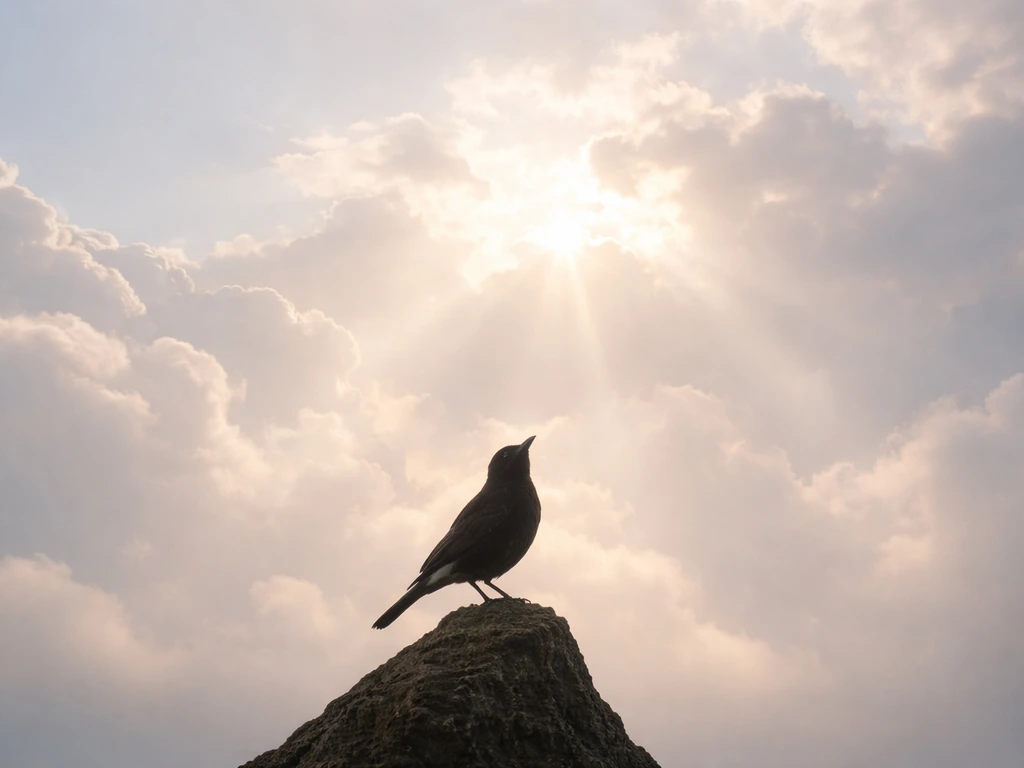
The phrase 'the pious bird of good' most likely refers to a bird carrying spiritual righteousness, divine blessing, or moral goodness in symbolic traditions, not a single species, but a concept that different cultures have attached to specific birds like the dove, ibis, crane, or white heron depending on where and when you look. If you came across this phrase in a poem, piece of art, or spiritual text, or if you're trying to interpret a real bird encounter through this lens, the key is figuring out which tradition you're working within and what 'good' means in that context: luck, protection, divine favor, or moral uprightness.
The Pious Bird of Good: Meaning, Symbolism, and How to Interpret It

Eleanor Hartwell
21 May 2026
What 'pious bird of good' most likely means
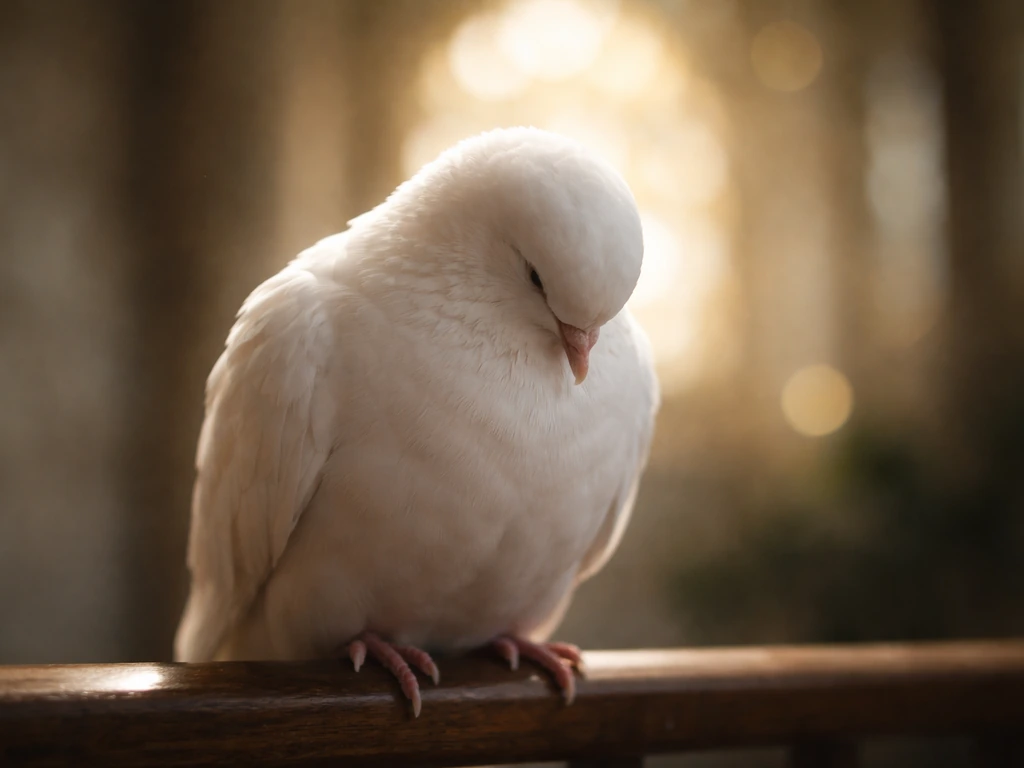
The phrase doesn't map to a single bird or a single meaning. Break it down and it becomes clearer. 'Pious' suggests a quality of reverence, prayer, or righteousness, a bird associated with the sacred, the divine, or moral goodness. 'Of good' modifies that further, pointing toward a bird that brings, embodies, or signals something positive: a blessing, a favorable sign, or moral virtue made visible. Together, they describe what scholars of folklore call a 'bird of good omen', a concept documented in Thompson's Motif-Index of Folk-Literature as a recurring folk-narrative motif found across dozens of cultures. The specific bird changes; the symbolic role stays consistent.
It's also worth flagging the Coleridge connection. Samuel Taylor Coleridge's 'The Rime of the Ancient Mariner' features an albatross described as 'the bird of good omen', a creature treated with near-religious reverence by sailors before its killing sets off catastrophe. If you encountered the phrase 'the pious bird of good' in a literary or poetic context, there's a real chance Coleridge is the source or at least the influence. The albatross in that poem carries both piety and goodness as intertwined qualities, which maps almost perfectly onto this phrase.
What 'pious' and 'righteous' mean in bird symbolism across traditions
Every major spiritual tradition has birds that carry a quality of holiness or moral standing, birds that aren't just lucky but actively associated with divine presence, prayer, or righteous living. These aren't interchangeable. Each carries its own texture of meaning.
Biblical and Christian traditions

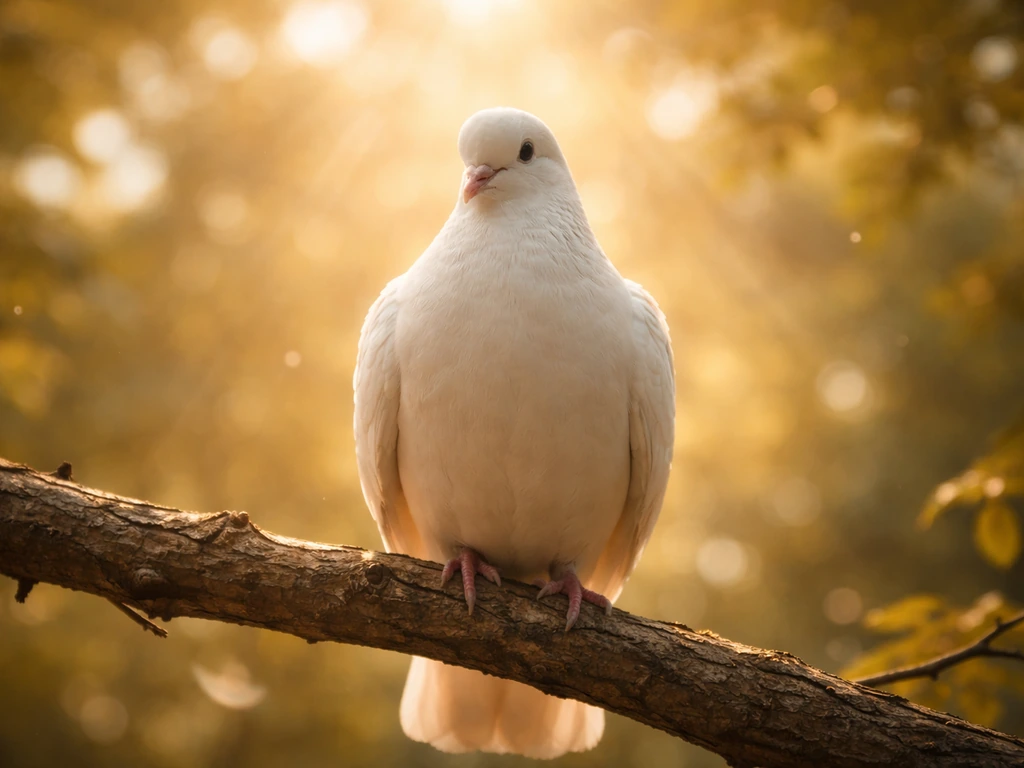
The dove is the central 'pious' bird of the Judeo-Christian world. At Jesus' baptism (Matthew 3:16-17), the Spirit of God descends 'like a dove', making the dove not just a symbol of peace but a literal vessel of divine presence. That one image has anchored the dove's sacred status in Western spiritual art for two thousand years. The dove at Noah's flood (returning with an olive branch) adds another layer: it becomes a sign of divine favor and restored goodness after judgment. In this tradition, a pious bird isn't merely well-behaved, it's a messenger between the human and the holy.
Egyptian tradition
Egypt assigns piety and moral order to the ibis, sacred to Thoth, the god of wisdom, writing, and divine law (Ma'at). The ibis wasn't just revered, it was mummified in enormous numbers as an offering, which tells you something about how seriously Egyptians took its sacred status. The heron, specifically the Bennu bird, carries a different kind of righteousness: it represents primordial creation and the soul's journey, appearing in the Book of the Dead as a form of righteous spiritual passage.
Native American traditions
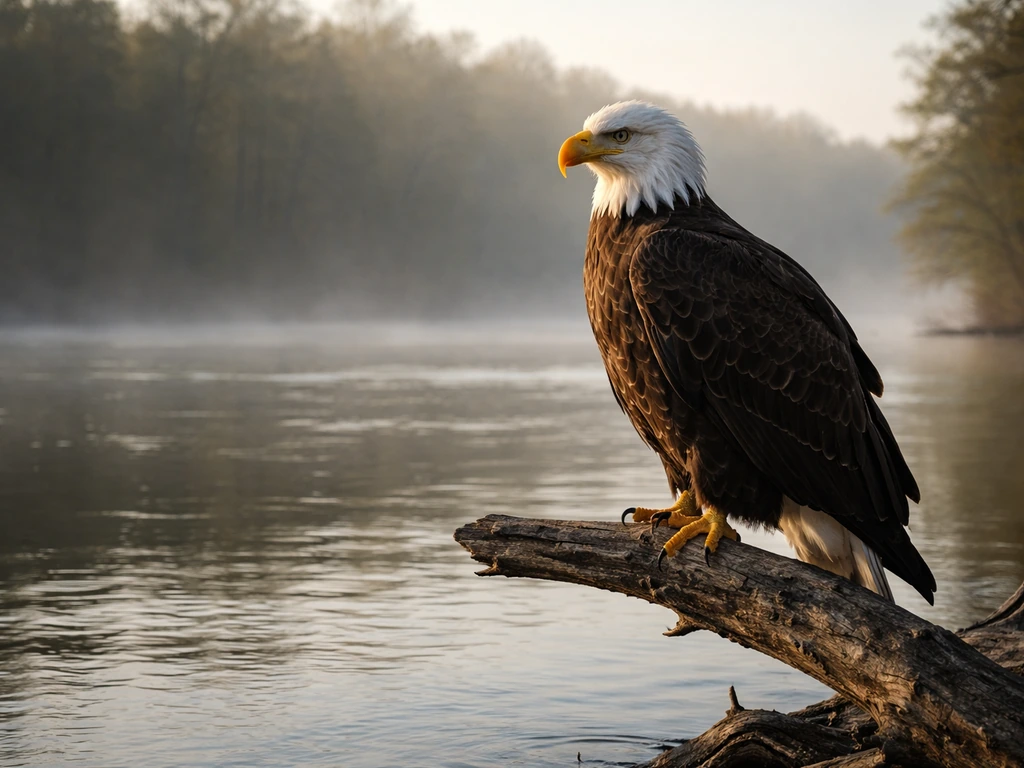
The concept of a 'pious' bird is more accurately framed here as a 'sacred messenger.' The eagle holds the highest spiritual authority across most Plains and Woodland traditions, it flies closest to the Creator and carries prayers upward. Eagle feathers are used in ceremony precisely because they're understood to have spiritual integrity. The crane and heron carry associations with patience, wisdom, and longevity in many Eastern Woodland and Southeastern traditions. None of these birds are 'pious' in the Christian sense, but they occupy an equivalent role: spiritually elevated, morally serious, and connected to divine order.
Celtic tradition
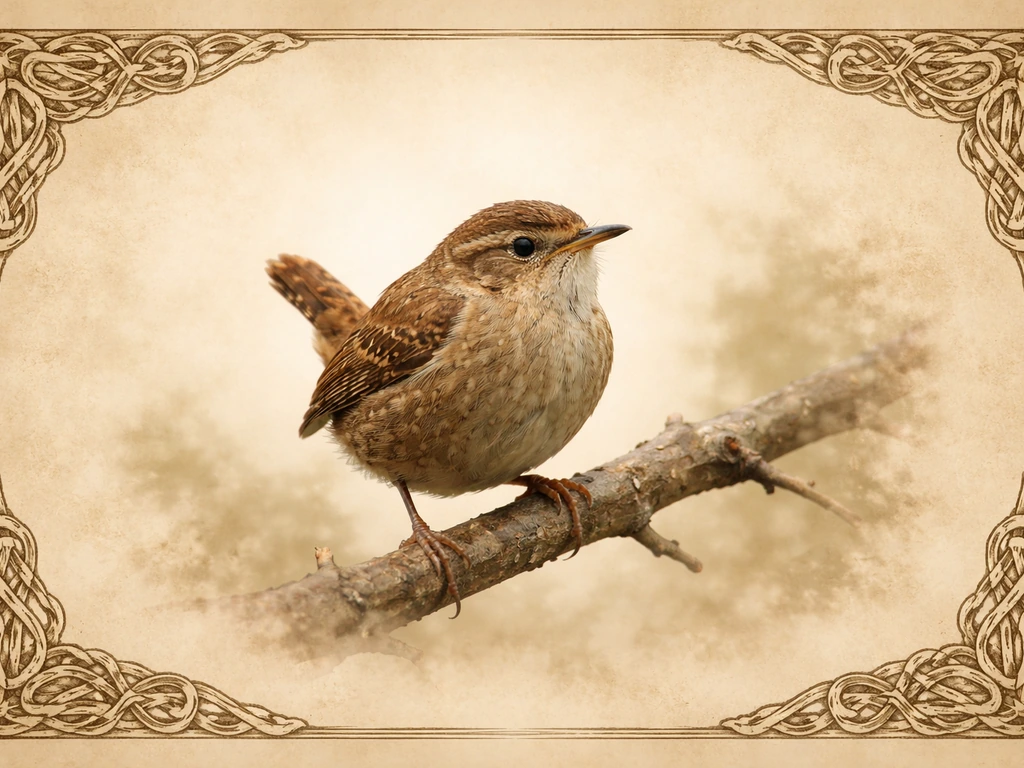
Celtic symbolism layers moral qualities onto birds in a distinctly different way. The wren, despite its tiny size, was considered a sacred bird of the druids, associated with prophecy and divine knowledge. The crane carried strong associations with the Otherworld and was linked to sacred law; harming one was considered deeply unlucky, almost a moral transgression. The swan, with its white plumage and transformative mythology, is connected to purity and the souls of the righteous in several Irish tales.
Aztec tradition
The Aztec world places the hummingbird and the eagle at the center of sacred bird symbolism, though in a more martial and cosmological frame. Huitzilopochtli, the god of sun and war, was associated with the hummingbird, warriors who died honorably were believed to be reincarnated as hummingbirds. The eagle represented the sun and divine power. Neither maps cleanly onto 'pious' in a contemplative sense, but both carry the weight of moral courage and sacred duty.
What 'good' means when it's attached to a bird
This is where interpretations branch sharply. 'Good' can mean at least four distinct things in bird symbolism, and mixing them up leads to real confusion:
- Good luck: the bird signals fortune, prosperity, or favorable outcomes (think the robin in European folk tradition, or the swallow returning to signal safe harbor)
- Good omen: the bird signals that something positive is approaching — this is the 'auspicious' reading, rooted in the ancient Roman practice of augury, where 'auspicium' literally meant observing birds for divine signs
- Protection: the bird actively wards off harm, watches over you, or represents a guardian presence (the owl in some Native traditions, the albatross for sailors)
- Moral goodness: the bird itself embodies virtue — purity, faithfulness, peace, or righteousness (the dove, the white crane, the swan)
The word 'auspicious' carries all this history. Its root is the Latin 'auspicium,' connected to 'auspex,' the Roman diviner who read bird signs. That divination tradition, literally watching birds to understand what the gods intended, is the oldest formal system for reading birds as agents of 'good.' When you see a bird and feel it means something positive, you're participating in a practice that's at least 2,500 years old.
The most likely bird candidates and how meaning shifts by culture
If you're trying to identify which bird best fits 'the pious bird of good' in a given context, here's how the strongest candidates compare across traditions:
| Bird | Primary 'Good' Quality | Key Traditions | Piety/Righteousness Role |
|---|---|---|---|
| Dove | Peace, divine favor, purity | Christian, Jewish, Greek, Roman | Vessel of the Holy Spirit; sign of God's covenant |
| Eagle | Power, divine authority, protection | Native American, Aztec, Roman | Messenger to the Creator; sacred in ceremony |
| Ibis | Wisdom, divine law, moral order | Egyptian | Sacred to Thoth; embodies Ma'at (cosmic justice) |
| Crane/Heron | Longevity, patience, sacred passage | Celtic, Chinese, Native American | Associated with sacred law and the Otherworld |
| Swan | Purity, transformation, the soul | Celtic, Greek, Norse | Souls of the righteous; divine beauty made manifest |
| Albatross | Protection, seafaring blessing, good omen | European maritime, Coleridge's poetry | Treated with near-religious reverence by sailors |
| Hummingbird | Sacred courage, spiritual renewal | Aztec, some South American traditions | Reincarnated warriors; associated with divine vitality |
The dove wins as the most cross-culturally recognized 'pious bird of good' in Western contexts. If your encounter is in a Western, Christian, or broadly spiritual context, the dove is the most defensible anchor. If you're working with Egyptian imagery, the ibis or Bennu heron is more accurate. For Celtic or literary contexts, especially if Coleridge is involved, the albatross carries that specific combination of piety and goodness more than any other bird.
How to interpret a real sighting or bird image you encountered
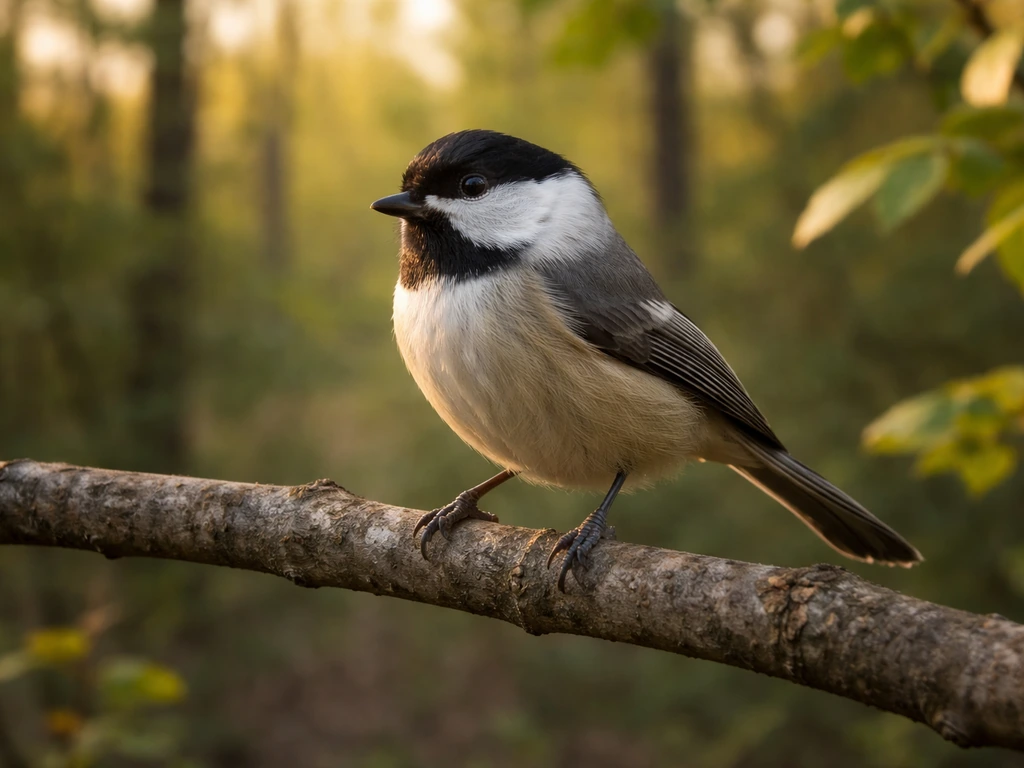
Start with the actual bird. What species was it? That's your anchor. Before reaching for symbolic meaning, identify what bird you actually saw or what bird appears in the artwork, text, or imagery you're working with. A white bird in a Christian church painting means something completely different from a white heron at a wetland edge, even if both feel 'pious' in the moment.
- Identify the species as specifically as possible — color, size, behavior, habitat, and time of day all matter for narrowing down which tradition's symbolism is most relevant
- Identify the cultural context of your encounter — was this a sighting in nature, a piece of art, a religious text, a poem, a dream, or a recurring image? Context shapes meaning more than the bird itself
- Ask what kind of 'good' felt present — did it feel like luck, protection, a message, or a sense of moral or spiritual rightness? That distinction tells you which symbolic layer to research
- Cross-reference the bird's behavior — a bird landing near you, circling overhead, singing at dawn, or appearing repeatedly all carry different interpretive weight in different traditions
- Check whether the encounter was unusual — birds appearing out of their normal range, in unexpected numbers, or at significant moments tend to be the ones people register as signs
Don't force a meaning that doesn't fit the bird. If you saw a crow, start with crow symbolism, don't redirect it toward dove symbolism because doves feel more comforting. Every bird carries its own symbolic integrity, and the most honest interpretation honors what the bird actually is.
Common mix-ups and how to get the interpretation right
Several misreadings come up again and again when people try to interpret birds through a 'pious' or 'good' lens.
Confusing 'good omen' with 'good moral character'
A bird of good omen brings favorable signs, it predicts positive outcomes. A 'pious' bird embodies righteousness or divine presence. These overlap but aren't the same. A magpie might be a good-luck bird in some cultures (one for sorrow, two for joy in British tradition) without carrying any spiritual piety. Meanwhile, a vulture in Egyptian tradition carries profound sacred meaning without being remotely 'lucky' in the folk sense. Always clarify which kind of 'good' you're after before reaching for a symbolic tradition.
Assuming symbolism is universal
The raven is a perfect example of why this matters. In Norse tradition, Odin's ravens Huginn and Muninn are divine messengers, wise, sacred, carrying profound spiritual authority. In some other European folk traditions, ravens are birds of ill omen associated with death and darkness. The same bird, opposite meanings, depending entirely on cultural context. Never assume that a bird 'good' in one tradition is 'good' everywhere.
Mixing up the albatross omen in Coleridge
This one catches people off guard. In 'The Rime of the Ancient Mariner,' the albatross arrives as 'a bird of good omen' and is treated with reverence, it's the pious bird of good in literary form. But the poem's whole point is what happens when that sacred status is violated. The albatross is good; killing it is the catastrophe. If you've encountered this phrase in a literary context, make sure you're reading the albatross as the symbol of goodness that is destroyed, not as a general symbol of the ocean or freedom.
Projecting rather than observing
The most common mistake is deciding what the sign means before researching what the bird actually represents. If a bird appears and you want it to mean good things, confirmation bias can lead you to whichever symbolic layer supports that. A more honest approach is to research the bird's actual symbolic role first, sit with what that tradition says, and then decide whether and how it applies to your situation.
Practical next steps: reflection, journaling, and follow-up research
If you're working with a bird encounter or image and want to extract real meaning from it, here's a practical sequence that actually helps:
- Write down the encounter in full detail as soon as possible — species (or best guess), color, behavior, time of day, location, what you were doing or thinking when you saw it, and how it made you feel. Raw observation is more useful than interpreted memory.
- Identify the cultural tradition most relevant to your personal background, the artwork or text you encountered, or the spiritual framework you're working within. That's your starting research point, not the internet's most popular result.
- Research the specific bird — not just its general symbolism but its role in the specific tradition you identified. If you're working with a Celtic frame, research what your bird means in Celtic sources specifically. If it's biblical, start with the biblical record.
- Note whether the encounter was singular or recurring. A single sighting might be noticed and released. A bird that appears three times in a week at significant moments is harder to dismiss and worth sitting with longer.
- Journal a short reflection on what kind of 'good' the encounter brought up for you: luck, protection, moral clarity, divine presence, or something harder to name. You don't have to land on a definitive answer — the reflection itself has value.
- If the phrase 'the pious bird of good' appeared in a text, poem, or artwork, find the full original source. Context almost always resolves ambiguity that a fragment leaves open. Related explorations — such as the general meaning of birds as good omens, or what the albatross symbolizes in more depth — can round out your understanding.
- Return to the encounter or image after a week and see whether your interpretation has shifted. Symbolic meaning often clarifies with time, not just research.
Ultimately, 'the pious bird of good' invites you to take bird symbolism seriously, not as superstition but as a layered, culturally grounded way of reading meaning into the natural world. That practice is ancient, rigorous, and genuinely useful when you approach it with curiosity and care rather than a need for fast answers.
FAQ
If I saw a bird and thought of “the pious bird of good,” how do I avoid guessing the wrong tradition?
Start by classifying the context first (Christian, Classical, Egyptian, Celtic, Indigenous, or general literature), then confirm the bird species before interpreting. If you cannot confidently name the species, treat the encounter as “symbolic mood” rather than a definite sign, because bird meaning often flips when the species is misidentified.
Does “of good” always mean good luck or does it sometimes mean moral righteousness?
It can mean both, but many interpretations conflate them. “Good omen” focuses on favorable outcomes, while “pious” focuses on reverence, divine presence, or moral uprightness. Decide which kind of “good” you want to apply before selecting a bird or tradition.
What should I do if the bird in the image or text is white, but the symbolism seems to conflict?
Use color as a modifier, not the anchor. For example, “white bird” can signal purity in one tradition and a different spiritual quality in another, so your next step should be identifying the actual bird type (dove, heron, swan, etc.) and the setting (church art versus wetlands) to resolve the mismatch.
How can I tell the difference between a “bird of good omen” and a “pious bird of good”?
Treat them as related but not identical roles. A bird of good omen is about predicting or signaling favorable events, while a pious bird is about holiness or sacred duty. If the story emphasizes reverence or prayerful posture, prioritize “pious” over “omen.”
Is it appropriate to apply this phrase to a real-life bird encounter for personal decisions?
You can treat it as reflective symbolism, but avoid making high-stakes decisions solely on an omen interpretation. A practical safeguard is to combine the symbolic reading with concrete factors you can verify (timelines, risks, plans) rather than taking the “good” as an instruction.
If I’m reading Coleridge, should I assume the albatross always means the same thing in every context?
No. In “The Rime of the Ancient Mariner,” the albatross’s “good” status is essential to the plot, because the catastrophe follows its violation. Outside that poem, an albatross can carry different associations, so match the meaning to the specific literary function (reverence, punishment, taboo) rather than the bird name alone.
What’s a common interpretation mistake when someone sees a crow or raven and wants it to mean “good”?
The mistake is applying a comforting bird template (like dove symbolism) to an opposite-feeling species. Instead, start with the bird’s own symbolic integrity for the relevant culture, then decide whether your “good” lens fits. If the culture links crows to wisdom but ravens to death omens, honor that difference rather than forcing positivity.
How should I handle it if two traditions disagree about the same bird’s moral meaning?
Choose based on the source of the text or the speaker’s cultural frame, not your preference. If you are interpreting a specific artwork or poem, use the tradition implied by the creator’s setting and references, because “same bird, opposite meaning” is a known pattern across regions.
Next Article
What Bird Is a Sign From Heaven? Meaning and How to Interpret
Which bird is often seen as a sign from heaven, plus a step-by-step way to interpret your specific encounter.