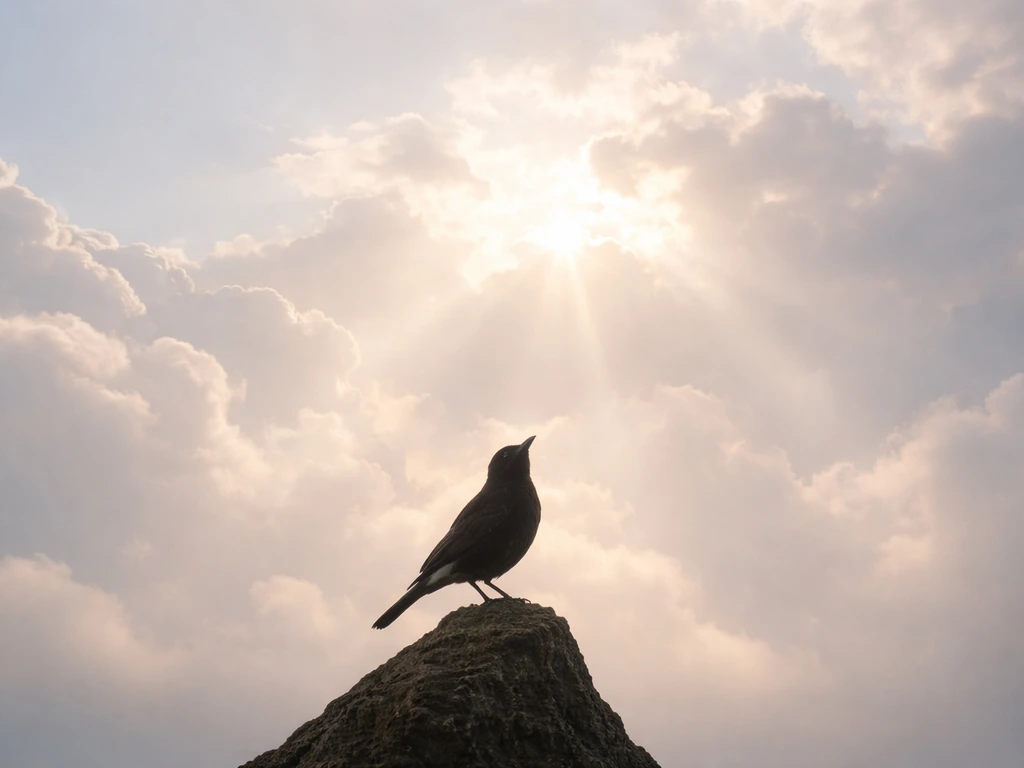
The phrase 'where the noble bird stands proud' is a symbolic riddle pointing most directly to Egypt and the eagle (or falcon) as its royal emblem, but it also opens a much wider conversation about which birds cultures have always crowned as noble, and how to spot the moment that energy is showing up in your own life. Whether you encountered this phrase in a game, a text, or a dream, the 'place' where the noble bird stands proud is rarely just a dot on a map. It is a symbolic location, a moment of encounter, or an image in art and scripture where a bird of high dignity announces itself.
Where Does the Noble Bird Stand Proud? Spiritual Sign Guide

Eleanor Hartwell
25 Apr 2026
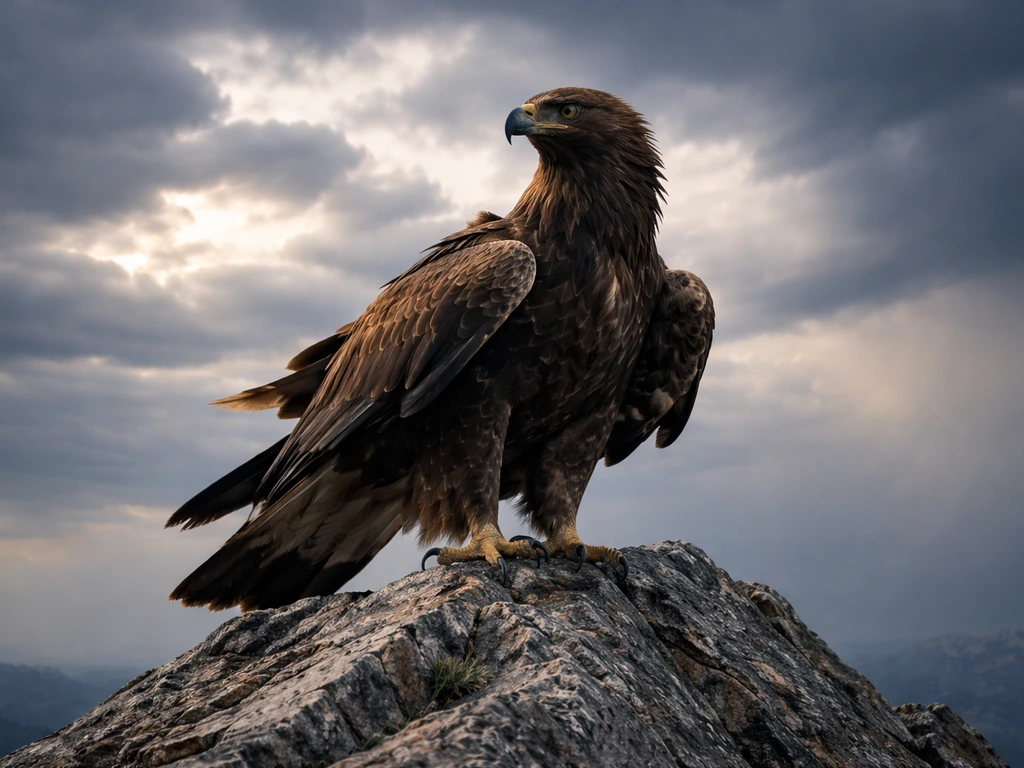
Decode the phrase: what 'noble bird' most likely means symbolically
The word 'noble' attached to a bird has a long and specific history. In older English literature and falconry manuals, 'noble birds of prey' was a recognized category, referring to raptors trained for the hunt and prized by aristocracy. The peregrine falcon was explicitly named 'the noble among birds of prey' in 19th-century ornithological writing, and the Arabic falconry term 'tayr hurr' (literally 'free bird') was applied to the lanner falcon and similar species precisely because of their high-caste association with royalty and noble households. So when you see 'noble bird' in any context, the first candidates are always raptors: eagles, falcons, and hawks.
The phrase also has a very specific pop-culture life. In the Carmen Sandiego game 'The First Class Caper,' the clue 'where the noble bird stands proud' is a direct pointer to Egypt, specifically Cairo, because of the Egyptian eagle on the national flag. That particular usage is worth knowing because it explains why so many people search this exact phrase today. But even in that game context, the designers chose the phrase because the eagle-on-flag association is genuinely ancient and cross-cultural, not a clever invention. The symbolic freight was there long before the game borrowed it.
So the symbolic decoding looks like this: 'noble bird' almost always refers to a bird of sovereignty, usually a raptor or a mythic bird (eagle, falcon, phoenix, or in some traditions the peacock). 'Stands proud' indicates a bird in its full emblematic posture, displayed rather than in flight, often on a crest, a flag, a temple wall, or a natural perch that feels deliberate and commanding. The 'where' is the location, physical or symbolic, where that dignity is being announced.
Cultural and religious bird symbols that match 'noble/proud' energy
Across every major symbolic tradition documented on this site, a handful of birds consistently carry the 'noble' designation. Here is how each tradition names them.
Egyptian tradition
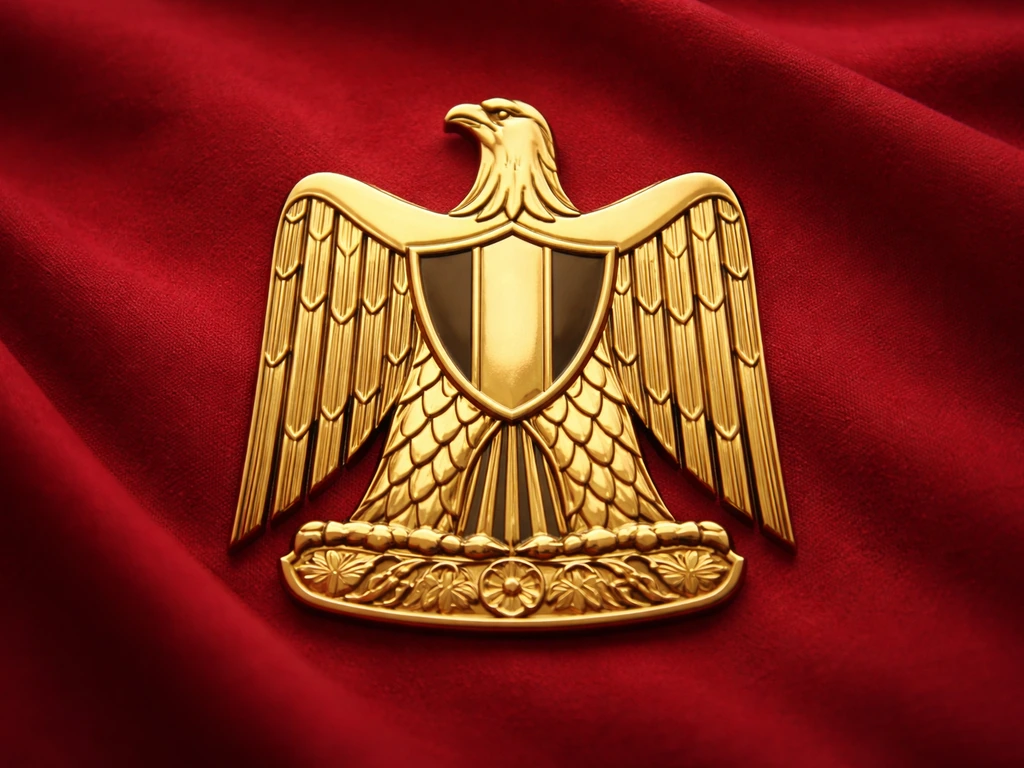
Egypt is the most direct answer to this specific phrase. The golden eagle on Egypt's national flag is known as the Eagle of Saladin, a symbol inherited from medieval Islamic heraldry but built on much older pharaonic foundations. Egypt’s national flag includes the golden Eagle of Saladin as the centered emblem on the white band. In ancient Egypt, the falcon (specifically Horus as the peregrine falcon) was the supreme noble bird, representing divine kingship. The pharaoh was the living Horus, and the falcon hieroglyph was used to write the royal name. When you see 'noble bird stands proud' in an Egyptian context, you are looking at thousands of years of sovereignty compressed into a single image.
Biblical and Christian tradition
In biblical symbolism, the eagle is the noble bird of the sky, used in Isaiah 40:31 ('they will soar on wings like eagles') as a symbol of renewed spiritual strength and divine favor. The eagle also appears in Revelation as one of the four living creatures around the throne, giving it an almost supreme celestial status. The dove, while meeker in appearance, carries the noble role of divine messenger, most famously descending at the baptism of Christ. Both birds stand proud in the Christian imagination: one as power, the other as peace.
Native American traditions
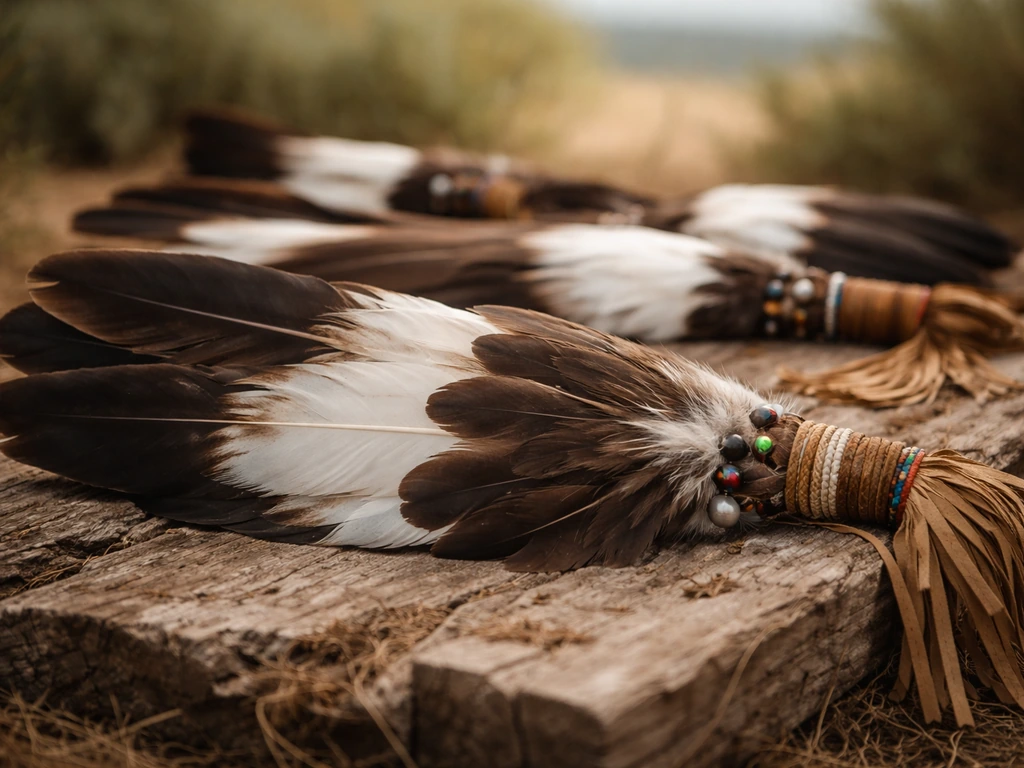
For many Native American nations, the bald eagle holds the highest ceremonial rank of any bird. Eagle feathers are awarded for acts of bravery and spiritual achievement; they are not decorative, they are earned. The eagle is understood as a messenger to the Creator, flying so high it can carry prayers upward. In some Plains traditions, the thunderbird, a mythic eagle-like being, occupies a similar throne as the supreme noble bird of the heavens, controlling storms and marking cosmic boundaries.
Celtic tradition
Celtic symbolism is more complicated with birds because the raven and the crane share noble status alongside the eagle. The eagle in Celtic mythology (particularly in Welsh tradition, appearing in the Mabinogion as one of the oldest creatures) carries wisdom and ancient sovereignty. But the wren, despite its tiny size, was considered the 'king of birds' in Celtic folklore after winning a contest by riding on the eagle's back, a story that blends humility with clever dignity in a uniquely Celtic way.
Aztec tradition
In Aztec cosmology, the eagle warrior represented the highest tier of military and spiritual achievement. The eagle (cuauhtli) was the symbol of the sun itself, of fire, and of the east where the sun rises. The founding myth of Tenochtitlan, what is now Mexico City, is explicitly about a noble bird standing proud: the god Huitzilopochtli instructed the Mexica people to build their city where they saw an eagle perched on a cactus devouring a serpent. That image, an eagle standing proud on a nopal cactus, is still on the Mexican national flag today.
Heraldic and royal traditions
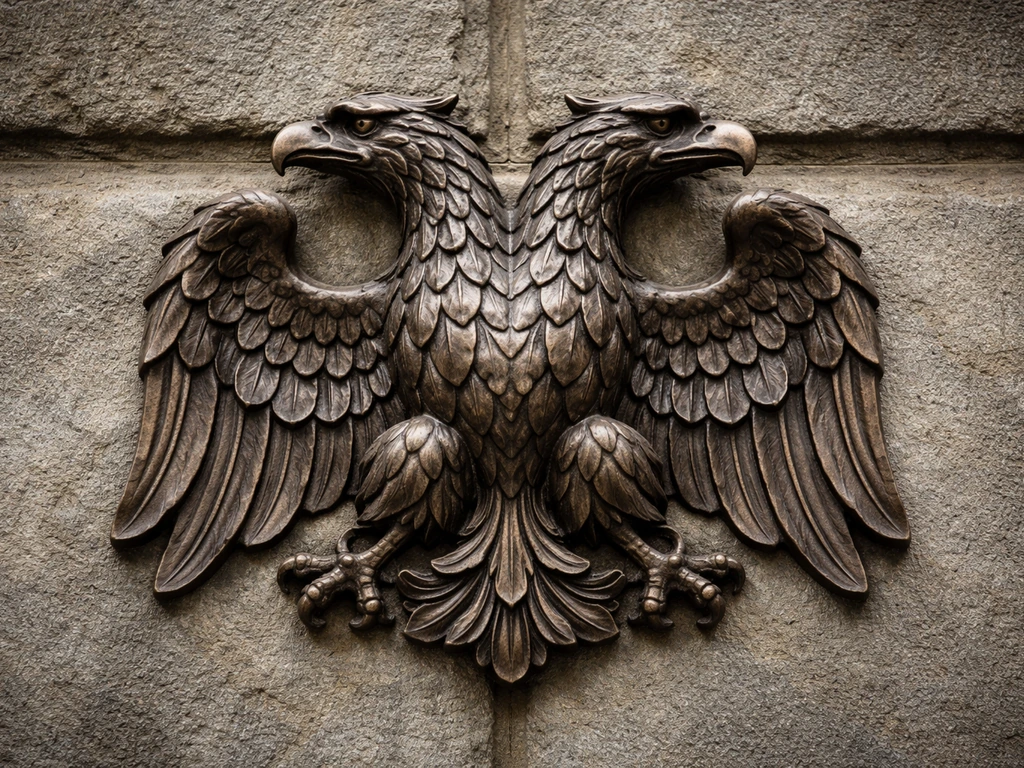
European heraldry made the eagle its default 'noble bird' for centuries. From the Holy Roman Empire's double-headed eagle to the spread eagle on countless coats of arms, a bird standing proud (displayed, in heraldic terminology, meaning facing forward with wings spread) is the universal visual grammar of nobility, power, and legitimacy.
The secretary bird, which carries its own heraldic meaning in South African coats of arms, is another example of how specific birds get recruited into these 'standing proud' roles depending on the region. The secretary bird coat of arms meaning varies by region, but it often carries the same message of dignity and legitimacy as other heraldic birds.
Similarly, the Liver Bird of Liverpool and the bird symbols on various family coats of arms all follow this same logic of a bird chosen to represent enduring dignity.
How to identify the 'stand proud' location in real life
If you are trying to find where this symbolism is showing up in your actual life today rather than in a game clue or a coat of arms, the key is noticing context: where did you encounter the bird, what was it doing, and what question were you sitting with at the time?
- A raptor perched at the top of a tree or building, sitting still and scanning rather than hunting, is the classic 'standing proud' posture. This is an invitation to look at your life from a higher vantage point.
- An eagle, hawk, or falcon that holds your gaze for an unusual amount of time is, in nearly every tradition, a sign worth pausing for. Note the direction it faces and whether it is alone or paired.
- A bird image appearing repeatedly in art, heraldry, or architecture you pass every day may be the 'noble bird standing proud' that your attention has been drawn toward, even if you walked past it a hundred times without really seeing it.
- In dreams, a bird perched on a high place (a tower, a cliff, a throne) with its feathers fully displayed and its posture upright corresponds symbolically to the 'standing proud' image across nearly all the traditions above.
- Flags, coins, institutional logos, and official seals carry noble bird imagery constantly. If one of these suddenly catches your attention or feels personally significant, that is the symbolic location the phrase may be pointing you toward.
Feathers, flight, and nesting: what the bird's behavior and imagery tell you
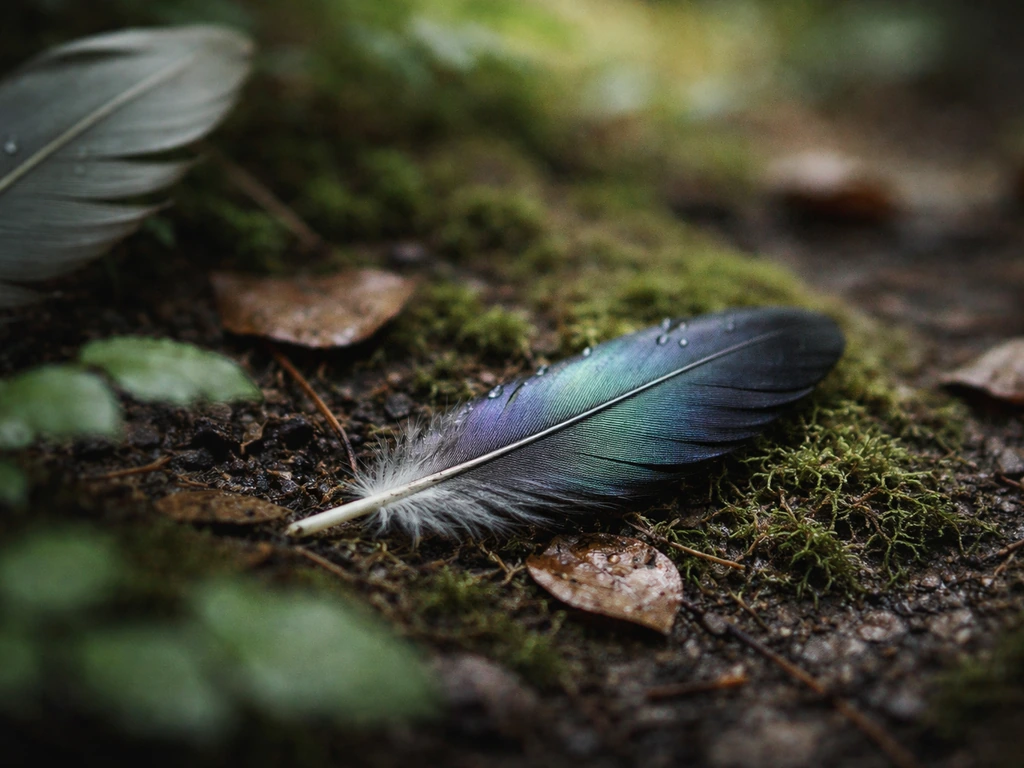
Not every noble bird encounter comes in the form of a bird standing still. Sometimes the symbolism arrives as a feather on the ground, a bird in full flight overhead, or the discovery of a nest in an unexpected place. Each of these has its own symbolic register, and it is worth knowing how they differ.
Finding a feather
In Native American traditions, finding a raptor feather is one of the most significant bird signs you can encounter. Eagle and hawk feathers are treated as sacred objects, carriers of the bird's spirit energy. In a broader cross-cultural sense, finding a large, strong feather (especially a flight feather, the long primary feathers from the wing tip) is typically read as a message of strength, protection, or spiritual readiness. The 'noble bird' does not need to be physically present for its symbolism to arrive; the feather is a direct emissary.
Watching the bird in flight
A noble bird in full flight, especially soaring on thermals without flapping, is one of the most universally read symbols of freedom, elevated perspective, and spiritual ascent. In biblical imagery this is the Isaiah eagle, rising above difficulty on renewed strength. In Aztec symbolism, the eagle flying toward the sun is the warrior soul ascending. In Celtic lore, the high-flying eagle sees what ordinary sight cannot. If your encounter is a bird soaring above you, the symbolic message is almost always about rising above your current perspective, not about a fixed location but about movement upward.
Discovering a nest
An eagle or raptor nest (called an eyrie) is itself a powerful symbol of noble placement. Eyries are built high, returned to year after year, and represent permanence, commitment, and the choice of a high vantage point as home. If you discover a raptor nest near your home or workplace, many traditions would read this as the noble bird literally 'standing proud' in your space, a guardian presence establishing itself at the highest point it can find.
How to choose the right interpretation for you

The honest answer is that 'noble bird' can point to several different birds depending on your context, and picking the right lens matters. Here is a quick matching method.
| Your context | Most likely noble bird | Best symbolic tradition to use |
|---|---|---|
| Game clue or geographic puzzle | Egyptian eagle (Eagle of Saladin) | Heraldic / Egyptian |
| Raptor seen in nature, sitting still | Eagle or peregrine falcon | Native American or biblical |
| Raptor in flight, soaring high | Eagle or buzzard | Biblical / Aztec / Celtic |
| Feather found on the ground | Eagle, hawk, or falcon feather | Native American |
| Dream image of a proud bird on a perch | Eagle, peacock, or phoenix | Egyptian / Hindu / Chinese |
| Image on a flag, seal, or coat of arms | Eagle (most common) or specific heraldic bird | European heraldic / national symbolism |
| Cultural or mythic exploration | Phoenix | Egyptian / Chinese / Celtic |
To narrow down your interpretation, ask yourself these three questions. First: where did I encounter this bird or image, and does that location have a known cultural or spiritual association? Second: what was I thinking about or asking for guidance on when the encounter happened? Third: which tradition feels most personally resonant or most alive in the culture I grew up in or feel drawn to? The answer to the third question usually tells you which framework will yield the most meaningful interpretation for you specifically.
It is also worth acknowledging that sometimes the phrase is simply a puzzle clue, as in Carmen Sandiego, pointing to a literal place (Egypt, Cairo) rather than a personal spiritual sign. If you are also looking at Alucard as a bird-linked Hermes figure, that identity adds another layer to how this message can be interpreted alucard the bird of hermes is my name. There is no shame in that answer. But even then, the reason the game designers used that clue is because the noble bird of Egypt has carried that proud symbolic weight for millennia. The literal and the symbolic are not always as separate as they seem.
Next steps you can do today
If you want to actually work with this symbolism rather than just understand it intellectually, here are concrete things you can do right now.
- Go outside and spend 10 minutes observing the sky. Note any birds of prey you see, what they are doing, and the direction they face or fly. Write this down immediately, including the time and your emotional state.
- Journal on this prompt: 'In my life right now, what deserves to stand proud? What feels like it has been crouching when it should be perched high?' The noble bird often appears as a mirror to something in your inner life seeking recognition or elevation.
- Look at the flags, coins, or official seals you interact with regularly. Do any of them carry a bird? Research that bird's specific symbolic history. You may find the noble bird has already been 'standing proud' in your daily environment for years.
- If you found a feather, hold it and sit quietly for a few minutes. In the Native American tradition, this is not superstition but a form of respectful attention. Ask what the bird who left this feather would see from its height that you currently cannot.
- Choose one tradition from the list above that resonates with you (biblical, Egyptian, Native American, Celtic, or Aztec) and read one primary myth or passage from that tradition featuring its noble bird. Let the story do the work, not just the symbol list.
- If you had a dream featuring a noble bird, write down every detail you can remember: the bird's posture, its color, whether it spoke, the height of its perch, and what you felt. Cross-reference the posture ('standing proud' vs. in flight vs. wounded) with the interpretive framework in this article to get a more specific reading.
- Treat any real encounter with a raptor today as a deliberate meeting. Make eye contact if the bird allows it, stay still, and simply be present. Every tradition covered here agrees on this much: the noble bird chooses when to be seen, and your job is to pay attention when it decides to show itself to you.
The 'noble bird standing proud' is one of the oldest images in human symbolic life. The term "herald of spring" is often used for birds whose seasonal call or first appearance signals warmer days.
Whether it leads you to Cairo on a flag, to a peregrine falcon on a city ledge, to an eagle feather on a hiking trail, or to a coat of arms you never really looked at before, the phrase is an invitation to look up, find the highest point in your current landscape, and recognize what is displaying itself there with full dignity.
If you are wondering what bird appears on the Thomas coat of arms, the same “stands proud” heraldic logic can help you identify the emblematic species what is the bird on the Thomas coat of arms. That is where the noble bird stands proud. The term “halcyon bird” is often discussed as a symbol of calm, renewal, and long-awaited peace, so its meaning can complement the same “noble, stands proud” energy you are exploring here halcyon bird meaning.
That includes symbols like the Liver Bird, which also represent civic dignity and standing proud in heraldic tradition.
FAQ
If I see the phrase “where the noble bird stands proud” repeatedly, how do I know whether it’s pointing to a real location or to my inner life?
Yes, but the “right” one depends on the setting. If the encounter is tied to a real location (flag, statue, crest, architectural relief), interpret “where” as that physical emblem site. If the encounter is inward (dream, repeated synchronicity, strong feeling), interpret “where” as the mental or emotional terrain you were in, meaning the life area being activated rather than a specific place.
What’s the best way to avoid misreading the noble bird as the wrong species?
Don’t overfit to a single bird name. Use a hierarchy: first identify whether the image is an obvious raptor or crest-style emblem, then check what action matches “stands proud” (displayed posture, frontal stance, wings spread, on a crest or flag). Only after that should you narrow to eagle, falcon, hawk, or a mythic counterpart like phoenix or thunderbird.
How does the meaning change if the bird is perched versus shown in a formal crest-like posture?
Heraldic “standing proud” has a specific visual grammar: the bird is typically shown facing forward with wings spread (display posture), rather than angled mid-flight. If what you’re seeing is a bird perched casually, that often shifts the meaning toward presence or watchfulness, while a display emblem tends to emphasize legitimacy, authority, or ceremonial identity.
If I find a feather, is it always a spiritual message, and what should I do with it?
Feathers are different from sightings. If you find a raptor feather, treat it as an external signal and stay grounded in practical safety (wear gloves if needed, store it carefully). Many traditions read flight feathers as “readiness” or “strength,” but if the feather appears during an anxious period, it may be more helpful to interpret it as “strength-building” rather than an immediate prediction of events.
Can the same “noble bird” symbol mean different things for different people, and how do I choose the right interpretation?
Yes, but be careful with certainty. Multiple traditions overlap on “eagle” themes, so your job is to pick the framework that actually changes what you do next. A useful test is behavioral: after the encounter, what choice becomes clearer (courage, patience, boundaries, trust), and does that choice match the tradition you feel drawn to?
If the noble bird shows up in full flight above me, should I assume it always means good luck?
A “flight overhead” encounter usually points to perspective shift, but it is not guaranteed to be positive or permanent. If the mood at the time was fear or urgency, interpret it as a call to rise in the short term (reframe, ask for guidance, move strategically) rather than assuming peace is already guaranteed.
How should I interpret a raptor nest or eyrie near my home without getting stuck on literal meanings?
If you are using the “where” lens, treat nests and high perches as “boundary and commitment” signals. However, avoid turning it into a literal instruction to intervene. A practical approach is to treat it as a reminder to create stability at your own highest responsibility point (career, care duties, long-term plan), not to approach wildlife or disturb a nesting area.
If I first encountered this phrase in a game like Carmen Sandiego, does that invalidate the spiritual-sign interpretation?
If the phrase came from a game or puzzle clue, it can still be meaningful symbolically, but the most honest workflow is dual-track: acknowledge it as a clue first (for the “where,” like Egypt/Cairo), then ask what question you were sitting with while encountering it. That second step often reveals why the symbol “activated” your attention.
What if multiple traditions feel relevant to me, including a personal mythology connection like Hermes, how do I reconcile them?
It can, especially if your cultural background includes specific bird meanings. Choose the tradition that feels both resonant and ethically safe to apply to your life. If you feel pulled toward a mythic overlay (like Hermes connections you mentioned), let it modify the theme (communication, messages, transitions), but keep your final guidance grounded in what you can verify and act on.
How do I use the “herald of spring” idea practically when I’m trying to apply the symbol right now?
“Herald of spring” language is about timing and new beginnings, but it is not only about the season itself. If you hear the bird call or notice first sightings during a transitional period in your life, the spring signal can mean renewed momentum or a short window to start something. If you are trying to use it practically, set a concrete intention within that window rather than waiting for repeated confirmation.
Next Article
What Bird Is a Sign From Heaven? Meaning and How to Interpret
Which bird is often seen as a sign from heaven, plus a step-by-step way to interpret your specific encounter.