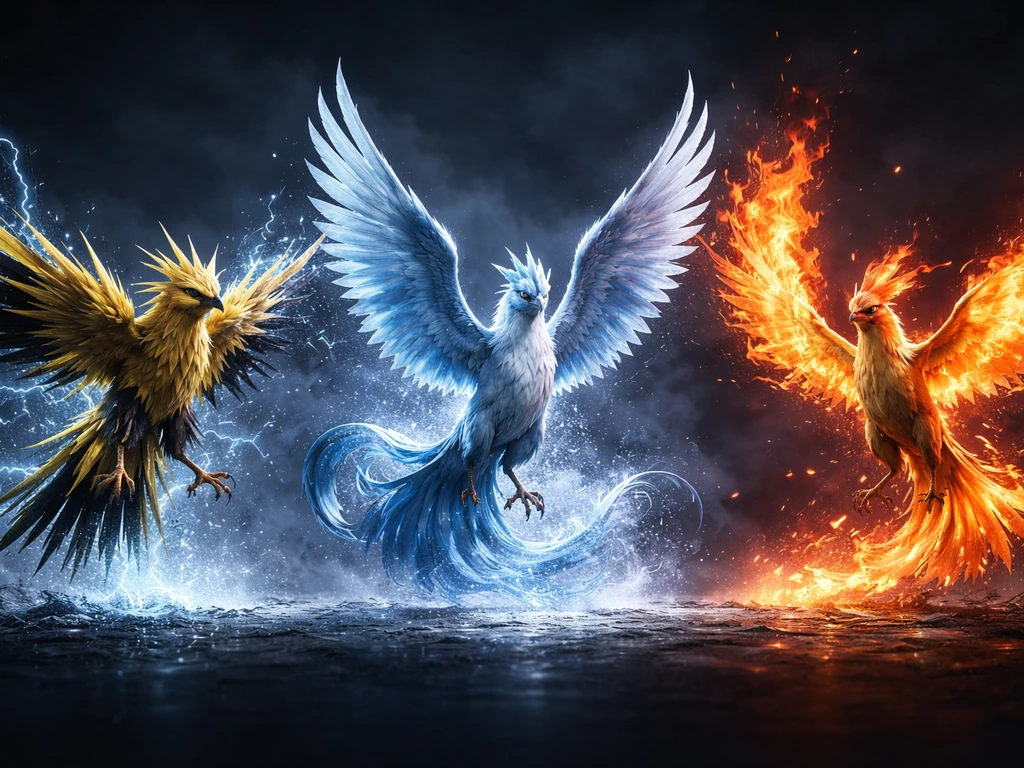
When people search 'what is the legendary bird,' they almost always mean the phoenix: the immortal, fire-born bird from ancient mythology that dies in flames and rises reborn from its own ashes. That's the default answer, and it's the one this article focuses on most. But depending on the story, artwork, or dream you're trying to interpret, the 'legendary bird' could also be the roc (a giant bird of prey from Arabian and Persian tales), the Simurgh (a wise, healing guardian-bird from Persian epics), or one of several regional equivalents like the Chinese Fenghuang or the Egyptian Bennu. The right answer depends on the context clues in what you're reading or experiencing, and this guide walks you through all of them.
What Is the Legendary Bird? Phoenix and Other Myths Explained

Eleanor Hartwell
11 May 2026
Which legendary bird do most people actually mean?
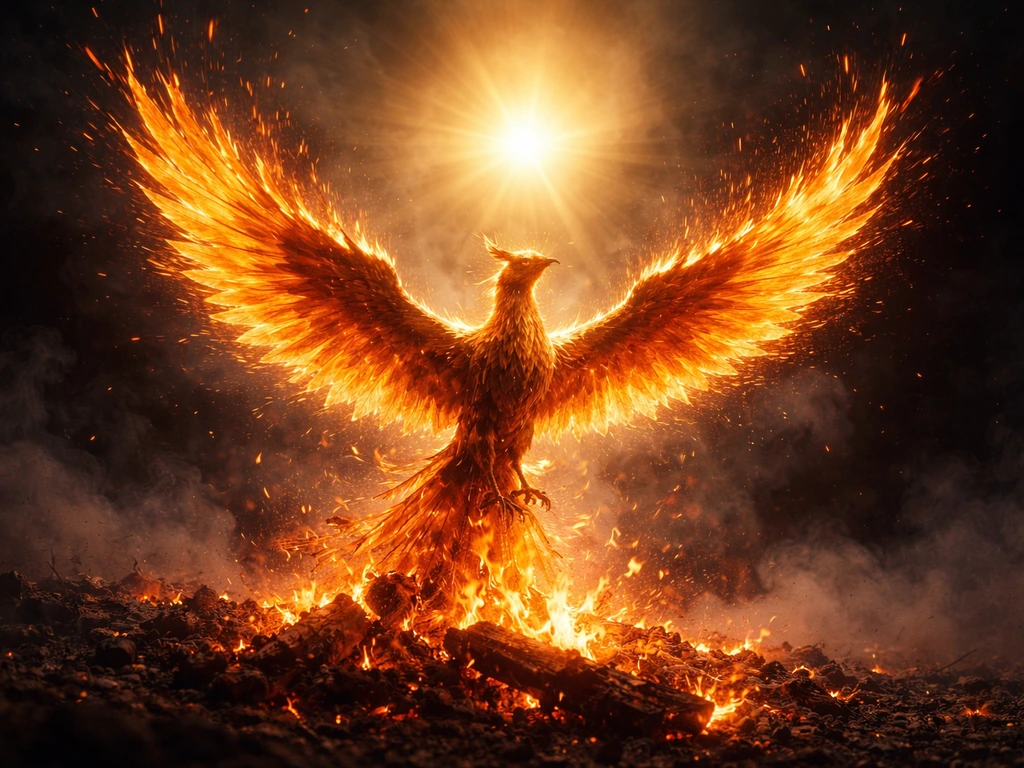
The phrase 'legendary bird' is a broad umbrella that covers mythic birds from dozens of cultures and genres, which is precisely why searching it sends most people toward specific famous candidates rather than one tidy definition. That said, the phoenix wins the default vote in virtually every context: Western literature, popular culture, spiritual symbolism, and comparative mythology all position it as the archetypal legendary bird. If someone says 'the legendary bird' without any other context, phoenix is the most defensible first answer.
Where it gets more interesting is when context shifts the answer. A story emphasizing enormous scale and prey-snatching is almost certainly pointing to the roc. A narrative about a wise, benevolent bird that heals heroes and offers counsel in Persian epics is the Simurgh. A solar bird tied to Egypt's temple at Heliopolis is the Bennu, which many scholars consider the oldest ancestor of the phoenix myth. Knowing these distinctions makes you a genuinely better reader of mythology, art, and your own symbolic experiences.
The phoenix: origin, story, and why it dominates
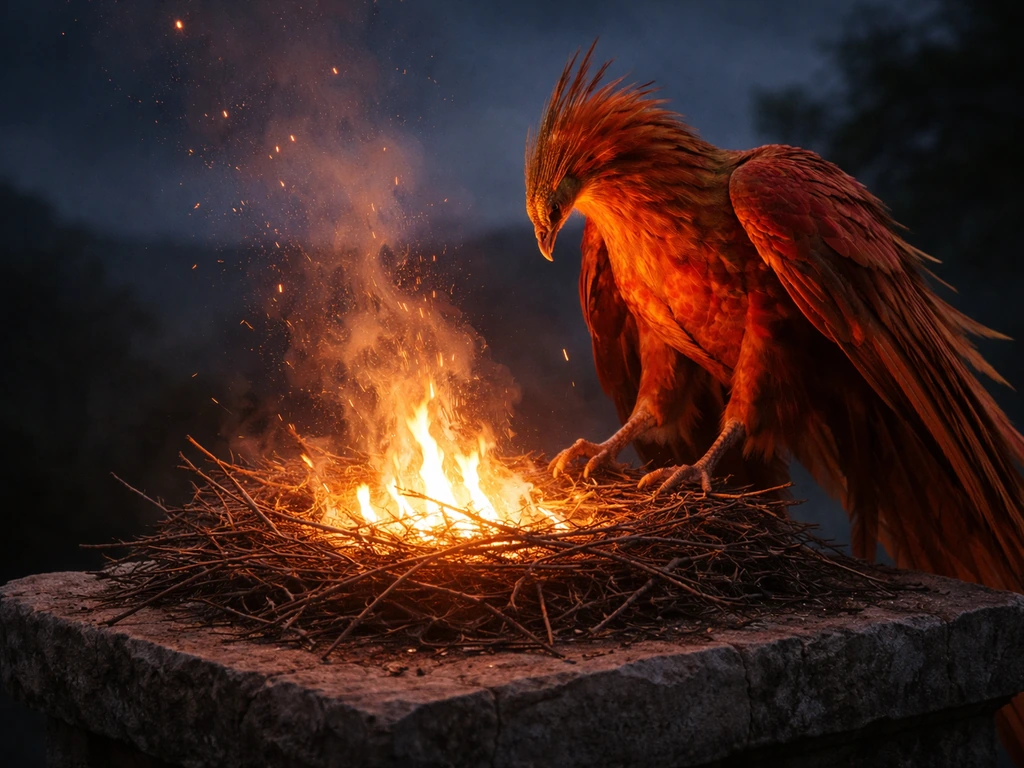
The phoenix as most people know it is a bird of extraordinary lifespan (classical sources like Herodotus put it at around 500 years) that builds a nest, ignites, burns completely, and then rises renewed from the ashes. Britannica places its earliest formal appearances in ancient Egypt and classical antiquity, where it was closely tied to sun worship. The Egyptian Bennu bird, a heron-like solar figure associated with the sun god Ra and the temple at Heliopolis, is widely cited by scholars as the most likely origin point for later Greco-Roman phoenix stories, even though the specific 'death by fire' element doesn't appear cleanly in surviving Egyptian sources.
The Herodotus version, reported in the 5th century BCE, describes the phoenix flying from Arabia to the Egyptian sun-temple every 500 years carrying its embalmed father in a ball of myrrh. This is already a different flavor from the full 'burst into flames and self-resurrect' narrative that becomes standard in later Roman-era texts. The poem 'De ave phoenice,' attributed to the early Christian writer Lactantius, is a turning point: it elaborates the fire-and-ash cycle in detail that later European Christian writers follow closely, mapping the phoenix onto resurrection theology. By late antiquity, the phoenix had been explicitly adopted as an emblem of resurrection and life after death, which amplified its spread through Christian art and literature.
The phoenix also absorbed regional variants along the way. Britannica notes that in Islamic tradition, the phoenix was identified with the Persian ʿanqāʾ and the Simurgh (more on that bird below), blending the firebird concept with a vast, mysterious creature of wisdom and mystery. The Chinese Fenghuang carries phoenix-like solar associations and cyclical renewal themes, though it functions more as a symbol of virtue and imperial harmony than of dramatic death-and-rebirth. Wikipedia summarizes Fenghuang as a phoenix-like composite mythological figure linked with Chinese symbolism, including associations with the imperial household and broader thematic links such as virtues Chinese Fenghuang carries phoenix-like solar associations. Slavic firebird traditions, the Hindu Garuda-adjacent motifs: these are all branches of the same deep human impulse to imagine a bird that transcends death.
How to recognize phoenix imagery
The language around phoenix symbolism is distinctive enough that you can usually spot it quickly. Key wording includes 'reborn from ashes,' 'immortal bird,' 'burns itself,' 'rises again,' 'cycle of renewal,' and 'sun-temple' or solar associations. In visual art, the phoenix is typically depicted in bright gold, red, and orange tones, often mid-flight from flames, sometimes with a radiant halo-like glow. If the story or image emphasizes cycles, self-sacrifice leading to transformation, and solar imagery, you're almost certainly looking at phoenix-derived symbolism.
Other legendary birds worth knowing
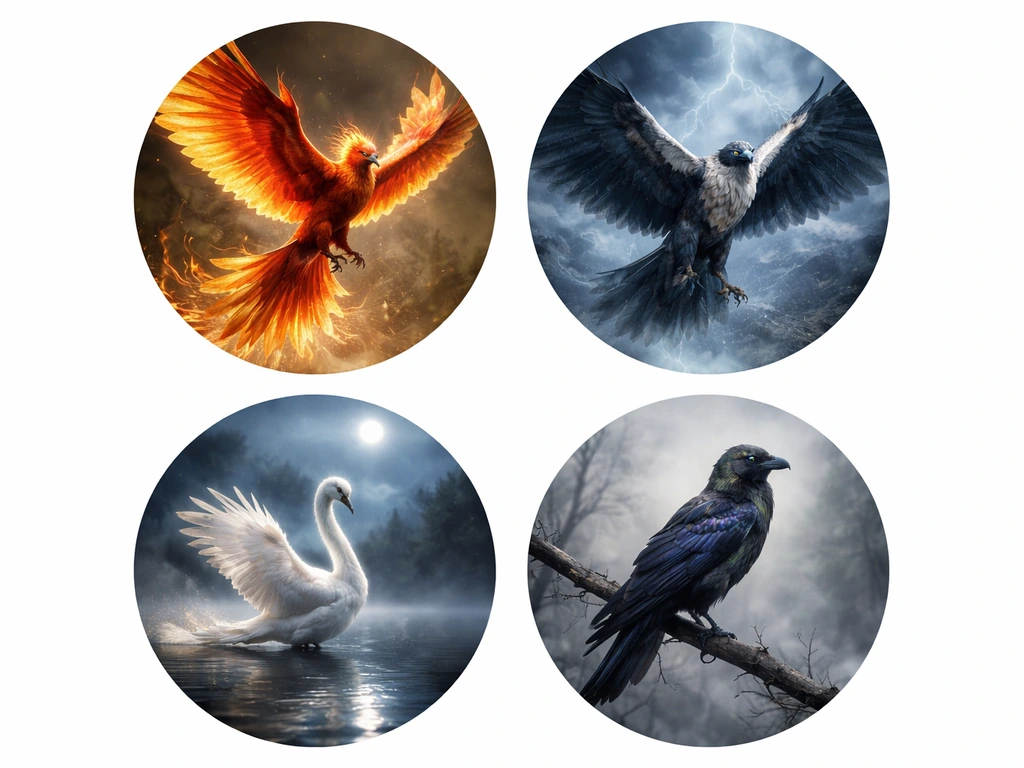
While the phoenix handles the 'rebirth' territory, other legendary birds carry their own distinct symbolic weight, and mixing them up misses something important about what the story or symbol is actually doing.
| Bird | Origin | Defining Feature | Core Symbolism | Key Wording Clues |
|---|---|---|---|---|
| Phoenix | Ancient Egypt / Classical antiquity | Burns and rises from ashes in a solar cycle | Rebirth, renewal, immortality, transformation | 'Ashes,' 'fire,' 'cycle,' 'rises again,' 'sun' |
| Roc | Arabian / Persian tales (1001 Nights era) | Enormous bird of prey that can snatch elephants | Overwhelming power, the sublime terror of nature | 'Giant,' 'snatches,' 'enormous,' 'prey,' 'bird of prey' |
| Simurgh | Persian epic tradition (Shahnameh, Sufi poetry) | Ancient wise bird that heals and guides heroes | Wisdom, healing, spiritual guidance, transcendence | 'Wise,' 'healer,' 'hero's mentor,' 'Persian epic' |
| Bennu | Ancient Egypt (solar cult, Heliopolis) | Heron-like solar bird linked to Ra and creation | Solar renewal, creation, the first light | 'Egyptian,' 'solar,' 'Heliopolis,' 'heron,' 'creation' |
| Fenghuang | Chinese mythology | Composite bird of virtue and imperial harmony | Virtue, balance, prosperity, imperial dignity | 'Chinese,' 'virtue,' 'harmony,' 'yin-yang,' 'five colors' |
The roc's defining feature is scale: it is so enormous that it treats elephants as prey. In the stories from the Arabian Nights and related Persian tradition, the roc functions less as a spiritual symbol and more as a representation of nature's overwhelming, indifferent power. If your story or dream emphasizes gigantic size, aerial predation, or being carried helplessly in a creature's talons, that's roc territory, not phoenix.
The Simurgh occupies a uniquely wise, benevolent space. In Ferdowsi's Shahnameh, the Simurgh raises the hero Zal and later provides healing feathers at critical moments. In Sufi poetry, especially Attar's 'Conference of the Birds,' the Simurgh becomes a metaphor for divine unity and the soul's journey toward enlightenment. Simurgh narratives emphasize guidance, counsel, and healing. If a legendary bird in your story is helping a hero, offering wisdom, or providing miraculous healing, Simurgh is the more precise fit than phoenix. Britannica's identification of the phoenix with the Persian ʿanqāʾ/Simurgh shows why these two often blur, but their symbolic functions remain genuinely different.
If the topic of legendary birds tied to specific cultural traditions interests you further, the legendary bird of the Maranao people of the Philippines, the Sarimanok, is another vivid example of how different cultures have developed their own sovereign versions of this archetype, each shaped by local cosmology and values.
Symbolism themes that run through all of them
Across every culture that produces a legendary bird, certain symbolic threads recur with remarkable consistency. Understanding these shared themes means you can interpret legendary bird imagery even when the specific bird isn't named or identified.
- Rebirth and renewal: The most universal theme. Whether through fire-and-ash resurrection (phoenix), cyclic solar regeneration (Bennu), or the soul's return after hardship, legendary birds embody the idea that endings are never final.
- Transcendence through flight: Birds move between earth and sky, making them cross-cultural symbols of the soul's capacity to rise above ordinary existence. Scholars working in comparative mysticism, including those studying Islamic Sufi traditions, have documented how bird and flight imagery functions as symbolic language for spiritual ascent and nearness to the divine.
- Feathers as spiritual contact: A feather from a legendary bird (the Simurgh's healing feather, the firebird's glowing plume in Slavic tales) represents a piece of the transcendent brought into ordinary life. In modern spiritual symbolism, finding a feather is widely read as a sign of lightness, freedom, and spiritual aspiration.
- The sun and cyclical time: Phoenix, Bennu, Fenghuang: all carry solar associations that tie the legendary bird to the idea of time as cyclical rather than linear, where death and rebirth repeat like sunrise and sunset.
- The threshold between worlds: Legendary birds frequently appear at moments of major transition, whether a hero's test, a death, or a spiritual awakening. They mark thresholds, not permanent residences.
A Jungian reading, supported by comparative bird-symbolism studies, frames the legendary bird archetype as a projection of the human desire to deny death as finality and to imagine transformation as always possible. That's a useful lens whether you're reading an ancient myth, interpreting a dream, or sitting with a difficult season of your own life.
Where this symbolism comes from culturally and spiritually
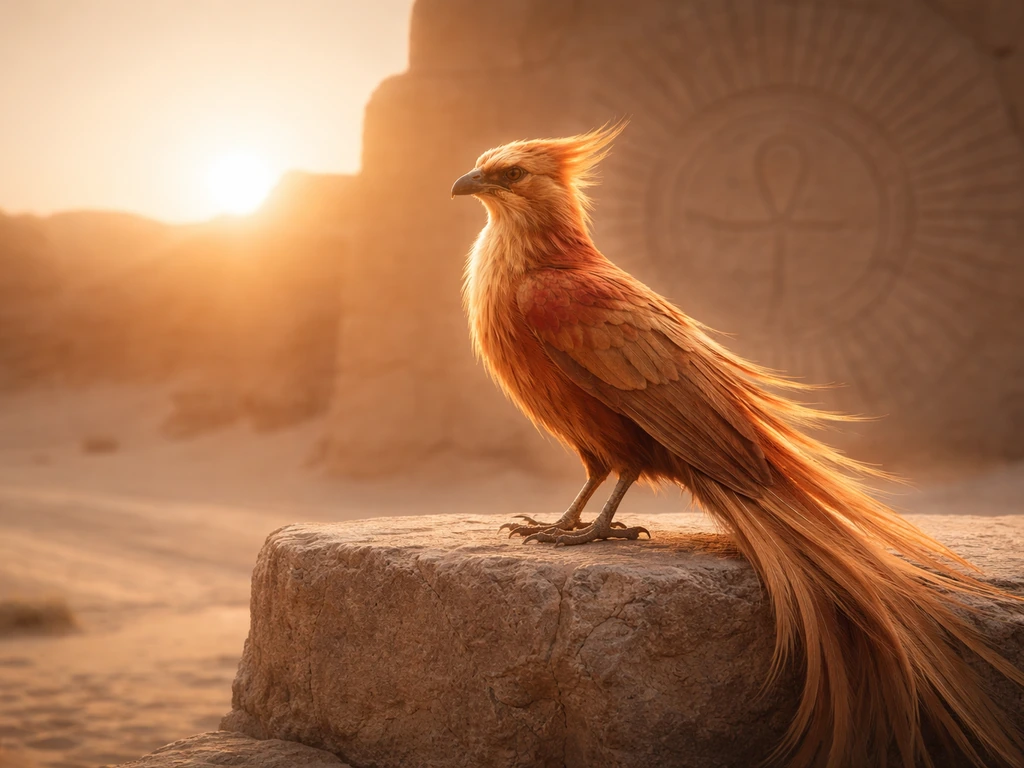
The phoenix's spiritual history is unusually well-documented across traditions. Its Egyptian roots tie it to sun worship and cosmological creation: the Bennu's cry at the primordial mound was said to mark the beginning of time. In classical Greco-Roman tradition, the phoenix became a symbol of the eternal empire and imperial virtue. Early Christian writers, most explicitly in texts like 'De ave phoenice' and later in the Catholic tradition's use of phoenix imagery, mapped the fire-and-ash cycle directly onto Christ's death and resurrection, making it one of the most theologically loaded images in Western religious art.
In Islamic tradition, the mysterious ʿanqāʾ and the Simurgh-connected figures absorbed phoenix associations while also emphasizing the bird's inscrutability and divine proximity. Sufi poets used the bird's flight and the soul's longing for return as interlocking metaphors. In Persian mystical literature, the legendary bird becomes less a creature of fire and more a creature of light, wisdom, and union.
In Native American and East Asian traditions, the equivalents of the legendary bird (the Thunderbird, the Fenghuang) emphasize power, harmony, and cosmic order rather than individual death-and-rebirth narratives. These traditions remind us that 'legendary bird' doesn't belong to any single culture: it is a genuinely global imaginative response to the mystery of transformation. The site's broader coverage of bird symbolism across Egyptian, Biblical, Celtic, and Aztec contexts reflects just how widely humans have turned to birds as spiritual anchors.
Interpreting legendary bird encounters in everyday life
You don't need to be standing in front of an ancient manuscript to encounter legendary bird symbolism. It shows up in dreams, in artwork on a wall or a tattoo, in a piece of jewelry, in a phrase someone uses ('rising from the ashes'), or in repeated encounters with real birds that carry analogous symbolic weight.
In dreams
A phoenix in a dream is almost universally interpreted in modern dream symbolism as a sign of personal renewal after a period of difficulty or loss: the burning represents the purge, the rising represents what you become afterward. If the bird in your dream is vast and overwhelming rather than fiery, roc associations (confronting something larger than yourself, feeling powerless) may be more relevant. A wise, calm, enormous bird that seems to guide you toward something suggests Simurgh-style symbolism: inner wisdom, healing, or spiritual direction. Feathers appearing in dreams are commonly mapped to lightness, freedom, and spiritual aspiration. Context, as always, matters more than the image alone.
In art and repeated imagery
When you keep noticing phoenix or firebird imagery in art, textiles, logos, or media, treat that noticing as an invitation rather than a prescription. What's recurring? Is it the fire aspect (transformation, destruction that precedes growth)? The flight (freedom, rising above difficulty)? The sun associations (new beginnings, cyclical optimism)? The specific element that keeps catching your attention is usually the thread most worth pulling in your own reflection.
Real birds as stand-ins
Because the legendary bird is a mythic ideal, real birds sometimes carry its symbolic weight in everyday encounters. Cardinals are frequently associated with hope and spiritual connection. Herons, with their stillness and solar-adjacent imagery, carry echoes of the Bennu. Eagles appear in multiple traditions as symbols of renewal (the Catholic tradition specifically invokes the eagle alongside the phoenix for renewal and 'renewing one's youth'). If a particular bird keeps appearing at significant moments, the interpretive tradition suggests sitting with what that bird's symbolic associations are in your own cultural or spiritual frame, rather than forcing a single 'correct' meaning.
Practical next steps you can take today
If you've come to 'what is the legendary bird' because something in your life is prompting the question, here are concrete ways to work with the symbolism right now. If you're wondering whether there is a legend about a bird in your reading or culture, start by identifying the context clues that match different legendary birds.
Journaling prompts
- What in my life right now feels like it is 'in the fire'? What am I being asked to release before I can rise?
- If I imagine the phoenix cycle applied to a specific situation, what would the 'ash' phase look like, and what do I hope the 'rising' phase produces?
- Which legendary bird resonates most with what I need right now: the phoenix's rebirth, the Simurgh's wisdom and healing, or the roc's confrontation with overwhelming scale? Why?
- Where have I noticed fire, bird, or feather imagery recently? What was I thinking or feeling in those moments?
- What does 'rising from ashes' mean for me personally, not as a metaphor but as a concrete description of what I am moving through or toward?
Meditation practice
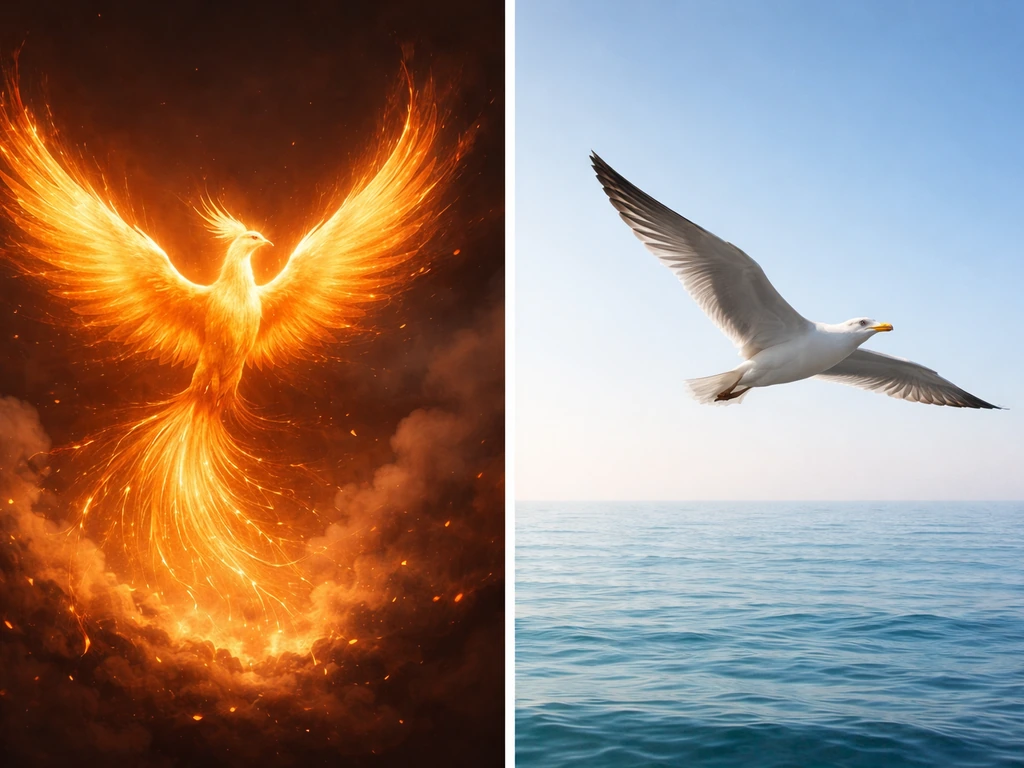
A simple practice: sit with a clear image of a bird in flight. Not necessarily a phoenix, just a bird moving freely between earth and sky. Let that image carry whatever feeling of transcendence, renewal, or possibility it naturally evokes. Scholars of Islamic mysticism have noted that bird and flight imagery functions in mystical traditions as symbolic language for spiritual transformation, not as literal prophecy. You don't need a vision of fire to access what the phoenix symbolizes. Sometimes just the felt sense of rising is enough.
Avoiding common mix-ups
A few clarifications worth keeping in mind. First, the phoenix is not a single fixed myth: it evolved across Egyptian, Greek, Roman, Christian, Islamic, and Asian traditions, and no single version is the 'correct' one. Second, not every 'legendary bird' in popular culture is a phoenix: always check the context clues (fire and ashes vs. enormous size vs. wisdom and healing vs. solar creation) before landing on an interpretation. Third, symbolic interpretation is not prophecy. Seeing phoenix imagery in a dream or in your surroundings is an invitation to reflect on themes of renewal and transformation, not a guarantee of specific outcomes. Historical traditions of augury (reading bird signs as omens) were themselves highly contextual, culturally specific, and practiced by trained specialists: modern spiritual application works best when it stays in the territory of personal reflection rather than literal prediction.
Finally, if you want to go deeper: the broader question of what makes a bird mythical across cultures (including what distinguishes a legendary bird from a simply sacred or symbolic one) is a rich thread to follow. The distinction between a legendary bird like the phoenix and the broader category of mythical birds generally is worth understanding if you want to interpret these symbols with real precision. If you are wondering what is a mythical bird in general, it helps to compare how different cultures define these extraordinary creatures and what symbolic role they serve.
FAQ
If someone just says “the legendary bird” with no context, what should I assume?
If the source you’re reading doesn’t specify, “the legendary bird” most defensibly defaults to the phoenix, especially in Western contexts. But treat “default” as a starting hypothesis, then verify using the article’s key filters (fire-and-ashes rebirth versus oversized predator versus wise healer versus solar-creation imagery).
How can I tell whether “legendary bird” in a book or movie is phoenix, roc, or Simurgh?
A good way to avoid mixing them up is to check what the bird is doing to people. Phoenix stories center on transformation through destruction or death, the roc centers on scale and predation, and the Simurgh centers on counsel and healing. When you can name the bird’s main function, the identification usually becomes obvious.
What if the story mentions a firebird, but it doesn’t explicitly show ashes or rebirth?
“Fire” alone is not enough. Some traditions emphasize renewal without literal self-burning, and others shift the symbolism toward light, wisdom, or divine proximity. If your artwork shows cycles or rising after an extinguishing, that points more toward phoenix-style renewal than toward roc or purely wise-bird traditions.
Is the phoenix story the same in all cultures, or does it change depending on the time period?
Yes, attributions can blur over time, especially between the phoenix, the Egyptian Bennu, and later Greco-Roman and Christian versions. If your text claims a direct death-by-fire event, it may be drawing from later retellings rather than early Egyptian sources, so look for clues about era or narrator.
How do I interpret “what is the legendary bird” symbolism in a dream when the imagery is vague?
For dreams, a quick edge-case check is intensity and scale. A vivid burning followed by rising often reads as renewal after loss, while a vast dominating bird can read as facing powerlessness or something “bigger than you.” If the dream centers on receiving guidance or healing, Simurgh-style meaning is more consistent.
If I dream about feathers from a legendary bird, what does that typically point to?
Feathers usually indicate freedom, lightness, and aspiration in modern symbolic interpretations, but pay attention to what happens with them. Feathers landing on you can feel like invitation or support, losing feathers can feel like depletion, and feathers transforming (into light or flight) can emphasize a readiness to move on.
What should I do if I keep seeing a bird connected to phoenix or legendary-bird symbolism in my life?
If you notice a bird that keeps appearing (in art, tattoos, logos, or real-life sightings), the article’s practical advice is to map it to your own symbolic associations. A mistake to avoid is forcing a single “universal” meaning, especially since everyday birds can carry personal or cultural meanings that differ from myth.
How can I tell whether a phoenix/legendary-bird reference is symbolic or just aesthetic in a piece of media?
If you’re trying to decide whether a “legendary bird” reference is more than entertainment, focus on whether the work uses transformation themes (renewal, cyclical return), solar creation language (sun-temple, primordial beginnings), or guidance/healing (counsel, feathers). Those patterns tell you whether the reference is symbolic or just decorative.
Does seeing phoenix imagery in my surroundings mean a specific future event is guaranteed?
Yes, and it matters. The article warns against treating symbolic interpretation as literal prophecy, and it also notes that augury practices were culturally specific and done by specialists. A safe next step is reflection-based journaling (What changed lately? What renewal would help?) rather than prediction-based interpretation.
What’s a quick decision aid to identify the legendary bird correctly from clues I already have?
One practical method is to write a two-column match: left side, the exact traits you notice (fire, ashes, sun, enormous size, healing, flight), right side, the candidate birds from the article (phoenix, roc, Simurgh, Bennu/Fenghuang variants). This reduces the common mistake of choosing based on mood alone.
Next Article
Best Legendary Bird Pokémon: Pick the Right One for You
Best legendary bird Pokémon pick with a battle and spiritual meaning guide for choosing Zapdos, Articuno or Moltres