
The phoenix is overwhelmingly a symbol of good: renewal, hope, transformation, and the idea that something beautiful can rise from total destruction. If you are also curious about the golden phoenix bird meaning, the same renewal and hope themes are typically what people connect to that imagery. Some people also ask what is stronger than a phoenix bird, and the answer often points back to enduring renewal itself.
Is Phoenix Bird Good or Evil? Meanings, Symbols, Signs

Eleanor Hartwell
12 May 2026
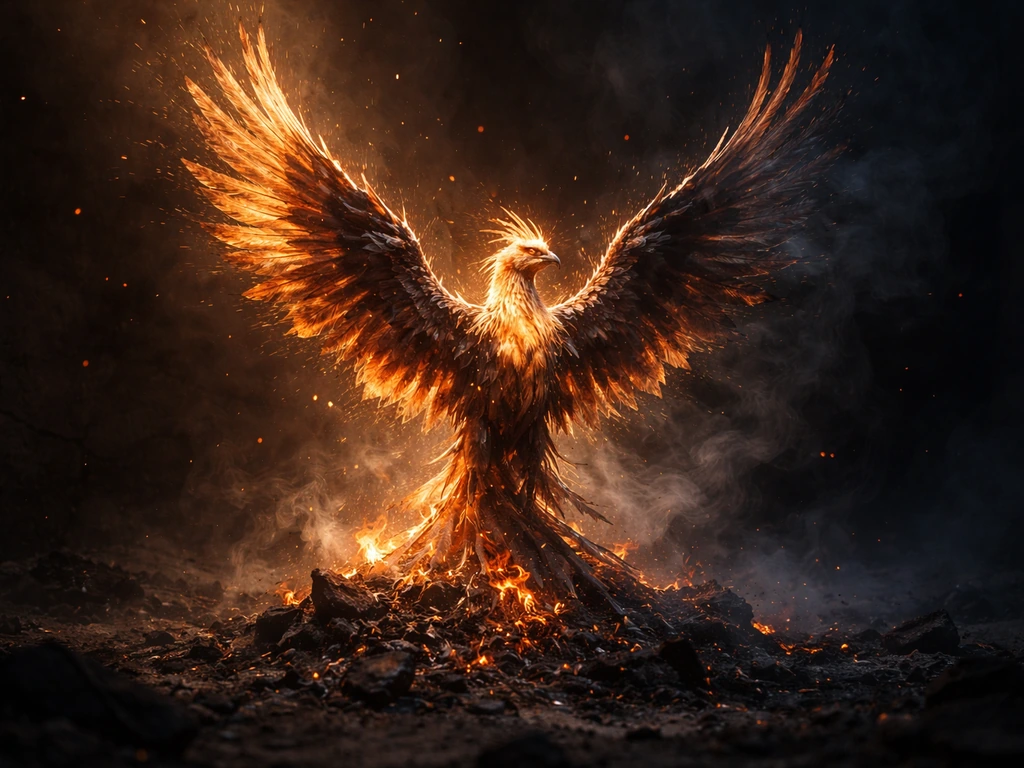
In that sense, a phoenix bird for good luck is less about predicting fortune and more about trusting renewal after hard seasons. Across every major tradition that carries the phoenix myth, from ancient Egypt to Greco-Roman poetry to early Christian writing, the bird's fire and death are not the point. The rebirth is the point.
That said, the same imagery can carry a cautionary edge depending on where you are in your own life, and understanding that nuance is what actually makes the symbolism useful.
What the phoenix symbol really means at its core
Strip away the fire and drama, and the phoenix is carrying one essential message: nothing that truly matters is permanently destroyed. The bird's defining characteristic across classical sources is its death-to-life arc. It burns, completely and without remainder, and then it returns. That cycle is not presented as a tragedy. It is presented as the natural order of renewal.
The core symbolic meanings attached to the phoenix read like a list of things most people actively want in their lives: rebirth after loss, hope in dark periods, purification of what no longer serves, resilience in the face of destruction, and the promise that endings are not final. When someone asks whether the phoenix is a good or bad symbol, it helps to notice that every single one of those meanings lands on the positive side of the ledger.
The fire itself is where some confusion enters. Fire destroys, and destruction feels threatening. But in phoenix symbolism, the fire is not the enemy. It is the mechanism of transformation. The burning is not punishment. It is the precondition for something new. That reframe is really the heart of what the phoenix offers as a symbol.
Why people call the phoenix good vs evil, and where the debate comes from
Most people who encounter the phoenix today encounter it through pop culture, where the bird sometimes gets cast as an agent of chaos or destruction, a creature whose fire consumes without mercy. That reading exists, and it is not entirely without basis. But it is a selective reading that lifts the destruction out of the death-to-life arc and treats it as the whole story.
In classical and mythological sources, the phoenix is never framed as malevolent. It does not burn other things. It burns itself. The self-immolation is voluntary, cyclical, and purposeful. That is a fundamentally different moral weight than a destructive force that consumes others. A symbol that embodies self-sacrifice and renewal is hard to call evil in any serious sense.
The 'evil' interpretation also sometimes comes from people who are currently in a painful life transition and projecting that pain onto the symbol they are encountering. If you are living through your own metaphorical fire right now, the phoenix can feel like a warning rather than a comfort. That does not make it an evil symbol. It makes it a symbol that is reading your situation accurately, which is actually worth paying attention to.
How major cultures and traditions actually see the phoenix
Ancient Egypt and the Bennu bird
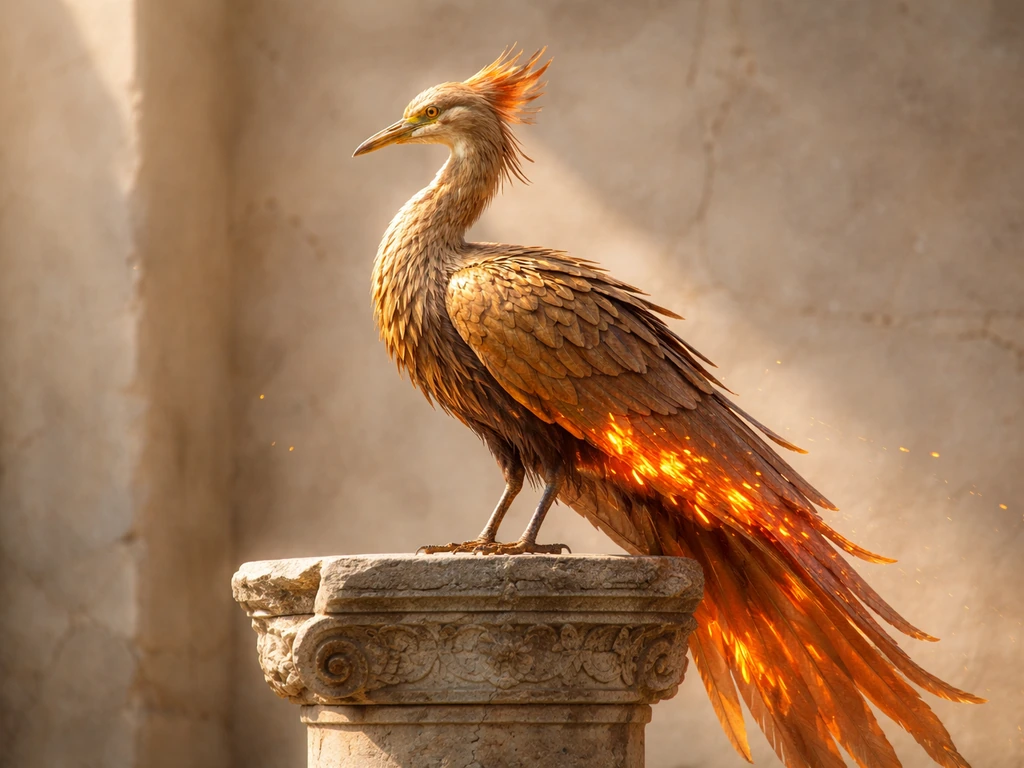
The phoenix's oldest roots connect to Egypt, specifically to Heliopolis, the city of the sun. The Bennu bird, a heron-like figure in Egyptian mythology, was associated with the sun god Ra and with the primordial moment of creation. The periodic death-and-return of the phoenix in classical accounts was frequently tied to this Egyptian context, framing the cycle as part of cosmic renewal rather than isolated destruction. The bird's appearance at Heliopolis was understood as a sign of the universe renewing itself. That is about as positive a framing as mythological symbolism gets.
Greco-Roman tradition
In Greco-Roman sources, the phoenix is a singular bird, not a species. There is only one at a time, and it lives for extraordinarily long cycles (accounts range from 500 to 1,000 years or more) before returning to build its pyre and be reborn.
The Roman writer and early Christian thinker Lactantius wrote a detailed account in the early 4th century in which the phoenix's body is destroyed by death, but that very destruction is described as 'the source of life. ' The heat produces flame, the bird blazes into ashes, and from those ashes a new phoenix emerges. Lactantius frames this as wonder, not horror.
That source is significant because Lactantius was explicitly drawing on both classical tradition and a broader understanding of resurrection and renewal.
Biblical and Christian parallels
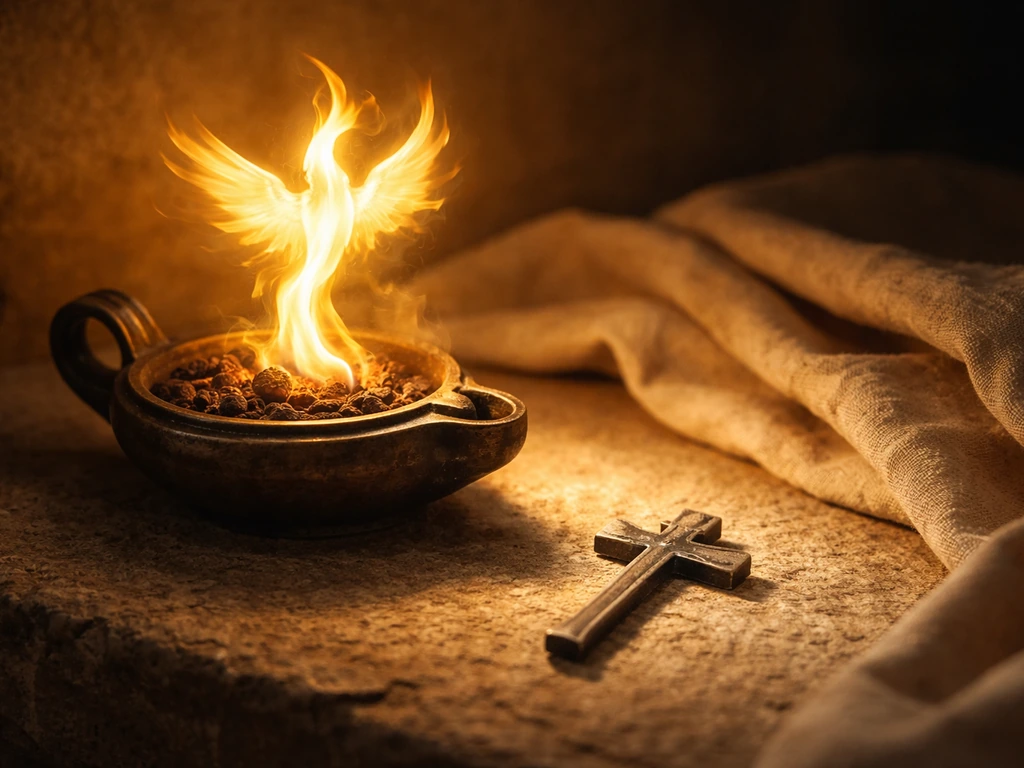
The phoenix does not appear directly in canonical biblical text, but early Christian writers adopted the image enthusiastically as a natural illustration of resurrection. The death-to-life arc mapped neatly onto Christian theology about resurrection and spiritual renewal, and the phoenix became a common motif in early Christian art and literature. In that context the bird is unambiguously a symbol of hope and divine promise. It carries no evil associations in Christian allegorical use.
Modern spirituality
In contemporary spiritual practice, the phoenix functions as a spirit animal or totem associated with transformation, perseverance through suffering, and the courage to begin again. It appears in contexts ranging from therapeutic imagery about surviving trauma to manifestation practices about calling in new life chapters. The consistent emphasis is on the phoenix as an ally and encourager, not a threatening force.
The fire and death arc: why it gets labeled 'bad' even when it isn't
Here is where it gets worth sitting with, because the phoenix myth does contain genuinely hard content. Something has to die for the rebirth to happen. The fire is real. The destruction is complete. In every version of the myth, the old form of the bird does not survive. It cannot be preserved and reborn at the same time. That is a demanding ask, symbolically speaking. A scholarly reference entry also notes that later “rising from the ashes” symbolism became prominent in specific authors while some miraculous elements and meanings vary by account, which supports the idea that not all versions are identical.
When people are in the middle of a major loss, a career ending, a relationship breaking apart, a health crisis, a grief that feels bottomless, the phoenix showing up can feel like the universe rubbing it in. 'Yes, something is burning. Yes, it is yours. No, you cannot save it.
' That reads as cruel if you only see the fire. But the mythology insists on showing you the rest of the story. If an encounter feels “negative,” Astrology. com suggests it often works as a wake-up call to confront fears and release old patterns rather than as inherently evil symbolism [it is the mythology insists on showing you the rest of the story](https://www.
astrology. com/spiritual-meaning-animals/phoenix). The ashes are not the end. These phoenix bird benefits also show up in how many people use the symbol to frame change as a fresh beginning, not a final loss The ashes are not the end.
They are the starting material.
The 'evil' label tends to attach to the phoenix when someone is in that middle section of the arc: past the old life, not yet arrived at the new one, standing in the ashes. From that vantage point, the symbolism can feel like a warning or even a threat. But what it is actually doing is naming the process accurately, and in mythology, a symbol that tells you the truth about where you are is doing you a service, not a disservice.
How to interpret a phoenix encounter in your own life
A phoenix encounter today might mean you saw a phoenix tattoo or piece of art that stopped you cold, dreamed of a bird in fire, kept running into the word 'phoenix' in unrelated contexts, or felt drawn to phoenix imagery in a way you cannot fully explain. Here is how to start reading it.
Positive or encouraging readings
- You are coming out of a difficult period and the phoenix feels like confirmation that the worst is behind you. This is the most classic reading: you have been through the fire and the new form is emerging.
- You are about to make a significant change (new job, ending a relationship, moving, starting over) and the phoenix is showing up as encouragement to trust the leap.
- You feel a sense of lightness or hope when you encounter the image, even if you cannot explain why. Emotional resonance is meaningful data in symbolic interpretation.
- You have been grieving something and the phoenix appears in a dream or image associated with the person or thing you lost. In this context it often carries a message about continuation and transformation rather than permanent ending.
- The encounter feels like a quiet nudge toward something you have been putting off, especially something that requires letting go of a familiar identity or situation to move forward.
Cautionary or warning readings
- You feel a sense of dread or unease when encountering the phoenix image. This is worth noticing. It may signal that you are resisting a necessary transformation rather than that the symbol itself is negative.
- You are clinging to something (a relationship, a habit, an identity, a situation) that is no longer working, and the phoenix keeps showing up. The cautionary message here is: something needs to burn off, and the longer you wait, the hotter the fire.
- The phoenix appears in a nightmare context, surrounded by chaos and loss, with no sense of renewal visible. This often reflects where you are in the arc, deep in the destruction phase, not a signal that the arc itself is bad.
- You encounter phoenix imagery right before or during a major upheaval you did not choose. The symbolism may be preparing you, not threatening you, but it is asking you to pay attention to what is ending.
Quick decision guide: is this a 'good' message or a 'warning'?
| What you're experiencing | Likely reading | What it's asking of you |
|---|---|---|
| Feeling hopeful or uplifted by the phoenix image | Encouraging: renewal is underway or coming | Trust the process, keep moving forward |
| Coming out of a hard period and seeing phoenix imagery | Encouraging: confirmation of rebirth | Acknowledge what you have survived and what is new |
| Feeling resistant or anxious when the phoenix appears | Cautionary: transformation is being resisted | Ask what you are holding onto that needs releasing |
| In the middle of a painful ending (loss, breakup, crisis) | Cautionary/preparatory: you are in the fire phase | Stay with the process; the ashes are not the final state |
| Dreaming of fire with no sense of renewal | Cautionary: deep transformation in progress | Ground yourself; the rebirth message is still present but not yet visible |
| Phoenix imagery feels like a confirmation of a decision you are making | Encouraging: alignment with necessary change | Move forward with the change you have been considering |
| Phoenix appears during a period of stagnation | Cautionary: something must change | Identify what is no longer alive and consider releasing it |
Practical next steps for working with phoenix symbolism

Symbolism only becomes useful when you do something with it. Here are concrete ways to engage with a phoenix encounter rather than just wondering what it meant.
Journaling prompts
- What in my life right now feels like it is 'on fire' or coming apart? Is this something I chose or something that is happening to me?
- What would I need to let go of completely in order to begin again? What am I holding onto that is already ash?
- If I imagine a version of myself that has already come through this fire, what does that person look like? What do they know that I do not yet know?
- Where in my life do I most need renewal right now? What would that renewal require of me?
- When I encountered the phoenix (in a dream, image, or sign), what was my first emotional response? What does that response tell me about where I am in my own transformation arc?
Reflection, meditation, and prayer
If you work with meditation or prayer, the phoenix offers a specific contemplative invitation. Sit quietly and bring to mind whatever in your life feels like it is burning or ending. You can also explore phoenix bird images vastu benefits to see how some traditions connect the symbolism with home and energy.
Instead of trying to fix or stop it, practice watching it the way the phoenix watches its own fire: with presence and without panic, trusting that something will remain after the burning is complete. If you work within a religious tradition, you can frame this as a prayer of surrender, releasing what is ending into the hands of whatever you understand as sacred, and asking for clarity about what wants to emerge.
Simple rituals for phoenix symbolism

- Write down what you want to release on a piece of paper. Burn it safely (in a fireproof container, outdoors if possible) as a physical enactment of the phoenix's letting go. Notice what comes up emotionally.
- Place a phoenix image (art, a printed photograph, a small figurine) somewhere you will see it during a period of transition. Let it serve as a daily visual reminder that you are in a process, not stuck in an ending.
- At the close of a significant chapter (end of a job, a relationship, a year), write a brief letter to the version of yourself who is about to emerge. Describe what you hope they will know and carry forward.
- If the phoenix appeared in a dream, sketch or describe the image in a journal before the details fade. Dreams involving transformation symbols often yield more meaning on a second or third reading.
When the experience feels distressing
If a phoenix encounter, especially a vivid dream or a strong emotional reaction to the imagery, leaves you feeling genuinely distressed rather than thoughtfully unsettled, that is a signal worth taking seriously. Symbolic experiences can surface real emotions about real situations. Ground yourself physically first: step outside, drink water, breathe slowly, and give yourself time before trying to interpret anything.
If the distress connects to a significant loss, trauma, or life crisis that is actively affecting your wellbeing, symbolic interpretation is a starting point for reflection, not a substitute for support. Speaking with a counselor, therapist, or trusted spiritual guide is not a failure to engage with the symbolism. It is actually in the spirit of the phoenix itself: using every resource available to make it through the fire intact.
The phoenix's core message across every tradition that carries it is that transformation is survivable, and that what comes after the burning can be more alive than what came before. Whether your encounter feels like encouragement or like a warning, it is pointing you toward the same truth: endings are not the last word, and you are more resilient than the fire.
FAQ
If the phoenix is associated with fire and destruction, how can it still be “good”?
In most traditional phoenix symbolism, “evil” is not the intended moral label because the bird does not harm others. The “bad feeling” usually comes from focusing on the destruction phase (the burning) rather than the self-contained death-to-rebirth cycle (renewal).
What does it usually mean if I see the phoenix as a tattoo, especially if I feel uneasy?
A phoenix tattoo is typically interpreted as a personal commitment to renewal, but the meaning often shifts with your life context and the tattoo details. For example, adding flames, ash, or an upward rising pose can emphasize transformation, while an urn-like or fallen ashes composition can read as grief and rebuilding.
Does pop culture’s “chaos phoenix” meaning override the traditional meaning?
Pop culture can reframe the phoenix as a destructive creature, but the myth’s moral weight is different because the phoenix consumes itself in a controlled cycle. If a show or game frames it as chaos without rebirth, that interpretation is more fictional tone than classical symbolism.
Can the phoenix be “evil” if it hits me during a painful transition?
Yes. If you’re in the middle of an acute loss, the phoenix can feel accusatory or cruel. In that case, treat the symbolism as an observation of change, not a prediction or judgment, and use it to identify what needs support and practical next steps rather than only meaning-making.
How should I respond if the phoenix imagery makes me want to resist change?
If you’re using it as a spiritual or self-help symbol, “evil” can be a sign you are trying to force an ending to stop. A more constructive check is: what in your life is actually already changing, and what is controllable right now (routines, boundaries, therapy, decisions), versus what is only symbolic urgency?
What are signs my interpretation is becoming unhelpful or harmful?
Look for whether the encounter points to renewal, perseverance, or purification, versus whether it repeatedly intensifies fear. If it heightens distress, ruminations, or insomnia, pause interpretation and focus on grounding and support, since symbolic experiences should not replace real care during a crisis.
If I dream of a phoenix, does that automatically mean good things?
In dream symbolism, vivid fire often represents transformation energy, conflict, or an end of an old identity. Because dreams are personal, the key detail is your emotional reaction in the dream (relief, dread, urgency). Relief aligns more with renewal, while dread can indicate you’re not yet ready for the transition.
What does “rebirth” practically look like, not just symbolically?
Yes, but not by preserving the “old form.” The phoenix message usually means you can’t keep everything the same and get rebirth at the same time, so the “benefit” is learning what must be released. A helpful practice is writing two lists: what must die (habits, roles, relationships that no longer fit) and what wants to live next (values, skills, connections).
Next Articles
What Bird Is a Sign From Heaven? Meaning and How to Interpret
Which bird is often seen as a sign from heaven, plus a step-by-step way to interpret your specific encounter.

What Bird Symbolizes Someone From Heaven? Meanings
Cross-cultural guide to birds symbolizing someone from heaven, with meanings, context clues, and how to validate sightin
What Bird Represents an Angel: Meanings and How to Identify It
Most common angel-associated birds and how to identify them, plus meaning and tips to avoid mix-ups like doves