
The phoenix bird is a legendary, mythological creature that symbolizes rebirth, renewal, and transformation through destruction. It is not a real biological species. Every major dictionary confirms this: Merriam-Webster defines it as a legendary bird thought to live for centuries, burn itself to death, and rise newborn from its own ashes. Cambridge Dictionary calls it an imaginary bird that sets itself on fire roughly every 500 years and is born again. So when you search 'phoenix bird definition,' the short answer is this: the phoenix is a powerful symbol, not a literal bird, and what it stands for is the idea that endings make new beginnings possible. what is the story of the phoenix bird
Phoenix Bird Definition and Meaning Explained Simply

Eleanor Hartwell
23 Mar 2026

The Phoenix as a Symbol: What It Actually Stands For
At its core, the phoenix is an emblem of cyclical renewal. Dictionary.com describes it as 'often' used as an emblem of immortality or reborn idealism and hope. Britannica frames the myth as an allegory of resurrection and life after death. The reason this symbol resonates across so many cultures and centuries is that it captures something universally human: the experience of going through something that destroys a version of you, and then having to rebuild.
The phoenix stands for several interconnected ideas, and it helps to separate them clearly rather than lump them together:
- Rebirth and resurrection: The bird literally dies and a new one rises. This is the defining image.
- Immortality: The cycle never fully ends. The phoenix does not simply survive, it keeps regenerating across vast spans of time, commonly cited as around 500 years per cycle.
- Transformation through destruction: The fire is not the enemy. It is the mechanism. Something must be destroyed for something new to emerge.
- Rising: The upward movement from ash to living bird is intentional symbolism, linking renewal to ascension and forward momentum.
- Hope and idealism: Dictionary.com's framing of 'reborn idealism' is worth noting. The phoenix is not just about surviving, it is about returning with something better.
The phrase 'like a phoenix rising from the ashes' has become so embedded in everyday language precisely because it captures all of these threads in a single image. When someone uses it, they are invoking the full symbolic weight of the myth, whether they realize it or not.
Spiritual Meaning: Rebirth, Renewal, and Transformation
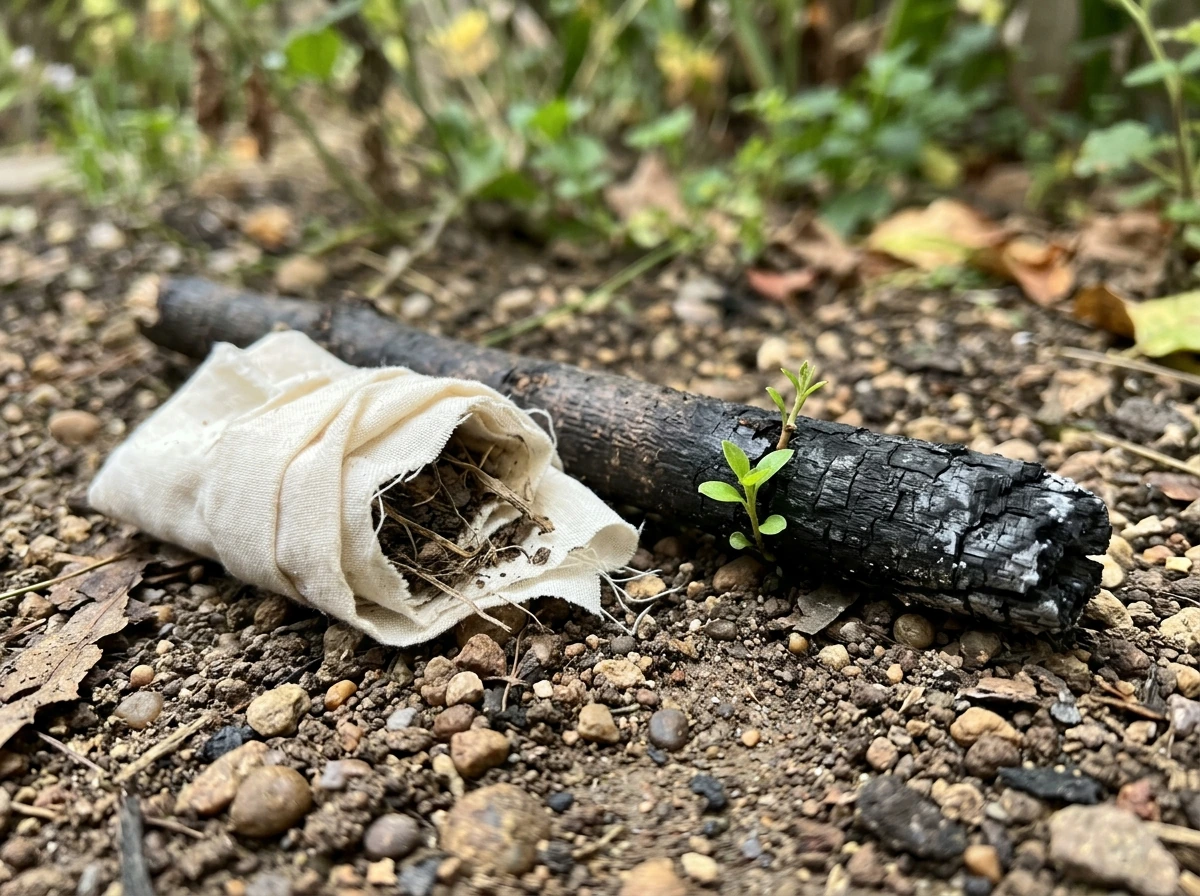
Spiritually, the phoenix is one of the most potent symbols of inner transformation available across traditions. The core spiritual message is that destruction is not the end of the story. In spiritual practice and symbolism, the phoenix is used to represent the soul's capacity to move through loss, grief, or collapse and emerge changed for the better.
Britannica specifically notes that the phoenix myth held powerful appeal to emergent Christianity because it mapped so cleanly onto resurrection theology. The fire-and-rebirth sequence mirrors the idea that death is a passage, not a conclusion. This cross-traditional appeal is part of why the phoenix symbol shows up in so many spiritual and religious contexts.
In contemporary spiritual practice, resources describe the phoenix as encouraging people to release old patterns and confront fears, framing it as an emblem of resilience, renewal, and the capacity to heal. The spiritual invitation of the phoenix is practical: What old version of yourself needs to be let go? What would rise if it did?
The Roman naturalist Pliny described the phoenix's lifespan at 540 years, noting that when the bird grows old, it builds a scented nest, dies there, and a new life emerges from its bones and marrow. That image of the nest built deliberately before death is spiritually significant. It suggests conscious preparation for transformation, not passive collapse. The phoenix does not just fall apart. It builds the conditions for its own renewal.
Phoenix vs. Fire Bird: Why the Naming Gets Confusing
If you have searched for 'phoenix fire bird meaning,' you have probably noticed that the two terms are sometimes used interchangeably and sometimes treated as completely different things. Here is how to think about it.
The Western phoenix tradition originates from ancient Egypt and was documented by Herodotus in his Histories (2.73). He records a sacred bird from Heliopolis that appears every 500 years when its parent dies, forms an egg from myrrh, and carries it to the Temple of the Sun. Later Greek and Roman sources, including Pliny, added the self-immolation and rebirth sequence. This is the phoenix in the Greek, Roman, and ultimately Western tradition.
The Slavic Firebird (called Zhar-ptitsa in Russian) is a separate folklore creature from a different tradition entirely. Wikipedia's entry on Slavic Firebird positions it as distinct from the Greek or Roman phoenix rebirth story. The two overlap in the sense that both involve fire and a magical bird, but the underlying myths, meanings, and cultural contexts differ significantly.
Similarly, the Chinese Fenghuang is commonly translated as 'Chinese phoenix' in Western contexts, but its mythology is quite different. Scholars note that the similarities between the Fenghuang and the Western phoenix are described as 'superficial.' The Fenghuang is a symbol of harmony, virtue, and imperial authority in Chinese tradition, not primarily a rebirth symbol.
| Bird | Tradition | Core Symbolism | Rebirth Focus? |
|---|---|---|---|
| Phoenix | Greek, Roman, Egyptian | Rebirth, resurrection, immortality, renewal | Yes, central |
| Firebird (Zhar-ptitsa) | Slavic folklore | Magic, danger, wish-granting, wonder | No, not primarily |
| Fenghuang | Chinese mythology | Harmony, virtue, imperial power, good omen | No, not primarily |
The practical takeaway: if you are reading about 'phoenix fire bird meaning,' the writer almost certainly means the Greek-tradition phoenix, because that is the one defined by fire as a mechanism of rebirth. The Slavic and Chinese birds are related in spirit but are not the same myth. If the specific cultural tradition matters to you, it is worth checking which tradition is being referenced.
What It Means to Dream About a Phoenix
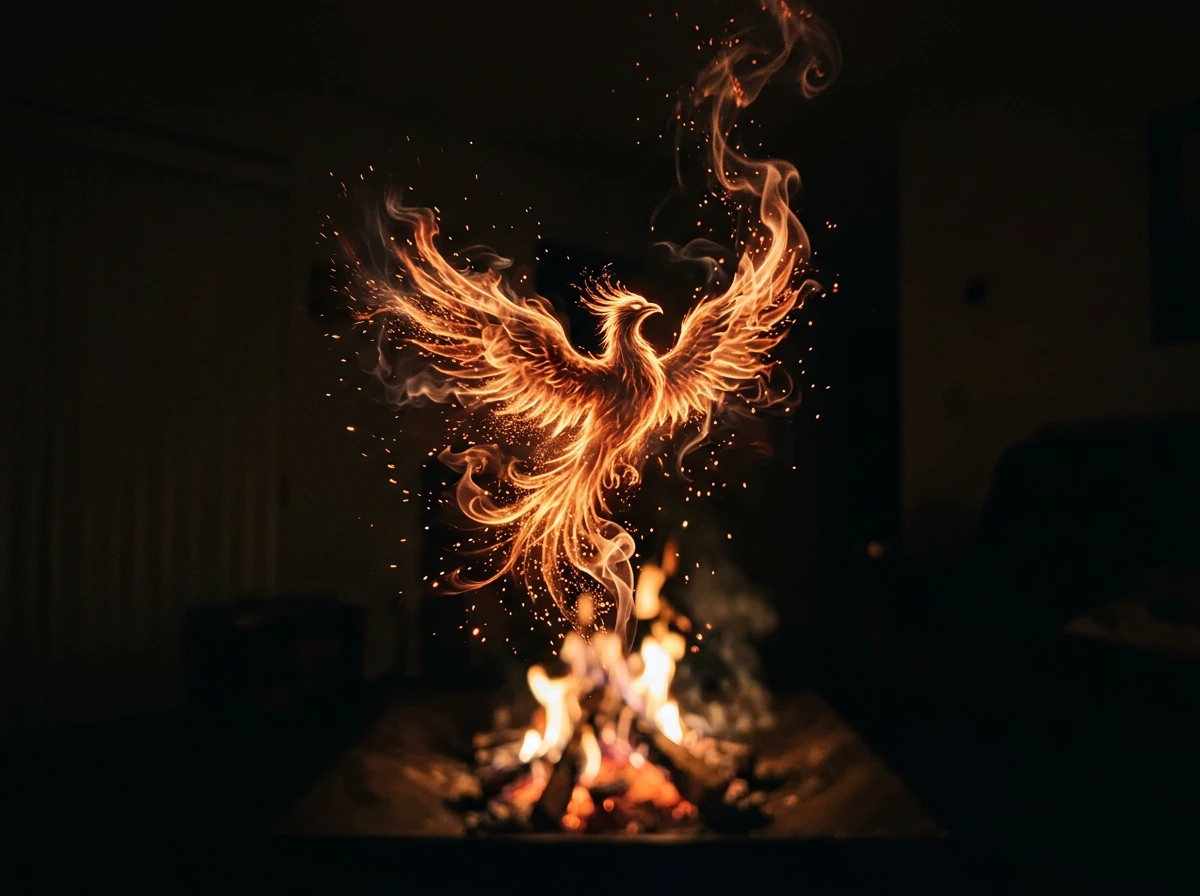
Phoenix dreams are generally interpreted as deeply positive symbolic messages, even when they feel intense or unsettling in the moment. Dream interpretation is not an exact science, but within the symbolic framework that sites like this one work from, recurring patterns in phoenix dreams carry consistent themes worth paying attention to.
Common Phoenix Dream Scenarios and What They Suggest
- Watching a phoenix rise from flames: This is the most direct dream expression of the core symbol. It typically points to a period of transformation underway in your waking life, often something that felt like a loss or ending is actually clearing space for something new.
- Being the phoenix yourself: This is a particularly powerful dream variation. It suggests you are in or approaching a personal rebirth, a major identity shift, career change, end of a relationship, or recovery from illness.
- A phoenix surrounded by ash: The focus here is on what remains after destruction. This dream often appears when someone is processing grief, loss, or a significant life change. The symbolic message is that something meaningful can still emerge.
- A phoenix that has not yet risen: If you dream of a phoenix before its fire or during the ash phase, this may reflect a feeling of being in-between, not yet through the difficult part, but on the way.
- A golden or brightly colored phoenix: Color carries its own symbolic weight. Gold often emphasizes the immortality and preciousness of what is being renewed. Flame-orange and red reinforce transformation through fire.
Dream interpretation resources consistently link phoenix imagery to emotional healing and new beginnings. The most actionable thing you can do after a phoenix dream is ask yourself: Where in my life is something ending or changing that I have been resisting? That resistance is often what the dream is pointing at.
Practical next steps after a phoenix dream: write down as much detail as you remember as soon as you wake up, note how the dream felt emotionally (not just what happened), and then sit with the question of where in your current life the renewal theme might apply. The dream rarely tells you exactly what to do. It points a direction.
Seeing Phoenix Symbolism in Everyday Life

Unlike cardinals or blue jays, the phoenix is not a bird you will encounter in your backyard. So what does it mean to 'encounter' phoenix symbolism in daily life? It shows up differently: in art, in logos, in tattoos, in phrases people use, in stories that resonate with you unexpectedly, and in recurring mental imagery.
Within the symbolic and spiritual framework used on this site, repeated or striking encounters with a symbol are worth pausing over. If phoenix imagery keeps appearing in your life, whether in something you read, a piece of art that catches your attention, a song lyric, or even the word itself, the interpretive question is the same one the dream raises: Where is transformation asking for your attention?
Some practitioner resources suggest placing symbolic intention into everyday actions when you are working with phoenix symbolism. This does not have to be elaborate. Lighting a candle and naming what you want to release, journaling specifically about what 'needs to burn' in your current life and what you want to rise in its place, or actively naming a painful ending as a 'phoenix moment' rather than just a loss are all practical ways to engage with the symbolism. The phoenix symbol works precisely because it reframes destruction as purposeful.
If phoenix symbolism is showing up during a period of grief, transition, or upheaval, that timing is rarely coincidental. The symbol is most alive and most useful during exactly those moments. The spiritual practitioner framing is consistent: the phoenix appears when you are in the ash phase, to remind you that the ash is not the final state.
On the Wording: 'Meaning,' 'Symbolism,' and 'Definition' in English
People searching 'phoenix bird meaning in English' or 'what does phoenix bird mean' are sometimes asking slightly different questions without realizing it. People often search for “phoenix is a bird” to clarify what the word means and whether the myth should be taken literally. Here is how to sort out the language.
A definition (as in Merriam-Webster or Cambridge) gives you the literal descriptive answer: what the word refers to, what kind of entity the phoenix is described as, and where the word comes from. That is the dictionary level. The phoenix is defined as a blank" rel="noopener noreferrer">mythical bird that self-immolates and is reborn).
Symbolism goes further. A symbol, in the semiotic sense, is something that stands for a concept beyond itself. The phoenix as a symbol is not just a mythical bird. It represents a whole framework of meaning around destruction, renewal, resilience, and hope. When people ask 'what does the phoenix symbolize,' they are asking what concepts the image points toward, not just what it literally depicts.
Spiritual meaning adds another layer. This is the personal and experiential dimension: what this symbol means in the context of someone's inner life, their path, their current circumstances. The phoenix's spiritual meaning is not fixed and identical for everyone. It is the symbolic meaning applied to the question: What is this saying to me, now, in my situation?
If you are a non-English speaker who landed here searching 'phoenix bird meaning in English,' the direct answer is: in English-speaking cultural and spiritual traditions, the phoenix means rebirth, resilience, and transformation after destruction. The phrase 'rising from the ashes' is the idiomatic shorthand for this meaning, and it is used widely in English to describe people, organizations, or situations that recover and improve after catastrophic loss.
How to Actually Use This Symbolism Today
Knowing what the phoenix symbol means is the starting point. The more useful question is what to do with that knowledge. Here are concrete ways to apply it, regardless of whether you came here after a dream, a spiritual inquiry, or simple curiosity.
- Name what is ending. Phoenix symbolism only becomes personally meaningful when you identify what the 'fire' is in your own life. What is breaking down, finishing, or being released right now? Name it specifically.
- Resist the urge to skip the ash phase. The myth does not jump from fire to flight. There is an ash period. If you are in a painful in-between, the phoenix symbol is telling you that this is a legitimate phase, not a failure.
- Ask what you want to rise. The phoenix that emerges is new, not a restoration of the old. What qualities, directions, or versions of yourself do you want to build into the next phase?
- Use the symbol as a reframe. When you catch yourself describing a loss or ending in purely negative terms, consciously ask: Is this actually a phoenix moment? That shift in framing is not denial. It is choosing the symbolic lens that makes resilience possible.
- Journal with it. Writing specifically about 'what needs to burn' and 'what I want to rise' is a practical, low-barrier way to use phoenix symbolism for real self-reflection. You do not need ritual or special practice. A notebook works.
- Pay attention to where it keeps showing up. If phoenix imagery is recurring in your life (in dreams, art, conversations, things you read), treat that recurrence as signal worth investigating rather than coincidence.
For deeper context on the phoenix specifically as a mythological bird and its full story arc, the broader mythology and the question of whether the phoenix could be considered a real bird are worth exploring separately. The phoenix's appearance in biblical texts adds another rich layer of meaning, exploring the phoenix bird meaning in the bible connects this symbol to traditions of divine renewal. But the foundation stays consistent: the phoenix is not asking you to avoid pain. It is telling you that pain, handled well, produces something that could not have existed without it.
FAQ
What’s the simplest phoenix bird definition I can use in a sentence?
A concise definition is that the phoenix is a legendary mythological bird associated with self-destruction by fire and a rebirth afterward, commonly used as a metaphor for renewal and transformation.
Is the phoenix a real animal or could it be a lost species?
In mainstream references and scholarship, it is treated as an imaginary creature, not a biological species, so explanations that try to identify it as a real animal (for example, a particular bird) are speculative rather than grounded in biology.
How do I tell whether a text means the Greek or Roman phoenix versus something else?
Look for the specific mechanism of rebirth. The Western phoenix tradition typically includes the fire, death, and rise from ashes pattern, while the Slavic Firebird and the Chinese Fenghuang are separate myths with different symbolic roles even if they involve “phoenix-like” imagery.
Why do people sometimes say “phoenix fire bird meaning” as if it’s one creature?
That phrase usually refers to the Western phoenix described as fire-related rebirth, but it can also confuse readers. A practical check is to identify whether the writer mentions ashes and a new life sequence, which is characteristic of the phoenix rebirth myth.
What does it mean if I keep dreaming about a phoenix but I’m not going through obvious change?
Even when life changes are subtle, phoenix dreams often point to “inner endings,” such as an old identity, habit, or belief that is losing its usefulness. Consider whether you are resisting closure in any area, for example a relationship dynamic, a job role, or a mindset.
Are phoenix dreams always “good,” or can they be warning signs?
They are often interpreted positively in symbolic frameworks, but “intensity” can signal that the psyche is demanding attention, not that you should ignore it. If the dream leaves you anxious, treat it as a prompt to identify what feels unresolved, rather than assuming everything is fine.
Is there a best way to interpret phoenix symbolism in everyday life, like seeing it in logos or art?
Use the context test: ask what you were thinking about right before you noticed the symbol. Then connect it to the article’s theme by identifying the most relevant “ending and new beginning” in your current situation, not just a general life lesson.
How can I apply phoenix symbolism without making it feel religious or overly mystical?
Keep it behavioral and concrete. Try journaling about one thing you want to let go of, then define one small action that represents the “rising” phase (for example, setting a boundary, applying for something new, or changing a routine).
What’s the difference between “phoenix symbolizes rebirth” and “phoenix rising from the ashes” as an idiom?
The first is the broad symbolic theme. The idiom adds a specific image of recovery after something destructive, so it tends to fit situations involving loss, major setbacks, or turning points, rather than everyday change.
Can phoenix symbolism be used during grief or serious transition, or does it feel insensitive?
It can be supportive if it’s used as hope for integration, not denial of pain. A helpful approach is to pair the belief in renewal with permission to grieve, for example by writing down what you miss and then separately writing what you want to preserve or change going forward.
Next Articles

Is There a Phoenix Bird? Myth, Evidence, and Symbolism
Find out if a real phoenix bird species exists, how to verify claims, then explore phoenix rebirth symbolism safely.
Phoenix Bird Meaning in the Bible: Christian Context
Christian take on phoenix bird meaning, rebirth and resurrection, and how to verify scripture claims and symbolism.
What Is the Story of the Phoenix Bird and Its Meaning
Origins and meanings of the phoenix, plus how its rebirth symbolism guides spiritual interpretation in daily life and ar