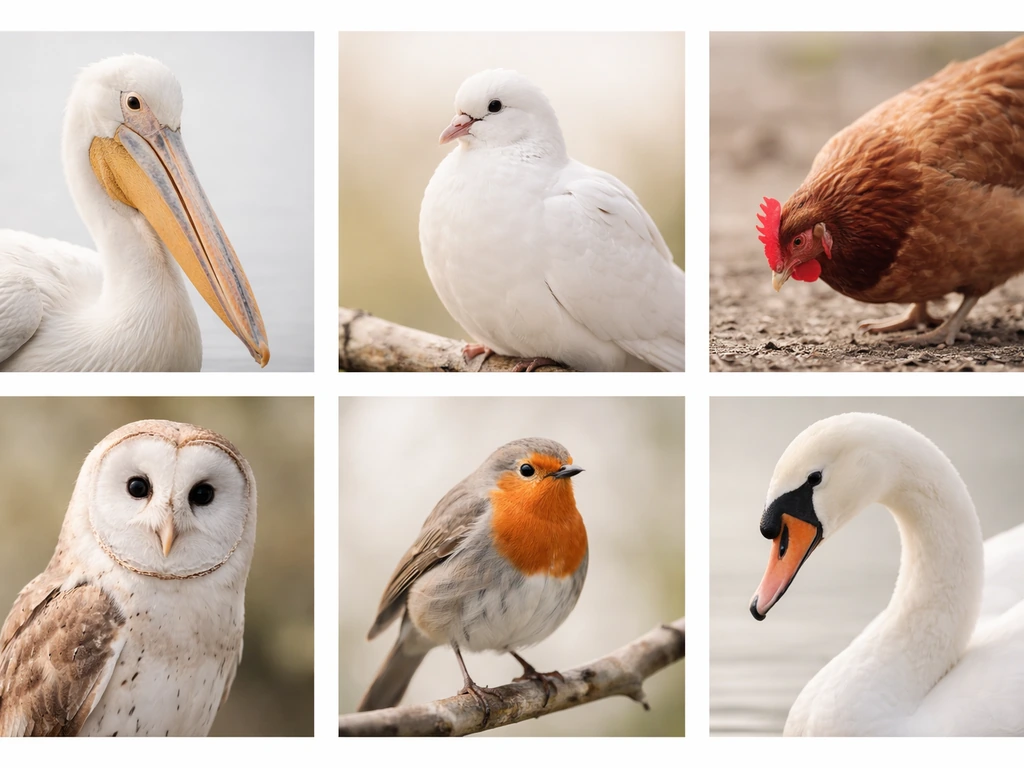
No single bird universally represents motherhood, but if you had to pick the strongest candidates across cultures, the pelican, dove, robin, hen, owl, and swan come up again and again in myth, scripture, and spiritual tradition. The pelican leads in Christian symbolism as a pure emblem of maternal self-sacrifice. The dove carries nurturing and gentle mothering energy across multiple traditions. The hen appears directly in the Bible as a protective mother image.
What Bird Represents Motherhood? Meanings and Matches

Eleanor Hartwell
16 May 2026
The owl is tied to watchful, guarding maternal energy in several Native American traditions. And the swan brings in themes of devotion, renewal, and returning home. The right choice really depends on which aspect of motherhood you are working with, and this guide will help you find that fit.
The most common motherhood-symbol birds at a glance
Before going deeper, here is a fast reference for the birds most consistently linked to motherhood across cultural and spiritual frameworks. Each one highlights a different dimension of what it means to mother.
| Bird | Core Motherhood Theme | Primary Tradition(s) |
|---|---|---|
| Pelican | Self-sacrifice, feeding, unconditional giving | Christian, Western heraldry |
| Dove | Nurturing, gentleness, life-giving love | Aztec/Nahua, Native American, Christian |
| Hen/Chicken | Gathering, protection, sheltering | Biblical (Christian), universal folk |
| Owl | Watchful protection, wisdom, night vigil | Native American, Celtic, Greek |
| Robin | Active caregiving, renewal, new beginnings | Western/folk, North American |
| Swan | Devotion, loyalty, graceful endurance | Medieval Christian, Celtic, Norse |
| Vulture (Nekhbet/Mut) | Divine protection, royal mothering, encircling care | Ancient Egyptian |
You will notice that several of these birds overlap. That is not a coincidence. The behaviors that made humans read these birds as mothers, building elaborate nests, feeding young from their own bodies, shielding chicks under wings, returning faithfully to the same nesting ground, echo the universal emotional vocabulary of motherhood across every culture that paid close attention to birds.
Why birds carry motherhood symbolism in the first place
Bird symbolism almost always starts with real behavior. People watched birds and saw themselves, or the ideals they wanted to hold up. Motherhood symbolism in birds clusters around a handful of observable patterns that feel unmistakably parental.
Nesting as an act of devotion
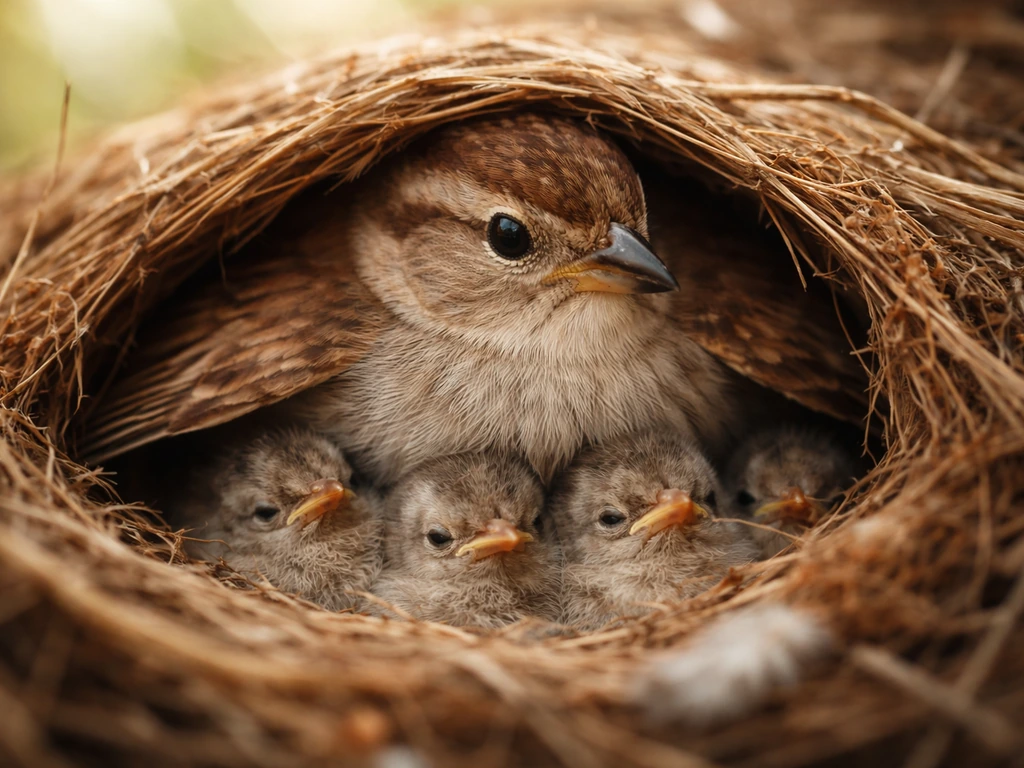
The nest is probably the most powerful maternal image in bird symbolism. A bird that gathers materials, shapes them into a cradle with its own body, and returns to sit in it day after day regardless of weather becomes a natural emblem of preparation, patience, and unconditional commitment. The American robin, for example, does most of the nest-building herself, weaving plant matter and even mud into a cup structure before laying. That image of deliberate, tireless preparation maps directly onto the experience of preparing for a child.
Feeding from the self
The pelican became the supreme Christian symbol of maternal sacrifice because of a medieval legend that held the mother pelican would pierce her own breast to feed her starving chicks with blood. Whether or not this reflected actual pelican behavior was secondary to what it meant: a mother giving her own substance so her children could survive. The Fabergé pelican egg, crafted in the early 1900s for the Russian imperial family, depicts exactly this scene as an explicit symbol of maternal care, which shows how deeply embedded that image became in Western culture. If you have seen a bird carrying a man statue, the same idea of symbolic storytelling often applies, including how viewers read sacrifice, protection, and caretaking themes into the imagery Fabergé pelican egg.
Sheltering under wings
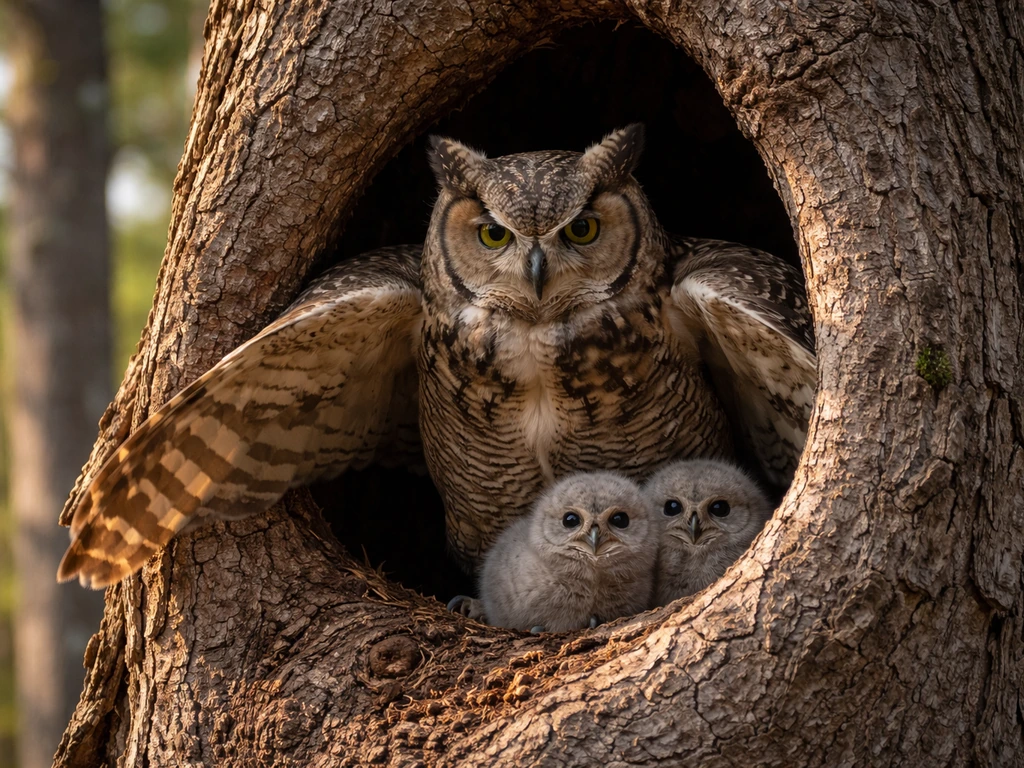
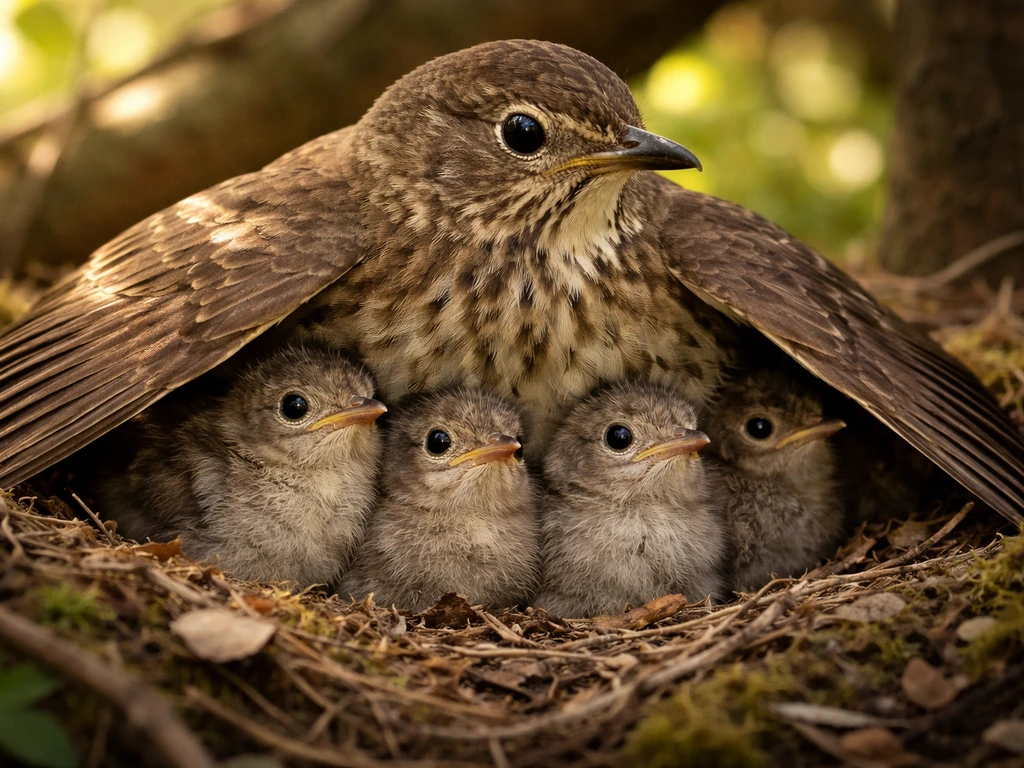
This is the instinct that appears most often in sacred texts and mythological imagery. A mother bird spreading her wings to cover her chicks is an image so visceral and recognizable that it transcends culture. In Egyptian iconography the vulture goddess Nekhbet spreads her wings over the pharaoh in exactly this gesture, and in the Bible, Jesus uses the image of a hen gathering chicks under her wings (Matthew 23:37, Luke 13:34) as a metaphor for divine, maternal-style protection. Wing-spreading is practically a universal visual shorthand for maternal sheltering.
Return and faithfulness
Migratory birds that return to the same nest site each year became symbols of a mother who always comes back, who does not abandon. The swan's known pair-bonding and the robin's seasonal return to familiar gardens feed exactly this kind of symbolism. Faithfulness and return are core emotional components of what cultures expect from mothers, which is why birds that demonstrate this behavior in the wild earn the symbolic role.
Motherhood meanings by bird species
The pelican: giving everything
In Christian symbolism the pelican is arguably the single most direct motherhood symbol. The medieval legend of the pelican wounding her breast to revive her young with blood made it a standard image for Christian charity and self-sacrificial love. You still see the pelican in church heraldry and stained glass for exactly this reason. If the motherhood you are exploring is about sacrifice, exhaustion in service of love, or giving beyond your own comfort, the pelican is your bird.
The dove: tender, life-giving nurture
The dove carries a gentler mothering energy. In Nahua (Aztec) tradition, the mourning dove (huilotl) is connected to Xochiquetzal, a goddess associated with beauty, love, and creative fertility, with some interpretations framing her as a mother-of-humanity figure. In Native American traditions more broadly, doves and pigeons appear across many tribal mythologies as emblems of gentleness, peace, and domestic warmth. Across Christian traditions the dove is linked to the Holy Spirit and the softening, comforting aspects of divine love. This makes the dove the right symbol when the motherhood in question is nurturing, gentle, emotionally present care rather than fierce protection.
The hen: gathered and kept safe
The domestic hen is not a glamorous symbol, but it is one of the most emotionally direct motherhood images in the biblical tradition. When Jesus in Matthew 23:37 and Luke 13:34 describes himself as wanting to gather Jerusalem's people "as a hen gathers her chicks under her wings," the image is unmistakably maternal: fierce, instinctive, absolutely unconditional. The hen does not choose which chick to protect. She gathers all of them. If you are working with the theme of inclusive, gathering, stay-close-no-matter-what mothering, the hen is surprisingly powerful.
The owl: vigilant, protective, wise
The owl's motherhood symbolism tends toward the protective and watchful dimension. In several Native American traditions, including Pawnee-adjacent frameworks that associate the great horned owl with protection, the owl is a guardian who watches over those in her care through darkness and danger. In an education-focused summary of multiple-tradition variability, the great horned owl is described as holding complex significance, including associations with protection and wisdom in some traditions [including Pawnee-adjacent frameworks that associate the great horned owl with protection](https://enviroliteracy.
org/what-does-the-great-horned-owl-mean-in-native-american-culture/). Celtic traditions also connect the owl to hidden wisdom and night-sight, qualities associated with a mother who sees threats that others miss. The owl is not a warm-and-soft motherhood symbol. It is the mother who holds the boundary, who watches the perimeter, who knows before anyone else does that danger is near.
The robin: active everyday care
The robin is the motherhood bird for the daily, practical, showing-up-again dimension of parenting. She builds the nest herself, incubates the eggs, and even when the fledglings are mobile, the male takes over the juveniles while she starts a second nest, meaning the care never fully stops. In folk and popular Western tradition the robin arriving in spring carries the energy of renewal, new life, and hopeful beginnings, all of which map neatly onto the experience of new motherhood or a fresh chapter in a caregiving relationship.
The swan: devoted, enduring love
Medieval bestiaries documented the swan as a symbol of purity and beauty, and Celtic and Norse traditions layered on themes of transformation (the swan-maiden motif) and devoted return. The swan's association with motherhood comes from its fierce protection of the nest, its graceful endurance, and the image of cygnets riding on a mother swan's back, one of the most literally tender images in the natural world. If you are drawn to the swan, you are likely working with a long-term, devoted, this-is-my-life-now quality of maternal love.
The vulture (Nekhbet and Mut): divine, royal, encompassing protection
This one surprises people, but in ancient Egypt the vulture was the primary divine symbol of motherhood. Nekhbet, the protective goddess of Upper Egypt, took the form of a vulture and was depicted with wings spread over the pharaoh as a shield of encircling protection. Mut, another major mother goddess of the New Kingdom and consort of Amun, was also represented through vulture iconography, with the Egyptian word for mother (mwt) directly linked to the vulture symbol.
The vulture's behavior of watching over a wide territory and its association with carrying souls between worlds made it the bird of the divine mother who oversees life, death, and rebirth. The Egyptian vulture symbolism is specifically about encompassing, all-seeing, cosmically scaled maternal power.
How different cultures read motherhood in birds
Biblical and Christian tradition
Christian bird symbolism gives you two very different motherhood archetypes. The hen in the Gospels is intimate, domestic, and emotionally urgent: a mother throwing herself over her young in a crisis. The pelican is transcendent and sacrificial: a mother who gives her own body so her children can live. Both appear in Christian art, and together they cover the full spectrum from everyday parental love to extraordinary self-giving. You will still find pelicans in church architecture and emblems of charitable orders for exactly this reason.
Ancient Egyptian tradition
Egypt gave motherhood symbolism a divine, royal dimension. Nekhbet the vulture goddess and Mut the mother goddess both operate at the cosmic scale: they do not just mother children, they mother kings, nations, and the order of the universe. Hathor, associated with the cow but depicted in some contexts alongside bird imagery, was also a major Egyptian mother goddess. In Egyptian symbolic thinking, the mother is a protective cosmos, not just a caregiver, and the vulture's wide-spreading wings become the visual grammar for that idea.
Native American traditions
It is important to say upfront that there is no single Native American tradition: there are hundreds of distinct nations with their own distinct symbolic frameworks. With that said, some general patterns emerge. The owl appears across several traditions as a guardian figure whose vigilance in darkness maps onto maternal protection. Doves and pigeons appear in many tribal mythologies as emblems of domestic peace and gentle nurture.
Eagle imagery, while primarily associated with strength and the divine, also carries protective-parent resonance in many traditions because of the eagle's known fierce protection of the nest. The specific meaning always depends on the tribe and the specific story context, so if you have a particular cultural heritage you want to draw from, drilling down into that specific tradition will serve you better than general summaries.
Celtic tradition
Celtic bird symbolism tends to weave motherhood into themes of transformation and the Otherworld. The swan-maiden stories that appear throughout Irish and Scottish tradition involve women who transform into swans, and swans who are really women, with themes of hidden identity, fierce loyalty, and the bond between a mother and her children that cannot be broken even across transformation. The wren and the robin carry folk-level maternal associations in Celtic regions. The owl in Celtic symbolism often functions as a wise, protective nighttime guardian, close to the boundary-watching maternal energy found in other traditions.
Aztec and Nahua tradition
In Aztec and Nahua cosmology, Xochiquetzal is a goddess connected to flowers, beauty, love, and creative fertility, and the dove (huilotl in Nahuatl, denoting the mourning dove) appears in connection with her energy. Some interpretations connect her to a mother-of-humanity role. The quetzal bird, with its spectacular plumage, carries sacred and regal symbolism in Mesoamerican tradition and appears in codex art across cycles connected to Quetzalcoatl. While quetzal symbolism centers more on divine authority and precious life than on domestic nurturing, it carries the sense of precious, irreplaceable life that underlies the deepest expressions of maternal love.
Reading feathers, nests, and other maternal bird imagery
Sometimes the bird itself does not show up. Instead you find a feather on a path, an empty nest in a tree you pass every day, or a piece of jewelry or art featuring bird imagery. These carry symbolic weight too, and in the context of motherhood, their meanings are quite specific.
- A feather found unexpectedly is widely read across traditions as a message or presence from the bird (or what it represents). A white feather connects to peace, purity, and gentle maternal energy. A soft downy feather, as opposed to a flight feather, specifically evokes warmth, nesting, and the physical softness of early maternal caregiving.
- An empty nest can carry two very different meanings depending on your situation. If you are in a season of anticipation (pregnancy, planning, preparing), an empty nest you encounter is often read as a symbol of readiness and preparation. If you are in a season of release (children leaving, grief, transition), it speaks to the dignity of having done the work of mothering and letting go.
- A nest with eggs is one of the most universally recognized symbols of new life, potential held carefully, and the patient waiting that precedes birth or a new chapter.
- A nest with chicks or a mother bird actively feeding young is a direct image of active mothering: the daily giving, the ongoing nourishment, the showing up.
- Bird imagery in jewelry or ornaments (think necklaces, pendants, or decorative objects featuring bird motifs) often functions as a way of carrying the energy of a particular bird's symbolism close to the body, which has a long history in talismanic and protective traditions across cultures.
- A bird calling persistently outside your home, or a bird that returns to the same spot near you repeatedly, is read in many traditions as a specific message rather than a general sign.
The nest in particular sits at the intersection of several meaningful themes for motherhood: construction, protection, return, and held life. If you encounter nest imagery during a significant maternal season of your life, it is worth pausing with it rather than moving past it quickly.
How to actually use this symbolism today
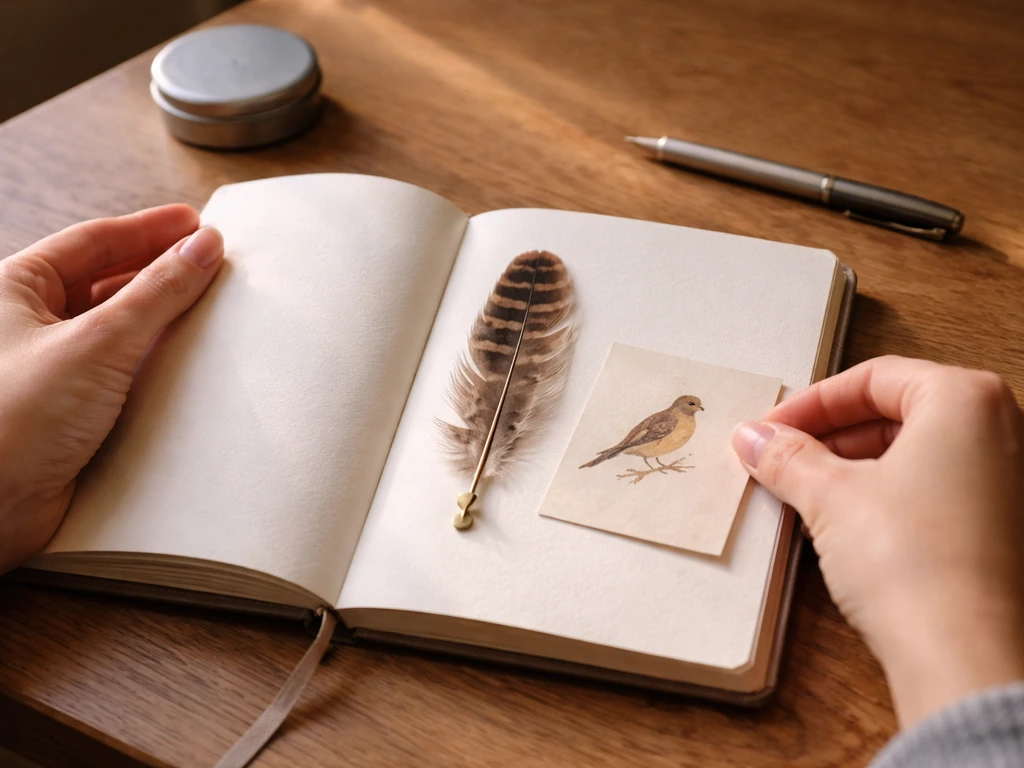
Knowing which bird represents motherhood is only the first step. The more useful question is: what do you do with that knowledge when a bird shows up in your life, or when you are choosing a symbol to work with intentionally? Here is a practical framework.
Step 1: Identify the bird you are seeing or feeling drawn to
If a specific bird keeps appearing to you, note it. If you are deliberately choosing a symbol (for a tattoo, a piece of jewelry, a meditation focus, a gift for a mother figure), use the comparison table above as your starting point. If the bird appears in a piece of jewelry, you can use that as a symbol to reflect on what kind of motherhood it represents. Ask yourself: which dimension of motherhood am I working with right now? Sacrifice and giving? Gentle nurturing? Fierce protection? Daily hands-on care? Devoted long-term love? The answer points you toward the right bird.
Step 2: Connect the bird to your specific situation
Once you have identified your bird, think about the behavior or myth most associated with it and see if it speaks to what you are actually experiencing. If you keep seeing robins while preparing for a new child or a fresh maternal chapter, the spring renewal and active nest-building energy is probably the message. If a pelican appeared to you during a season of exhausted, self-depleting caregiving, the medieval sacrifice image may be asking you to notice what you are giving and whether it is sustainable. Symbolism works best as a mirror, not a prescription.
Step 3: Work with the symbol actively
There are several practical ways to engage with a motherhood bird symbol rather than just noting it and moving on. Journaling is the most accessible: write about what the bird's specific quality (the pelican's sacrifice, the owl's night-watch, the swan's devotion) means in your current maternal relationship. If you are trying to understand a charm of what bird, choose the bird whose symbolism matches the specific feeling you want to embody in your daily life the pelican's sacrifice.
You can also use a brief spoken affirmation that names the bird and the quality you want to embody, something like: "Like the hen who gathers her chicks, I create safety and shelter for those in my care. If your own story or heritage calls you in that direction, let it guide how you interpret the mothering symbolism you choose to work with my heritage is unto me as a speckled bird.
" If you practice any form of altar, meditation space, or personal ritual, adding an image, feather, or small ornament featuring your chosen bird brings the symbol into physical space where you will encounter it regularly. If you come across a broken bird ornament, treating it as a symbol of repair and healing can add extra intention to your practice small ornament.
Finally, if you are honoring a mother figure (living or deceased), a gift, card, or piece of jewelry featuring the bird that best represents her particular style of mothering is a far more personal and resonant choice than a generic symbol.
A note on cultural specificity and personal fit
Because motherhood bird symbolism spans so many traditions, it is worth being intentional about which tradition you draw from, especially if you have a specific cultural or spiritual background that matters to you. An Egyptian-rooted framework gives you the cosmic, powerful, encompassing mother of Nekhbet. A Christian framework gives you the sacrificial pelican or the gathering hen. A Celtic framework gives you the loyal, transformative swan. A Native American framework (depending on nation) may give you the watchful owl or the peaceful dove. None of these is more correct than another. They are lenses, and you can choose the one that most honestly reflects the kind of maternal energy you want to honor, explore, or call in.
FAQ
If I have to pick one bird, which one represents motherhood most clearly?
If you need one “best answer” for a general, widely recognized symbol, the hen is often the most immediately relatable. The image is protective and gathering (wings covering chicks), it appears prominently in Christian teaching, and it also maps to inclusive, everyday care rather than only sacrifice or devotion. If your focus is specifically self-sacrifice, choose the pelican instead.
How do I decide what kind of motherhood a bird symbolizes when there are multiple meanings?
Look at the bird’s role, not the species label. For example, a robin can signal renewal and ongoing daily care, but a pelican is about costly giving. If you feel “I am depleted,” the pelican theme fits more than the dove. If you feel “I need shelter and safety,” the hen and owl themes fit better than the swan’s long-term devotion.
What is the most common mistake when choosing a motherhood bird symbol?
People often pick a bird that “looks maternal” but ignore the symbol’s core behavior. In this topic, the most consistent cues are nest-building and sheltering (hen), feeding at cost (pelican), gentle nurturing (dove), and boundary-watching (owl). If the bird’s symbolism you chose does not match your real-life need, the symbol will feel off or forced.
Can the same bird symbolize different stages of motherhood?
Yes, bird symbolism can show up with “secondary” meanings like seasons and life stages. A robin that appears during pregnancy or early postpartum often aligns with preparation and renewal. A swan image may fit better for long-term bonds, even later in caregiving, because the symbolism centers on returning, enduring, and fierce protection over time.
What do bird-related symbols like feathers, empty nests, or bird jewelry mean for motherhood?
A feather is usually read as a message about protection, guidance, or the “carrying” quality of care, because it relates to wing-shelter imagery. An empty nest can be about transition, readiness, or grief, depending on your context. With jewelry, the meaning tends to reflect what the wearer is actively trying to embody, since the symbol is intentionally carried.
If a motherhood bird keeps appearing to me, what should I do with that message?
If you see the same bird repeatedly, treat it like a prompt rather than a command. The article frames symbolism as a mirror, so ask what quality the bird is highlighting in you right now (self-giving, patience, gentleness, vigilance, renewal, or devoted return). Then check whether you have resources to support that quality in a sustainable way.
Does pelican symbolism ever become unhealthy or unrealistic to follow?
Consider sustainability and boundaries, especially with pelican symbolism. Sacrifice themes can inspire compassion, but they can also validate overextending yourself. Pair “giving beyond comfort” imagery with a reality check, for example, what support do you need, what can be delegated, and what is not yours to carry alone.
How can I choose a motherhood bird symbol for a specific mother or mother figure?
Yes. If you are doing a tattoo, gift, or ritual for a specific mother figure, match the symbol to her style of mothering. An aunt who provided steady, practical care may fit robin or hen, while someone known for protective guarding may fit owl, and someone defined by steadfast devotion may fit swan. This makes the symbolism personal instead of generic.
How should I handle cultural or spiritual context if I want to use a bird symbol respectfully?
When drawing from a tradition, avoid assuming one bird equals one fixed meaning everywhere. The article notes there is no single Native American tradition and that specific meanings vary by nation and story context. If heritage matters, pick a tradition you actually connect to, and interpret the symbol within that lens rather than mixing frameworks randomly.
What if motherhood in my situation is adoption, guardianship, or caregiving rather than birth?
If you are honoring motherhood beyond birth, look for birds that map to caretaking behaviors rather than literal parenting. Hen imagery can fit adoptive or guardian “gathering” care, dove imagery can fit nurturing support, and owl imagery can fit protective advocacy. The key is choosing the behavior that matches your motherhood role.