
No, the Holy Spirit is not literally a bird. The short answer is that the Holy Spirit is understood in Christian theology as the third person of the Trinity, a divine presence rather than a creature of any kind. But the reason people ask this question is completely reasonable: the Bible describes the Holy Spirit descending 'like a dove' at Jesus' baptism, Christian art has depicted it with wings and feathers for two thousand years, and bird imagery runs through scripture in ways that feel genuinely connected to the divine. So the real question worth sitting with is not 'is it a bird?' but 'what does the bird imagery actually mean, and why does it keep showing up?'
Is the Holy Spirit a Bird? Dove Meaning in Scripture

Eleanor Hartwell
21 Apr 2026

What Christians mean by 'Holy Spirit'
Before the bird question makes sense, it helps to know what the Holy Spirit is understood to be in Christian tradition. If you are comparing this to other miracles, you might also wonder about whether Jesus performed specific resurrection signs, such as the claim that Jesus brought a bird back to life bring a bird back to life. The Nicene Creed, one of the oldest and most widely accepted statements of Christian belief, describes the Holy Spirit as 'the Lord, the giver of life,' who is 'worshipped and glorified with the Father and the Son.' The Catechism of the Catholic Church describes the Holy Spirit as 'another divine person with Jesus and the Father,' making clear that the Spirit is not a lesser entity or a symbol of God but a full expression of divine being. The theological language says the Father generates, the Son is begotten, and the Holy Spirit proceeds, meaning the three persons are distinct but not separate in their nature.
That is a lot of doctrinal architecture, but what it boils down to practically is this: in orthodox Christian understanding, the Holy Spirit is divine, not created. It is not an animal, not a metaphor for a good feeling, and not simply God's energy or force. That foundation matters because it shapes how you read every piece of bird imagery in scripture. The dove is not what the Holy Spirit is. It is how the Spirit showed itself at a specific moment.
Why people connect the Holy Spirit with a bird in the first place

The bird connection comes from one dominant scene and a handful of supporting threads. The scene is Jesus' baptism, and it appears in all four Gospels: Matthew 3:16, Mark 1:10, Luke 3:22, and John 1:32. But the imagery does not start there. Genesis 1:2 describes the Spirit of God 'hovering over the waters' at creation, and the Hebrew verb used there has been interpreted by some rabbis as resembling a bird hovering or fluttering near a nest. That hovering, brooding quality is distinctly bird-like, even if the text never says 'bird.' So by the time readers arrive at the baptism scene in the Gospels, they are already primed to recognize something familiar in the Spirit moving above water.
Add to that the fact that doves carry deep symbolic weight across both the Hebrew Bible and Greco-Roman culture. The dove in Noah's story (Genesis 8) returns with an olive branch, signaling peace and the end of judgment. In Hosea 11:11, God's people return 'like a dove.' Psalm 55:6 uses 'wings like a dove' as an image of longing for rest and escape. By the time you get to Jesus standing in the Jordan River, the dove was already loaded with meaning: purity, peace, return, divine communication. It was not a random bird. It was the right bird for the moment.
The baptism scene: what the Bible actually says
Each Gospel describes the moment slightly differently, which is worth paying attention to. Matthew 3:16 says the Spirit descended 'like a dove.' Mark 1:10 uses similar language but scholars note the wording can indicate both manner and appearance. Luke 3:22 adds the phrase 'in bodily form,' which has led some readers, including the early commentator Alford, to argue that something visibly dove-shaped was actually seen by John the Baptist. John 1:32 frames the whole account through John the Baptist's testimony: 'I saw the Spirit descend from heaven like a dove, and it remained on him.'
Commentators have debated for centuries whether this was a literal dove, a dove-shaped appearance, or a description of manner (the Spirit descended gently, the way a dove lands). Scholars writing in The Bible Translator have argued that the 'like a dove' phrasing functions as an apocalyptic simile, meaning it models the kind of descent rather than specifying a zoological form. John Calvin was direct on this: he called it 'foolish and improper' to press the literal meaning so hard that you conclude the Spirit's essence is that of a dove. The sign is not the thing signified. Most mainstream Christian interpretation, from Calvin to the current Catechism, agrees that what was witnessed was a visible sign, not the actual nature of the Spirit.
Still, Luke's 'bodily form' phrase keeps the question alive, and that is fine. The point of the scene was witness: John the Baptist needed something he could see and report. The dove-like appearance gave the baptism a visible, confirmable quality that a purely invisible event would not have had. The bird imagery served testimony, not taxonomy.
Bird symbolism beyond one verse: feathers, flight, and nesting
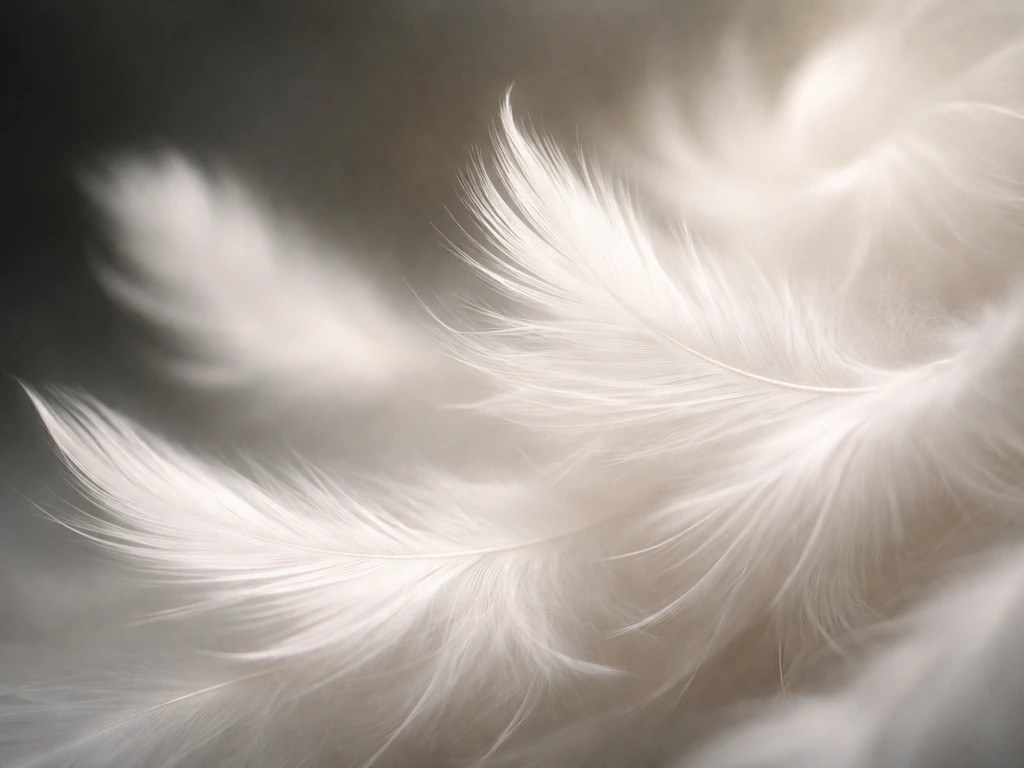
The dove at the Jordan is the most famous connection, but the broader texture of bird symbolism in scripture maps remarkably well onto how the Holy Spirit is described throughout the New Testament. Flight suggests freedom, movement across boundaries, and the ability to go where physical creatures cannot easily reach. The Spirit in Christian theology is similarly described as moving freely, not bound by geography or human institution. Feathers carry associations with protection and shelter: Psalm 91:4 reads 'He will cover you with his feathers, and under his wings you will find refuge.' That imagery is not about the Spirit specifically, but it belongs to the same symbolic language Christians have always used to describe divine care.
Nesting is another thread. The Genesis 1:2 'hovering' language suggests a bird brooding over eggs, a posture of patient, generative presence. The Hebrew verb used there implies not just hovering but warming, sustaining. Early church writer Cyprian, one of the first Christian theologians to write in detail about the dove symbol, emphasized the dove's character: simple, joyous, not given to violence. He used these qualities to explain what the Spirit's presence looks like in practice. This is exactly how bird symbolism works on this site and across cultural traditions generally: the bird's actual behavior and qualities become a lens for understanding something that is otherwise hard to describe.
The dove became so thoroughly associated with the Holy Spirit in Christian art that the Biblical Archaeology Society describes it as 'the quintessential symbol for the Holy Spirit,' appearing in baptism imagery, depictions of the Trinity, and Pentecost scenes across two thousand years of Christian visual culture. If you have ever wondered why dove imagery carries such weight in Christian contexts, this is the deep root of it.
How to interpret it spiritually without getting tangled in literalism
The most useful practical tool for reading this kind of scripture is watching the language closely. The Church of Jesus Christ of Latter-day Saints' Scripture Study materials offer advice that applies broadly here: look for signal words like 'like,' 'as,' 'likened,' and 'as it were.' When the Bible says the Spirit descended 'like a dove,' the word 'like' is doing important work. It is telling you this is a comparison, not a classification. Answers in Genesis makes a similar point from a different angle: being 'literally true' does not mean every word must be taken in its most flat, surface sense. Recognizing simile is not doubting the Bible. It is reading it the way its authors intended.
So what do you do with this as a spiritual practice? A few concrete approaches:
- Read the four baptism accounts side by side (Matthew 3: 16, Mark 1:10, Luke 3:22, John 1:32) and notice what each one emphasizes. Matthew focuses on what Jesus saw. Luke adds 'bodily form.' John frames it as John the Baptist's testimony. Sitting with those differences opens up the meaning rather than flattening it.
- When you encounter dove imagery in Christian art, ask what quality of the Holy Spirit the artist was trying to communicate: purity, gentleness, descent from above, arriving peace. The bird is a vocabulary, not a portrait.
- Bring Genesis 1: 2 into the picture. The Spirit hovering over formless waters before creation is a powerful image of presence before anything exists yet. Meditating on that alongside the baptism scene shows the dove imagery as a thread running through the whole Bible, not just one verse.
- Use the dove's actual characteristics as a reflection prompt. Doves are ground-level birds that also fly. They return home reliably. They are not predators. These qualities have been intentionally drawn on by theologians from Cyprian onward as a way of describing what the Spirit's presence feels like in daily life.
- If you notice doves or bird imagery in everyday life and feel a spiritual resonance, you are tapping into a symbolic tradition with deep roots. That kind of noticing is exactly what the dove symbol was designed to support, pointing attention toward something gentle, present, and arriving from beyond the ordinary.
Common misunderstandings worth clearing up
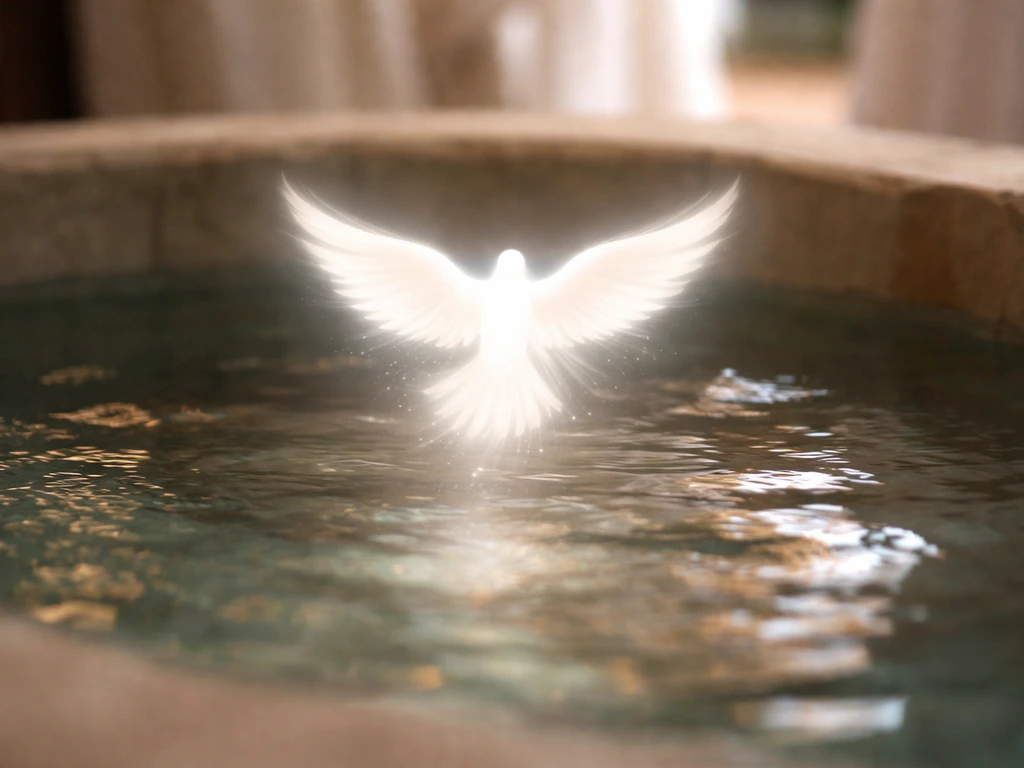
The biggest misunderstanding is treating 'like a dove' as a straightforward identity statement. The Holy Spirit is not a dove the way a robin is a bird. This is a simile describing a visible sign at a specific moment, filtered through the symbolic vocabulary that scripture had already built around the dove over centuries. Pressing the literal reading too hard leads to theological confusion: if the Spirit is literally a dove, what does that say about the Spirit's nature as a divine person? The tradition has always rejected that conclusion, and for good reason.
A second misunderstanding is assuming that because it is symbolic, it is less real or less meaningful. The Continuing Church of God puts it plainly: 'the Holy Spirit is not a literal bird but a manifestation of divine power.' That is not a downgrade. A manifestation is an appearance of something real. The dove-like descent was a genuine event that John the Baptist witnessed and testified to. The form it took was chosen, not accidental, and the dove's symbolism was fully intentional.
A third misunderstanding is thinking this question only matters for scholars or theologians. It comes up for ordinary readers all the time, especially people encountering Christian art, baptism ceremonies, or church decorations where a white bird with spread wings appears above a scene. Knowing that this image represents a theological claim about the Spirit's descent and character, rather than a literal claim about an animal, helps you read those images with much more fluency.
Where this fits with broader bird symbolism in scripture and tradition
It is worth stepping back and recognizing how naturally this connects to the way bird symbolism works across religious traditions generally. Birds occupy a special symbolic position in nearly every culture because they move between earth and sky, between the visible and what lies above it. In Christian symbolism specifically, the dove is not the only bird doing heavy theological work. The question of what bird represents Jesus, or what bird serves as a sign from heaven, or what birds are understood as visitors from the divine realm, all draw on the same basic symbolic logic: birds as messengers and bridges between the human and the sacred. If you are looking for the specific answer to <a data-article-id="E1410CC9-D35D-41D5-ABAE-F16FAC2820FF">what bird serves as a sign from heaven</a>, the dove is the central example in Christian tradition. If you are also asking about “what bird represents an angel,” that same dove-as-sign logic shows up in how Christianity treats birds as messages from the divine rather than literal identities what bird serves as a sign from heaven. If you are looking for the specific answer to what bird symbolizes someone from heaven, the dove is still the most prominent choice in Christian tradition. If you are wondering what bird is a visitor from heaven in Christian art and symbolism, that logic connects closely to the dove as a sign of divine presence.
The dove connected to the Holy Spirit is one of the most developed examples of that tradition, precisely because it is grounded in specific scriptural events (the baptism, the flood, the creation) rather than general cultural association. That combination of textual specificity and universal bird symbolism is what gives it such staying power across two millennia of Christian art, liturgy, and prayer.
| Symbolic Element | What It Points To | Scriptural Anchor |
|---|---|---|
| Dove descending | Holy Spirit arriving, presence confirmed | Matthew 3:16, Mark 1:10, Luke 3:22, John 1:32 |
| Hovering over water | Creative, generative divine presence | Genesis 1:2 |
| Dove returning with olive branch | Peace, end of judgment, restoration | Genesis 8:11 |
| Wings as shelter/refuge | Divine protection and care | Psalm 91:4 |
| Wings like a dove (Psalm 55:6) | Longing for rest and flight toward God | Psalm 55:6 |
| Like a bird/dove returning (Hosea) | Swiftness of return to God | Hosea 11:11 |
The consistent thread is that bird imagery in scripture almost never describes what God or the Spirit literally is. It describes how divine action feels, moves, and arrives. That is a distinction worth holding onto, not because it makes the imagery less powerful, but because it makes it more useful. Once you understand what the symbol is doing, you can read it, paint it, pray with it, and notice it in the world with a clarity that pure literalism actually prevents.
FAQ
If the Bible says “like a dove,” can Christians still call it “the dove” without getting it wrong?
Yes, the dove shaped image can be an accurate way to describe the biblical scene without claiming the Spirit is a literal bird. In mainstream Christian reading, the dove is a visible sign that communicates the Spirit’s descent at Jesus’ baptism, while the Spirit itself is divine and not created.
What’s the difference between a simile (“like a dove”) and a literal identity statement?
The main issue is identity. Saying “the Holy Spirit is a dove” treats a comparison as an equation. A more careful phrasing is that the Spirit appeared “like a dove,” meaning the sign had dove-like manner or appearance, not that the Spirit’s nature is zoologically bird-like.
Does “in bodily form” mean the Spirit was actually a physical dove?
“Bodily form” language in Luke is often read as emphasizing that a real, visible witness was present. But it still does not require concluding the Spirit is literally a bird. Many interpreters think John the Baptist saw something dove-shaped or dove-like in a way suitable for testimony.
Is the dove always the sign of the Holy Spirit in every biblical event?
Not necessarily. The dove is tied most directly to the baptism scene, and other New Testament descriptions of the Spirit use different images and purposes. If you see doves at Pentecost art or in church décor, it is usually drawing on established dove symbolism, not claiming every Spirit episode was the same visual event.
How does the “literal bird” view affect basic Trinitarian beliefs?
If someone treats the dove imagery as a denial of the Spirit’s divinity, they may end up either animalizing the Spirit or reducing the Spirit to a mere symbol. Classic doctrine keeps both points together, the Spirit is divine and the dove is a sign that helps human witnesses understand and proclaim what happened.
How can I apply the dove symbolism spiritually without turning it into doctrine-by-imagination?
You can use the dove imagery for spiritual meaning without building doctrine from it. A safe practice is to ask what the scene was communicating at the time (approval, witness, peace, divine communication) and then hold the Spirit’s divine reality constant, rather than treating imagery as a full description of essence.
What mistake do people make if they focus only on the dove and ignore other Spirit descriptions?
In many Christian traditions, the Spirit is also associated with other “movement” or “presence” ideas in Scripture, so focusing only on the bird can make the overall picture lopsided. Checking for broader Spirit descriptions in the surrounding passages helps you see the dove as one sign among several ways the Spirit’s work is described.
How should I interpret dove imagery in Christian art or baptism ceremonies?
When artwork shows a dove above a baptism, it is usually communicating the baptismal identification of the Spirit’s descent, not offering a zoological lesson. If you want to be precise, treat the artwork as a visual shorthand for a specific scriptural testimony rather than a claim about the Spirit’s species.
What practical clues should I look for when reading biblical “bird” or “dove” descriptions?
Look for comparison signals, especially “like” or “as,” and note who is doing the witnessing. Also observe the purpose of the account, in the baptism story it is largely about John’s testimony and public confirmation, which supports the idea of a visible sign rather than a taxonomic description.
How do I respond if someone says the only “literal” reading proves the Spirit is a bird?
Yes, some people use the question to test whether a tradition “follows the Bible literally.” The best way forward is to distinguish between literal truth and flat surface meaning. A comparison can be literally true as a description of what was seen, while still not being a literal statement that the Spirit’s nature equals a bird.
Next Articles
Cardinal Bird Meaning in the Bible: What It Really Means
Find out if a cardinal bird is named in the Bible, what bird imagery means, and how to verify the exact verse.
What Does the Cardinal Bird Mean Symbolism and Tattoos
Explore what a cardinal bird symbolizes, what seeing one can mean, and how to interpret cardinal tattoo meanings.
Best Legendary Bird Pokémon: Pick the Right One for You
Best legendary bird Pokémon pick with a battle and spiritual meaning guide for choosing Zapdos, Articuno or Moltres