
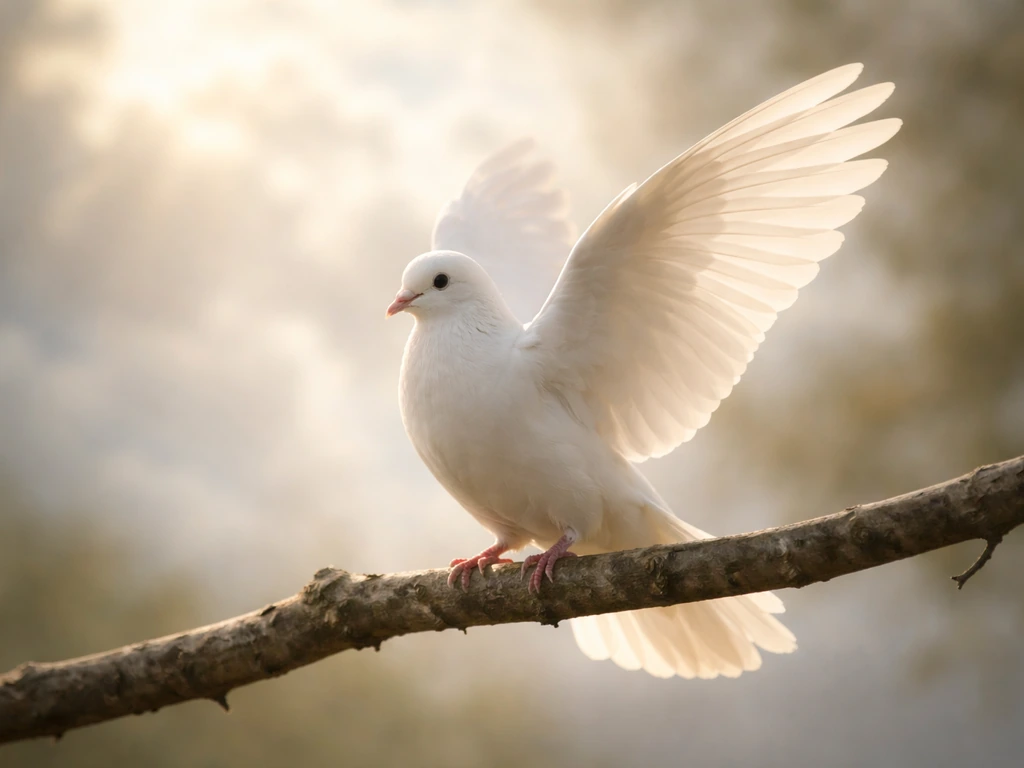
Seeing or hearing a dove is almost universally considered a good sign. Across the vast majority of cultures, religious traditions, and spiritual frameworks, the dove carries meanings of peace, purity, love, hope, and divine presence. There are a handful of superstitions that attach darker readings to doves, but those are the exception, and most of them come from context or misreading rather than the bird itself being a bad omen. If a dove showed up in your life today, the weight of thousands of years of symbolism is firmly on the side of it being a meaningful, positive encounter.
Dove Bird Good or Bad Meaning Spiritually and Biblically

Eleanor Hartwell
11 May 2026
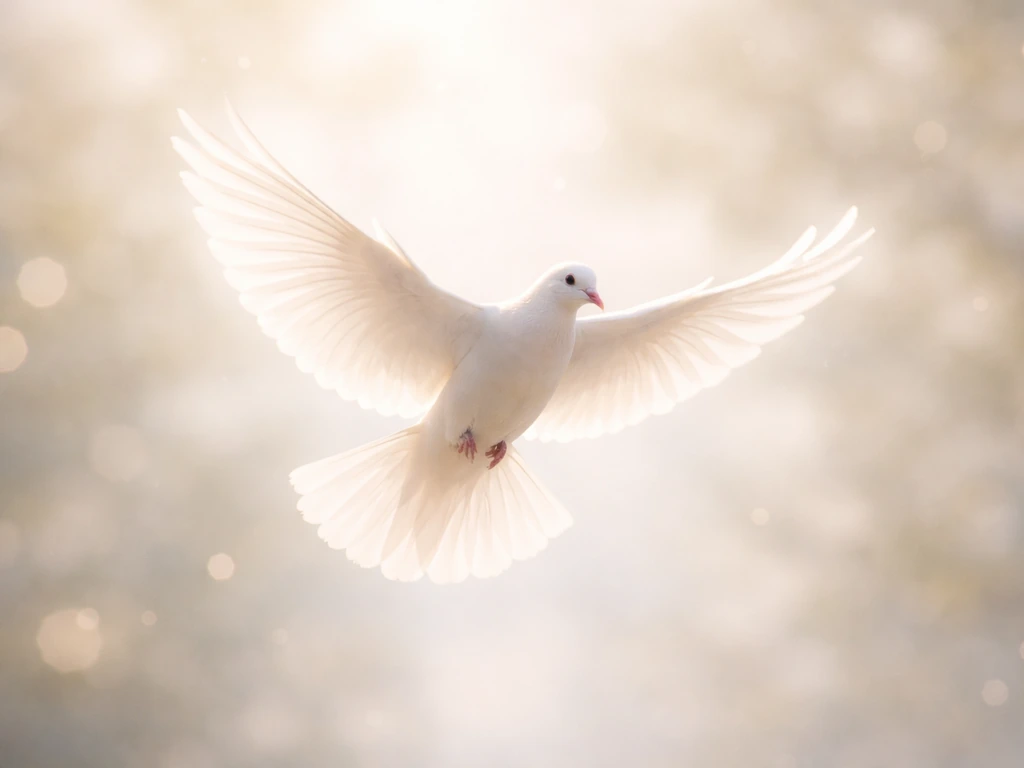
Dove symbolism across cultures and religions
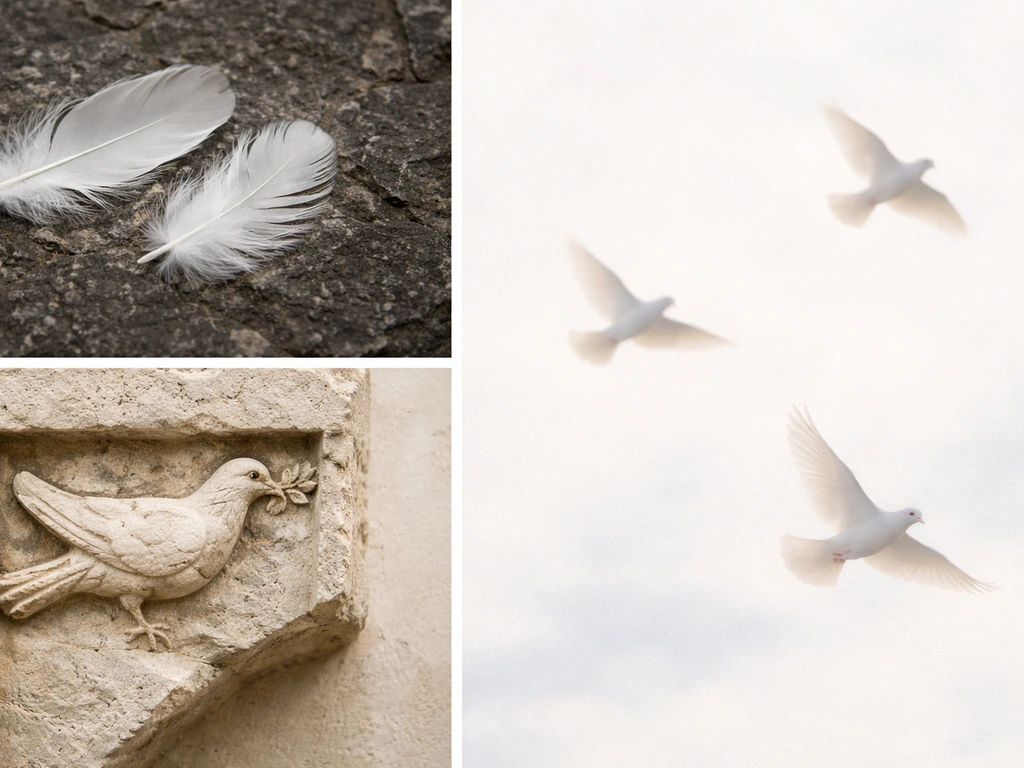
The dove is one of the oldest symbolic animals on record. Long before the biblical Noah story, doves appeared throughout the ancient Near East and Mediterranean world as sacred figures associated with mother goddesses. In Mesopotamian religion, the dove was linked to Inanna-Ishtar, a goddess of both love and war, which tells you something important: even in early history, the dove carried layered meaning rather than a single flat message. In the Greco-Roman world, the dove became the sacred bird of Aphrodite and Venus, cementing its association with love, desire, and fertility.
In Jewish tradition, the dove carries a strong association with shalom, the Hebrew word for peace that means far more than the absence of conflict. Jewish sages taught that the dove was one of three symbols for peace, alongside the river and the kettle. Rabbinic literature also draws on the dove's imagery to represent spiritual sensitivity and a prayer-like quality of turning toward the divine. In Islam, the dove does not hold a special religious role the way it does in Jewish or Christian thought, and is generally treated as one of many permitted birds rather than a carrier of spiritual significance.
Native American and indigenous traditions vary widely by nation and region, but many associate birds generally with messenger roles between the human and spirit worlds. The dove, with its gentle cooing and nesting habits, often appears in these contexts as a carrier of calm, comfort, and communication from ancestors or the spirit realm. Celtic traditions, which placed enormous weight on bird omens and divination (a practice formally called ornithomancy in the ancient Greek world), generally read the dove as a peaceful presence rather than a harbinger of trouble.
Dove meanings unpacked: peace, love, purity, and hope
The four core meanings attached to doves worldwide are not random. Each one has a traceable origin, and understanding where they come from helps you apply them more meaningfully to an encounter you're trying to interpret.
| Symbolic Meaning | Cultural/Historical Source | Practical Interpretation |
|---|---|---|
| Peace | Noah's dove returning with an olive branch (Genesis 8:11), later developed by early Christian writers including Augustine and Tertullian | A call to reconcile, de-escalate, or seek resolution in a conflict |
| Love | Aphrodite/Venus association in Greek and Roman tradition, earlier Inanna-Ishtar links in Mesopotamia | A sign connected to relationships, partnerships, or opening the heart |
| Purity | White plumage, use of doves in temple offerings (Leviticus), Holy Spirit imagery in Gospels | An invitation to clarity, cleansing, or honest self-examination |
| Hope | The olive leaf as evidence that floodwaters receded and new life was returning | A reassurance during difficult seasons that renewal is on the way |
These four meanings overlap more than they differ. Peace and reconciliation require hope. Purity and love are intertwined in spiritual thought across traditions. So when you encounter a dove and feel unsure which meaning applies to you, it helps to consider which of these four themes is most alive in your life right now. That's usually the lens through which the encounter will make the most sense.
What the Bible and Christian tradition say about doves

The dove is arguably more central to Christian symbolism than to any other religious tradition. There are two primary biblical moments that anchor its meaning. The first is Noah's story in Genesis 8, where the dove is sent out from the ark and returns carrying an olive leaf, a sign that the waters had receded and the earth was renewing itself. Early Christian commentators, including Tertullian in the second century, explicitly connected Noah's dove and olive branch to Baptism, describing the dove as a herald of peace and restoration.
The second and even more theologically weighted moment is the baptism of Jesus. All four Gospels record that the Holy Spirit descended upon Jesus after his baptism, and three of them (Matthew 3:16, Mark 1:10, and Luke 3:22) describe it specifically as descending 'like a dove. ' Luke's account adds the detail 'in bodily form,' emphasizing that this was a visible, perceivable sign rather than a purely internal experience.
The Catechism of the Catholic Church references this event directly, describing the dove as the form in which the Holy Spirit came down upon Jesus and remained with him. The Catholic Encyclopedia notes that the dove also appears in representations of Pentecost, further deepening its association with the active, renewing presence of the Holy Spirit.
This is why Christian symbolism treats dove encounters with particular reverence. A dove is not just a 'nice bird' in this tradition. It is directly linked to the Spirit of God moving in the world, to the renewal of all things after judgment, and to the grace associated with Jesus's own mission.
When a Christian sees a dove and wonders what it means spiritually, they're standing in a very long line of people who have asked the same question and arrived at the same answer: presence, peace, and renewal. The biblical meaning of doves in this tradition also intersects with how ravens and crows are treated, since those birds appear in the same Noah narrative but carry markedly different symbolism.
While this tradition emphasizes dove meaning, it also influences how people interpret related birds in biblical symbolism, including the crane bird biblical meaning. Many people also wonder about the crow bird meaning in the Bible, and how it contrasts with the dove ravens and crows. In the same Bible narratives, ravens carry their own symbolism that is often different from the raven bird meaning in the bible ravens and crows.
How doves show up in rituals, weddings, and ceremonies
Cultures have not just interpreted dove symbolism intellectually. They have acted it out in physical rituals for centuries. The most widespread modern example is the dove release ceremony, which appears at weddings, funerals, memorials, religious events, and even major sporting occasions. The Olympics has included dove releases in opening and closing ceremonies, and wedding dove release companies frame the birds explicitly as living symbols of 'Love, Peace, and Hope.' In this context, the release itself is the symbolic act, representing the beginning of a new chapter, the sending of a prayer, or the offering of hope into the world.
Historically, doves were also used as temple offerings in ancient Israel. Leviticus describes doves as acceptable burnt offerings, and the Gospel of Luke records that Mary and Joseph brought a pair of doves when they presented the infant Jesus at the Temple, connecting the bird to sacred rites of dedication and consecration. Leviticus 14:22 specifies that the offering includes “two turtledoves, or two young pigeons,” showing that doves were used as acceptable offerings in Israelite ritual. This ritual use reinforced the dove's association with purity and divine encounter in ways that went beyond metaphor into lived religious practice.
In many folk traditions, a dove nesting near a home was read as a blessing on the household, a sign of peace and protection for the family within. In some Mediterranean cultures, doves arriving at a window around the time of a death were interpreted as the soul departing peacefully, which is a gentler and more comforting reading than the dark omens attached to birds like ravens or crows in similar contexts.
What to make of feathers, cooing, and dove encounters
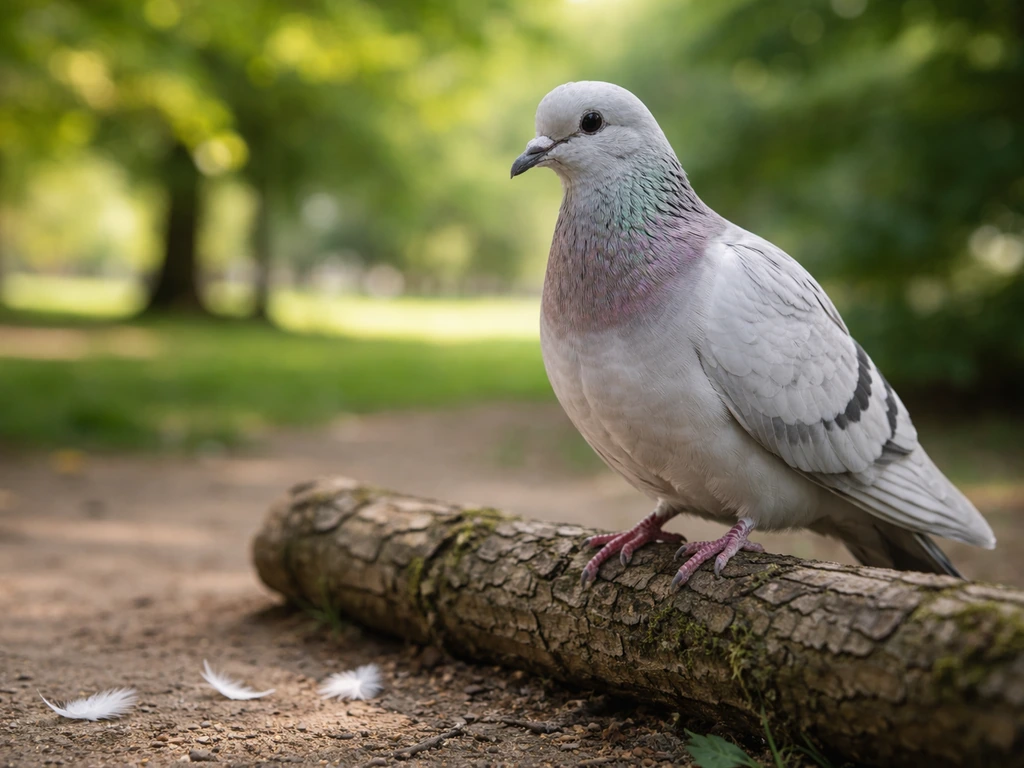
Not every dove encounter looks the same, and the specific form it takes can shift how you might interpret it spiritually. Here's a practical breakdown of common encounters and the symbolic weight most traditions attach to each.
- Seeing a single dove outdoors: A reminder of peace or a call to slow down. Often read as reassurance that you are on the right path, or that a period of calm is arriving after turbulence.
- Seeing two doves together: Widely associated with partnership, love, and lasting devotion. Common in wedding symbolism and also read as a sign of reunion or reconciliation in a relationship.
- A dove indoors or at your window: Traditionally one of the stronger symbolic encounters, suggesting a direct message or heightened spiritual attention. Often interpreted as a moment to pause and reflect on what you need most right now, whether that is peace, guidance, or comfort.
- Hearing dove cooing without seeing the bird: Cooing is the dove's most distinctive behavior, and symbolically it is read as a gentle call to quietness and prayer. Many spiritual traditions associate the sound with a prompt to enter a contemplative state.
- Finding a dove feather: Feathers across many traditions represent a message left behind, a sign that the spiritual is brushing up against the everyday. A dove feather in particular is connected to peace, purity, and divine presence.
- A dove nesting nearby: Read across cultures as a blessing of the home, a sign of protection, and an indication that a stable, peaceful season is taking root.
The consistent thread across these encounters is that the dove is almost always pointing toward something inward: peace you need to make, love you need to extend, hope you need to hold onto, or a quiet moment of connection with whatever is sacred to you. That is a useful interpretive frame regardless of your specific tradition.
When dove symbolism feels negative: clearing up the confusion
There are traditions and superstitions that attach uncomfortable meanings to dove encounters, and it is worth addressing them directly rather than pretending they don't exist. Some European folk traditions held that a dove flying repeatedly against a window could signal an impending death in the family. Certain regional superstitions read an unusual or erratic dove (one that seems distressed or enters a space forcefully) as a warning sign rather than a blessing.
The honest assessment of these traditions is that they reflect anxious human pattern-matching more than a consistent symbolic system. Birds fly into windows because of glass reflection, not because they are carrying messages of doom. The Audubon Society has written about bird superstitions specifically in terms of myth-busting, noting that bird-meaning stories are culturally persistent narratives that don't necessarily reflect what birds are actually doing biologically. The ancient Greek practice of ornithomancy, reading omens from bird behavior, was itself a formal discipline with rules and interpreters. It was never a simple 'dove equals death' calculation.
If a dove encounter feels unsettling to you, the more grounded question to ask is: what is happening in my life right now that makes this feel threatening rather than comforting? Symbolism functions as a mirror. A person going through grief might read any unusual bird encounter as a death omen. A person in a peaceful season of life tends to read the same encounter as reassurance. The dove has not changed. Your interpretive lens has. That self-awareness is actually one of the most useful things bird symbolism can offer you.
It is also worth separating symbolic meaning from practical reality. Dove and pigeon droppings in large accumulations can carry genuine health risks, including fungal infections like histoplasmosis and cryptococcosis. If a dove is nesting in your eaves or a flock is roosting on your property, that is a practical situation that warrants practical handling, good ventilation, appropriate cleaning precautions, and avoiding disturbing dry droppings without protection. None of that spiritual reality cancels the spiritual symbolism. They are simply two different frames for two different kinds of questions.
How to actually use dove symbolism in your daily life
Symbolic encounters are only as useful as what you do with them. Here are concrete ways to respond when a dove shows up in your life and you want to honor the encounter intentionally rather than just noting it and moving on.
- Pause and name what you need most right now. Doves most often carry one of four themes: peace, love, purity, or hope. Sitting quietly for even a few minutes and asking yourself which of those feels most urgent is a simple but surprisingly clarifying exercise.
- Use the encounter as a prompt for reconciliation. If there is a relationship in your life that needs repair, a dove sighting is a culturally rich invitation to take that first step. Write the message, make the call, or at least journal through what is keeping you from it.
- Pray or meditate with dove imagery. In Christian practice, the dove's association with the Holy Spirit makes it a natural focal point for prayer, particularly prayers asking for guidance, comfort, or renewal. You can simply hold the image of the dove in your mind as you enter a time of stillness.
- Journal the specifics of the encounter. Where were you? What were you thinking about just before it happened? What emotional response did it trigger? Over time, patterns in these entries often reveal something meaningful about recurring themes in your spiritual life.
- Reflect on the peace you are being called to make, not just receive. The dove's peace symbolism is not passive. Noah's dove brought back the olive branch as an active message that the world was ready. Ask yourself where you are being called to bring that kind of active peace into a situation.
- If you found a feather, keep it somewhere intentional. Many people who engage seriously with bird symbolism treat found feathers as physical reminders of a spiritual message. Placing a dove feather somewhere you see daily can serve as a recurring prompt to return to the theme it represents for you.
The goal in all of these practices is not to turn bird watching into a rigid divination system. It is to use the encounter as a door into reflection that you might not have walked through otherwise. Dove symbolism has endured for thousands of years across radically different cultures and religious systems because it keeps pointing toward things that human beings genuinely need: peace, love, hope, and a sense that something beyond the ordinary is present and attentive. That is a good sign by almost any measure.
FAQ
If I see a dove while I’m anxious, does that automatically mean something bad is coming?
Not automatically. Many “ominous” readings come from how the person’s emotional state changes pattern recognition. If the encounter feels threatening, treat it as a prompt to check what you are worried about, then decide on a practical next step (talk to someone, handle a pending issue, or take time for grounding) rather than assuming the bird is delivering a negative message.
What if the dove looks injured or behaves erratically near my home?
In symbolic terms, some folk beliefs treat distress as a warning, but it is often just a real-world health or weather issue. Give priority to humane safety: keep pets indoors, give the bird space, and contact local wildlife rescue or animal control if it cannot fly or seems in danger.
Does a dove at a window mean the same thing spiritually as a dove landing nearby?
Not necessarily. Window strikes are commonly explained by lighting and reflection, while landing near you or nesting nearby is more consistent with the bird choosing your space. Spiritually, many people treat a “window” event as an interrupted moment that asks for attention, while a “settling” event is read as calm presence and protection.
Are dove releases at weddings and funerals spiritually “meaningful,” or is it just symbolism?
It is primarily ceremonial symbolism, but that does not make it meaningless. The spiritual value usually comes from what people intend when they release the birds, such as prayer, remembrance, or blessing for a new chapter. If you participate, focus on the intention and your follow-through (for example, writing a message, offering a moment of prayer, or making a commitment) rather than relying on the release itself.
How should Christians interpret seeing a dove if they do not feel spiritually close at the moment?
A dove does not have to mean you are already “on the right path.” Many believers frame it as an invitation to renewal, a nudge toward reconciliation, or permission to begin again. A practical approach is to identify one concrete act aligned with peace or love you can do today, then let the encounter point you there.
Is there a difference between a dove and a pigeon spiritually?
Yes, in many traditions the “dove” label carries the symbolism of peace and divine presence, while “pigeon” is sometimes treated more as a common urban bird. If you want to interpret the moment accurately, use the actual bird you saw (size, behavior, nesting, sound) and the context (home, church setting, nature), since folk meaning often depends on how the bird is categorized locally.
What should I do if doves are nesting near my house and I’m worried about health risks?
Treat it as a practical safety matter. Avoid disturbing dry droppings, ventilate the area, and consider wearing appropriate protection and using safe cleaning methods. If droppings are heavy in enclosed spaces or you have respiratory issues, get professional guidance. Handling the risk does not contradict the symbolism, it simply separates spiritual reflection from real-world health precautions.
How do I decide which of the four meanings (peace, purity, love, hope) applies to me?
Use your lived context as the decision aid. Ask which theme is actively asking to be lived right now, for example, peace (a conflict to repair), purity (a boundary or habit to clean up), love (someone to reach out to), or hope (a difficult situation where you need endurance). The meaning that matches your current need is usually the most actionable one.
Are there any dove-related superstitions I should ignore?
You can generally ignore claims that rely on “one-to-one” doom equations, like a bird flying into glass automatically meaning death. Window behavior is often explained by reflections, and many ominous stories are cultural pattern-matching rather than a consistent symbolic system. If you are unsettled, ground the interpretation in what is happening in your actual life instead of in a rigid folk rule.
Next Articles
What Bird Is a Sign From Heaven? Meaning and How to Interpret
Which bird is often seen as a sign from heaven, plus a step-by-step way to interpret your specific encounter.

What Bird Symbolizes Someone From Heaven? Meanings
Cross-cultural guide to birds symbolizing someone from heaven, with meanings, context clues, and how to validate sightin
What Bird Represents an Angel: Meanings and How to Identify It
Most common angel-associated birds and how to identify them, plus meaning and tips to avoid mix-ups like doves