
The phrase "great speckled bird" does not appear word-for-word in any major Bible translation. It comes from Jeremiah 12:9, which in the King James Version reads: "Mine heritage is unto me as a speckled bird, the birds round about are against her. " The word "great" was added later, most famously by Reverend Guy Smith when he wrote the gospel hymn "The Great Speckled Bird" in the 1930s, basing his lyrics on that exact Jeremiah passage.
What Is the Great Speckled Bird in the Bible? Meaning

Eleanor Hartwell
24 Apr 2026
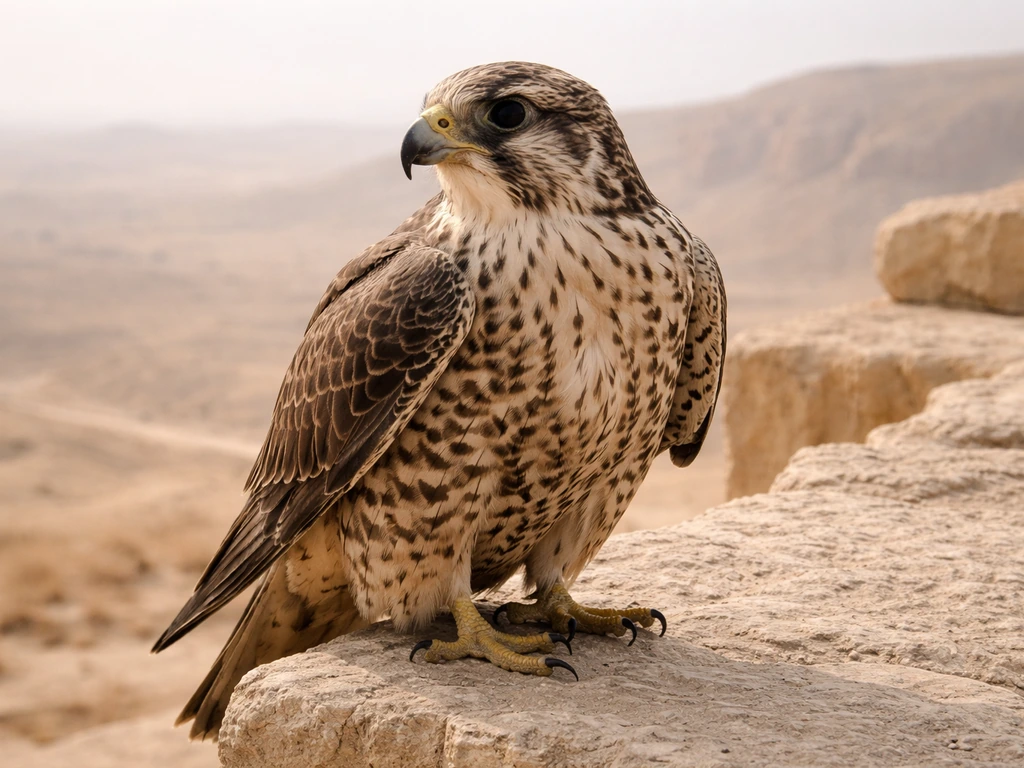
God provided the speckled bird imagery as a picture of Israel, his covenant people. So when people ask what the great speckled bird is in the Bible, the honest answer is: the source verse is Jeremiah 12:9, the exact phrase is a hymn-tradition expansion, and the meaning is a powerful metaphor for God's people being visibly distinct and surrounded by enemies.
The actual Bible verse this comes from

Jeremiah 12:9 is the passage. In the KJV, it reads in full: "Mine heritage is unto me as a speckled bird of prey; the birds of prey round about are against her; come ye, assemble all the beasts of the field, come to devour." The speaker is God, and "mine heritage" refers to God's own people, Israel, described as a speckled bird surrounded and targeted by predatory birds on every side. That image, stark and vivid, is where the entire "great speckled bird" tradition begins. If you are curious about how Thanksgiving traditions select specific birds, you may also want to read why is turkey the thanksgiving bird.
It is worth noting that the word "speckled" shows up elsewhere in the Bible, particularly in Genesis 30 and 31, where Jacob's wages from Laban are described in terms of speckled, spotted, and streaked livestock. Genesis 30:32 mentions "every speckled or spotted sheep," and Genesis 31:10 describes the male goats in Jacob's dream as "streaked, speckled, and spotted." Those passages are about animal markings in a breeding negotiation, not about birds or spiritual symbolism. They are a separate thread entirely. The bird symbolism lives specifically in Jeremiah 12:9.
Where the phrase "great speckled bird" actually comes from
The phrase as most people know it comes from a gospel hymn, not a Bible translation. Reverend Guy Smith wrote the lyrics to "The Great Speckled Bird" during the Fundamentalist-Modernist controversies of the early twentieth century, drawing directly on Jeremiah 12:9. Country music legend Roy Acuff recorded the song in 1936 and added his own verses, making it one of the most recognized gospel songs in American history.
Wikipedia’s biography of blank" rel="noopener noreferrer">Roy Acuff notes that he recorded “The Great Speckled Bird” in 1936, helping make it one of the song’s best-known performances. Smith used the "speckled bird" image from Jeremiah as a metaphor for the true church: distinct, set apart, recognizable, and therefore a target.
The word "great" is an interpretive and emphatic addition from the hymn tradition, not a translation choice from the Hebrew. By the late 1960s the phrase had also entered secular culture, appearing as the title of an underground newspaper published in Atlanta, showing how far the image had traveled from its Jeremiah origins.
What it means spiritually and symbolically
The Jeremiah 12:9 metaphor works on several levels at once. At its most direct, God is lamenting that his covenant people have become like a bird whose unusual markings make it conspicuous among other birds, drawing attack rather than acceptance. Scholars note that the Hebrew word behind "speckled" here is tsâbûa' (צָבוּעַ), a rare term that appears only this one time in the entire Hebrew Bible. That rarity matters: it tells us the word was chosen for a specific effect, not out of routine usage, and it cautions against being overly dogmatic about what exact color or marking pattern is intended. What is clear is the sense of standing out, of being visibly different in a way that invites hostility.
The Hebrew word translated "bird" or "bird of prey" in this verse is 'ayit (עַיִט), which specifically implies a bird of prey rather than a songbird or dove. Commentators in the Lange tradition read the surrounding imagery as predatory: the speckled bird is not just odd-looking, it is itself a bird of prey that is now being attacked by other birds of prey. That layering of predator and prey, of vulnerability and strength, is part of what makes the image so resonant as a metaphor for a covenant community that is both called and exposed.
In the hymn tradition, Reverend Smith flipped the tone slightly toward the triumphant: the great speckled bird represents the true church, marked and identifiable by scripture, standing out from compromised religion but ultimately vindicated. That reading does not contradict the Jeremiah passage so much as it takes the "distinctiveness" imagery and projects it forward into New Testament-style hope. Both readings, the lament of Jeremiah and the triumph of Smith's hymn, share the same core symbol: a bird whose markings make it impossible to ignore.
From a broader bird-symbolism perspective, the speckled bird occupies an interesting space. Where a white dove signals purity and peace, and a raven can carry dual meanings of provision and omen, the speckled bird signals otherness, covenant identity, and the cost of being set apart. It is a symbol that invites reflection rather than simple comfort, which is exactly what the Jeremiah passage is designed to produce in its reader.
Why "speckled" was such a charged image
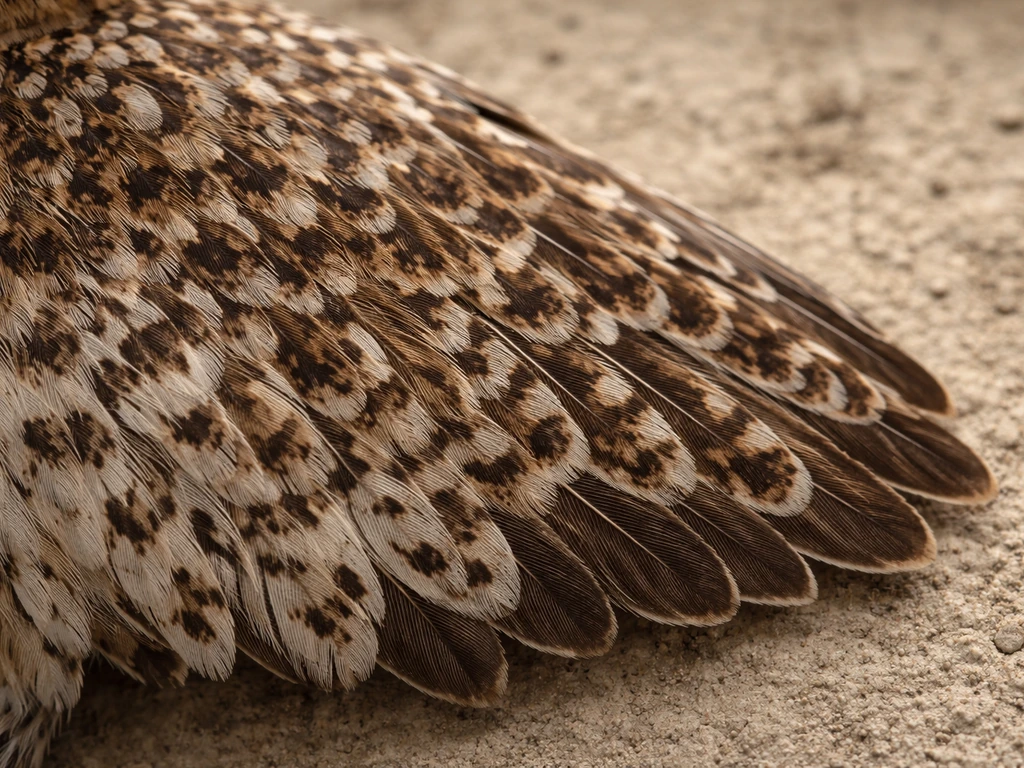
In the ancient Near Eastern world, markings on animals carried meaning. They were used to identify ownership, determine value, and signal category. A bird that was visibly, unusually marked would stand apart from the flock in a way that made it vulnerable precisely because it could not blend in. The speckled pattern, in both the Jeremiah bird imagery and the Genesis livestock passages, functions as a marker of differentiation.
In Jeremiah, that differentiation is spiritual and covenantal: God's people look different, and that difference has consequences. In Genesis, the speckled markings determine economic ownership. The shared thread is that visible markings cannot be hidden, and what cannot be hidden invites response, whether that is conflict, as in Jeremiah, or negotiation, as in Genesis.
The addition of "great" in the hymn title amplifies this. It transforms a lament into a declaration. The speckled bird is not just marked; it is notably, even gloriously marked. That shift in tone is exactly what hymn culture often does with prophetic imagery, taking the raw wound of prophecy and redeeming it into a statement of identity.
How to verify this in your own Bible
If you want to confirm the source for yourself rather than taking anyone's word for it, here is a straightforward process. Start with the verse directly, not with the phrase.
- Open a Bible gateway tool (BibleGateway.com is the most accessible) and go directly to Jeremiah 12:9. Read the full verse in KJV first, since that is the translation closest to how the hymn tradition used it.
- Then read the same verse in NIV, ESV, NLT, and NET to see how translators handle the rare Hebrew words. You will notice some say "speckled bird of prey," others say "mottled bird of prey," and some include a footnote noting the difficulty of the Hebrew term.
- Search the phrase "great speckled bird" (in quotes) across all Bible translations using your preferred Bible search tool. You will find zero results. That confirms the exact phrase is not in any translation.
- Search just "speckled bird" without quotes. You will find Jeremiah 12: 9 as the primary result, plus the Genesis passages about livestock, which will help you see how those two uses differ completely in context.
- Check a brief commentary on Jeremiah 12: 9, whether from BibleHub study notes or a resource like the NET Bible's translator notes, to see how scholars handle the 'ayit and tsâbûa' terms. This gives you the interpretive range rather than locking you into one reading.
- If you want to trace the hymn tradition, look up Roy Acuff's 1936 recording and the attribution to Reverend Guy Smith. That step connects the biblical text to the folk and gospel culture that popularized the phrase.
This process takes about fifteen minutes and leaves you with a grounded, verifiable answer rather than something passed along secondhand. It also builds the habit of distinguishing between what a Bible verse says and what a cultural tradition has built around it, which is a genuinely useful skill when navigating bird symbolism or any other area of spiritual interpretation.
Clearing up common misconceptions

The most common mistake is treating "great speckled bird" as a direct Bible quote. People often say "the Bible calls the church the great speckled bird," when what is accurate is that Jeremiah 12:9 uses a "speckled bird" metaphor for God's heritage, and a gospel hymn from the 1930s built the "great" and the church-application on top of that. In Jeremiah 12:9 (KJV), the speckled-bird imagery describes God’s heritage surrounded and targeted by “birds of prey” and other beasts of the field coming to devour Jeremiah 12:9 uses a "speckled bird" metaphor for God's heritage. The difference matters if you are trying to explain the idea to someone else or ground it in scripture.
A second misconception is conflating the Jeremiah bird imagery with the Genesis speckled livestock passages. They are entirely separate contexts, separate Hebrew words in some cases, and separate theological points. The Genesis passages, covering speckled sheep and goats in Jacob's labor agreement with Laban, have nothing to do with the bird metaphor in Jeremiah. Mixing them produces a muddled reading of both.
A third issue is over-specifying the bird. Because the Hebrew is rare and contested, trying to identify a specific species, whether a starling, a hawk, or any other bird, goes beyond what the text supports. The Institute for Creation Research notes that the "speckled" term appears only once in the Hebrew Bible, which means there is no cross-reference within scripture to pin down exactly what marking or species is meant. The image is meant to function as a metaphor, not as a field guide entry. Responsible interpretation keeps it at the metaphor level: distinctiveness that draws both attention and attack.
Finally, some people assume the "great speckled bird" is a positive symbol throughout, when in Jeremiah the tone is closer to lamentation. God is describing a sorrowful condition, not celebrating it. That same lesson applies when God sends a red bird, because traditions can overlay scripture unless you return to the original context. The hymn redeems that lament into something hopeful, but reading only the hymn and skipping Jeremiah 12 in context means you miss the weight and grief in the original image. Both tones belong together for a full picture.
Literal text vs. living symbol: how to hold both
The great speckled bird is a good example of how biblical imagery travels. A metaphor from a seventh-century-BC lament becomes a verse in a 1930s gospel hymn, which becomes a country music standard, which becomes a countercultural newspaper title by 1969. Along the way the image accumulates layers of meaning: suffering, distinctiveness, perseverance, and pride. None of those later layers are illegitimate, but they are additions, not replacements for the original passage.
When you encounter any bird symbol in the Bible, the same approach applies. Start with the actual Hebrew or Greek term, check what it says in context, look at how translators have handled it across major versions, and then trace any cultural or folk tradition that has grown around it. That sequence keeps interpretation honest while still leaving room for the genuine spiritual resonance that makes these images worth studying in the first place.
The great speckled bird, once you follow it back to Jeremiah 12:9, turns out to be a richer and more sobering image than the hymn alone suggests, and that depth is exactly what makes it worth knowing. This same Jeremiah 12:9 bird imagery connects to why people ask, "Micah 1:16: what bird is mentioned? That same approach helps you answer what bird did God provide for the Israelites by tracing the wording back to its specific Bible passages.
That same approach helps you answer what bird did God provide for meat in the wilderness by tracing the wording back to its specific Bible passages. ". If you are wondering why turkey is linked to Thanksgiving, it helps to ask what the tradition is claiming and then trace it back to its origins the way this verse-symbol is traced back to Jeremiah why is turkey the thanksgiving bird.
Yes, turkey is often mentioned in connection with Thanksgiving traditions rather than as a named bird in the specific Bible verses discussed in this article. If you are wondering whether the Bible explicitly names turkey as a bird, this article’s answer is essentially no turkey as a bird in the Bible.
FAQ
Is “great speckled bird” something the Bible explicitly calls the church or God’s people?
Not as that exact wording. Jeremiah 12:9 uses a “speckled bird” metaphor for God’s heritage, and “great” plus the common church-focused framing come from later hymn tradition rather than a direct Bible translation choice.
Do different Bible translations use the same phrase for Jeremiah 12:9?
They do not keep the same English wording. Translations vary in how they render “speckled” and the bird term, so a more reliable check is to compare the verse wording side-by-side rather than relying on a single familiar phrase.
Could the “speckled bird” be identified as a specific bird species in the text?
Usually not responsibly. The text functions as a metaphor, and the Hebrew term for “speckled” is rare, so trying to name a precise modern species (hawk, starling, etc.) often goes beyond what the verse supports.
Why does the passage mention “birds of prey” and “assemble the beasts,” does it mean the metaphor is about literal animals?
The surrounding language is graphic and includes predators, but the target of the metaphor is God’s people as a “heritage” that is under attack. The imagery is meant to intensify the lament, not to teach animal identification.
What changes if I only read the hymn “The Great Speckled Bird” without Jeremiah 12:9?
You may miss the tone shift. The hymn can emphasize vindication and hope, while Jeremiah presents a lamenting description of a vulnerable condition, so reading the chapter in context matters for the emotional and theological balance.
How do I avoid mixing up Jeremiah’s bird imagery with the “speckled” wording in Genesis?
Treat “speckled” as a shared surface detail, not a shared symbol. Genesis passages describe livestock markings in a negotiation context, while Jeremiah uses a bird metaphor for covenant identity and conflict.
If I want to confirm the meaning myself, what is the best step-by-step method?
Read Jeremiah 12:9 in context first, then check how major translations render the key terms, and only after that compare what hymn and folk tradition added. This prevents you from treating later cultural framing as original Scripture.
Is the word “speckled” in Jeremiah meant to imply something about purity or holiness?
Not primarily. The emphasis is distinctiveness that becomes conspicuous, which leads to hostility. That differs from symbols like the dove that are more consistently tied to peace themes.
Why do some people assume the symbol is always positive?
Because later tradition can shift prophetic imagery into triumph language. Jeremiah’s tone, however, is closer to grief and complaint, so using the symbol as a blanket “good omen” can flatten what the verse is actually describing.
What should I do if I’m hearing someone claim “the Bible says the church is the great speckled bird”?
Ask them where in the text they see that exact phrasing. Then redirect to Jeremiah 12:9 for the original “speckled bird” metaphor and explain that “great” and the common church application come from hymn tradition.