Turkey became the Thanksgiving bird gradually, not all at once. The short answer: turkeys were plentiful across colonial New England, they were practical to raise and transport, and one determined 19th-century editor named Sarah Josepha Hale spent nearly four decades writing turkey into America's idea of a proper Thanksgiving meal. By the time Lincoln made Thanksgiving a national holiday in 1863, turkey was already sitting at the head of the table in the popular imagination. For a related bird-in-the-Bible angle, see what bird did God provide for meat in the wilderness. The industrial food system then locked that in for good. But the full story is more layered than that, and it involves birds, symbols, and cultural forces that are worth understanding on their own terms.
Why Is Turkey the Thanksgiving Bird and How It Won

What people actually ate before turkey took over
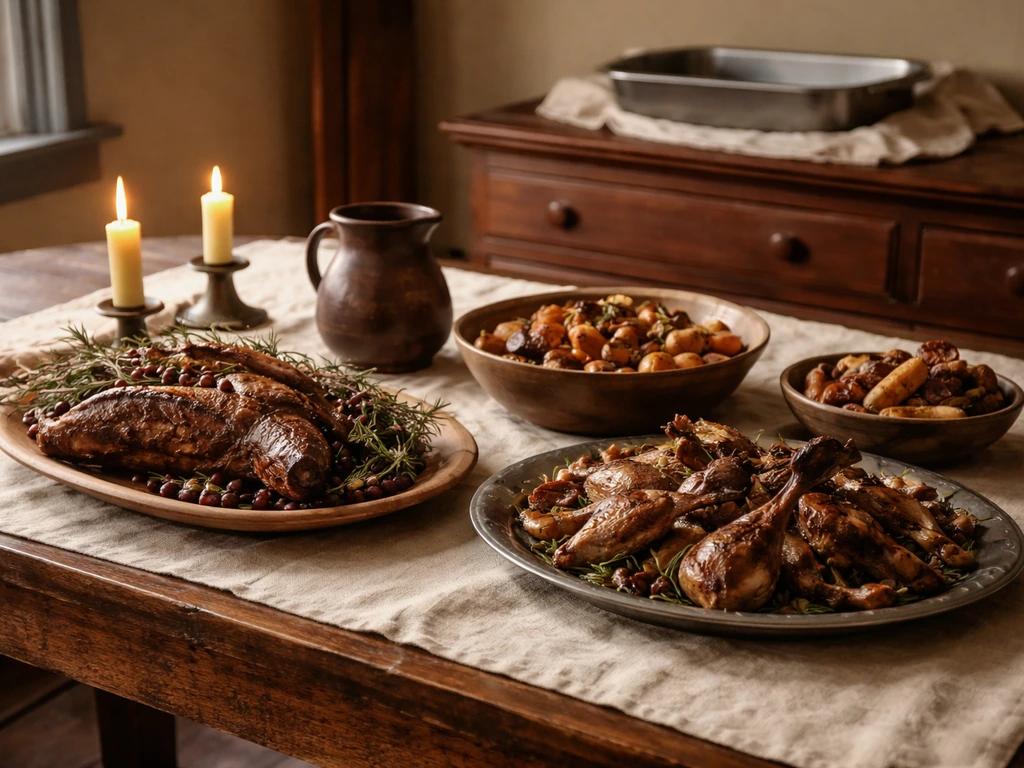
The 1621 Plymouth harvest feast, the event most Americans point to as the origin of Thanksgiving, almost certainly did not look like today's holiday table. The only eyewitness account of that gathering, written by Edward Winslow, mentions just two foods explicitly: venison brought by the Wampanoag and wildfowl. That word 'wildfowl' is important because it could mean ducks, geese, or any number of birds native to the region. It does not specifically name turkey. The short answer is that turkey is not explicitly named in the Bible, even though “birds” and “fowl” appear in various passages. Alongside those, Smithsonian researchers note that colonists and their Wampanoag guests likely ate eels, lobster, clams, and mussels, foods that fit the coastal New England environment but have been almost entirely erased from the popular Thanksgiving myth.
Moving into the late 1700s and early federal period, Thanksgiving tables across New England were diverse by today's standards. Goose and duck were common centerpiece birds, and contemporary accounts suggest that passenger pigeons and even swans appeared on holiday menus. Chicken, guinea fowl, and other farmed poultry were all raised in significant numbers and competed naturally with turkey as holiday protein. The idea that turkey was always the obvious choice simply is not supported by the historical record. Its rise to dominance was a cultural process, not an inevitable one.
A timeline of how turkey got there
Understanding the arc helps. Turkey's path from 'one of several birds' to 'the Thanksgiving bird' moves through a few distinct moments over roughly two centuries.
| Period | Key Development | What It Meant for Turkey |
|---|---|---|
| 1621 | Plymouth harvest feast; wildfowl and venison documented | Turkey possibly present but not named or central |
| 1672 | John Josselyn records 'threescore broods' of young turkeys near Plymouth marshes | Wild turkeys confirmed as regionally abundant |
| 1827 | Sarah Josepha Hale publishes first literary Thanksgiving scene with roast turkey 'at the head of the table' | Turkey elevated to symbolic centerpiece in print |
| 1850s–1860s | Hale uses Godey's Lady's Book to promote Thanksgiving traditions, including roast turkey, stuffing, and pumpkin pie recipes | Turkey image planted in hundreds of thousands of American households |
| October 3, 1863 | Lincoln's proclamation makes Thanksgiving a national annual holiday (last Thursday in November) | A fixed national date creates a repeating demand anchor for holiday foods |
| 1892 | Harper's Bazar publishes a Thanksgiving poster pairing turkey with pumpkins | Turkey fully embedded in mainstream holiday visual culture |
| 20th–21st century | Industrial turkey production scales to meet seasonal demand; USDA tracks production in billions of pounds annually | Supply infrastructure makes turkey the default, affordable centerpiece |
Why turkey specifically made sense
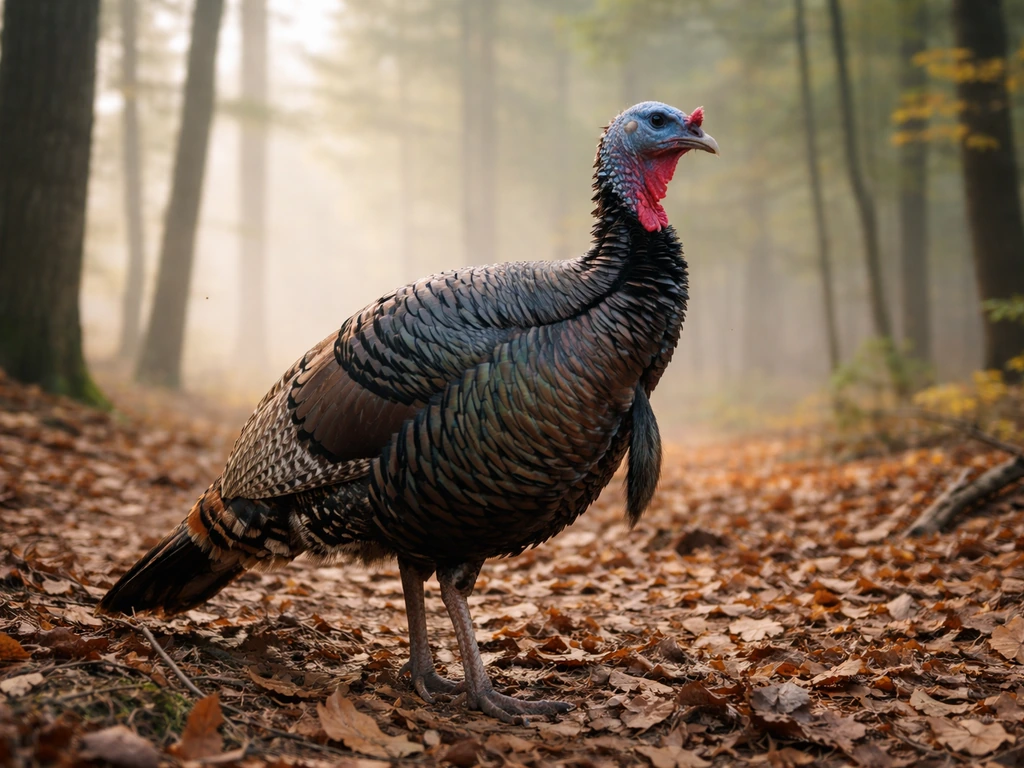
Practical arguments for turkey are real and worth taking seriously. Wild turkeys were genuinely abundant in New England and the broader eastern seaboard well before anyone was calling it 'Thanksgiving.' John Josselyn's 1672 observation of large flocks near Plymouth marshes is one data point; the general density of wild turkey populations across colonial North America is another. When settlers needed a large bird that could feed a gathering, turkey was a natural candidate in ways that, say, a duck simply was not: a single adult bird could weigh 15 to 30 pounds and serve a crowd, while a duck might feed three or four people at most.
There was also a financial logic. Turkeys were not prized for secondary products the way chickens (eggs), cows (milk), or sheep (wool) were. Raising a turkey to slaughter it was economically rational in a way that killing a laying hen was not. That made turkey a socially acceptable feast animal without the waste anxiety attached to other farm animals. Cities like New York saw their largest turkey sales happen in November and December specifically, with turkeys being transported by boat and freight from rural farms to urban markets in time for the holiday season. USDA ERS notes that turkey demand peaks around November and that producers build up stocks to meet seasonal demand largest turkey sales happen in November and December. The supply chain for holiday turkey was functioning before the 20th century's industrial farming era made it effortless.
As a centerpiece, turkey also had visual weight. A whole roasted turkey on a platter communicates abundance in a way that a platter of shellfish or a bowl of eel stew simply does not. That symbolic function matters, and it connects to something deeper about why humans use particular animals as ritual foods, a point worth returning to.
How media, cookbooks, and holiday branding sealed the deal
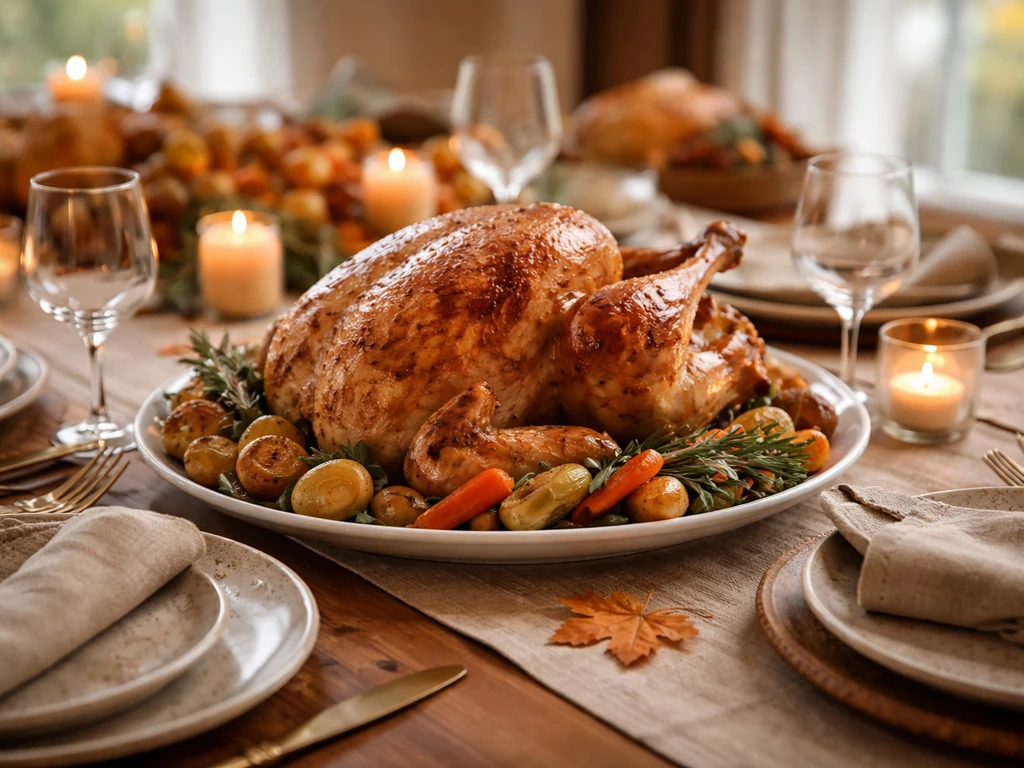
The single most important human actor in turkey's rise is Sarah Josepha Hale, the editor of Godey's Lady's Book from 1837 to 1877. In 1827, she published what scholars consider the first literary depiction of Thanksgiving featuring roast turkey as the table centerpiece. Over the following decades she used Godey's, which reached roughly 150,000 subscribers at its peak and was read by an estimated half million Americans, to push a consistent vision of what a 'proper' Thanksgiving meal looked like: roast turkey, stuffing, pumpkin pie. She also spent 36 years writing letters to presidents, governors, and senators lobbying for a national Thanksgiving holiday. Lincoln's 1863 proclamation was in large part the fruit of that campaign. History.com notes that Lincoln's 1863 proclamation helped make Thanksgiving a regular national holiday tradition.
Once there was a fixed national holiday date, publishers and advertisers had a reliable seasonal hook. By 1892, Harper's Bazar was producing Thanksgiving imagery that paired turkey with pumpkins as a visual shorthand the public already recognized. Cookbooks of the late 19th century standardized turkey recipes, stuffing variations, and gravy techniques that turned turkey preparation into a teachable, repeatable domestic skill. Each generation that learned to cook Thanksgiving turkey from a cookbook or from a mother who learned it the same way reinforced the tradition without questioning its origins. The feedback loop between media, recipe culture, and domestic practice was self-reinforcing.
The 20th century added industrial scale. Modern USDA data tracks turkey production in the hundreds of millions of pounds per season, with breeding and processing technology designed to keep retail prices accessible specifically around November. The holiday and the supply chain co-evolved to the point where turkey is now both culturally expected and economically optimized for Thanksgiving. Changing the centerpiece would require dismantling infrastructure, not just tradition.
Turkey as symbol: what the bird actually represents
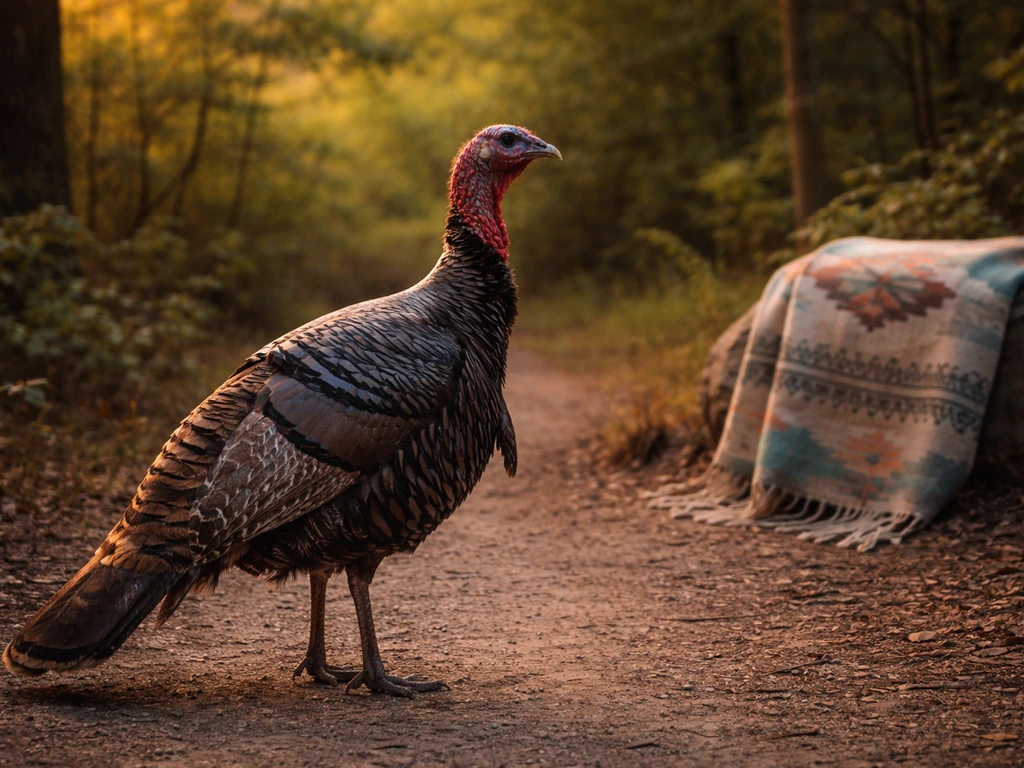
This is where the purely historical account gets more interesting, at least on a site devoted to what birds mean. Turkey was not adopted as a Thanksgiving symbol purely by accident or market forces. It carried, and still carries, a cluster of symbolic associations that made it feel right for a harvest-abundance celebration in a way that other birds did not.
In many Indigenous traditions of North America, the turkey was associated with abundance, harvest, and communal generosity. Turkey feathers appear in ceremonial contexts across multiple cultures, linked to fertility and the gifts of the earth. The turkey is a ground-dwelling bird that forages for seeds, nuts, and berries, making it symbolically connected to the harvest landscape in a direct, embodied way. It does not soar like an eagle or hunt like a hawk. It moves through the same fields and forests that produce food. That proximity to the earth and to sustenance is symbolically coherent with a harvest feast.
In broader bird symbolism, feathers have long functioned as carriers of spiritual meaning, connecting the material world to something larger. The turkey's impressive feather display, particularly the male's fanned tail, communicates abundance visually in a way that resonates across cultures even when the specific symbolism is not consciously invoked. When you see a roasted turkey on a table surrounded by harvest vegetables, you are encountering something that functions almost like a visual prayer for abundance, whether or not anyone in the room thinks of it that way. Some people also connect the idea of divine guidance to specific bird symbolism, such as the meaning of when God sends a red bird. The sibling question of whether turkey appears in the Bible is worth noting here: the bird is not explicitly named in scripture, which distinguishes it from birds like the quail that God provided for the Israelites in the wilderness, or the birds invoked in books like Micah. For the specific bird references in the Bible, you can also look at where birds are mentioned in Micah. You might be wondering what people mean when they ask what the Great Speckled Bird is in the Bible. Many people also wonder which birds are connected to God’s favor, not just which bird appears in scripture God’s favorite bird. Turkey's spiritual weight comes from Indigenous and folk traditions rather than from the biblical canon that shaped early American religious culture.
That gap is actually telling. Turkey became a Thanksgiving symbol not through sacred text but through lived seasonal practice, editorial influence, and cultural repetition. Its symbolic power is real, but it was constructed over time rather than inherited from ancient tradition. That makes it a fascinating case study in how birds acquire meaning, which is something worth reflecting on if you approach bird symbolism as a living, evolving framework rather than a fixed code.
Common myths about the first Thanksgiving, corrected
A few persistent misconceptions keep circulating, and it is worth addressing them directly. In the biblical story, God also provided a specific bird for the Israelites as part of their wilderness food God provided a bird for the Israelites. If you are also curious about what the first bird mentioned in the Bible might be, that is a related question about how specific animals appear in scripture rather than in Thanksgiving history.
- 'Turkey was definitely served at the 1621 feast.' The primary sources do not confirm this. Winslow's account mentions wildfowl generically, and turkey may well have been included, but the sources do not name it. The Library of Congress has pushed back on overcorrections that completely remove turkey from the picture, noting that turkeys were present in the regional environment, but that is different from calling it confirmed.
- 'Benjamin Franklin wanted the turkey as the national bird.' This story comes from a private letter Franklin wrote in 1784 where he criticized the bald eagle's character and, in passing, said a turkey would be a more respectable bird. He was not seriously lobbying for it as a national symbol, and the letter was never intended for public advocacy.
- 'Thanksgiving has always been in November.' Regional Thanksgiving observances existed earlier in the calendar throughout colonial history. The last-Thursday-in-November standard came from Lincoln's 1863 proclamation, and the specific date shifted again in 1941 when Congress formally set it as the fourth Thursday in November.
- 'Turkey replaced chicken as the Thanksgiving bird.' Chicken was actually not the main competitor historically. Goose, duck, and venison were more common alternatives in early American Thanksgiving contexts. Chicken was widely available but associated more with everyday meals than with feast occasions.
- 'Hale invented Thanksgiving.' She did not invent it, but she was instrumental in standardizing and nationalizing it. Regional Thanksgiving celebrations predate her campaign significantly. What she shaped was the national, uniform, calendar-anchored version we recognize today, along with its menu.
Where to dig deeper
If you want to go beyond the popular history and look at the actual evidence, there are several productive directions. Start with the primary sources: Edward Winslow's 1621 letter (often called Mourt's Relation) and William Bradford's Of Plymouth Plantation are the two foundational accounts of early Plymouth life, and both are accessible online and in good modern editions. They will give you a direct sense of how thin the evidence is for specific foods at the 1621 feast.
For the 19th-century media angle, original issues of Godey's Lady's Book are held at institutions including the University of Vermont's digital collections and the New York Society Library's special collections. Reading Hale's actual editorials on Thanksgiving, rather than summaries of them, is genuinely illuminating. Her vision of Thanksgiving as a national unifying ritual, with a specific menu and domestic ritual attached, comes through clearly in her own words.
The Library of Congress's Thanksgiving collections include period images, posters, and curated historical references that show how turkey became visually standard in American print culture across the late 19th century. The National Archives holds Lincoln's 1863 Thanksgiving proclamation and related presidential Thanksgiving materials that put the holiday's formalization in its Civil War context. The Pilgrim Hall Museum in Plymouth, Massachusetts has assembled one of the most careful documentary threads on the question of turkeys specifically, including the John Josselyn quote and analysis of when and how turkey's centerpiece role solidified.
For the symbolic and spiritual dimension of turkey in Native American and Indigenous contexts, ethnographic literature on Pueblo, Cherokee, and other nations' relationships with the turkey as a ceremonial bird offers a perspective that the mainstream Thanksgiving history almost entirely ignores. That thread connects naturally to broader questions about what birds represent in North American spiritual traditions, which is a rich area of inquiry far beyond the holiday table.
One practical step: if you want a concrete research starting point, search for historic Thanksgiving menus from the mid-to-late 19th century. Newspaper archives from the 1870s through 1900s, accessible through resources like Chronicling America at the Library of Congress, contain hotel menus, family meal descriptions, and advertisements that show turkey's actual market dominance in real time, not just as a cultural symbol but as a commercial product tied directly to the Thanksgiving calendar.
FAQ
If turkey wasn’t named at the 1621 Plymouth feast, when did people start serving it specifically for Thanksgiving?
Turkey appears as a clear centerpiece much later than 1621 in the cultural record. A major turning point is the early to mid-1800s, when editorial and popular media repeatedly associated Thanksgiving with a roast turkey menu, until the bird became the default by the late 19th century.
Were other birds actually common on early American Thanksgiving tables?
Yes. Contemporary accounts from parts of New England and the broader period show that goose, duck, swan, and other poultry could all be holiday centerpieces. Turkey competed with these options long enough that later “always turkey” stories are an oversimplification.
Why was turkey the “right size” compared with other wild birds?
A key practical advantage is that a single adult turkey often weighed far more than typical ducks, allowing one animal to feed a large gathering. That mattered at a time when people were planning around what they could reliably catch or purchase in season.
Did raising turkey cost more or less than raising other poultry?
Turkey was often economically sensible because it was mainly raised for meat rather than for ongoing products like eggs or dairy. That reduced the sense of “wasting” a living asset, which made turkey a socially acceptable feast choice.
Was the decision mostly about markets and logistics, or mostly about media and tradition?
It was a combination. Markets and transport helped turkey stay available near Thanksgiving, but the standardized roast-turkey image was repeatedly reinforced by widely read publications and cookbook culture, which trained families to expect the same menu year after year.
Why did the U.S. formal holiday date (Lincoln’s proclamation) matter for turkey?
A fixed holiday date made turkey purchasing and advertising easier, giving retailers and publishers a predictable seasonal demand window. Once that timing stabilized, supply chains and recipes aligned around late-year turkey availability.
Does turkey’s symbolism explain its adoption, or did symbolism come after it became popular?
Symbolism helped make the bird feel fitting, but it did not work alone. The bird gained ritual meaning through lived seasonal practice, repeated imagery, and domestic cooking routines, so the “meaning” and “popularity” reinforced each other over time.
Is turkey symbolism in Indigenous traditions the same as mainstream Thanksgiving symbolism?
Not necessarily. Many Indigenous communities associated turkey with abundance, harvest, and ceremonial contexts, but mainstream Thanksgiving storytelling later simplified these meanings into a generic “harvest abundance” message focused on the roast bird and the table ritual.
Why did roasted whole turkey become the visual centerpiece, specifically?
A whole roast turkey has strong “abundance signaling” on a platter, it is easy to photograph and describe, and it creates a clear focal point for sharing. This visual clarity made it an ideal symbol for posters, magazines, and family cookbooks.
What’s a common misconception people have about turkey and the Thanksgiving story?
A frequent mistake is treating 1621 as the exact blueprint for today’s meal. The evidence suggests the 1621 gathering used a different mix of foods, and turkey’s centerpiece role developed through later cultural, editorial, and market forces.
If I want to verify turkey’s timeline myself, what kind of sources should I look for?
Look for dated primary artifacts, such as historic Thanksgiving menus, period newspaper hotel ads, and late-1800s cookbook editions. These show what was actually being offered to customers and families during Thanksgiving season, not what later summaries claim.
Which bird is often seen as a sign from heaven, plus a step-by-step way to interpret your specific encounter.

Cross-cultural guide to birds symbolizing someone from heaven, with meanings, context clues, and how to validate sightin
Most common angel-associated birds and how to identify them, plus meaning and tips to avoid mix-ups like doves