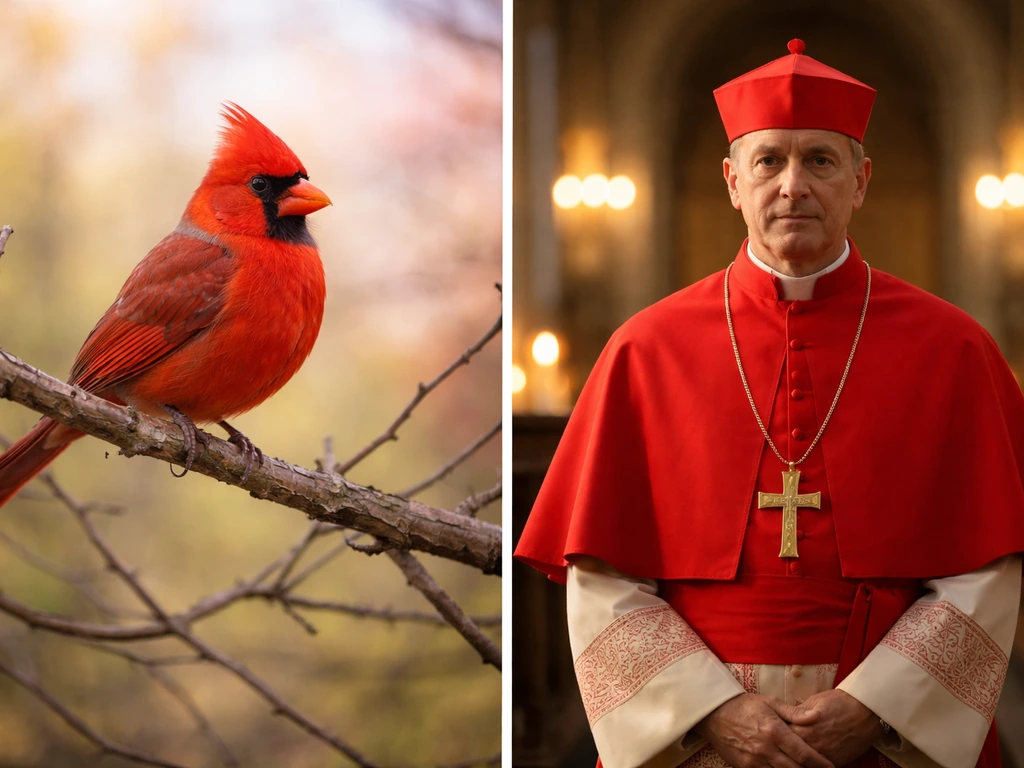
The cardinal bird got its name from the red robes and caps worn by Roman Catholic cardinals. Early English speakers saw that unmistakable scarlet plumage and made the connection immediately: this bird looks like a church cardinal. The English term for the bird is recorded as far back as the 1670s, and every major etymology source traces it directly to that visual comparison. The bird was not named after a specific person, a saint, or a single scientist. It was named by common cultural usage, long before any taxonomist formally described the species in Latin.
How Did the Cardinal Bird Get Its Name? Etymology and History

Eleanor Hartwell
27 Apr 2026
What the cardinal was actually named after

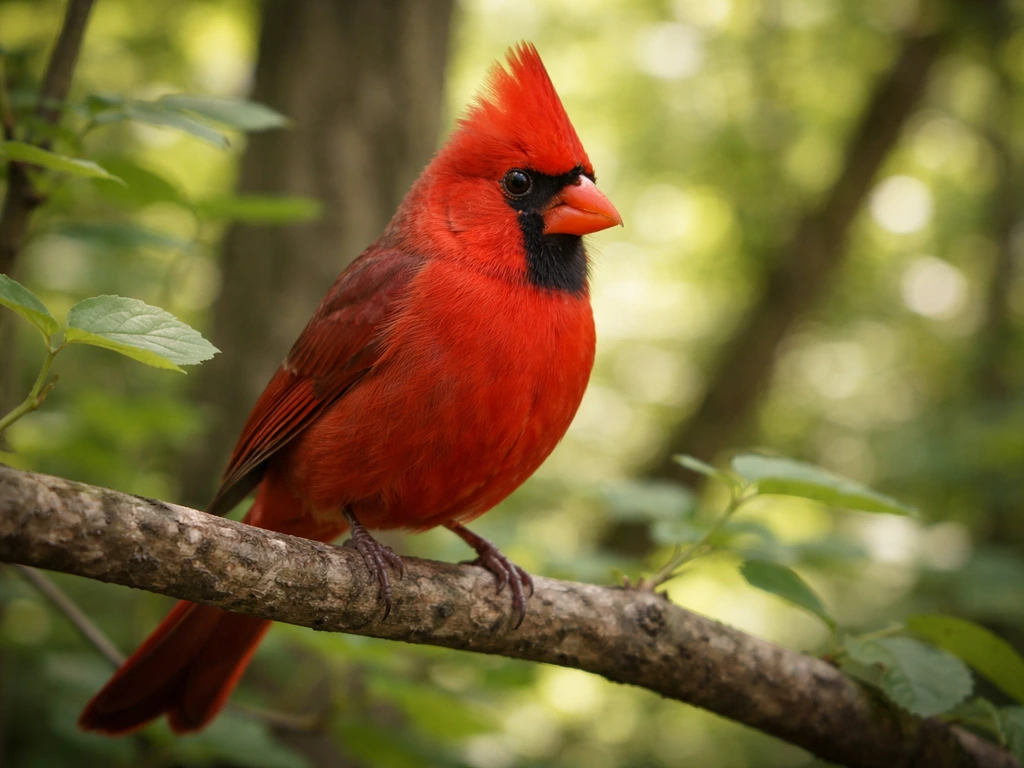
The name comes down to one thing: color. A male cardinal's plumage is a deep, saturated red, and Roman Catholic cardinals had been wearing vivid scarlet robes and caps for centuries before Europeans encountered this bird in North America. The resemblance was obvious enough that English speakers simply started calling it the cardinal bird.
One historical natural history text puts it plainly: 'The Cardinal is one of the most brilliant of American birds: the name is derived from its color, which is a deep red. ' The Indiana DNR's fact sheet on the Northern Cardinal phrases it the same way, saying the bird was 'named for the red hat and robes of a church prince.
' That framing, color linked to clerical dress, is the consistent explanation across wildlife agencies, etymology dictionaries, and ornithological references.
The bird was also called the 'Virginian Nightingale' in early records, and 'red-bird' remained a common informal name for generations. Both of those alternatives point to the same two features that defined the cardinal for early observers: where it lived (Virginia, meaning the broader eastern colonies) and what color it was. But 'cardinal bird' won out in standard English usage, and it did so because the church-robe comparison was so culturally legible to a European audience.
Who named it: common usage vs. formal taxonomy
This is where it helps to separate two different kinds of naming. The common name 'cardinal' was not assigned by a single taxonomist. It evolved through everyday cultural usage among English speakers in the late 1600s, which is why Etymonline can point to a 1670s attestation for the bird sense of the word without crediting one author or scientist. People saw the bird, saw the color, made the comparison, and the name spread.
The formal scientific naming is a different story with specific authors attached. Carl Linnaeus gave the species its scientific description in 1758, which is why the species authority reads Cardinalis cardinalis (Linnaeus, 1758) in taxonomy databases like ITIS and GBIF. Later, in 1838, Charles Lucien Bonaparte established the genus Cardinalis formally, which is why ITIS separates the two: species authorship goes to Linnaeus, genus authorship to Bonaparte. The early ornithologists Francis Willughby (1676) and John Ray (1678) also documented the bird in Latin and English, which is part of why the name trail runs back into the 1670s. But none of these figures invented the common name. They formalized and Latinized a label that English speakers were already using.
Walking through the etymology of 'cardinal'

Understanding why this comparison made so much sense requires looking at what 'cardinal' actually means as a word. The chain runs like this:
- Latin cardo (genitive: cardinis) means 'hinge' or 'pivot point,' as in something that everything else turns on.
- From cardo comes the Latin adjective cardinalis, meaning 'of chief importance' or 'principal,' in the sense of being the hinge on which everything depends.
- The Roman Catholic Church applied cardinalis to its senior bishops, who were among the most important figures in the Church hierarchy. The English word 'cardinal' for a church official comes directly from this Latin root.
- Those church cardinals wore (and still wear) vivid scarlet robes and caps as part of their official dress.
- When English speakers encountered the red bird of eastern North America, they applied the same word to it by analogy: this is the bird that looks like a cardinal.
- By the 1670s, 'cardinal bird' was in documented English use, and by the time Linnaeus formalized the species in 1758, 'cardinal' was the established common name.
The Helm Dictionary of Scientific Bird Names, one of the most authoritative references on bird-name derivations, traces the genus name Cardinalis explicitly through this pathway from cardo to cardinalis to the church office to the red plumage comparison. So the word 'cardinal' carries a layered meaning even before you get to the bird: it means something that is central, pivotal, and of the highest rank. That added weight is part of why the name has held such resonance beyond simple color identification.
When and why the name stuck historically
The timing matters. European settlers and naturalists were actively cataloguing the wildlife of eastern North America in the 1600s, and they needed names for everything they encountered. The red bird they found in Virginia and surrounding regions had no European equivalent, so they reached for comparisons. The church cardinal comparison was not just about color in isolation.
Roman Catholic cardinals were among the most visually distinctive, culturally prominent figures in European life at the time. Their scarlet dress was not decorative in a casual sense. It was deeply symbolic, associated with rank, authority, and sacrifice (red being the color of the blood of Christ and of martyrdom). For a European observer to compare a brilliantly red bird to a cardinal was to use one of the most recognizable color symbols in their cultural vocabulary.
Willughby's 1676 and Ray's 1678 references are the earliest documented anchor points in the formal record, but the name was almost certainly in spoken use before those written records. By the time the Century Dictionary documented 'Cardinal-bird (Cardinalis virginianus)' as a standard entry, the name had been in steady English use for generations. Linnaeus's 1758 scientific description simply codified what common usage had already established, translating the cultural name into formal Latin taxonomy.
How the naming connects to cardinal symbolism
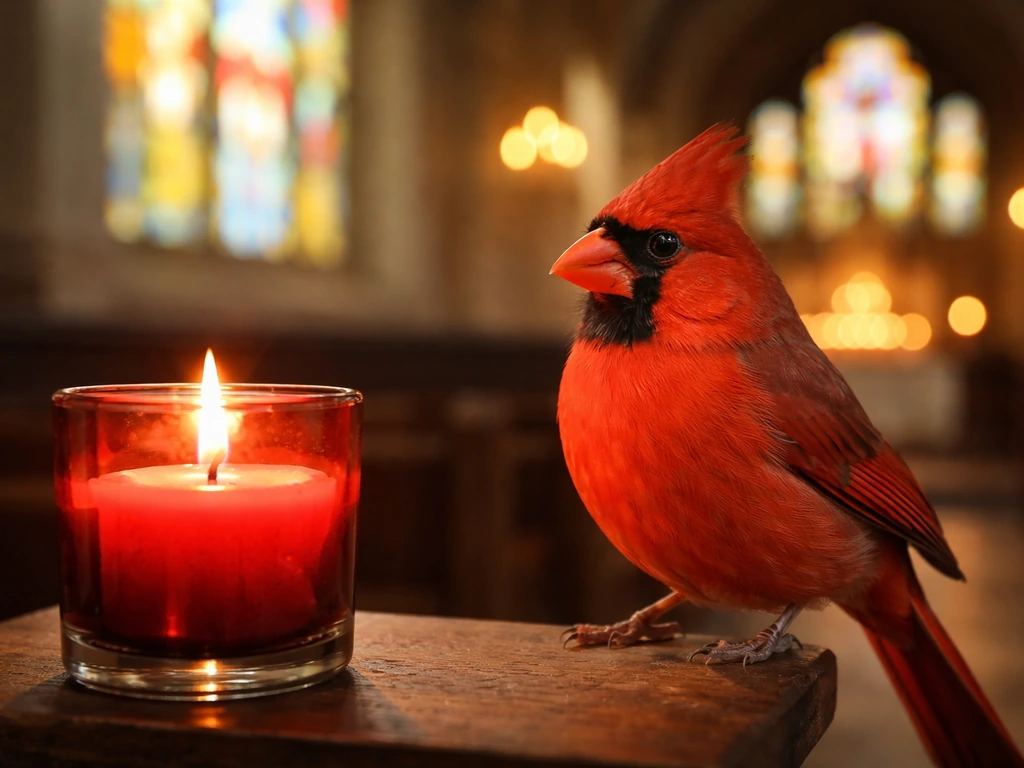
Once you understand that the bird's name is rooted in religious authority and vivid red symbolism, the spiritual and cultural meanings that people attach to cardinals start to feel less like coincidence and more like a logical extension of the name itself. If you are wondering why the cardinal is also treated like a Christmas bird, it comes down to how people connect vivid red birds to seasonal symbolism cardinals start to feel less like coincidence.
Red in many traditions carries meanings of vitality, passion, life force, and sacrifice. The Catholic Church's use of scarlet was deliberate and theologically layered. When the bird was named after that tradition, it absorbed some of those associations culturally, even for people who never made the connection consciously. If you are asking what the cardinal bird means to people today, it helps to separate everyday symbolism from the name’s historical word origins.
The idea that a cardinal sighting represents a visit from a departed loved one, or a message from heaven, draws on that same instinct the original namers had: this bird is too vivid, too arresting, too unmistakable to be ordinary. Some people read a cardinal bird as a sign from heaven, connecting its vivid red to divine presence or a message. The church cardinals in their scarlet robes were set apart from ordinary clergy visually and symbolically.
The bird carries that sense of being set apart. In biblical symbolism, red feathers and birds have been read as signs of divine presence and protection. In the Bible, the cardinal bird meaning is often connected to divine presence and protection through its vivid red coloring cardinal bird meaning in the bible. In Native American traditions, the cardinal's red is often associated with vitality, the south direction, and renewal.
Those meanings do not require knowledge of the Latin etymology to feel real, but the etymology does show that the naming process itself was always deeply tied to the weight that red and religious authority carried in Western culture.
The word 'cardinal' meaning 'of chief importance' adds another layer worth sitting with. If a cardinal virtue is a foundational virtue, and a cardinal direction is a primary direction, then the cardinal bird carries, embedded in its very name, a suggestion of something primary and essential. That is not a stretch of interpretation. It is baked into the etymology. Communities that read cardinal sightings as meaningful messages are, consciously or not, working with a name that already implies significance and centrality.
How to verify this yourself today
If you want to confirm any of this directly, here are the best places to look and the exact terms to search:
| What you want to verify | Where to look | Search term or path |
|---|---|---|
| Earliest English attestation of 'cardinal' for the bird | Etymonline (etymonline.com) | Search: cardinal — look for the bird sense, listed as 'attested from 1670s' |
| Formal species authorship (Linnaeus, 1758) | ITIS (itis.gov) or GBIF (gbif.org) | Search: Cardinalis cardinalis — check 'Taxonomic Authority' field |
| Genus authorship (Bonaparte, 1838) | ITIS (itis.gov) | Search: Cardinalis — look at genus-level entry, separate from species entry |
| Scientific name etymology (cardo/cardinalis pathway) | Helm Dictionary of Scientific Bird Names (Jobling) | Search: Cardinalis — available as PDF via open academic sources; search 'Jobling bird names PDF' |
| Common name rationale confirmed by a wildlife agency | Indiana DNR species page | Search: Indiana DNR Northern Cardinal — look for the 'named for' language in the description |
| Historical English usage in a major dictionary | The Century Dictionary (archive.org) | Search: Century Dictionary cardinal bird — documents 'Cardinal-bird (Cardinalis virginianus)' |
For the etymology chain specifically, Etymonline is the fastest free source with a direct statement. For taxonomy and authorship, ITIS is the authoritative U.S. government taxonomy database and will show you both the Linnaeus (1758) species credit and the Bonaparte (1838) genus credit on the same page. If you want the deepest linguistic and historical name derivation, blank" rel="noopener noreferrer">Jobling's Helm Dictionary is the ornithological standard, and scanned versions are findable through academic repositories. Between those three sources, you can confirm the full picture: cultural naming in the 1670s by English speakers comparing the bird's red color to church cardinals' robes, formalized by Linnaeus in 1758 scientific nomenclature, with the genus later organized by Bonaparte in 1838.
FAQ
Was the common name “cardinal” invented by Linnaeus or another scientist?
No. The common name “cardinal bird” developed through everyday English usage as a visual comparison, and it was already established before Linnaeus. Linnaeus later provided the formal Latin species description, which codified a name people were already using in English.
Does the scientific genus name mean the same thing as the English common name?
The “cardinal” in Latin taxonomy (Cardinalis) and the English “cardinal bird” are related, but they are not the same step. Common usage produced the English label based on red church rank, then later taxonomists translated and organized it into scientific form with separate credits for species and genus.
Why did older names like “Virginian nightingale” and “red-bird” not stick as the main name?
If you hear “Virginian nightingale” or “red-bird,” they refer to other naming choices based on location or appearance. Those names did not replace the dominant “cardinal bird” label long-term because the “church cardinal” comparison was more distinctive to European English speakers than plain color or region alone.
Are “sign from heaven” beliefs proof of why the bird got its name?
Yes, but it is indirect. Some people treat a cardinal sighting as spiritual or meaningful, but that tradition is not part of the original naming reason. The etymology is about how English speakers described the bird’s color, while later symbolism is a separate layer that people attached to the vivid red bird.
Does the word “cardinal” meaning “chief importance” explain the bird name?
“Cardinal” also means “chief” or “highest rank” in English, which can reinforce the symbolism people feel today. However, that sense is an added resonance, not the primary historical naming mechanism described by the early English comparison.
Which religious “cardinals” were the early English name-makers likely referring to?
In most European contexts, “cardinal” would point to the Roman Catholic office, because cardinals were the most visually recognizable high-rank religious figures with distinctive scarlet attire. If you live in a non-European context, the cultural reference might not be intuitive, but the historical English naming still points to that specific clerical dress.
Why do taxonomy entries show different dates and author names (like Linnaeus and Bonaparte)?
Scientific names can look confusing because genus and species can have different author dates. The key practical rule is to check both parts: one author and year for the species description and another for the genus establishment, since different researchers may have published those steps at different times.
Can the bird have different names in different places, even if it has the same scientific name?
Be careful not to equate “cardinal bird” with the bird being taxonomically a “cardinal” in any single modern language. Common names vary by region and language, while the Latin binomial is the stable scientific label, maintained through taxonomic rules.
What should I check if I want to confirm the etymology versus the scientific naming credits?
If you want to verify the “how it got its name” claim quickly, focus on sources that explicitly describe the common-name derivation (not only taxonomy). A practical approach is to check one linguistic etymology source for the common-name pathway, and one taxonomic database for the formal Linnaeus and Bonaparte credits.
Next Article
Which Came First: Cardinal Bird or Cardinal Priest?
Cardinal bird vs cardinal priest: which term came first, with timelines, definitions, and a quick decision checklist.