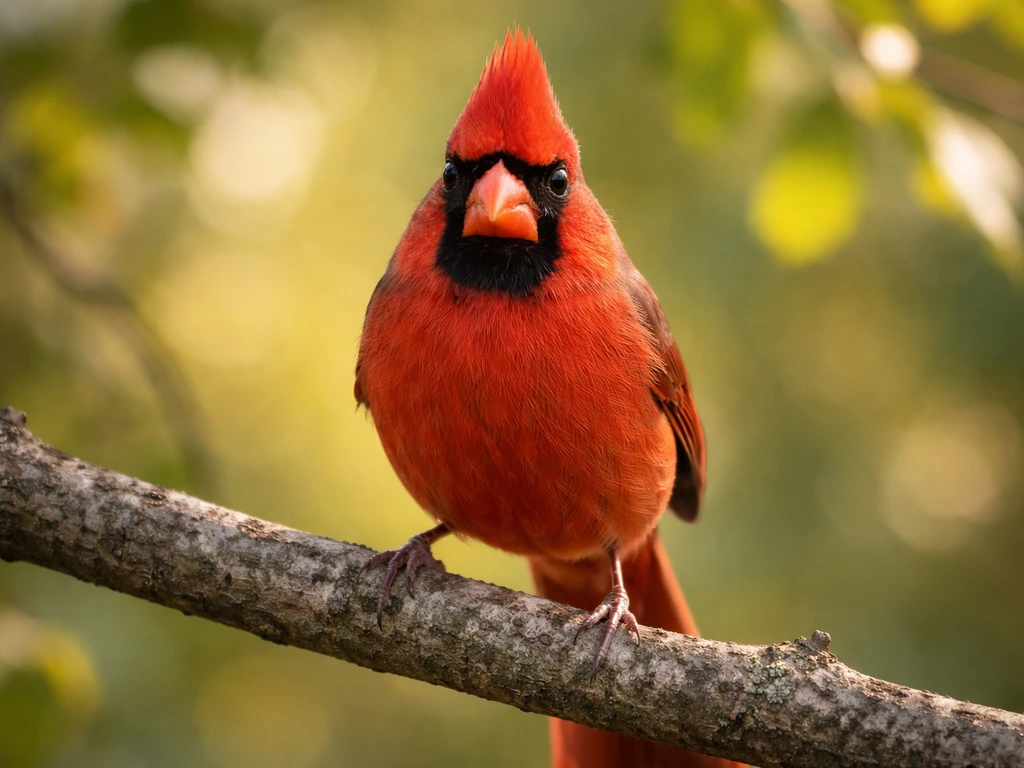
The Christian clergy title came first, and it's not particularly close. The word 'cardinal' was being applied to senior clergy in Rome as far back as the 9th century, and there's documentary evidence of Pope Zacharias using the term for priests in a letter dated 747 AD. The bird's common name 'cardinal' only shows up in English naturalist writing in the 1670s, named deliberately after those red-robed priests. So the ecclesiastical rank predates the bird's English name by roughly nine centuries. That's the short answer. Everything below explains exactly how we know that and what it means for the way we think about cardinal symbolism.
Which Came First: Cardinal Bird or Cardinal Priest?

Eleanor Hartwell
22 Apr 2026
Wait, which cardinal are we even talking about?
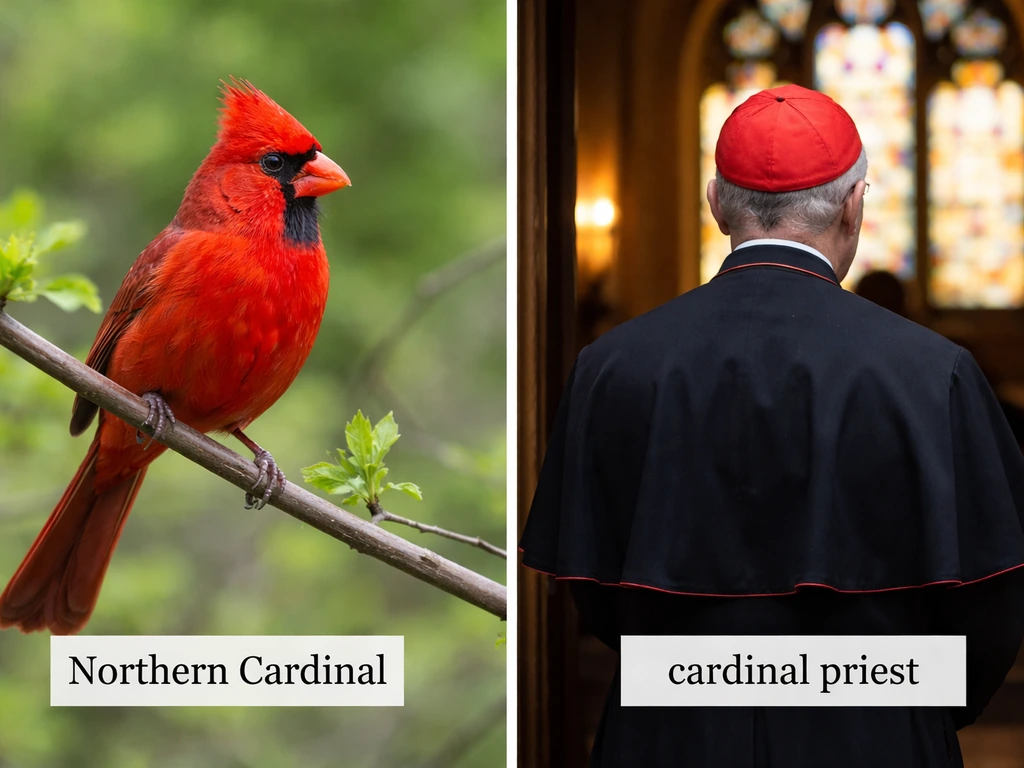
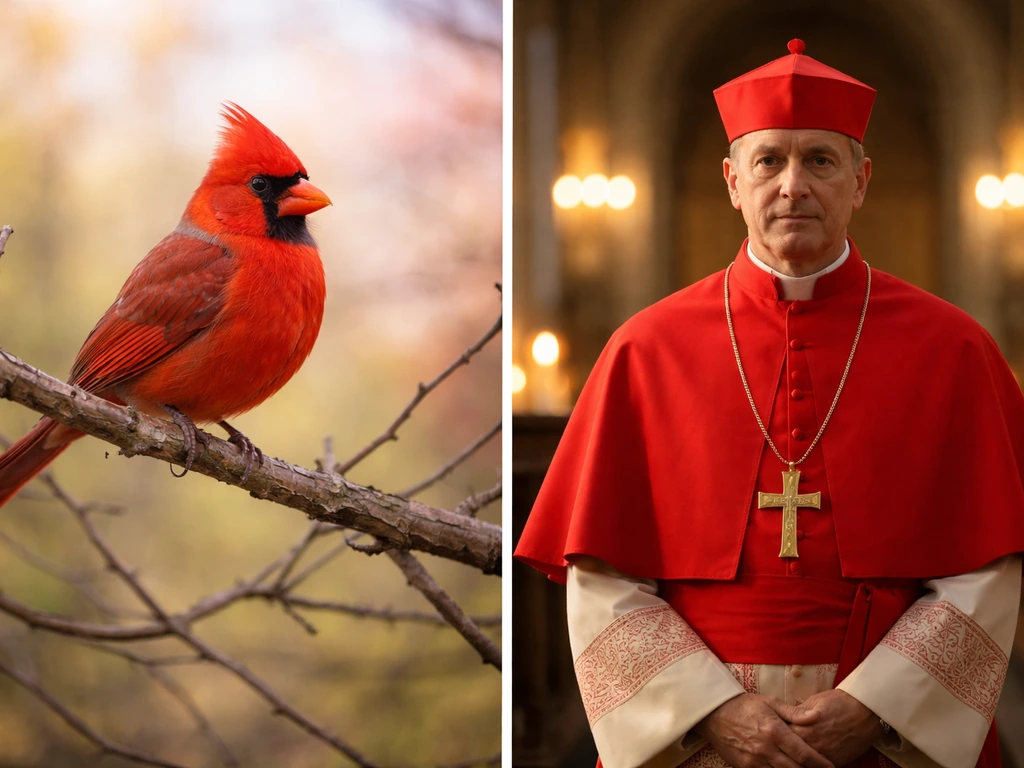
It's worth pausing to make the comparison explicit, because the word 'cardinal' is doing two very different jobs in English. Merriam-Webster also distinguishes two major senses of “cardinal”: an important clergyman in the Roman Catholic Church and the red songbird, linking the bird sense to the priest's red robes by color resemblance. On one hand, you have the Northern Cardinal (Cardinalis cardinalis), the brilliant red songbird native to North America that millions of people recognize immediately. On the other, you have the Catholic cardinal, a senior member of the Roman Catholic hierarchy whose duties include advising the pope and, most famously, electing a new one when a papal seat is vacant. These are genuinely two different things that happen to share a name, and the reason they share a name is exactly the point of this article.
The question 'which came first' is really asking: did the bird get named after the priest, or did the priest get named after the bird? Once you frame it that way, the investigation becomes pretty satisfying. You're tracing two separate word histories and comparing their earliest credible appearances in the written record.
What 'cardinal' means in everyday vs. religious contexts
The root of the whole word is the Latin cardo, meaning 'hinge.' From that comes cardinalis, which carries the sense of something pivotal, chief, or load-bearing. In everyday English, we still use 'cardinal' in this older sense: cardinal sins, cardinal directions, cardinal rules. These uses all mean 'most fundamental' or 'of primary importance,' and they carry no religious flavor whatsoever.
The ecclesiastical use builds directly on that 'pivotal' sense. A cardinal in the Church is a hinge point, someone central to the institution's governance. The bird's common name, by contrast, doesn't derive from the 'hinge' meaning at all. It derives from the visual resemblance: early English naturalists looked at the male's vivid red plumage and the distinctive crest, and the obvious comparison was to the scarlet robes and red caps worn by Catholic cardinals. The naming is essentially a compliment to the bird's appearance, borrowed from the most recognizable red-clad figures in 17th-century European consciousness.
How the Church's cardinal rank developed

The word cardinalis appears in a letter from Pope Zacharias dated to approximately 747 AD, where it is applied to priests in Paris. That's the earliest documentary evidence we have for the term used in an ecclesiastical sense for clergy. By the 9th century, the term was being applied to the priests of the parish churches (the 'tituli') within the diocese of Rome, marking them as attached to, or 'hinged into,' specific churches in a formal way.
The institution really crystallized as a formal structure during the 11th-century papal reform movement. Pope Nicholas II's Lateran Synod decree from April 1059 established that the pope should be elected by the cardinal-bishops, which is a watershed moment: it transformed the cardinal rank from a local Roman administrative title into a pivotal office of the universal Church. By the years 1050 to 1100, the college of cardinals had evolved from a Rome-specific institution into a body with authority across the whole of Western Christianity. The scarlet robes and red broad-brimmed hats we associate with cardinals today became the formal liturgical dress later, but the rank and title were firmly established centuries before the bird got its name.
When the bird got its name
The Northern Cardinal was first formally described in Linnaeus's Systema Naturae in 1758 under an earlier binomial name. But the common English name 'cardinal bird' predates that by about 80 years. The earliest solid naturalist attribution comes from around 1678, when the English naturalist John Ray documented the bird with a description noting it seemed to wear a red hat, an explicit visual reference to Catholic cardinal headwear. If you're wondering how did the cardinal bird get its name, the key clue is that early naturalists drew a direct line from the bird's red appearance to Catholic cardinal headwear. The naturalist Mark Catesby followed in the early 18th century with detailed illustrations, labeling the species 'The Red Bird' but reinforcing the ecclesiastical color connection in his descriptions.
Etymonline places the English-language bird-name attestation at 'the 1670s,' which aligns with Ray's work. The specific standardized phrase 'northern cardinal' as a formal common name has a first-known-use date of 1925 according to Merriam-Webster, reflecting the later formalization of bird nomenclature. The scientific genus name Cardinalis wasn't applied until 1838, when the species was classified as Cardinalis virginianus before arriving at the current Cardinalis cardinalis. Every step of that naming process was consciously referencing the Catholic cardinal by appearance.
The timeline at a glance
| Milestone | Approximate Date | Source Type |
|---|---|---|
| Pope Zacharias uses 'cardinalis' for clergy (earliest documented) | 747 AD | Documentary / Britannica |
| 'Cardinal' applied to priests of Rome's parish churches | 9th century | Wikipedia / historical record |
| Cardinal-bishops gain formal role in papal elections (Lateran Synod) | 1059 AD | FIU Catholic history / Britannica |
| College of Cardinals becomes universal Church institution | 1050–1100 AD | Cambridge Core / Britannica |
| 'Cardinal bird' attested in English (John Ray / naturalist writing) | c. 1670s | Etymonline / Banisteria |
| Linnaeus formally describes the species in Systema Naturae | 1758 | GBIF |
| Species placed in genus Cardinalis | 1838 | GBIF |
| 'Northern Cardinal' as standardized common name (first known use) | 1925 | Merriam-Webster |
The gap between the earliest ecclesiastical use (747 AD) and the earliest English bird-name use (1670s) is about 925 years. Even if you measure against the 11th-century institutional solidification of the cardinal rank, the bird's name still comes roughly 600 years later. This isn't a close call.
How symbolism ties these two together
Here's where it gets genuinely interesting from a symbolism perspective. The bird was named after the priest, which means every layer of meaning the cardinal bird carries in spiritual folklore is, at least linguistically, downstream of sacred office. The Northern Cardinal entered human consciousness through a lens of religious authority and ritual color. Red, in Catholic tradition, represents the blood of martyrs and the fire of the Holy Spirit. Cardinal-red isn't a decorative choice; it's a theological statement. So when 17th-century naturalists saw that plumage and reached for the word 'cardinal,' they were encoding that sacred color symbolism directly into the bird's identity.
In contemporary popular spiritual interpretation, cardinals are commonly associated with good luck, messages from deceased loved ones, divine presence, and reassurance during difficult times. These meanings circulate widely in folklore and personal experience, and they're worth engaging with as a framework for meaning-making rather than as doctrinal claims. Many people interpret a cardinal bird as a sign from heaven, but the key is that its name and color symbolism were shaped by religious language long before modern folklore. What's worth noting is that none of these folk associations are accidental. People who see a vivid red bird in a winter garden and feel a sense of presence or comfort are responding to something real about the bird's appearance, and that appearance was itself named after figures of sacred authority. The symbolism has a kind of internal coherence across centuries.
The ecclesiastical cardinal, meanwhile, carries the symbolism of sacred governance: authority, discernment, proximity to the divine seat of power, and responsibility for continuity of the Church. Both uses of the word orbit around ideas of importance, visibility, and spiritual weight. That's not coincidence; it's the word 'cardinal' (from cardo, hinge) doing exactly what it was always designed to do, pointing to what is pivotal. If you're exploring what the cardinal bird means spiritually, or its significance in biblical tradition, or why it has such strong associations with Christmas and winter, the naming history gives those conversations much richer grounding. If you're asking why is the cardinal a Christmas bird, the same naming and color symbolism helps explain why people link it with winter seasons and religious themes cardinal bird. In the Bible, a cardinal bird is not mentioned directly, but its name and red color symbolism are often connected to themes like divine presence and the blood of martyrs cardinal bird meaning in the bible. If you're wondering what does the cardinal bird mean, this naming history clarifies why the symbolism feels so spiritually charged in Western tradition.
How to reach a confident answer yourself: a simple decision tree

If you want to verify this independently or apply this method to similar 'which came first' questions about bird names, here's the process that works reliably.
- Define your terms precisely. Establish that you're comparing the English common name 'cardinal' for the bird versus the ecclesiastical title 'cardinal' for Catholic clergy. Keeping these distinct prevents muddled comparisons.
- Find the earliest credible attestation for each sense. For the clergy title, look at Britannica's entry on cardinals, which cites the 747 AD Zacharias letter as the earliest documentary example. For the bird name, Etymonline gives '1670s' as the earliest English-language attestation, with John Ray's 1678 naturalist work as a concrete reference point.
- Cross-check with a dictionary that tracks word history by sense. The Oxford English Dictionary is the gold standard for this: it lists earliest quotations for each individual sense of a word, so you can compare the 'bird' sense and the 'clergy' sense side by side. Merriam-Webster gives 1925 for the formalized 'northern cardinal' phrase, which is useful for modern nomenclature context.
- Sanity-check the naming rationale. Confirm that naturalist and ornithological sources (American Bird Conservancy, National Geographic, Wikipedia's Northern Cardinal entry) all state explicitly that the bird was named after Catholic cardinals by color resemblance. This confirms the direction of borrowing: bird-name derives from clergy-title, not the reverse.
- Apply the result to your actual question. Once you've confirmed that the clergy title predates the bird name by roughly nine centuries and that the bird was deliberately named after the priests, you have a clean, well-sourced answer: the cardinal priest came first.
The answer is settled history, not a matter of interpretation. But the interesting part, especially on a site devoted to bird symbolism, is what happens after you know the answer. Understanding that the bird was named through a religious lens helps explain why it carries such persistent spiritual associations in Western folk tradition. The weight of sacred office is baked into the bird's very name, and that's a genuinely compelling thing to sit with the next time a flash of red lands outside your window.
FAQ
When people ask “which came first,” do they mean the animal itself or the word “cardinal” for the animal?
The article answers about naming in human language, not biology. Northern cardinals existed long before the English word, so “which came first” refers to when the priest-related term entered use versus when English writers applied “cardinal” to the bird.
Could the bird have gotten its name from something other than Catholic cardinals (for example, general red color)?
It is possible in theory, but the strongest evidence points to a deliberate visual comparison to red-robed clerics, especially the “red hat” idea in early naturalist descriptions. If it were mainly “red” symbolism, you would expect earlier and more generic English naming patterns rather than a term specifically tied to the clergy.
Does the scientific name “Cardinalis cardinalis” prove the bird was named after priests?
Not by itself. The genus and species names were assigned much later (19th century), after English common usage and ongoing clerical associations. Scientific naming can reflect existing common names, but it is the earlier English attestation that really does the work for the “named after” claim.
Why is the earliest church usage dated to about 747 AD instead of earlier?
Because scholars rely on documentary evidence, not guesswork. Earlier ecclesiastical uses might exist in records we have not found, but 747 AD is the earliest credible written instance discussed in the article, meaning the case is grounded in what survives.
What’s the difference between “cardinal” as an ecclesiastical rank and “cardinal” as “pivotal” or “primary” in English?
They share a Latin root related to “hinge” or “pivotal importance,” but the meanings diverge. English still uses the nonreligious sense for “cardinal sins” and “cardinal directions,” while the Church sense is a specific hierarchy tied to governance and election of popes.
Are the bird and the Catholic rank actually connected in meaning today, or is it just a historical name coincidence?
In everyday usage today, they are treated as separate referents, but the connection persists culturally because the bird’s common name and the visual “red hat” association were built using clerical imagery. That is why the bird still carries strong Western religious symbolism in folklore.
How should I handle “spiritual” claims like cardinals being messages or signs from deceased loved ones?
Treat them as personal or cultural meaning-making rather than historical fact about the bird’s origin. The naming history explains why those interpretations feel coherent in Western contexts, but it does not validate a specific supernatural mechanism.
If I want to check similar “which came first” naming questions for other animals, what is the most reliable method?
Compare earliest written attestations for each usage in the relevant languages, then trace the semantic pathway (for example, color, clothing, or role) that explains the borrowing. Also separate “first in the world” (the organism) from “first in writing” (the name).
Next Article
Cardinal Bird Meaning in the Bible: What It Really Means
Find out if a cardinal bird is named in the Bible, what bird imagery means, and how to verify the exact verse.