
The cardinal bird means, at its core, a message of love, vitality, and connection across the boundary between the living and the dead. That's the thread running through almost every tradition that has assigned meaning to this bird. But the fuller answer depends on context: who you are, what you were thinking when you saw it, and which cultural or spiritual lens you're looking through. This guide walks through all of it, from the broad symbolic picture to the practical steps for turning a cardinal sighting into something personally meaningful.
What Does the Cardinal Bird Mean Symbolism and Tattoos

Eleanor Hartwell
17 Apr 2026
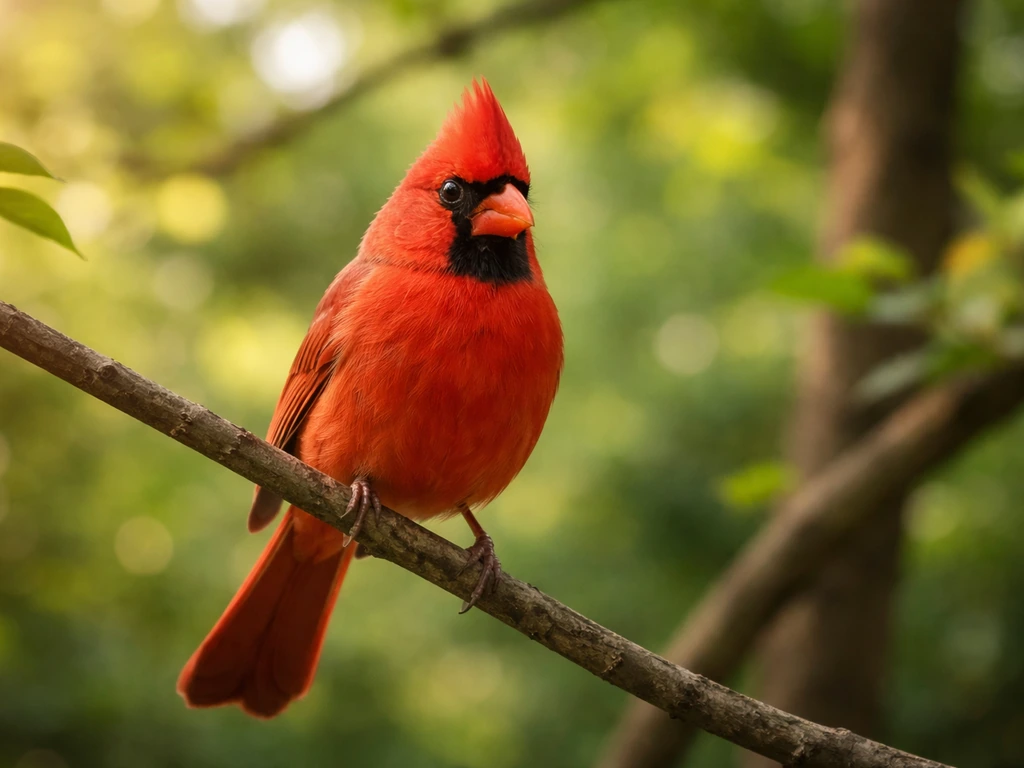
Cardinal bird meaning in plain language
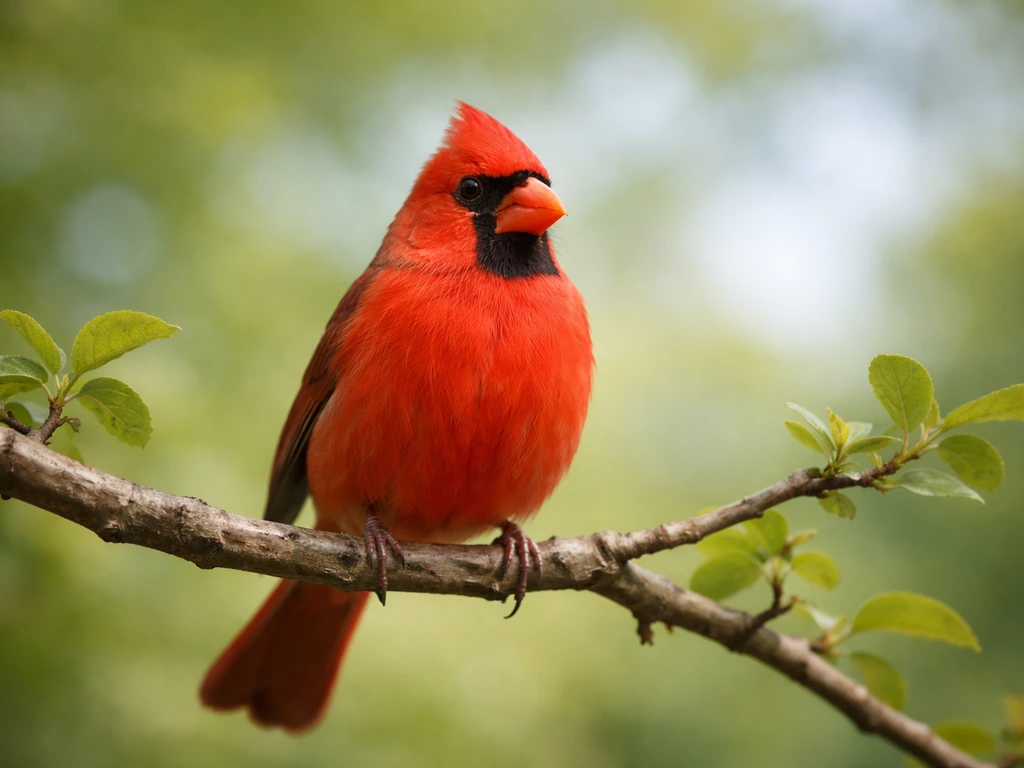
Strip away the tradition-specific layers and you get a handful of recurring themes: love, renewal, good fortune, and the presence of someone who has passed. The cardinal's unmistakable red plumage is the starting point for most of this. Red is the color of life, blood, passion, and fire across virtually every human culture. When a bird is that vivid and that hard to miss, people pay attention, and they assign weight to the encounter.
There's also a seasonal dimension worth noting. Cardinals don't migrate. In much of North America, that bright red bird sitting on a snow-covered branch in January is one of the few spots of color in an otherwise muted landscape. That visibility in winter has made the cardinal a symbol of warmth, comfort, and the promise of new beginnings even in the hardest months. These aren't arbitrary associations. They're grounded in what the bird actually does and looks like in the world.
One more piece of plain-language context: the name itself carries history. If you've ever wondered how the cardinal bird got its name, it traces directly to the Catholic Church's senior clergy, whose distinctive red vestments matched the bird's plumage so closely that early European settlers in North America borrowed the title. That naming connection runs deeper than most people realize and colors (literally) how the bird has been interpreted in Western Christian contexts ever since.
What a cardinal bird symbolizes
The cardinal carries a wide symbolic vocabulary. Rather than claiming one definitive meaning, it's more honest and more useful to understand the main themes and where they come from.
- Love and devotion: Cardinals are monogamous and the male famously feeds the female during courtship. That behavior maps directly onto human ideals of loyal, attentive love, which is why the cardinal so often appears in the context of romantic or familial bonds.
- Messages from deceased loved ones: This is probably the most emotionally resonant modern interpretation. The belief that a cardinal visit signals the presence of someone who has died is widespread across folk traditions and modern spiritual practice. It's not tied to a single religion but appears in Christian, Indigenous, and general spiritualist contexts.
- Good fortune and luck: The Farmers' Almanac and multiple folk traditions frame cardinal sightings as positive omens. Seeing one is generally read as a sign that something good is on its way, or that you're on the right path.
- Renewal and new beginnings: Cardinals nest and breed in late winter into spring, which aligns the bird biologically with the idea of fresh starts. When people see a cardinal during a period of transition or grief, this symbolism of renewal tends to feel especially apt.
- Vitality and confidence: The male cardinal's song is loud, the plumage is bold, and the bird holds its ground. Symbolically, this has been interpreted as a call to show up fully, assert yourself, and embrace your own energy.
The question of whether the cardinal is literally a sign from a departed person is one many people genuinely wrestle with. If that's the angle you're exploring, there's a dedicated look at whether a cardinal bird is a sign from heaven that goes deeper into the spiritual case for that interpretation.
What seeing a cardinal means in the moment
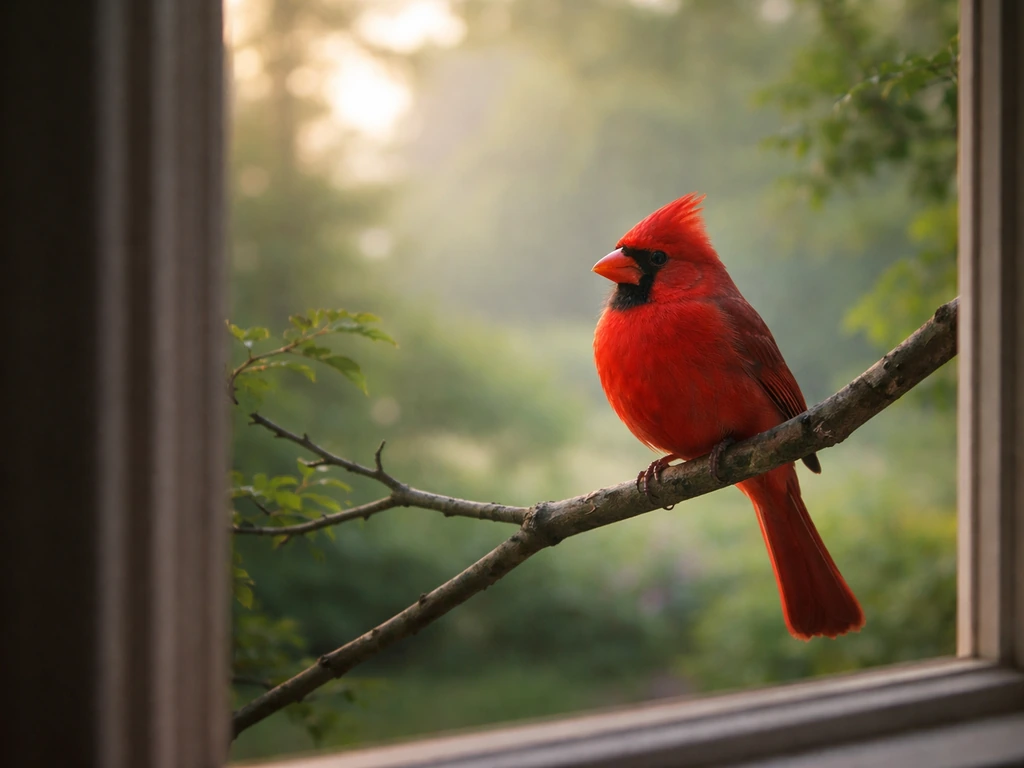
Context is everything here. A cardinal sighting doesn't carry one fixed message the way a stop sign means stop. What matters is what was happening for you when the cardinal appeared. Were you grieving? Working through a decision? Feeling stuck or low? Or were you simply outside on a Tuesday morning with nothing particular on your mind?
People who track these encounters consistently report that the timing feels meaningful. The cardinal shows up during a moment of emotional weight, and the vividness of the sighting cuts through whatever noise was running in the background. Whether you interpret that as spiritual communication, a psychological reminder, or pure coincidence, the encounter tends to prompt reflection, and that reflection is where the meaning actually lives.
A few things worth noticing when you see a cardinal: Is the bird alone or with a mate? A pair of cardinals is often read as a symbol of relationship and partnership, while a single bird more commonly gets linked to a message from a specific person or a personal prompt. Is it male (red) or female (brown with red tints)? The female cardinal is less frequently discussed in symbolic terms but carries its own weight, often associated with groundedness and quiet strength. And where is the bird in relation to you? Cardinals that seem to hold eye contact, approach closely, or return repeatedly tend to get the most significant interpretations.
Cardinal bird symbolism across cultures and spiritual traditions
The cardinal doesn't have a single global symbolic identity the way a dove or raven does, partly because it's a bird native to the Americas. Its deepest symbolic roots are in Native American traditions and North American folk culture, with Christian layering added by European settlers.
Native American traditions
Several Native American nations have assigned specific meaning to the cardinal. The Cherokee associated the cardinal with the sun and with good weather, reading the bird's appearance as a positive sign. The Choctaw saw the cardinal as connected to relationships and courtship. Some traditions linked the bird to the directions or the turning of seasons. Across these interpretations, the cardinal is generally a benevolent presence, a sign of favor or guidance rather than a warning.
Christian and biblical symbolism
In Christian tradition, the cardinal's red color carries obvious visual weight. Red is the color of Christ's blood, of sacrifice, and of the Holy Spirit's fire at Pentecost. The bird's association with Catholic cardinals runs both ways: the clergy were named for the bird's color, and over time the bird absorbed some of the spiritual gravity of that clerical connection. For a fuller treatment of those scriptural and theological threads, the cardinal bird's meaning in the Bible covers the specific passages and doctrinal angles that inform a Christian reading of the bird.
Christmas and winter symbolism
The cardinal's role as a Christmas bird is so culturally embedded in North America that it shows up on greeting cards, ornaments, and holiday wrapping paper every December without most people stopping to ask why. The answer is a mix of visual logic (red and green) and layered historical association. If you want to trace that specifically, understanding why the cardinal is a Christmas bird gets into the seasonal and religious history behind the image. And the naming history ties back once more to the Catholic connection: which came first, the cardinal bird or the priest is a genuinely interesting question that unpacks how the visual shorthand between red bird and red vestment became so culturally sticky.
General spiritual and New Age traditions
Outside of specific religious frameworks, the cardinal has become one of the most commonly cited symbols in modern spirituality. It appears in angel number and spirit animal frameworks, in grief support communities, and in popular books about signs from the deceased. In these contexts, the bird functions as a messenger, a thin place between the physical and spiritual worlds. The consistency of this belief across different people and backgrounds, regardless of formal religion, suggests it's meeting a genuine human need for connection and continuity after loss.
Cardinal bird tattoo meaning and common themes

Cardinal tattoos have become genuinely popular, and the reasons people choose them are as varied as the symbolism itself. Before getting ink, it's worth understanding what meaning you're trying to carry, because the cardinal is a rich enough symbol that two people with the same tattoo can mean entirely different things by it.
The most common motivation for a cardinal tattoo is memorial. People get a cardinal to honor someone who has died, especially when that person was associated with the bird in life, or when the family holds the belief that cardinals carry messages from the departed. In this context, the tattoo is essentially a permanent reminder of that spiritual connection, a way of keeping someone close.
Beyond memorial, here are the major thematic choices people make with cardinal tattoos and what typically drives them:
| Theme | What it typically represents | Common design choices |
|---|---|---|
| Memorial / grief | Honoring a deceased loved one; belief in spiritual communication | Single red cardinal, often with a name or date; realistic style |
| Love and partnership | Devotion, loyalty, romantic connection | Pair of cardinals (male and female together); watercolor or illustrative style |
| Renewal and hope | New chapter, overcoming hardship, fresh start | Cardinal perched on a winter branch with blooms; seasonal imagery |
| Faith and spirit | Christian symbolism, connection to the divine | Cardinal with cross, scripture, or religious motifs; traditional style |
| Vitality and confidence | Self-assertion, passion, personal power | Bold male cardinal mid-song or in flight; vivid color saturation |
| Cultural identity | Native American heritage or specific tribal association | Cardinal incorporated into broader Indigenous art style or motifs |
A few practical notes for anyone considering a cardinal tattoo: the bird's red is notoriously difficult to tattoo in a way that ages well, especially on darker skin tones. Talk to your artist specifically about how they handle saturated reds and what the design will look like in 10 to 15 years. Also think about placement relative to size. The cardinal's detail, especially feather layering and the distinctive crest, reads best at a scale of at least 3 to 4 inches. Small cardinals tend to lose definition and can blur into a generic red bird over time.
How to interpret your specific cardinal encounter
Here's a practical method for turning a cardinal sighting into something personally meaningful rather than staying stuck in vague generalities. It's not about telling yourself what the bird means. It's about using the encounter as a prompt to surface what's already present for you.
- Notice the moment before you interpret. What were you doing or thinking about when the cardinal appeared? Grief, a decision, a conversation you've been avoiding? The context is the first layer of meaning. Write it down if you can, even a quick note on your phone.
- Register the details of the sighting. Was it one bird or two? Male or female? Did it come close, make eye contact, or behave in a way that felt unusual? Did it stay or pass through quickly? These details shift the interpretation significantly.
- Apply the tradition that fits your life. If you're Christian, the biblical and liturgical associations are probably the most resonant frame. If you're working through grief and aren't religious, the widespread folk belief in cardinals as messengers from the deceased may be the more meaningful lens. If you're drawn to Indigenous frameworks, look at which specific nation's tradition aligns with your background or connection. Don't force a framework that doesn't fit you.
- Ask what the symbolism is inviting you toward. If the cardinal represents renewal, what in your life needs renewing? If it represents love, who or what are you being called to pay attention to? This is the step where vague symbolism becomes personal direction.
- Decide what to do with it. You don't have to act on a cardinal sighting, but it's worth asking: is there something I've been putting off? Someone I should reach out to? A decision I've been avoiding? Use the encounter as a nudge rather than waiting for a definitive sign.
The cardinal is one of those symbols that tends to mean more the more honestly you engage with it. It's not about deciding whether cardinals are literally supernatural messengers or pure coincidence. It's about recognizing that the encounter caught your attention, and that attention itself is worth following. In every tradition that has taken the cardinal seriously, the bird's meaning has always been less about the bird itself and more about what the person seeing it was ready to hear.
FAQ
What does the cardinal bird mean if I saw one during a happy moment, not grief?
It often still points to connection and renewal, but the “message” usually matches the emotional tone you were in. Instead of focusing on loss, treat the sighting as a cue to acknowledge something good you might have been overlooking, then note what changed right after you saw it (a decision, a conversation, a plan).
Does seeing a cardinal close to my home mean something more than seeing it while driving or traveling?
Many people read repeated local sightings as more personal and less “general.” If you see the same bird type, area, or time window (like mornings on your porch), log those details, because the specificity often mirrors what your mind keeps returning to.
If a cardinal lands near me, should I assume it is “about” someone who passed away?
Not automatically. Close encounters can feel significant, but the practical move is to check which relationship or theme is strongest in your thoughts at the time. If grief is present, memorial meaning may fit, but if you were focused on a goal or problem, the same encounter can also function as a reminder or nudge.
How can I tell whether a cardinal sighting is a coincidence versus a meaningful sign?
Use a decision-based test instead of debating the supernatural. Write down what you were doing emotionally and what choice, habit, or boundary was on your mind, then later see whether the next reasonable step you take aligns with that same theme. Meaning tends to show up through your actions, not through certainty.
What’s the significance of a pair of cardinals versus a single cardinal for symbolism?
A pair is commonly interpreted as partnership, mutual support, or strengthening a relationship. A single bird is more often used for more individualized prompts. If you can observe behavior, “how they act together” (chasing, feeding, staying close) can clarify whether the theme is harmony, pursuit, or reconciliation.
Does the bird’s sex (male versus female) change what it means spiritually or symbolically?
In most symbolic interpretations, male cardinals (the vivid red) get more attention, while females are less frequently assigned headline meanings. If you want a more precise reading, focus less on sex and more on the bird’s behavior and your reaction, because those are the details that actually stay consistent from person to person.
What should I do right after I see a cardinal if I want to extract personal meaning?
Do a quick “capture” while it’s fresh: note the date, location, weather, and what you were thinking or feeling in the 5 to 10 minutes before you noticed the bird. Then ask one concrete question, like, “What am I ready to renew, release, or commit to?”.
Are cardinal tattoos only for memorial, or can they represent other themes?
They can represent far more than remembrance. People also choose cardinals for love, resilience, new beginnings, or spiritual protection themes. If you want the tattoo to match your intent, pick elements that reflect your theme (for example, a winter setting for comfort and renewal, or a heart motif for relationship-focused meaning).
What design details help a cardinal tattoo age better, especially with red ink?
Ask your artist to plan for future fading, use strategies to keep reds saturated without overworking the skin, and consider adding subtle darker outlines or shading to preserve contrast. Also confirm that the design has enough negative space and line stability so the feather details do not merge into one blot over time.
Where is the best placement for a cardinal tattoo if I want it to stay detailed?
Placement that minimizes heavy rubbing and stretching tends to preserve feather detail better, and a larger scale (about 3 to 4 inches or more) is usually necessary for crisp crest and layered plumage. Areas that move a lot with skin expansion can blur smaller work faster, so discuss placement versus size with your artist.
If I want a cardinal tattoo to represent a specific person, how can I make that meaning clear without adding text?
You can customize the symbolism with contextual cues, like including an element tied to the person’s life (a month, a home landscape, a birth-season vibe, or a small object associated with them). If you do add text, keep it short and typographically simple to reduce long-term readability issues.
Does cardinal meaning differ in Christian versus Native American contexts?
Yes, the emphasis shifts. Christian readings often lean on red as blood, sacrifice, and spiritual fire, while Native American and folk interpretations often frame the cardinal as benevolent guidance tied to seasons or weather, depending on the nation or community. If you care about accuracy, decide which lens you want to honor, then let that guide your interpretation of the sighting.