
The bird most directly associated with Jesus in Christian tradition is the dove, though with an important nuance: blank" rel="noopener noreferrer">the dove appears specifically as a symbol of the Holy Spirit descending upon Jesus at his baptism, not as a symbol of Jesus himself as a bird. All four Gospels record the moment. Luke 3:22 describes this as “the Holy Spirit descended on him in bodily form, like a dove,” with the parallel dove language also appearing on the same ESV page for Matthew 3:16 and Mark 1:10 blank" rel="noopener noreferrer">the Spirit descended on him in bodily form, like a dove. Matthew 3:16 says the Spirit descended "like a dove," Mark 1:10 uses the same phrasing, Luke 3:22 goes further and says it came "in bodily form like a dove," and John 1:32 has John the Baptist testify he saw the Spirit "descending like a dove from heaven and remaining on him." That event is the bedrock of the dove-Jesus connection in Christianity, and it's far more textually grounded than any other bird claim you'll hear.
What Bird Represents Jesus? The Dove and Other Common Symbols


Why the dove is the closest answer to this question
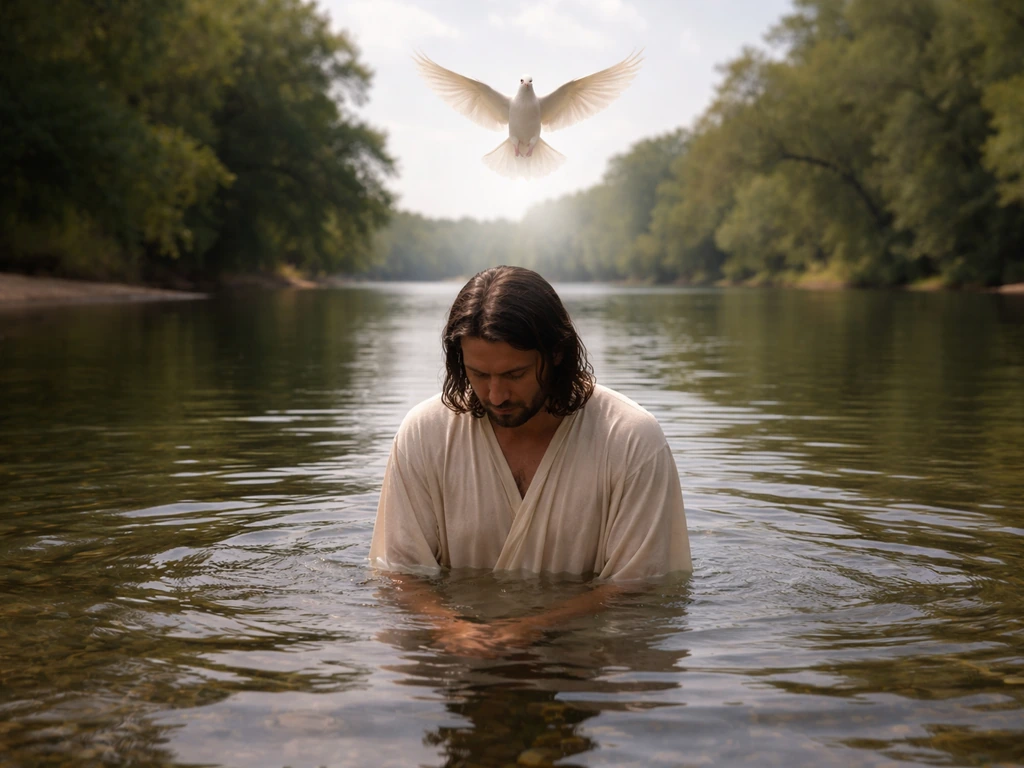
The dove doesn't represent Jesus in the sense that it stands in for his identity the way, say, the lamb does. Instead, it marks a defining moment in Jesus' story: the point where God publicly identifies him and the Spirit rests on him. That's theologically significant. The dove shows up at the very beginning of Jesus' public ministry as a visible sign meant to be understood, which is exactly why all four Gospel writers bother to record it. Early church fathers, including Tertullian writing in the second and third centuries, explicitly described the baptism as the scene where "the Spirit descended in the form of a dove." The imagery stuck because the Gospels made it stick.
The technical theological point worth knowing is that the dove marks the Holy Spirit, not Jesus personally. But in common usage, the dove became so inseparable from the scene of Jesus' baptism that it flows into his broader iconography. When you see a dove in Christian art near a scene of water or a man being baptized, you're looking at Jesus' baptism. That's the shorthand the tradition settled on. A local council in Constantinople in 536 formally approved the dove as a symbol of the Holy Spirit in church imagery, cementing what had already been widespread visual practice for centuries.
What to look for in Christian art
If you want to identify the dove's role in Christian iconography, the Baptism of Christ is the scene to study. The arrangement that appears again and again in medieval and Renaissance depictions follows a vertical axis: God the Father (or a divine hand, or a beam of light) at the top, the dove in the middle descending with wings spread, and Jesus below in water or at a riverbank. The dove is almost always shown directly above Christ's head, wings open, often with rays of light around it. It's a deliberate compositional choice meant to show divine descent, not just a decorative bird.
The Catechism of the Catholic Church describes the scene exactly this way: at Jesus' baptism, "the Holy Spirit, in the form of a dove, comes upon Jesus" alongside the voice from heaven. So in mainstream Catholic teaching and in the visual tradition that grew from it, the dove is the Holy Spirit, present at and symbolically defining the baptism of Jesus. Knowing that layering, you can read any Baptism of Christ painting with much more confidence. The dove is always the Spirit. The Spirit is always there with Jesus. That's the connection.
Helpful visual cues at a glance
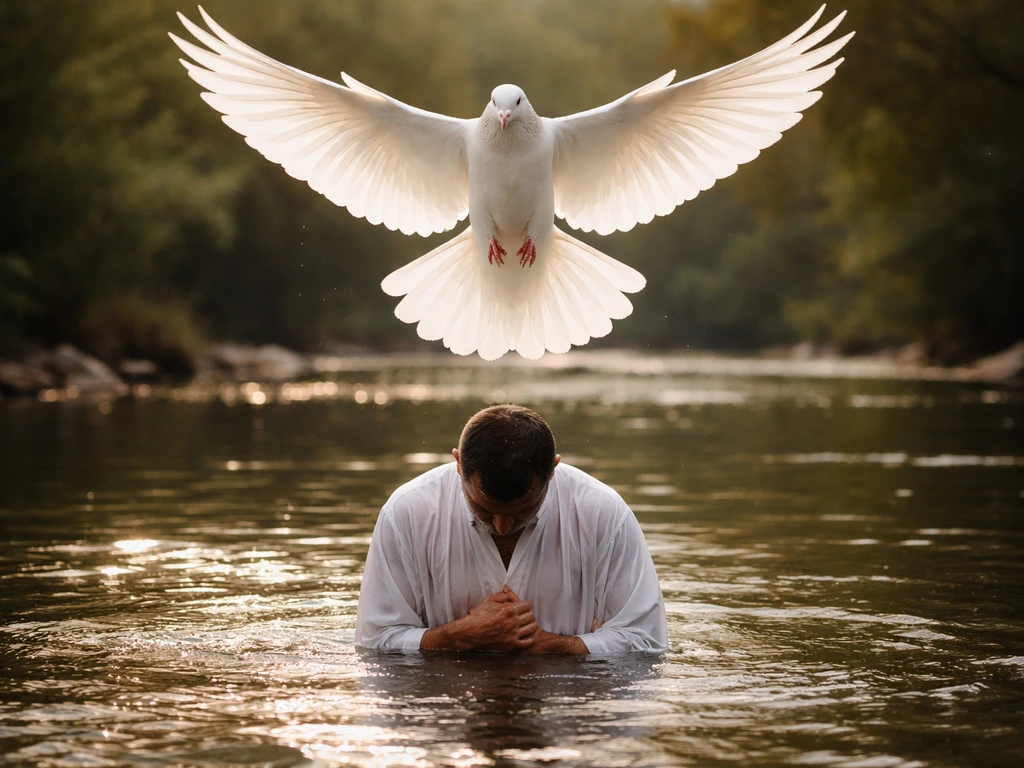
- A white dove descending with wings spread, shown above a figure in water: Baptism of Christ scene
- Vertical arrangement of Father (light or hand), dove, and Christ: Trinity representation tied to the baptism
- Dove shown with a halo or rays of light: signifies its role as the Holy Spirit, not a natural bird
- Dove paired with the Jordan River or a baptismal font: confirms the baptism context specifically
- Dove over a crowd with flames: shift to Pentecost imagery, still the Spirit but a different event
Other birds people associate with Jesus (and what to make of those claims)
A few other birds come up regularly when people ask this question, and they're worth addressing directly because each one has a real basis in Christian symbolism, even if none rivals the dove for direct Gospel backing.
| Bird | What it actually symbolizes in Christianity | Direct connection to Jesus? |
|---|---|---|
| Dove | The Holy Spirit at Jesus' baptism; peace; the Trinity | Yes, directly tied to the baptism account in all four Gospels |
| Pelican | Christ's sacrificial blood; self-giving love | Typological, not scriptural; based on a medieval legend about pelicans feeding chicks with their own blood |
| Eagle | Resurrection; divine strength; renewal (Isaiah 40:31) | Metaphorical and broadly divine, not specific to Jesus' identity or a key event |
| Rooster | Peter's denial; moral vigilance; dawn | Associated with Jesus' passion narrative, but as a prophetic detail rather than a Jesus-symbol |
| Phoenix | Resurrection and rebirth after death | Used by early church writers as a Christ-type, but mythological rather than biblical |
The pelican is probably the most interesting alternative. Medieval Christian art depicted the pelican piercing her own chest to feed her chicks with her blood, a behavior people believed was real at the time. This became a widely used symbol for Christ's sacrifice on the cross. The United Methodist Church still lists the pelican among traditional Christian symbols for exactly that reason. It's a legitimate piece of the iconographic tradition, but it arrives through medieval natural history and theological allegory, not through a specific Gospel account. That's a meaningful distinction when you're trying to sort out which claims are well-grounded.
The rooster shows up in the passion story because Jesus predicts that Peter will deny him "before the rooster crows" (Matthew 26:34), and Peter does. The rooster then became a symbol of that moment of human failure and moral reckoning in Christian thought. It doesn't represent Jesus so much as it marks a pivotal moment in his story. You'll still see weathervanes with roosters on church steeples across Europe, placed there as a reminder of that lesson.
The eagle carries the weight of Isaiah 40:31 ("those who hope in the Lord will renew their strength; they will soar on wings like eagles") and was used by early Christians as a symbol of resurrection and divine power. It's also the traditional symbol of the Gospel of John. But it functions more as a general symbol of divine majesty and renewal than as a specific symbol of Jesus himself.
How to check any bird-Jesus claim you come across
When someone tells you a specific bird represents Jesus, the most useful question to ask is: where is this claim coming from? There are a few source categories to work with, and they aren't equal.
- Biblical text: does one of the four Gospels or another New Testament book actually describe this bird in connection with Jesus? If yes, that's your strongest foundation. The dove passes this test clearly.
- Patristic and historical theology: did early church writers or formal church councils attach this bird to Jesus or the Holy Spirit? Tertullian on the baptism dove and the 536 council ruling both count here.
- Official church teaching or catechism: does a major Christian body (Catholic, Orthodox, mainline Protestant) include this bird in its formal symbolic vocabulary? The pelican in Methodist and Catholic iconographic lists counts.
- Medieval art and legend: is the claim based on artistic tradition or a natural history story rather than scripture? The pelican-piercing-chest image comes from this category. Valid as cultural tradition, but not scriptural.
- Modern folk belief or recent spiritual writing: some bird associations with Jesus circulate online without any historical or textual grounding. Cross-check these against the earlier sources before accepting them.
Early Christian scholarship on the baptism dove (including work published in academic biblical translation journals) has traced how the dove imagery was deliberately adopted to specify the visible, understandable way the Spirit descended on Jesus. The sign was meant to be legible to witnesses. That context reinforces why the dove became the go-to symbol: it wasn't arbitrary. It carried existing cultural weight as a sign of peace and divine presence in Jewish tradition (think of the dove returning to Noah with an olive branch in Genesis 8:11) and then got new, specific meaning at the baptism.
What a dove encounter might mean to you today
If you're someone who finds meaning in bird encounters, the dove carries a layered set of associations that are worth knowing before you interpret one. In Christian symbolism, a dove can evoke peace, the presence of the Holy Spirit, divine affirmation, and the memory of Jesus' baptism. Many people who work within a Christian interpretive framework describe a dove appearing at a significant moment as a felt sense of peace or divine acknowledgment. The related questions of what birds mean as visitors or signs from heaven, or whether birds can carry messages from those who've passed, are deeply personal and sit alongside rather than within formal doctrine. Some people interpret bird sightings as signs from heaven, even though that meaning is personal rather than doctrinal. People often frame this as the question of what birds mean as signs from heaven, and the dove is the most widely grounded biblical symbol for that idea.
The grounded approach is to hold the symbolism without over-claiming it. Seeing a dove doesn't confirm a theological proposition, but it can be a genuine prompt for reflection, especially if you're in a moment of grief, decision, or searching. The Christian tradition itself treats the dove at Jesus' baptism as a sign meant to be interpreted, which gives you permission to engage with bird encounters as potentially meaningful without treating them as literal divine messages. That balance between openness and humility is where most thoughtful engagement with bird symbolism lands.
The answer you can actually use
If someone asks you what bird represents Jesus, the most accurate and defensible answer is: the dove, specifically as the symbol of the Holy Spirit descending on Jesus at his baptism, as recorded in all four Gospels. In some Christian discussions, people also ask what bird represents an angel, but the “angel” role is usually handled by symbols like light or messengers rather than a specific bird. It's not that Jesus is a dove, or that the dove is Jesus, but that the dove is the bird most directly and scripturally woven into the defining moment of Jesus' public identity in the New Testament. Every other bird in the Christian tradition connects to Jesus more loosely, through metaphor, medieval legend, or symbolic association with his story rather than through a Gospel account. Some stories go further and claim that Jesus brought a bird back to life, but that idea is not part of the Gospel record the article has focused on Jesus bringing a bird back to life. Lead with the dove, know why it matters, and you'll have the right answer for almost any context in which this question comes up.
FAQ
If a church or person says “the dove represents Jesus,” what should I understand that to mean?
Usually it is meant to refer to the Holy Spirit’s descent at Jesus’ baptism, not to Jesus’ identity “as a bird.” If the claim does not connect the dove to the Baptism of Christ scene, it is likely devotional shorthand or later iconography rather than the most text-grounded meaning.
How can I tell in Christian art whether a dove is pointing to Jesus’ baptism?
In many church artworks the dove is placed above Jesus’ head while light or a divine hand appears above or behind him. If you are identifying a symbol from a picture, check whether there is water, Jordan, or a baptism moment, since that context is what ties the dove to the Gospel episode.
Does a dove always mean Jesus is being symbolized, or can it mean something else too?
A dove can suggest peace or purity in general Christian usage, but the specific “Jesus link” in the New Testament is the Spirit coming upon Jesus at baptism. So you can treat the dove as a broader peace symbol without assuming it always means the baptism scene.
Why do some traditions connect a rooster to Jesus, and is it the same type of symbolism as the dove?
The rooster is tied to Peter’s denial narrative, so it is “in the passion story” rather than “representing Jesus himself.” If the bird claim is used to explain Peter’s failure, read it that way, and if it is used to depict Jesus’ divine identity, it is probably a category mix-up.
Is the pelican symbol for Jesus as credible as the dove symbol?
The pelican tradition is mostly medieval and allegorical, where the bird story functions as a lesson about Christ’s sacrifice. It is a legitimate Christian symbol, but it is not as directly anchored to a specific Gospel event as the dove is.
What’s a quick way to evaluate whether a “bird represents Jesus” claim is biblically grounded or just tradition?
Yes, and a good rule is to ask whether the claim is anchored to a particular Gospel moment. Dove symbolism typically has that anchor, while many “birds as signs” explanations are experiential or cultural and should be held more loosely.
If I see a dove while I am going through something difficult, does that confirm a spiritual message about Jesus?
Seeing a dove or other birds in everyday life does not automatically confirm doctrine or divine communication. If you want to incorporate it faithfully, treat it as an invitation to reflect on peace, the Holy Spirit, or a decision point, rather than as evidence of a specific message.
How do I avoid over-claiming when connecting bird sightings to faith or meaning?
Many Christians use the “dove at baptism” as a pattern for interpreting what they feel spiritually, but they avoid taking it as a literal, testable sign. If you find yourself making strong claims (“this means X will happen”), consider that the tradition supports reflection more than prediction.
Is there a single bird that represents angels in Christianity the way the dove represents the Holy Spirit at baptism?
Yes. If someone asks “what bird represents an angel,” they are usually asking for a visual idea rather than a strict bird-to-angel rule in the Gospels. In most cases, angels are depicted with messengers, light, or personified heavenly forms, not a single universally standardized bird.
Is the Holy Spirit a Bird? Dove Meaning in Scripture
Biblical answer to is the Holy Spirit a bird, explaining the dove appearance at Jesus baptism and dove symbolism for pra