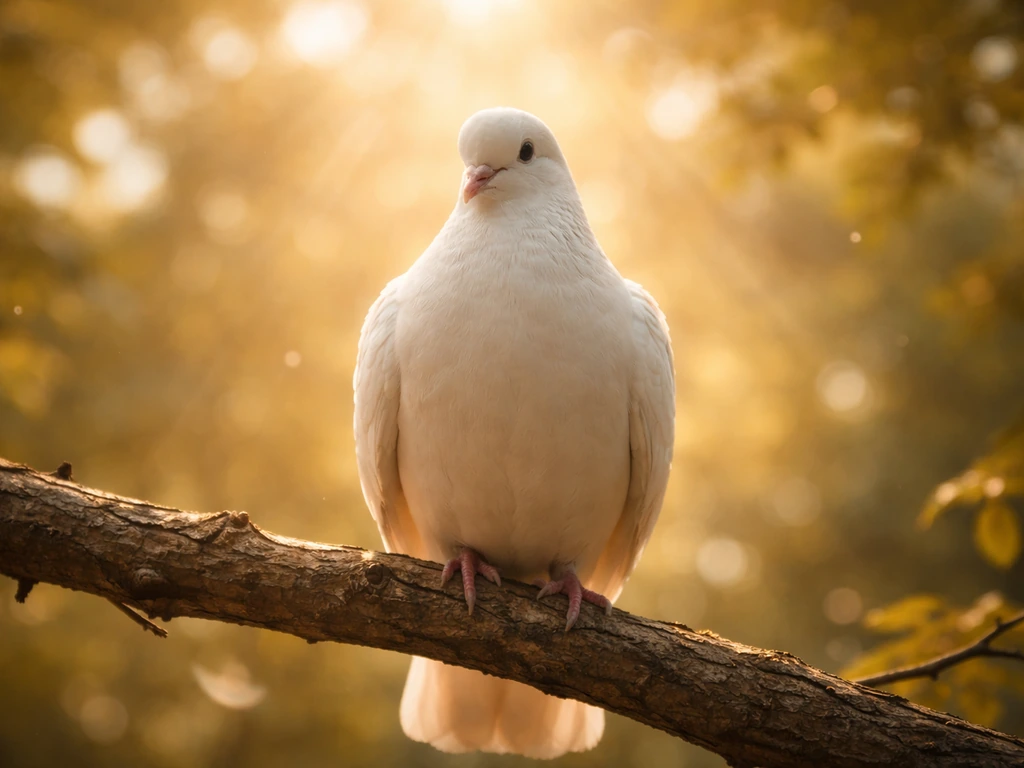
The albatross symbolizes endurance, freedom, long journeys, and the weight of unavoidable consequence. Across maritime cultures, spiritual traditions, and literature, it appears as a creature that bridges worlds: sea and sky, the known and the unknown, the living and the dead. Whether you spotted one over the open ocean, encountered it in a dream, or are tracing the word back to its most famous literary use, the albatross consistently carries the same essential message: you are capable of covering enormous distance, but how you treat what guides you along the way matters deeply.
What Does an Albatross Bird Symbolize Spiritually and Culturally

Eleanor Hartwell
22 May 2026
Core meanings of the albatross
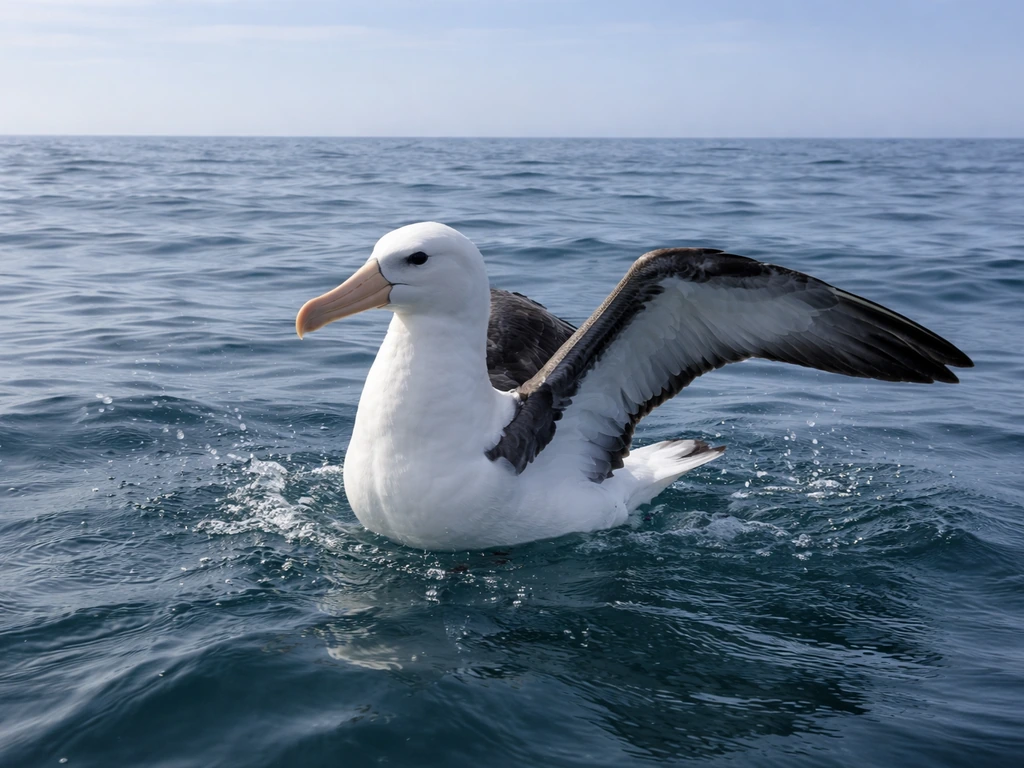
At its heart, albatross symbolism is about the long haul. These are birds that genuinely do travel enormous distances across open ocean, sometimes circling entire ocean basins in a single season. The Laysan albatross, for example, ranges across the North Pacific on journeys that dwarf most creatures' lifetimes. That biological reality feeds directly into symbolic meaning: the albatross is not a bird of short hops and safe hedgerows. It is a bird of commitment to distance.
The core symbolic cluster around the albatross includes:
- Endurance and resilience: the ability to sustain effort over extraordinary stretches of time and space
- Freedom and wayfinding: the capacity to navigate without obvious landmarks, trusting instinct and inner guidance
- Omen and spiritual message: the sense that its appearance carries meaning beyond coincidence
- Burden and consequence: the 'albatross around the neck' as unwanted weight, rooted in the idea that dismissing a sacred guide carries a price
- Loyalty and long bonds: albatrosses are famously monogamous and return to the same partner season after season, lending the bird associations with faithful, lasting commitment
That last point is easy to overlook but worth sitting with. A bird that returns across thousands of ocean miles to the same partner, the same nesting site, year after year, carries a very different symbolic weight than a solitary wanderer. The albatross is both: a free-ranging ocean traveler and a creature of deep, sustained fidelity.
Cultural symbolism around the world
Maritime and European seafaring traditions
European sailors, particularly those navigating the Southern Ocean from the 17th century onward, developed a strong oral tradition around albatrosses as protectors of the seas. The prevailing belief was that albatrosses carried the souls of lost sailors, which made killing one not just bad luck but a kind of sacrilege. Seeing an albatross during a voyage was read as a sign of favorable winds, safe passage, or spiritual accompaniment on a dangerous crossing.
European sailors read an albatross sighting as a sign of favorable winds and safe passage, and considered killing one unlucky and sacrilegious, a maritime omen tradition that helped shape later literary associations. Seeing an albatross during a voyage was read as a sign of favorable winds, safe passage, or spiritual accompaniment on a dangerous crossing, much like the bird of good omen.
This is the tradition that Samuel Taylor Coleridge drew from when he wrote The Rime of the Ancient Mariner in 1798, and it explains why the crew's horror at the bird's killing felt so immediate and believable to its original readers.
Polynesian and Pacific Island perspectives

For Pacific Island cultures whose entire existence is organized around ocean navigation, large seabirds often function as living compasses. The albatross, as the most visible and dramatic of these birds, held particular spiritual weight as a guide. In some Polynesian traditions, the appearance of a great seabird during a voyage was interpreted as ancestral guidance, a message from those who navigated before. The bird's extraordinary ability to fly without apparent effort, riding wind currents for hours without flapping, reinforced the idea of effortless navigation powered by something beyond the physical.
Modern conservation as symbolic extension
In contemporary secular culture, the albatross has taken on a new layer of meaning through conservation. Wisdom, a Laysan albatross tracked by researchers for decades, became what Audubon described as a 'worldwide symbol of nature's endurance.' She raised chicks well into her 70s, outliving most of the humans who first banded her. In this frame, the albatross symbolizes not just individual resilience but the persistence of wildness itself, the idea that some things endure if we stop harming them.
Spiritual and spiritual-psychological interpretations
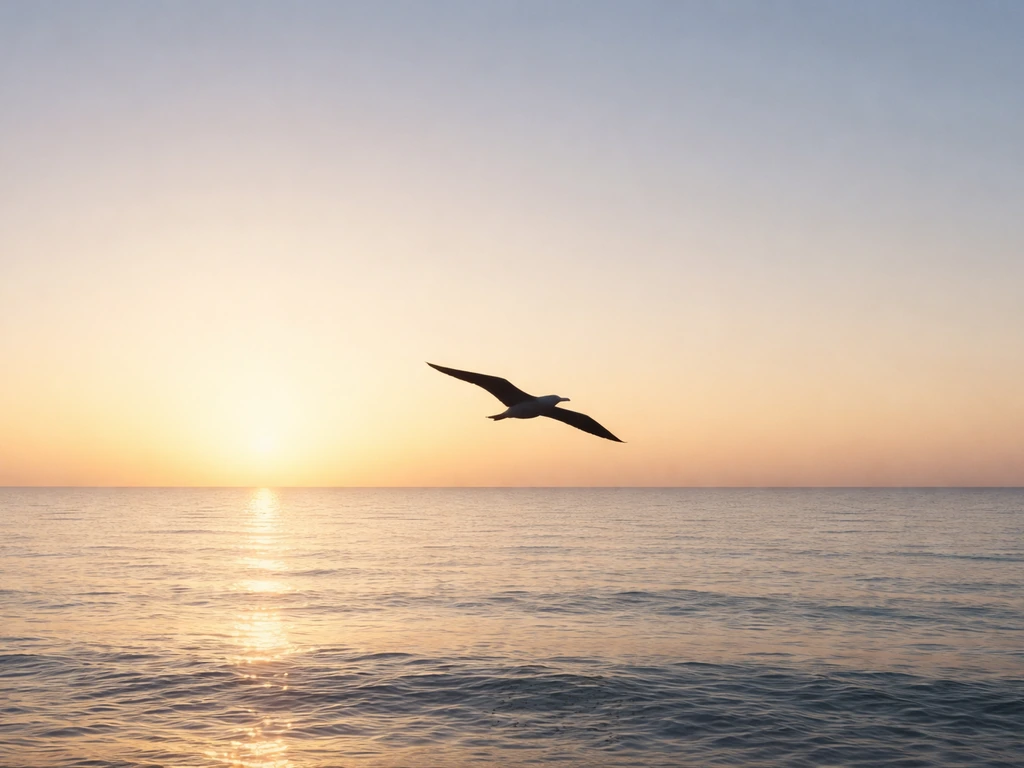
From a spiritual perspective, the albatross tends to appear as a symbol of soul-level navigation. If you work with animal symbolism as a reflective framework, the albatross asks you to consider where you are in a long journey, not a quick errand but a life-shaping passage. It does not promise the journey will be easy or short. It promises that you have what it takes to sustain the crossing.
In spiritual-psychology terms, the albatross also carries a shadow side that is worth honoring. The 'albatross around the neck' image points to unresolved guilt, to the weight of having dismissed or harmed something that was trying to help you. If this resonates, the bird's appearance may be less about celebration and more about honest reckoning. What have you been carrying? What would it mean to acknowledge what you did with guidance you were given?
The albatross also connects to boundary symbolism: it lives at the edge between ocean and sky, between this world and whatever lies beyond the horizon. In many spiritual traditions, creatures that inhabit thresholds, the places between defined territories, are understood as messengers. Their arrival often signals a transitional moment in the observer's life: a journey beginning or ending, a shift in how they understand their own direction.
Myths, literature, and popular references
The single most powerful cultural anchor for albatross symbolism in the Western tradition is Coleridge's blank" rel="noopener noreferrer">The Rime of the Ancient Mariner) (1798). In the poem, a sailor shoots an albatross that had appeared during a difficult passage through Antarctic waters. The crew, who initially feared the bird's death would bring misfortune, later turn on the mariner when conditions worsen. As punishment and penance, they hang the dead albatross around his neck, forcing him to carry the physical and spiritual weight of what he destroyed.
That image became one of the most durable metaphors in the English language. 'An albatross around your neck' now means any burden you carry as the result of a past mistake, something you cannot put down and cannot escape. It is worth noting that this metaphor is directly tied to the idea that the bird was sacred, a guide, a good omen. This “bird of good omen” idea is tied to Coleridge’s long influence on how people read the albatross as spiritual guidance bird was sacred, a guide, a good omen. The burden is not arbitrary. It is the consequence of ignoring or destroying something that was protecting you.
Coleridge's poem sits at the intersection of several sibling themes worth exploring: the concept of the pious bird of good, the broader idea of a bird of good omen, and specifically the bird of good omen in Coleridge's own framing. These threads all feed into how we understand the albatross today, because the poem both preserved ancient maritime belief and reshaped it into something new.
Beyond Coleridge, the albatross appears in Baudelaire's poem 'L'Albatros' (1857), where it becomes a metaphor for the misunderstood artist: magnificent and graceful in its element, mocked and clumsy on land. This adds another layer to the bird's symbolism: the tension between natural power and social awkwardness, between visionary capacity and practical limitation.
Common spiritual signs: seeing an albatross and what to do
If you encounter an albatross in a way that feels significant, whether in person on the ocean, in a dream, in repeated imagery, or through a strong intuitive pull toward the bird, here is how to work with that encounter practically.
- Locate yourself in your journey. The albatross is not a bird of rest or arrival. Its appearance typically signals that you are in the middle of something long and demanding. Ask honestly: what is the crossing you are currently making, and how far are you into it?
- Check what you are carrying. If the burden meaning resonates, sit with it without judgment. Is there something you dismissed, a piece of guidance you ignored, a relationship or value you sacrificed for short-term gain? The albatross around the neck is not permanent. It is a message, not a sentence.
- Notice the freedom dimension too. The albatross also signals that you have enormous navigational capacity. If you have been waiting for external permission or a map, the bird may be reminding you that you already know how to find your way.
- Journal the encounter. Write down what you were thinking about in the days before the albatross appeared or became meaningful to you. Look for a theme: an unresolved decision, a long-term commitment that feels heavy, a journey you have been avoiding beginning.
- Meditate on the ocean. Since the albatross belongs to open water, a short meditation where you visualize yourself over open sea, with no land in sight, can help you access what the symbol is pointing toward. What do you feel: fear, relief, loneliness, freedom? That response is usually the message.
It is worth saying directly: bird symbolism works best when treated as a reflective lens, not a prediction. Seeing an albatross does not mean something is definitely about to happen. A commonly repeated “bird omen” interpretation is that seeing an albatross can be taken as guidance and freedom, but context matters and it is not universally good luck Seeing an albatross does not mean something is definitely about to happen.. It means the symbol has caught your attention, and there is likely a reason for that. Your job is to do the honest internal work of figuring out what that reason is.
Feathers, flight, and ocean themes in albatross symbolism
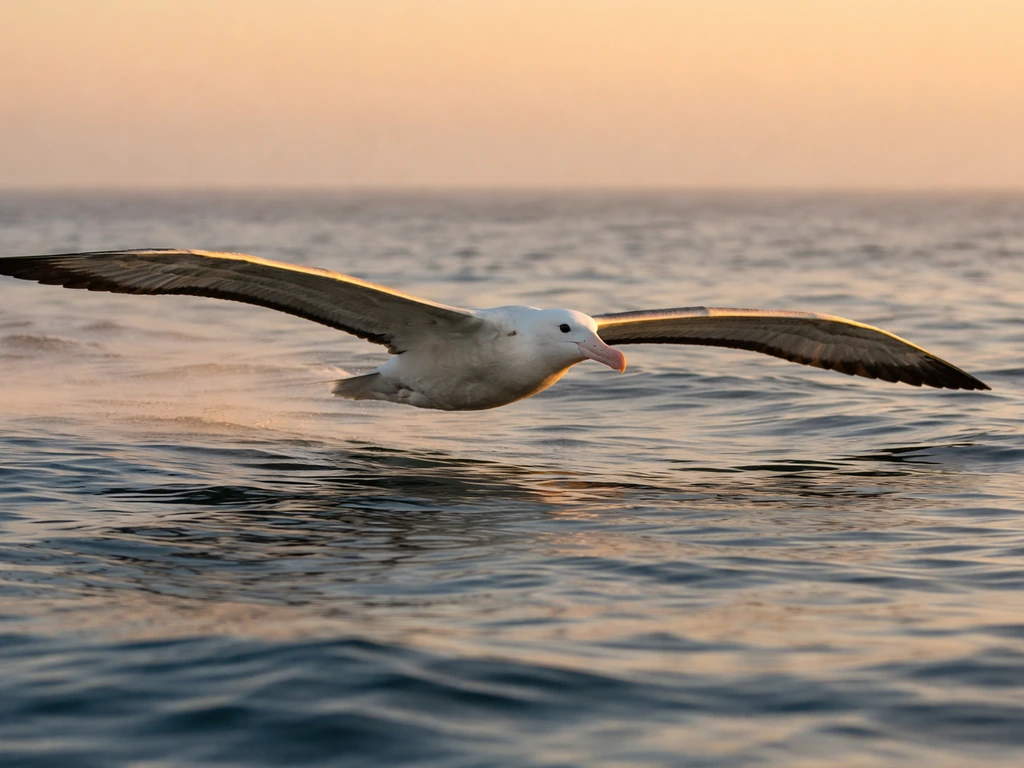
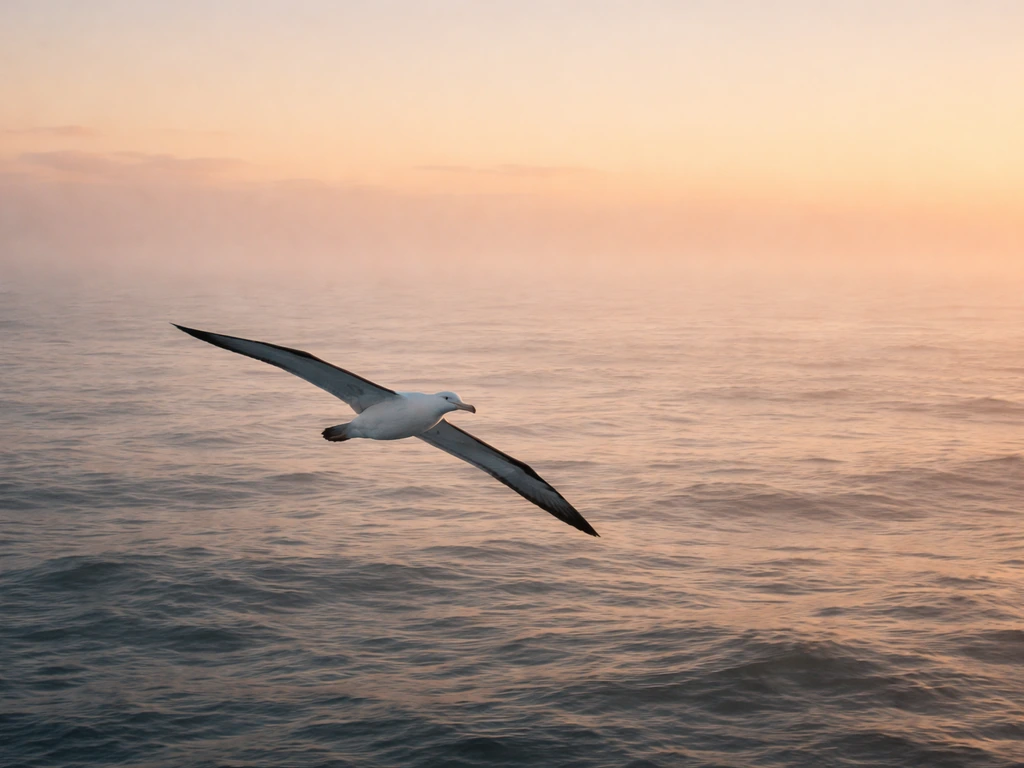
The albatross has one of the largest wingspans of any living bird, reaching up to 11 feet in the wandering albatross. That physical fact matters symbolically. Flight in bird symbolism generally represents transcendence, perspective, and the soul's movement between realms. But the albatross's flight is specifically about dynamic soaring: it uses wind gradients near the ocean surface to travel vast distances with almost no energy expenditure. It is not forcing its way through the air. It is reading invisible currents and working with them rather than against them.
This particular style of flight carries a specific symbolic message: effortless progress is not laziness. It is mastery. If the albatross appears as a guide in your life, one useful question is whether you are fighting currents that you could actually be working with. Are you burning enormous energy on resistance when a slight shift in angle might carry you further with far less effort?
Albatross feathers, like the feathers of most seabirds, are associated with the element of water as much as air. Water in symbolic traditions typically governs emotion, intuition, and the unconscious. An albatross feather, if encountered, sits at the crossroads of air (intellect, communication, spirit) and water (feeling, depth, the unseen). It is a reminder that the most meaningful navigation happens when rational direction-finding and emotional intelligence are working together.
The ocean itself, as the albatross's home, deepens all of this. The sea represents the vast, uncharted, sometimes terrifying space between known points. The albatross does not dread the ocean. It is most itself there, most capable, most free. That is perhaps the deepest practical message this bird carries: whatever your open ocean looks like, the unmarked space you are afraid to enter, that is precisely where you are built to thrive.
| Symbolic theme | What it points to | Practical reflection question |
|---|---|---|
| Endurance | Sustaining effort across long, difficult passages | What long-term commitment in your life needs renewed dedication? |
| Wayfinding and freedom | Trusting inner navigation without a fixed map | Where are you waiting for permission or direction you already have internally? |
| Burden and consequence | Carrying the weight of dismissed or harmed guidance | What past choice are you still carrying, and what would honest acknowledgment look like? |
| Loyalty and return | Faithful commitment despite long separation or absence | Where in your life do you keep returning, and what does that tell you about your true priorities? |
| Threshold and transition | Living at the edge between known and unknown | What transitional moment is currently active in your life? |
| Effortless mastery | Working with natural currents rather than fighting them | Where are you expending energy on resistance that could become cooperation? |
FAQ
Does the albatross symbolize good luck, or is it more about punishment and consequence?
In spiritual terms, it usually points to long-horizon movement rather than sudden outcomes. If you are asking “what does it mean for me right now,” a useful distinction is between endurance (steady progress over time) and fate (events you cannot change). The albatross is more often a prompt to endure wisely and align with what guides you, rather than a sign of fixed, unavoidable timing.
What does the “albatross around the neck” meaning apply to in everyday life?
If “an albatross around your neck” shows up for you, it tends to map to an emotional burden linked to a real choice, not random anxiety. A practical check is whether you have ongoing guilt about disregarding help, boundaries, or guidance. If the guilt feels vague or chronic, treat it as a cue to seek clarity and support rather than to assume the bird is “proving” you deserve suffering.
How can I tell if an albatross encounter in a dream is a supportive message or a shadow-side warning?
It often depends on whether the symbolism you encounter feels protective or isolating. Repeated sightings or vivid dreams that feel stabilizing align with guidance, guidance from ancestors (in some traditions), or conservation resilience. If the imagery feels heavy, shaming, or stuck, it may be pointing to unresolved guilt, resistance, or ignoring currents you could work with.
If an albatross symbolizes long journeys, does it always mean I should change careers or move?
Yes, because many albatross meanings are about relationship to distance and direction. If you are feeling “called” to a big move or new season of work, ask whether you are traveling with fidelity (staying true to what matters) or only chasing freedom without responsibility. The bird can symbolize both, but the spiritual emphasis often lands on how you treat what guides you along the way.
What practical question should I ask myself if I keep noticing albatross imagery?
You can work with the symbol without turning it into fate. Try a two-part reflection: (1) “What part of my life is in an open-ocean phase, meaning unknown terrain but real competence?” (2) “Where am I fighting currents when a small adjustment could create effortless progress?” The symbol is most useful when it leads to a concrete behavioral next step.
Does the albatross symbolism emphasize intuition, logic, or both?
Because the bird is both sea-and-sky, it often suggests integrating two modes: rational direction (planning, boundaries, communication) and emotional navigation (intuition, feeling, deeper motivation). If you are making a decision, consider whether your plan is “air-heavy” (logic only) or “water-heavy” (emotion only). The albatross points toward harmonizing both so your course becomes steadier.
How should modern readers interpret the ancient “don’t kill the albatross” idea?
In many maritime and literary traditions, harming or killing an albatross is treated as disrespect toward a sacred guide, but modern life rarely maps directly to that literal act. If the theme shows up for you, it can mean dismissing guidance, exploiting something fragile, or participating in harm you could avoid. It is best read as an ethical cue rather than a prediction of bad luck for a specific event.
If I connect to the conservation meaning, what action does it usually point toward?
In secular and conservation contexts, the albatross often symbolizes endurance of wildness, meaning resilience that depends on reduced harm to habitats and food chains. So if you are asking “what should I do,” an aligned next step might be lifestyle or advocacy choices that lessen impact, not just personal self-reflection. The symbol can hold both inner and outer responsibility.
What if the symbolism makes me feel guilty or stuck, instead of motivated to change?
Albatross symbolism is not primarily about “escape from consequences.” Instead, it highlights the weight of disregarding something that was meant to protect you, then carrying the emotional reality of that choice. A helpful edge case is whether you are using the symbol to punish yourself. If so, shift toward repair (amends, changed behavior, learning) because the spiritual lesson is often transformation, not endless self-penalty.
Next Article
The Pious Bird of Good: Meaning, Symbolism, and How to Interpret It
Interpret the pious bird of good in spiritual symbolism, compare likely bird meanings across cultures, and apply signs w