
The Mughal Empire is most commonly cited when people ask which empire made India a 'golden bird,' though the phrase 'sone ki chidiya' (literally, a golden bird) describes India's legendary wealth across multiple eras and is not cleanly tied to a single ruler or dynasty. The Maurya and Gupta empires also get credit in various retellings, and modern political figures like Prime Minister Narendra Modi have revived the phrase to talk about India's economic future.
Which Empire Made India Golden Bird Claim: How to Verify

Eleanor Hartwell
17 May 2026

So the honest answer is: the 'golden bird' label describes an idea of India's prosperity rather than a single empire's achievement, and which empire you hear credited depends heavily on the source, the era being discussed, and whether the speaker is making a historical, political, or symbolic point.
What 'sone ki chidiya' actually means
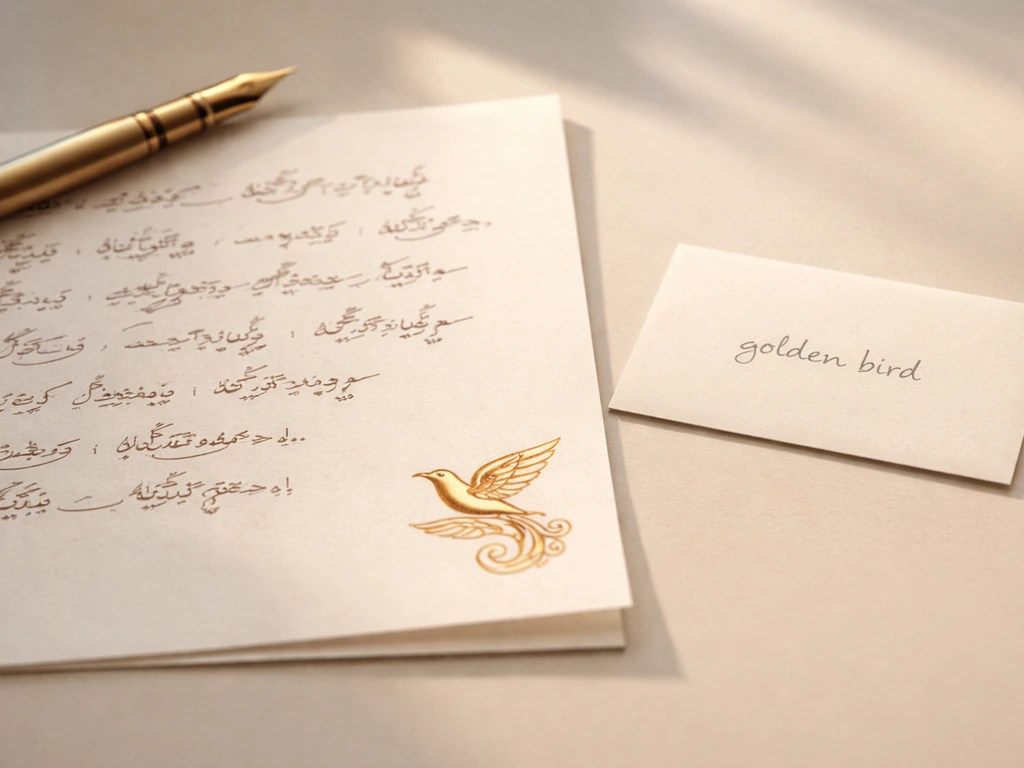
The phrase 'sone ki chidiya' (Hindi/Urdu: सोने की चिड़िया) translates directly to 'golden bird' in English. In everyday South Asian usage, the Rekhta Dictionary defines it as an expression for a rich person or a highly valued prize.
When applied to India as a whole, it means the subcontinent was so wealthy it was like a golden bird perched on the world stage: dazzling, desirable, and endlessly pursued by outsiders. That bird imagery is doing real cultural work here. That same idea, often summarized as [the bird revelation explained](/cultural-bird-symbols/the-bird-revelation-explained), is the reason the phrase can feel both historical and mythic at once.
Birds in many traditions represent freedom, flight toward higher ideals, and the soul of a place or people. Calling India a golden bird rather than simply a 'rich land' gives the description a living, mythic quality that has made it stick across centuries and retellings.
The Indian Express (2024) used this framing directly when explaining a Miss Universe contestant's national costume called 'The Golden Bird,' equating it with 'son chidiya/sone ki chidiya' and describing it as a sobriquet for India's golden age of prosperity. Business Standard has documented Prime Minister Modi using the phrase as a proverbial call to action, urging citizens to help India reclaim its 'sone ki chidiya' status through digital commerce. The phrase clearly travels across time, politics, and symbolism simultaneously.
Which empire gets the most credit, and why
Popular sources most frequently attach the 'golden bird' reputation to the Mughal period, roughly the 16th to 18th centuries, when India is estimated to have accounted for 24 to 25 percent of global GDP. European traders and colonial chroniclers wrote extensively about the subcontinent's extraordinary textile wealth, spice trade, and architecture during Mughal rule, which is why that era tends to dominate the popular imagination. When British colonial rule began dismantling that wealth, nationalist writers and leaders later used 'sone ki chidiya' to describe what had been lost, which cemented the Mughal-era association even further.
However, historians of the Maurya period (roughly 322 to 185 BCE) and the Gupta period (roughly 320 to 550 CE) make equally strong cases. The Gupta era in particular is often called India's classical 'golden age' because of its advances in science, mathematics, literature, and art, not just trade wealth. So if someone cites the Gupta Empire as the source of the 'golden bird' identity, they are not wrong: they are just using 'golden' to mean intellectual and cultural flourishing rather than raw commercial wealth. The phrase stretches to cover all of it.
How to verify the claim you are reading today

Because the attribution varies so much, it is worth checking any specific claim carefully before repeating it. Here is a practical way to do that.
- Identify what kind of source made the claim: a politician's speech, a popular history article, a textbook, or a primary historical document. Political speeches (like Modi's) use the phrase symbolically. Popular articles (like those from ABC News or Indian Express) describe the cultural resonance without tracing a single textual origin. Neither is wrong, but they are doing different things.
- Search for the specific phrase alongside the empire name: try 'sone ki chidiya Mughal empire origin' or 'India golden bird Gupta era' in Google Scholar or JSTOR to find academic sources. Check whether any peer-reviewed historian pins the phrase to a specific text or era.
- Cross-check with the Rekhta Dictionary or Oxford Hindi-English Dictionary for the phrase's linguistic history, which can tell you how old the figurative use actually is in written literature.
- If a source claims a specific quote from a ruler or traveler (such as Ibn Battuta or Megasthenes), look up that traveler's actual writings. Many of the most vivid quotes about India's wealth circulating online are paraphrased, compressed, or sometimes invented.
- For spiritual or symbolic readings of the phrase, treat it as you would any bird symbol: note the tradition it comes from, who is using it, and what the bird's golden quality is meant to convey about flight, value, or divine favor.
Birds and empire in South Asian storytelling
Bird symbolism runs extraordinarily deep in South Asian traditions, which is part of why the 'golden bird' phrase carries such staying power. In Hindu cosmology, Garuda, the divine eagle, is the mount of Vishnu and a symbol of speed, strength, and sovereignty. The peacock, India's national bird, appears across Mughal miniature paintings as a motif of imperial beauty and divine grace. The hamsa (often translated as swan or goose) represents the soul's ability to discriminate between good and evil, and appears in Vedic and Buddhist texts alike as a marker of enlightened kingship.
When a civilization is described as a 'golden bird,' it is drawing on all of that inherited imagery. The bird is not just wealthy: it is elevated, spiritually charged, and migratory in a way that suggests the wealth is alive and could take flight, which is exactly what nationalist narratives about colonial extraction were arguing had happened. Understanding that symbolic layer makes the phrase far richer than a simple economics claim.
It is closer to the way the phoenix image functions in other cultures, where a bird carrying fire or gold represents a civilization's irreducible inner value, the thing that can survive loss and be reborn. The idea of two-headed birds in Slavic and Byzantine traditions, for instance, similarly attached bird imagery to imperial legitimacy, suggesting that the instinct to describe empire through birds is genuinely cross-cultural.
Where people get confused
A few confusion points come up constantly with this phrase, and it is worth naming them directly.
- Conflating 'golden age' with 'golden bird': The Gupta period is commonly called a golden age in Indian history textbooks, but 'sone ki chidiya' as a phrase is more often associated with Mughal-era commercial wealth in popular usage. These are not the same claim, and mixing them up produces a muddled answer.
- Assuming a single textual origin: Many people search for the quote or inscription that first called India a golden bird. That source does not cleanly exist as a single famous passage the way a Lincoln or Gandhi quote might. The phrase emerged organically across folk sayings, nationalist writing, and colonial-era accounts.
- Translation slippage: 'Sone ki chidiya' literally means golden bird, but in usage it also means 'golden cow' in some regional dialects, and some sources translate it as 'cash cow' in a modern business context. If you are reading a translation, check which version the translator chose.
- Colonial framing vs. indigenous framing: Many Western accounts of India as a 'land of gold' were written to justify extraction and trade conquest, not to honor India's sovereignty. When Indian writers use 'sone ki chidiya,' they are often reclaiming that narrative, not simply repeating a colonial observation. The two uses carry opposite emotional and political valences.
- Mixing up the Mughal Empire with the British Raj: Some popular articles frame the story as 'India was a golden bird before the British arrived,' which positions the Mughal era as the golden period and the colonial era as the time of loss. That is a specific political argument, not a neutral historical statement, and it is useful to recognize the framing before accepting the attribution.
A quick comparison of the main contenders

| Empire / Era | Approximate Period | Why It Gets Credit | Type of 'Golden' Claim |
|---|---|---|---|
| Maurya Empire | 322–185 BCE | Unified subcontinent, Silk Road trade, Ashoka's reign | Political unity and early trade wealth |
| Gupta Empire | 320–550 CE | Classical golden age: science, math, literature, art | Cultural and intellectual flourishing |
| Mughal Empire | 1526–1857 CE | ~25% of global GDP at peak, textile and spice trade dominance | Commercial and architectural wealth |
| Modern India (political use) | Post-1947 / present | Modi and others invoking the phrase for economic aspirations | Aspirational and symbolic revival |
If you need a single answer, the Mughal Empire is the most defensible choice when someone asks which empire made India a 'golden bird,' because that era is most consistently linked to the phrase in nationalist discourse and popular history sources. But if you are writing something scholarly or precise, acknowledge that the phrase spans multiple eras and is primarily a symbolic and folk expression rather than a formal historical designation.
What to do next with this question
If you encountered this phrase in a specific context, here are practical next steps depending on your goal.
- For a history essay or factual claim: Use 'Mughal Empire' as your primary answer and note that the phrase 'sone ki chidiya' captures a folk and nationalist narrative rather than a single empire's official motto. Cite economic historians like Angus Maddison, whose GDP estimates for Mughal India are the basis for most percentage claims you will encounter.
- For a cultural or symbolic interpretation: Explore how Garuda, the hamsa, and the peacock function in South Asian bird symbolism, then read the 'golden bird' phrase as part of that larger tradition of birds as carriers of prosperity, sovereignty, and divine favor.
- For a political or media literacy analysis: Look at who is using the phrase today and what they are arguing. Modi's use is forward-looking and aspirational. Colonial-era critiques used it retrospectively to describe loss. Both uses are legitimate but serve very different rhetorical purposes.
- For spiritual reflection: Treat the golden bird as you would any potent bird symbol across traditions, as an image that asks you to consider what is precious, what is free, and what might take flight if not protected. The symbolism of birds as markers of the sacred or the prosperous appears across Hindu, Buddhist, and folk traditions in ways that reward slow, careful reading rather than quick attribution.
- For fact-checking a specific viral claim: Search the exact quote alongside 'source' or 'original text' in Google, and check whether any result leads to a primary document. If all roads lead to other popular articles citing each other, that is a strong sign the phrase is operating as cultural memory rather than documented history.
Bird symbolism, whether it is the golden bird of India, the two-headed imperial eagle of Byzantium, or the sacred birds embedded in stone artifacts from ancient North America, tends to carry meaning that outlasts the empires that first used it. If you are asking about bird stones, it also helps to focus on how specific cultures used bird imagery in carved or inscribed objects bird symbolism.
The 'sone ki chidiya' phrase has survived Mughal rule, British colonialism, independence, and multiple economic eras because it captures something true about how people feel about their homeland's value, not just what any ledger or historian recorded. In a similar way, the Good Lord Bird telegram echoes how sensational language can turn historical themes into a vivid public story.
Holding that symbolic weight lightly, while still being honest about the historical record, is the most useful way to work with it. Some people summarize the idea behind this phrase using the proverb-like explanation known as “two stones one bird meaning. ”.
FAQ
Is “golden bird” an actual historical name for an empire or dynasty?
It is almost never a formal, single-empire title. In most modern usage, “golden bird” is a folk metaphor that different periods (Mughal, Gupta, and sometimes Maurya) are said to “represent,” so the safe check is to ask what the speaker means by “golden” (trade wealth, cultural output, or national destiny).
If someone says India was 24 to 25 percent of world GDP during the Mughal era, how can I validate it?
When the claim is tied specifically to global GDP, verify what dataset and time window the speaker is using, because estimates for premodern economies vary widely and the “percentage of world GDP” framing is easy to overstate or misapply to the Mughal period.
How do I tell whether a claim is about economic wealth or the “classical age” when people mention different empires?
Look at the language choice, not just the period label. A Mughal credit usually focuses on textiles and trade routes under court patronage, while a Gupta credit often emphasizes arts, sciences, and scholarship, so “which empire” depends on the dimension being highlighted.
What should I do if I see the “golden bird” phrase used in politics or media today?
Be careful with “golden bird” appearing in modern politics, advertisements, or pageants, because those uses often signal a symbolic promise rather than a historical argument. In those cases, the most meaningful question is what the phrase is being used to justify (investment, reforms, national pride, or a cultural brand).
How can I avoid repeating an inaccurate “origin story” for the phrase?
If the person is making a scholarly claim, ask for primary sources or specific references, not just a rhetorical quote. Many popular accounts treat it as if it were consistently documented, but the phrase behaves more like an enduring proverb than a dated slogan with a clear origin.
Can translation differences change what “golden bird” is supposed to mean?
Check whether the claim uses “sone ki chidiya” or translates “golden bird” in a way that changes the meaning. The expression can refer to value and desirability, not necessarily a single historical event, so mistranslation can lead to false certainty about “which empire.”
What is the best way to answer when I’m asked directly, “Which empire made India a golden bird?”
If you need one answer for casual conversation, choose Mughal, since it is most consistently linked to the phrase in nationalist discourse and popular summaries. For academic or careful writing, you can keep credibility by stating that attribution is contested and the phrase is symbolic, not an official marker tied to one dynasty.
Why do Gupta-era claims sometimes sound right even if the speaker is not talking about trade wealth?
When evaluating the Gupta or Maurya options, decide whether the source is emphasizing “golden age” achievements (intellectual and artistic progress) rather than “golden” as commercial dominance. Mixing those meanings is a common reason debates get stuck.
Next Articles

Two-Headed Bird Meaning: Symbolism, Omens, and Spiritual Messages
Two-headed bird meaning explained through mythology, religion, and modern symbolism, with questions to interpret your me

What Bird Is a Sign From Heaven? Meaning and How to Interpret
Which bird is often seen as a sign from heaven, plus a step-by-step way to interpret your specific encounter.

What Bird Symbolizes Someone From Heaven? Meanings
Cross-cultural guide to birds symbolizing someone from heaven, with meanings, context clues, and how to validate sightin