
If you've seen an Egyptian bird hieroglyph and want to know what it means, here's the honest answer upfront: there is no single "bird meaning" in Egyptian hieroglyphics. If you've seen an Egyptian bird hieroglyph and want to know what it means, here's the honest answer upfront: there is no single "bird meaning" in Egyptian hieroglyphics, but the broader Egyptian bird symbol meaning is worth exploring alongside these writing-context clues. What you're looking at could be a phonetic sound unit, a category marker, a divine emblem, or part of a royal name. The good news is that with a few practical cues, you can figure out exactly which role your bird is playing, and then interpret it accurately. This guide will walk you through every layer of that process.
Hieroglyphics Bird Meaning: How to Identify Egyptian Bird Signs

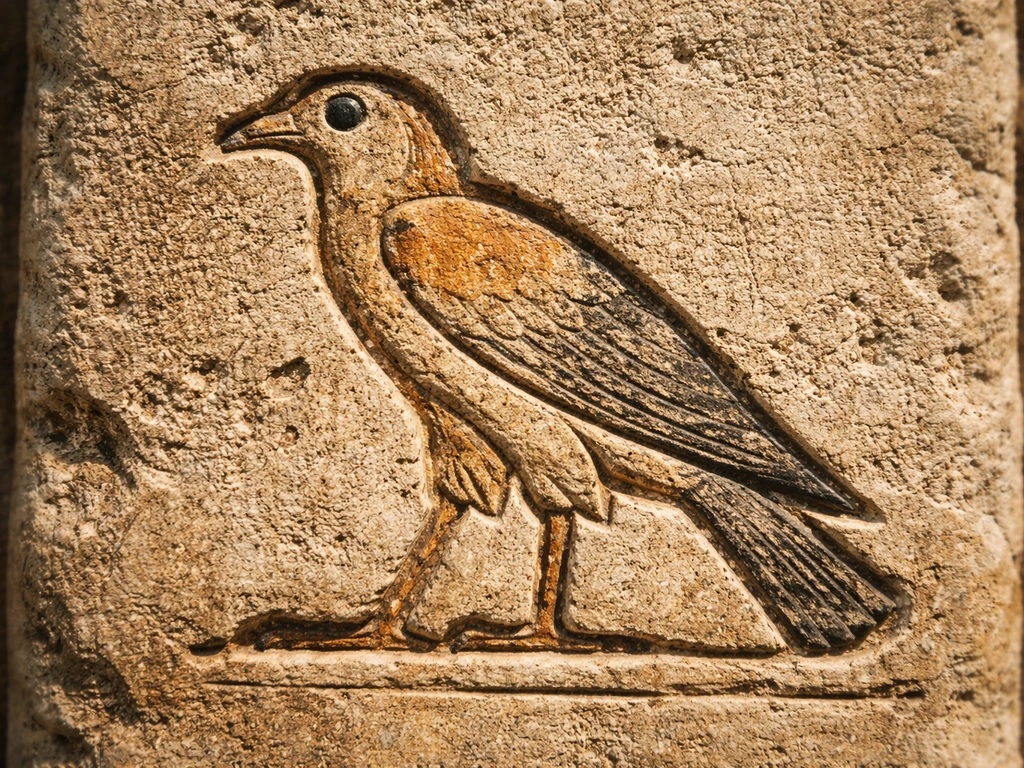
What "hieroglyphics bird meaning" actually refers to
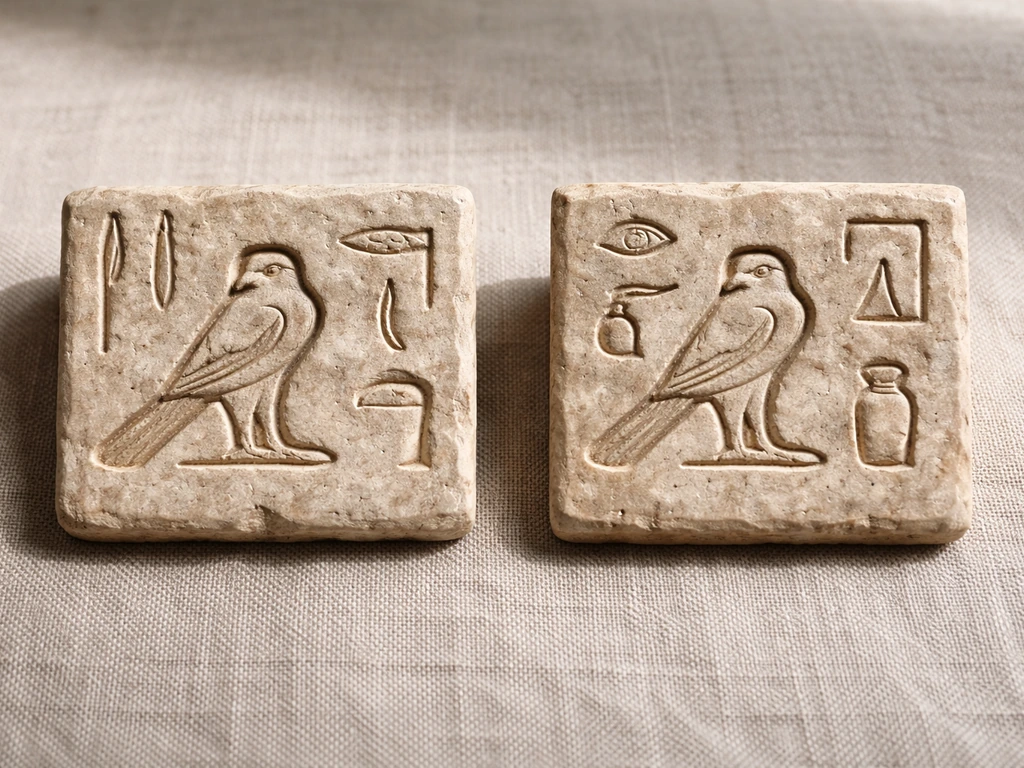
The phrase covers three very different things depending on the context you're working with. The first is a specific bird-species sign acting as a phonogram, where the image of, say, an owl or a quail chick represents a consonant sound rather than the animal itself. The second is a bird-related sign like the feather of Ma'at, which carries direct symbolic weight (truth, cosmic order, divine justice) and functions more like an emblem. The third is a bird appearing inside a cartouche, the oval enclosure used for royal and divine names, where it is almost certainly spelling out part of a name rather than symbolizing anything on its own.
This distinction matters enormously in practice. A lot of confusion starts when someone sees a beautifully rendered falcon in a painting or a carving and assumes it "means" protection or royalty, when in the text immediately next to it the same falcon sign is just functioning as the sound "Hr" (for Horus) in a longer inscription. Both readings can be true at once, but they operate on different levels, and conflating them leads to interpretations that sound meaningful but don't hold up.
The most common Egyptian bird hieroglyphs and what they do
Egyptologists classify bird hieroglyphs under the "G" section of Gardiner's Sign List, the standard scholarly reference for identifying and cataloging Egyptian signs. The list assigns each sign a code (G1, G17, G43, and so on), a conventional phonetic value, and notes on how it typically functions. Using that framework, here are the bird signs you're most likely to encounter and their primary roles in writing.
| Gardiner Code | Bird | Phonetic Value | Primary Function |
|---|---|---|---|
| G1 | Egyptian vulture (Gyps fulvus) | aleph (ꜣ) — a glottal stop | Uniliteral phonogram (one consonant) |
| G17 | Owl (likely barn owl) | m | Uniliteral phonogram |
| G36 | Swallow | wr (great, large) | Bilateral phonogram / determinative for 'great' |
| G43 | Quail chick | w | Uniliteral phonogram |
| G5 | Falcon (Horus) | Hr (Horus) | Ideogram / divine name sign |
| G14 | Egyptian vulture (Nekhbet) | symbol of Upper Egypt | Ideogram / royal emblem |
| G24 | Pintail duck | sꜣ (son of) | Phonogram — very common in royal titles |
| H6 | Feather of Ma'at | Mꜣꜥt | Ideogram for truth, cosmic order |
Notice that several of these are "uniliteral" signs, meaning they represent a single consonant sound the way letters work in an alphabet. blank" rel="noopener noreferrer">Uniliteral signs are used as single-consonant graphemes, and sources discuss how specific sounds and concepts (such as the glottal stop or “aleph” associated with the vulture sign) help explain why many “letter-like” bird signs function phonetically rather than symbolically. blank" rel="noopener noreferrer">The owl is simply "m." The quail chick is simply "w." When you see these birds in a hieroglyphic text, their job is phonetic, not symbolic. The symbolic meaning of the actual animal (the owl's association with death in some cultures, for instance) is largely irrelevant to how the sign functions in Egyptian writing. That's a critical distinction if you're trying to interpret rather than just decode.
The spiritual and symbolic meaning of birds in ancient Egypt
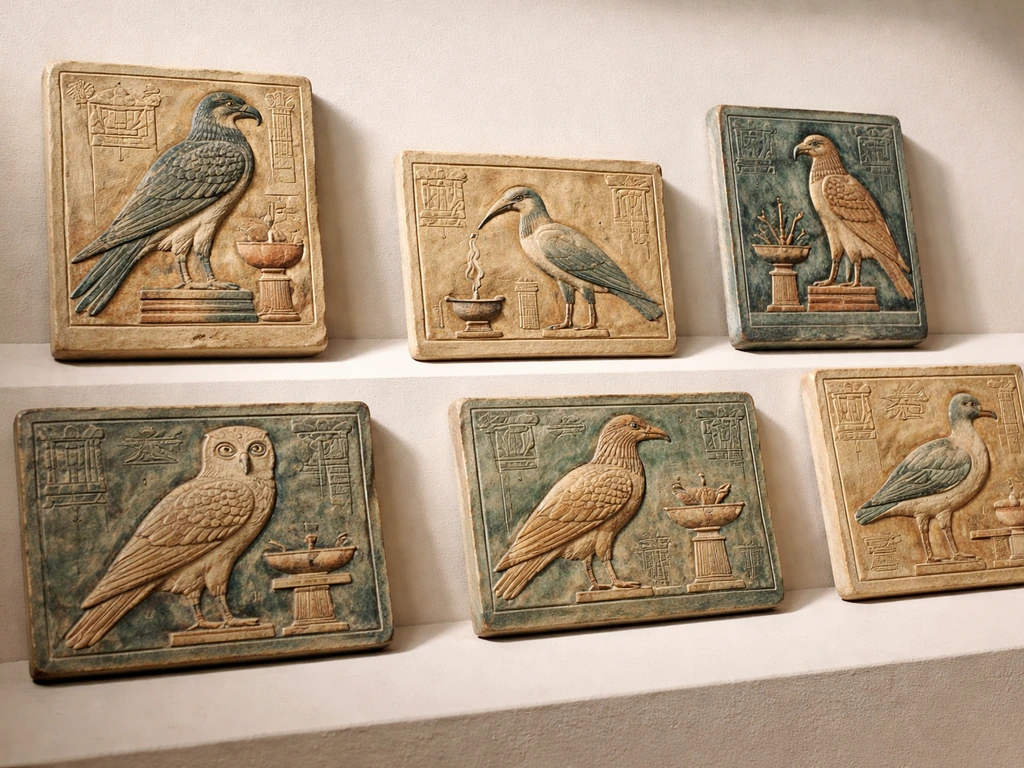
When birds do carry symbolic weight in ancient Egyptian religion and art, the meanings are dense, layered, and species-specific. Scholars studying Egyptian ornithology and religion consistently find that Egyptian bird symbolism operated at multiple levels simultaneously, unlike the simpler "one bird, one meaning" framework you find in, say, folk omen traditions. Here are the core symbolic themes, mapped to the birds most closely associated with them.
The falcon: divine kingship and sky power
The falcon, particularly the peregrine falcon, was the living embodiment of Horus, the sky god whose eyes were the sun and moon. If you're really trying to pin down what Egyptian god is a bird, you'll usually want to start from the specific bird sign (like Horus's falcon) and then match it to the divine figure it represents. In Egyptian mythology, the falcon is commonly associated with Horus, especially in royal and sky-power contexts. The Egyptian pharaoh was considered the earthly manifestation of Horus, which is why the falcon appears on nearly every royal monument. A falcon hieroglyph in a royal context is not a decorative bird choice. It is a direct statement of divine legitimacy. The spread wings of the falcon also appear as a protective symbol, the "wings of Horus" sheltering the dead or protecting sacred objects.
The ibis: wisdom, scribal knowledge, and the moon
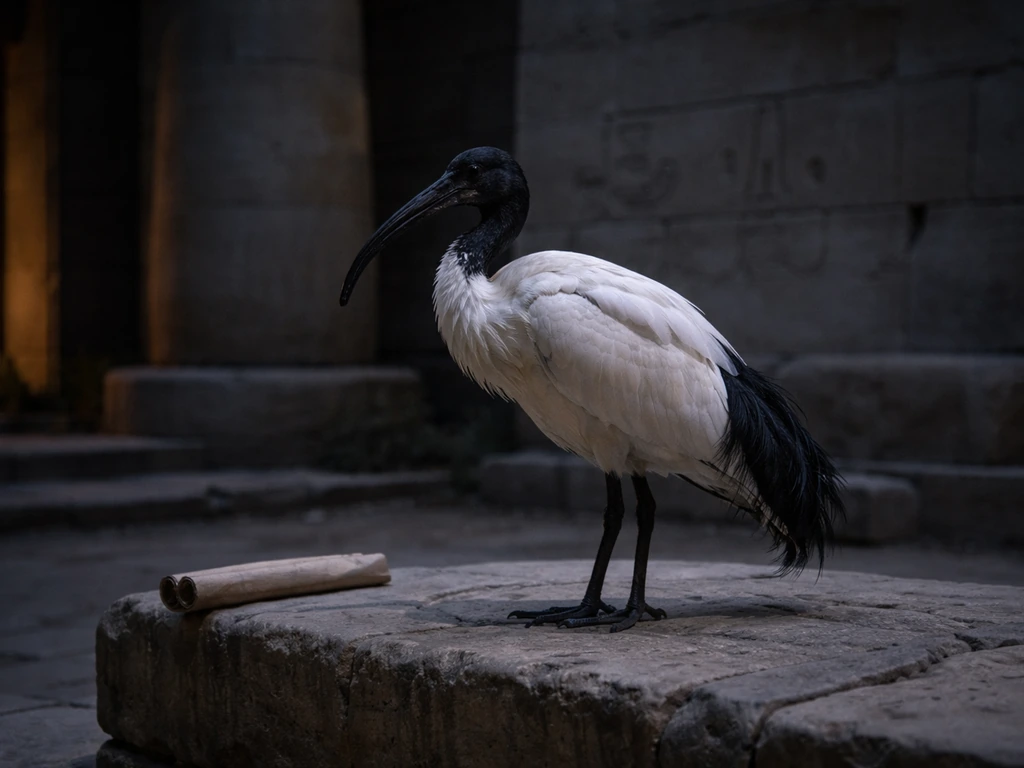
The sacred ibis (Threskiornis aethiopicus) was the symbol of Thoth, god of writing, wisdom, and the moon. Ibises were kept in temples, mummified in enormous numbers, and offered as religious dedications. When you see an ibis hieroglyph or an ibis-headed figure in Egyptian art, the theme is intellectual and lunar, not celestial or solar. Thoth was also the divine scribe who recorded the weighing of the heart in the afterlife, which connects the ibis to judgment and the transition between life and death.
The vulture: maternal protection and royalty
The Egyptian vulture (Nekhbet) was the patron goddess of Upper Egypt and one of the two protective deities (alongside the cobra Wadjet) who flanked the pharaoh. Because vultures were observed feeding their young with devoted care, and because Egyptians may have believed vultures were exclusively female, the bird became a powerful symbol of motherhood and fierce protective love. The vulture headdress worn by queens and goddesses signals this same protection.
The ba bird: the soul in flight
One of the most philosophically rich Egyptian bird images is the ba, typically depicted as a human-headed bird. The ba was one component of the Egyptian soul, the aspect of a person that could leave the body at death and travel between the mortal and divine realms. It was not a literal bird species but a visual metaphor: flight as spiritual freedom, the capacity to exist beyond physical limits. You'll often see the ba bird hovering above mummies or flying out of tomb scenes, and this is one of the clearest cases where the bird image carries a pure spiritual meaning rather than a phonetic one.
The heron (Bennu): resurrection and the primordial moment
The Bennu bird, associated with the grey heron, was the Egyptian precursor to (or parallel of) the phoenix myth. It was said to have alighted on the primordial mound at the first moment of creation, and its cry was believed to have set time itself in motion. The Bennu was sacred at Heliopolis, linked to Ra and Osiris simultaneously, and connected to the cycle of the sun: death each evening, resurrection each dawn. The theme here is cosmic renewal, not just personal rebirth.
How to identify the right hieroglyph from a chart or photo
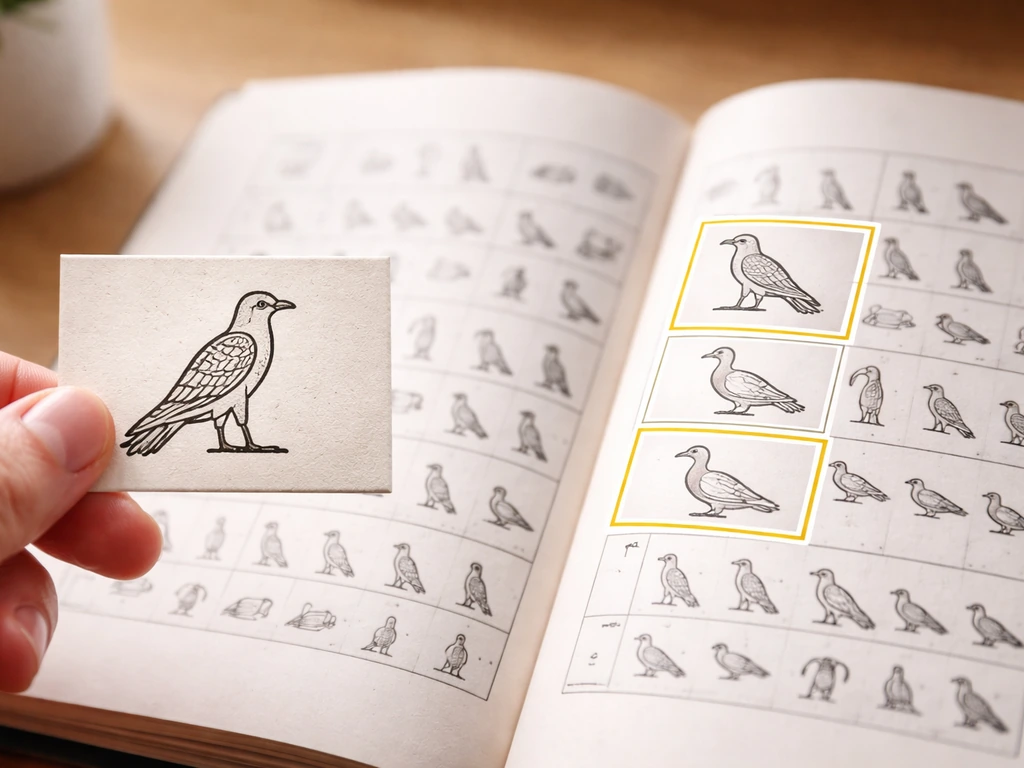
The most practical tool you can use is Gardiner's Sign List, which is widely available in printed Egyptology references and in digital form through academic and museum websites. It organizes signs into visual categories (G for birds, F for mammals, D for body parts, and so on), which means you can locate an unfamiliar bird sign by shape alone, then cross-reference its code to find its phonetic value and typical usage. If you have a photo or drawing of your hieroglyph, start by identifying the bird species if possible, then locate the matching Gardiner code.
Beyond the reference list, three practical cues will help you read the sign correctly in context. First, look at which direction the bird is facing. In Egyptian hieroglyphics, animal and human figures always face the beginning of the text, not the end. So if your bird faces right, the text reads right to left. This matters because mirrored versions of the same bird can look almost identical, and misidentifying direction can flip your reading entirely.
Second, look at what signs surround the bird. A bird followed by a seated-god determinative is likely part of a divine name. A bird appearing after a cartouche oval is almost certainly a phonogram spelling a royal name. A bird appearing alone at the top of a vertical column in a funerary context is more likely functioning as a symbolic or ideographic sign, possibly the ba soul concept or a protective emblem.
Third, check whether the bird has any distinguishing details: a tuft or crest (identifying species more precisely), whether it's standing, flying, or seated, and whether it appears with additional marks like strokes beneath it (which often indicate an ideogram reading). A single stroke below a sign typically means the sign is being used as an ideogram, where the image represents the thing or concept directly rather than just a sound.
- Look up the bird's Gardiner code using a visual reference (start in the G section for birds).
- Determine reading direction by the way the bird faces (birds face the start of the text).
- Check for cartouche enclosure: if the bird is inside an oval with a baseline, it's part of a name.
- Look for a single vertical stroke below the sign, which signals ideographic rather than phonetic use.
- Read the surrounding signs as a group before assigning isolated meaning to the bird alone.
- Cross-check your identification against at least one museum or academic reference, not just a general symbol chart.
Bird imagery in modern spiritual practice
For many people who find their way to Egyptian bird symbolism, the starting point isn't an academic text. It's an encounter, a hawk landing unusually close, a feather found in an unexpected place, a recurring bird image in a dream. That kind of attentiveness to bird as messenger or spiritual signal is genuinely ancient, and Egyptian culture itself took it seriously. But how you translate it into modern meaning matters.
In terms of omens and messengers, Egyptian thought did include the idea that birds could convey divine messages, particularly through their flight patterns and calls. This wasn't superstition but part of a coherent cosmological system where the natural world was seen as constantly communicating divine order. If you're drawn to a particular bird species in your own life, looking up its Egyptian hieroglyphic identity and symbolic role can be a genuinely rich way to deepen that reflection. A falcon appearing repeatedly in your environment can be approached through the lens of Horus: sky, vision, sovereign power, and divine protection.
Feathers carry enormous weight across Egyptian symbolism. The feather of Ma'at (specifically a single ostrich feather) was the measure of a righteous life, weighed against the heart of the deceased. Finding a feather in your daily life and reflecting on what "truth and cosmic order" mean personally is one way to engage this tradition meaningfully without overclaiming. You're not invoking a spell. You're using a well-documented symbolic framework as a lens.
Flight in Egyptian thought consistently symbolized freedom from bodily limitation, movement between worlds, and divine access. Nesting, by contrast, connected to the earthly and the protective, particularly through the vulture goddess. If you're working with bird imagery in meditation, journaling, or spiritual reflection, these distinctions can help you apply the symbolism with more precision and more personal resonance.
How Egypt's bird symbolism differs from other traditions
Egyptian bird symbolism is unusually systematic. Unlike folk omen traditions (where a bird's behavior or species signals good or bad luck in a fairly binary way), or Celtic traditions (where ravens and wrens carry mythological narrative weight as tricksters or sacred harbingers), or Native American traditions (where specific birds are clan totems or spirit helpers tied to individual relationship and lineage), the Egyptian system is theological and cosmological. Birds aren't just messengers from the spirit world. They are the gods themselves, or aspects of the soul, or inscribed into the very structure of divine order.
Biblical bird symbolism is worth a brief comparison here too. In the Hebrew and Christian traditions, the dove is a specific carrier of peace and divine spirit (Noah's dove, the descent of the Holy Spirit), and the eagle represents divine strength and prophetic vision. But these are largely narrative and theological symbols rather than part of a writing system. In Egypt, the same bird can simultaneously be a phonetic letter, a divine emblem, and a theological statement, all in the same inscription. That layering is distinctly Egyptian.
The Egyptian tradition also differs in its precision about species. Where other cultures often work with broad categories ("birds of prey" as powerful symbols, "songbirds" as gentle messengers), Egyptian religious art and hieroglyphic texts carefully differentiate between a peregrine falcon and a kestrel, between a grey heron and a purple heron, because the species choice was theologically deliberate. If you're working with Egyptian bird symbolism, species identification matters more than it does in most other traditions.
Putting it all together: your next steps
If you've seen a specific Egyptian bird hieroglyph and want to interpret it accurately, start with Gardiner's Sign List to identify the sign by shape and code. Then determine whether it's functioning phonetically (as part of spelling a word or name), ideographically (representing the concept of the bird directly), or as a determinative (categorizing nearby words without adding sound). A quick way to deepen your reading is to use a syrinx definition bird guide so you can tell whether the sign is phonetic, symbolic, or ideographic. Once you know the function, you can move confidently into the symbolic layer: what did this particular bird species mean in Egyptian religion, and what divine figure or concept does it invoke?
For spiritual reflection, use that meaning as a starting point rather than a fixed answer. Egyptian bird symbolism was never meant to be a one-line fortune. It was a sophisticated, multi-dimensional framework for understanding the relationship between the human, the natural, and the divine. If an ibis keeps appearing in your life and you explore what Thoth represents (wisdom, writing, the moon, the weighing of truth), you're engaging something genuinely ancient and genuinely rich. Just hold your interpretation with appropriate humility, as a lens rather than a verdict.
If you want to go deeper, the connected threads worth exploring include what specific bird species (like the falcon) meant for Horus as a divine figure, the broader landscape of Egyptian bird symbols in religious art, and how ancient message-carrying birds fit into both the historical and symbolic record. In particular, you can ask which bird was used to carry messages in ancient Egyptian belief and practice. The Saqqara bird is also tied to ancient beliefs about how sacred messages and ideas were conveyed which bird was used to carry messages. Each of those angles adds a different dimension to what any single bird sign can tell you.
FAQ
If there is no single “bird meaning” in hieroglyphics, how do I know whether my bird is phonetic or symbolic?
In many cases you need to separate what the sign is doing from what the animal “means.” If the bird is used like a letter (phonogram), its symbolic associations are not the main interpretation. Look for phonetic spelling, nearby cartouches, or determinatives that show the bird is categorizing nearby words rather than stating a mythic theme.
I’m unsure which way my bird faces, does that really change the meaning?
Direction affects reading, but it also affects identification. If a bird looks similar mirrored either way, confirm the facing direction relative to the surrounding signs, then check whether the same shape exists in Gardiner under more than one variant. If your bird is facing the wrong way for the assumed text direction, you may be reading the wrong phonetic value or mislocating the bird’s function.
What if the bird appears inside a cartouche, can I still interpret it as a deity symbol?
Yes. A bird that appears inside a cartouche is usually part of spelling, so treat it as phonetic or part of a name rather than a standalone religious emblem. If you see your bird enclosed by the oval boundary of a cartouche, prioritize name decoding over general symbolism.
How can I tell whether a bird in a tomb scene is the ba soul concept versus just a religious bird image?
Begin with the sign’s role in the sentence. If the bird is immediately followed by a determinative or stands in a place where determinatives typically occur, it may be functioning to classify a word. A standalone bird in a funerary tableau or tomb scene can also be ideographic or thematic, but it is not guaranteed to be the ba unless the broader composition matches that tradition.
How do I identify the exact species when the artwork is stylized or worn?
Bird species identification can be tricky because ancient artists stylize feathers and heads. Watch for consistent “tells” such as a crest or tuft, whether the beak is hooked or straight, and body posture (seated, standing, flying). If your photo is low-resolution, compare multiple views of the same sign type in your source, not just one angle.
Can the same bird sign be both a letter and a divine symbol at the same time?
Sometimes the same bird sign is used in multiple ways across texts, including phonograms, determinatives, and emblem-like uses. If your context suggests spelling but the bird’s species strongly evokes a god (for example, a Horus falcon), both can be relevant, but the safest approach is to decode the writing function first, then layer symbolism afterward if the surrounding scene supports it.
What does a stroke or line below the bird hieroglyph usually indicate?
A single stroke under a sign is often a clue that the sign is being used as an ideogram or is being modified for a specific reading. Treat it as context-sensitive, then recheck the Gardiner code and nearby determinatives to decide whether it represents the concept directly or is marking a grammatical or interpretive distinction.
What are the most common mistakes people make when identifying bird hieroglyphs from photos?
Photograph-to-sign translation is a common failure point. Take a close, straight-on image if possible, note whether the bird is seated, standing, or in flight, and write down the immediate neighbors (especially any seated god, oval cartouche, or clear determinatives). Then use the bird category (Gardiner G group) only as the first filter, not the final ID.
Is it enough to look up the bird in a chart, or do I need context too?
A “bird guide” can help you classify whether you are looking at a phonogram, ideogram, or determinative, but you should still confirm with the surrounding signs and the sign’s position in the layout (top of a column, within a name cartouche, adjacent to gods). Classification tools are strongest when combined with context, not used alone.
How can I use bird symbolism meaningfully without overclaiming or guessing?
If you want to use the symbolic layer for reflection, treat it as a lens rather than a prediction. Anchor the symbolic meaning to an explicit match, such as identifying the falcon with Horus in royal sky-power contexts, or the ibis with Thoth in writing and lunar judgment themes. If you cannot confirm the writing function, avoid locking in a single spiritual interpretation.
What Bird Is a Sign From Heaven? Meaning and How to Interpret
Which bird is often seen as a sign from heaven, plus a step-by-step way to interpret your specific encounter.