
The phrase comes from Ecclesiastes 10:20, and it is not a promise that birds will deliver divine messages to you. It is a wisdom proverb warning that even your most private words have a way of reaching people in power. The KJV renders it: "for a bird of the air shall carry the voice, and that which hath wings shall tell the matter." The point is simple and a little unsettling: guard what you say, even in your own bedroom, because nothing stays secret forever. That is the core meaning. But because this site is about bird symbolism and what birds signify across spiritual traditions, there is more worth unpacking here, including how the imagery of a winged messenger carrying sound became one of the most durable metaphors in spiritual literature, and what it might actually mean when you feel like a bird encounter is trying to tell you something. The proverb "the weak should fear the strong bird" similarly underscores how wisdom uses imagery to warn about the risks of speaking or acting carelessly.
A Bird of the Air Shall Carry the Voice Meaning

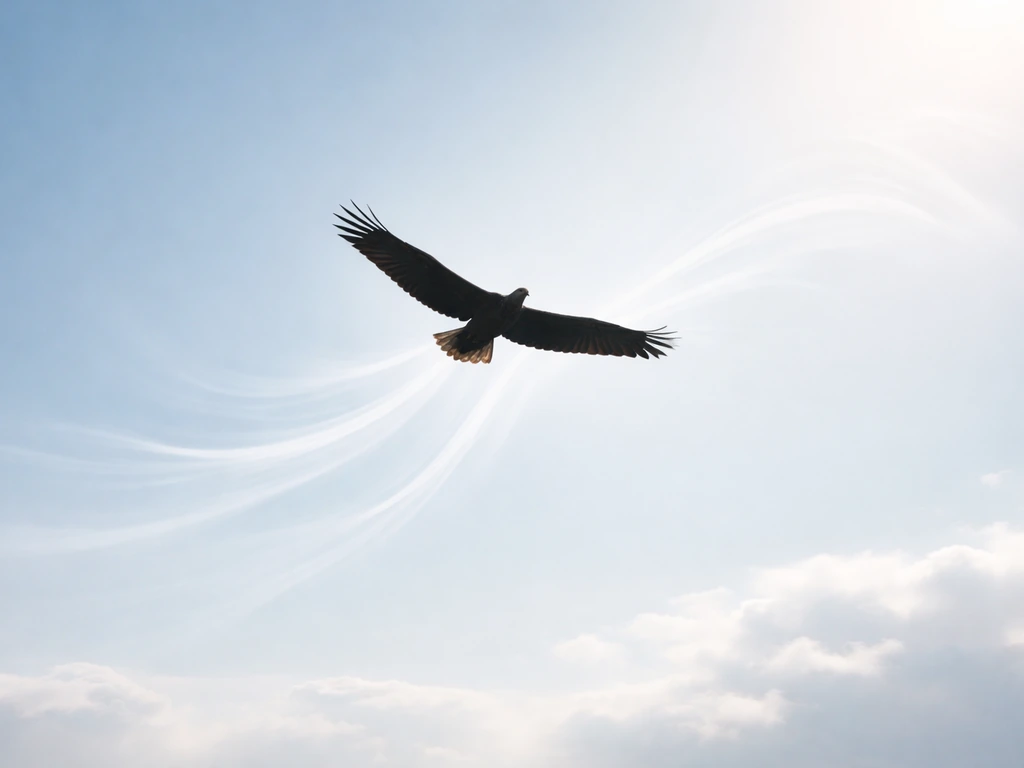
Breaking down the phrase: bird, carry, and voice

Each word in "a bird of the air shall carry the voice" carries symbolic weight, and they work together as a single image rather than three separate ideas. Let's take them one at a time.
"Bird of the air" (or "bird of the heavens")
The Hebrew behind this phrase specifically means wild, undomesticated birds in flight, not tame fowl. The NASB 1995 translates it as "a bird of the heavens," which adds a vertical dimension: this is a creature that moves between earth and the sky, unrestricted by walls or private spaces. In ancient Near Eastern thought, birds were liminal figures precisely because they crossed boundaries humans could not. They passed over city walls, palace courts, and bedroom windows without anyone's permission. Calling the messenger a "bird of the air" rather than, say, a rat or a servant is the writer's way of emphasizing the inevitability of it. You cannot fence in a bird. Your words, once spoken or even thought, become equally uncontrollable.
"Carry" as conveyance of something unseen

The word "carry" here is doing the heavy lifting. It is not passive. It implies active transport, something picked up and deliberately moved from one place to another. In the context of the verse, what is being carried is not physical: it is sound, meaning, intention. The NET Bible translates this as "might carry the sound," which keeps that slightly ominous, uncertain quality intact. The carrying is figurative, but its effect is real. What you said privately arrives publicly. Symbolically, "carry" represents the idea that communication has momentum of its own, that once released, it cannot be called back.
"Voice" as more than sound
In biblical Hebrew, "voice" (qol) can mean a literal sound, a spoken word, a report, or even a divine calling. BibleHub notes on Ecclesiastes 10:20 connect the word to the sense of a reported matter being conveyed onward. So "voice" here is not just the decibels coming from your throat. It is the substance of what you communicated, your meaning, your attitude, your intent. That is what the winged creature carries and tells. This layered sense of "voice" as both sound and significance is why the phrase resonates so strongly in spiritual contexts well beyond its original wisdom-literature setting.
Why Ecclesiastes uses a bird as the messenger

Ecclesiastes 10:20 sits inside a broader block of practical wisdom sayings (verses 18 through 20) that cover laziness, feasting, and reckless speech. The writer is building a picture of how hidden foolishness inevitably surfaces. The bird image is chosen precisely because it is surprising and slightly absurd, which is how proverbs work. Nobody expects a bird to be the thing that reports their private complaint to the king. That unexpectedness is the point. Ancient readers would have understood it as hyperbole for "you never know who is listening."
What makes the image richer is its long interpretive history. The article discusses the interpretation history of Ecclesiastes 10:20 and connects it to blank" rel="noopener noreferrer">traditional Jewish interpretive approaches. Jewish midrashic tradition identified the "bird of the air" with the angel Raziel, who according to the Targum on this verse makes proclamation of human secrets and whose voice resounds through the world. The University of Chicago’s open-access study of Qohelet discusses the blank" rel="noopener noreferrer">Raziel-type tradition connected to Ecclesiastes 10:20’s “bird of the heavens” imagery and how it is used to interpret “human secrets” being proclaimed. The "winged creature" in the second half of the verse was connected to Elijah. This is not the original meaning of Ecclesiastes 10:20, but it shows how naturally the image migrated into spiritual and angelic territory. Many readers also ask, “who is the bird of prey in the bible,” and that question is often connected to the imagery of an avian messenger in Isaiah 46:11. Many people connect the idea of a bird of prey to the question of how divine messages in scripture are carried and understood. The idea of a messenger who transcends physical boundaries, who carries speech from hidden places to high authorities, translated almost effortlessly into the vocabulary of angels and divine intermediaries.
This is consistent with how birds function as messengers across virtually every religious tradition this site documents. From the raven sent out by Noah, to the dove of peace, to the eagle as a bird of divine power (sometimes called the bird of Jove in classical tradition), winged creatures have served as the go-between linking human experience and something larger. The "bird of the air" in Ecclesiastes is doing the same symbolic work, even in a mundane wisdom context: it represents the messenger you did not see coming, operating in a register you cannot fully control.
What "carry" and "voice" tell us about spiritual communication
If you are coming to this phrase because you are searching for spiritual meaning in a bird encounter, the symbolism of "carry" and "voice" is directly relevant. These two words together form the core of what the messenger-bird archetype is always doing in spiritual traditions: it carries something across a boundary (physical, spiritual, or temporal) and delivers it in a way that speaks to the receiver. The message may not be in words. It may be in timing, in species, in behavior, or in the feeling the encounter leaves behind.
The idea that a bird "carries a voice" aligns with what many traditions describe as the bird's role as a divine intermediary. The voice being carried is not necessarily a verbal instruction. It can be a nudge toward attention, a sense of being called to notice something, an emotional resonance that feels like more than coincidence. This is the symbolic layer that gets activated when you hear birdsong at a significant moment or when a particular bird appears repeatedly during a period of discernment or grief. The encounter feels like it carries something, even if you cannot quite name what.
How to read bird encounters as a carried voice

If you are trying to discern whether a specific bird encounter is meaningful, the most honest approach is to hold it lightly while taking it seriously. Here are the signs worth paying attention to, based on how bird symbolism actually functions across spiritual traditions.
- Repetition: A single bird sighting is just a bird. The same species appearing repeatedly over days or weeks, especially at significant moments (during prayer, after a major decision, at a funeral), starts to feel like pattern. Patterns are worth reflection.
- Timing: A bird appearing immediately after you ask a question, finish a prayer, or make a decision carries different weight than one that shows up randomly. The timing is part of the message.
- Species: Different birds carry different traditional associations. A dove suggests peace or the Holy Spirit in biblical tradition. A cardinal is widely associated with visitation from loved ones who have passed. A hawk or eagle often suggests clarity, vision, or divine oversight. The species matters when you are looking for meaning.
- Behavior: A bird that lingers, makes direct eye contact, sings unusually loudly, or enters an unusual space (inside a building, at a hospital window) is behaving in a way that invites attention beyond the ordinary.
- Your internal response: This one is underrated. If an encounter produces a strong emotional reaction, a sudden calm, a sense of being seen, or an unexpected clarity, that interior movement is data. It is not proof of a message, but it is worth recording and sitting with.
Birdsong specifically deserves its own note here. In several traditions, hearing a bird before seeing it, hearing it call your attention before you know what it is, is itself a version of a "voice carried." The sound arrives first. You do not control it. That is exactly the structure of Ecclesiastes 10:20's imagery: something is delivered to you before you expect it, from a source you cannot fully account for.
Common misreadings, and how to avoid them
The most widespread misreading of "a bird of the air shall carry the voice" is treating it as a general biblical promise that birds are spiritual messengers sent to communicate divine guidance to individuals. The verse does not say that. It is a proverb about the danger of private speech becoming public, set inside a collection of wisdom sayings about foolishness and consequences. Taking it out of that context and building a personal omen system around it is exactly the kind of over-literalization that good interpretation guards against.
There is also a recurring online misreading that treats the verse as evidence for bizarre literal claims (one viral Reddit thread argued the verse "proves" birds are surveillance drones). This is what happens when figurative language is read with no attention to genre, context, or literary tradition. Ecclesiastes uses hyperbole throughout. The "bird" is doing the same thing as "the walls have ears." It is a vivid image, not a meteorological or ornithological claim.
On the spiritual side, the comparable error is running in the opposite direction: assuming that any bird you notice is carrying a personalized divine message for you right now. Ancient Babylonian cultures had elaborate omen-divination systems built around bird behavior, and while that background is historically interesting, it is a completely different practice from biblical wisdom interpretation. Ecclesiastes is not a divination manual. The difference matters.
1 John 4:1 gives the Christian reader the clearest framework here: "Do not believe every spirit, but test the spirits to see whether they are from God." Testing means measuring against Scripture and against the core truths of the faith, not against novelty, emotional intensity, or how meaningful something felt in the moment. A bird encounter that produces a genuine sense of peace or clarity is worth sitting with. But the interpretation you land on should be consistent with what Scripture says about God's character and communication, not built on the encounter alone.
| Type of Reading | What It Looks Like | Is It Reliable? |
|---|---|---|
| Literal/omen reading | Treating every bird as a specific divine signal or personal prophecy | No — misreads the biblical genre and risks superstition |
| Over-spiritualized reading | Interpreting any bird encounter as a guaranteed message without discernment | No — lacks the testing framework 1 John 4:1 requires |
| Purely skeptical reading | Dismissing all bird symbolism as projection with no spiritual value | Incomplete — ignores genuine cross-cultural and personal resonance |
| Grounded symbolic reading | Holding bird encounters as potentially meaningful while testing them against Scripture and pattern | Yes — honors both the symbol and the need for discernment |
This same discernment principle applies when you explore adjacent themes on this site, like what a bird of prey symbolizes in Isaiah 46:11, or what the broader category of birds of prey means in biblical literature. In the same way, you can explore who the bird of prey is in Isaiah 46:11 and how that theme fits the passage. The interpretive caution stays the same: understand the genre, understand the context, test what you receive.
Practical next steps: what to actually do with this
If you came to this phrase because something in your life feels like it is trying to get your attention, and a bird encounter is part of that picture, here is what I would actually recommend doing.
Start with a journal entry
Write down the encounter while it is fresh: the species if you know it, the time, what you were thinking or praying about beforehand, what you felt during and after. Do not interpret yet. Just record. Then, a few days later, come back and read it. Does it still feel significant? Does a theme emerge? Journaling creates the distance you need to separate genuine pattern from confirmation bias.
Use these reflection prompts to get started:
- What was I thinking or asking about in the moments before this encounter?
- Have I seen this bird or had this type of encounter before, and if so, when?
- What word, feeling, or image came to me during or after the encounter?
- Does that word or feeling connect to anything I am currently navigating?
- What does Scripture say about the situation I am facing, independent of this encounter?
Bring it into prayer or meditation
Proverbs 3:5-6 is the anchor verse for this kind of discernment: "Trust in the LORD with all your heart and do not lean on your own understanding. In all your ways acknowledge him, and he will make your paths straight." That verse is not telling you to ignore your experiences. It is telling you where to take them. Bring the encounter into prayer. Hold it open. Ask for clarity rather than confirmation. There is a difference between asking "tell me what this means" and asking "what do you want me to understand right now?" The second question is more honest and usually more productive.
Measure what you receive against Scripture
Whatever sense of meaning or direction you receive from reflecting on a bird encounter, run it through Colossians 3:16's standard: does it align with the word of Christ dwelling richly in you? If you are also curious about the bird of prey Jim Morrison meaning, look for how that symbolism frames themes of freedom, danger, and heightened awareness in the context you mean to apply it. A genuine spiritual prompting will not contradict Scripture, will not produce fear or obsession, and will not require you to keep watching for more signs to feel sure. If the interpretation you are landing on is producing anxiety, compulsion, or a need to look for more confirming omens, that is a signal to step back and test more carefully.
Decide what to do next, not just what it means
Meaning without action is just interesting. Once you have journaled, prayed, and tested what you received, ask a practical question: does this change anything I am about to do? If a sense of calm or direction emerged, is there a concrete step that follows from it? A decision to make, a conversation to have, a habit to begin or end? The best use of a symbolic encounter is not to decode it perfectly but to let it move you toward something real. That is what "a voice carried" is ultimately for: not explanation, but motion.
FAQ
Does “a bird of the air shall carry the voice” mean birds will directly tell me God’s guidance?
Not by itself. The proverb is about the inevitability of your words and attitudes reaching others, especially those with influence. So it does not mean every bird will deliver a personal prophecy, or that a bird sighting automatically confirms guilt, judgment, or a specific “message from God.”
How can I apply this meaning without turning it into superstition or omens?
The cleanest way to apply it is to treat it as a speech-and-discretion warning. A practical takeaway is to reduce risk before it happens, for example, avoid venting to people who might repeat it, correct misinformation quickly, and use privacy settings and cautious wording in group chats, not only in face-to-face conversations.
What should I do if a bird encounter keeps feeling significant, and I want to keep checking for more signs?
If a bird encounter feels meaningful, you can discern without obsession by setting a time boundary. For example, journal for a few days, pray once for clarity, and then stop “sign-checking” and go back to normal discernment (Scripture, wise counsel, and practical outcomes).
Does the warning include things I didn’t say directly, like texts, DMs, or posts?
Yes. The phrase targets private communication, including what is repeated indirectly. That means it can apply to rumors, backchannel complaints, and social-media posts that are “not meant” for certain people. It is less about literal birds and more about how information spreads beyond your intent.
What does “voice” mean in practice, especially if I’m thinking about tone, reputation, or implied intent?
Colloquial “voice” can be broader than audible speech, since it can include a report, reputation, or the meaning behind what you communicate. If you feel convicted, ask what your “voice” carried in context, such as sarcasm, bitterness, influence on others, or a decision someone later interpreted as endorsement.
How do I avoid over-literalizing the phrase into specific predictions?
A common mistake is claiming a direct, specific outcome, like “this means I will get an offer” or “this means I’m being watched.” Instead, keep interpretations probabilistic. Ask, “Could this be a prompt to speak differently or take a wise next step?”
How can I tell whether my interpretation is leading to healthy discernment or unhealthy fear?
When you feel anxious, trapped, or compelled to monitor birds repeatedly, that is usually a sign you are moving from discernment into fear. A safer next step is to return to basics, Scripture, prayer for wisdom rather than certainty, and one concrete action in the real world.
What framework can I use to evaluate whether a bird-related interpretation is actually trustworthy?
If you’re unsure whether an encounter is “from God” versus just coincidence or psychological patterning, use a checklist. Does it align with Scripture, produce clarity without obsession, and lead to a concrete improvement (repentance, reconciliation, better decisions) rather than just more guessing?
Does it matter whether I hear the bird before I see it, or vice versa?
Yes, and it matters: hearing a bird first, then later seeing it, can feel “message-like,” but it does not change the interpretive rule. Still record what you noticed, what was happening in your mind beforehand, and whether the meaning holds after a few days.
If I want bird symbolism, how can I interpret the “boundary crossing” theme in a grounded way?
Instead of decoding the bird itself as a secret transmitter, focus on the boundary-crossing image. Ask what boundary you are dealing with in your life, for example, privacy versus disclosure, secrecy versus accountability, or personal feelings versus how they affect others.

Which bird is often seen as a sign from heaven, plus a step-by-step way to interpret your specific encounter.

Cross-cultural guide to birds symbolizing someone from heaven, with meanings, context clues, and how to validate sightin

Most common angel-associated birds and how to identify them, plus meaning and tips to avoid mix-ups like doves