
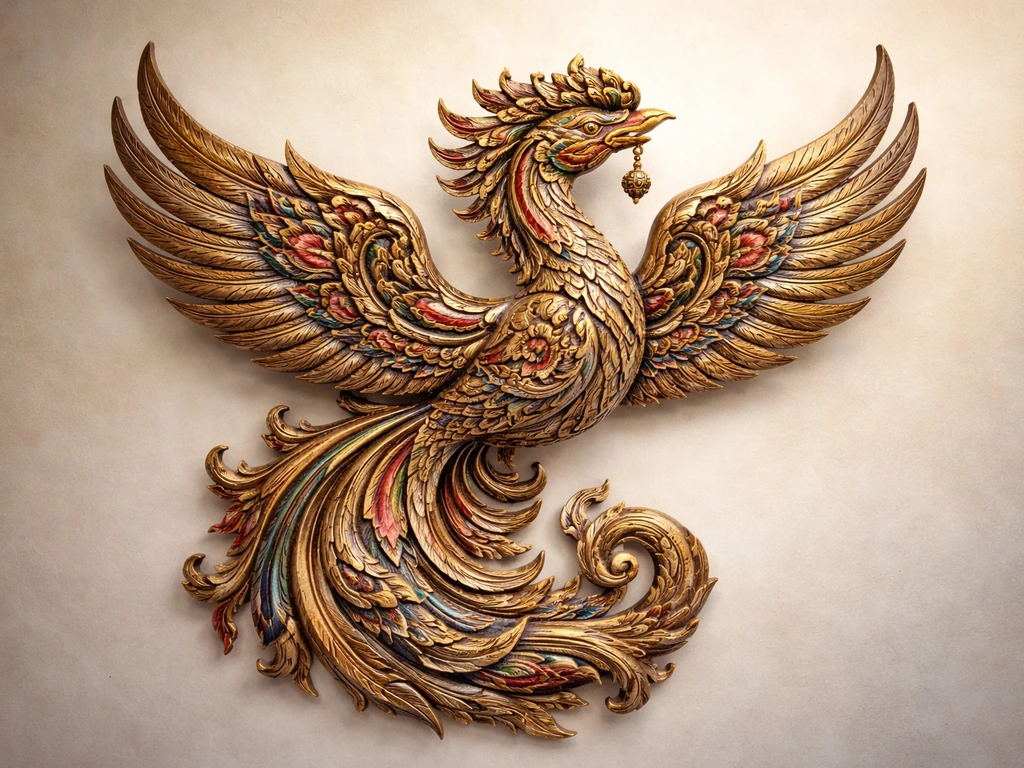
The legendary bird of the Maranao is the Sarimanok, a colorful, stylized fowl depicted holding a fish in its beak or talons. It is not a single creature from one fixed story but a living cultural symbol woven into Maranao art, architecture, ceremony, and identity for centuries. If you have seen an ornate, feathered bird figure carrying a fish in Filipino art or textiles, you have almost certainly already looked at a Sarimanok.
What Is the Legendary Bird of the Maranao? Meaning

Eleanor Hartwell
22 May 2026
Who the Maranao are and where the Sarimanok fits in
The Maranao are a predominantly Muslim ethnolinguistic group from Mindanao in the southern Philippines, centered on Lake Lanao (known locally as Ranaw) and the province of Lanao del Sur. The name Maranao itself roughly translates to 'people of the lake,' and that geographic anchor matters because it shapes the mythology. Their cultural traditions include the Darangen, a sprawling oral epic passed down across generations and eventually recorded in print during the 20th century, as well as a sophisticated decorative arts tradition built around a design language called okir. It is within this layered world of oral literature, ceremonial craft, and communal identity that the Sarimanok lives.
The Sarimanok is described in encyclopedic references as a stylized bird placed on top of banner poles and embedded throughout Maranao material culture. UNESCO and ICHCAP have archived it specifically as part of the traditional craftsmanship heritage of the region, which tells you something important: this is not just a folklore character. It is a symbol with visual rules, craft protocols, and cultural weight that extends far beyond any single story.
Identifying the Sarimanok across different retellings
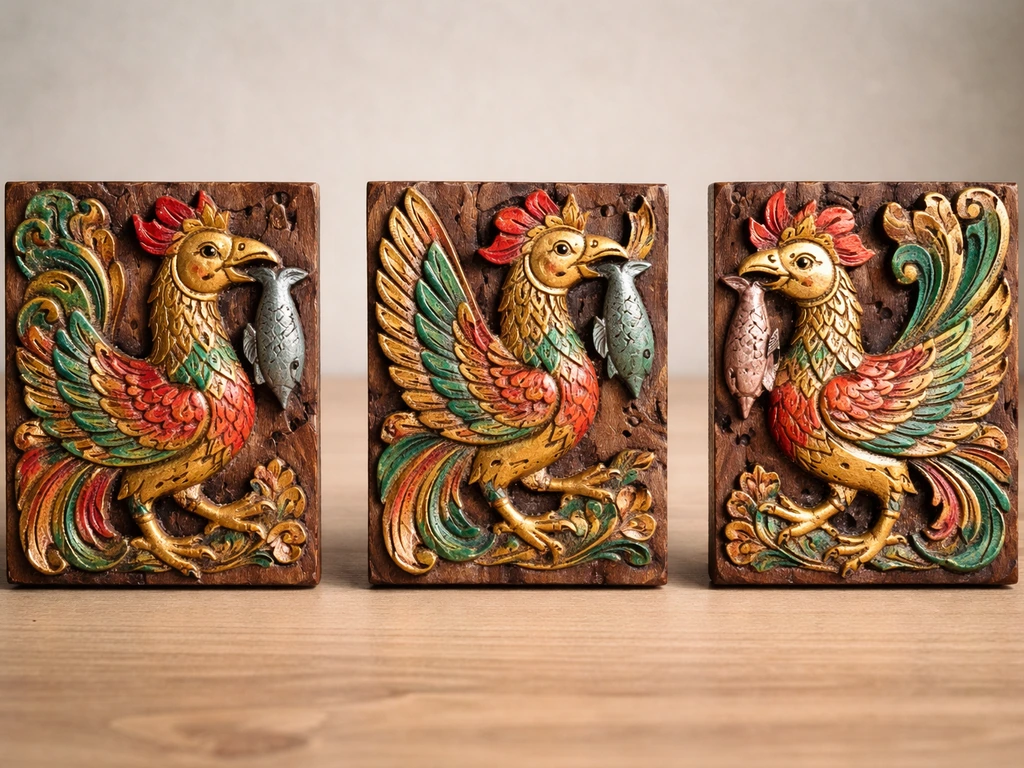
One source of confusion when researching the Sarimanok is that its name and form shift slightly across retellings and contexts. In okir iconography (the plant-and-creature-based design language of the southern Philippines), the bird is sometimes called papanok, a feminine form of the term. Wikipedia's description of okir notes that Sarimanok appears in this plant-based iconography alongside the naga or serpent motif okir iconography. Both names refer to essentially the same figure: a decorative, legendary bird rooted in Maranao tradition. The 'sari' prefix is generally understood to relate to brilliance or color, which aligns with every visual depiction of the creature.
The iconography is remarkably consistent despite the narrative variation. Far Eastern University's collection describes what researchers call an 'inviolable iconography': a colorful feathered bird or fowl with an elaborate, feathered tail, holding a fish on its beak or claw. That fish is the single most identifying detail. Strip away the colors and ornamentation and you still have a bird with a fish, and that combination is the Sarimanok's visual signature across centuries of Maranao craft.
Modern internet retellings, including versions set specifically over Lake Lanao, tend to preserve that visual package even when the plot details vary. Some versions emphasize the bird as a totem chosen to protect against masamang espiritu (evil spirits), while others focus more on its role as a good-fortune symbol without a fixed narrative. This is actually typical of legendary birds in oral traditions globally: the image stabilizes even when the story around it drifts.
Because the Sarimanok is often treated as a legendary bird of good fortune, it can be a useful example of the best legendary bird. Think of how broadly the phoenix concept holds its 'rebirth from fire' core across Persian, Greek, and Chinese retellings, despite wildly different surrounding narratives.
What the Sarimanok actually symbolizes
The most straightforward, cross-referenced meaning is good fortune. Multiple authoritative sources, from encyclopedia entries to Bangsamoro government cultural publications, describe the Sarimanok as a symbol of good luck and prosperity for the Maranao people. But that simple label undersells the layering involved.
The fish the Sarimanok carries is not incidental decoration. At least one retelling compilation interprets the fish as food offered to the spirit world, making the Sarimanok a bridge figure: a creature that moves between the physical and spiritual planes, carrying sustenance as tribute or gift. In Maranao worldview, the bird does not merely represent good fortune passively, like a lucky charm. It actively mediates between human life and the spiritual forces that govern wellbeing. That is a significantly richer role.
Its association with protection from evil spirits in some narrative versions adds another dimension. A bird that delivers fortune and wards off harm is functioning as a guardian figure, which connects to the broader human tendency (documented across cultures) to assign protective and mediating roles to birds. The Sarimanok's placement on top of banner poles and on the carved panolong beams of royal torogan houses reinforces this: it is positioned at thresholds, heights, and liminal spaces where spiritual protection matters most. Maranao torogan architecture uses carved panolong beams and panolong-style slabs where okir motifs, including sarimanok imagery, can be embedded carved panolong beams of royal torogan houses.
The spiritual significance of placement and flight
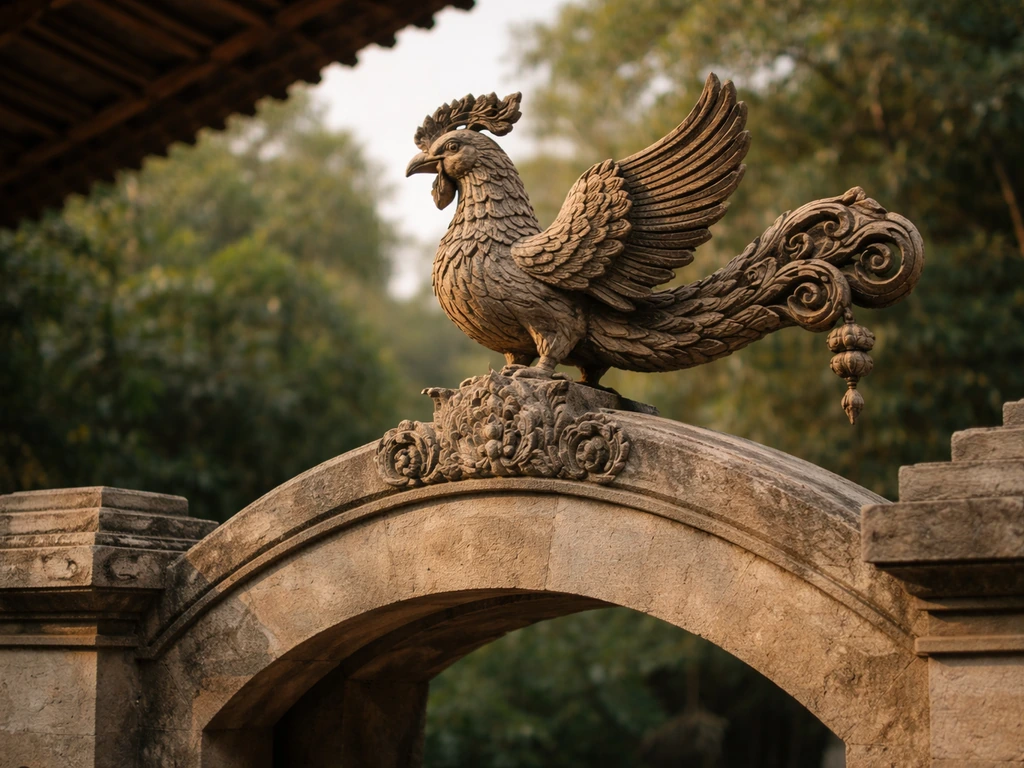
In symbolic frameworks, the position of a bird figure matters as much as the figure itself. The Sarimanok consistently appears at elevated, threshold, or ceremonially significant points: tops of poles, carved onto the extended ends of royal house beams (panolong), woven into banners and textiles used in ceremony. This placement mirrors a universal pattern where birds, because they navigate both earth and sky, are treated as connectors between human and divine realms. The Sarimanok's specific position above and at the edges of sacred architecture suggests it is not just decorating a space but guarding or consecrating it.
The myths and story beats you should know
Because the Maranao tradition is primarily oral and retellings vary, there is no single canonical Sarimanok myth. If you want the quick origin of what is the legendary bird you keep seeing in Maranao art, it is the Sarimanok. If you are looking for an overarching legend about a bird, the Sarimanok is the best place to start in Maranao tradition there is a legend about a bird. But a few consistent story elements show up across enough versions to be worth knowing.
- The bird appears near or over Lake Lanao, anchoring it geographically to the Maranao homeland in most versions.
- The Sarimanok is associated with a choice between totems or protective figures, with siblings or community members selecting it as their guardian against evil spirits (masamang espiritu in some Filipino-language retellings).
- The fish the bird carries is a central narrative element, not a background detail. In the spirit-world interpretation, the fish is a deliberate offering, suggesting the bird performs ritual functions within the story.
- The bird's colors and visual brilliance are consistently emphasized, reinforcing that its power is partly expressed through its appearance.
- Some retellings position the Sarimanok as an origin or founding-symbol figure, explaining why Maranao art and identity are so thoroughly marked by its image.
It is worth being honest here: because these stories were passed down orally and have been retold in various printed and digital formats, there is genuine variation in plot details. Retellings from public library resources, folklore compilation sites, and academic archives can differ in specifics. What remains stable is the bird's appearance, its association with Lake Lanao, and its role as a spiritual protector and fortune-bringer. If you are researching the Sarimanok for academic, spiritual, or creative purposes, treat those constants as the core and hold the narrative specifics more loosely.
Sarimanok imagery in Maranao culture versus broader bird symbolism
What makes the Sarimanok distinctive compared to many other legendary or mythical birds is how completely it has been absorbed into lived material culture. It is not just a story character. National Artist Abdulmari Imao worked extensively with Sarimanok motifs, bringing the image into contemporary Philippine fine art and helping establish it as a recognized symbol of Bangsamoro and Maranao identity at a national level. It appears in the Singkil dance tradition, in torogan architecture, in weaving, in metalwork, and in carved wooden objects. UNESCO recognition of Sarimanok craft as intangible heritage confirms that this is a living tradition with active practitioners.
That density of presence in material culture is actually unusual. Compare the Sarimanok to other mythical birds discussed in broad symbolic frameworks: the phoenix primarily survives as a narrative and metaphorical figure, rarely embedded in regulated craft traditions with consistent visual rules. The thunderbird of some Native American traditions is similarly present in art but varies considerably by nation and region. The Sarimanok, by contrast, has a remarkably stable iconographic core (feathered fowl plus fish) that practitioners across centuries have recognized and repeated. That consistency is what elevates it from 'legend' to 'symbol system.'
| Attribute | Sarimanok (Maranao) | Phoenix (Global) | Thunderbird (Native American) |
|---|---|---|---|
| Core visual rule | Colorful feathered bird holding a fish | Fiery bird, sometimes solar imagery | Large bird, lightning/storm associations (varies by nation) |
| Primary meaning | Good fortune, spiritual protection, mediation | Rebirth, renewal, immortality | Power, weather control, protection (varies) |
| Anchored to place | Yes, Lake Lanao/Maranao homeland | No fixed geography | Varies by nation and tradition |
| Present in craft tradition | Yes, with strict iconographic rules (okir) | Mostly narrative/metaphorical | Yes, but highly variable across nations |
| UNESCO heritage recognition | Yes (traditional craftsmanship) | No | No (as a single entity) |
For readers already familiar with bird symbolism in other traditions, the Sarimanok sits closer to the phoenix in its 'legendary' status but operates more like a community guardian figure in its practical cultural function. It is less about transformation and more about sustained protection and prosperity.
How to work with Sarimanok symbolism in everyday life
If you have been drawn to the Sarimanok through an encounter with its image, a dream, or simply a growing interest in its symbolism, there are some genuinely useful ways to engage with it.
Encountering the image or motif
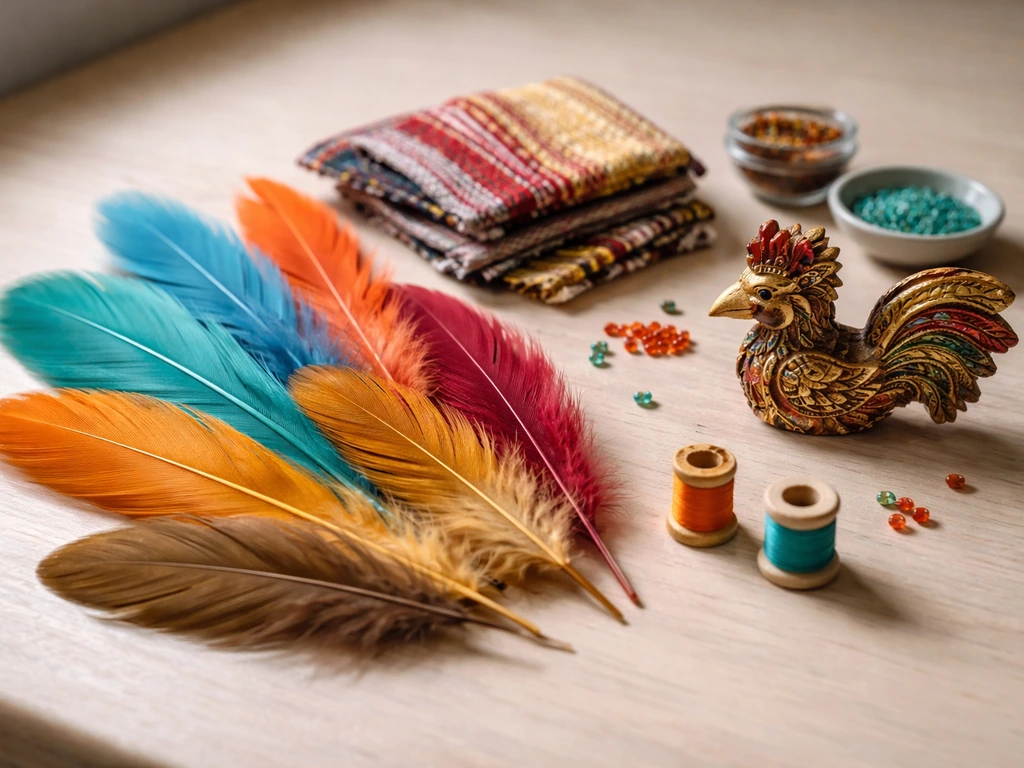
If you keep seeing Sarimanok imagery, whether in Filipino art, textiles, or online, treat it the way you would any recurring bird symbol: as a prompt for reflection rather than a rigid omen. In its traditional context, the Sarimanok signals good fortune and spiritual protection. If you feel drawn to it, you might reflect on what in your life needs guarding, what you are hoping to attract, or where you feel a threshold moment is approaching. The bird's fish-carrying quality is worth sitting with too: what are you offering, and to whom?
Feathers and found objects
The Sarimanok's most defining physical feature is its colorful, elaborate feathers. If you encounter vivid, multicolored feathers in your environment and feel a Sarimanok connection, the traditional interpretation would align with good fortune and the idea of something spiritually significant crossing into your awareness. Feathers in many traditions (including this one) mark the presence of something that moves between worlds. You do not need to be Maranao to find meaning in that framework, but it is worth understanding the source culture clearly rather than flattening the symbol into a generic 'lucky feather' interpretation.
Dreams involving the Sarimanok
Dreams of colorful birds, especially birds carrying something in their beaks or claws, can carry meaningful symbolic weight across many traditions. In the context of Maranao symbolism, a dream Sarimanok might be interpreted as a sign of approaching good fortune, a call to tend to your spiritual protections, or a reminder to consider what you are carrying and what you are offering. If the bird in your dream holds a fish, the 'offering to the spirit world' interpretation from Maranao tradition is a genuinely interesting lens to apply.
Next steps for deeper understanding
If you want to go deeper, start with UNESCO and ICHCAP archived material on Sarimanok traditional craftsmanship, which gives you the most grounded visual and cultural reference point. Far Eastern University's collection documentation on Sarimanok iconography is also worth reading for the 'inviolable iconography' framing. For the broader folklore context, look for retelling compilations that include the original Filipino-language terms (papanok, masamang espiritu) since those tend to be closer to source-community versions. The Darangen oral epic tradition is a larger context worth exploring for Maranao mythology more broadly, even though the Sarimanok operates somewhat independently of any single epic narrative.
The Sarimanok is one of the more thoroughly documented legendary birds in Southeast Asian tradition, which means you have real primary and heritage sources to work from rather than only internet retellings. If you are curious about mythical birds more broadly, this is a helpful place to start legendary birds. That is worth taking advantage of.
Whether you are approaching the Sarimanok for creative inspiration, spiritual reflection, or cultural research, grounding yourself in the actual Maranao context will give you something far richer than a generic 'mythical bird' framework. It is also worth exploring how the Sarimanok fits alongside other legendary and mythical bird figures across global traditions, since patterns in what birds symbolize across cultures often reveal something universal about how humans relate to these creatures.
FAQ
Is the Sarimanok a single animal with one official origin story?
No, it is a cultural symbol rather than one fixed character. Different retellings emphasize different meanings, but the iconographic core stays consistent, especially the feathered bird figure holding a fish and its placement on culturally significant structures.
What exactly should I look for to confirm I am seeing a Sarimanok (and not a different bird motif)?
Use the fish-carrying detail as your primary check. Practitioners typically depict a colorful fowl with an elaborate tail, and the fish in the beak or claws is the most reliable identifier even when names or decorative styling vary.
Why do some sources call it “papanok” instead of Sarimanok?
The variation reflects how names and forms shift across contexts and design traditions. In okir iconography you may see “papanok” as a related feminine form, but it still points to the same visual figure with the same fish-carrying signature.
Does the Sarimanok always mean “good luck,” or can it also be protective?
Both. Many accounts frame it as good fortune and prosperity, and several traditions also treat it as a protective mediator that helps ward off harmful spiritual forces. It can function like a guardian at thresholds, not just a passive lucky charm.
What does the fish symbolize in practice, not just in one story version?
A common interpretation is that the fish represents a gift or sustenance offered across the boundary between human life and the spirit world. Even when specific plot lines change, the fish often functions as the “bridge” element that makes the bird more than decoration.
Where would you expect to see the Sarimanok in traditional settings?
Look for elevated or boundary locations in Maranao material culture, such as the tops of banner poles and carvings on royal house elements (like extended beams). Placement at edges and liminal points is part of the meaning, not just an aesthetic choice.
Is it accurate to assume the Sarimanok is tied to Lake Lanao only?
Lake Lanao is central to Maranao identity, and Sarimanok imagery is strongly associated with that cultural world. However, the motif can appear outside the lake region in art and crafts, so the safe approach is to tie the bird to Maranao tradition while recognizing modern dissemination.
How should I interpret Sarimanok imagery if I am using it for a story, logo, or tattoo?
Avoid treating it as a generic “mythical bird” symbol. Ground your use in the core iconography (especially the fish) and the two major meanings (fortune plus spiritual protection or mediation). If your work engages belief systems, phrase it respectfully and acknowledge cultural origin.
What is the most common research mistake when learning about the Sarimanok online?
Relying on plot-only retellings and ignoring the iconographic rules. The art and craft tradition stabilizes meaning even when narratives drift, so focusing on the bird form, fish detail, and culturally specific placement leads to more accurate understanding.
If I have a dream about a colorful bird carrying something, how can I apply the Sarimanok meaning responsibly?
Use it as a reflective prompt rather than a literal omen. In a Maranao-aligned reading, the dream can suggest approaching good fortune, paying attention to spiritual protections, and reflecting on what you are “carrying” or offering in your life.
Next Article
What Is the Legendary Bird? Phoenix and Other Myths Explained
Discover what the legendary bird means, from the phoenix’s rebirth to other myths, plus spiritual interpretation tips.