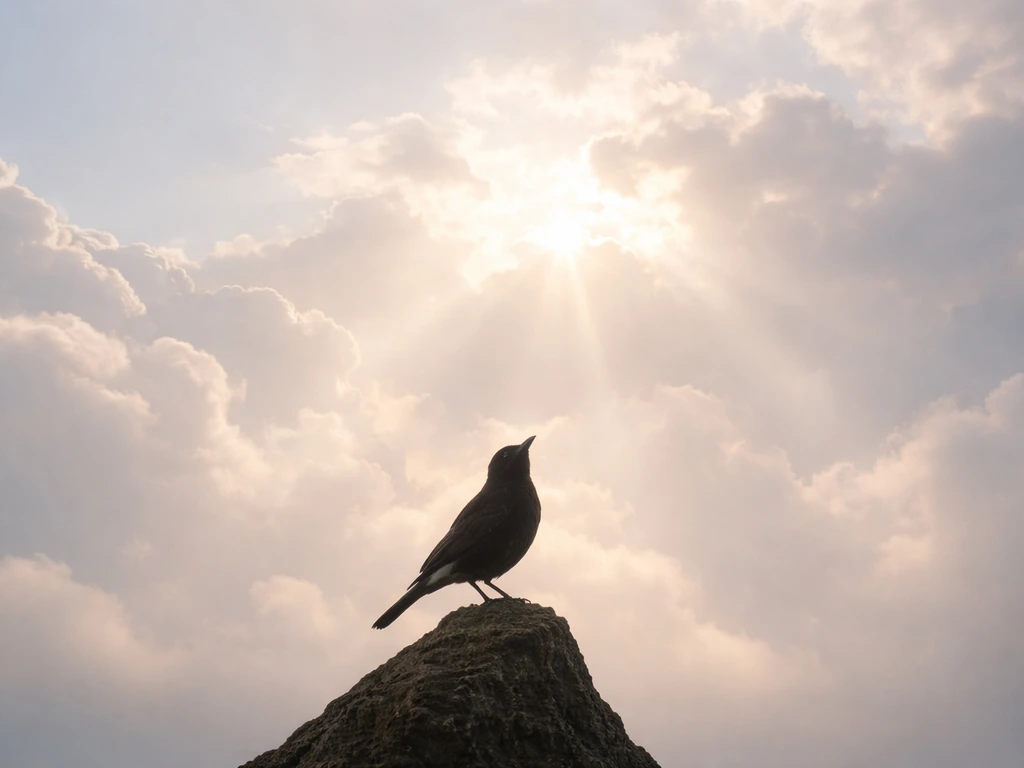
The bird that rises from the ashes is the phoenix. That is the direct, confident answer. It is not a living species you can spot at a feeder or identify in a field guide. It is a mythic bird, one of the most enduring symbols in human culture, and when someone uses the phrase 'rose from the ashes' or 'rises from its own ashes,' they are almost always referring to this creature, whether they know the word or not. The phoenix is the source of that image, and unpacking what it actually means, where it comes from, and how to use it practically is where the real value lies.
What Bird Rises From the Ashes: Phoenix Meaning Today

Eleanor Hartwell
22 Apr 2026
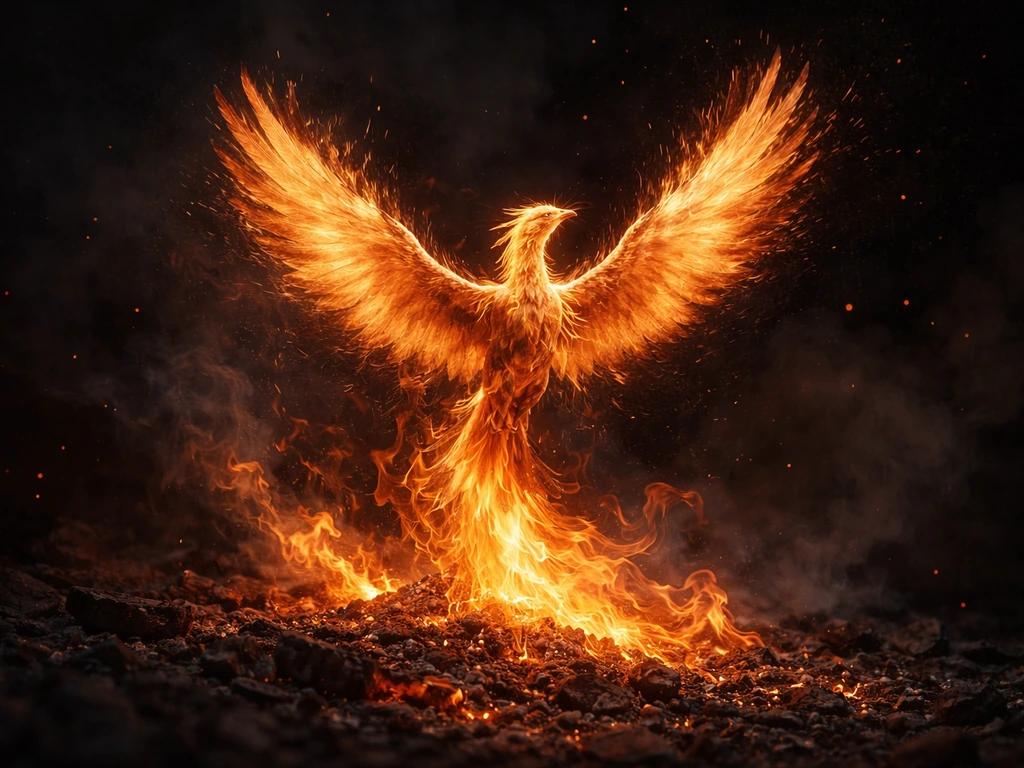
Phoenix symbolism and what 'bird from ashes' really means
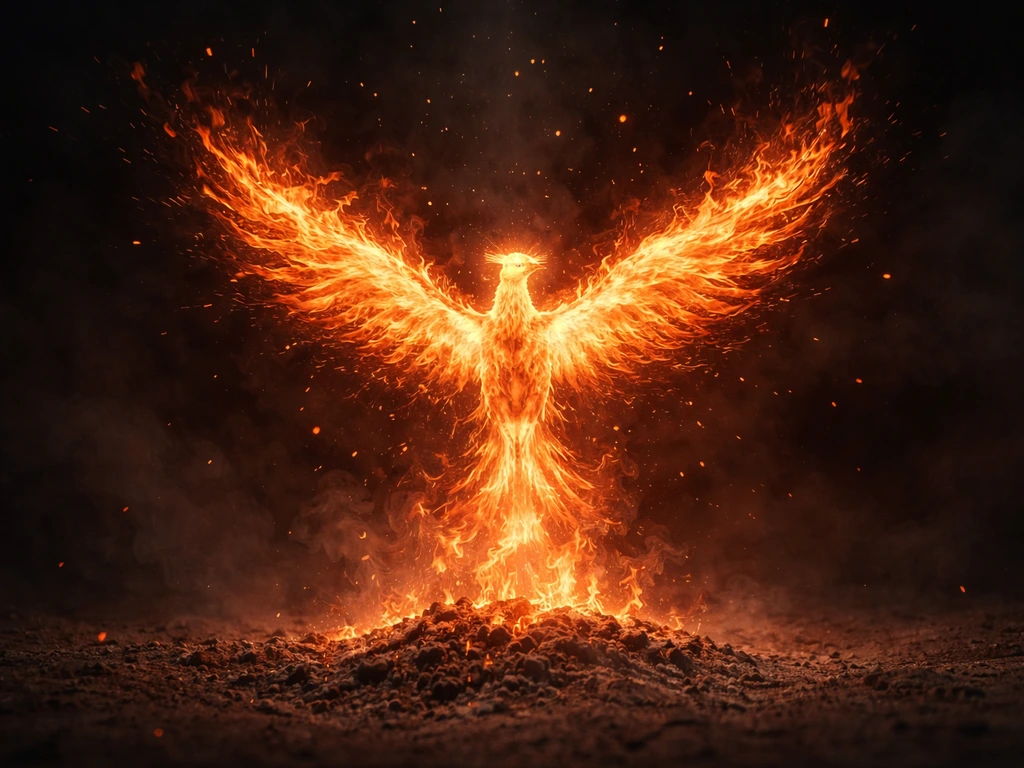
The phoenix is not just a dramatic story detail. It is one of the oldest and most complete symbols of cyclical renewal that any culture has produced. The core myth, consistent across nearly every tradition that carries it, goes like this: the phoenix lives for an extraordinarily long time (classical sources, including Herodotus, say roughly five hundred years), then deliberately enters its own nest, ignites, and burns to ash. From those ashes, new life emerges, eventually becoming a fully formed phoenix again. The bird is not killed by an outside force. It chooses the fire. That distinction matters enormously for how the symbol works spiritually.
What makes the phoenix unusual among bird symbols is that the ashes are not an ending. They are the mechanism of return. Descriptions preserved from medieval sources, including Bartholomew the Englishman's account of the phoenix, describe a sequence where a worm first arises from the ash and remains, then gradually develops into a new bird. The Egyptian-derived accounts recorded by Herodotus describe the young phoenix carrying the bones or remains of its parent to Heliopolis, the city of the sun, as a kind of ceremonial completion of the cycle. This is not simple resurrection. It is transformation through total dissolution, which is a subtly different and arguably more demanding idea.
Phoenix or something else? Clearing up the confusion
People occasionally wonder whether 'the bird that rises from the ashes' could refer to a real species with phoenix-like qualities. Some point to the flamingo, whose name may share etymological ground with flame imagery and whose Egyptian associations are real. Others mention the heron, particularly the Bennu bird of Egyptian mythology, which is sometimes described as a heron-like figure and is one likely ancestor of the phoenix legend. The Bennu was associated with the sun, creation, and regeneration in Egyptian cosmology, and Herodotus appears to have partly conflated it with what he called the phoenix when he visited Heliopolis.
But here is the practical truth: when contemporary people use the phrase 'the bird that rises from the ashes,' they mean the phoenix, full stop. If you want the bigger picture behind this mythical bird reborn from ashes idea, keep reading about how the symbol carries agency and transformation through total release. In other words, the phoenix is the bird that is reborn from ashes in the mythic sense.
If you want the full meaning behind this rebirth image, it centers on the phoenix the bird that is reborn from ashes. In puzzle terms, the mythical bird that is reborn from ashes is the phoenix phoenix the bird that is reborn from ashes.. The Bennu, the flamingo theory, and the various mythological cousins are fascinating in their own right and worth exploring separately, but they are not what the phrase is pointing to in everyday use.
The phoenix absorbed and outlasted all of its regional relatives, becoming the dominant symbol for this specific idea across Western, Middle Eastern, and East Asian traditions. If you heard the phrase in a dream, saw it on a piece of art, or read it in a context that felt spiritually significant, the phoenix is the referent you should be working with.
What the ashes-to-rise arc actually symbolizes
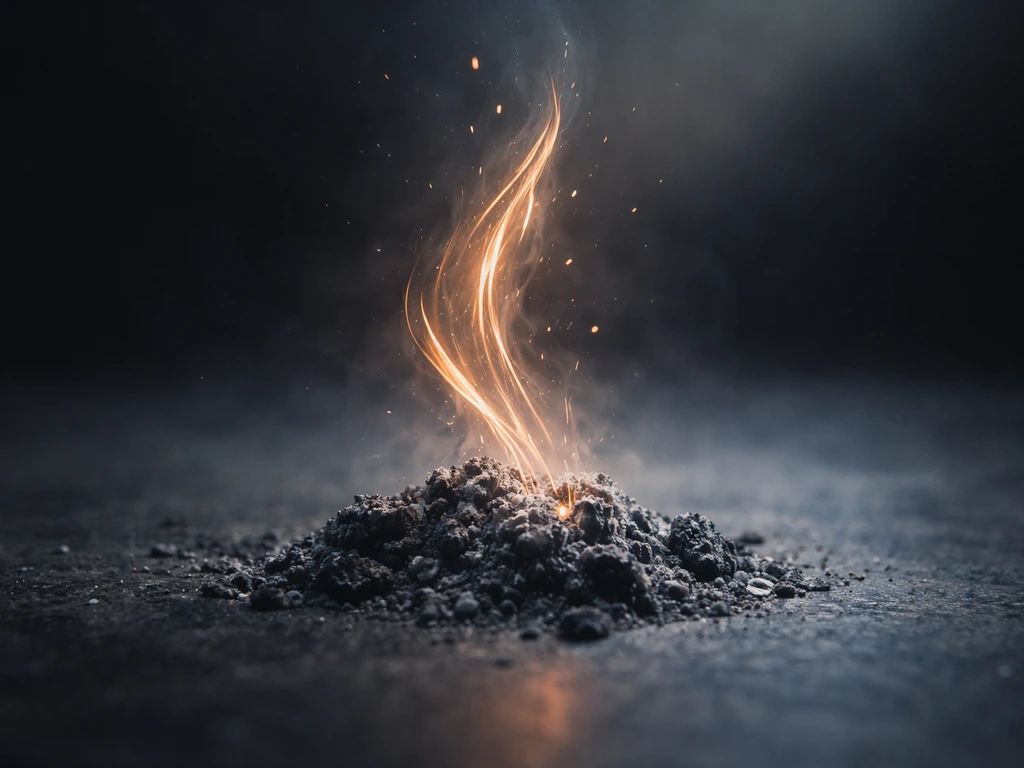
Rebirth is the obvious reading, but the phoenix symbol carries more texture than that single word suggests. Consider what ashes represent on their own: they are what remains after something has burned completely. Not damage, not ruin, but the final residue after total combustion. The phoenix does not survive the fire. It is fully consumed. What returns is genuinely new, not a repaired version of the old form. That distinction is spiritually significant because it implies that real transformation requires complete release of the previous form, not just recovery from difficulty.
The symbol also carries an element of agency that most rebirth myths do not. The phoenix chooses its own nest, gathers its own materials, and enters the fire willingly. This is renewal as an act of deliberate self-authorship, not something that happens to you. Modern readings of the phoenix as a resilience and self-renewal metaphor, including its contemporary use as a self-identifier by people who have survived major life disruptions, draw directly from this quality. The ashes represent the totality of what was released: old identity, old patterns, old limitations. The rising represents what becomes possible once that release is complete.
- Rebirth: the complete emergence of a new form from the remains of the old
- Renewal: cyclical restoration rather than linear progression, suggesting life moves in spirals
- Transformation: genuine change at the level of identity, not just circumstance
- Immortality: the continuity of essential self across multiple forms and cycles
- Resilience: the capacity to survive total dissolution and reconstitute
- Agency: the choice to enter the transformative fire rather than avoid it
How the phoenix story travels across cultures and religions
The phoenix has no single origin point. Some scholars connect the Greek phoenix tradition to Egyptian Bennu worship, including links involving Heliopolis, while other scholars disagree about the origins.
What we have is a cluster of related myths that converged over centuries into a shared image. The Egyptian Bennu bird, associated with the sun god Ra and the first sunrise of creation, is the most credible ancient ancestor. Herodotus reported hearing the story at Heliopolis in Egypt, describing a bird that arrived at the sun's sanctuary every five hundred years to complete its cycle.
That account, however skeptical Herodotus himself sounds about it, became foundational for later Greek and Roman retellings. Ovid elaborated the myth, adding the nest of aromatic spices and the combustion sequence that later versions standardized.
The Christian tradition absorbed the phoenix enthusiastically. The Latin poem De ave phoenice, attributed to Lactantius, presented the bird's death and return as a deliberate allegory for Christ's resurrection and the promise of eternal life. The Old English adaptation of that poem extended the allegory further, treating the phoenix's burning and emergence as a template for the Christian soul's journey through death toward renewal. This is how the phoenix moved from a classical curiosity into the heart of Western spiritual imagination, where it remained through the medieval period and into modernity.
Chinese mythology has its own version, the Fenghuang, a composite bird of auspicious power associated with the empress, harmony, and the union of yin and yang. While it does not always carry the fire-and-ash rebirth narrative in its primary form, it shares the phoenix's solar associations and its role as a symbol of renewal and high virtue. In Persian and Arabic traditions, the Simurgh, a vast and ancient bird of wisdom said to have witnessed the destruction of the world three times, overlaps meaningfully with phoenix themes. The consistency across cultures is striking: something about the image of a bird self-generating from its own destruction seems to map onto a near-universal human intuition about the nature of genuine change.
| Tradition | Bird Name | Core Association | Rebirth Element |
|---|---|---|---|
| Egyptian | Bennu | Sun, creation, Ra | Cyclical return at Heliopolis |
| Greek / Roman | Phoenix | Solar cycle, immortality | Burns in spice nest, rises from ashes |
| Early Christian | Phoenix (allegorical) | Resurrection, eternal life | Death and return mapped to Christ's resurrection |
| Chinese | Fenghuang | Harmony, virtue, empress | Renewal, auspiciousness, cosmic balance |
| Persian / Arabic | Simurgh | Ancient wisdom, endurance | Witnessed world's cyclical destruction and renewal |
| Medieval European | Phoenix (literary) | Spiritual transformation | Worm-to-bird emergence from ash, soul allegory |
Reading the phoenix as a sign in your own life
If you are here because you encountered the phoenix symbol in a dream, in art, at a meaningful moment, or in a phrase that caught you off guard, that context matters more than any general definition. Bird symbolism, and particularly phoenix symbolism, functions as a lens rather than a prescription. The question is not 'what does the phoenix objectively mean?' but 'what does this symbol illuminate about what I am already experiencing?'
Dream traditions across multiple frameworks associate phoenix imagery with endings that carry within them the seed of something new. Dreaming of a phoenix rising is often interpreted as a signal that a cycle in your life is completing, not failing. The fire in the dream is not a threat. It is the mechanism. If you dreamed of a phoenix burning, that imagery tends to point toward a release phase: something being fully relinquished before new form becomes possible. If you dreamed of the bird already risen and flying, the interpretation shifts toward emergence, the new form already taking shape even if you cannot yet see it clearly in waking life.
Outside of dreams, the phoenix appears as a sign most often when people are in transition: the end of a relationship, the collapse of a career, a health crisis, a geographical move, or any moment that feels like it has burned down something that used to define them. In those contexts, encountering the phoenix symbol, whether in a piece of art, a tattoo someone is wearing, a book title, or simply this phrase landing in a search bar, can be a useful prompt to ask: what is the ash here? What has been fully released? And what is the new form that could emerge from it?
Practical ways to work with the phoenix symbol right now

- Name what has burned. Before you can locate the rising, you have to be honest about what is genuinely gone, not damaged, not on pause, but finished. Write it down without softening it.
- Identify the ash. What remains from that ending? Skills, relationships, values, clarity about what you don't want anymore? The ash is not nothing. It is the material the new form is built from.
- Ask what the worm stage looks like. In the classical sequence, the worm precedes the bird. Real transformation has an awkward, formless middle phase. If you are in that phase, the phoenix symbol is specifically relevant.
- Journal from the phoenix's perspective. Write as the bird mid-cycle: what do you know now that the previous version of you did not? What does the new form want that the old form was not yet capable of wanting?
- Notice your resistance to the fire. The phoenix enters its nest willingly. If you are avoiding a particular change, the symbol is worth sitting with as a question: what would it look like to choose this transition rather than be dragged through it?
- Mark the cycle. The phoenix story always includes a ceremonial element, carrying the remains to Heliopolis, building the nest with intention. Consider whether there is a ritual closing or opening that would help you move from ash to flight.
Feathers, flight, and nesting: the phoenix in the wider bird symbol framework
The phoenix does not exist in isolation as a symbol. It draws on the same underlying architecture that makes bird symbolism so persistent across cultures: feathers as connection between earthly and divine realms, flight as freedom and transcendence of fixed circumstances, and nesting as the deliberate construction of a home from available materials. Understanding how these threads work within the phoenix story deepens the symbol considerably.
The phoenix's feathers carry particular weight. In interpretive frameworks that take bird feathers seriously as symbols, phoenix feather imagery tends to cluster around themes of recovering agency and regaining direction after chaos. Finding a feather at a pivotal moment is widely interpreted in bird symbolism traditions as a sign of support or guidance from beyond the immediate situation. A phoenix feather specifically, in dreams or in symbolic art, tends to amplify that toward the idea of renewal being actively underway: not just support, but transformation in progress.
Flight, in bird symbolism broadly, represents the capacity to move between states, to gain altitude and perspective, to leave one condition and arrive in another. The phoenix's flight after rising is not aimless. In the classical accounts, it flies with purpose to Heliopolis, to the place of the sun, to complete the ceremonial arc of its cycle. That directedness matters. The phoenix does not just escape the ash. It arrives somewhere intentional. As a personal symbol, this suggests that the rebirth phase has a destination, even if that destination is not yet visible from the ash.
Nesting is perhaps the most practically interesting element. The phoenix builds its nest from aromatic wood and spices, frankincense and myrrh appear in some accounts, materials associated with sacred ritual and preservation. It constructs the very thing that will burn it with care and intention. In the broader symbolic language of birds, nesting represents preparation, home-making, the creation of conditions for new life.
The phoenix's nest is also its funeral pyre, which is a striking convergence: the same structure that holds and nurtures also holds and releases. That dual function, the nest as both cradle and flame, is one of the more profound images in the entire phoenix mythology, and it resonates with anyone who has experienced a relationship, a home, or a vocation that simultaneously sustained and ultimately required them to let go.
The phoenix is not the only bird in this symbolic territory worth knowing. Related explorations of the fabled bird that rose from the ashes of its nest, the broader mythical bird reborn from ashes traditions, and what it means that the phoenix is a legendary bird that rises all fill in different aspects of this myth's long history. Each angle adds texture. But the phoenix, as the central answer to 'what bird rises from the ashes,' is where the most coherent symbolic meaning lives, and it is more than enough to work with.
FAQ
If someone says “rose from the ashes” but doesn’t mention a phoenix, should I always assume they mean the phoenix?
In everyday spiritual and metaphorical speech, yes. The phrase usually points to the phoenix symbol even when the speaker avoids the word. The main exception is literal context, like discussing mythology in a specific tradition (for example, using Bennu or other regional birds), where “ashes” may be about that culture’s specific story rather than the general phoenix idea.
Are there any real birds that match “rises from the ashes,” and could I identify them in nature?
Not in a straightforward way. The phrase is a mythic referent, not a field ID. Real animals can inspire phoenix imagery, like birds associated with sun symbolism or “flame” in naming, but there is no commonly accepted living species that literally matches the rebirth-from-ashes mechanism used in the legend.
What does it mean if the phoenix symbol shows up repeatedly to me, not just once?
Repetition often signals that the “cycle completion” piece is ongoing, not finished. A useful practical check is to ask what you keep trying to rebuild from the old structure. If the same theme keeps returning, it can indicate you are still holding an identity or pattern that the symbol is inviting you to fully release, not just patch.
How should I interpret the phoenix if it appears in a dream, but I feel good during the burning?
Feeling positive while the bird burns commonly tilts the interpretation toward deliberate surrender and readiness. It can suggest you are in the “release phase” willingly, or that part of you already senses the new form. If the emotion is calm rather than fearful, the dream may be emphasizing choice and agency, not danger.
What if my dream shows the phoenix already risen and I can’t see what happens next?
That usually points to emergence that is happening faster internally than externally. In practical terms, you may already be forming a new identity, but the visible results are delayed. A helpful next step is to look for a change you have started living, even if it is small, rather than waiting for a fully formed outcome.
Can the phoenix meaning be negative or a warning?
It can, depending on your relationship to the “ashes.” If you resist the idea of release, phoenix imagery can show up as a push toward ending something that is no longer sustainable. The warning is not “burn yourself,” it is “stop prolonging what has already reached total combustion,” meaning the old form is no longer capable of repair.
What’s a common mistake people make when using phoenix symbolism for life changes?
They treat it as permission to rebuild the old self with cosmetic changes. The phoenix story emphasizes complete consumption of the previous form, not a patched version. A practical way to avoid this is to ask, “What would I release even if I could keep parts of it?” The symbol typically favors letting go rather than hybridizing the past.
How can I use phoenix symbolism in a tangible way, like journaling or planning?
Use a two-column reflection: “What is the ash here?” (specific identity, habit, or situation that has ended) and “What is becoming possible?” (the new behavior, relationship boundary, or direction). Then add one action that supports the transition, such as closing an account, ending a contract, or starting a new routine that matches the emerging form.
Why does the article emphasize agency, choosing the fire, and does that change interpretation for me?
Yes. If you treat the process as chosen, your focus shifts from blaming events to making intentional decisions that align with renewal. The practical implication is accountability: instead of asking only “Why did this happen?” you also ask, “What am I doing now that enables the old structure to end and the new one to begin?”
If phoenix symbolism is about renewal, how do I tell the difference between renewal and denial?
Renewal usually includes clear completion signals, like naming the end, changing behavior, and accepting what cannot be restored. Denial often looks like repeating the old attempts to recreate the same conditions while calling it “rebirth.” A decision aid is to look for measurable change, not just a hopeful interpretation.
What does “destination” mean in the phoenix context, and how do I apply it?
In many interpretations, the phoenix rises to arrive somewhere intentional, not to escape aimlessly. Applied practically, it suggests you should define the “where” before burnout-less emergence. Even a rough destination helps, such as choosing a new role, moving toward a specific community, or committing to a skill track that your new identity needs.
Does phoenix symbolism always relate to major endings, or can it fit smaller transitions too?
It can fit both. The magnitude matters less than the pattern of completion and release. For smaller transitions, phoenix symbolism might appear when you are outgrowing a role, ending a cycle of procrastination, or closing a chapter like a course or project, as long as the old structure is truly finished rather than temporarily paused.
Next Article
What Bird Is a Sign From Heaven? Meaning and How to Interpret
Which bird is often seen as a sign from heaven, plus a step-by-step way to interpret your specific encounter.