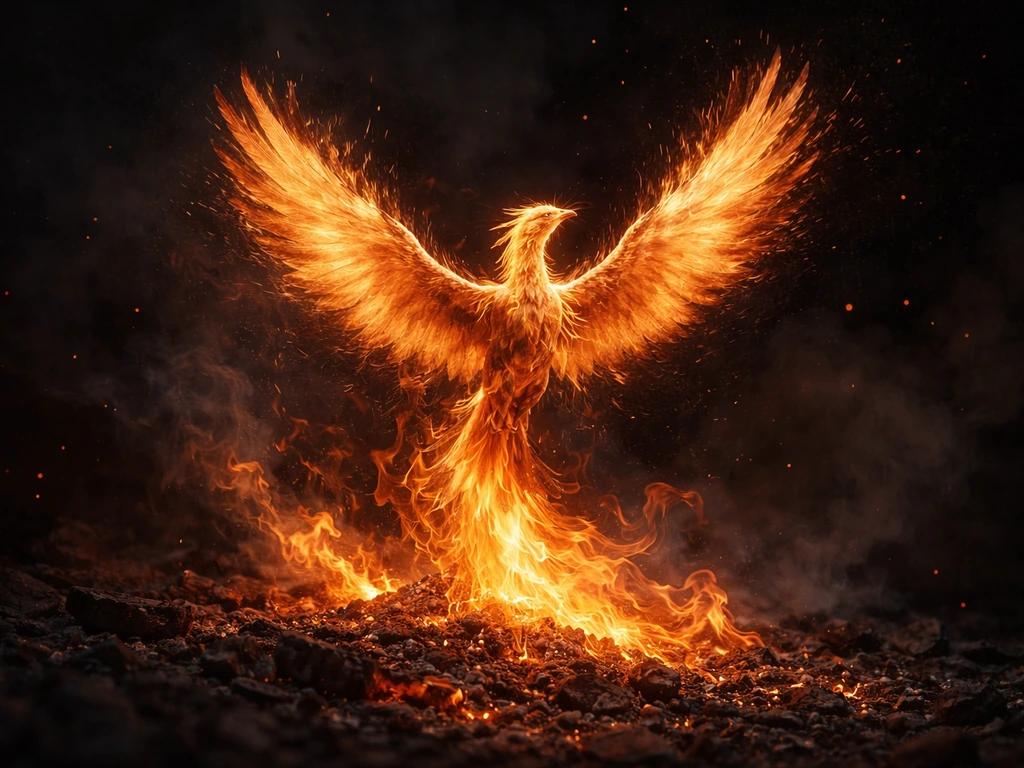
The fabled bird that rose from the ashes of its nest is the phoenix. It burns itself alive, reduces to ash inside a nest it built for exactly this purpose, and then emerges reborn, entirely new, from that same destruction. That cycle of fire, ash, and renewal is the whole point of the myth, and it has carried meaning across cultures for well over two thousand years.
What Fabled Bird Rose From the Ashes of Its Nest? The Phoenix

Eleanor Hartwell
25 Apr 2026
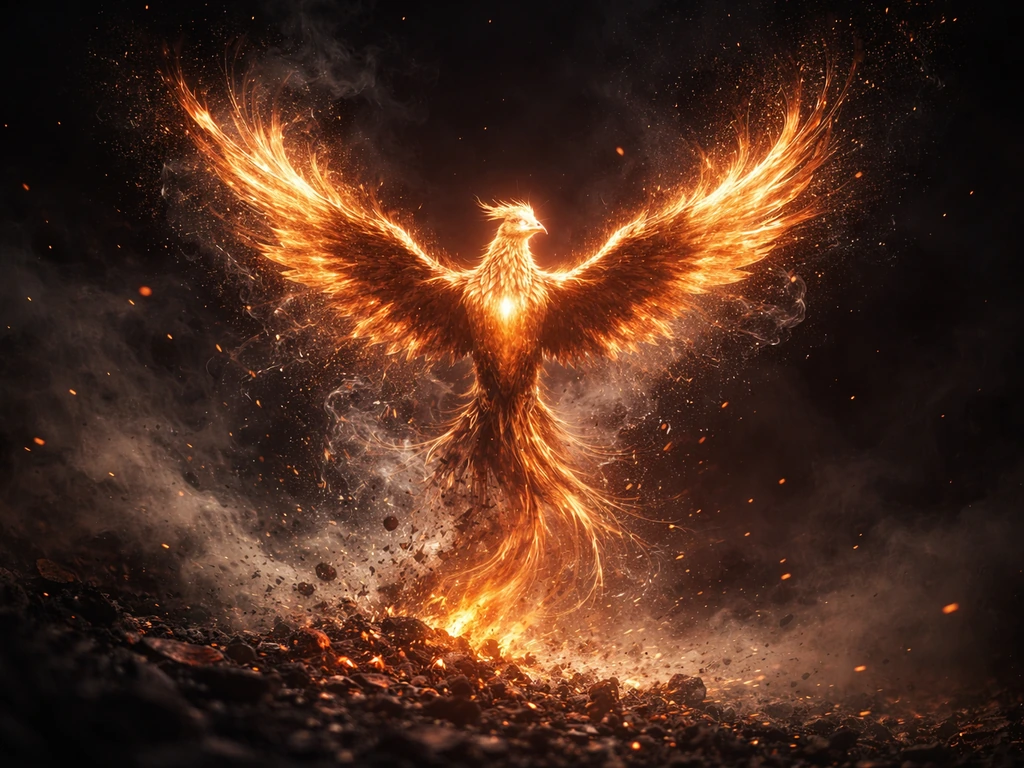
The phoenix: the bird behind the legend
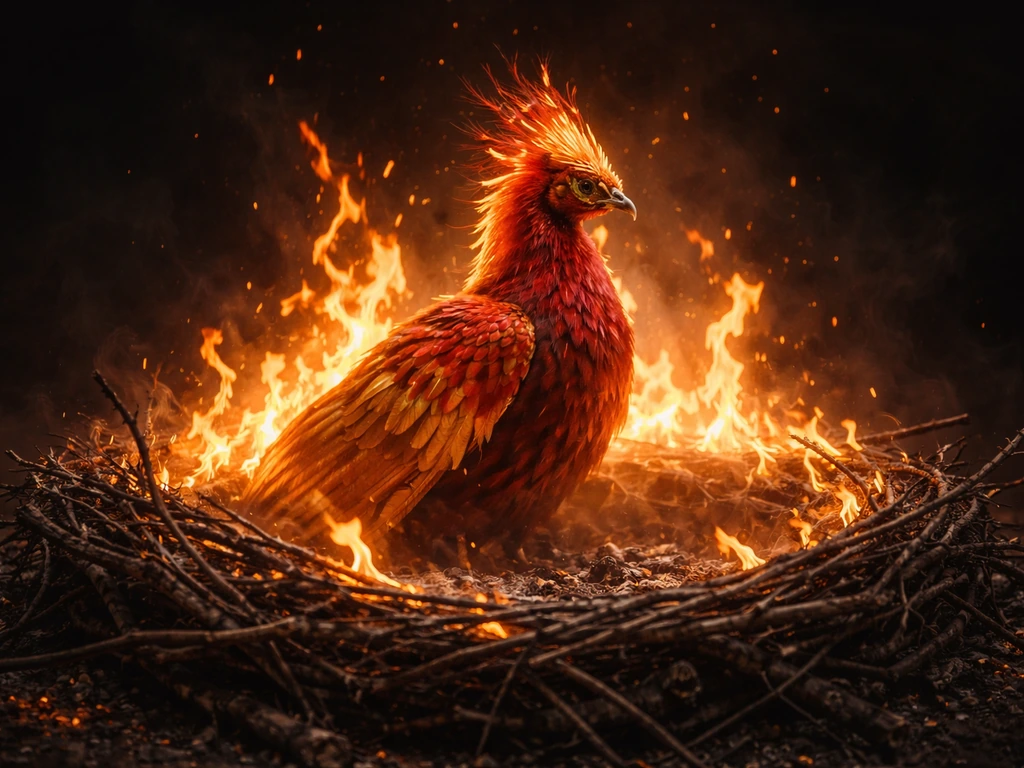
The phoenix is the canonical answer to this question, full stop. It is a legendary bird, not a real species, and its defining feature is a self-contained cycle of death and rebirth. In the earliest Western literary account we have, Herodotus writing in the fifth century BCE describes a sacred bird connected to Heliopolis in Egypt that appears roughly every 500 years. In his telling from Histories 2.
73, the phoenix forms an egg out of myrrh, seals its predecessor inside, and carries it to the temple of the Sun (Helios). The bird is bound to the sun, to long cycles of time, and to a ritual of carrying the past forward rather than abandoning it. What strikes me every time I revisit this account is how deliberate the phoenix is. It doesn't burn accidentally.
It builds, seals, transports, and renews with intention.
Ovid's version in Metamorphoses Book 15 is where the self-immolation mechanics become vivid and poetic. He writes that the phoenix 'from himself the Phoenix only springs,' constructing a nest on oaken boughs that eventually ignites. The bird burns, collapses into ash, and then a new, infant phoenix rises from that ash. Lactantius, writing in late antiquity, adds more texture: the phoenix 'builds for herself either a nest or a tomb,' the heat builds, fire dissolves the body into ash, and new life follows. Notice that across all three accounts the nest isn't incidental. It is the site of both death and birth. The nest is the phoenix's altar.
What the phoenix actually symbolizes
The symbolic weight of the phoenix rests entirely on the relationship between destruction and renewal. The bird doesn't escape the fire. It submits to it. That's what makes the myth so enduring and so applicable to human experience. The phoenix is not about avoiding loss or pain. It's about the possibility that complete destruction of the old self is what makes genuine renewal possible. The old form has to go. You can't carry the ash and expect to fly. That is why the mythical bird that is reborn from ashes is often used to symbolize renewal after total loss phoenix.
This theme maps onto experiences almost everyone recognizes: the end of a relationship or identity that felt like a complete collapse, followed eventually by a life that wouldn't have been possible otherwise. Grief that burns through you and leaves something different standing. The phoenix doesn't minimize those experiences. It takes them seriously, holds the fire as real, and insists that what comes after is also real. That's a more honest symbol than most.
- Cyclical immortality: the phoenix doesn't live forever in a fixed form. It lives forever by continuously transforming.
- Intentional ending: the bird builds its own funeral pyre. Endings that lead to renewal are often ones we participate in, not just endure.
- Solar connection: in Greco-Roman accounts, the phoenix is linked to Helios and the sun's daily and yearly renewal, tying personal transformation to cosmic rhythm.
- Self-sufficiency: Ovid emphasizes that the phoenix springs from itself alone. The renewal is internal, not dependent on outside forces.
- The nest as sacred space: the nest here is not a home for eggs and chicks. It is a site of transformation, built with aromatic materials like myrrh, deliberately constructed for the purpose of burning.
Other 'ash and fire' birds that sometimes get confused with the phoenix
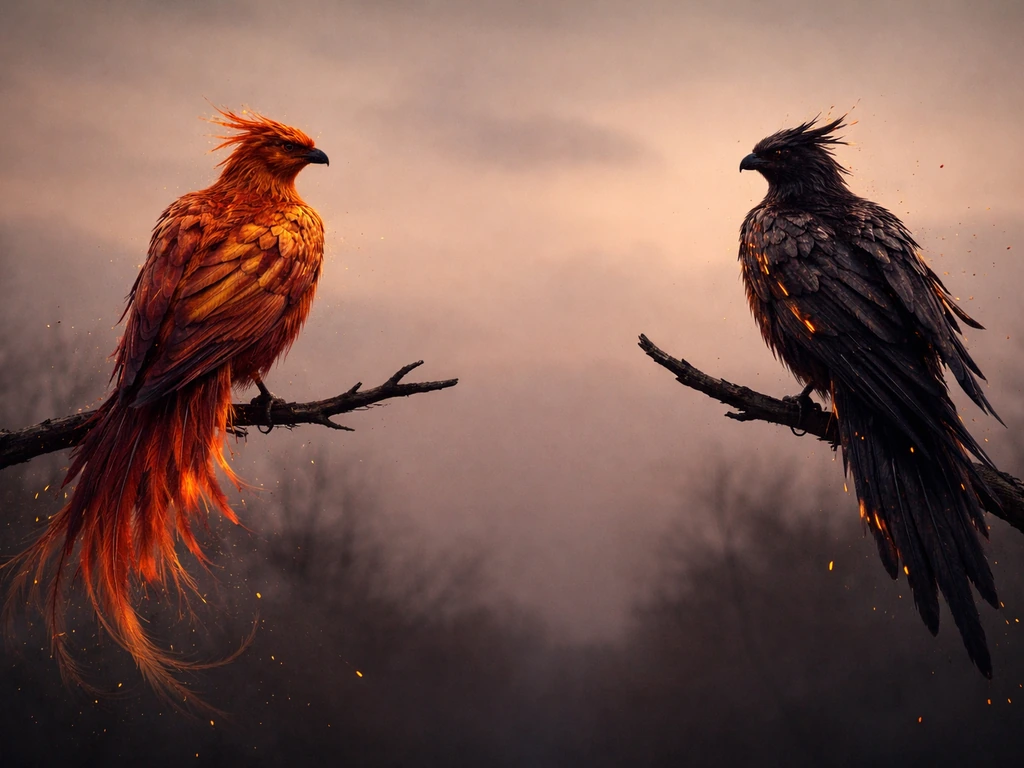
If you've been searching around this topic, you'll notice a few related birds come up. If you meant the riddle-style question “which bird reborn from ashes,” the answer is the phoenix. It's worth briefly clarifying what they are and how they differ, because the distinctions actually matter symbolically.
| Bird | Origin | Core trait | Ash/rebirth mechanism |
|---|---|---|---|
| Phoenix | Greco-Roman mythology | Immortal solar bird | Burns in self-built nest, rises from ashes |
| Bennu | Ancient Egyptian | Sacred heron-like bird, solar deity associated with Ra | No ash-death cycle in original Egyptian texts; linked to daily solar renewal and the benben stone at Heliopolis |
| Firebird (Zhar-Ptitsa) | Slavic folklore | Luminous, magical bird with glowing feathers | No death-and-rebirth cycle; fire is an aura, not a mechanism of renewal |
| Heraldic phoenix | European heraldry | Eagle-like figure rising from flames | Visual symbol only; the nest-and-ash narrative is often stripped away in heraldic use |
The Bennu is probably the most commonly compared bird, and there's a real historical reason for that: the Bennu was a sacred bird at Heliopolis, associated with the sun and with renewal, and Herodotus himself was writing about Egypt. Scholars have long noted a possible connection between the Bennu and the phoenix narrative. But it's important to recognize that in original Egyptian texts, the Bennu doesn't die in fire and reappear from ashes the way the phoenix does.
It represents solar renewal and the first dawn, perched on the primordial benben stone, which is symbolically rich in its own right, but not the same mechanism. If you're drawn to the ash-and-rebirth theme specifically, the phoenix is your bird. If you're interested in how the phoenix is described as the bird that rises again, compare it with the more general idea of renewal across cultures the phoenix is your bird.
If you're also looking at it as a clue in puzzles, this mythical bird that is reborn from ashes codycross is still the phoenix by definition. The mythical bird that is reborn from ashes is the phoenix, and it carries the same meaning of death and renewal.
Phoenix across myths and religious traditions
Greco-Roman tradition
Herodotus gives us the earliest detailed account around 430 BCE, rooted in Egypt and the temple of the Sun. Ovid in the first century BCE/CE elevates it into poetry, emphasizing the self-generated nature of the renewal: the phoenix is its own parent, its own child, and its own funeral director. The Greco-Roman tradition ties the phoenix to solar cycles and to the idea that time itself is regenerative rather than simply linear.
Late antiquity and Christian reception
By the time Lactantius was writing in the third and fourth centuries CE, the phoenix had become available for Christian interpretation. The poem attributed to him (De ave phoenice, preserved in the Church Fathers) describes the phoenix's destruction and revival in language that clearly invites a parallel to resurrection. Medieval Christian bestiaries were explicit about this: the phoenix rising from ash became a direct symbol of Christ's resurrection. The Rochester Bestiary from around 1230 CE uses the phoenix this way, and the image stuck. For centuries in European Christian culture, seeing a phoenix in art or architecture was a coded reference to resurrection and eternal life.
Broader cross-cultural echoes
The phoenix idea, a bird or creature that dies in fire and is reborn, appears in variations across many cultures, though the specific ash-nest mechanism is distinctly Greco-Roman. Chinese mythology features the Fenghuang, a splendid bird associated with virtue, harmony, and renewal, though its symbolism differs from the destruction-and-rebirth arc. Persian and Arabic traditions describe the Simurgh or Anka, ancient and wise birds with their own renewal associations. What connects all of them is the use of a bird as a symbol for something that transcends ordinary mortality, which tells you something about why birds have carried spiritual meaning across every culture humans have built.
Reading phoenix symbolism as a spiritual message
Whether you've encountered the phoenix in a dream, in recurring imagery, in a tattoo you feel pulled toward, or in a piece of art that keeps catching your eye, the interpretive question is always: what does this mean for you, right now, in the context of your actual life? Symbol systems are lenses, not verdicts.
Feathers, flight, and the nest
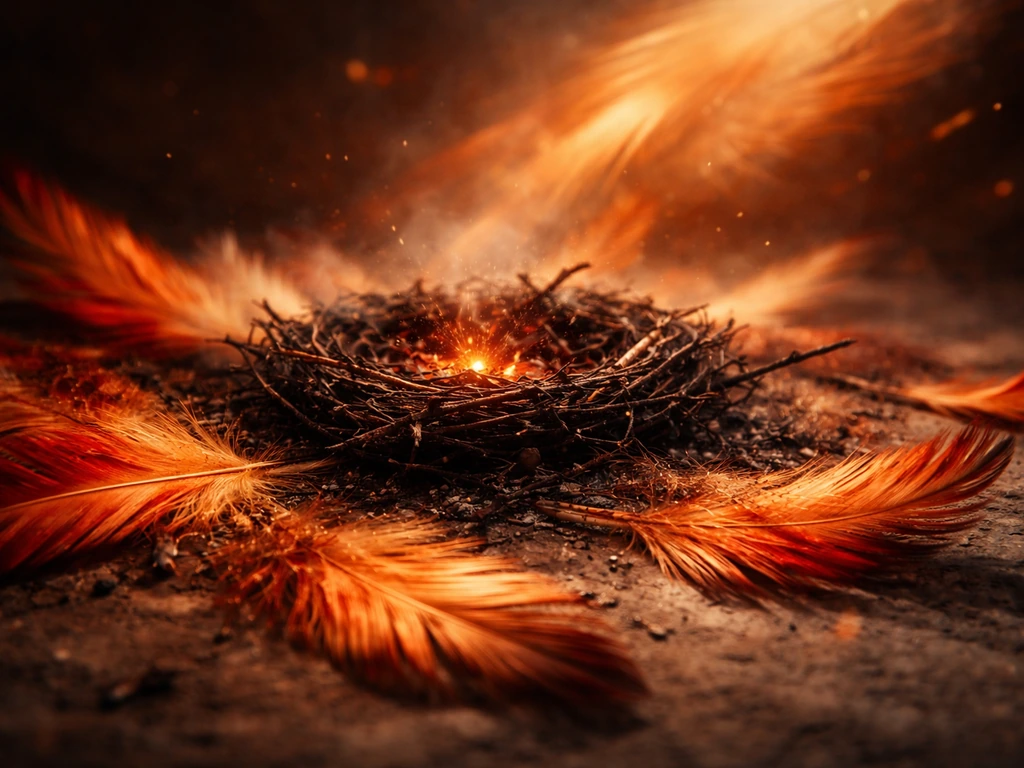
Each element in phoenix imagery carries its own symbolic layer. Feathers in dream and spiritual symbolism are broadly associated with lightness, ascension, and spiritual communication. A phoenix feather specifically adds fire to that: it's not just the freedom of flight but the freedom that comes after burning.
If feather imagery is part of what you're noticing, it may be pointing toward a message of release, or toward the idea that you are further along in a transformative process than you feel. Flight in phoenix imagery tends to read as transcendence of the former self, a rising to a higher perspective rather than an escape from difficulty.
The nest is the most grounded element: it's the place you build, the container you create, specifically so that transformation can happen there. Noticing nest imagery might point toward the idea of intentionally creating conditions for change rather than waiting for it to happen.
What life themes the phoenix tends to point toward
- Something is ending, and that ending is necessary, not a failure
- A period of grief, loss, or collapse is part of a larger renewal arc
- You are being invited to release an identity, relationship, or chapter that has already run its course
- Healing is possible, but may require fully acknowledging what has been destroyed rather than rebuilding prematurely
- A creative, spiritual, or personal project is in its 'ash' stage and not yet ready to show itself as new life
One thing worth saying: phoenix symbolism is not a guarantee of a happy outcome. It's a symbol of a possibility, and it's a demanding one. It says renewal requires real destruction first. That's not always comfortable to sit with, especially if you're hoping to skip the fire. But the symbol is honest about the sequence: ash comes before the rising, not after.
What to do when phoenix imagery keeps showing up
If you're encountering phoenix imagery repeatedly, whether in dreams, art, or a general pull toward the symbol, the most useful thing you can do is treat it as a prompt for honest self-reflection rather than a prediction or instruction. Here are concrete ways to work with it.
- Name what is ending. The phoenix builds its nest with intention. Ask yourself: what in your life has already burned or is ready to? Be specific. Name the relationship, the identity, the belief system, the career chapter. Vague awareness doesn't have the same power as naming it clearly.
- Sit with the ash before rushing to the rebirth. The phoenix doesn't skip the ash stage. Resist the cultural pressure to move on quickly. Spend time acknowledging what has been lost or destroyed before focusing on what comes next.
- Write or journal about what you are not willing to carry into the next version of your life. The phoenix doesn't carry the old self forward. It leaves ash behind. This is a useful and often uncomfortable exercise.
- Set an intention at a threshold moment. If you're at a genuine transition point, a ritual of intention-setting can mirror the phoenix's deliberate act of building its nest. This could be as simple as writing what you are releasing and what you intend to step into on separate pieces of paper.
- Notice the emotional tone of your phoenix encounters. Dream interpretation guides consistently emphasize that the feelings in and around the symbol matter as much as the symbol itself. A phoenix that feels terrifying in a dream reads differently than one that feels liberating. Trust your emotional response as data.
- Revisit the symbol over time. The phoenix operates on long cycles, Herodotus said roughly 500 years. Your personal version won't be that long, but transformation rarely resolves in a week. Return to the symbol periodically and notice how your relationship to it changes as your circumstances do.
The phoenix is one of the most complete symbols in any mythology for the experience of going through something that destroys the old form and coming out as something genuinely new. If that's where you are, or where you're heading, the bird is worth paying attention to. Not as a promise, but as a companion for the journey through fire.
FAQ
Is the phoenix the only bird that fits “rose from the ashes,” or are there others people confuse with it?
Others exist, especially the Bennu in Egyptian tradition, which is strongly linked to solar renewal, but the Bennu is not described as self-immolating into ash in the same way. If the key details include burning to ash inside a purposeful nest and then rebirth from that ash, the phoenix is the match.
What’s the difference between “renewal” symbols and “death and rebirth” symbols in phoenix stories?
Renewal can mean a cycle of time, sunrise, or restoration without literal self-destruction. The phoenix specifically ties renewal to a disruptive end, then a new beginning that cannot occur until the old form is gone.
Does the phoenix myth say the bird escapes the fire, or does it intentionally undergo it?
In the versions discussed, the bird does not avoid the fire. The cycle depends on deliberate submission to destruction, with the nest serving as the site where the old body ends and the new life begins.
Why is the nest such a big deal in phoenix descriptions?
The nest functions like an altar or workshop, not just a backdrop. The act of building, sealing, and using the nest as the location of transformation makes the rebirth feel engineered and contained, reinforcing the idea that change happens in a specific “place and condition,” not randomly.
If I see phoenix symbolism in a dream or artwork, should I treat it like a prediction?
It’s more reliable to treat it as a prompt than a forecast. Phoenix imagery tends to ask what real destruction you may be avoiding, for example an ending, a habit, or an identity shift, rather than promising immediate comfort.
What does a “phoenix feather” in symbolism usually emphasize?
A phoenix feather tends to blend the usual meanings of feather imagery (lightness, spiritual communication) with fire, so it often points toward release that comes after burning through something difficult, rather than a simple wish for elevation.
How should I interpret “flight” in phoenix-related imagery?
Flight in phoenix symbolism usually reads as transcendence of the former self or a higher perspective, not as escaping the hard part. The implication is that you rise because you passed through the transformation.
Is phoenix symbolism ever used as a warning that change may be painful?
Yes. The symbolism often stresses that renewal requires real loss first. It can be interpreted as a caution against expecting growth without dismantling what is no longer workable.
If phoenix imagery keeps showing up, what’s a practical next step I can take?
Use it as a self-audit: identify one “old form” you are keeping for comfort, even though it is burning through you (for example, a relationship pattern or a self-story). Then decide what conditions you can build intentionally, since the nest imagery emphasizes creating the environment for transformation.
In puzzle riddles or “reborn from ashes” questions, how do I confirm I’m thinking of the right bird?
Look for the ash-and-rebirth mechanism tied to a specific bird. When the riddle points to the classic creature that dies in its own nest and re-emerges reborn from ash, that answer is the phoenix, even if other renewal birds get mentioned elsewhere in the broader theme.