
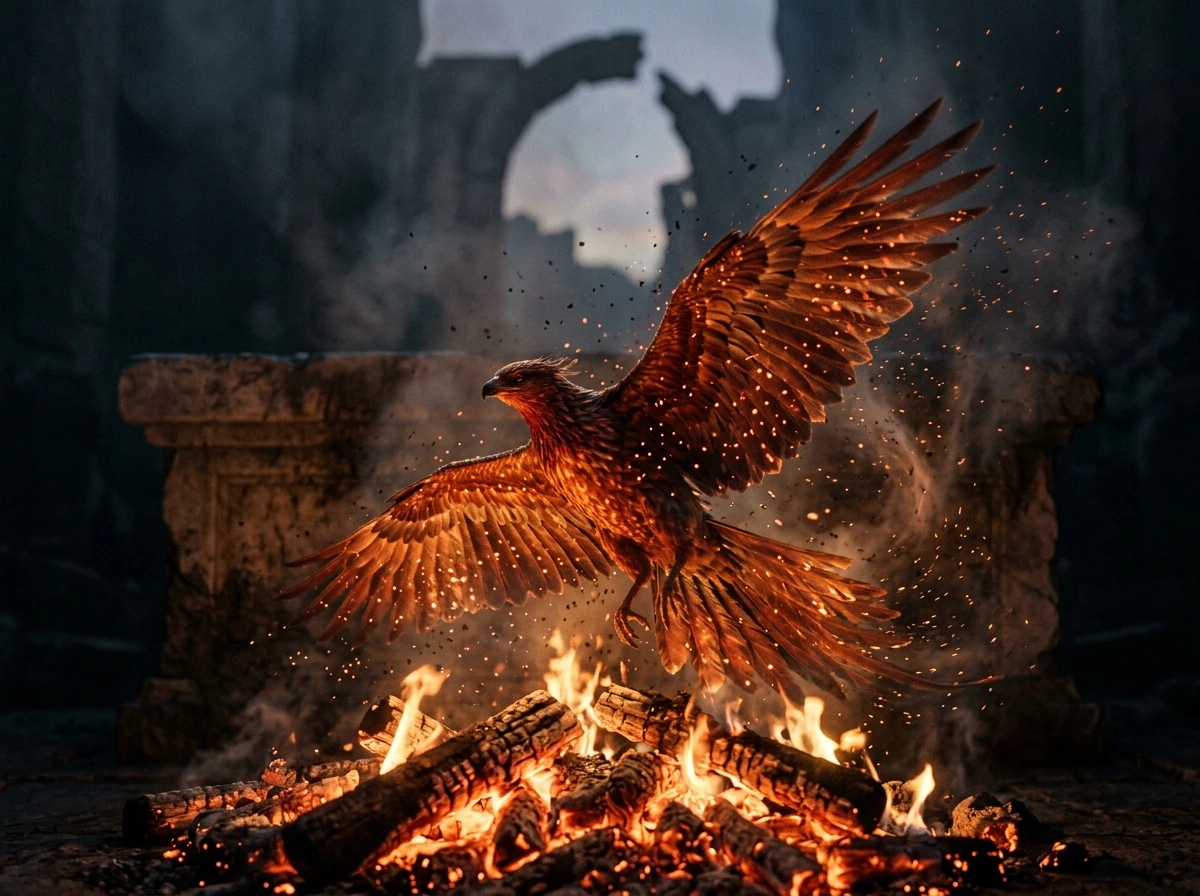
The story of the phoenix bird is this: a magnificent creature lives for hundreds of years, dies in flame or decay, and rises again from its own ashes, this is the rising meaning of the phoenix. That is the core of it. But the phoenix myth is not one story, it is dozens, spread across Greek, Egyptian, Roman, Christian, Islamic, and Persian traditions, each retelling shaping the symbol differently. If you are trying to understand what the phoenix means and where it comes from, you need to know both the narrative itself and the variations, because those variations are exactly where the meaning lives.
What Is the Story of the Phoenix Bird and Its Meaning

Eleanor Hartwell
23 Mar 2026
Where the phoenix story actually comes from
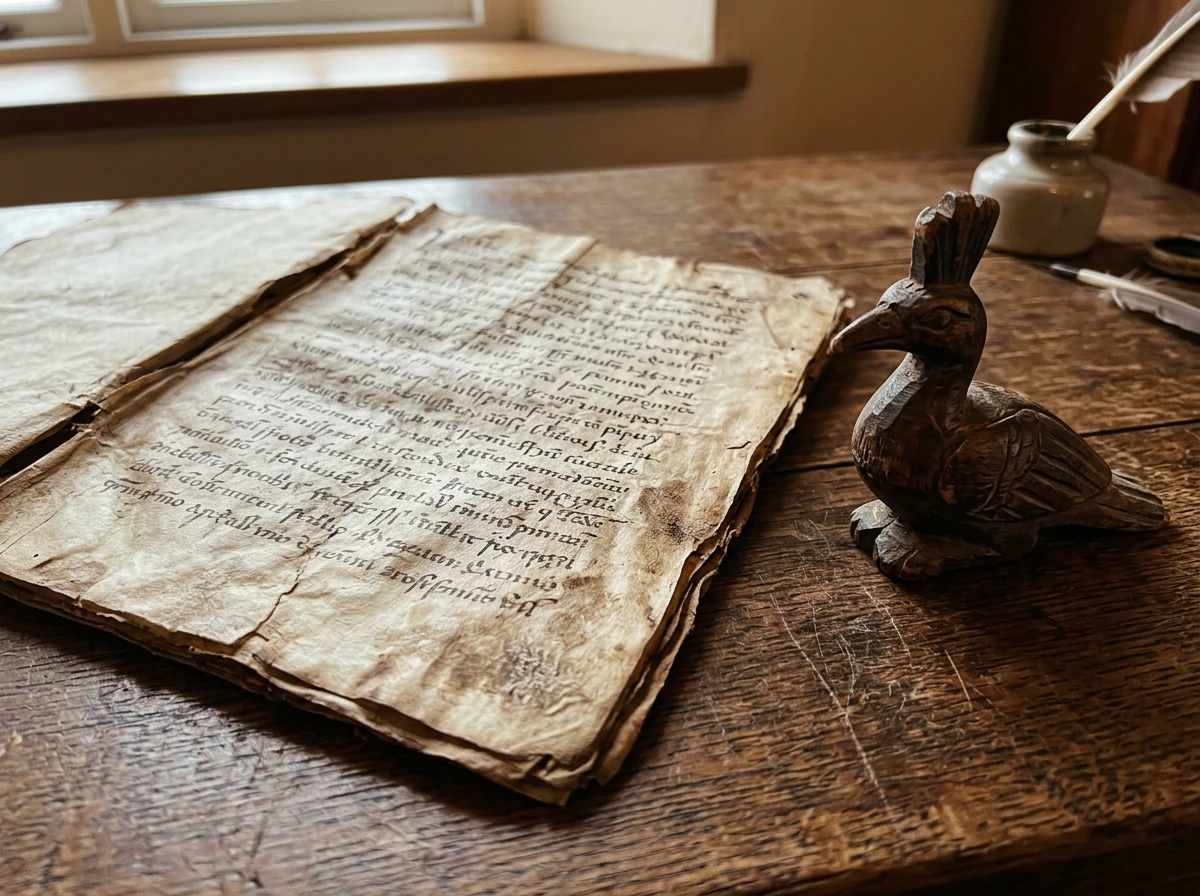
The oldest written account most people encounter is from the Greek historian Herodotus, writing in the 5th century BCE. In his Histories (Book 2, section 73), he describes the phoenix arriving in Egypt from Arabia every five hundred years, at the time of its father's death. The bird transports the father's body to the Temple of the Sun (Helios) in Heliopolis by forming an egg of myrrh, placing the body inside, and sealing it with more myrrh. This is not yet the fire-and-ashes story most people know, it is a burial ritual, a story of filial devotion and solar pilgrimage. That detail matters because it tells you the phoenix was first and foremost a solar bird, not simply a fire bird.
Egyptian tradition is almost certainly the soil this myth grew in. The Bennu bird, a heron-like sacred creature associated with the sun god Ra and the primordial mound of creation at Heliopolis, is widely considered the prototype for the Greek phoenix. The Bennu represented the cycling of the sun and the daily act of renewal, which is why later Greek writers placed the phoenix's ritual destination at Heliopolis. The geography in the myth is not incidental. It is pointing you back to Egypt and to solar theology.
By the time Roman writers and early Christian thinkers picked up the myth, the fire element had become central. The version recorded in Encyclopaedia Britannica describes a dying phoenix flying to Heliopolis and immolating itself on the altar fire, with a young phoenix rising from the flames. This is the version that lodged in Western imagination, and it is the one that made the phoenix useful to early Christian writers looking for a nature-based analogy for resurrection.
How the story was told across different traditions
The Greek and Roman accounts
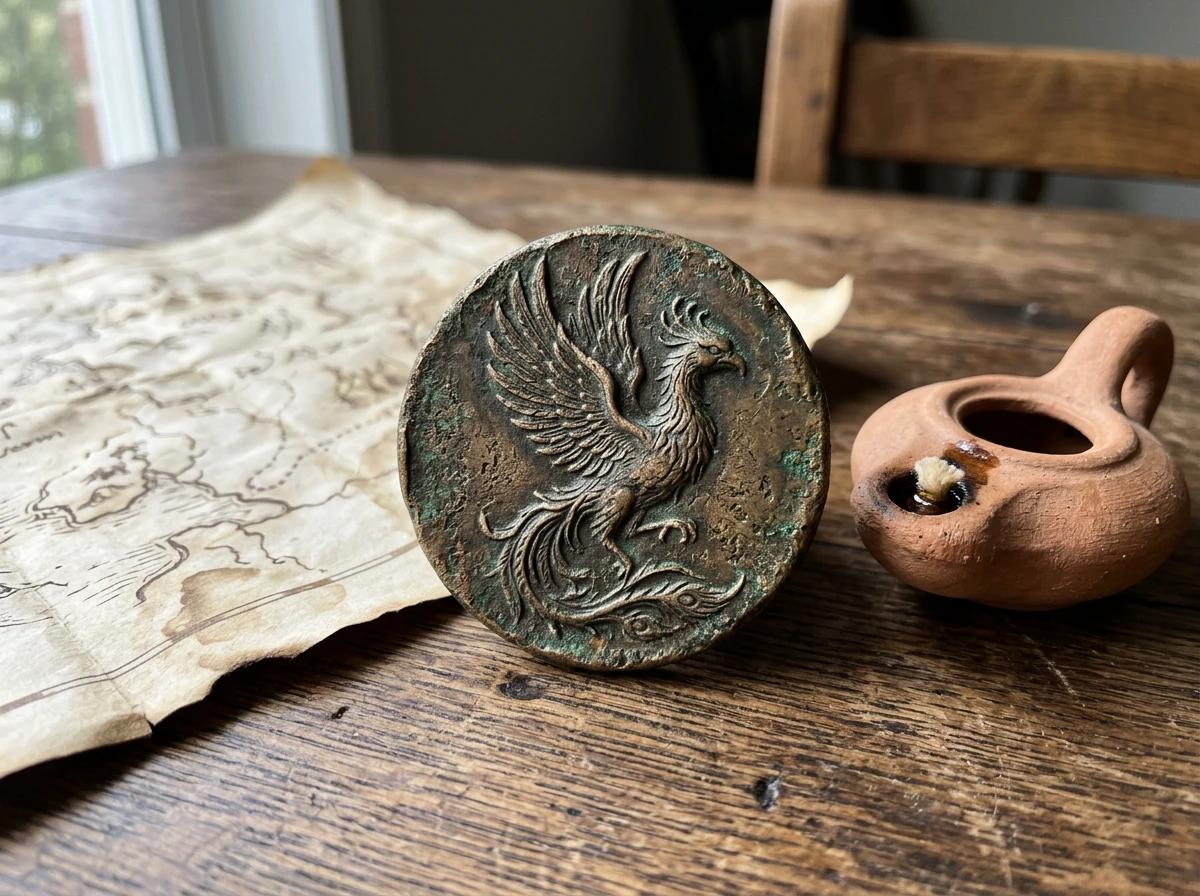
Beyond Herodotus, classical writers elaborated on the cycle of dying and regeneration. The recurring pattern across these accounts involves a long life (often given as five hundred years), a death by fire or by natural decay, ashes or remains left behind, and a new phoenix emerging from those remains. The details vary, the timeline, the location of the fire, whether there is an intermediate worm stage, but the structure stays consistent: death is not an ending, it is a mechanism.
The early Christian interpretation
The early Christian poet Lactantius wrote a poem called De ave phoenice (On the Phoenix Bird) that is one of the most detailed ancient descriptions of the myth. In his account, the phoenix 'builds for herself either a nest or a tomb' and perishes so that she may live, producing herself again, framing death and rebirth as a form of intrinsic self-generation. Lactantius also describes the body being reduced to burnt ashes from which a worm arises, which then warms into a new-born phoenix that eventually flies back to Arabia. This worm-stage detail is easily overlooked but is theologically important: it echoes burial and resurrection rather than instantaneous transformation, making the phoenix useful as a Christian symbol for the resurrection of the body.
Clement of Rome, in one of the earliest patristic texts, cited the phoenix directly as evidence for the possibility of bodily resurrection. The bird arriving every five hundred years, being burnt to dust, a worm arising, and a new phoenix forming, Clement treated this as an argument from nature. Whether or not he believed the phoenix was a real bird, he was using the myth exactly as symbolic thinkers use it today: as a framework for understanding death and life.
Islamic and Persian parallels
In Islamic mythology, the phoenix was identified with the Anqa (Arabic) and the Simurgh (Persian). Britannica describes the Anqa as a huge, mysterious bird created by God with all perfections, which eventually became a plague and was destroyed. The Simurgh in Persian literature, particularly in Sufi poetry like Attar's Conference of the Birds, functions as a divine or transcendent presence, a symbol of wisdom and ultimate reality. These are not quite the same as the Greek fire-and-rebirth cycle, but they belong to the same family of mythic birds that exist at the edge of the human world, representing something vast and transformative.
The Chinese Fenghuang
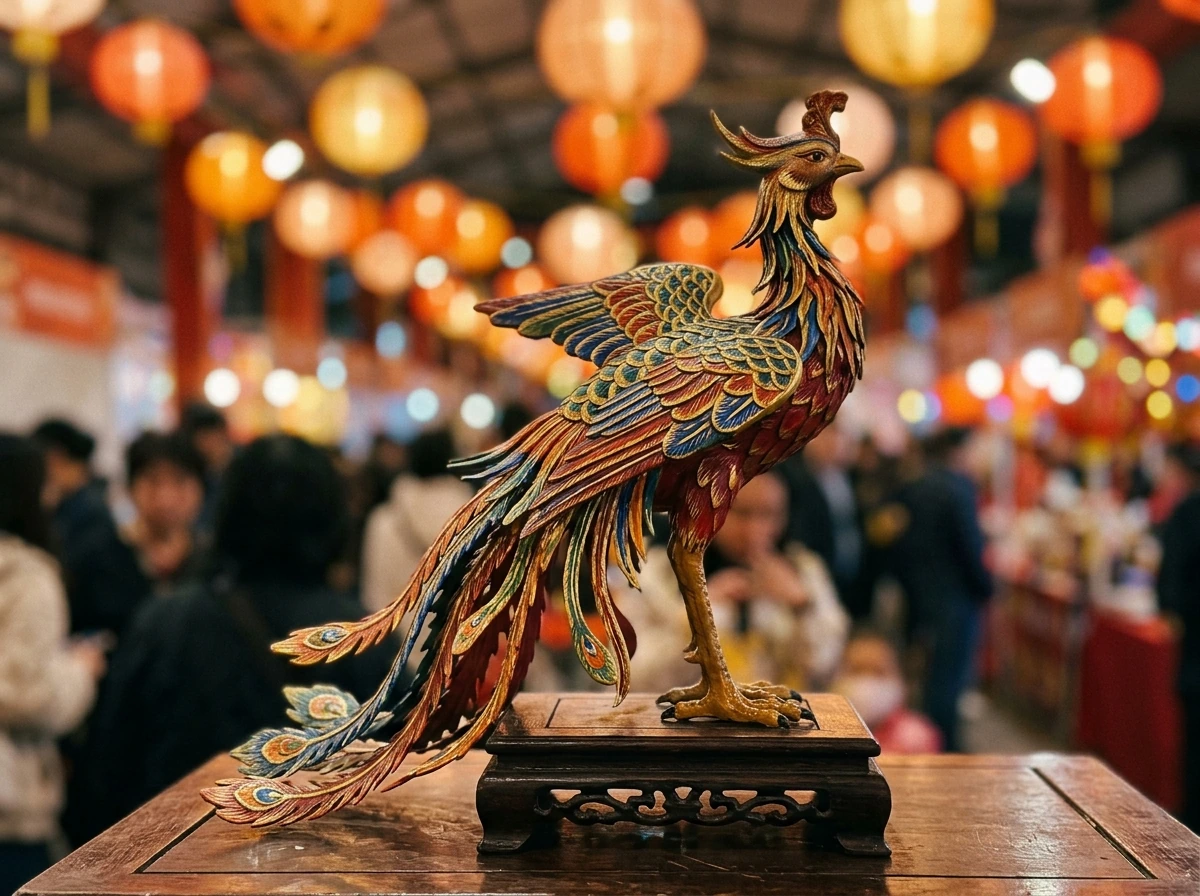
The Chinese Fenghuang is often called the 'Chinese phoenix' in casual usage, and while it shares the phoenix's composite, magnificent quality, it is a meaningfully different creature. The Fenghuang is traditionally a pairing of male (feng) and female (huang) elements, associated with virtue, grace, and imperial harmony. It is not primarily a death-and-rebirth figure. In many accounts, it is simply immortal. Calling it a phoenix is a useful shorthand but an imprecise one, understanding the difference actually enriches your reading of both traditions.
What the phoenix actually symbolizes
The phoenix is, at its core, a symbol of cyclical renewal, the idea that destruction is not final and that what looks like an ending is actually a transformation in progress. This is where the phoenix connects most directly to the broader language of bird symbolism. Birds in myth and spiritual tradition consistently represent transition: flight as the movement between worlds, nesting as the construction of new life, feathers as evidence of contact with something sacred. The phoenix holds all of these layers simultaneously. It is the ultimate bird symbol because it embodies the full cycle rather than a single moment of it.
The specific symbolic elements are worth naming individually because they each carry independent weight.
- Rebirth: The phoenix does not survive its death — it fully dies, and something new emerges. This distinguishes it from simple immortality. The rebirth is earned through complete transformation.
- Renewal: Each new phoenix is not burdened by the last. The cycle resets. This makes the phoenix a symbol of fresh starts, not just survival.
- Immortality through cycle: The phoenix never truly ends because the cycle never ends. This is a different kind of immortality from simple eternal life — it is resilience through change rather than permanence through stasis.
- Solar energy: Because the phoenix is tied to Helios and the sun, it carries the symbolism of light returning after darkness, warmth after cold, and the daily proof that endings are not final.
- Self-creation: Lactantius' framing that the phoenix 'produces herself' is significant. The phoenix does not need an external force to resurrect it — transformation is built into its nature. As a personal symbol, this suggests that renewal comes from within.
The phoenix in religious texts and literature

One often-cited but genuinely contested biblical reference appears in Job 29:18, where Job expresses hope that he will 'multiply his days as the phoenix' (in some translations). If you want a deeper look at the phoenix bird meaning in the Bible, keep reading. The Hebrew word used, chol, is ambiguous, the Septuagint and Vulgate render it differently, with some scholars preferring 'sand' or 'palm tree' as the translation rather than phoenix. Whether or not the biblical text intends a phoenix reference, the passage has historically been read that way by commentators who wanted to connect the phoenix to ideas of long life and resilience. If you encounter this reference, treat it as a matter of translation debate rather than settled fact.
In literary tradition, the phoenix appears in Dante's Inferno, Shakespeare's plays, and later in J.K. Rowling's Harry Potter series, where Dumbledore's companion Fawkes embodies the classic cycle: burning to ash and being reborn as a chick. These literary uses do not create the symbol's meaning, they inherit and amplify it. Every cultural retelling reinforces the same core story because the metaphor is genuinely useful for human experience. That is why it keeps appearing.
In contemporary art, phoenix imagery continues to work the same way. The exhibition 'Phoenix Rising: Xu Bing and the Art of Resilience' used phoenix-related works to represent unity, power, and rebirth in a modern visual context. A 1985 lithographic print cataloged by the Library of Congress titled 'Phoenix ascending' used yellow to represent chaos on one side and rebirth on the other, visual shorthand that works precisely because the symbol's meaning is so well-established.
How the phoenix story is used symbolically today
The phoenix is one of the most actively used mythological symbols in contemporary life, which is striking given that it has no connection to a real bird species. (Scholars have noted that the phoenix cannot be traced to any particular species, it is a symbolic construction, not a zoological one.) Its power comes entirely from its story. People who have survived illness, loss, addiction, grief, or collapse reach for phoenix imagery because the myth gives a narrative shape to experiences that otherwise feel only like destruction. The phoenix says: the fire is part of the process.
Cities use the phoenix as a symbol of urban recovery. Companies use it in branding to signal reinvention. Individuals get phoenix tattoos to mark personal turning points. Athletes use it to frame comebacks. In each case, the person is applying the myth as a lens for meaning-making, which is exactly what the myth was always for. If you encounter phoenix imagery in art, architecture, or personal symbolism and want to read it accurately, the question to ask is not 'which version of the phoenix is this?' but 'what kind of transformation is being described here?'
Clearing up common confusion about the phoenix
The phoenix gets conflated with other rebirth myths regularly, and the differences are worth knowing because they change the meaning.
| Myth or Symbol | Culture of Origin | Core Mechanism | Key Distinction from Phoenix |
|---|---|---|---|
| Phoenix | Greek/Egyptian | Fire, ashes, self-regeneration | Self-generated; one individual; cyclical |
| Bennu bird | Egyptian | Solar cycle, primordial renewal | Associated with Ra and creation; proto-phoenix, not identical |
| Simurgh / Anqa | Persian / Islamic | Divine wisdom, transcendence | Not a death-rebirth cycle; more of a divine presence |
| Fenghuang | Chinese | Virtue, imperial harmony, immortality | Not defined by death and rebirth; associated with grace |
| Firebird (Zhar-ptitsa) | Russian folklore | Magical radiance, quest object | Typically not self-regenerating; more of a magical creature |
Another common confusion is assuming there is one definitive phoenix story. There is not. The myth shifts significantly between Herodotus, Lactantius, Islamic tradition, and modern usage. The worm-stage in Lactantius is genuinely different from the instantaneous fire-rebirth of popular imagination. Neither version is more 'correct', they are different cultural expressions of the same underlying symbol. Being comfortable with that variation actually makes you a better reader of phoenix imagery, not a worse one.
Finally, it is worth being clear that the phoenix is not a real bird species that went extinct or remains undiscovered. It is a mythological creature, and its power is entirely symbolic. That does not make it less meaningful, if anything, purely symbolic creatures tend to carry more concentrated meaning precisely because they are not constrained by biology. You can read more about what distinguishes mythological bird figures from real-world bird symbolism in the site's articles on the phoenix bird definition and what it means for a phoenix to be a bird at all.
How to use the phoenix story for personal reflection

If you have come to the phoenix story looking for personal meaning rather than purely historical knowledge, here is a practical way to work with it. The myth is most useful when you identify which part of the cycle you are in. The phoenix story is not only about the moment of rising, it includes the long life before the fire, the burning itself, the ashes, the worm, and the gradual reformation. Most people who feel drawn to the phoenix are somewhere in the middle of that cycle, not at the triumphant end. Naming where you are in the cycle (in the fire, in the ashes, or newly forming) can be more grounding than simply holding onto the image of the risen bird.
You can also use the cross-cultural framework of bird symbolism to deepen this reflection. Birds in spiritual traditions consistently represent the soul's movement between states, flight as transition, nesting as preparation, feathers as contact with the sacred. The phoenix is the most complete version of that framework because it includes the full arc from life through death to new life. If you are drawn to bird symbolism more broadly, the phoenix story is a useful anchor point, because it makes explicit what other bird myths hold implicitly: that transformation is the fundamental nature of living things.
- Identify which part of the phoenix cycle resonates most with your current experience — the long life before change, the fire of transformation, the ash period of uncertainty, or the emergence of something new.
- Read at least two versions of the myth (the Herodotus account and the Lactantius poem are the most accessible starting points) so you are working with the actual tradition rather than a simplified popular version.
- When you encounter phoenix imagery in art, architecture, or personal symbolism, ask what kind of destruction and renewal is being referenced — this question will give you a more precise reading than simply noting 'phoenix equals rebirth.'
- Connect the phoenix to the broader bird symbolism framework on this site, particularly the themes of flight as spiritual transition and the relationship between bird behavior and cyclical meaning.
- Consider the solar dimension of the phoenix — its connection to Helios and the sun is not decorative. If you are working with phoenix symbolism spiritually, incorporating the idea of solar renewal (light returning, cycles completing) adds a layer that the fire-only reading misses.
The phoenix story has lasted thousands of years across dozens of cultures because it describes something people keep experiencing: the moment when what you were is gone, and what you will be has not yet formed. The myth gives that unbearable in-between a shape, a name, and a promise. That is what the best symbolic traditions do. The phoenix does not tell you the fire will not hurt. It tells you the fire is not the last word.
FAQ
How can I tell which phoenix version a book, painting, or quote is using?
Look for the details the myth stresses: if it emphasizes an egg, burial, or a return to Heliopolis, it is leaning toward a solar ritual model. If it focuses on burning on an altar, ashes, and a new bird emerging immediately, it is leaning toward the later “immolation and rebirth” model. If it includes a worm stage, it is offering a slower, resurrection-through-transformation reading. The version you see usually signals which kind of renewal the symbolism is meant to express.
What does the phoenix cycle mean if I relate it to my own life (not just history)?
If you are using the phoenix for personal reflection, avoid treating it as a one-time event. The story can map to phases: long endurance, the collapse or “burning” period, the ashes or aftermath, and then the reformation phase. Many people find it more accurate to name where they are right now in the cycle rather than insisting they are already at the triumphant rising.
Why do different cultures use the phoenix for different meanings?
A helpful rule is not to search for one “true” origin, but to ask what the symbol is answering for. When a culture connects the phoenix to the sun, it often frames renewal as cosmic order (daily or seasonal logic). When a culture links it to resurrection theology, it is usually answering a different question (how life returns after real death). The same bird image can carry different answers depending on that underlying purpose.
Is the phoenix story always instant rebirth, or can it be a staged process?
The commonly repeated “instant rebirth from ashes” idea is not the only ancient structure. In some detailed Christian readings, the remains and a worm stage matter because they mirror burial and a staged reemergence, not a magical shortcut. If you want a more grounded interpretation, pay attention to whether the depiction includes an intermediate phase like decay, worm, or gradual rebuilding.
Does Job 29:18 actually refer to a phoenix bird?
Interpret “phoenix” in the Bible with caution because the reference is tied up with translation choices. In Job 29:18, the Hebrew term is ambiguous, and some translations historically avoid rendering it as phoenix, using alternatives like sand or palm tree. If your text uses phoenix, treat it as a contested interpretation, not a settled identification.
How is the phoenix different from other “rebirth” myths like the dragon reborn or resurrection birds?
Many symbols get bundled together, but the phoenix is specifically about renewal through its own destruction or transformation, not just any immortal bird. If a story includes reincarnation with no explicit self-destruction, or a rebirth caused by an outside savior, it may be a different mythic pattern. When you compare myths, check the mechanism, for example self-immolation, decay, or divine intervention, because that changes what the symbol is teaching.
If the phoenix is not a real species, why do people still treat it like a factual animal?
It is better to treat phoenix claims as symbolic rather than zoological. The article emphasizes there is no real-world species behind the creature, so when a modern work claims a literal phoenix discovery or a biological explanation, it is usually borrowing the symbol for effect. If you want historical accuracy, focus on the cultural accounts and the themes they attach to the bird.
How should I interpret phoenix imagery that shows the bird repeatedly, versus only once?
If the artwork or text shows cycles, returning journeys, or seasonal repetition, you can read it as “renewal through time,” not just personal recovery. If it shows a single dramatic transformation, it may be pointing to a specific turning point. The question to ask is what the creator emphasizes, repetition over years, or a singular event, because the emotional tone usually follows that choice.
What should I pay attention to in scenes where the phoenix builds a nest or tomb?
If a depiction focuses on the “building” or “nest or tomb” idea, it often supports a theme of preparation and meaning-making during vulnerability. If it focuses only on flames, the message may center on suffering that is part of the process, not the final outcome. Noticing whether the phoenix is resting, constructing, or emerging helps you read the symbolism more precisely than simply “rebirth.”