If you searched 'the good lord bird ott india,' you are likely doing one of two things: trying to find out where to stream the Showtime miniseries 'The Good Lord Bird' in India, or looking for the deeper symbolic meaning behind the phrase and whatever bird encounter prompted your search. The honest answer for the streaming question is quick and a little frustrating: as of today, The Good Lord Bird is not available on any OTT platform in India. If the bird symbolism angle is what actually pulled you here, you are in exactly the right place. If you are looking for another angle on the bird meaning behind the phrase, you might also find the breakdown of bird symbolism in related posts helpful bird symbolism angle.
The Good Lord Bird OTT India or Bird Symbolism? Guide

Eleanor Hartwell
7 May 2026

What 'The Good Lord Bird' Actually Is

The Good Lord Bird started as a 2013 novel by American author James McBride. It follows Henry Shackleford, a young enslaved boy who joins the radical abolitionist John Brown's crusade against slavery and spends much of the journey disguised as a girl just to survive. The novel is darkly comic, deeply human, and won the National Book Award. In 2020, it was adapted into a limited Showtime miniseries starring Ethan Hawke as a ferocious John Brown, with the story running through historical events like Bleeding Kansas and the 1859 raid on Harpers Ferry.
The title itself refers to a real bird: the Ivory-billed Woodpecker, historically nicknamed 'the Good Lord Bird' because people who spotted it in the wild were said to cry out 'Good Lord!' at the sight of something so spectacular. That detail matters if you are here for symbolism rather than streaming, because the name is already soaked in the language of divine encounter, the kind of breathless reverence humans have always used when a bird stops them cold.
For Indian viewers searching OTT platforms, the current situation is straightforward but disappointing. JustWatch's India listings confirm the miniseries is not available for streaming there right now. It originally aired on Showtime in the United States, and international OTT licensing has not caught up in India's market. If streaming is your goal, keep an eye on platforms like SonyLIV, Lionsgate Play, or Apple TV+ India, as U.S. prestige dramas do eventually find their way to these services. But if you landed here because something about the phrase 'good lord bird' felt meaningful rather than just a show title, read on.
The Birds That Carry the 'Good Lord' Feeling
Across cultures, certain birds reliably produce that involuntary 'good lord' moment: a flash of color, an unexpected stillness, a bird that seems to look directly at you. These encounters are the raw material of bird symbolism everywhere in the world, and they tend to cluster around a handful of species.
- The Ivory-billed Woodpecker (the original 'Good Lord Bird'): So rare it was believed extinct, its sighting carried the weight of miracle. In symbolic terms, woodpeckers across many traditions represent persistence, the uncovering of hidden truths, and a knock on the door between the living and the dead.
- The Peacock: In India, the national bird and one of the most spiritually loaded birds in any culture. Associated with Lord Kartikeya and Lord Krishna, it represents divine beauty, protection, and the destruction of ego (since its feathers absorb snake venom in folk tradition).
- The Crane and the Egret: Tall, white, and otherworldly, these birds appear in Hindu, Buddhist, and Jain contexts as symbols of purity, longevity, and focused spiritual practice.
- The Crow: Misunderstood almost everywhere but deeply respected in Indian tradition, where it represents the souls of ancestors. Feeding crows during Pitru Paksha is a direct act of communication with the dead.
- The Owl: In Greek myth a symbol of wisdom; in many Indian regional traditions a mixed omen, sometimes associated with Goddess Lakshmi and prosperity, sometimes with ill luck depending on context and direction of call.
If a specific bird is what sent you searching today, the species matters enormously for interpretation. Each one carries its own layer of meaning that varies by tradition, by behavior at the moment of encounter, and by where you are in your own life.
Why 'Good Lord' Language Shows Up in Bird Encounters
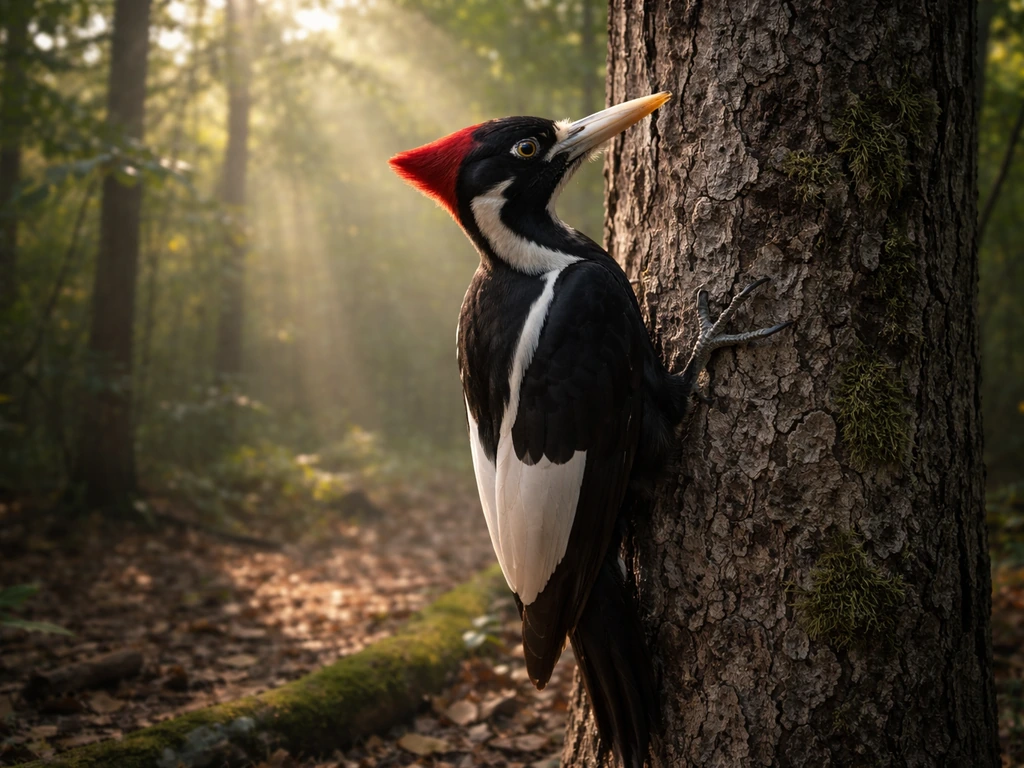
The Ivory-billed Woodpecker earned its nickname from a genuine human reaction: shock, awe, and an instinctive reaching for divine vocabulary. That same reflex appears across every culture that has ever recorded a significant bird encounter. In biblical tradition, the dove descending on Jesus at baptism is described with a hushed reverence that resembles exactly this kind of 'good lord' moment. In Celtic mythology, the appearance of a raven or a wren at a critical moment was read as a direct message from the otherworld. In Norse cosmology, Odin's ravens Huginn and Muninn (Thought and Memory) are divine intelligence made visible in feathered form.
The common thread is not a literal belief that birds are gods, but rather a recognition that birds move between worlds in a way humans cannot. They rise into the sky (the domain of the divine in almost every cosmology), they appear and vanish without warning, and their behavior often seems timed to human moments of crisis or transition. When a bird makes you say 'good lord,' that reaction itself is worth paying attention to. It is your nervous system registering that something outside the ordinary just happened. Symbolic traditions are, at their core, frameworks for taking that reaction seriously and asking what it might mean.
This connects to ideas explored elsewhere on this site, including the figure of the bird god in various mythologies and the ancient reverence for colossal or legendary birds in traditions from Norse Helheim to Aztec cosmology. The phrase "bird god" often refers to how different cultures interpret certain birds as divine or messenger figures figure of the bird god. In Hindu tradition, the idea of a divine bird can also point you toward which divine beast is the bird figure of the bird god in various mythologies. You can also find examples of this idea in accounts of colossal bird shrines where rock encases the divine presence colossal or legendary birds. In Helheim, the setting is tied to Norse beliefs about otherworld realms, so the bird you may be thinking of can relate to those myths. The impulse to see birds as divine messengers is one of the oldest human instincts on record.
Birds as Spiritual Messengers in Indian Cultural Context
India has one of the richest traditions of bird symbolism in the world, running through Hindu scripture, Buddhist teaching, Jain cosmology, and the folk traditions of hundreds of regional cultures. If the 'OTT India' part of your search reflects your cultural context, then the symbolic reading of birds is something deeply embedded in that heritage.
In the Ramayana, Jatayu, a giant vulture, dies trying to save Sita from Ravana. If your real question is about colossal legendary birds, you may also want to look up what is the giant bird in helheim for a Norse-adjacent comparison giant vulture. He is not just a bird: he is a figure of selfless sacrifice and dharma, honored by Rama himself with funeral rites reserved for the most revered. Jatayu's story is one of the most emotionally powerful bird encounters in any literary tradition anywhere in the world. The Garuda, half-eagle and half-human, is the divine vehicle of Lord Vishnu and represents the solar principle, spiritual speed, and the destruction of illusion (symbolized by his eternal war with serpents). These are not decorative symbols. They are integrated into a living cosmological framework.
In everyday practice, birds are read as omens in ways that vary significantly by region and community. The direction a bird calls from, the species, the time of day, and whether it enters a home all carry different weights in different traditions. A crow cawing on the rooftop can announce a visitor (especially a welcome one, since crows are associated with ancestors). A pair of pigeons nesting near a home is widely read as a sign of peace and incoming good fortune. This includes places like the colossal bird shrine where there is little light, which people often interpret through the lens of sacred bird symbolism. An owl heard in daylight, in some traditions, is cause for pause and reflection rather than fear.
| Bird | Indian Symbolic Association | Common Context |
|---|---|---|
| Peacock | Divine beauty, protection, Lord Kartikeya's vehicle | National bird; associated with rain, fertility, and spiritual royalty |
| Crow | Ancestors, souls of the departed | Fed during Pitru Paksha; announces visitors |
| Garuda | Vishnu's vahana, solar power, destroyer of illusion | Temple iconography; invoked for protection |
| Parrot | Love, Kama (god of desire), eloquence | Associated with Meenakshi; kept as sacred birds in some temples |
| Owl | Lakshmi's vehicle in some traditions; mixed omen regionally | Read by direction of call and time of appearance |
| Crane/Egret | Purity, longevity, focused practice | Associated with meditation and spiritual patience |
| Jatayu (Vulture) | Sacrifice, dharma, heroic devotion | Honored in Ramayana; regional temples dedicated to Jatayu exist in Kerala |
How to Actually Interpret a Bird Sign Today
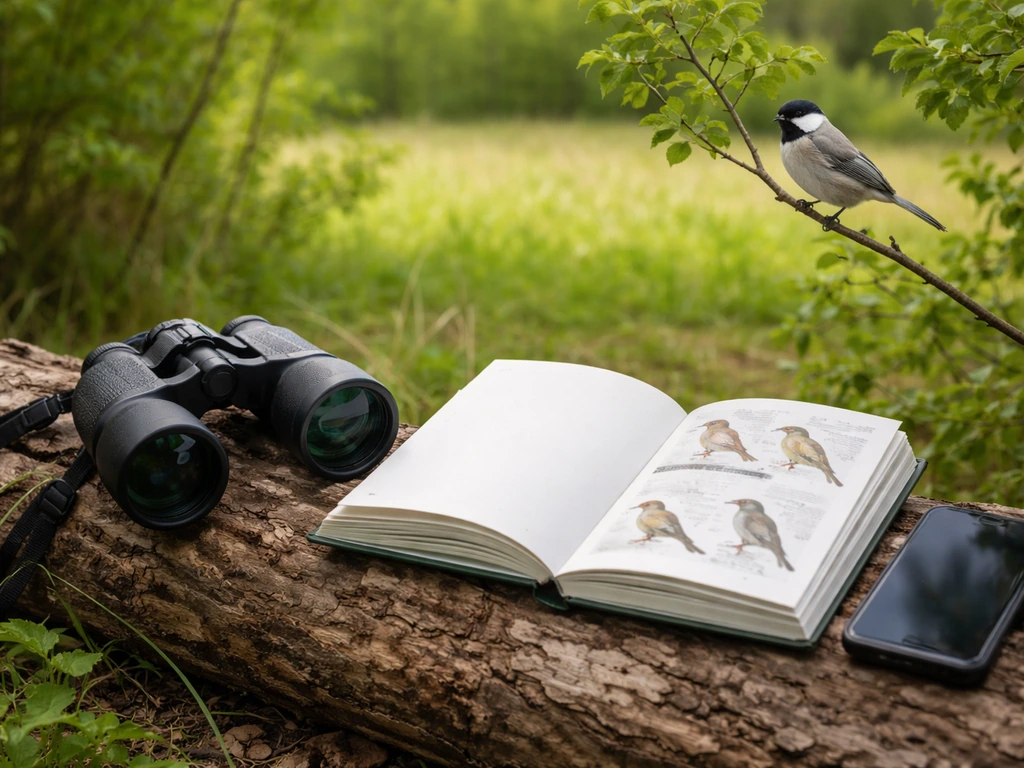
If a bird encounter brought you to this search and you want to make practical sense of it, here is how to approach it in a way that is grounded rather than generic. Merlin is free to use and was developed by the Cornell Lab of Ornithology, making it a suitable no-cost bird identification tool.
- Identify the bird as precisely as you can. Color, size, behavior, and sound all narrow the field dramatically. A large black bird is very different from a small brown one, and the difference matters enormously across traditions. If you are unsure of the species, a bird identification app like iBird or the Merlin app from Cornell Lab can help you pin it down in minutes.
- Note the circumstances. Where were you, and what were you thinking about or dealing with at the moment of the encounter? Bird symbolism in virtually every tradition is contextual: the same bird means different things depending on whether it appeared at a threshold (door, window, gate), during a moment of grief, during a transition like a journey or a new beginning, or in a dream versus waking life.
- Choose your interpretive tradition deliberately. If your cultural background is Hindu, start there: the bird in question likely has a specific association in Vedic or folk tradition that will feel resonant. If you are drawn to biblical symbolism, Celtic frameworks, or Egyptian cosmology, those are all valid lenses. The site you are on covers all of these in depth, and comparing across traditions often reveals a shared core meaning that feels more universal and therefore more trustworthy.
- Look at the behavior, not just the species. A bird that flies toward you carries different energy than one that flies away. A bird that sings carries different meaning than one that is silent and still. A feather found on the ground (especially in an unexpected place) has its own symbolic grammar across many traditions, including Native American frameworks where feathers are considered direct gifts from the spirit world.
- Ask the right question of the encounter. Do not ask 'is this a good or bad sign?' Ask instead: what aspect of my life feels most alive or uncertain right now, and what does this bird's known symbolism suggest about that? Bird symbolism is best used as a mirror for reflection, not a verdict. The encounter gives you a frame; the meaning you find in it is genuinely yours to discover.
Putting It All Together
If you came here purely for streaming, the honest answer is that The Good Lord Bird is not on OTT in India right now, but it is worth watching if and when it becomes available. It is a genuinely powerful piece of storytelling, and the bird at its center (the rare, almost mythical Ivory-billed Woodpecker) carries exactly the kind of symbolic weight the show's title promises.
If you came here because a bird made you say 'good lord' in your own life recently, take that reaction seriously. If you want another way to decode older phrases tied to birds, see the bird of yore meaning as a related option. Every major tradition that has ever thought carefully about the natural world has agreed on at least this much: birds move between earth and sky, between the visible and the invisible, and they have been read as messengers for as long as humans have looked up. Cornell Lab’s Merlin Bird ID app is designed to help users identify birds they see and hear, including those that show up in moments that feel meaningful blank" rel="noopener noreferrer">birds move between earth and sky. The frameworks for reading them, whether from Hindu cosmology, biblical tradition, Celtic lore, or the rich folk practices of regional India, all point toward the same invitation: pay attention, ask what this moment is pointing toward, and trust that the encounter meant something worth exploring.
FAQ
If The Good Lord Bird OTT India shows “not available,” does that mean it is gone permanently?
In India, the show being unavailable right now usually means licensing for the specific miniseries has not been granted to Indian OTT platforms, not that the series is “removed forever.” If you get alerts from JustWatch-style trackers or follow the same title on platform search monthly, you will catch re-listings when rights change.
Which OTT platforms should I check first in India, and what is the fastest way to verify it is the full series?
If you are deciding between searching for the series on different apps, prioritize platforms that carry Showtime-style prestige dramas in India (often via regional distribution partners). In practice, the quickest check is to search the exact title “The Good Lord Bird,” then confirm by episode list, since similar-sounding titles and clips can appear in search results even when the full series is not licensed.
Can I interpret “the good lord bird” symbolism even if I do not know which version (book or show) I am reading?
Yes, you can use the title symbolism even if you are not sure the show or the novel you found is the one you mean. The “Good Lord Bird” phrase points to an intense reaction to a rare, spectacular bird, so your interpretation can start from the emotion it triggers (awe, shock, reverence) rather than forcing a single “correct” bird meaning.
What details about a bird encounter matter most for interpreting it in an Indian-omen style reading?
Many bird-omen traditions in India treat context as part of the message. Factors that commonly change the meaning include time of day (daylight versus evening), where the bird is heard (roof, street, near the door), and the bird’s behavior (calling once versus repeated calls, entering versus merely passing). If you recall these details, your reading will be much more specific.
Is “bird symbolism” the same as believing birds are literally divine, and how should I avoid overgeneralizing?
A common mistake is to treat the “bird god” idea as a single universal belief. In most traditions, birds function as messengers or vehicles in specific mythic frameworks, not as one consistent, literal doctrine. The right approach is to match the symbolism to the tradition you resonate with, then apply it to your situation with the same caution you would use for any personal meaning-making.
What is a simple way to turn a recent “good lord” moment into a grounded interpretation?
If you want a practical next step after a meaningful bird moment, document three things immediately: the species you believe you saw (or the closest match), your emotional reaction in that moment, and what was happening in your life around the encounter. This keeps your interpretation grounded and prevents “blanket meaning” from replacing your actual observations.
How can I tell if an India streaming site listing is legitimate and actually the right miniseries?
If you are using streaming sites that show a thumbnail or suggest availability, verify the legality and completeness by checking whether the platform lists all episodes under that title, and whether it is the miniseries with the correct year and cast. Counterfeit or unofficial listings can be misleading, and episode counts are the most reliable quick check.
If I did not see an Ivory-billed Woodpecker, can I still use the symbolism of the title for my own bird encounter?
The title’s specific reference to the Ivory-billed Woodpecker is tied to an old nickname and the human reaction to rarity. However, if you cannot connect your personal encounter to that exact species, you can still use the symbolism level (rare visitation, shock, awe, liminal “between worlds” feeling) without forcing a one-to-one species match.
Next Articles
Bird of Yore Meaning: Idiom Explained With Examples
Learn the meaning of bird of yore, how to use it in sentences, and how bird symbolism shapes the phrase.
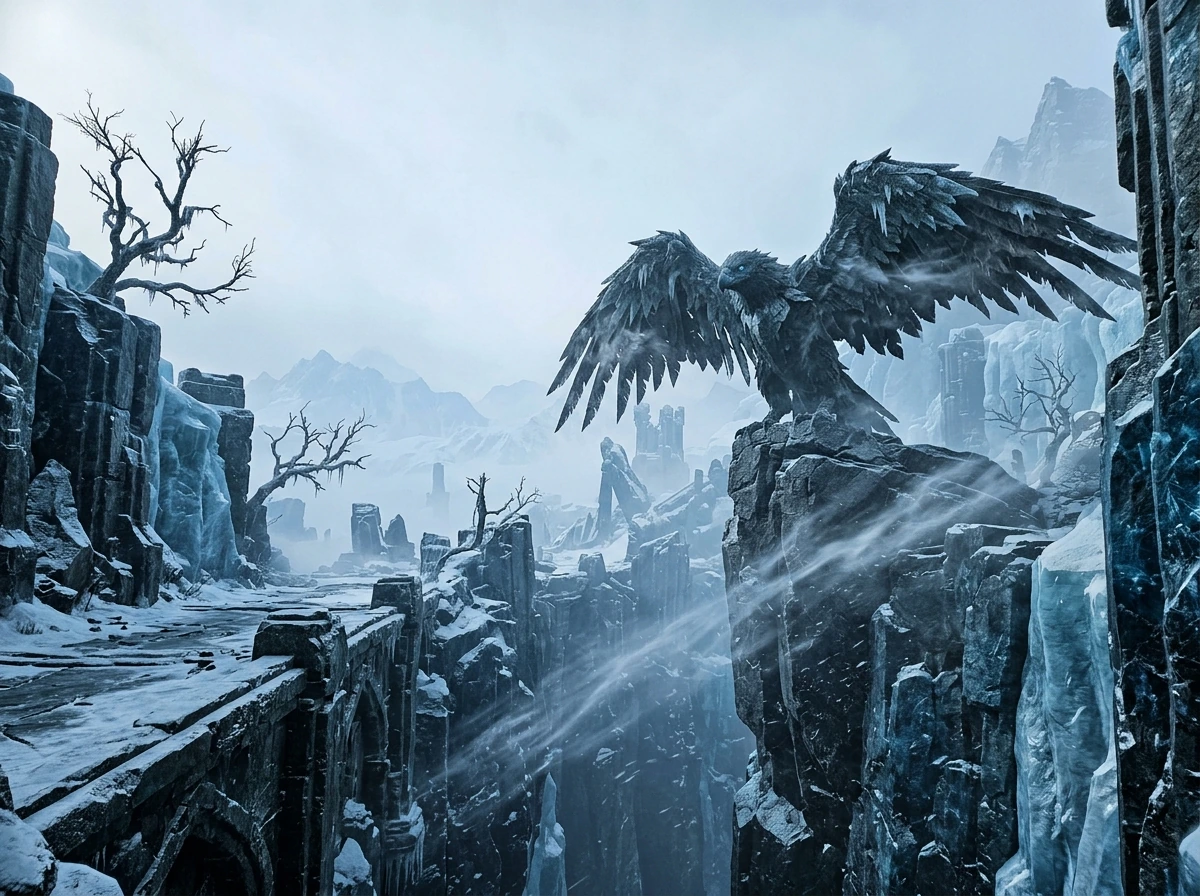
What Is the Giant Bird in Helheim in God of War?
Explains the giant bird in Helheim in God of War, what it is, why it appears, and its symbolism.

Which Divine Beast Is the Bird Symbolically
Find which divine beast the bird symbolizes, with quick guides to pick the right one by tradition and source.