
The short answer: in most Norse mythology sources, there is no single famous bird living inside Helheim, so if you’re asking "who is the bird god," it helps to identify what specific bird you mean.
What Is the Bird in Helheim? Meanings and How to Identify It

Eleanor Hartwell
23 Mar 2026
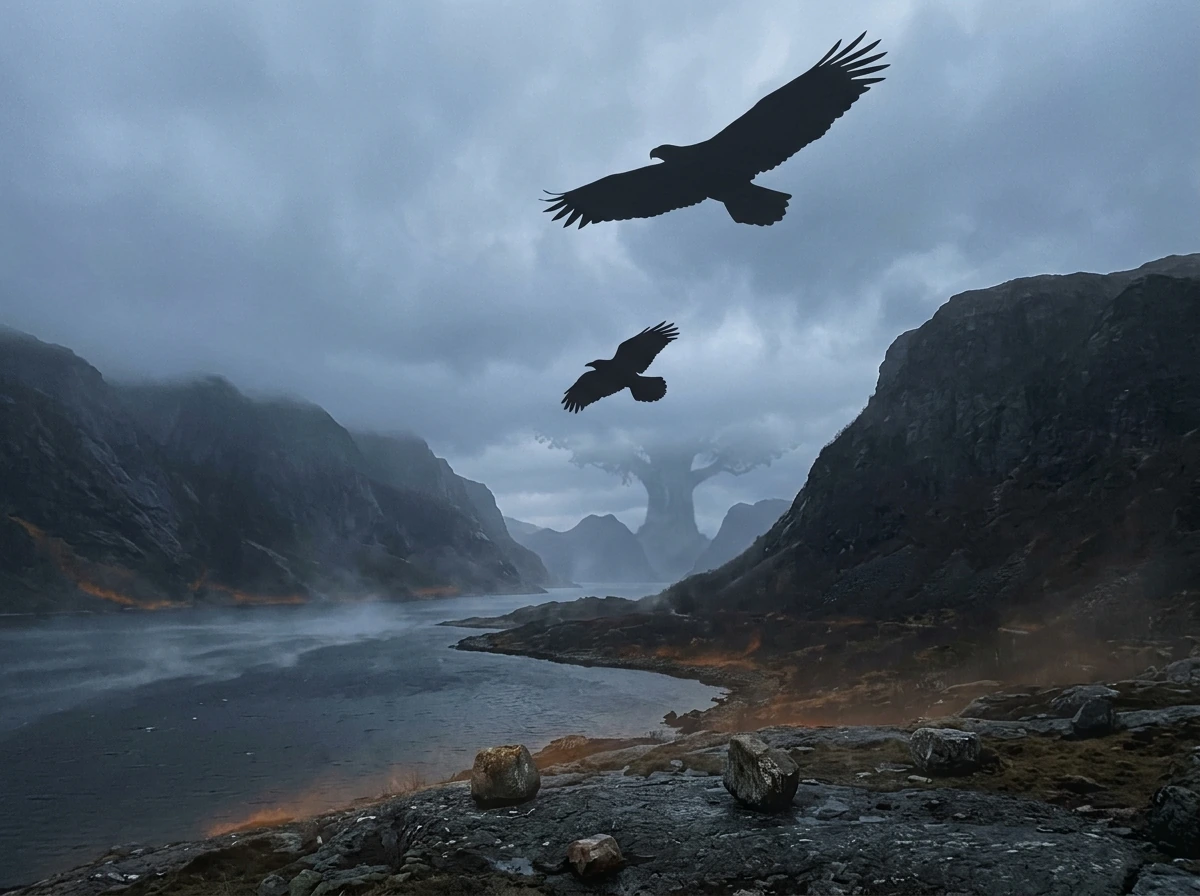
But if you keep seeing references to "the bird in Helheim," you are almost certainly encountering one of three things: Hræsvelgr, the colossal eagle-giant whose wings generate the wind at the edge of the Norse cosmos; Odin's ravens Huginn and Muninn, which popular interpretation frequently links to the realm of the dead; or content from God of War Ragnarök, where Hræsvelgr appears directly in the Helheim zone and fans use "the giant bird in Helheim" as a landmark description.
If your question is really about the game-style “giant bird in Helheim,” the most common answer is Hræsvelgr, the colossal eagle-giant tied to wind and the north. Which one applies to you depends entirely on your source, and this guide will help you figure that out. the colossal bird shrine where there is little light
What Helheim actually is in Norse mythology
Helheim is not a standardized ancient term the way English speakers tend to assume. In the primary sources, specifically the Prose Edda written by Snorri Sturluson in the 13th century and the earlier poems of the Poetic Edda, the realm of the dead is most commonly called Hel. Snorri's Gylfaginning describes Odin appointing the goddess Hel to rule a realm of the same name, located within Niflheim, the primordial world of cold and darkness. Encyclopaedia Britannica summarizes this as a kingdom that "lies downward and northward," where Hel oversees vast mansions and receives the dead who did not die in battle.
The term Helheim, meaning roughly "Hel's home," shows up more in later and modern usage than in the Eddas themselves. It is the label many contemporary writers, game designers, and esoteric practitioners use when referring to Hel's realm, and it has absorbed associations from Niflheim and Niflhel (another underworld name mentioned in Vafþrúðnismál and Baldrs draumar) along the way. So when you read about "the bird in Helheim," you are working within a broad, somewhat fluid interpretation of Norse underworld geography rather than pinpointing a single passage from a single ancient text.
Why a bird shows up in Helheim at all
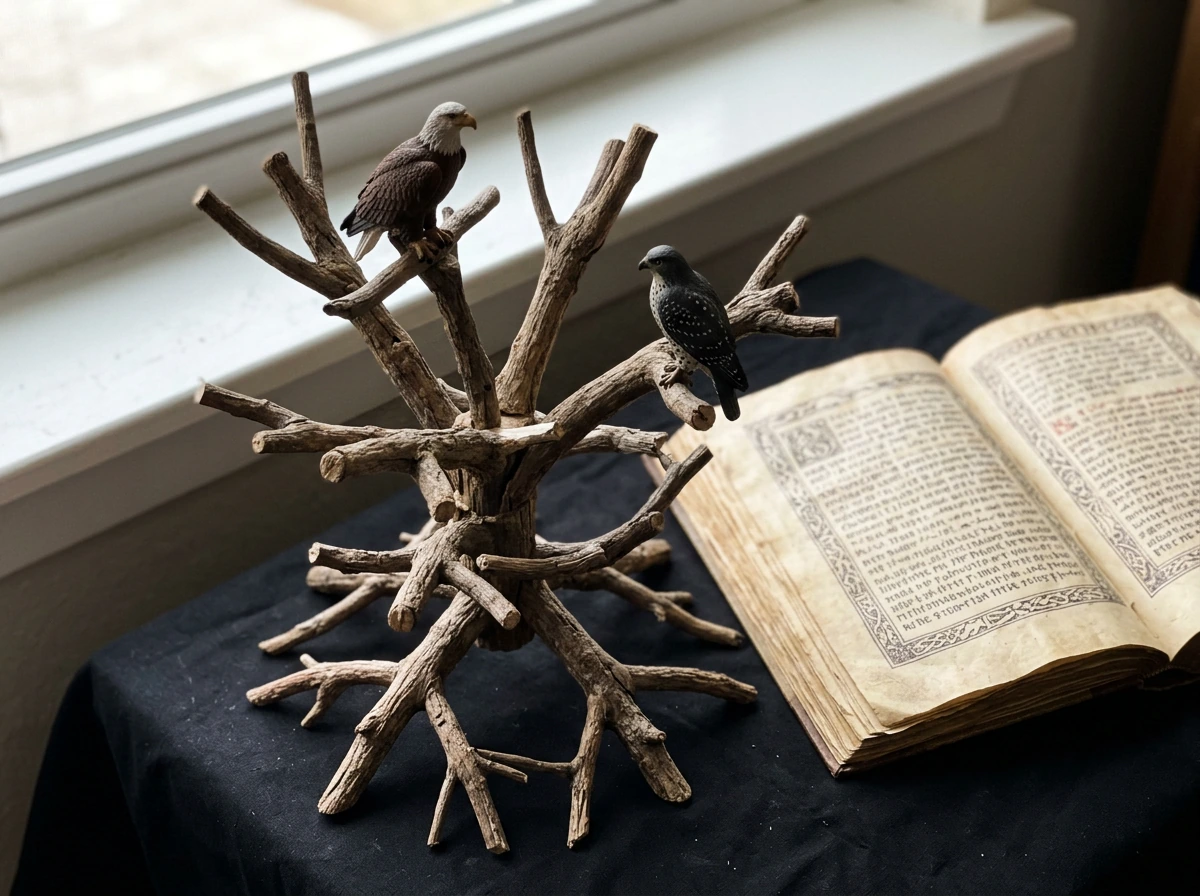
Birds in Norse cosmology are not confined to the living world. They sit at the boundaries, on the World Tree Yggdrasil, and at the edges of heaven and the underworld, functioning as messengers, cosmic forces, and omens. The association of birds with death, transition, and the realm of the dead is not a modern invention. It is baked into the mythology's structure. The question is which bird, in which tradition or source, is being referred to in whatever you are reading or seeing.
The main candidates: which bird is it?
Hræsvelgr: the corpse-swallower eagle
This is the most mythologically grounded answer. Hræsvelgr is a jötunn (giant) who takes the form of an eagle and sits at the northward end of heaven. The Prose Edda translation puts it plainly: "At the northward end of heaven sits the giant called Hræsvelgr: he has the plumes of an eagle, and when he stretches his wings for flight, then the wind rises from under his wings.
" His name translates from Old Norse as "corpse-swallower," which connects him thematically to death, consumption of the dead, and the cold north where Hel's realm lies. He is not described as living inside Helheim in the Eddas, but his position at the cold, northward edge of the cosmos places him in the same symbolic and geographical territory.
In God of War Ragnarök, game designers placed Hræsvelgr directly in Helheim, and a location called Hel's Perch was named because it offers a view of the enormous eagle. This is why fans of the game use "the bird in Helheim" almost as shorthand for Hræsvelgr. colossal bird shrine where rock encases
Odin's ravens: Huginn and Muninn
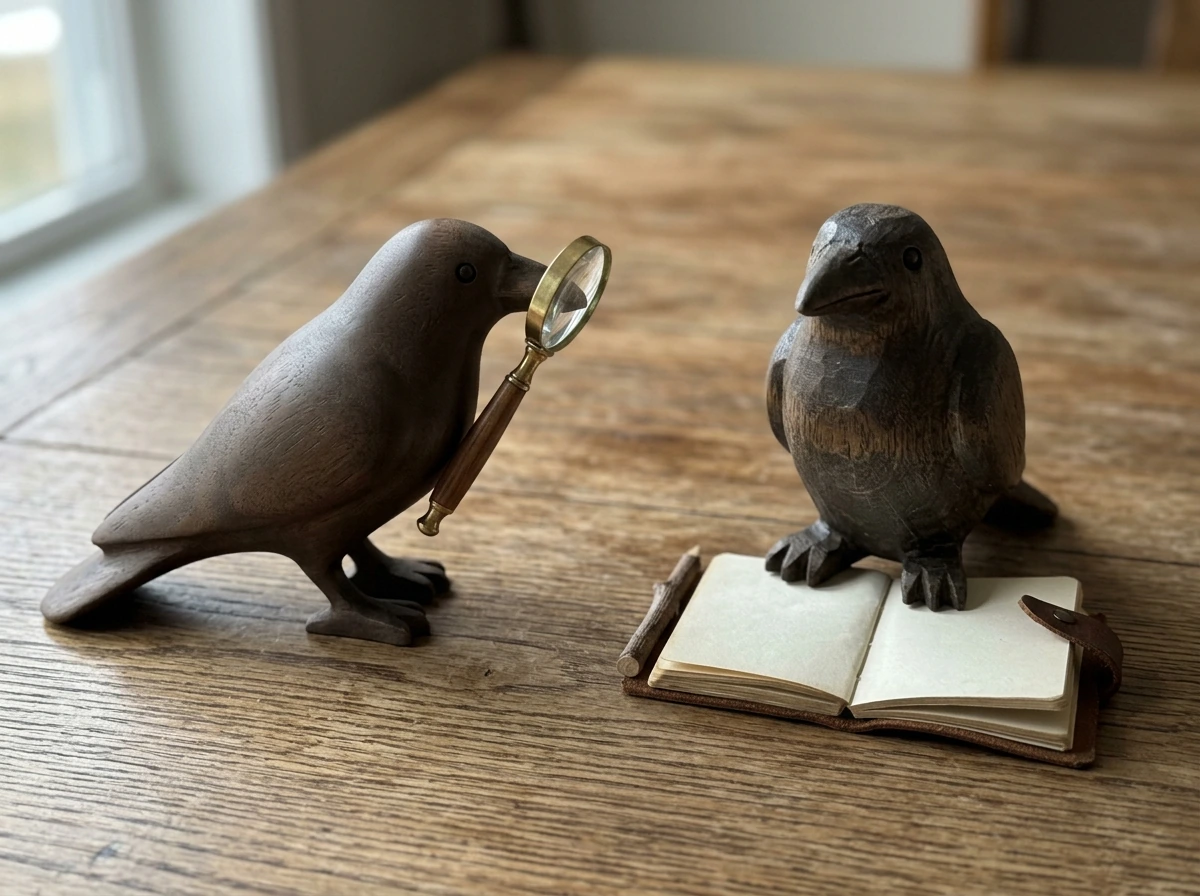
Huginn (Thought) and Muninn (Memory) are Odin's two ravens, who fly across all the worlds and bring him information. Modern interpreters frequently describe them as traversing Helheim because Odin is deeply connected to death, war, and the afterlife. This connection is not explicitly confirmed in the primary Eddas the same way Hræsvelgr's role is, but it is widespread in contemporary Norse spirituality and popular mythology writing. In God of War Ragnarök, collectible Odin's Ravens are scattered throughout Helheim as a gameplay mechanic, which reinforced this association further. If you have seen a reference to ravens in Helheim, you are most likely in popular interpretation or game territory rather than in a direct Edda citation.
Veðrfölnir: the hawk on Yggdrasil
Veðrfölnir is a hawk described in the Eddas as sitting between the eyes of an eagle perched atop Yggdrasil, the World Tree. This eagle-and-hawk pairing on the World Tree is a documented piece of Norse bird symbolism, representing cosmic observation and mediation between realms. Some interpreters, especially those working with bird symbolism in a spiritual context, connect Veðrfölnir and the Yggdrasil eagle to messages passing between worlds, including the realm of the dead. This is a more speculative extension of the mythology, but it is a legitimate strand of interpretation, especially if the image you are looking at shows a hawk or eagle near a tree rather than a standalone figure in an underworld setting.
A symbolic or artistic bird: death, transition, and the underworld
Not every reference to a bird in Helheim is tied to a specific named creature. In descriptions of the realm, the colossal bird shrine where there is little light often appears as a metaphor for death, cold, and the boundary between worlds. In art, tarot-style decks, oracle cards, and modern Norse spirituality, birds appear in Helheim imagery as universal symbols of the soul, transition, messages from the dead, and transformation. A raven, crow, owl, or eagle in Helheim-themed artwork may not be pointing to any one mythic figure. Instead, it draws on the broader archetype of birds as boundary-crossers between the living world and whatever lies beyond it.
Comparing the candidates side by side
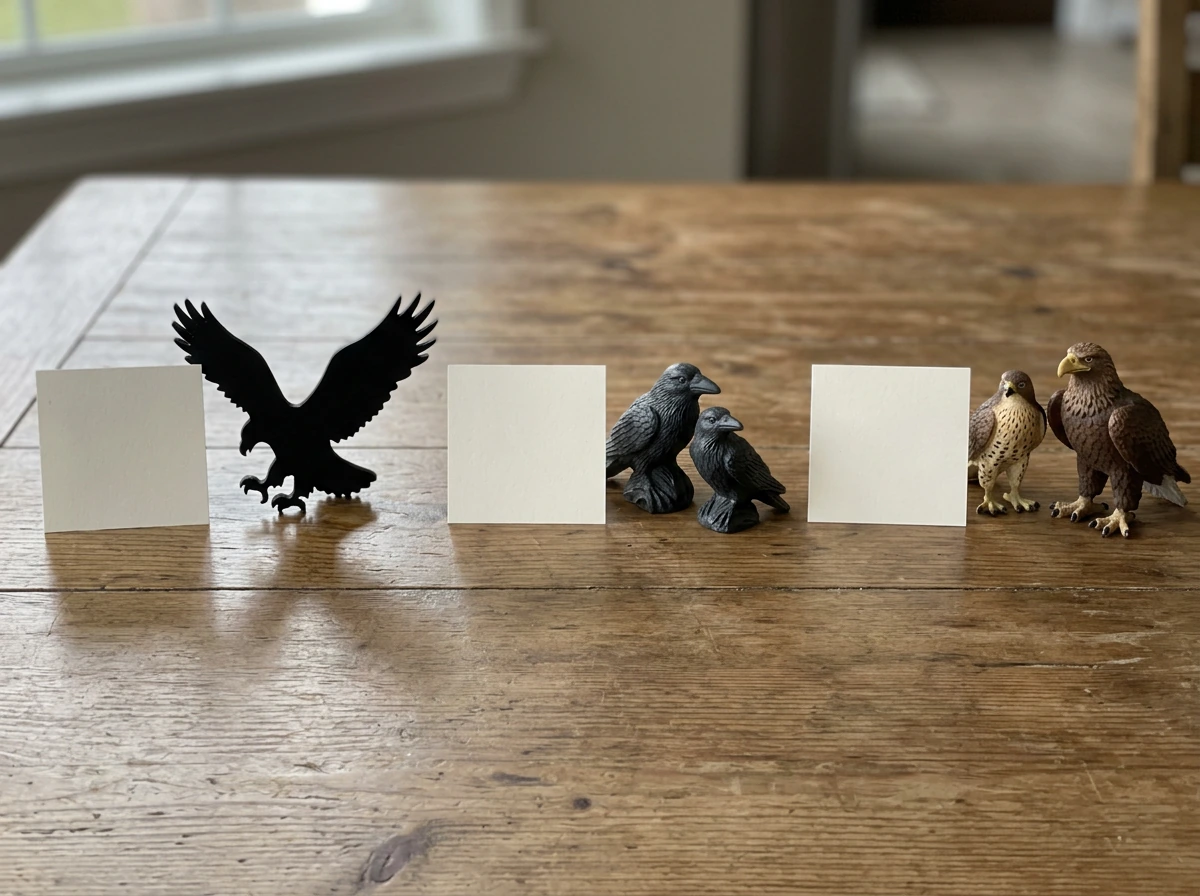
| Bird/Figure | Type | Source Quality | Where it appears | Core Symbolism |
|---|---|---|---|---|
| Hræsvelgr | Eagle-giant | Primary Edda source (Gylfaginning, Vafþrúðnismál) | Norse mythology, God of War Ragnarök | Death, wind, the cold north, corpse-consumption, cosmic boundary |
| Huginn and Muninn | Ravens | Primary Edda source, but Helheim link is mostly modern | Modern Norse spirituality, God of War Ragnarök (collectibles) | Thought, memory, Odin's reach into all realms including the dead |
| Veðrfölnir | Hawk | Primary Edda source (Yggdrasil description) | Scholarly and some spiritual contexts | Cosmic observation, mediation between worlds, messages |
| Generic symbolic bird | Varies (raven, crow, owl, eagle) | Modern art, oracle, spiritual practice | Artwork, decks, blogs, modern Norse practice | Soul, transition, afterlife messages, transformation |
If you are trying to identify which bird applies to your situation: Hræsvelgr is the most likely answer if you are discussing Norse mythology directly or playing God of War Ragnarök. Ravens (Huginn and Muninn) are the most likely answer if you are in a contemporary spiritual or popular mythology context. A symbolic bird is the most likely answer if you are interpreting a piece of artwork, a dream, or a spiritual experience.
How to interpret bird imagery tied to Helheim
When you encounter a bird in Helheim-themed imagery, the first thing to do is establish what the image is asking of you. Is it informational (explaining Norse mythology), narrative (telling a story in a game or novel), or symbolic (inviting spiritual reflection)? Each frame calls for a different reading.
In an informational or mythological frame, look for which specific bird is named. If the source cites the Eddas and mentions a giant eagle at the edges of the cosmos, that is Hræsvelgr. If it mentions ravens as messengers between worlds, that is Huginn and Muninn territory, though verify whether the source is citing a primary Edda passage or offering a modern interpretation, because those carry different levels of authority.
In a narrative or game frame, accept that the creators may have remixed mythology for storytelling purposes. God of War Ragnarök places Hræsvelgr inside Helheim and gives the player ravens to collect there. Both are deliberate creative choices, not errors. The game draws on authentic Norse sources and then adapts them for dramatic effect. If you come across a colossal bird shrine where rock encases, it is probably drawing on the same underworld bird symbolism found in Norse stories.
In a symbolic or spiritual frame, the bird's species matters less than what it is doing. An eagle suggests power, sovereignty, and seeing across vast distances. A raven suggests intelligence, mystery, and messages from other realms. A hawk suggests precision, vigilance, and swift transition. Ask what the bird is doing in the image: is it perched (watching, waiting), flying (transitioning, carrying a message), or consuming (transformation through death)? That action is often more informative than the species alone.
Bird symbolism across cultures: the underworld bird as a universal archetype
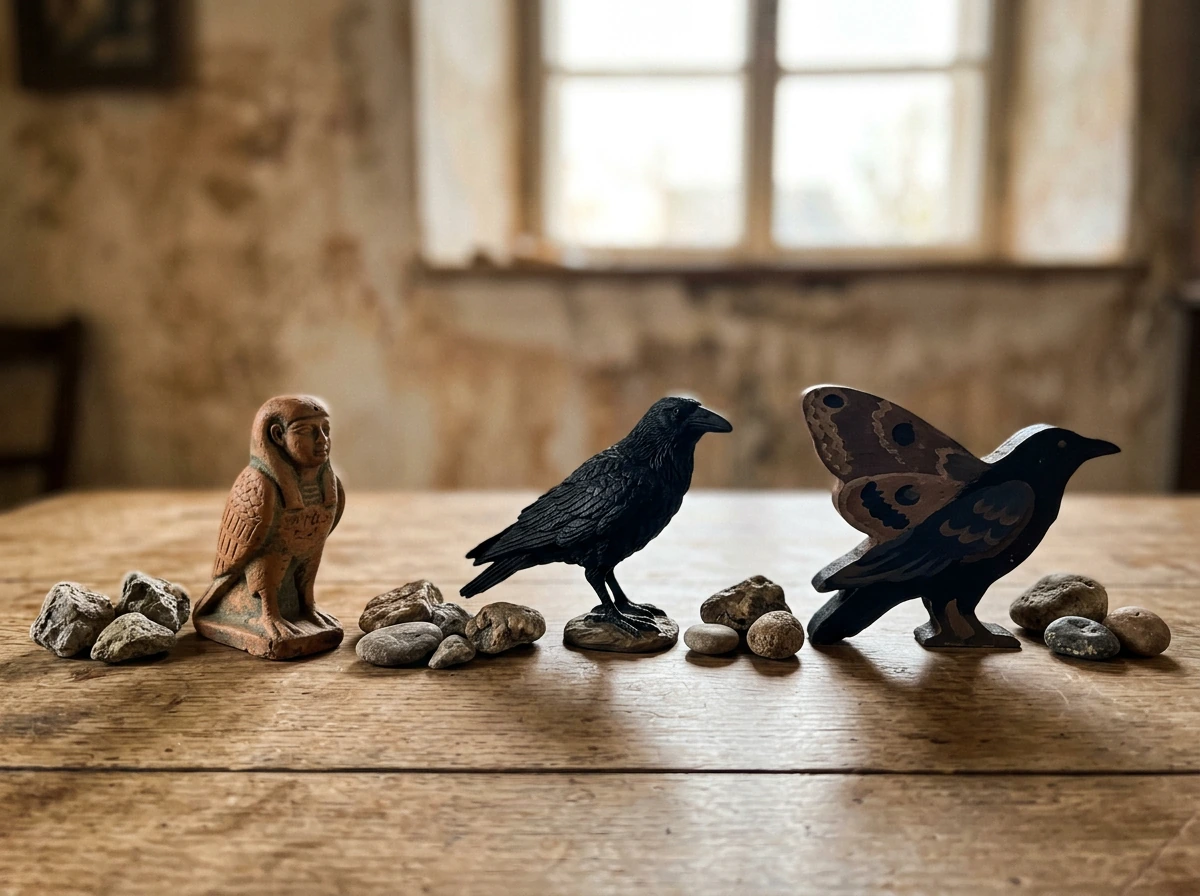
The idea of a bird connected to the underworld or the realm of the dead is not unique to Norse mythology. It appears across nearly every major spiritual and mythological tradition, which is part of why Helheim's bird imagery resonates so widely even outside a specifically Norse context. the good lord bird ott india</a> You can also compare this “underworld bird” idea to the themes discussed in <a data-article-id="04DA2205-3671-481D-B5FB-4E999C91C432">the good lord bird as a related adjacent interpretation.
- In ancient Egyptian belief, the ba soul was depicted as a human-headed bird that could travel between the world of the living and the world of the dead, acting as a mediator between realms in much the same way Norse birds do near Hel's domain.
- In Celtic tradition, ravens and crows were strongly associated with the Morrigan, a goddess of death and battle who could take bird form and was believed to appear at the moment of death as a messenger and guide.
- In Native American traditions across multiple nations, eagles are regarded as messengers to the spirit world, carrying prayers and souls upward. Owls frequently appear as omens or messengers from the dead.
- In biblical tradition, ravens appear as survivalists and messengers (fed by God in 1 Kings 17, sent out from the ark in Genesis 8), while eagles are symbols of divine power and renewal. The association of dark birds with liminal and death-adjacent spaces runs through prophetic literature.
- In Aztec cosmology, the underworld Mictlan was connected to owls and bats as messengers of Mictlantecuhtli, the lord of the dead, emphasizing how birds and flying creatures serve as boundary-crossers between life and death across cultures.
This cross-cultural consistency is why encountering a bird in Helheim imagery tends to feel spiritually significant even to people who have no specific knowledge of Norse mythology. The archetype of the underworld bird, the creature that crosses between death and life and carries messages in both directions, is one of the most deeply embedded symbols in human spiritual history.
Your next steps: narrow it down and find your meaning
Step 1: Identify your source
Before you interpret anything, figure out exactly where the image, quote, or reference came from. Is it a passage from a translation of the Prose Edda or Poetic Edda? A scene from God of War Ragnarök? A piece of artwork, an oracle deck, or a blog post? Knowing the source tells you immediately which framework to use. Primary Edda texts point toward Hræsvelgr or Huginn and Muninn. Game content almost certainly means Hræsvelgr or Odin's ravens as gameplay objects. Art or spiritual content opens up the symbolic frame.
Step 2: Look at what the bird is doing
Once you know your source, look closely at the bird's behavior or role. In the Eddas, Hræsvelgr sits at the north end of heaven and generates wind with his wings. If your image is specifically about the good lord bird ott India, use this same process to identify which underworld bird idea it is borrowing and why. That is an active, powerful, elemental role. Huginn and Muninn fly and return with information. The hawk Veðrfölnir watches from a fixed position. Each action carries a different meaning, and the action in your source image or text is your best clue to which interpretation fits.
Step 3: Journal on what the bird means to you
If you came to this question because a bird appeared in a dream, a meditation, or a repeated real-world encounter that felt connected to grief, loss, or a question about what comes after death, then the mythology is context, not the destination. Take time to journal with these prompts: What was the bird doing when you noticed it? What emotion did it bring up? Did it feel like a warning, a comfort, or a message? Who in your life, living or dead, does the bird make you think of? What threshold or transition are you currently standing at? These questions move the inquiry from mythology into personal meaning, which is where bird symbolism actually lives for most people.
Step 4: Use a short reflective practice
If you want to sit with the image or encounter more intentionally, try this: find a quiet place, bring the bird image to mind (or look at it if you have a physical version), and simply ask, in whatever way feels right to you, whether through prayer, meditation, or quiet inner listening: what are you carrying, and what are you releasing? The underworld bird in nearly every tradition is a creature of threshold, of the space between what was and what comes next. Sitting with that question, rather than rushing to pin down a single factual answer, is often how the most useful personal meaning emerges.
Step 5: Decide whether the literal or symbolic reading serves you better
There is no rule that says you have to choose one interpretation and stick with it. Hræsvelgr is a real figure from the Norse Eddas and also a powerful symbolic image of death, cold, and the consuming nature of time. Odin's ravens are documented mythological figures and also archetypes for how intelligence and memory travel beyond the boundaries of ordinary life. You can hold both levels at once. The practical question to ask yourself is: what do I need from this image right now? If you need historical accuracy, go back to the primary Edda sources. If you need personal guidance, let the symbolism lead.
FAQ
Is there one exact “bird in Helheim” mentioned in the original Norse texts?
In the original Eddic and Prose Edda material, “Helheim” is not treated like a single, universally defined location where one named bird lives. “Bird in Helheim” is usually a modern label layered onto older ideas about Hel, Niflheim, and death-related boundary creatures, so the safest approach is to identify the bird and the source frame (Edda text, game, or symbolism) rather than assuming one canonical creature.
How can I tell whether the reference means Hræsvelgr or Odin’s ravens?
If the reference explicitly mentions a giant eagle whose wings create wind, that points strongly to Hræsvelgr. If instead the reference focuses on ravens that report information back to Odin, then it is more consistent with Huginn and Muninn. When you see Helheim used as a setting keyword, cross-check whether the creature’s described action matches wing-generating wind, information delivery, or fixed watching.
Does God of War Ragnarök’s “bird in Helheim” count as an accurate Norse reference?
In God of War Ragnarök, creators adapt myth for gameplay, so a bird tied to Helheim in that game is best treated as “the game’s mapping” of Norse figures and mechanics. If you want historical alignment, verify whether the same bird and role appear in an Edda passage. If you want narrative meaning, accept the game’s Helheim placement as intentional storytelling, not a strict ancient geography claim.
What clues in the image (action or posture) help me identify the bird faster?
Look at behavior and positioning. An eagle that generates wind with wing-stretching suggests Hræsvelgr’s elemental role. Ravens that fly in and out and return with information suggest Huginn and Muninn’s messenger function. A hawk or bird that is perched as an observer on or near Yggdrasil aligns with the Veðrfölnir style of symbolism, which is more “watching cosmic order” than “living inside an underworld zone.”
What should I do if the bird is in tarot or modern spiritual imagery and no creature name is given?
If your source is a tarot, oracle, blog, or spiritual post, it may be using “underworld bird” as an archetype rather than a named figure. In that case, identification should shift from “which mythic bird” to “what transition theme is being invoked” (messages from the dead, grief processing, threshold/liminal change). Species can guide the tone, but role and message typically matter more than a one-to-one myth mapping.
Why do people sometimes say “Hel” and other times “Helheim,” and does that change the bird identification?
A common mix-up is treating “Hel” and “Helheim” as if they function identically in every context. Older texts more often use Hel for the realm, while Helheim shows up more in later and modern naming. So if your quote swaps terms loosely, prioritize what the text is describing (ruler, realm characteristics, north/cold associations, boundary behavior) instead of chasing a single label as if it is standardized across all sources.
If the bird in the image feels “death-themed,” does that automatically mean it is Hræsvelgr?
If the bird is described as consuming or corpse-related, that thematic angle supports Hræsvelgr’s death-associated naming and cold-north symbolism, even if Helheim is only implied. Still, avoid overconfident leaps: some artworks borrow “death bird” energy without intending the specific Hræsvelgr identity, so match the story details to the creature’s typical role rather than relying on vibes alone.
How do I avoid repeating a fandom shorthand that may not come from a real Edda passage?
If you found the phrase via fandom, memes, or short-form clips, it may be shorthand rather than quotation from a named translation. A practical check is to ask whether the source names Huginn and Muninn, mentions Yggdrasil, or describes wind generated by eagle wings. If none of that is present, the reference is likely symbolic usage, and your identification should reflect that uncertainty.
If “the bird in Helheim” came up in a dream, how should I interpret it without forcing a mythic ID?
If the bird appears in a dream, use the action as your “meaning anchor,” not the location label. Ask what was happening when you noticed the bird (flying, landing, calling, staring), what emotion surfaced, and whether you are in a transition period related to grief, letting go, or a change in identity. This turns the encounter into a personal interpretation without needing a perfect mythic one-to-one match.