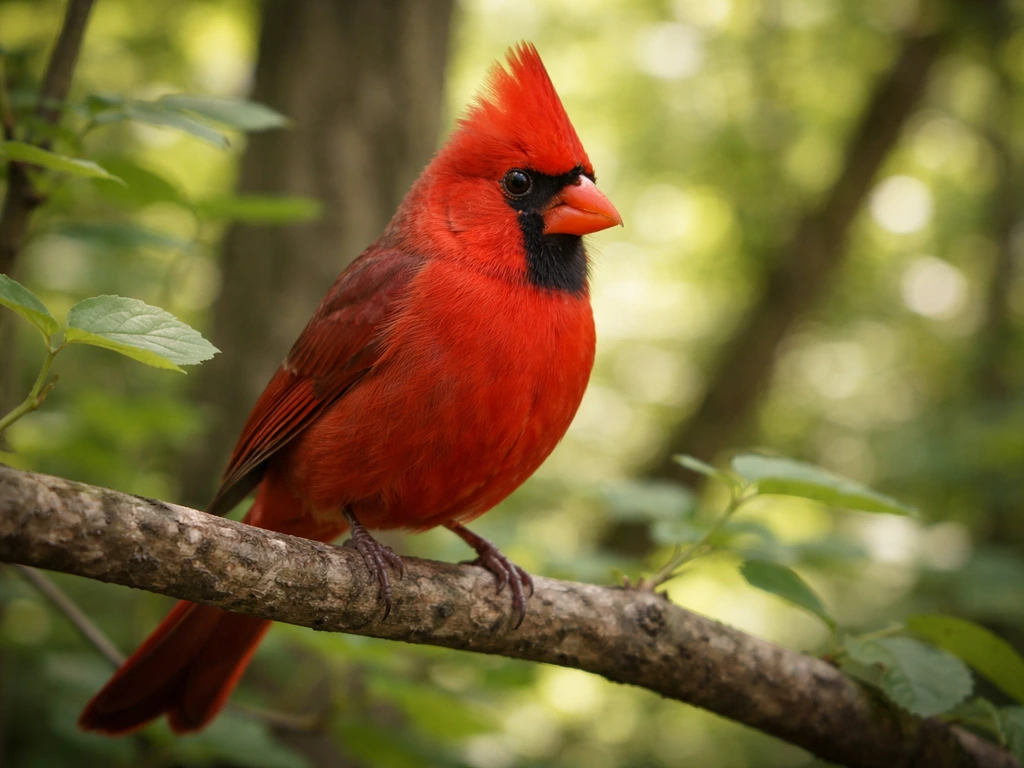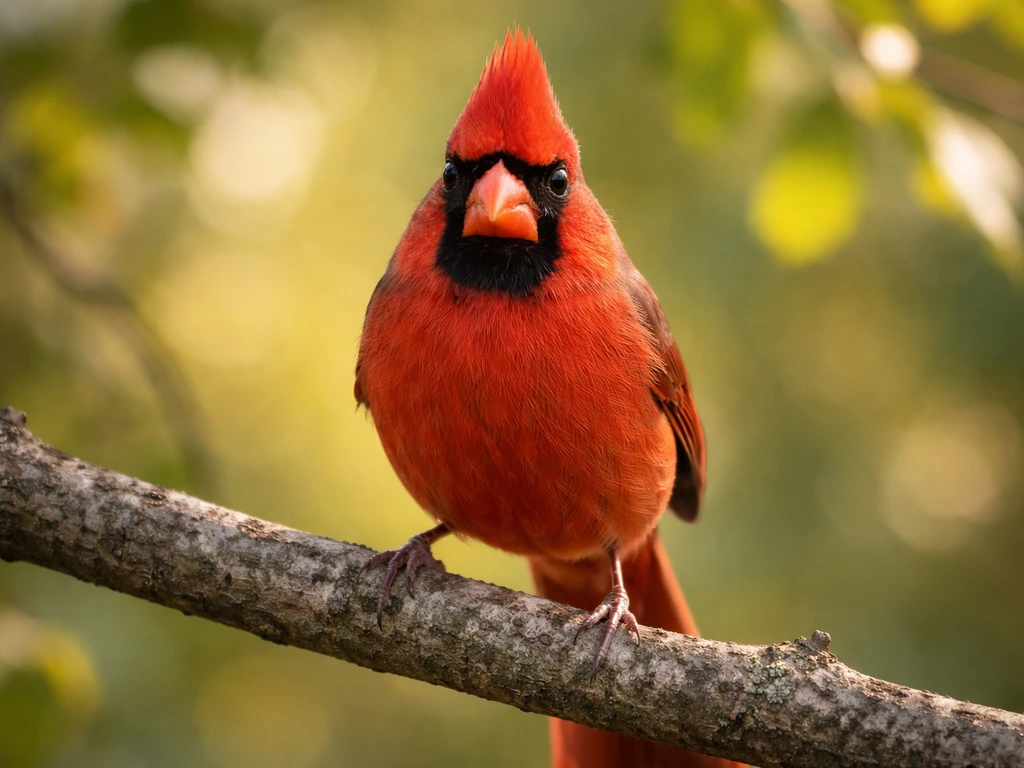
Yes, it is entirely reasonable to treat a cardinal sighting as a meaningful spiritual moment, and many people across cultures and faith traditions have done exactly that for centuries. Whether you call it a sign from heaven, a visitation, or simply a moment of grace, the cardinal carries a weight of symbolic meaning that spans Christian Scripture, Native American tradition, Celtic folk belief, and modern spiritual practice. That said, treating it as meaningful does not require you to abandon your critical thinking. The most grounded approach holds both things at once: this bird may carry real significance for you, and you can still ask honest questions about what you are actually experiencing.
Is a Cardinal Bird a Sign From Heaven? Meaning and Steps

Eleanor Hartwell
27 Apr 2026
What people usually mean by "a sign from heaven"
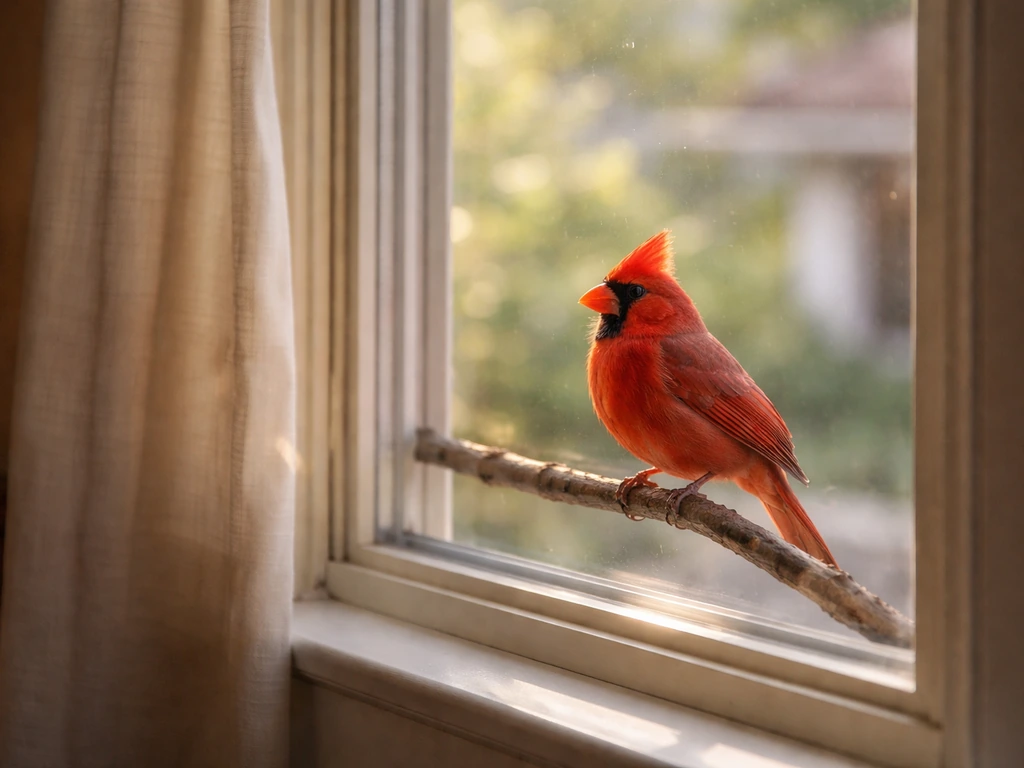
When someone searches this question, they are rarely asking for an ornithology lesson. They just saw a brilliant red bird at an unexpected moment, maybe right after a loved one died, or during a period of grief, decision, or longing, and something in them said: that felt like more than a bird. A "sign from heaven" in this sense typically means one of four things: a message of comfort (you are not alone), a message of reassurance (you are on the right path), a sense of connection with someone who has passed, or a prompt to pay attention to something you have been avoiding. None of these interpretations requires you to believe the bird was sent by a supernatural courier. They do require you to take your own interior experience seriously.
Christian discernment traditions, particularly the Ignatian framework developed by Ignatius of Loyola, actually offer a useful vocabulary here. Ignatius described interior movements as either "consolation" (peace, hope, warmth, a sense of drawing closer to what is good) or "desolation" (anxiety, heaviness, confusion, withdrawal). If your cardinal encounter left you feeling strangely comforted or quietly hopeful, that interior movement of consolation is worth paying attention to, regardless of whether the bird itself was a divine messenger. If it left you anxious, fearful, or obsessed, that is a signal to pause rather than interpret.
What cardinals actually symbolize
The cardinal carries some of the richest symbolic layering of any North American bird. Its most commonly cited meanings in folk and spiritual tradition include good luck, romance and love (the male's courtship song is one of the more distinctive in the bird world), encouragement during difficult times, and the sense that a departed loved one is nearby. The bird's vivid red color has led many Christian-influenced folk traditions to connect it with Christ's blood, vitality, and spiritual fire. Country Living and WorldBirds both document these associations as widespread cultural folklore, worth knowing even if they are not rooted in Scripture.
The romance symbolism is not arbitrary. Northern cardinals are one of the few songbird species where both the male and the female sing, and they actually perform duets during nesting season. The American Bird Conservancy notes that a female's song helps coordinate the pair's behavior during breeding. If you spot a cardinal pair near your home in spring or early summer, that behavior has a beautiful natural explanation that does not diminish its symbolic resonance one bit. Seeing two cardinals together has long been associated with partnership, commitment, and healthy love.
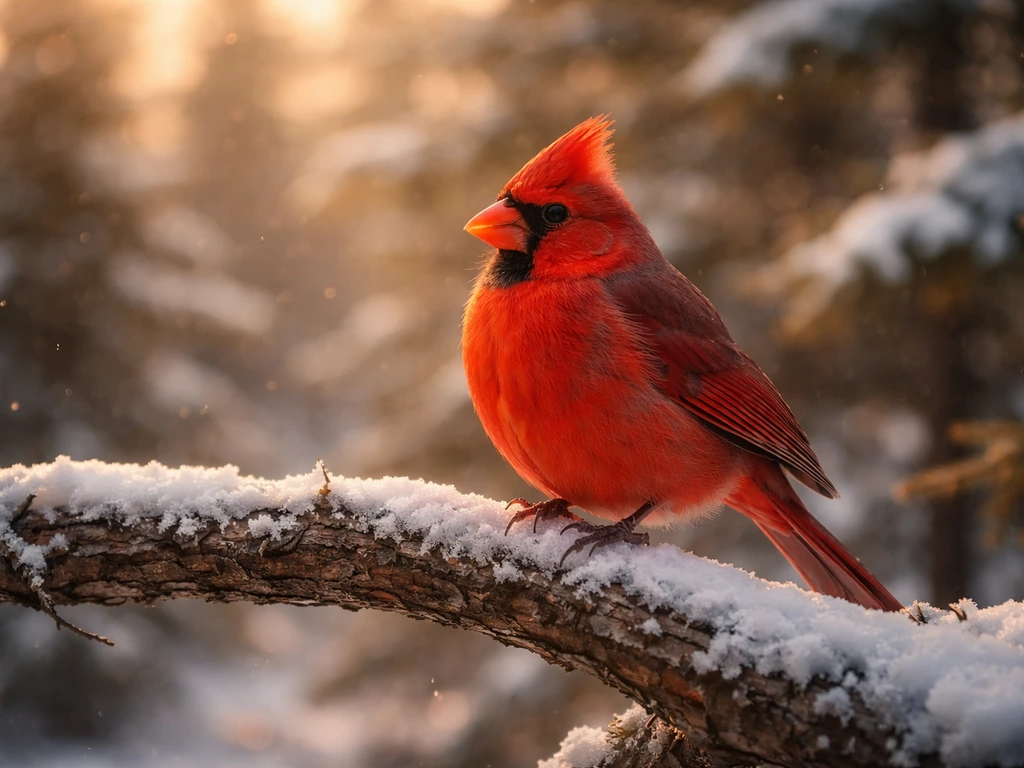
The idea that cardinals represent the spirit of a deceased loved one visiting the living is primarily a modern folk tradition rather than an ancient religious doctrine, but it has become deeply meaningful to many people, particularly after a loss. The symbolism of birds as messengers between worlds is ancient and cross-cultural, and the cardinal's startling visibility in winter (bright red against snow) has made it especially poignant for people in grief.
What the Bible actually says (and what it doesn't)

The Bible does not mention cardinals specifically, which makes sense since Northern Cardinals are native to the Americas and the biblical texts predate any European contact with the New World. In the Bible, cardinals are not named, but Scripture still offers guidance on why birds can feel spiritually meaningful why is the cardinal a christmas bird. But the Bible has a great deal to say about birds in general, and the pattern is consistent: birds are used by Jesus to illustrate God's attentiveness and care for all created things. To understand cardinal bird meaning in the bible, it helps to look at how Scripture talks about God’s attention to birds in general. Luke 12:6 is the most direct: "Are not five sparrows sold for two pennies? Yet not one of them is forgotten before God." The point Jesus is making is not that sparrows deliver messages. The point is that if God notices something as small and common as a sparrow, God surely notices you. Matthew 6:26 makes the same move: birds of the air neither sow nor reap, yet your heavenly Father feeds them.
GotQuestions.org, a widely referenced evangelical resource, makes an interesting theological point here: calling something a "coincidence" may actually understate what God's providence is doing. Their counsel is not to dismiss meaningful moments, but to bring any sense of divine prompting back to Scripture and to test it against the standard of 1 Corinthians 14:33, that God is not the author of confusion. In practical terms, this means a biblical approach to your cardinal encounter asks: does this sense of meaning bring me toward peace, faith, and clarity, or toward anxiety, obsession, and fear? The former is consistent with how Scripture describes the Spirit's work. The latter is a sign to slow down.
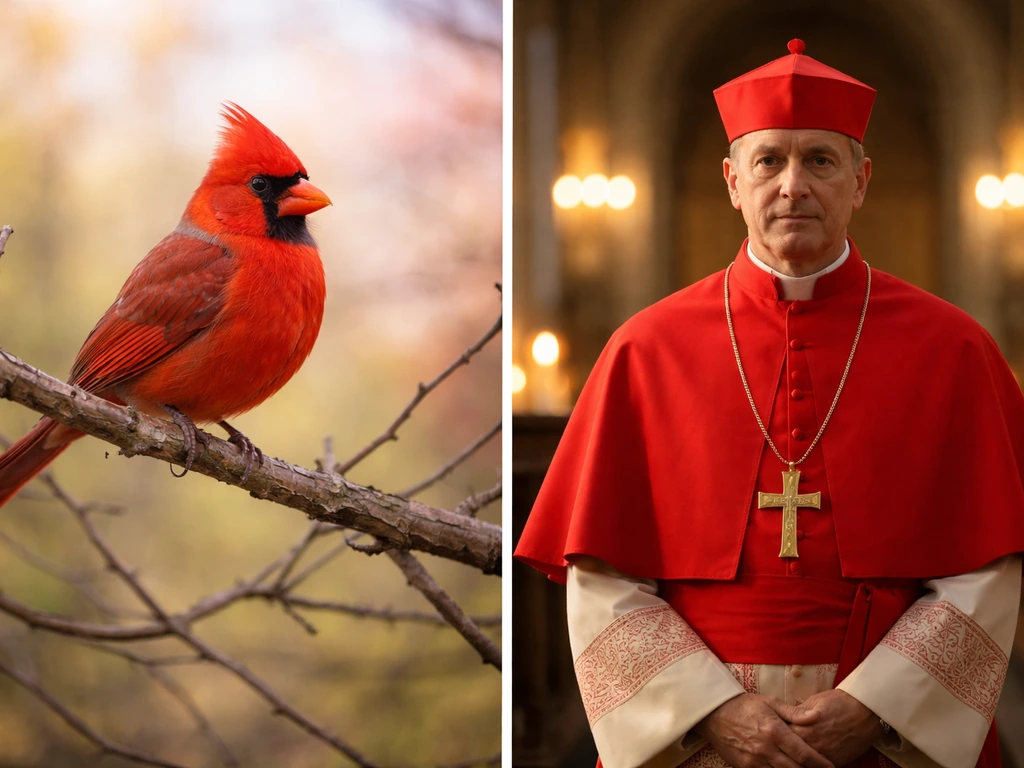
The cardinal's red color does have a cultural connection to Christian imagery. Folk traditions in Advent and Christmas seasons have long associated red birds with the blood of Christ and the fire of the Holy Spirit, and the bird's name itself reflects this: the word "cardinal" comes from the Latin "cardo" (hinge) and was applied first to Roman Catholic cardinal clergy, whose robes are a vivid scarlet. The bird was named after the clergy, not the other way around. When you explore “which came first” questions about cardinal birds and clergy, it helps to separate natural bird behavior from human traditions and timelines which came first cardinal bird or priest. So the color association is real, even if the theological lineage is indirect.
How other cultures read the cardinal
The practice of reading bird appearances as omens is ancient and cross-cultural. Ornithomancy, the formal term for interpreting bird behavior as signs, was practiced in Greek, Roman, Celtic, and many indigenous cultures. Cardinals fit into this framework in varied and sometimes contradictory ways, which is important to know before you settle on a single interpretation.
- Native American traditions: Native-Languages.org reports that in many southeastern tribes, cardinals (often called "redbirds") are considered good omens and symbols of good luck. However, interpretations are not uniform. A Cherokee Nation document notes that in some Cherokee traditional beliefs, a cardinal visiting a home can be read as a sign of death, a reminder that meaning shifts dramatically by cultural context and you should not assume one tradition speaks for all.
- Celtic and European folk tradition: The color red has long been associated in Celtic symbolism with otherworldly power, passion, and the threshold between worlds. Red birds specifically appear in Irish and British folklore as creatures that bridge the living and the dead, which feeds into the modern "loved one visiting" interpretation.
- General folk symbolism: Across North America, the cardinal has accumulated rich associations with good fortune, love, and spiritual encouragement, traditions that Country Living and WorldBirds document as widely shared, if not ancient in origin.
The key takeaway from comparing traditions is that no single interpretation is universal. Your cultural and spiritual background will shape what resonates most, and that is not a weakness in the framework. It is how symbolic meaning actually works.
How to read your specific encounter
The details of your sighting matter more than a generic answer. Here is how to think through them concretely.
Timing and season

Cardinals are year-round residents across much of North America, but they are especially visible in winter when their red plumage stands out against bare branches and snow, and in spring when males sing aggressively to establish territory. Northern Woodlands notes that as days lengthen, cardinal singing and territorial activity increases sharply. A cardinal singing loudly at your window in February may be doing so primarily because it sees its own reflection and is defending territory, not delivering a celestial message. A cardinal appearing quietly on the day of a funeral, or on a loved one's birthday, carries different interpretive weight because the timing is so personally specific.
Where the bird appears and what it does
Cardinals have expanded their range significantly into suburban areas due to birdfeeders and backyard habitat. Cornell Lab of Ornithology and the American Bird Conservancy both document this suburban expansion clearly. A cardinal at your feeder is common. A cardinal that lands on the windowsill of a hospital room, or sits on a gravestone, or appears at an unusual location with no obvious reason to be there, is the kind of specific, unexpected appearance that people across cultures have historically treated as meaningful. Repeated, unexpected appearances in unusual contexts carry more weight than regular feeder visits.
Your emotional state and life situation
This is the most important factor and the one most people overlook. What were you thinking about when the bird appeared? What question were you sitting with? What emotional need was most present for you in that moment? The Ignatian discernment model asks you to notice interior movements, and this applies here. If you were in grief and the bird brought sudden, unexpected peace, that interior shift is real data. If you were anxious and looking for a sign to confirm a rash decision, the bird may be less a confirmation and more a prompt to pause and seek community counsel, something PracticingOurFaith.org emphasizes as part of faithful discernment.
| Encounter Detail | More Likely Natural | More Worth Reflecting On |
|---|---|---|
| Location | Backyard feeder, known bird territory | Hospital room, graveside, unfamiliar place |
| Timing | Spring or winter (peak activity seasons) | Significant date: anniversary, funeral, crisis moment |
| Behavior | Singing repeatedly, defending territory vs. window | Landing nearby, lingering calmly, unusually close |
| Frequency | Daily feeder visits | Single, unexpected appearance in unusual context |
| Your interior state | Neutral, just going about the day | Deep grief, major decision, intense longing or prayer |
What to do with it: journaling, prayer, and grounded action

The most useful thing you can do right now is write down the encounter while the details are fresh. Record exactly what you saw, where, and when. Then write a sentence or two about what you were thinking or feeling in the moments before the bird appeared. Then write what the encounter made you feel. Do not try to interpret it yet. Just document it. This practice, common in both spiritual direction and reflective psychology, gives you something concrete to return to rather than a vague feeling that fades.
If prayer or meditation is part of your practice, bring the encounter there without demanding an answer. Faithward.org describes spiritual discernment as listening for stirrings rather than decoding messages, which is a healthier frame. Sit with the feeling the cardinal brought. Ask what it might be calling your attention to. Ask whether there is something you need to release, revisit, or receive. Let the answers come over days, not minutes.
Then take one grounded action that aligns with the meaning you sensed. If the cardinal felt like a message of encouragement about a relationship, reach out to that person today. If it felt like comfort in grief, allow yourself to grieve more openly rather than pushing through. If it felt like a prompt about a decision you have been avoiding, schedule the conversation or make the appointment. The point is not to wait for more signs. It is to let the experience move you toward something real.
- Write down the encounter in detail today, including time, place, behavior of the bird, and your emotional state.
- Identify the one theme or question most alive in your life right now, and hold it alongside what the encounter felt like.
- If you pray or meditate, bring the experience into that practice without forcing an interpretation.
- Notice whether the overall feeling is one of peace/consolation or anxiety/desolation, and trust that distinction as meaningful data.
- Take one concrete, grounded action that reflects the meaning you sensed, rather than waiting for another sign to confirm it.
How to stay grounded and avoid common misreadings
The most common misreading is treating a cardinal encounter as a directive rather than an invitation. A sign from heaven, in virtually every serious religious and cultural tradition, is meant to orient you, not to give you a binding command. If you find yourself saying "the cardinal told me to quit my job" or "the cardinal confirmed I should end that relationship," you have moved from symbolic reflection into magical thinking. Signs invite. They do not instruct.
A second common misreading is over-indexing on frequency. Because cardinals are genuinely abundant in suburban North America, and because backyard feeders make sightings predictable, seeing a cardinal every day at your feeder is not a chain of 365 divine messages. The abundance of cardinals in suburban North America also makes frequent sightings unsurprising, which can help keep your interpretations grounded in natural causes Because cardinals are genuinely abundant in suburban North America. It is a well-fed bird with a good habitat. Reserve interpretive weight for the encounters that are genuinely unexpected, and resist the urge to find meaning in every common sighting.
A third misreading, and perhaps the most important one to name clearly, is letting cultural traditions speak past your own context. The Cherokee example is instructive here. In some traditional Cherokee belief, a cardinal near the home is not a comfort but a warning of death. If you are reading broadly about cardinal symbolism and you encounter that interpretation, it can produce unnecessary dread. Meaning is context-dependent. Your tradition, your relationship to the encounter, and your interior state together shape what the symbol means for you, not a single universal rulebook.
Finally, be honest about your emotional state when you encountered the bird. People in acute grief, high stress, or major life transitions are naturally more alert to meaningful patterns, which is a healthy human response, not a pathology. But it does mean that the same bird might feel like a divine sign on the worst day of your year and go entirely unnoticed on an ordinary Tuesday. That variability is not proof the encounter was meaningless. It is proof that meaning requires a receptive person, not just a red bird.
The cardinal's symbolism runs deep, touching everything from its name (rooted in the Latin for hinge, a threshold point) to its biblical adjacency (God's care for birds is a recurring scriptural theme) to its cross-cultural life as a "redbird" omen across Native American and Celtic traditions. Whether you are drawn to its meaning in a Christian context, a broader spiritual framework, or simply as a moment of beauty that arrived when you needed it, the cardinal is one of the most layered symbols in the bird world. The question is not really whether it is a sign from heaven. The question is what you are being invited to notice.
FAQ
Do I have to believe it is supernatural for it to count as a “sign from heaven”?
Yes, you can approach it as meaningful without treating it as a supernatural message. A practical way to do this is to evaluate the encounter based on results in your life, for example does it lead you toward steadier prayer, more compassion, and clearer next steps, or toward fear, secrecy, and compulsive checking for more “proof”?
How can I tell whether my cardinal sighting brought reassurance versus just anxiety?
Look for emotional movement, not details alone. If the strongest feeling you take away is peace and renewed courage, that often functions like “guidance,” if the strongest feeling is dread, urgency, or obsession, treat it as a signal to slow down and seek support before acting on any interpretation.
What should I do if I feel like the cardinal is telling me to make a major decision?
Commonly, people over-attribute direction. If you catch yourself making a concrete command (quit, move, confess, break up) ask a grounding question first: “What is the smallest faithful action I can take that doesn’t remove my freedom or safety?” For weighty decisions, pause and involve a trusted person, since spiritual meaning should not replace practical discernment.
How can I keep the interpretation biblical if the Bible does not mention cardinals?
If you want to connect it to Scripture, consider framing it the way Jesus talks about God’s attentiveness to created things, as an invitation to trust rather than a claim about the bird’s hidden instructions. In other words, you can treat it as a prompt to pray and reorient, without concluding the bird delivered a secret message.
Does cardinal behavior like singing or visiting a window mean anything beyond territory?
Avoid trying to “decode” the bird’s actions too literally. For example, seeing it sing near your window can often be territorial behavior or a response to your reflection, so use behavior as context for what you were feeling, not as a guaranteed coded signal.
If I see cardinals every day, do I need to interpret each sighting as a sign?
Frequency is a trap when you are seeking certainty. A helpful rule is to assign meaning only to encounters that feel genuinely unexpected for you (timing feels personal, location feels unusual, or your interior state shifts). Regular feeder visits usually deserve appreciation, not interpretation.
What if I read a cultural interpretation that makes me feel scared?
Take cultural claims seriously but don’t let them hijack your emotional safety. If you read an interpretation that triggers dread, you can consciously re-center on your own context and values, and choose a response that is life-giving, like prayer, journaling, or talking with a supportive person, instead of spiraling.
How do I write down a sighting in a way that helps, not just creates more guessing?
Journaling can be more useful when you separate observation from meaning. Write what happened factually (time, weather, location, number of birds) and separately write your thoughts and feelings before and after. Revisit the entry later to see whether the “meaning” holds up to your calm perspective.
How do I know if my “sign reading” is becoming unhealthy?
A sign-based practice can become unhealthy if it replaces decision-making or isolates you. If you notice compulsive checking, fear of consequences, or needing new signs to do basic tasks, shift to a bounded ritual (short prayer or reflection, then one grounded action) and bring in trusted support.
What is a good next step if I feel comforted or prompted, but I’m still unsure what it means?
Yes, and it is a great next step. After you reflect, choose one action aligned with the direction you felt, then set a time limit for waiting on additional confirmation (for example, “I will revisit this in a week”). This keeps meaning from turning into endless looking for omens.