
If you are looking for the bird most widely associated with angels, the dove is your clearest answer. If you are wondering what bird symbolizes someone from heaven, this dove-messenger tradition is a common place to start. Across Christian art, scripture, and centuries of visual tradition, the dove carries angelic and divine-messenger energy more consistently than any other bird. That said, other birds, including the white heron, the swan, the owl in certain traditions, and even the cardinal, show up in personal and cultural contexts as angelic symbols. The right answer for you depends on your tradition, the specific encounter you had, and what the bird was actually doing.
What Bird Represents an Angel: Meanings and How to Identify It

Eleanor Hartwell
4 Jun 2026
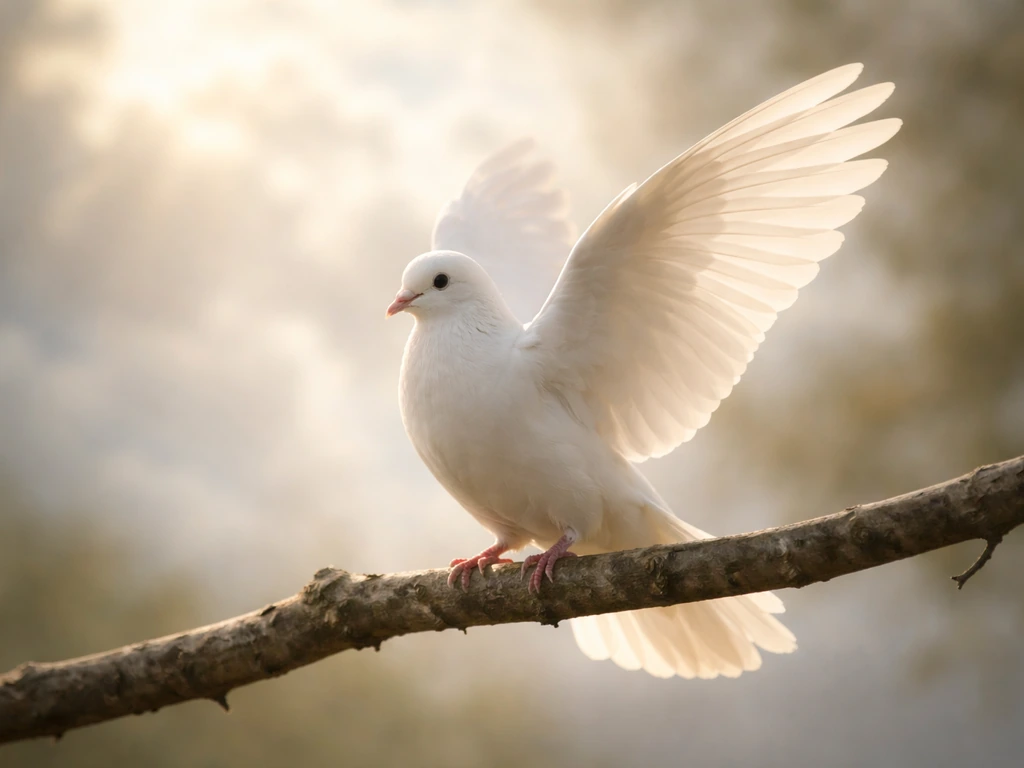
The most common angel bird associations at a glance
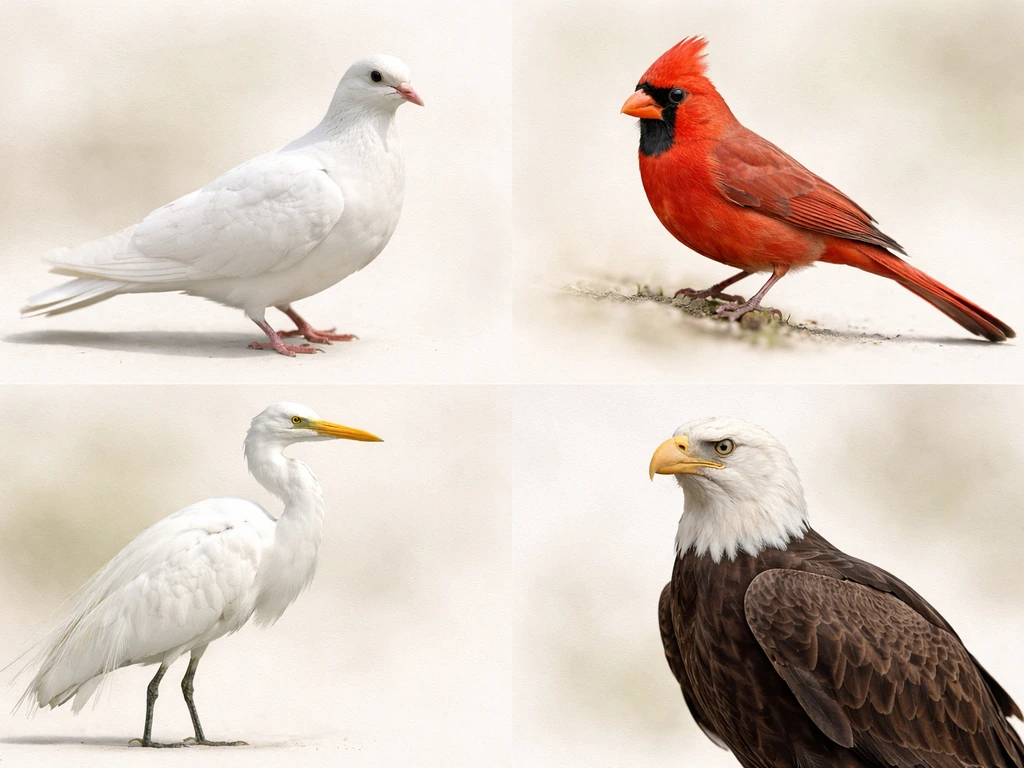
Most people asking this question come from a broadly Christian or Western spiritual context, and in that framework the dove dominates. But even within Christianity, angel-bird associations are layered: sometimes the dove represents the Holy Spirit descending as a messenger, sometimes it represents the soul of the departed carried to heaven, and sometimes the faithful themselves are depicted as doves. Add in cross-cultural perspectives and the list expands considerably. Here is a quick map of the most-cited pairings:
| Bird | Primary Angelic Association | Tradition |
|---|---|---|
| Dove (white) | Holy Spirit, divine messenger, angelic purity | Christian, broadly Western |
| White heron / egret | Heavenly visitor, soul in transit | Various folk traditions, Native American |
| Swan | Angelic grace, soul carrier, threshold guardian | Celtic, Norse, European folk |
| Cardinal (red) | Message from a loved one in heaven, guardian presence | Modern Christian folk belief |
| Crane | Longevity, heavenly messenger, sacred intermediary | East Asian, Celtic |
| Eagle | Divine power, messenger of the creator | Native American, biblical imagery |
| White owl | Soul guide, angelic protection in darkness | Some Indigenous and European traditions |
Why birds and angels go together across so many traditions
The connection is not arbitrary. Birds share the most visible physical feature we have ever assigned to angels: wings. Flight is the oldest available metaphor for transcendence, for moving between the earthly and the divine. When ancient artists needed to represent a being that bridged the human and the heavenly, a winged creature was the natural vocabulary. Birds do not just symbolize angels because artists ran out of ideas. They share a symbolic logic: freedom from gravity, access to the sky, the ability to arrive without warning and leave the same way.
Add to that the role of birds as messengers. In nearly every culture that developed a symbolic vocabulary around birds, the idea that a bird carries communication, between the living and the dead, between the human and the divine, appears with remarkable consistency. The dove returning to Noah with an olive branch was already performing that messenger role before Christian theology formalized it. By the time Matthew 3:16 described the Spirit descending like a dove at the baptism of Jesus, the bird-as-divine-messenger association was already ancient. Christian art simply adopted and deepened it, and it has been reinforced by painting, sculpture, and stained glass ever since.
There is also a purity dimension. White birds in particular carry a cross-cultural association with holiness, cleanness, and spiritual elevation. The snow-white dove became the preeminent form of the Holy Spirit in Christian iconography specifically because whiteness read as purity to the traditions that built that visual language. That same logic applies to white herons, white swans, and white cranes in traditions from Celtic Europe to Japan.
The specific birds people most often call angelic, and what each one actually means
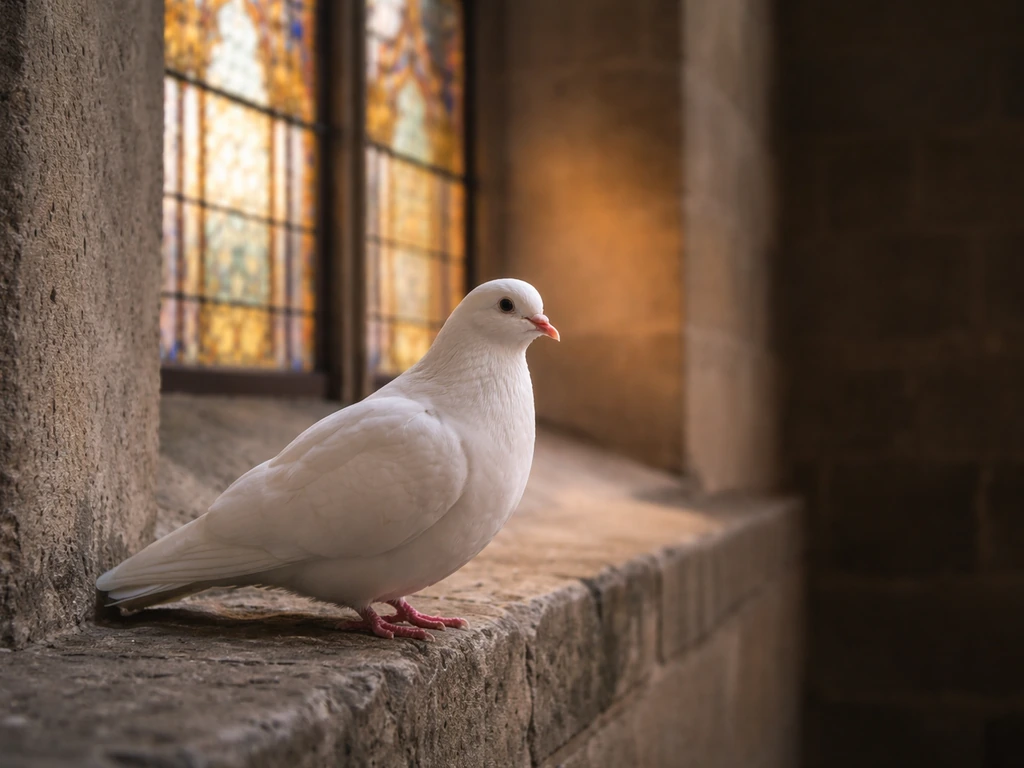
The dove: the anchor of the conversation
No bird comes close to the dove's depth of angelic association within Christian tradition. The Catholic Encyclopedia's entry on bird symbolism in early Christian art describes apostles and the faithful being represented as doves, with the apostles specifically understood as instruments of the Holy Ghost carrying peace into the world. In Annunciation scenes, the dove of the Holy Spirit appears alongside the angel Gabriel, essentially as a second divine representative. The dove does not just mean peace here. It means divine presence, message delivered, and grace extended. When someone sees a white dove after a death or during a moment of grief, the tradition behind that experience is genuinely ancient and deeply sourced.
Cardinals: the modern popular association

The cardinal has become the dominant folk symbol for angelic visitation in contemporary American Christian culture. The popular saying, 'when a cardinal appears, an angel is near,' is not traceable to ancient scripture or formal theology, but it has real cultural weight. The red color reads as vitality, love, and the life force of someone who has passed. If your question comes from seeing a cardinal at a difficult moment, you are drawing on a living, widely shared symbolic tradition, even if it is more modern than the dove's.
White herons, cranes, and swans: the threshold birds
These three birds share a role in many traditions as creatures of the threshold, meaning they are associated with liminal spaces: dawn and dusk, the edge of water and land, the moment between life and death. In Celtic tradition, swans are often supernatural beings or souls in transformation. In East Asian traditions, particularly Japanese and Chinese symbolism, cranes are heavenly messengers and symbols of longevity and spiritual elevation. White herons appear in various Indigenous North American traditions as visitors from another realm. If you saw one of these birds at a significant moment, especially a white one near water at dawn or dusk, the angelic or heavenly messenger reading has real cultural grounding behind it.
Eagles: power and divine authority rather than gentle presence
The eagle's symbolic register is a bit different. In biblical imagery and in many Native American traditions, the eagle is a messenger of the Creator or Great Spirit, a conduit for divine power and protection. It represents the highest kind of spiritual authority. Some traditions connect eagles explicitly to angelic or guardian-spirit energy. If your encounter was with an eagle, the reading tends toward protection, strength, and divine oversight rather than the softer comfort-and-consolation feeling the dove or cardinal carries.
How to interpret your own encounter: species, color, behavior, and context

The most useful thing you can do after a meaningful bird encounter is slow down and note four things before you start assigning meaning. The species matters, but so does the color, the behavior, and the context of your own life at that moment. Here is a practical framework:
- Species: Start with what you actually saw. A dove, cardinal, heron, swan, crane, eagle, and owl all have distinct symbolic histories. Identify the bird first, and let that narrow the meaning rather than jumping to 'angel' before you know what you are working with.
- Color: White birds carry the strongest angel-and-heaven associations across almost every tradition. Red birds (cardinals, robins) lean toward love, vitality, and connection with the departed. Black birds (ravens, crows) are messengers in their own right but in a different register, one associated more with wisdom and the underworld than with angelic comfort.
- Behavior: Was the bird still and watching you, or was it flying? A bird that lands close, holds eye contact, or behaves unusually calm is far more commonly interpreted as a purposeful sign than one simply passing overhead. A bird flying directly toward you or away from you in a specific direction adds a directional dimension that many traditions read as guidance.
- Context: What was happening in your life at the moment of the encounter? The same bird means different things at a funeral, during a prayer, in the middle of a difficult decision, or immediately after thinking of someone who has died. The symbolism is most powerful when the context makes the encounter feel significant rather than random.
When you do not know the species: universal bird symbols that stand in for angels
Sometimes you see something white and graceful and it is gone before you can identify it. Or you find a feather without seeing the bird at all. Universal bird symbolism still gives you a usable framework in these situations.
A white feather found unexpectedly is one of the most widely reported signs people interpret as angelic contact across Western folk traditions. The logic connects directly to the wing imagery of angels: a feather is a piece of something that flies, something from above, something that arrived without explanation. If the feather is white and appeared in an unusual place or at a significant moment, many people in the English-speaking world would recognize the experience you are describing and point you toward the same angelic interpretation.
Beyond feathers, the direction of flight is worth noting. In many traditions, a bird flying upward or toward the east carries a positive, heavenward meaning. A bird circling overhead is often read as protection or watchfulness. A bird that appears to be leading you in a specific direction, especially one that pauses and waits for you to catch up, is a motif that appears in folklore and spiritual accounts across multiple traditions as a guide figure.
- White feather found in an unusual place: widely interpreted as a sign of angelic presence or message from a departed loved one
- Bird flying upward or toward the light: ascent, heavenward movement, soul traveling peacefully
- Bird circling overhead without fleeing: protective watchfulness, guardian presence
- Bird landing unusually close and staying calm: deliberate contact, a message being delivered rather than a casual encounter
- Nesting near your home: protection, blessing, the establishment of sacred space around your dwelling
- Bird appearing at dawn or dusk: liminal timing often strengthens the spiritual reading of an encounter
Common confusions worth clearing up
The most frequent mix-up is treating 'dove as peace' and 'dove as angelic messenger' as the same thing, when they actually come from slightly different symbolic streams. The dove-and-olive-branch image is rooted in the Noah story and points toward peace, reconciliation, and hope after destruction. The dove as angelic presence or Holy Spirit messenger comes from the baptism of Jesus imagery and the broader role of the dove in Annunciation scenes. Because the dove is closely tied to the Holy Spirit in Jesus scenes, it is also the bird many people associate with Jesus himself baptism of Jesus imagery. Both meanings can apply, but if you are trying to understand a personal encounter, knowing which stream you are drawing from helps you interpret the experience more precisely.
Another common confusion is conflating angelic birds with resurrection birds. The phoenix is the most obvious example: it is a powerful symbol of rebirth and transformation, but its symbolism is about the cycle of death and renewal, not about angelic messengers or guardians. For resurrection symbolism, some people also think about stories of Jesus bringing life back, and they may blend those themes with angel-bird meanings resurrection birds. Similarly, the raven is a messenger in Norse mythology and in many Indigenous traditions, but it carries a very different weight from the dove or crane. Treating any bird with wings as automatically an angel symbol flattens meaningful distinctions that make the symbolism actually useful.
One more: not every bird that appears after a death is an angelic visitor. Some encounters are meaningful and some are coincidental, and the traditions themselves would acknowledge this. The ones that tend to be interpreted as significant typically involve unusual behavior (abnormal calmness, proximity, timing), distinctive appearance (especially white or unusually colored birds), or a strong emotional resonance in the person who sees them. If the encounter felt significant to you, that feeling is itself part of the interpretive data.
Angel birds beyond Christianity: what other traditions offer
If your background points somewhere other than Christian symbolism, the bird-as-angel concept still holds, though the specific birds and their meanings shift. Here is a brief orientation by tradition:
| Tradition | Key Angel-Adjacent Bird(s) | Role |
|---|---|---|
| Ancient Egyptian | Ibis, falcon (Horus), ba-bird (human-headed bird) | Soul of the deceased, messenger of the gods, divine protection |
| Native American (various nations) | Eagle, hawk, hummingbird, owl (by nation) | Messenger of the Creator, spirit guide, ancestor's visit |
| Celtic | Swan, crane, wren, raven | Otherworld messenger, soul in transformation, threshold guardian |
| Norse/Germanic | Ravens (Huginn and Muninn), eagle, swan-maidens | Divine messengers, wisdom carriers, guardian spirits |
| Aztec/Mesoamerican | Hummingbird (Huitzilopochtli), quetzal, eagle | Divine warrior spirit, sacred intermediary, solar messenger |
| Japanese/East Asian | Crane, phoenix (Fenghuang), white heron | Heavenly messenger, longevity, divine grace |
In Ancient Egyptian belief, the ba, often depicted as a bird with a human head, was literally the soul of a person capable of leaving the body and traveling between worlds. That is about as close to an angelic intermediary as any symbolic framework gets. The ibis, associated with Thoth, served as a messenger between the human and divine. In many Native American traditions, the eagle carries prayers upward to the Creator, functioning much the way an angel does in Christian thought, without being labeled as such. The specific birds that carry this role vary by nation, but the underlying function of a sacred winged messenger is widely shared.
Celtic tradition offers a particularly rich alternative for anyone drawn to European but non-Christian frameworks. The crane and the swan both carry otherworldly associations, with swans in particular appearing in Irish mythology as beings that move between this world and the next. If you have Celtic roots or that tradition resonates with you and you encountered a swan or crane at a significant moment, the angelic reading is culturally grounded and historically deep.
If you are exploring related questions, the symbolic role of the dove in relation to the Holy Spirit, the birds most associated with Jesus specifically, or the idea of a bird as a visitor or sign from heaven each open slightly different angles on this same territory. If you are asking what bird is a sign from heaven, your best starting point is usually the dove, because it is the most consistent angelic symbol in Christian tradition. They all connect, but each one rewards its own focused attention.
Putting it together: how to find your answer today
Start with your tradition. If you are working within a Christian framework, the dove is your most theologically grounded angel bird, the cardinal is your most culturally alive one, and either can carry genuine meaning depending on your encounter. If your tradition is Indigenous, Celtic, East Asian, or Egyptian, the specific bird and its angelic role will be different, and the table above gives you entry points for each.
Then go back to the details of the encounter itself. What was the bird? What color? What was it doing? What were you going through at that moment? Those four questions, applied to the symbolic traditions relevant to you, will get you much closer to a meaningful answer than any single 'angel bird' label can. The symbolism is richest when it is specific to you, your tradition, and the actual bird in front of you.
FAQ
If I saw a bird after a funeral, does that automatically mean an angelic message?
Not automatically. The article notes that some death-related sightings are coincidental, so focus on what made it unusual: abnormal calm or proximity, distinctive coloring (especially white), timing that felt synchronizing, and a strong emotional resonance that stayed with you afterward.
What if I only found a feather and never saw the bird that left it?
Treat it as a symbolic fragment, not a misidentification. A white feather in an unusual place or at a significant emotional moment is one of the most commonly reported angelic interpretations, and you can also note whether it felt connected to a specific person, prayer, or event.
Does a white bird always mean the same thing as a white dove?
No. White generally reinforces purity themes, but the meaning still depends on the bird’s species and action. A white dove tends to point toward divine-messenger or Holy Spirit symbolism in Christian contexts, while a white crane or white heron can read more as heavenly visitor or other-realm threshold in their respective traditions.
How can I tell whether my dove meaning is “peace” or “angelic messenger”?
Use the underlying story you are most resonating with. Peace interpretations track the dove-and-olive-branch tradition (reconciliation after destruction), while angelic or Holy Spirit interpretations align more with baptism or Annunciation imagery (divine presence, message delivered, grace extended).
What does it mean if the bird is circling overhead instead of flying away?
In many folk readings, circling from above is associated with protection or watchfulness rather than simple visitation. Pair that with your context (what you were worried about, what you needed reassurance for) because the symbolism often “clicks” when it matches the moment.
I saw a cardinal. How is that different from the dove spiritually?
In contemporary American Christian culture, the cardinal is often treated as a culturally “alive” angel visitation sign, with the red color read as vitality and the life force of someone who passed. The dove is more deeply grounded across Christian art and scripture, often linking to Holy Spirit messenger and divine presence rather than a primarily folk-coded visitation.
What if I saw multiple different birds on the same day, should I treat it as one message?
Usually it is better to treat it as layered input rather than one single announcement. The article emphasizes using species, color, behavior, and your life context. If birds differ, assign each its own meaning stream (for example, dove for message, eagle for protection, crane for threshold), then look for the common theme across them.
If I saw an eagle, does that automatically mean comfort like a dove would?
Not necessarily. The eagle’s symbolic register tends to shift toward divine oversight, protection, and strength rather than softer consolation. If you felt a “guarding” or “power” theme in the moment, that reading fits better than trying to force a dove-like peace interpretation.
Can the same bird symbolize something non-angelic in my tradition?
Yes. The article warns against flattening distinctions by assuming all winged birds mean angels. For example, a phoenix is more about rebirth and transformation than angelic messengers, and ravens can be messengers in other mythologies with a very different emotional and symbolic tone.
What’s the biggest mistake people make when interpreting these signs?
Relying on only one cue. The article’s practical framework is to slow down and note species, color, behavior, and context. Also avoid mixing “dove as peace” and “dove as messenger,” because they come from different symbolic streams even though the same bird can overlap meaning in some personal cases.
Citations
In Christian antiquity, the dove appears frequently in connection with early representations of baptism; in many ancient examples it is shown bearing an olive branch, and the dove’s meaning is discussed as peace for the departed soul (especially when paired with the olive branch).
https://www.newadvent.org/cathen/05144b.htm
Christian art iconography represents the Holy Spirit “preeminently in the form of a snow-white dove,” and in Annunciation scenes the Virgin is present with both the angel and the dove of the Holy Spirit.
https://www.encyclopedia.com/religion/encyclopedias-almanacs-transcripts-and-maps/holy-spirit-iconography
In Christian thought, the dove is commonly understood as a symbol of the Holy Spirit, especially associated with the Baptism of Jesus (the article ties this to Matthew 3:16 and Luke 3:22).
https://en.wikipedia.org/wiki/Sign_of_the_Dove
Matthew 3:16 is commonly cited in Christian art symbolism as the passage where the Spirit is seen/depicted as descending “like a dove,” which is why the dove became a long-standing visual symbol in Christian art.
https://en.wikipedia.org/wiki/Matthew_3%3A16
Early Christian adoption of the dove/olive-branch symbolism is commonly explained through early Christian baptism-related images and the Noah/Ark peace association (dove returning with an olive branch), which helped connect doves to peace in Christian contexts.
https://en.wikipedia.org/wiki/Doves_as_symbols
The Catholic Encyclopedia’s “Birds (In Symbolism)” states that in early Christian art, apostles and the faithful were generally represented as doves—apostles as instruments of the Holy Ghost carrying peace, and the faithful as recipients of reconciliation connected to the dove/holy spirit imagery.
https://www.newadvent.org/cathen/02576b.htm
Next Article
What Bird Is a Visitor From Heaven? How to Identify the Sign
Identify common “visitor from heaven” birds like dove, cardinal, swallow, hummingbird, and eagle with step-by-step check