
There isn't one single bird that every tradition agrees is 'the' visitor from heaven. But in everyday spiritual use, the phrase most often points to five species: the cardinal, the dove, the hummingbird, the swallow, and the bald eagle. Which one fits your sighting depends on where you live, what you saw, and which faith or cultural tradition you're working from. This guide walks you through each candidate, gives you the field cues to confirm your ID, and helps you land on a meaningful interpretation that actually fits your experience.
What Bird Is a Visitor From Heaven? How to Identify the Sign

Eleanor Hartwell
30 May 2026
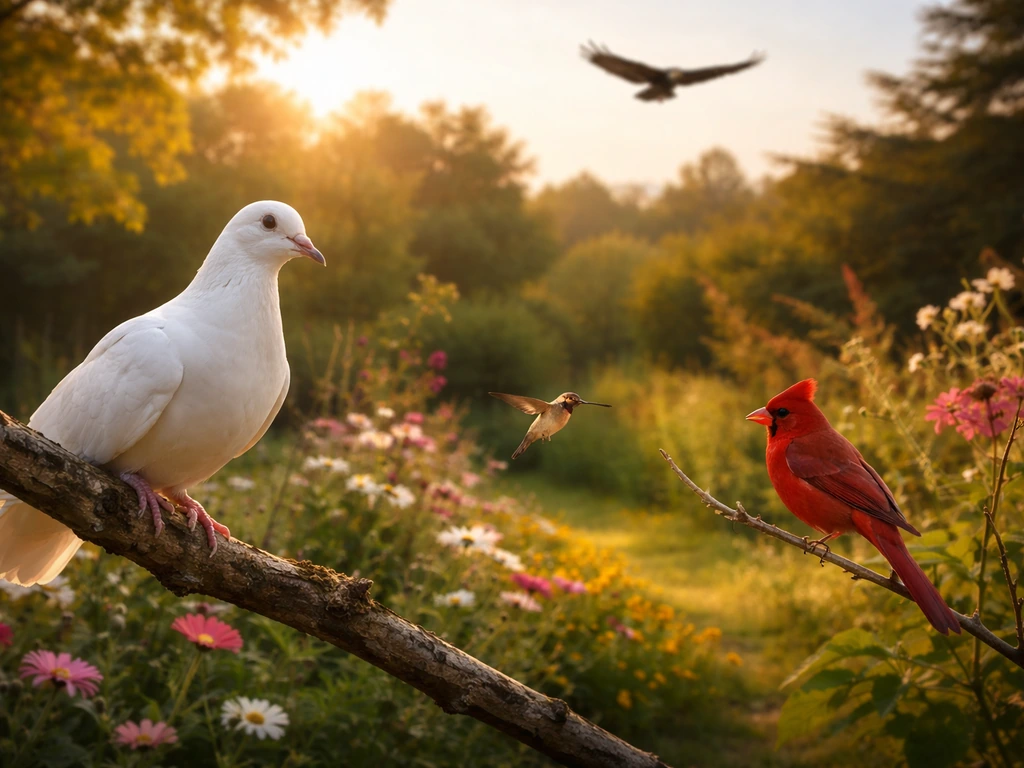
What 'visitor from heaven' actually means in spiritual language
In Christian scripture, a 'sign from heaven' refers to a divinely sourced event or phenomenon meant to communicate something about God's will or presence. In Mark 8:11, the Pharisees literally demand one from Jesus as a test. In Isaiah 7:11 the phrase 'heights of heaven' is used as a frame for where divine confirmation comes from. The common thread across these uses is interpretive: a sign from heaven isn't a self-explaining miracle. It's a perceived communication that requires discernment and personal context to unpack.
Contemporary spiritual usage keeps that interpretive spirit. When people say a bird is a 'visitor from heaven,' they usually mean one of a few things: a deceased loved one is sending comfort, an angel or divine messenger is present, or the moment carries a quality of grace that feels outside ordinary experience.
When people ask what bird symbolizes someone from heaven, they are usually thinking of a comfort-sign like a cardinal or a universally recognized symbol like the dove. Many people ask what bird is a sign from heaven, and the answer depends on the tradition and context you’re drawing from. Faith media frequently uses the phrase specifically for cardinals in grief contexts, describing the bird as confirmation that 'someone is near.
' But that's one tradition's shorthand, not a universal rule. The phrase is a lens, not a species label.
The birds most people mean when they say 'heavenly visitor'
Across the traditions this site covers, five birds come up again and again in contexts where people describe an encounter as heaven-sent. Here's a quick summary of each and why it earns that reputation.
Cardinal
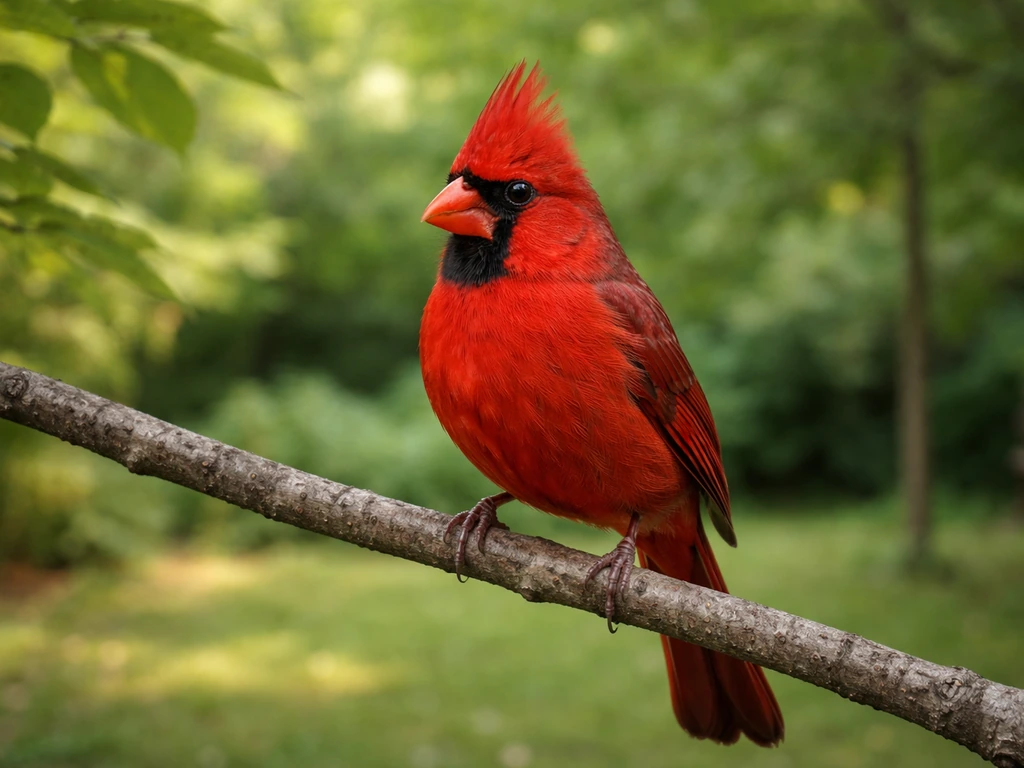
The northern cardinal is probably the bird people picture most often when they use the 'visitor from heaven' phrase in the United States. Faith media, grief counselors, and funeral home content consistently frame the red cardinal as a comfort-sign, especially after loss. The bird's brilliant red color makes it hard to miss, it stays year-round across its range, and it shows up at backyard feeders reliably. That combination of visibility and accessibility makes it a natural candidate for a meaningful sighting. Both English- and Spanish-language sources describe it as 'un visitante del cielo' in mourning contexts.
Dove
The dove has the longest documented history of any bird as a heavenly symbol. In the New Testament, the Holy Spirit descends 'like a dove' at Jesus' baptism, and Noah's dove returns with an olive leaf as confirmation of God's covenant with creation. In some discussions of Christian symbolism, people also wonder whether the Holy Spirit itself is depicted as a bird. Because of those two moments alone, the dove is probably the most universally recognized divine bird in the Western tradition. Mourning doves in particular, with their soft gray-brown feathers, slim bodies, and quiet presence, are what most people actually see in North American backyards. Pigeons (rock doves) look superficially similar but carry different cultural weight.
Hummingbird
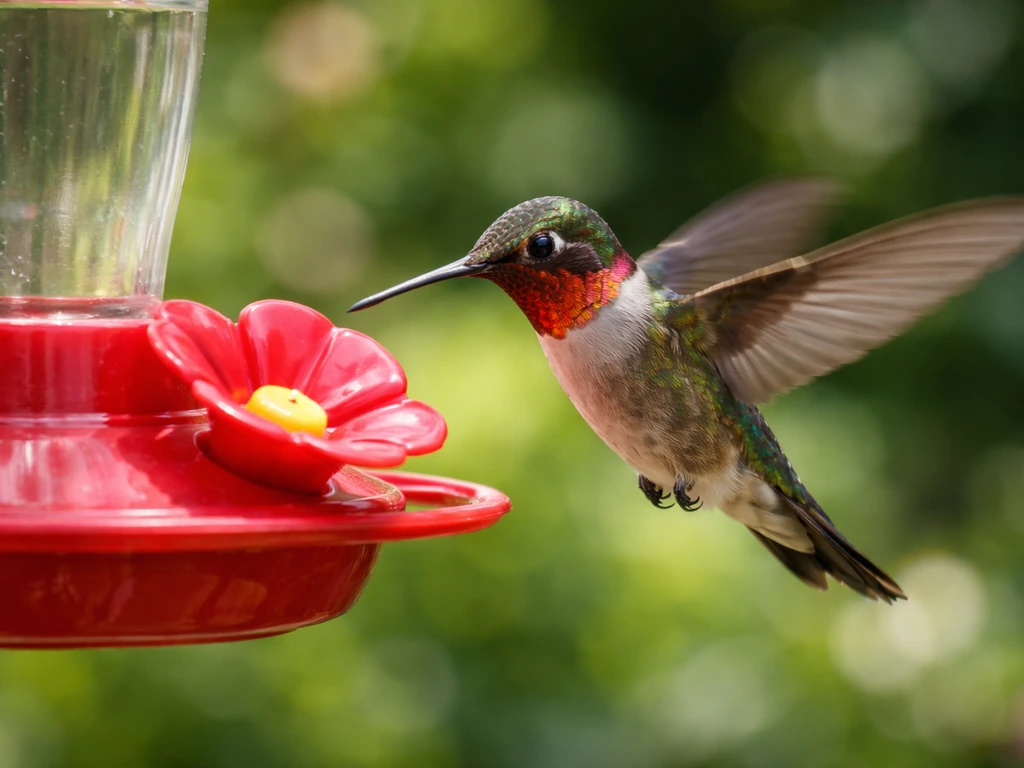
In many Native American traditions, particularly in Central American and Aztec contexts, hummingbirds are messengers from deceased warriors or loved ones. The Aztec deity Huitzilopochtli was associated with the hummingbird, and warriors who died in battle were said to return as hummingbirds. In contemporary spiritual culture in North America, a hummingbird appearing unexpectedly (especially when one isn't usually around) is often read as a visitation. Their brief, hovering presence and startling beauty make encounters feel significant.
Swallow
Swallows have been regarded as heavenly messengers in multiple traditions across time. In Celtic lore they were associated with the souls of the dead, and in Christian art the swallow sometimes symbolizes resurrection and the hope of return. The barn swallow in particular has been a companion to human settlement for centuries, nesting in barns and eaves, which may contribute to the sense that its appearance is purposeful rather than coincidental. Swallows are highly migratory, so a sighting often coincides with a seasonal shift that already feels meaningful.
Bald Eagle
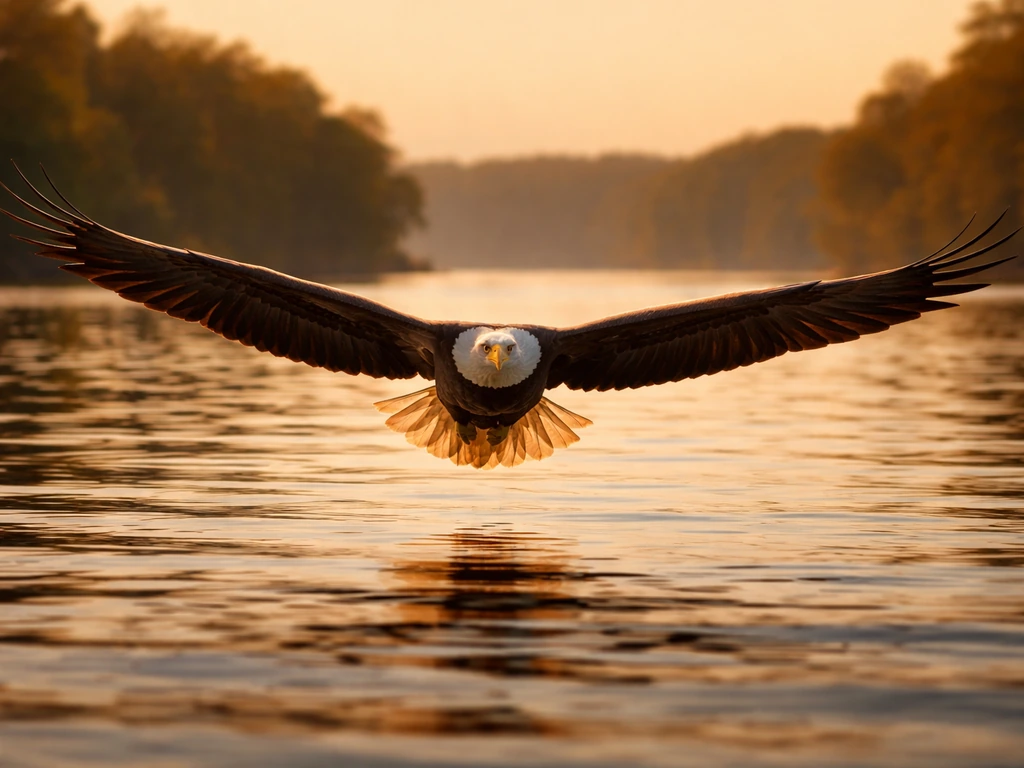
In many Native American traditions, the bald eagle is considered sacred, closely connected to the Creator and to spiritual communication. Audubon also describes bald eagles as native to North America and notes their cultural associations, which can help frame the bird as more than an identification cue when exploring spiritual symbolism.
An eagle sighting is treated with reverence as a sign that prayers have been heard or that the Great Spirit is present. Because eagle sightings are rarer and the bird is so visually striking, the encounter tends to feel inherently momentous. Its range covers much of North America, so while you won't see one in every backyard, an unexpected encounter is not uncommon for people near water or open land.
How to identify the bird you actually saw
Before you can interpret a sighting, you need to know what you saw. It's easy to project meaning onto a bird before confirming the species, and misidentification undercuts the whole exercise. Here are the key field cues for each of the five candidates, organized so you can work through them quickly after the fact.
| Bird | Size | Key color cues | Distinctive feature | Year-round in the U.S.? |
|---|---|---|---|---|
| Northern Cardinal | About 8–9 inches | Male: brilliant all-red; Female: pale brown with red tinges | Prominent crest on head; only crested red bird in North America | Yes, within its range (eastern U.S. and parts of the Southwest) |
| Mourning Dove | About 12 inches | Gray-brown overall; pink-tan underparts; black spots on wings | Slim body, thin neck, long tapered tail; black marks on cheeks | Yes, widespread across the continental U.S. |
| Ruby-throated Hummingbird | About 3.75 inches (sparrow-sized) | Green back; male has ruby-red throat; female lacks the red throat | Bill is slender and slightly downcurved; hovers; extremely small | Seasonal (spring–fall in eastern U.S.; winters in Mexico/Central America) |
| Barn Swallow | About 6–7 inches | Deep steel-blue upperparts; rusty/cinnamon underparts; rusty forehead and throat | Long, deeply forked tail (most distinctive among swallows) | Seasonal (spring–fall in North America; migratory) |
| Bald Eagle | About 28–40 inches | Adult: brown body, white head and tail; bright yellow bill | Very large; white head unmistakable in adults; immatures are mottled brown | Year-round across much of North America, especially near water |
A few practical notes: if you saw a red bird but it didn't have a crest, it was probably not a cardinal (house finches and purple finches are red but lack the crest). If your 'dove' had a white lower back and heavy black wing bars, it was likely a rock pigeon rather than a mourning dove.
For swallows, the deeply forked tail is the fastest way to confirm barn swallow versus other swallow species like the cliff swallow, which has a square-tipped tail. For example, Audubon notes that the cliff swallow has a short square-tipped tail and distinctive nesting, which helps you distinguish it from other swallows cliff swallow, which has a square-tipped tail.
Hummingbirds are so small and fast that the sparrow-size scale and hovering behavior are your two quickest confirmations.
Checking whether it's likely in your area
Range and season matter enormously. If you're in the eastern U.S. and it's midsummer, a hummingbird is very plausible. If it's January in the Midwest and you see a flash of red at your feeder, it's almost certainly a cardinal. If you're in the Pacific Northwest near a river or lake and a large bird with a white head is circling overhead, that's a bald eagle. eBird's free range maps let you check which birds are likely in your location by season, which takes the guesswork out of probability. That context doesn't diminish the spiritual meaning, it actually sharpens it: knowing a bird is out of season or out of range makes an encounter feel even more notable.
What each bird means across traditions
Once you've confirmed the species, you can start matching the symbolism to your own faith or cultural context. The same bird often carries different weight in different traditions, so it's worth knowing the range of meanings before settling on one.
Cardinal
- Christian/American folk tradition: a messenger from a deceased loved one; comfort in grief; the red color associated with the blood of Christ and vitality
- Native American traditions: in some nations, cardinals are associated with weather changes and relationships; the male's red is connected to the south direction and vitality
- General symbolic meaning: alertness, brightness, confidence; the crest is sometimes read as a crown of divine authority
Dove
- Biblical/Christian: the Holy Spirit in avian form (Jesus' baptism in the Gospels); peace and covenant (Noah's dove and the olive branch); purity
- Egyptian: the dove was associated with innocence and was offered as a symbol of devotion
- Celtic: doves were linked to healing wells and sacred water; peaceful guidance from the otherworld
- General spiritual: peace, transition, the soul's safe passage; still the most broadly recognized symbol of divine communication across Western cultures
Hummingbird
- Aztec: warriors who died in battle returned as hummingbirds; associated with Huitzilopochtli, the god of sun and war
- Native American (various traditions): messenger of joy and love; a sign that a deceased loved one is present and well
- Contemporary spiritual: symbols of resilience and joy; their ability to hover is associated with presence in the moment and the suspension of ordinary time
Swallow
- Celtic: souls of the dead visiting the living; associated with the veil between worlds thinning
- Christian art: resurrection and the hope of return; the swallow's annual return from migration was read as a symbol of Christ's resurrection
- Ancient Egyptian and Greek: swallows were associated with the souls of the dead calling out for justice or comfort
- Maritime/folk tradition: a swallow sighting was a sign of land nearby and safe passage; protection during journeys
Bald Eagle
- Native American traditions (widespread): sacred messenger between humans and the Creator; prayers carried upward on eagle wings; feathers used in ceremony as conduits of spiritual power
- Biblical/general: eagles are associated with spiritual renewal (Isaiah 40:31, 'they shall mount up with wings as eagles'), strength, and divine perspective
- Celtic: one of the oldest animals in Celtic mythology, associated with wisdom and long sight; a bird of high sacred places
- General symbolic meaning: sovereignty, clarity of vision, the divine overview of earthly matters
What to do after the sighting
A sighting only becomes a meaningful encounter when you give it some attention. Here's a practical sequence for turning a bird encounter into something you can actually work with, whether your orientation is religious, spiritual, or simply reflective.
- Record what you observed immediately. Note the date, time, location, and the bird's specific behavior (was it perched and still, hovering, circling, singing?). The behavior often matters as much as the species in symbolic interpretation.
- Confirm the identification. Use the field cues above or a free app like Merlin (Cornell Lab) to verify the species. You don't need to be a birder to do this; a photo on your phone is often enough.
- Note your emotional and personal context at the time. Were you grieving, at a decision point, thinking of someone specific? Symbolic meaning isn't generated by the bird alone; it's shaped by what you brought to the moment.
- Match the symbolism to your tradition. Use the framework above to find which reading resonates. If you're working from a Christian framework, the dove and cardinal carry the most textual grounding. If you're rooted in Native American traditions, the eagle and hummingbird have deeper ceremonial weight.
- Journal about what felt significant. Spiritual interpretation is personal by nature. Write down what the sighting seemed to be saying, even if it's tentative. Revisit it in a week and see if the meaning feels the same or has shifted.
- Observe from a respectful distance. If the bird returns, resist the urge to approach closely. Standard ethical wildlife guidance suggests maintaining at least 50 yards from larger birds, and even more for nesting birds. The bird's natural behavior is part of the message; interrupting it disrupts the encounter.
If you're interested in going further, the question of whether the Holy Spirit is specifically depicted as a bird in scripture, which bird most directly represents Jesus across traditions, and what birds are most commonly described as signs from heaven (rather than visitors) are all closely related threads worth exploring. Some traditions also connect the idea of a miraculous bird revival with the question of whether Jesus brought a bird back to life. Many people ask what bird represents Jesus, and the best answer depends on which scripture passage or tradition they are drawing from what bird most directly represents Jesus across traditions. Each sheds different light on the same core question you're sitting with.
The phrase 'visitor from heaven' is doing spiritual work, not ornithological work. It's a way of saying: this moment felt like more than coincidence, and I want to understand what it might mean. The bird gives the experience a shape. The tradition gives it a language. What you do with both is entirely yours.
FAQ
What should I do if I saw the bird but I could not confirm the species?
Write down what you remember in order (color, size, behavior like hovering or soaring, and any distinctive feature such as a forked tail or head crest), then wait until you can verify with photos or a local checklist. If you never confirm, treat the encounter as meaningful without assigning it a specific tradition-specific label, since incorrect ID is the biggest way the interpretation can go off track.
Can a single bird be a “visitor from heaven” in more than one tradition?
Yes. For example, the same species can carry different meanings across faiths, so it helps to choose the interpretation that best matches your personal context and the emotional tone of the moment (comfort, guidance, or hope). If you feel pulled between traditions, one practical approach is to pick the meaning that aligns with how you intend to respond, not the meaning that is most dramatic.
What if I see a cardinal but it’s not at a feeder, or it appears briefly?
Cardinals do not require a backyard feeder to be relevant, since they also feed on natural foods and can pass through quickly. The fresh detail to consider is behavior and setting: if it appeared repeatedly over a short period, or showed up at a moment tied to your grief or prayer, that “pattern” often matters more than duration.
Are there common “false doves” that people mistake for a dove?
Yes, rock pigeons are the usual confusion. A quick decision aid is body markings and shape: if the bird shows strong wing bars and a stouter, more urban look, treat it as likely a pigeon rather than a mourning dove. Also note that mourning doves often appear smaller and more uniformly colored in flight, with a softer, less bold striping pattern.
How can I distinguish barn swallow from other swallows if the bird is moving fast?
Focus on the tail shape and overall silhouette. Barn swallows typically show a distinctly forked tail, while other common swallows can have different tail edges. If you cannot see the tail, try to capture a short video or note whether the bird nests near human structures (barns, eaves), since barn swallow habitats can provide supportive context without over-relying on symbolism.
If I saw a hummingbird, how do I avoid mistaking it for something else?
In most regions, the key checks are scale and motion: hummingbirds hover with rapid wing movement and move with a darting, stop-and-go quality. If the bird perches for long stretches and lacks hovering behavior, it likely is not a hummingbird. If you can, count seconds of hover, even briefly, because that behavior is more diagnostic than color alone.
What if the bird I saw was out of season or out of range?
Treat “out of range” as a signal to double-check identification first, using photos and local sightings. If the ID still holds, many people read an out-of-season appearance as especially “visitation-like,” but keep the discernment balanced by asking whether the moment could be explained by unusual weather patterns or vagrancy (birds sometimes wander beyond their usual areas).
How do I know whether I should interpret the sighting as comfort versus guidance?
A practical way is to separate the meaning of the moment from the symbolism of the bird. If the encounter immediately brought calm, closure, or a sense of reassurance, comfort fits best. If it coincided with a clear decision, renewed motivation, or a “next step” feeling, guidance may fit better. Choosing based on your response reduces the risk of forcing a meaning.
Is it okay to have a spiritual interpretation even if I’m not part of the tradition that uses that bird most often?
Yes, but do it with boundaries. You can borrow the idea of “heaven-sent” as a lens for reflection without adopting every specific tradition’s claims. A helpful caveat is to avoid declaring certainty about a message intended for you unless it aligns with your values and you can honestly connect it to your lived experience.
What evidence should I record right after the sighting so I can interpret it responsibly later?
Record time, location (including nearby water or open land), approximate size, color highlights, and behavior, plus whether it was alone or in a pair. If possible, capture a photo or short clip. This turns an emotional memory into checkable details, which makes later identification and interpretation more reliable.
Next Articles
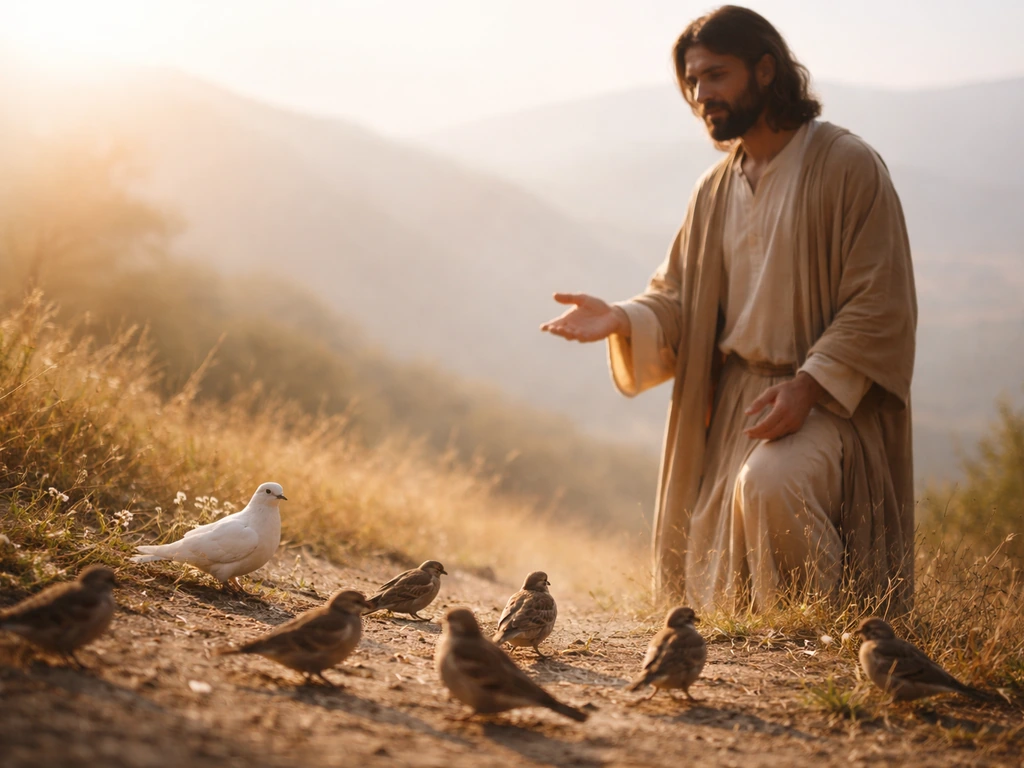
Did Jesus Bring a Bird Back to Life? Scriptural Answers
No Gospel says Jesus resurrected a bird. Explore scripture bird imagery, renewal themes, and verify common bird-revival

What Bird Represents Jesus? The Dove and Other Common Symbols
Find the Christian bird symbol of Jesus: the dove and its link to the Holy Spirit, plus common alternatives and how to v

Is the Holy Spirit a Bird? Dove Meaning in Scripture
Biblical answer to is the Holy Spirit a bird, explaining the dove appearance at Jesus baptism and dove symbolism for pra