
In birds, the syrinx is the specialized vocal organ located at the base of the trachea, right where it splits into the two bronchi leading to the lungs. It is the biological source of every song, call, chirp, and alarm note you have ever heard a bird make. Unlike the human larynx, which sits at the top of the throat, the syrinx sits deep in the chest cavity, and its unique position allows many birds to control each side independently, producing two acoustic layers at the same time. That is the anatomical definition. But if you landed here because you are trying to understand what birdsong means symbolically or spiritually, the syrinx is where the story starts: it is the instrument through which birds have delivered what countless cultures across history have treated as divine messages.
Syrinx Definition in Birds: Meaning, Symbolism, and More

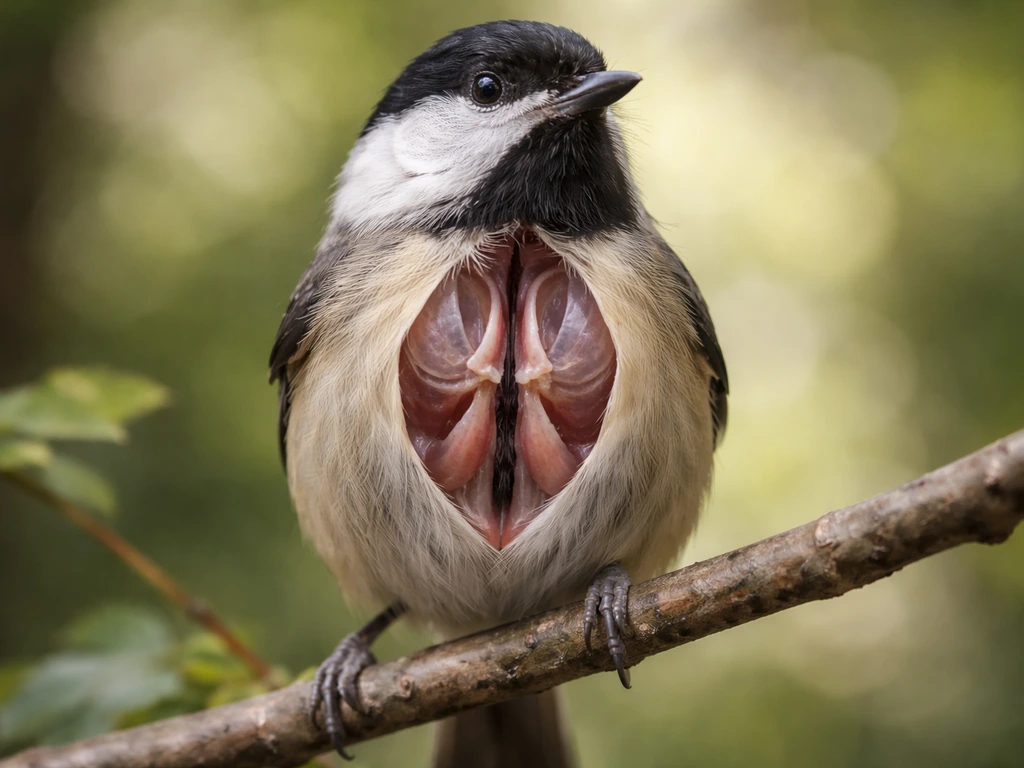
What the syrinx actually is in birds
The syrinx sits at the trachea-bronchi junction, deep in the thoracic cavity. Inside it are paired structures called medial and lateral labia, along with thin tympaniform membranes. When a bird exhales, air flows outward across these membranes and labia, setting them vibrating. Syringeal muscles actively reposition the labia into and out of the airway, essentially opening and closing the valve to shape the sound. Because each bronchus has its own set of labia, a bird can produce two independent acoustic components simultaneously, which is why a thrush can sound like a small choir. The syrinx is a uniquely avian structure with no direct equivalent in mammals, which is one reason birdsong has such a wide acoustic range compared to most animal calls.
Stanford ornithologists describe the syrinx as a bony structure at the lower end of the trachea, contrasting it explicitly with the mammalian larynx. That distinction matters because it means birds and humans use completely different anatomical solutions to make sound, and the symbolic weight cultures have placed on birdsong often reflects an intuition that birds speak from a different place entirely, both physically and metaphysically.
Songs vs. calls: why the difference matters for interpretation
Ornithologists distinguish between songs and calls, though the line is somewhat functional rather than perfectly neat. A song is typically longer, more complex, and patterned, used mainly by males to advertise territory and attract mates. A call is usually short and simple, used year-round for functions like alerting the flock to danger, maintaining contact while foraging, or signaling flight. Both come from the same syrinx, but they carry different messages, and that distinction is genuinely useful when you are trying to interpret what you are hearing.
The dawn chorus is a good example of song in context. In spring, birds begin singing before sunrise to defend breeding territory and attract partners. If you hear a rich, elaborate, repeating vocal pattern from a perched bird at dawn, that is territorial song. But if you hear short, sharp, insistent notes erupting suddenly through a quiet garden, that is almost certainly an alarm call. Black-capped Chickadees, for instance, vary the urgency of their alarm call based on the size of the perceived threat, adding extra "dee" notes when a smaller, more agile predator is nearby. The same syrinx, different messages.
Quick clarification: the bird syrinx is not the medical syrinx

If you searched "syrinx definition" and found yourself reading about spinal fluid cavities, you hit the medical meaning by mistake. In neurology and clinical medicine, a syrinx refers to a fluid-filled cyst that forms within the spinal cord (syringomyelia) or brain stem (syringobulbia). It is an MRI finding associated with neurological conditions and has nothing to do with birds or sound production. The two uses of the word are completely separate. The word shares a Greek root meaning "tube" or "pipe," which is why it was applied to both an anatomical cavity in the spine and a pipe-shaped vocal organ in birds, but the contexts do not overlap. If you are reading about bird symbolism, spirituality, or ornithology, the syrinx is always the vocal organ.
| Term | Context | What it is | Relevance here |
|---|---|---|---|
| Syrinx (bird) | Ornithology / biology | Vocal organ at trachea-bronchi junction in birds | Yes — the source of all birdsong and calls |
| Syrinx (medical) | Neurology / clinical medicine | Fluid-filled cyst in the spinal cord or brain stem | No — unrelated to birds or sound |
| Syrinx (mythology) | Greek myth | Nymph transformed into hollow reeds by Pan | Tangentially — the mythological root of the word |
Why birdsong carries symbolic weight across cultures
The syrinx produces the sound, but cultures around the world have consistently interpreted that sound as something more than acoustics. Psalm 104:12 describes birds singing among the branches as part of creation's ongoing activity, a small but telling detail that frames birdsong as participation in a divine order rather than mere animal noise. In Islamic tradition, birds are understood to glorify Allah, knowing their own form of prayer and praise, a theme that appears across references to birds in the Quran. These are not isolated ideas. They reflect a cross-cultural intuition that birds, because of their capacity for flight and voice together, occupy a threshold between the earthly and the transcendent.
Ancient Roman augury formalized this intuition into a practice. Augurs interpreted the behavior of birds, including their cries and calls alongside their flight patterns, to determine whether the gods approved of a proposed action. The voice of a bird was not background noise; it was information. The Saqqara Bird was also used as a symbol of flight and divine intention in ancient Egyptian culture, which is why it is often discussed in relation to birds and meaning. That framework persisted in some form across nearly every major cultural tradition, from Celtic and Norse mythology to Indigenous American practices, each with their own framework for what a bird's voice signals and to whom.
What different vocal birds represent spiritually
The specific bird matters as much as the fact of song. A singing robin in many European and North American traditions signals renewal, the arrival of spring, and messages from those who have passed. People often ask which bird was used to carry messages, and the answer connects bird symbolism to ancient storytelling. A nightingale's song has been tied to longing, the soul's yearning, and divine beauty in Persian and medieval European poetry. Owls, whose calls are often low and haunting rather than melodic, carry associations with prophecy, death, and the unseen in many traditions, precisely because their "song" sounds unlike the cheerful dawn chorus. The wren, small and easily overlooked, is considered a sacred singer in Celtic tradition, its tiny voice carrying disproportionate spiritual significance.
The Egyptian context is worth noting here, given how deeply bird symbolism is embedded in that tradition. In that Egyptian bird symbolism, you may also wonder what Egyptian god is a bird and how that belief connects to Horus and other divine messengers. In particular, the Egyptian bird symbol meaning is often tied to Horus, the soul's journey, and messages of divine power. Hieroglyphic birds, gods like Horus who take bird form, and sacred ibises all connect avian presence to divine communication and power. Hieroglyphics bird meaning is one adjacent way people connect visual Egyptian bird forms with divine communication, so it can be a useful companion read Hieroglyphic birds. While Egyptian symbolism tends to focus more on the visual form of a bird than its voice specifically, the thread connecting birds to messages from the divine runs consistently through that tradition as it does elsewhere. Many people also want the bird hieroglyph meaning, since Egyptian iconography used birds in religious and symbolic ways.
How to interpret the bird you are hearing right now

Start with identification. You cannot interpret a message if you do not know the messenger. The Merlin Bird ID app from Cornell Lab uses AI-powered sound recognition to identify over 450 species by voice alone. The Cornell Lab of Ornithology describes Merlin Sound ID’s data requirement, noting that it needs at least 100 clean recordings of every call for each species to work effectively. Use it. Once you know the species, you can layer in context: what does this bird represent culturally, what is its behavioral ecology, and what is the quality of what you just heard?
- Identify the species first using Merlin or a field guide. Symbolism is specific to the bird, not generic to "a bird."
- Distinguish the type of vocalization. Is it a long, patterned, melodic song from a perch (territorial, celebratory, communicative)? Or a short, sharp, repeated call (alarm, contact, distress)?
- Note the time and season. Dawn chorus in spring carries meanings of renewal, territory, and new beginnings. A single bird calling at dusk or in winter reads differently.
- Notice the context of your own life. Symbolic frameworks treat the bird's appearance as a mirror for what you are already navigating. What question were you sitting with when you heard it?
- Cross-reference cultural meanings. The same bird can carry different weight in biblical, Indigenous American, Celtic, or Egyptian traditions. Look for themes that overlap across traditions for the strongest signal.
- Pay attention to behavior beyond the voice. Is the bird singing to you directly, flying toward or away, alone or in a flock? Voice is one channel; movement and feather symbolism are others that reinforce or qualify the message.
Common mix-ups to avoid
Confusing an alarm call with a welcoming sign
Not every bird sound is a positive spiritual signal. An alarm call, characterized by short, sharp, insistent repetition and often accompanied by mobbing behavior or rapid movement, is a warning about a predator or threat in the environment. If you hear that kind of call and interpret it as a message of peace or welcome, you are likely reading the wrong register. An alarm call in a symbolic context might more accurately reflect urgency, the need for heightened awareness, or a warning about your own situation.
Assigning meaning to the wrong species
Misidentifying the bird undermines any symbolic interpretation you apply. A crow and a raven look and sound similar to an untrained ear, but their symbolic histories are meaningfully different. A raven in Norse tradition is Odin's messenger; a crow in some Indigenous traditions is a trickster. Getting the species right before reaching for meaning is not overthinking it, it is just good practice. The Merlin app makes this much easier than it used to be.
Expecting every bird encounter to carry a message
Most bird behavior is just bird behavior. A robin singing at dawn is defending territory and trying to attract a mate. That behavior is not negated by symbolic meaning, but it is not a cosmic telegram either. The most grounded approach to bird symbolism treats it as a lens for reflection, not a news feed. When an encounter genuinely stops you, when a bird appears unexpectedly, lingers, or its voice seems to cut through everything else around you, that is worth sitting with. The rest is natural history, which is also worth appreciating on its own terms.
Pulling it all together
The syrinx is the physical mechanism that makes all of this possible. It is the reason birds can produce sounds of extraordinary range and complexity, the reason a single thrush can fill a forest at dawn, and the reason cultures from ancient Rome to medieval Persia treated birdsong as meaningful. When you hear a bird today, you are hearing the output of an organ that evolved over millions of years, sits at a unique crossroads inside the bird's chest, and has been interpreted as a vehicle for divine communication across virtually every human culture that has documented its relationship with the natural world. Whether you approach that symbolically, spiritually, or simply as natural history, the syrinx is where the story begins.
FAQ
If the syrinx produces all bird sounds, how do I know whether I am hearing a song or a call?
No. The syrinx is the vocal organ, but meaning depends on the behavior and context, for example dawn singing tied to territory is different from short repeated notes used as an alarm. Use both the sound type (song versus call) and what the bird is doing (perched and singing versus mobile and mobbing) to interpret what you are hearing.
Are song and call categories strict, or is it sometimes confusing in real life?
Often, you can tell by tempo, length, and pattern. Songs are typically longer and show repeating structure, while calls are shorter, simpler, and occur for functions like contact, alarm, or flight. In practice there is overlap, so the most reliable method is to look for the typical season and behavior associated with the sound you heard.
Can I misjudge where a bird is by following the sound, and would that affect meaning?
Yes. Many birds sing from hidden perches, and the sound can still seem to come from a different direction, which can tempt misidentification. Try to note the bird’s location visually when possible, then confirm with a recording or an ID tool like Merlin rather than trusting your ear alone.
What are common mistakes when interpreting an alarm call as a friendly or spiritual message?
A sudden, insistent “alarm-style” call can escalate while the bird mobbing increases, it is usually responding to a nearby predator. Symbolic interpretations that assume “welcome” or “peace” are most likely off if you hear this urgency pattern or see agitation and rapid movement around the sound source.
Why do some birds sound like they have multiple voices at once, and does that always mean a “deeper” message?
Yes. The syrinx can generate layered components because each bronchus has its own paired structures, but the complexity you hear varies by species, age, and even individual condition. If you compare two species recorded at different distances or with different microphone settings, you may overestimate how much “meaning” is tied to sound complexity.
Does the syrinx let birds sing nonstop, or are there breathing or pacing limits?
Not exactly. A bird can only produce sounds during breathing cycles, so loud vocal output often depends on motivation and respiratory effort. After you hear extended singing, look for behavioral pauses or changes in posture, those cues can indicate what the bird is doing physically, not just what it is “saying.”
How much does getting the species wrong undermine symbolic interpretation?
Yes, especially with close look-alikes. Crows versus ravens are a classic example, and some songbirds can share similar tones in certain neighborhoods. If symbolic interpretation matters to you, confirm species first, then apply symbolism that matches that specific culture and species history.
How can I avoid mixing up the bird syrinx with the medical meaning of syrinx?
The word “syrinx” in birds refers to the vocal organ, while in medicine it refers to a fluid-filled cavity in the spinal cord or related structures. If you are reading about MRI findings or neurological symptoms, it is not the same syrinx, so the bird-song symbolism should not be connected to that content.
What is a simple method I can use to interpret birdsong more reliably?
If you want to interpret what you heard, start with a practical workflow: identify the species, classify the sound type (song versus call), note the immediate behavior (territory defense, contact, mobbing), and consider the time of day and season. That reduces the chance you project a narrative onto the wrong behavioral category.