In Celtic tradition, birds are messengers, shape-shifters, and boundary-crossers between this world and the Otherworld. When you encounter a bird and feel it means something, the most accurate Celtic-based reading comes from three things working together: the specific species (raven, swan, wren, and owl each carry distinct meanings in Irish, Welsh, and Scottish sources), the bird's behavior at the moment you saw it (singing, silent, in flight, nesting, or dying), and the timing and context of your own life. If you’re looking specifically for the guinness bird meaning, start by matching the bird’s kind and behavior to the Celtic framework described here. Generic "Celtic bird symbolism" on its own is too broad to be useful. The tradition rewards specificity.
Celtic Bird Meaning: How to Interpret Encounters and Symbols

What "Celtic bird meaning" actually refers to
The phrase covers two overlapping things that are worth separating. The first is species-specific meaning: particular birds appear in named Celtic myths, manuscripts, and folk traditions with documented symbolic roles. The swan in Irish mythology is a shape-shifter linked to the Otherworld. The raven is tied to Bran the Blessed in Welsh tradition, where it functions as a guardian symbol. The wren appears in Cormac's 9th-century Glossary as "druí-én," literally "druid bird," glossed as a creature that makes prophecies. These are textually grounded meanings, not modern inventions.
The second layer is a general Celtic framework: birds as a category hold special status in Celtic literary and spiritual logic because flight and song were understood as boundary-crossing abilities. Scholarship on early medieval Irish hagiography specifically frames birds as "messengers" whose capacity to move between realms made them natural carriers of supernatural communication, revelation, and prophecy. This framework explains why a bird encounter, regardless of species, registers as potentially meaningful in a Celtic worldview. Both layers matter, but when you're trying to find a specific meaning, start with species first.
One important note: much of what circulates online as "Celtic animal totems" or "Celtic spirit animals" is a modern overlay that blends New Age frameworks with actual Celtic sources. The scholarly record, including a ResearchGate publication specifically on the significance of the bird figure in Celtic tradition, treats birds as meaningful within a literary, mythological, and folk context rather than as personal totem animals in the way popularized by 20th-century spirituality movements. You can use the older sources and still find personal meaning in them. Just know what you're working with.
How to interpret a Celtic bird encounter step by step
The tradition itself gives you a method, even if it's not written as a how-to list. Here's how to apply it practically.
- Identify the species as precisely as you can. A black bird perched silently is not the same as a swan landing on water. Species carries the most interpretive weight in Celtic sources, so "a bird" is less useful than "a raven" or "a wren." If you genuinely couldn't tell, note the size, color, and behavior and work from there.
- Note the behavior in the moment. Song, silence, flight direction, nesting activity, confrontational behavior, or death each shift the meaning significantly. In early medieval bird-messenger traditions, song in particular was linked to seer-adjacent functions: a bird singing toward you carried different weight than one flying away. The bestiary tradition tied a swan's harmonious voice directly to its omen value for sailors.
- Register the timing and season. Wren Day traditions, for example, are tied to the winter solstice period (St. Stephen's Day, December 26) across Ireland, the Isle of Man, Wales, and Brittany. A wren sighting in late December carries cultural resonance that the same bird in July doesn't carry in the same way. Seasons, life transitions, and personal circumstances all influence how Celtic sources frame bird appearances.
- Consider your personal context. Celtic literary tradition, including the immrama voyages like the Voyage of Bran, uses bird encounters as markers of threshold moments: crossings, departures, significant decisions. Ask what threshold you're currently standing at. The bird's appearance as a signal makes more sense against that backdrop.
- Cross-check against documented sources before settling on a meaning. If you're interpreting a raven, look at what Welsh mythology actually says about Bran's raven association rather than importing Norse raven symbolism. The traditions are neighbors but not identical.
Common Celtic birds and what they're said to mean
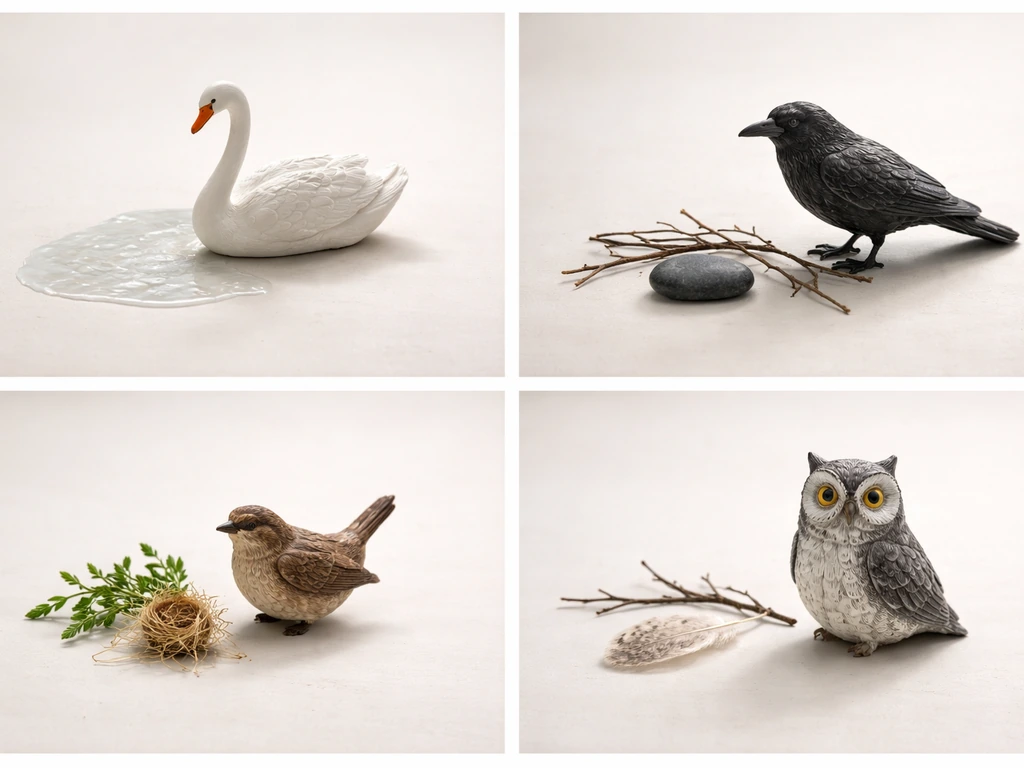
These are the species with the clearest grounding in Celtic and Insular sources. Each entry reflects documented mythological, manuscript, or long-running folk tradition rather than generalized modern symbolism.
Swan
The swan is probably the most mythologically loaded bird in Irish tradition. The Children of Lir, one of the Three Sorrows of Storytelling, transforms royal children into swans for 900 years. Swan figures in Irish myth are consistently linked to shape-shifting and movement between the human world and the Otherworld. The swan's beauty and its haunting song reinforce its liminal status: medieval bestiary tradition records that sailors read a swan's appearance as a good omen, and the same sources emphasize its "harmonious voice" as part of its symbolic value. If you encounter a swan in a Celtic interpretive frame, you're looking at a symbol of transformation, mystery, and Otherworldly passage, not just elegance.
Raven and Crow
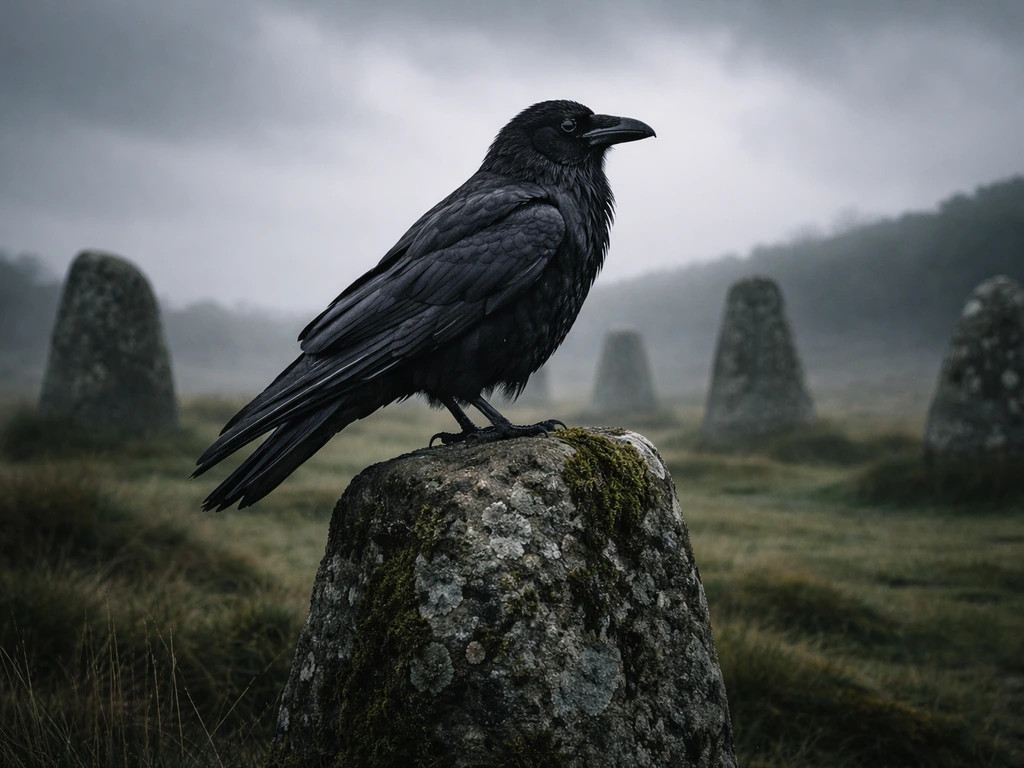
In Welsh mythology, Bran the Blessed is explicitly associated with the raven as his totem, and he is framed as a guardian of Britain. This is not a vague association: it's structural to his mythic identity. Ravens appear in Scottish tradition so consistently that multiple place names across the Highlands carry raven terminology ("an Fhithich," "nam Fitheach"), anchoring the bird's meaning in actual geography. The raven in Celtic sources functions primarily as a guardian, a battle-field presence (closely linked to the Morrígan in Irish tradition), and an omen of significant change. Its intelligence and its association with the dead give it weight as a messenger between worlds.
Wren
Small but extraordinarily significant. blank" rel="noopener noreferrer">Cormac's Glossary in the 9th century glosses the Old Irish word for wren as derived from "druí-én," meaning "druid bird," and describes it as a creature that makes prophecies. This is one of the most direct textual links between a specific bird species and a divinatory function in the entire Celtic record. The wren's association with prophecy and wisdom continued into seasonal folk practice across Ireland, the Isle of Man, Wales, and parts of France, where Wren Day rituals persisted for centuries. A wren sighting in Celtic symbolic terms points toward prophecy, hidden knowledge, and the possibility that something small is carrying a larger message.
Owl
The owl in Welsh mythology appears most famously as Blodeuwedd, the woman made of flowers who is transformed into an owl as punishment, becoming a creature of the night condemned to be shunned by other birds. This gives the Celtic owl a more complex, cautionary valence than simple "wisdom" associations found elsewhere. An owl encounter in a Celtic frame can signal a confrontation with hidden truths, deception (including self-deception), or a necessary but painful transformation.
Hawk and Raptor
Hawks and eagles appear in Celtic sources as creatures of great age and far sight. The Hawk of Achill in Irish mythology is one of the oldest creatures in the world, a repository of memory and ancient wisdom. Raptors in general carry a sense of elevated perspective in Celtic symbolic logic: seeing from above, spanning distances, and perceiving what others cannot. A hawk sighting tends to read as a call toward clarity, longer-range thinking, or awareness of something you've been missing.
Robin
The robin sits more firmly in folk tradition than in major mythological narratives, but it carries consistent associations with the threshold between seasons and with the spirit world in Irish and British folk belief. Its winter presence and its red breast (linked in Christian-influenced folk tradition to the Crucifixion, but older associations exist) make it a bird of transitions. In a Celtic-adjacent frame, the robin is often read as a messenger from someone who has passed, or as a sign of renewal at a difficult moment.
What feathers, flight, nesting, and bird imagery in Celtic art actually signal
Beyond species, the condition and behavior of a bird carry meaning in Celtic tradition. Flight is the core symbolic act: birds move between the earth and the sky, and in Celtic literary logic, that movement maps onto movement between this world and the Otherworld. blank" rel="noopener noreferrer">In the Voyage of Bran, the Otherworld island is marked by birds all singing at the same time, a coordinated celestial choir that signals sacred space. Flight toward you in historical omen-reading traditions reads differently than flight away: approach suggests incoming message or change, departure can signal a closing chapter.
Nesting carries a distinct meaning: settlement, protection, new beginnings, and the sacred domestic space. Finding a bird's nest, especially an active one, in Celtic folk interpretation tends to point toward home, family, or the early stages of something being built. Disturbing a nest was considered deeply unlucky in Irish and Scottish folk tradition, not just as an ecological concern but as a spiritual transgression.
Feathers found on the ground occupy a specific interpretive space. In Celtic tradition, a feather is a trace of the bird's passage, a physical remnant of something that crossed between realms. The color and condition matter: a clean, intact feather reads differently than a damaged or molted one. Black feathers are most commonly associated with the raven/crow complex and carry the guardian and Otherworld-message framing. White feathers, particularly swan feathers, connect to the transformation and purity associations of that species.
In Celtic art, particularly in Insular manuscript illumination (think of the spiraling, interlaced bird forms in the Book of Kells), birds are depicted with elongated, interlocking bodies that suggest the interweaving of realms rather than natural observation. This is deliberate: the artistic tradition encodes the bird's symbolic function visually. Bird imagery in Celtic metalwork, stonework, and manuscript decoration consistently uses the idea of transformation and boundary-crossing as its organizing principle.
How Celtic bird symbolism compares to other traditions (and where not to mix them)
Celtic bird symbolism shares some broad features with other traditions, but the specifics diverge enough that mixing them carelessly leads to inaccurate readings. Here's a practical comparison.
| Tradition | Bird as messenger | Raven meaning | Swan meaning | Owl meaning |
|---|---|---|---|---|
| Celtic (Irish/Welsh/Scottish) | Otherworld messenger, prophecy, liminal crossing | Guardian, battle omen, Bran the Blessed (Welsh) | Shape-shifter, Otherworld passage, transformation | Hidden truth, punishment/transformation (Blodeuwedd) |
| Norse/Germanic | Messenger of Odin (Huginn/Muninn), wisdom | Thought and memory, Odin's scouts | Valkyrie association, fate | Wisdom, foresight |
| Biblical/Christian | Dove as Holy Spirit, raven as provision (Elijah) | Provision and sustenance (1 Kings 17) | Purity in bestiary tradition (overlaps Celtic) | Desolation, mourning (Isaiah 34) |
| Native American (varies by nation) | Spirit messenger, varies widely by nation | Trickster and creator in many Pacific Northwest traditions | Less central; varies by region | Death omen or wisdom depending on nation |
| Egyptian | Soul (ba) depicted as human-headed bird | Not prominent | Not central | Associated with Thoth/wisdom in later periods |
The most common mistake is applying Norse raven symbolism (Huginn and Muninn as Odin's thought and memory scouts) to a Celtic encounter. The two traditions are geographically adjacent and historically intertwined in places like Scotland, but the raven's role is structurally different: in Celtic sources it's a guardian and battle-field omen closely tied to specific named figures and places, not a cosmic philosophical pair. Similarly, owl-as-wisdom is primarily a Greek association (the owl of Athena) that has bled into general Western symbolism. The Celtic owl is considerably darker and more ambivalent.
Biblical bird symbolism overlaps with Celtic in some places because early medieval Irish Christianity absorbed and adapted older bird-messenger logic rather than replacing it. The Cambridge scholarship on early medieval hagiography makes this explicit: bird imagery and the heavenly-messenger function merged with Celtic literary tradition even as the content became Christian. So a robin or dove encounter in an Irish folk context might carry both layers simultaneously. That's not syncretism to be corrected; it's how the tradition actually developed.
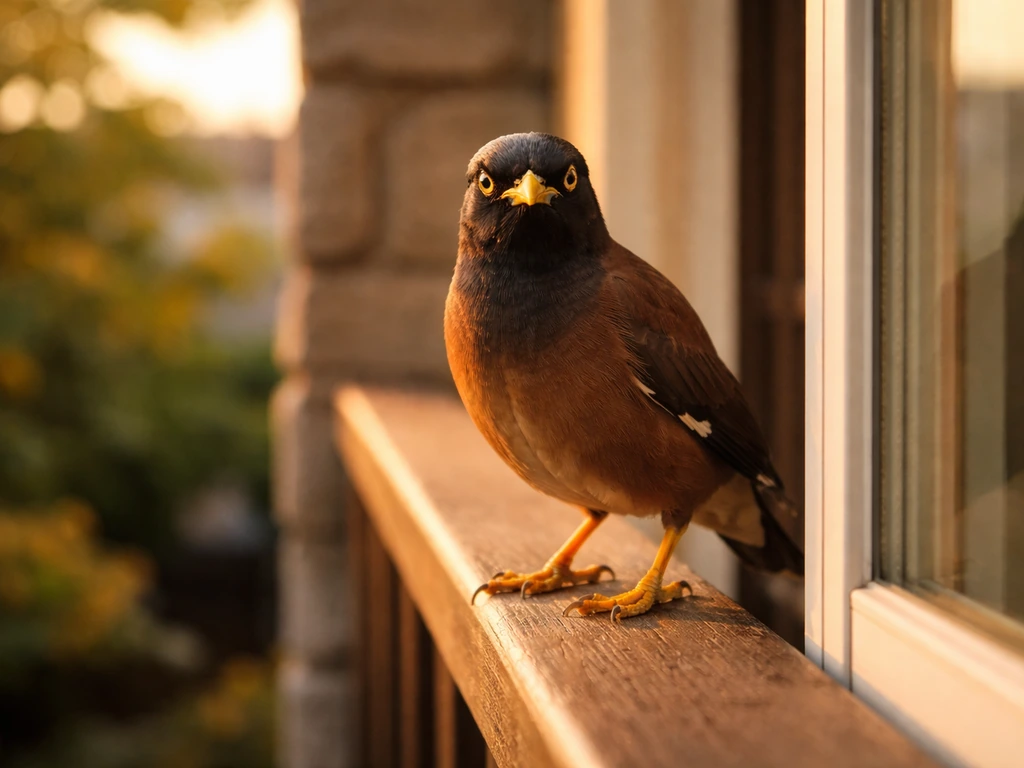
Other symbolic frameworks on this site, like the luck and omen meanings attached to specific birds across cultures, can serve as useful comparison points. Other symbolic frameworks on this site, like the luck and omen meanings attached to specific birds across cultures, can serve as useful comparison points myna bird good luck.
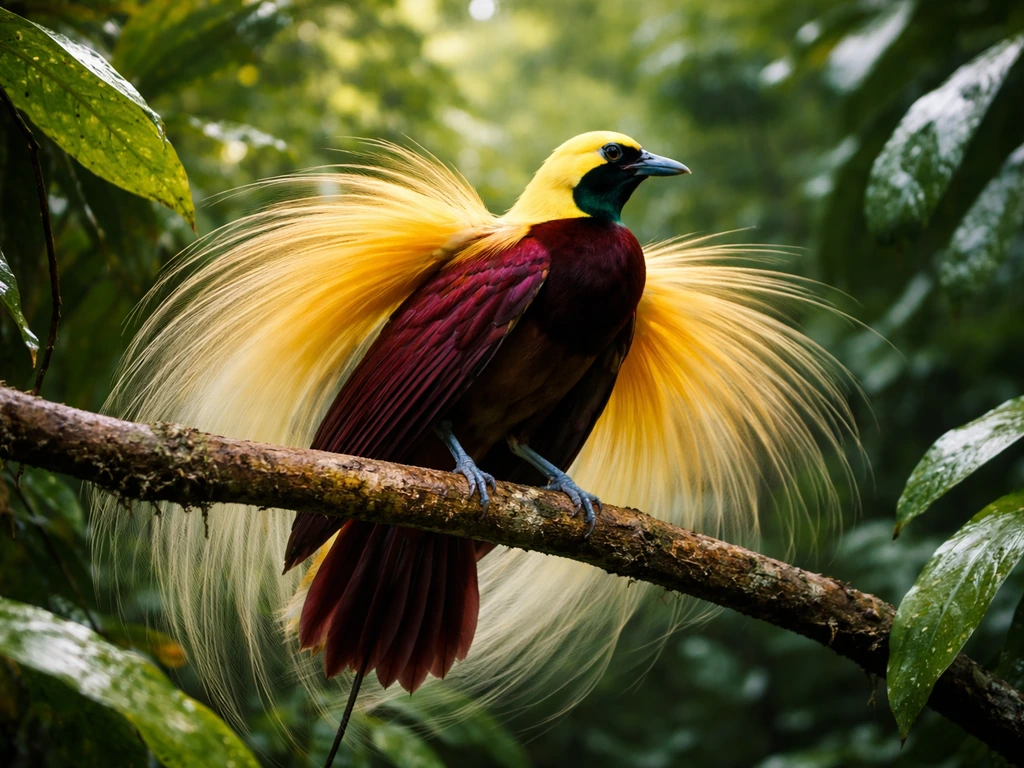
A bird of paradise or a flamingo carries entirely different cultural freight than a raven or a wren, which shows how location-specific and tradition-specific bird meanings always are. In other traditions, a bird of paradise is sometimes treated as a sign of luck or good fortune, which is why it's worth separating Celtic meanings from unrelated bird-legend systems.
If you're specifically looking at a flamingo bird good luck omen, treat it as a different cultural layer than Celtic symbolism and verify which tradition you mean. The general lesson: find the tradition that actually applies to your bird and your context, rather than assembling a composite.
Practical next steps: journal prompts, finding your best interpretation, and acting on it
After a bird encounter that feels significant, the most useful thing you can do before reaching for an interpretation is record the specifics while they're fresh. The details that seem minor (time of day, your own emotional state, what you were thinking about) often become the most interpretively useful later.
Journal prompts to use immediately after an encounter
- What species was it, or what did it most closely resemble? Describe color, size, and any distinctive markings.
- What was the bird doing? Singing, silent, in flight, perched, nesting, eating, or dead/injured?
- Did the bird interact with you directly, or was it going about its own activity?
- What time of day and season was it? What's happening in the natural calendar right now?
- What were you thinking about or dealing with in the hours before the encounter?
- Has this bird or a similar one appeared more than once recently? If so, in what different contexts?
- What was your immediate gut feeling when you saw it, before you started looking for meaning?
How to narrow down the most likely interpretation
Once you have the specifics, work through the species meanings above and ask which one maps most coherently onto your current situation. The Celtic tradition isn't a lookup table: it's a framework for pattern recognition. A raven appearing during a period of significant personal change reads differently than the same bird appearing during a period of stability. The Otherworld-messenger function in Celtic sources always operates in relation to a threshold moment in the person's life. If there's no threshold, reconsider whether the bird is carrying a message at all, or whether it's simply a bird.
Avoid the overgeneralization trap: not every bird sighting is a Celtic omen, and the tradition itself doesn't claim otherwise. The birds in Celtic mythology that carry messages appear at specific, narratively significant moments. If you're seeing birds constantly because you've started paying attention to them, that's awareness, not prophecy. The encounters worth interpreting tend to feel genuinely unusual: unexpected proximity, repeated appearance of the same uncommon species, or an encounter that interrupts your attention in a way that feels unavoidable.
Acting on what you find
Celtic bird symbolism, like all symbolic frameworks, is most useful as a lens for reflection rather than a directive. If a wren's appearance points toward prophecy and hidden knowledge in the old sources, the practical application isn't "something will happen to me" but "what am I not seeing clearly right now?" If a raven appears during a difficult decision and its guardian function resonates with you, the action isn't passive waiting but asking what you're actually protecting or should be protecting. The tradition hands you a question, not an answer.
If you want to go deeper, the primary sources are accessible: the Children of Lir and the Voyage of Bran are both available in English translation, and Cormac's Glossary entries on birds are frequently cited in academic folklore studies. Reading even small sections of the actual source material gives you a feel for how birds function in the tradition that no summary can fully replicate. The academic scholarship, including the ResearchGate work on bird figures in Celtic tradition and the Cambridge work on bird messengers in early medieval literature, takes this material seriously as a framework for understanding human experience. That's the spirit in which it's most honestly used today.
FAQ
How can I tell whether my “celtic bird meaning” reading is actually Celtic and not a modern spirit-animal idea?
Use the “text first” test: if you cannot match the bird to a named Celtic role (for example, swan transformation, wren prophecy in Cormac’s Glossary, raven guardianship tied to Bran), then treat it as a personal reflection rather than a Celtic-symbol claim. Celtic symbolism in the sources is more narrative and literary than a fixed personal totem system.
What should I do if I saw more than one bird species close together?
Prioritize sequence and behavior over the final species list. In Celtic-style readings, timing matters because birds are boundary-crossers at threshold moments, so ask whether the first bird interrupted you (incoming change) and whether the second followed with a complementary theme (nesting or flight direction). If you cannot link them to a single life threshold, keep both readings as prompts, not conclusions.
Does direction of flight matter in a Celtic-based interpretation?
Yes. Approach is commonly read as an incoming message or change, while flight away can resemble closure or release. Also note altitude and visibility, if you can remember them, since “from above” perspectives (hawk or eagle logic) often suggest clarity or a wider viewpoint rather than immediate news.
I found a feather, does that count the same as a bird encounter?
Treat it as a weaker but still specific “trace.” In Celtic-style logic, a feather is evidence the bird passed between realms, so color and condition matter (intact versus damaged, clean versus molted). If you found it indoors, that can add a “threshold in home space” emphasis, because nesting and domestic boundaries are part of the same symbolic category.
What if the bird was doing something ambiguous, like calling intermittently or hovering?
Use the closest action your memory supports and label the uncertainty. Celtic readings rely on behavior categories such as singing, silent, in flight, nesting, or dying, so if you cannot say which it was, decide between “song” (message/communication) and “flight” (movement between worlds). When in doubt, lean toward a reflective prompt rather than a predictive one.
How do I interpret an owl encounter without defaulting to “wisdom”?
In Celtic-adjacent framing, the owl carries a more cautionary, transformation-linked tone (linked to Blodeuwedd’s punishment in Welsh tradition). So ask what feels like deception, hidden truth, or self-deception in your current situation, rather than seeking reassurance. If you felt fear or social unease, that emotional valence can be part of the symbolic signal.
Are robins always tied to the same meaning, or can that conflict with the Celtic framework?
Robins are more common in folk practice than in major myth cycles, so their meaning is often seasonal or threshold-based rather than a single fixed myth role. If your encounter happened in a transition period (winter edge, emotional shift, moving house), interpret it as a “passage” sign. If it happened in a stable time, use it as a gentle nudge to notice change rather than assume a specific event.
What is the best way to avoid the “bird omen everywhere” problem?
Set an evidence rule: only treat an encounter as symbolic if it was unusual for your environment (unexpected species, rare proximity, repeated appearances with the same bird) or if it strongly disrupted attention. If birds show up only because you started looking for them, that’s awareness, not necessarily a message.
Can Celtic bird meanings be combined with Christian meanings I’ve heard about?
Sometimes, yes, but keep the layers separate in your mind. Early Irish Christianity absorbed older bird-messenger logic, so a robin or dove encounter in Irish folk contexts can carry both threshold and messenger themes. The practical approach is to decide which layer best matches your lived context (comfort and renewal versus warning and revelation) before turning it into an action.
If a “celtic bird meaning” reading points me to a question, what practical question should I ask?
Use a protective, threshold-focused question: “What am I protecting, what am I avoiding, and what boundary in my life is changing?” This matches the Celtic messenger and guardian framing described in the tradition. If the bird’s theme is nesting, reframe it into an action question about home, stability, or early-stage growth.
How specific should I be when identifying the bird species?
As specific as you can. Misidentifying between similar-looking birds can flip the symbolic category (for example, raven or crow complex versus other black-bird types, or wren-level smallness versus larger songbirds). If you are unsure, do not force a specific Celtic species reading, instead use the broad behavior category (flight, song, nesting) and treat it as a less-certain prompt.