
Seeing a myna bird near your home or hearing its sharp, chattering call is widely considered a good omen in South Asian traditions, particularly when you spot a pair together. In India, where the common myna (Acridotheres tristis) has been part of daily life for centuries, two mynas seen together signal good fortune, love, and positive change. A single myna has sometimes been linked to caution or a message to pay attention, but the overall symbolic weight of this bird leans toward protection, companionship, and the arrival of something new.
Myna Bird Good Luck: Meaning, Signs, and What to Do Today

Eleanor Hartwell
20 May 2026
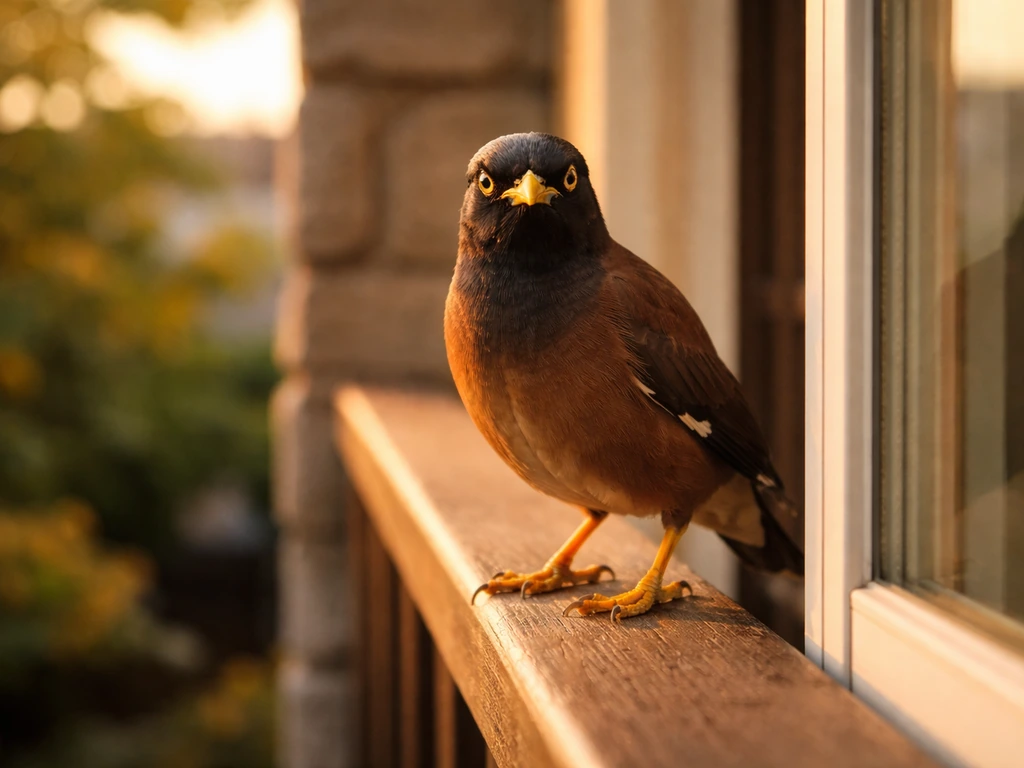
What "myna bird good luck" actually means
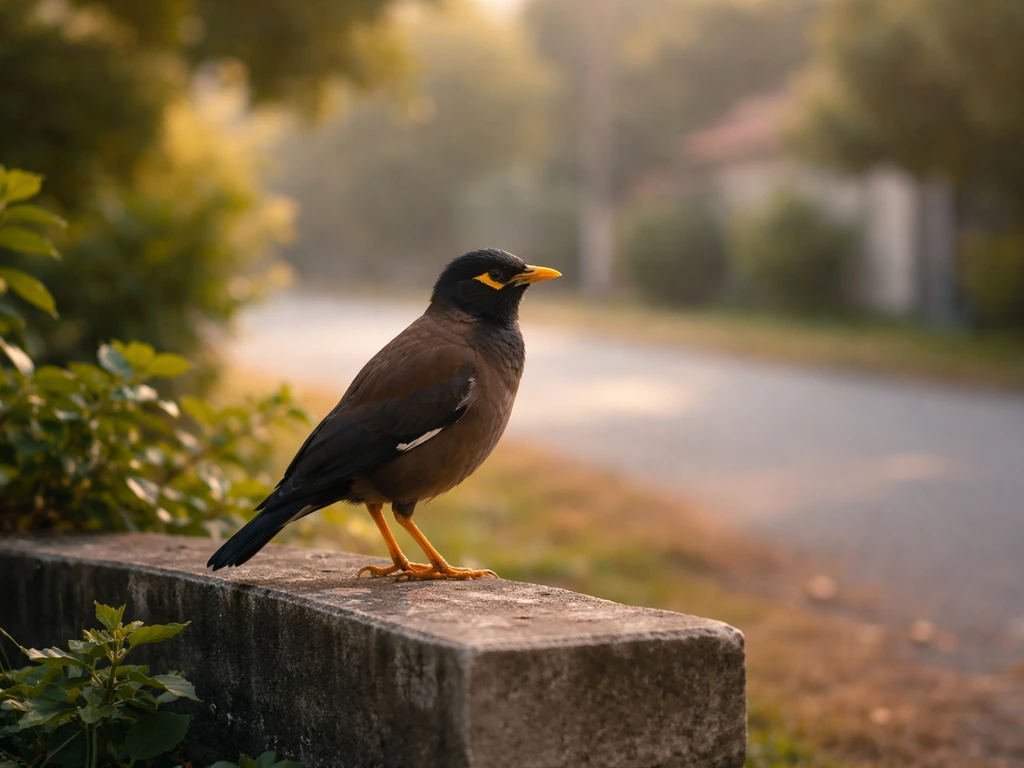
When people search for "myna bird good luck," they're usually asking one of two things: Is this encounter a meaningful sign, or is it just a bird? The honest answer is both, and that tension is exactly where the symbolism lives. The myna has been a culturally significant bird in South and Southeast Asia since at least the classical Sanskrit period, where it was called śārikā (शारिका) and later śarkarikā in omen texts. It shows up in Indian folklore, early omen systems, and classical literature as a bird connected to communication, love, and the rhythms of domestic life.
The "good luck" framing specifically comes from a few converging ideas: the bird's strong pair bond (mynas often pair for life), its closeness to human habitation, and its loud, attention-grabbing voice that has long been interpreted as a message or announcement. When people describe a myna as a good luck bird, they're drawing on a system of meaning where the bird's behavior mirrors something happening in the observer's life. That's not superstition for its own sake; it's a form of symbolic thinking with real historical roots.
Symbolic meanings of mynas across traditions
The common myna's symbolic life is richest in India and the cultures influenced by South Asian thought, but its spread to Australia, New Zealand, Hawaii, and much of Southeast Asia has layered new interpretations onto the bird wherever it landed.
Indian and South Asian traditions
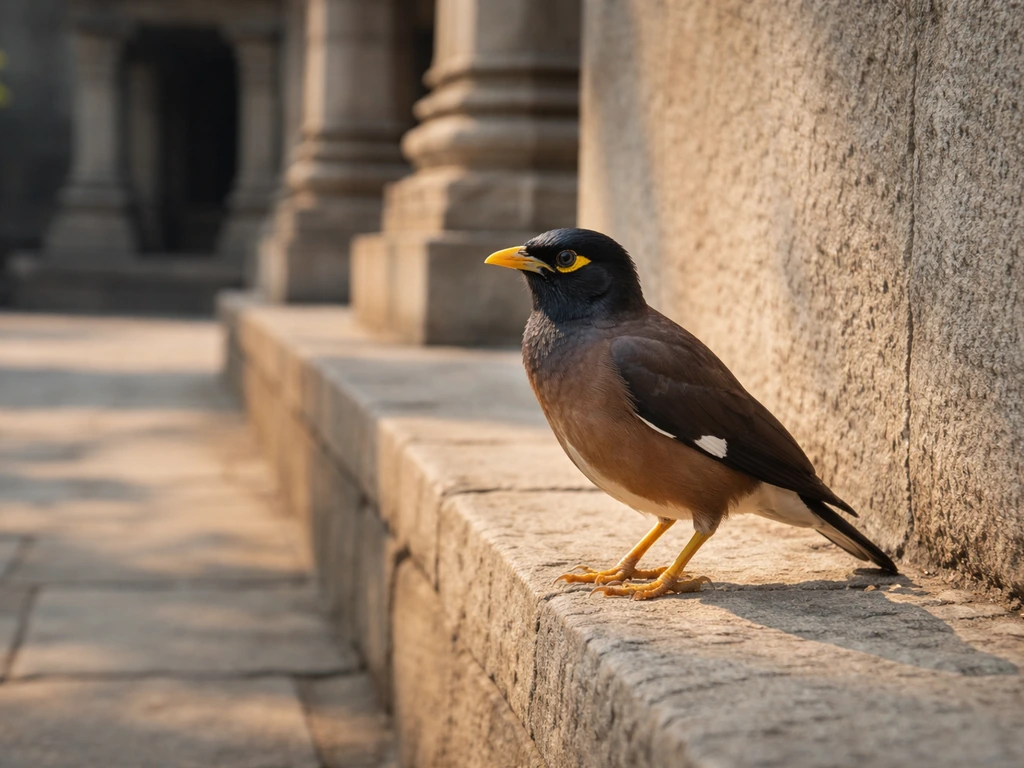
In Indian tradition, the myna is regarded as a symbol of undying love because the birds are known to pair for life. The IUCN's cultural documentation of the species notes this directly: the myna is described as a symbol of devoted, lasting partnership. It's also called the "farmer's friend" in India, a tag that connects the bird to abundance, productivity, and practical blessing. In early omen catalogs from both Mesopotamian and Indian traditions, the common myna type appears as a bird whose calls and movements carry meaning about journeys, visitors, and events to come.
Classical Sanskrit and literary symbolism
The Sanskrit name śārikā places the myna in ancient Indian literary and cultural consciousness well before modern superstition. Classical texts reference the bird in the context of speech, voice, and communication, which aligns with the myna's real behavioral trait of being an exceptional mimic and one of the most vocal birds in any landscape it inhabits. Its ability to replicate human sounds and other bird calls gave it an early reputation as a messenger, a bridge between the human and the natural world.
Broader Asian and comparative contexts
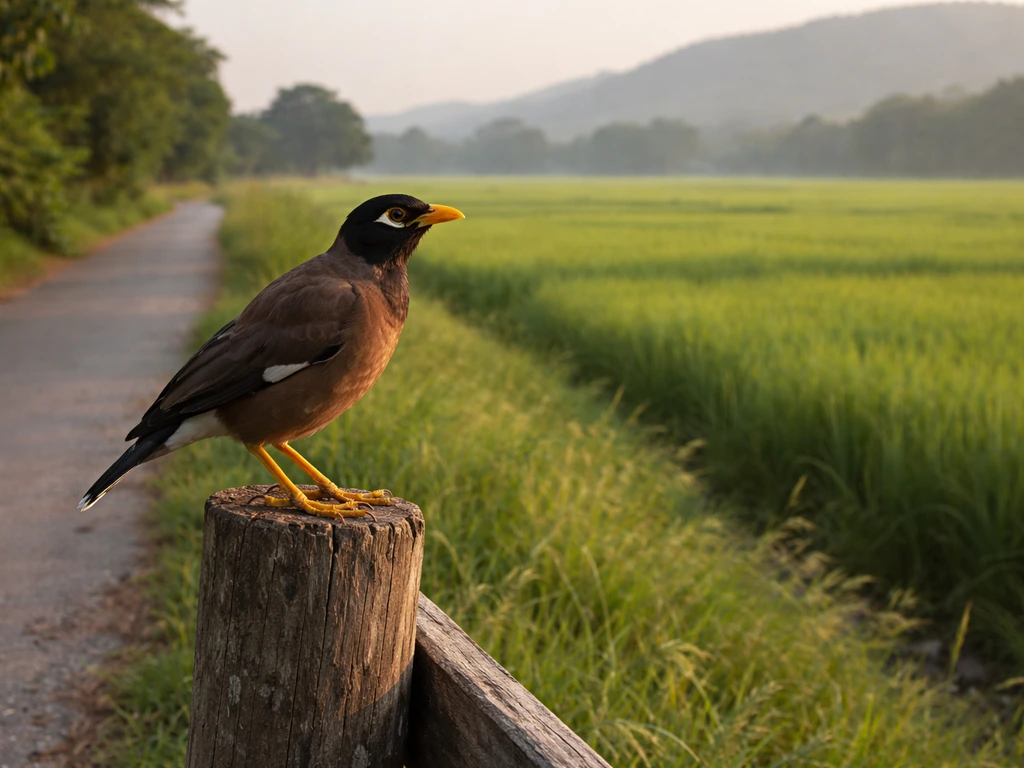
In Chinese cultural frameworks, birds functioning as auspicious symbols of agricultural prosperity and good fortune are well-documented, and while the myna itself doesn't have a single fixed role in Chinese mythology, the broader tradition of treating birds as fortune omens creates a compatible interpretive frame. The practice of ornithomancy, or reading bird behavior and calls as omens, has existed across cultures from ancient Greece and Rome to Mesopotamia and the Indian subcontinent. In Philippine mythology, the tigmamanukan is an omen bird whose direction of flight could bless or warn a journey, showing just how widely this pattern of bird-as-omen extends across Asian traditions.
Why people connect mynas to luck specifically
A lot of the myna's luck association comes directly from its behavior, and once you know what the bird actually does, the symbolism makes intuitive sense rather than feeling arbitrary. In the Guinness Bird Meaning tradition and related omen lore, the takeaway is usually about attention and communication rather than a guaranteed prediction.
- Pairing for life: Common mynas form strong, lasting pair bonds. Seeing two together became a natural symbol of love, loyalty, and lasting fortune, much like how doves function in Western symbolism.
- Closeness to humans: Mynas are one of the most human-associated birds on the planet. Cornell Lab describes them as highly adaptable and often found in human-influenced areas. When a bird consistently lives near you, folklore tends to assign it meaning tied to the household.
- Vocal complexity: The common myna's call repertoire includes whistles, clicks, gruff notes, and imitations of other species. That alarm call, that chattering announcement, feels like a message. It's easy to see why cultures interpreted it as one.
- Nesting in structures: Mynas frequently nest in man-made structures, cavities in buildings, and household structures. When a bird chooses your home to raise its young, that's a powerful symbolic trigger in nearly every tradition that treats birds as omens.
- Visibility and persistence: They're not shy. A myna that shows up stays visible, calls loudly, and returns. That repeated, hard-to-ignore presence makes it feel intentional, which is exactly what good omen experiences tend to involve.
How to interpret different types of myna encounters
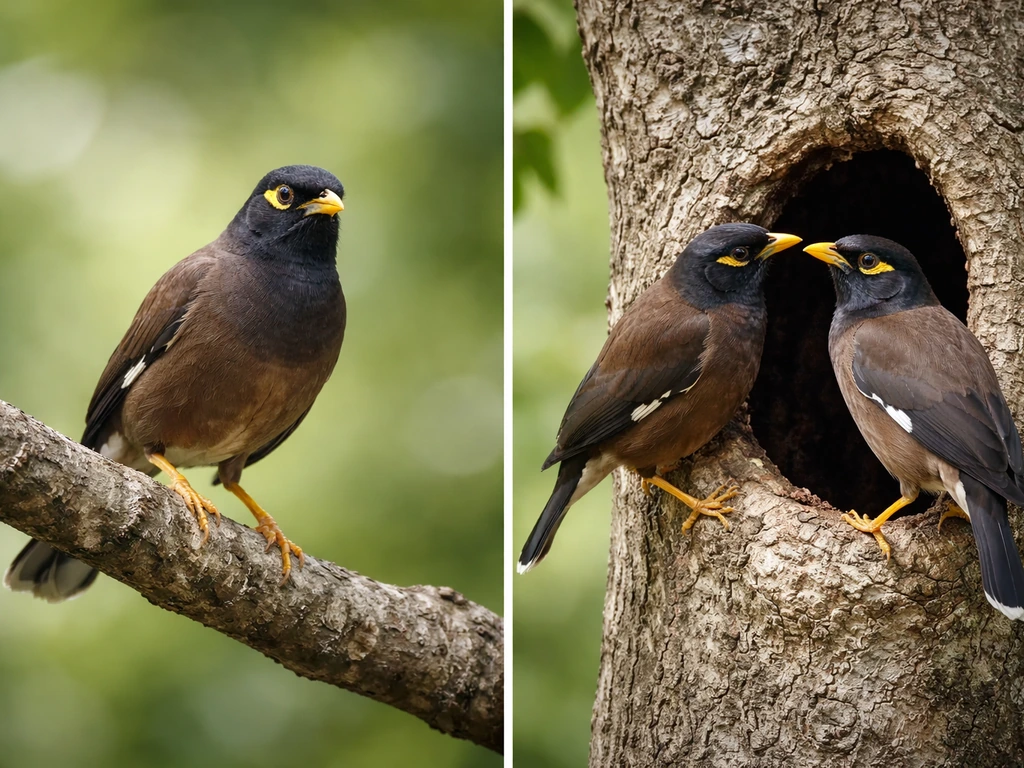
The type of encounter matters a lot in how you interpret the symbolism. Here's a practical breakdown of the most common scenarios and what they've traditionally been associated with.
| Encounter Type | Traditional Association | Practical Interpretation |
|---|---|---|
| Seeing a single myna | A message or alert; sometimes caution in folk traditions | Pay attention to what's around you; a nudge toward awareness rather than fortune |
| Seeing two mynas together | Good luck, love, harmony, positive news | Strong good omen; associated with partnership, reunion, or a favorable outcome in relationships |
| Hearing a myna call without seeing it | A message arriving, news on its way | Something you need to hear is coming; useful prompt for reflection or communication |
| A myna nesting near or in your home | Protection, abundance, household blessing | One of the strongest positive omens; associated with fertility, stability, and lasting prosperity |
| A myna following or approaching you | Direct communication or spiritual attention | Treat as a personal sign; invite reflection on what you're currently asking for or working toward |
| A flock of mynas roosting nearby | Community, collective energy, noise before clarity | Can signal a period of transition or activity; less about individual fortune and more about collective movement |
What to do today: practical spiritual steps
If you've had a myna encounter that felt significant, here's how to work with it in a grounded, respectful way rather than either dismissing it or overclaiming a specific outcome. If you want to work with a bird-as-sign approach in a humane, grounded way, try to avoid chasing or startling the bird.
In the moment
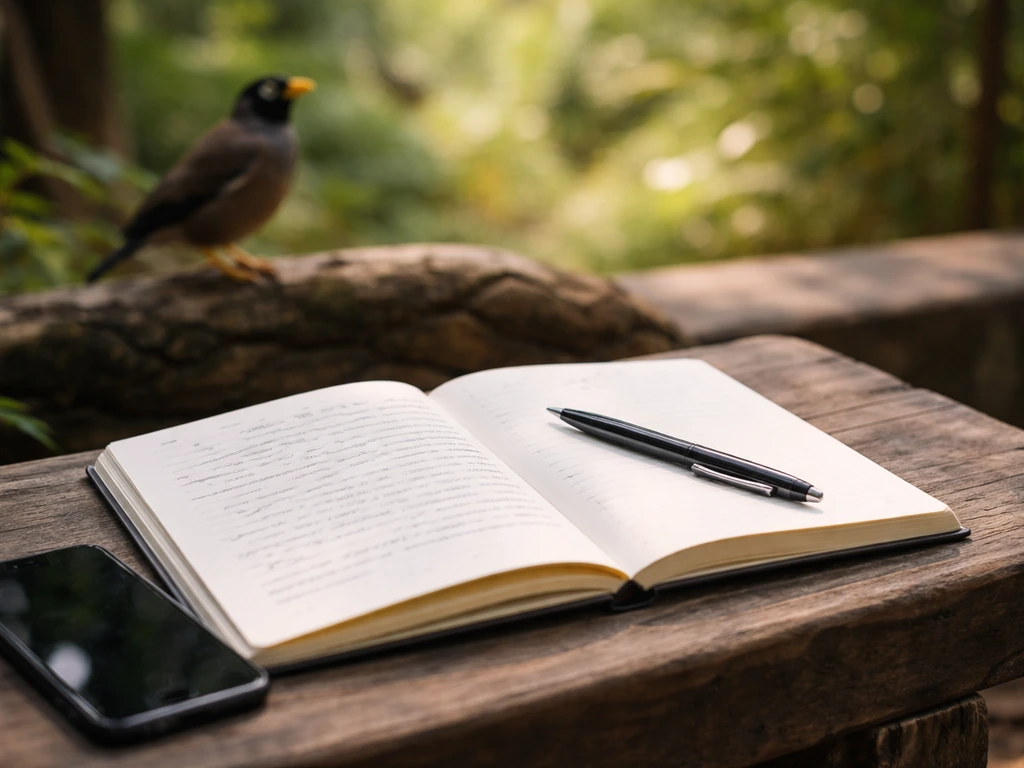
- Pause and observe. Don't chase or startle the bird. Just watch. Notice whether it's alone or paired, calm or alarmed, moving toward or away from you. These details carry meaning in omen traditions.
- Note the timing. What were you just thinking about? What decision or situation is currently active in your life? Omen traditions treat timing as part of the message, not a coincidence.
- Acknowledge the encounter out loud or silently. A simple internal recognition, "I see you, I'm listening," is consistent with reverent traditions that treat bird encounters as moments of contact between the natural and the spiritual.
Later today: reflection prompts
- Write down exactly what you saw and when. Include what you were thinking about or doing just before the encounter.
- Ask yourself: if this bird is bringing a message, what is the thing I most need to hear right now?
- If you saw two mynas, reflect on a relationship or partnership in your life. Is there something there that deserves attention or gratitude?
- If the myna was near your home or nesting, consider what "home" and "stability" mean to you right now. Is there something you're trying to build or protect?
- Sit quietly for five minutes after journaling. Breathe slowly. Let the observation settle without forcing a conclusion. The goal is receptive awareness, not certainty.
A simple intention practice
If you want to align yourself with the luck energy the myna is said to carry, try this: light a candle, write down one area of your life where you're asking for support or clarity, and spend a few minutes holding that intention. You don't need elaborate ritual. The symbolic system the myna belongs to is fundamentally about awareness, communication, and partnership, so grounding your practice in honest reflection and sincere intention honors that tradition more than any prescribed ceremony would.
Luck meanings by life area
Myna symbolism isn't monolithic. Different contexts and traditions emphasize different dimensions of the bird's meaning. Here's how the luck association tends to shift depending on what's happening in your life.
| Life Area | Myna Symbolism | Key Detail |
|---|---|---|
| Love and relationships | Undying love, loyalty, lasting partnership | Strongest when you see a bonded pair; rooted in the myna's life-pairing behavior |
| Home and family | Protection, stability, household blessing | Especially strong when a myna nests in or near your home structure |
| New beginnings | Arrival of change, fresh energy, a message heralding something new | Aligned with the bird's vocal announcement quality; often felt as a "herald" omen |
| Money and abundance | Farmer's friend association; practical prosperity, harvest energy | Less about sudden wealth and more about sustained productivity and resourcefulness |
| Communication and creativity | Voice, expression, mimicry as symbolic gift | Relevant if you're working through something that requires finding the right words |
| Travel and journeys | Attention to signs along the way; awareness of what's approaching | Draws on omen-bird traditions where bird sightings before travel carried directional meaning |
These are symbolic possibilities, not guaranteed outcomes. The appropriate framing is: this is what the encounter might be pointing toward, given the tradition it comes from. What resonates with your actual situation is the more important signal.
Common mix-ups, myths, and how to get it right
The bird identification problem
"Myna" is not one species. Merriam-Webster defines mynah as a group of Asian starlings covering multiple genera, primarily Acridotheres (the common myna) and Gracula (the hill myna). The common hill myna (Gracula religiosa) was historically the bird most people in the West called "myna bird" because it was commonly kept as a cage bird and known for talking. The Javan myna is another species that has spread widely through the cage-bird trade. So when you look up "myna bird good luck," you may be reading symbolism attributed to one species that doesn't necessarily apply to the bird you actually saw. The safest approach: if you're in South or Southeast Asia, or a country where the common myna (Acridotheres tristis) has been introduced (Australia, New Zealand, Hawaii, parts of Africa), that's almost certainly what you saw.
The "one for sorrow, two for joy" confusion
One of the most widely repeated myna superstitions is that one myna brings bad luck and two bring good luck. This mirrors the magpie rhyme ("one for sorrow, two for joy") almost exactly, and there's a genuine possibility that this belief was simply transferred from magpie folklore onto mynas in regions where both birds are common. Magpies have a well-documented centuries-long history of this counting superstition in European and East Asian traditions. The myna version appears in Indian folk belief too, but it's worth knowing the distinction: when you see the "one/two myna" rule cited online, verify whether the source is actually documenting a specific regional Indian tradition or just repeating a generalized omen pattern. Both the scholarly omen-bird literature and cultural documentation suggest treating "good luck/bad luck" attributions as culturally specific rather than universal.
Ecology versus omen: keeping perspective
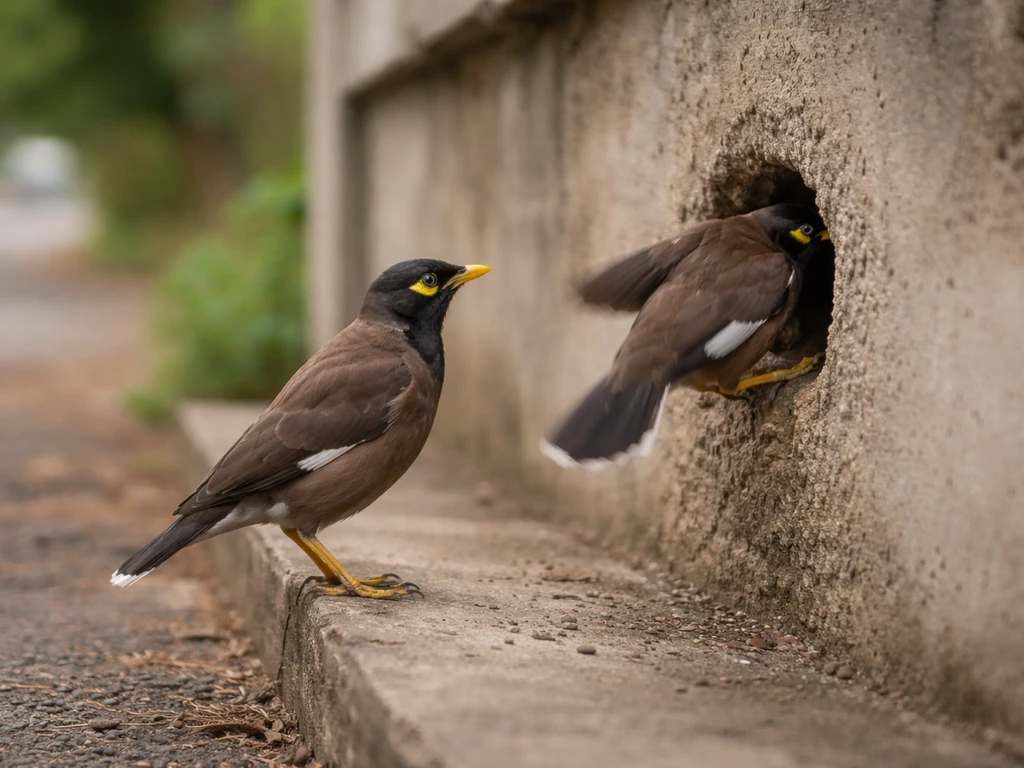
Mynas nest near human structures because they're cavity nesters and buildings offer ideal sites, not because your home is spiritually special. They appear near roadsides and in urban areas because they're highly adaptable generalists. Knowing this doesn't cancel the symbolism; it actually enriches it. The same bird behavior that makes the myna ecologically successful (proximity to humans, boldness, vocal communication, strong pair bonds) is exactly what made it symbolically potent in the first place. The ecology and the symbolism aren't in conflict; they point at each other.
How to verify symbolism respectfully
If you want to trace a myna symbolism claim back to a real tradition rather than just a generalized "spirit animal" website, look for references to Indian classical texts, Sanskrit names (śārikā, śarkarikā), or regional folk traditions that name the bird specifically. Omen-bird scholarship that documents both Mesopotamian and Indian systems confirms that "myna type" birds appear in real historical omen catalogs, which gives the tradition genuine depth. When a source just says "the myna symbolizes good luck" without cultural context, treat it as modern folk synthesis rather than ancient tradition, which is fine to use, but worth labeling accurately. Similar care applies when exploring symbolism for other birds across traditions, whether that's flamingo associations, Celtic bird meanings, or bird of paradise symbolism; each benefits from being traced to a specific cultural context rather than treated as universal. If you are looking for celtic bird meaning, use the same approach: connect the claim to a specific tradition and source rather than treating it as universal Celtic bird meanings.
One last thought on personal interpretation
Bird symbolism has always worked best as a lens rather than a verdict. The myna doesn't guarantee a lucky outcome any more than a four-leaf clover does. What it offers is a framework: a way of paying attention, slowing down, and asking what the natural world might be reflecting back at you in a particular moment. The traditions that built this symbolism knew the myna as a bird of voice, loyalty, and home, and those are genuinely meaningful qualities to sit with. Trust what resonates with your actual situation, hold the rest lightly, and let the encounter be what it is: a moment worth noticing.
FAQ
Does seeing one myna bird for luck mean something different from seeing two?
If you want to treat the encounter responsibly, focus on what you can verify: the bird’s behavior (call, direction of movement, whether it returns to the same spot) and your own situation right now. Use the “good luck” idea as a prompt to take a practical step (send the message you’ve been delaying, check on a plan, or start the task you’ve postponed), rather than expecting an automatic outcome.
Is the “one myna bad luck, two mynas good luck” rule trustworthy?
Yes, but the safest approach is to separate tradition from internet pattern. If the source doesn’t specify a region (for example, a particular local Indian folk belief), treat “one means bad luck, two means good luck” as a generalized counting rhyme that may not match the bird you actually saw or the tradition you’re assuming.
What if I only heard a myna, I didn’t see it?
If you heard a call but never saw a bird, you can still work with the symbolism, but interpret it as an “attention and communication” cue rather than a guaranteed message about a specific event. A practical way to ground it is to write down what conversation or decision has been on your mind since the call.
Can I use myna good luck as a decision guide for important choices?
Avoid tying the encounter to medical, financial, or safety decisions as if it were a certainty. You can honor the meaning by doing what the bird’s symbolism points to, like improving communication, strengthening a relationship, or seeking clarity, while still following normal professional guidance for high-stakes choices.
What does it mean if myna birds keep coming near my home every day?
Mynas are cavity nesters and can be opportunistic around buildings, so their presence may be ecological rather than personal. If the bird is repeatedly landing near your window, consider non-harmful deterrents like reflective tape or adjusting feeding sources, and channel the “good luck” symbolism into how you respond to the situation calmly.
How can I tell which myna species I actually saw?
If you saw a “talking” bird, it might have been a hill myna or another captive-bird type rather than the common myna. That matters because the species most associated with “home, pair bond, and loud calls” in South Asian tradition is the common myna (Acridotheres tristis), so try to identify location and physical features before assuming the same omen applies.
How do I interpret the sign if it doesn’t seem to match my current life?
Don’t treat the encounter as a fixed prediction. A good check is whether your life has an obvious area aligned with the symbolism (love, companionship, travel, visitors, or a message that needs to be said). If nothing fits, use it as a nudge to reflect and communicate more clearly, not as evidence that something bad is coming.
What should I do today if I want to “work with” the myna good luck meaning?
A culturally respectful approach is simple: be mindful and reflective, then take one concrete action connected to communication or partnership. For example, have a short honest conversation, plan a visit, or set a clear intention for what you want clarified, then let the rest unfold without forcing a timetable.
What if the myna bird looks sick or injured when I see it?
If a myna seems injured, keep distance and contact local wildlife or animal rescue services, because symbolism should not come before welfare. The “luck” frame can shift into care and responsibility, which is a more grounded response than trying to interact physically with the bird.
How can I avoid overreacting to a myna encounter?
If the bird’s behavior is ambiguous, use a “lucky lens” rather than a verdict. One useful method is to ask, “What is it asking me to notice?” then choose the smallest next step that improves communication, strengthens a relationship, or brings clarity, since those are the recurring themes behind myna symbolism.
Next Articles
Bird of Paradise Good Luck Meaning Across Cultures
Discover why bird of paradise symbolizes good luck across cultures, and how to use its themes for love, opportunity, and
What Bird Is a Sign From Heaven? Meaning and How to Interpret
Which bird is often seen as a sign from heaven, plus a step-by-step way to interpret your specific encounter.

What Bird Symbolizes Someone From Heaven? Meanings
Cross-cultural guide to birds symbolizing someone from heaven, with meanings, context clues, and how to validate sightin