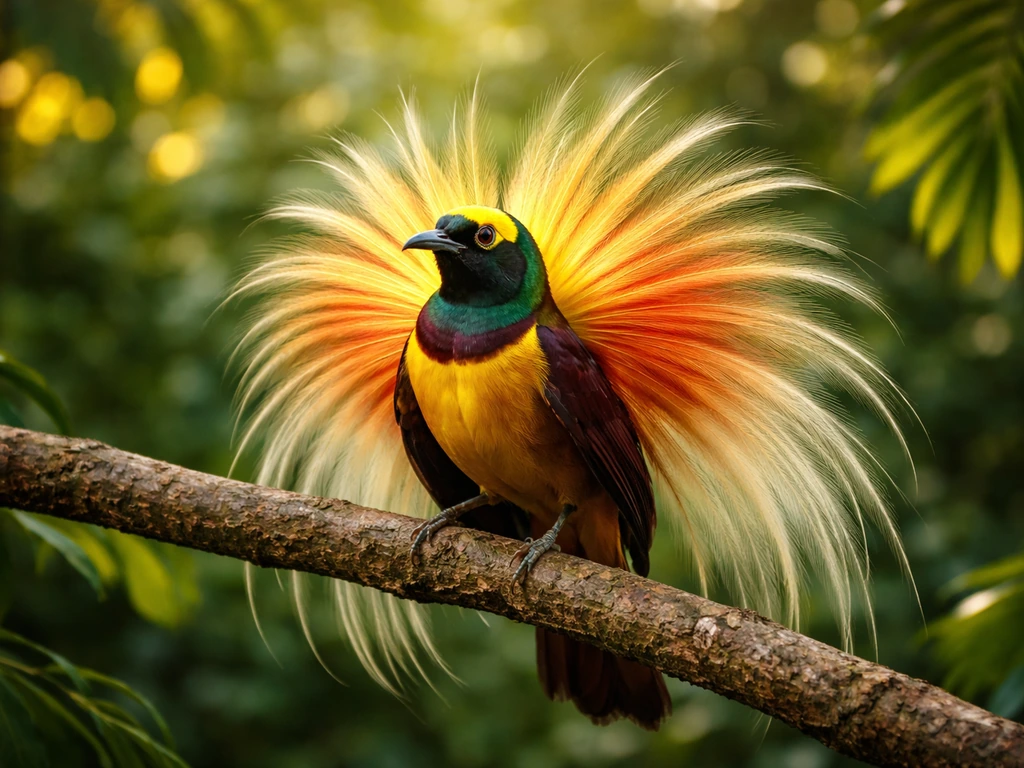
When someone writes 'may the bird of paradise' as a wish or blessing, they are almost always expressing a hope that joy, beauty, freedom, and good fortune will find you. The phrase borrows from centuries of symbolic weight attached to an extraordinary family of birds, and it functions in everyday life the same way 'may you be blessed' or 'may happiness follow you' does. Whether you spotted it on a card, a tattoo, a social post, or a poem, the core message is a generous one: may something radiant and rare grace your life.
May the Bird of Paradise Meaning: Symbolism and Blessings

Eleanor Hartwell
26 Apr 2026
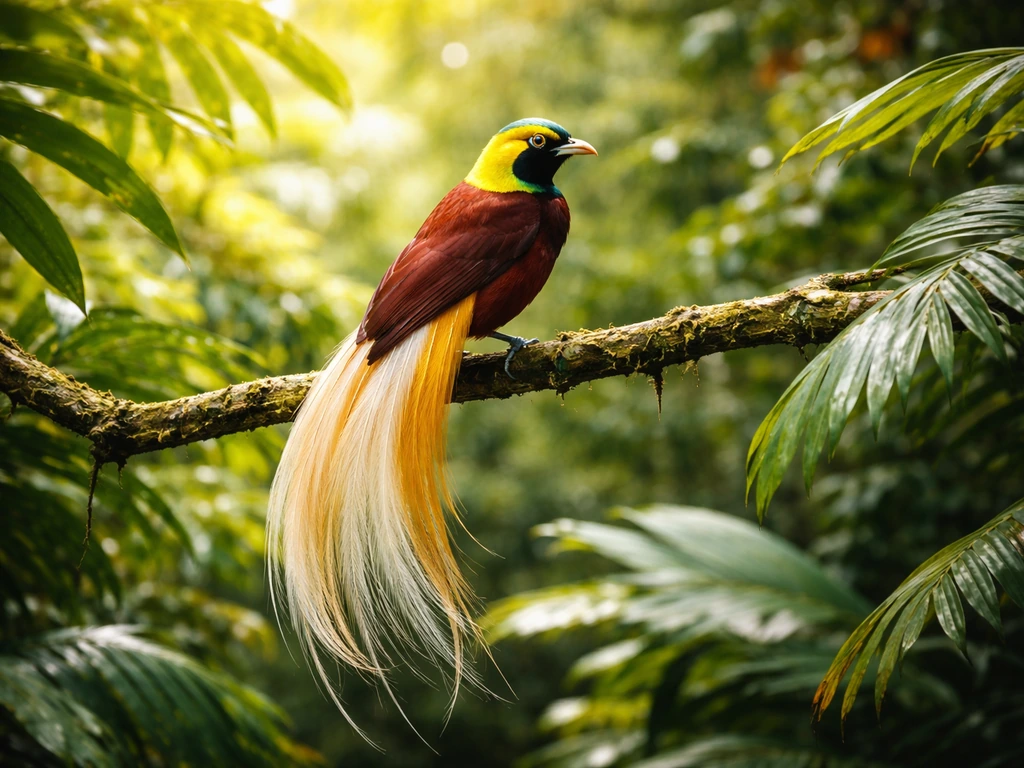
A Blessing, a Joke, or Something Else? What the Phrase Actually Is
The phrase 'may the bird of paradise' sits at an interesting crossroads in modern usage. On one side, it carries genuine symbolic weight as a well-wishing expression. On the other, it has a well-known comedic shadow: the 1965 novelty song 'May the Bird of Paradise Fly Up Your Nose' by 'Little' Jimmy Dickens, which was itself inspired by a comic putdown line from Johnny Carson's Tonight Show. In that version, the bird of paradise is used as a stock curse, a playful mock-insult in the tradition of absurdist one-liners. So context matters enormously here.
When the phrase appears without the 'fly up your nose' punchline, it almost always drops the joke and leans into the blessing. Think of it the same way you would 'may the force be with you': borrowed from a larger cultural moment but now used sincerely. If you saw it on a graduation card, a tattoo, or in a poem about new beginnings, the person almost certainly meant it as a genuine wish for your flourishing, not a comedic jab. The tone and setting are your clearest clues.
What the Bird of Paradise Actually Represents
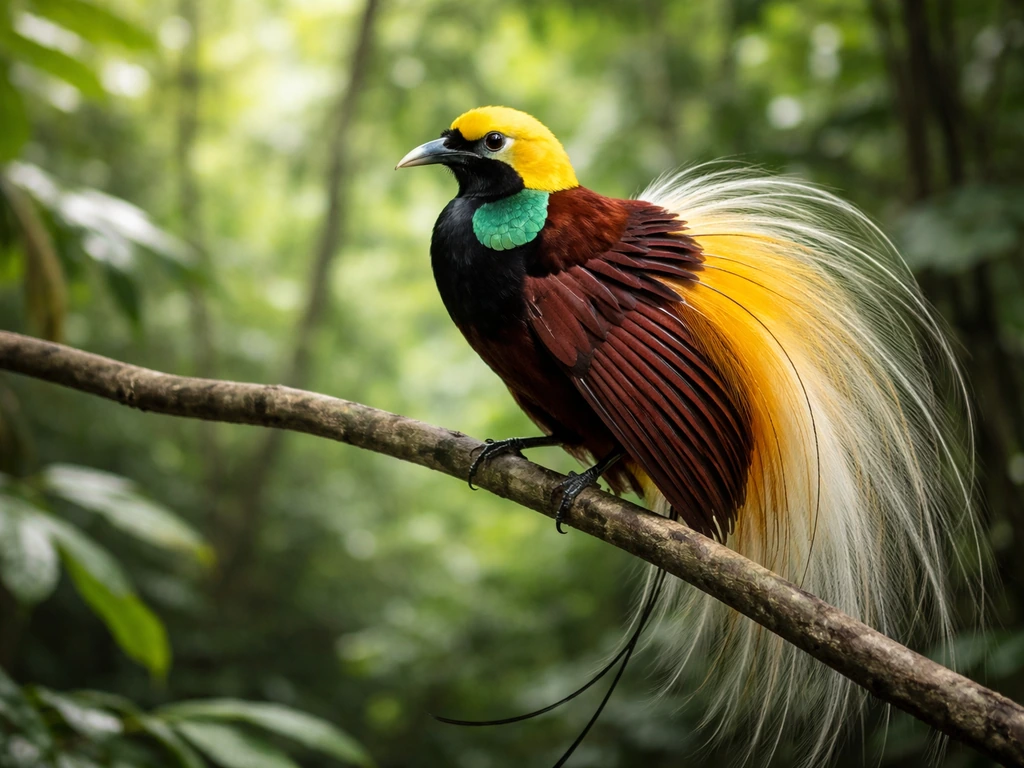
The birds of paradise, the family Paradisaeidae native to New Guinea and surrounding regions, became legendary in Europe partly because of a misunderstanding. Early trade skins arrived with their feet removed, and observers concluded these creatures must never touch the ground, that they lived perpetually in the air, in paradise itself. Carl Linnaeus formalized this myth when he named the greater bird-of-paradise Paradisaea apoda, literally 'without feet.' That error planted a symbolic seed: these birds became creatures of another realm, untouched by the ordinary world. So, if you are wondering what the bird of paradise symbolizes, these roots help explain why the imagery centers on beauty, freedom, and a sense of another realm.
The real birds are extraordinary enough without the myth. Males perform elaborate, almost theatrical display rituals in groups called leks, fanning iridescent plumage in a full-body commitment to beauty. That behavior alone explains why the symbolism that grew up around them gravitates toward themes of authentic self-expression, the willingness to show yourself fully without apology.
Add to this the Strelitzia reginae, the flower named 'bird of paradise' for its vivid resemblance to the bird in mid-display, with iridescent orange and midnight blue petals. It can also be helpful to look up the bird of paradise flower meaning behind the symbolism people attach to the bloom. Longwood Gardens describes the flower as symbolizing 'blank" rel="noopener noreferrer">ultimate freedom and joy.' The plant grows slowly, with seedlings taking three to five years to bloom, which has made it a natural metaphor for patience, delayed reward, and the moment when something beautiful finally emerges after a long wait. The plant grows slowly, with seedlings taking three to five years to bloom, which has made it a natural metaphor for patience, delayed reward, and the moment when something beautiful finally emerges after a long wait bird of paradise when does it bloom.
- Joy and radiant happiness: the visual spectacle of the bird and flower both invoke pure, unrestrained delight
- Freedom: the historical myth of a bird that never lands connects directly to liberation from earthly limits
- Beauty and authentic display: the male bird's lek behavior symbolizes showing your true self without holding back
- Good fortune and divine favor: elite cultures across Persia and the East Indies prized bird-of-paradise feathers as marks of status and blessing
- Spiritual elevation: the 'paradise' in the name has always carried theological weight, suggesting closeness to the divine
- Patience and awakening: the slow bloom of the Strelitzia connects the imagery to earned rewards and transformative emergence
- Love and desire: the dramatic, devoted display of the male bird maps naturally onto expressions of deep longing and devotion
Cultural and Spiritual Traditions That Echo This Imagery
One of the richest connections comes from Persian and Iranian tradition. The Huma bird, often translated as 'bird of paradise,' is a mythical creature believed to bestow kingship and divine favor on anyone it touches or flies over. Sources as early as the Persian lexical tradition describe the Huma alongside phoenix, royal eagle, and paradise bird imagery, showing how fluidly these 'elevated bird' archetypes merged across cultures. To say 'may the bird of paradise bless you' in a Persian-influenced context carries the force of wishing someone royal fortune and divine legitimacy.
In the traditions of New Guinea and surrounding regions, bird-of-paradise feathers were used in sacred ceremonial contexts, including the decoration of ritual objects and in ceremonies involving trophy heads, marking the feathers as more than decorative. They signified power, honor, and spiritual significance within those communities, not the distant Western fantasy of 'paradise' but a grounded, living connection to sacred meaning.
The phrase also has interesting resonance with the broader 'bluebird of happiness' tradition. Many people also use may the blue bird of happiness as a sweet wish for contentment. The bluebird of happiness, rooted in a French fairy play tradition, is a more explicitly happiness-focused symbol. The bird of paradise is simultaneously grander and more complex: it carries joy, yes, but also beauty, power, freedom, and spiritual elevation. Britannica discusses Haoma in relation to sacred, elevated imagery in ancient Iranian religion, including blank" rel="noopener noreferrer">“divine birds” that bring haoma sprigs down to earth, which supports your framing of spiritual elevation through “paradise imagery” when attributed. If the bluebird of happiness is a sweet wish for contentment, the bird of paradise is a wish for something more luminous and extraordinary.
What It Means When You Encounter It in Real Life
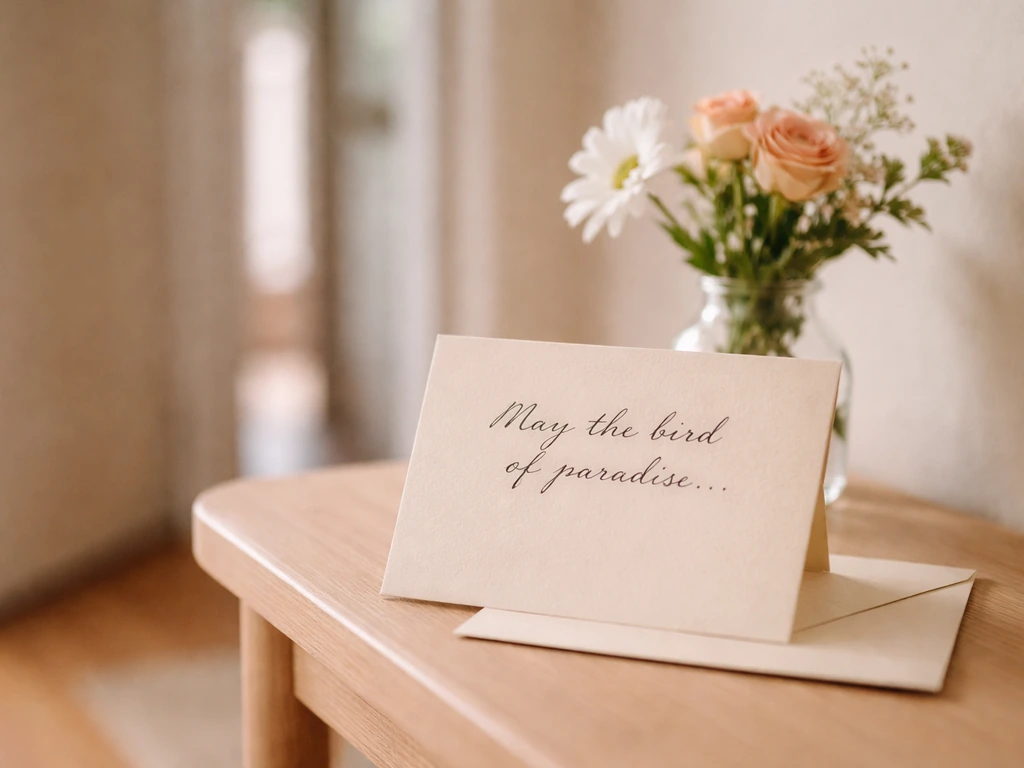
Context is everything when you are trying to decode a phrase like this in the wild. Here is how to read it across the most common settings.
On a Card or as a Written Blessing
If someone writes 'may the bird of paradise find you' or 'may the bird of paradise light your path' on a card, especially for a graduation, new home, recovery, or life transition, they are reaching for the fullest possible wish: joy, freedom, beauty, and fortune all at once. It is a poetic way of saying 'may everything good come to you.' The bird is doing the work that more ordinary phrases cannot quite carry.
As a Tattoo
Bird-of-paradise tattoos are chosen for deeply personal reasons, and the placement and design tell you a lot. A wrist or forearm placement typically signals something the wearer wants to carry with them as a daily reminder, often freedom, authenticity, or a specific transformation they have lived through. A full-color Strelitzia flower tattoo leans into the joy and beauty symbolism. A rendered bird in full display speaks more to authentic self-expression and the willingness to be seen. Either way, the phrase accompanying the image is likely a personal mantra or a blessing the wearer extends to themselves.
In a Social Caption or Quote
On social media, 'may the bird of paradise' tends to appear as an aspirational caption on posts celebrating a new chapter, an achievement, or a moment of beauty. It functions like a secular blessing, elegant enough to feel meaningful without committing to a specific religious tradition. If someone posts it with a nature photo, a travel image, or a milestone announcement, they are almost certainly using it as a shorthand for 'may this beautiful thing, whatever it is, come to you.'
As a Gift Theme
Bird-of-paradise imagery appears regularly on congratulatory greeting cards and celebratory gifts, precisely because it reads as unambiguously positive and visually stunning. When the image or phrase is on a gift, the sender is borrowing that positive symbolic charge: this is a wish for your joy, your freedom, your flourishing.
How to Make the Meaning Your Own
Symbolism only becomes personally useful when you bring your own situation into it. If you are trying to figure out what the phrase means for you specifically, a few reflection questions can sharpen the interpretation.
- Where did you encounter it? A gift from a loved one carries a very different emotional weight than a line in a poem you stumbled across.
- What life moment surrounded it? New beginnings (graduation, new job, new relationship) tend to activate the freedom and joy themes. Loss or grief can draw out the paradise and spiritual elevation themes.
- Which specific quality resonates most? Joy, freedom, beauty, good fortune, divine favor, and authentic self-expression are all valid readings. Trust the one that feels true to your moment.
- Who was it for? If you are writing it for someone else, think about what they most need right now. Someone starting over may need the 'freedom' angle. Someone who has been patient and waiting may need the 'finally blooming' metaphor.
- Are you drawn to the bird or the flower? The Strelitzia flower leans toward beauty, joy, and emergence. The actual birds lean toward freedom, display, and authentic power. Both are valid entry points into the same broader symbolism.
You do not need to commit to a single interpretation. The phrase works precisely because it holds multiple meanings at once. Let it mean what your situation needs it to mean.
Common 'May the Bird of Paradise' Sayings and What They Usually Signal

| Phrase / Variation | Most Likely Meaning | Typical Context |
|---|---|---|
| May the bird of paradise find you | A wish that joy, beauty, and good fortune seek you out | Cards, poems, blessings for new chapters |
| May the bird of paradise light your way | A wish for guidance, clarity, and spiritual elevation | Spiritual or religious gifting, life transitions |
| May the bird of paradise sing for you | A wish for happiness, celebration, and being seen | Birthdays, achievements, personal milestones |
| May the bird of paradise bloom in your garden | A wish for patience rewarded, beautiful things emerging in your life | Recovery, long-term goals, planting seasons |
| May the bird of paradise always fly free | A wish for lasting freedom and authentic self-expression | Tattoos, inspirational posts, personal mantras |
| May the bird of paradise fly up your nose | A comedic mock-curse with no genuine ill will, rooted in the 1965 Dickens/Carson tradition | Jokes, playful jabs, comedy contexts only |
The last line in that table is worth keeping in mind. If you see the full Carson-inspired phrasing with the punchline intact, you are in comedy territory, not blessing territory. The moment the punchline drops away, you are almost certainly back in the realm of genuine well-wishing. That dividing line is what makes the phrase so interesting: it has lived simultaneously as a sincere blessing and a cultural joke, and the meaning shifts entirely depending on which half of that history the speaker is drawing from.
If you are curious to go deeper, the specific symbolism of the bird of paradise as a spiritual figure, the biblical resonances of paradise imagery, and the longer history of what the bird of paradise symbolizes across world traditions all open up even richer interpretive territory. In the biblical meaning of the bird of paradise, the imagery is often tied to exaltation and hope rather than literal zoology biblical resonances of paradise imagery. The phrase 'may the bird of paradise' is a doorway. What it opens into depends entirely on where you are standing when you walk through it.
FAQ
Is “may the bird of paradise” meant as a blessing or can it be an insult?
In most everyday uses, it is a sincere blessing wishing joy, beauty, freedom, and good fortune. It can feel insulting only when the phrase is paired with the well-known comedic punchline about the bird flying up someone’s nose, or when it is clearly used as a parody mock-insult.
What does it mean if the phrase is written as “may the bird of paradise find you” versus “may the bird of paradise fly up your nose”?
“Find you” suggests an all-purpose wish that something wonderful reaches you, often used for milestones like graduation, recovery, or a new home. The longer “fly up your nose” line flips the meaning into comedy, so the surrounding context (tone, setting, and whether the punchline is present) is the deciding factor.
Can the phrase be used for someone going through something difficult, like grief or recovery?
Yes. In recovery, grief-adjacent, or stressful life transitions, people often use it as hopeful encouragement, especially when paired with supportive wording (for example, “light your path” or “bring you comfort”). The key is that the message is usually aspirational, not a literal promise that everything will instantly improve.
Does the flower “bird of paradise” meaning change how the phrase is interpreted?
Often, yes. If the wording appears alongside a Strelitzia (the flower) or a botanical image, many readers will emphasize patience and delayed joy, because that plant is commonly linked to “waiting for something beautiful to emerge.” If the wording appears with a bird illustration, the emphasis more often shifts to self-expression, freedom, and spectacle.
What if I see it as a tattoo with a bird-of-paradise image but no text, does the “may the bird of paradise meaning” still apply?
It can. Many tattoo choices borrow the same symbolism even without the exact phrase, with common themes being authenticity (the bird’s display), personal transformation, or a daily reminder of joy and freedom. Placement matters too, for instance forearm or wrist often reads as ongoing self-meaning rather than memorial only.
Is it okay to use the phrase in professional or formal settings?
Usually, yes, because it reads as elegant and positive when used without the comedic history. To keep it appropriate, avoid contexts that could be read as a reference to the punchline, and consider pairing it with a clear, professional message like “Wishing you continued success and joy.”
How can I tell which cultural layer is influencing the person using the phrase?
Look for cues in the companion imagery or references. If the message is tied to royalty, divine favor, or a “who will rise” theme, it may be echoing the Huma-style royal elevation idea. If it is paired with ceremonial or feather imagery, it may be gesturing toward grounded sacred significance rather than the fantasy of paradise.
What’s the best way to respond if someone writes this as a caption on social media?
A warm, simple reply works best, because the phrase is fundamentally a positive wish. You can mirror the intent by responding with gratitude and one personal detail (for example, “Thank you, this is exactly what I needed for this new chapter,” or “Appreciate the blessing, I’m feeling hopeful”).
Next Article
What Does the Bird of Paradise Symbolize? Meaning and Use
Meaning of bird of paradise symbolism: beauty, joy, freedom, love, confidence, transformation, and spiritual uplift for