
If you searched "may the bird of paradise," you are almost certainly looking for the 1965 novelty song "May the Bird of Paradise Fly Up Your Nose" by Little Jimmy Dickens. The song was written by Neal Merritt, released on September 7, 1965, and became a genuine country hit. This guide will tell you where to find the correct lyrics, what the song actually means, how its title connects to the rich symbolic tradition surrounding the bird of paradise, and how to find matching chords so you can play along.
May the Bird of Paradise Lyrics Meaning and Chords

Eleanor Hartwell
17 Apr 2026
Where to find the correct lyrics and how to confirm you have the right version

The most reliable way to get the exact, publisher-verified lyrics for Little Jimmy Dickens's recording is to use a licensed sheet music source. Musicnotes lists the work specifically under Little Jimmy Dickens and includes the complete lyrics tied to that particular arrangement. Because the lyrics are attached to an official sheet music product, you can trust that what you're reading reflects the actual recorded version rather than a fan transcription that may have drifted over decades of copying.
A second useful reference is a published guitar songbook PDF (sometimes labeled as a "miscellany of older popular songs") that prints the lyrics in a clear CHORUS/VERSE layout alongside chord symbols. This format is especially helpful because the lyric text and the chord chart are presented together, so you can immediately see that the two match the same recording. If you find lyrics on a lyrics website and chords on a separate tab site, there is a real chance they come from different versions or different performers covering the same song.
The quick verification checklist: confirm the songwriter credit reads Neal Merritt, confirm the performer is Little Jimmy Dickens, and confirm the release year is 1965. Any source that checks all three boxes is giving you the original. If a version you find credits a different writer or doesn't mention Dickens at all, you may be looking at a cover or a parody that borrowed the title.
What the song is about and what the title really implies
"May the Bird of Paradise Fly Up Your Nose" is a novelty song, which means its primary job is to make you laugh. The structure follows a classic comedic formula: a narrator recounts a series of small misfortunes inflicted on rude or inconsiderate strangers, and at the end of each story delivers the same absurd curse as a punchline. The title phrase functions as a comic benediction, a wish so silly and specific that the humor comes entirely from the image it conjures.
The genius of the title is the collision of grandeur and absurdity. The bird of paradise carries centuries of association with beauty, grace, and the divine. What the bird of paradise symbolizes across cultures is almost always elevated: paradise itself, eternal beauty, freedom from earthly limits. Merritt takes that lofty image and redirects it into the most undignified possible situation. That gap between the symbol's dignity and the song's punchline is exactly where the joke lives.
The song's themes are essentially social. Each verse describes a small act of everyday rudeness, and the chorus delivers the curse. It is a lighthearted but pointed commentary on how people treat each other, dressed up in the language of an extravagant folk blessing gone wrong. Think of it as the comic inverse of a genuine wish for someone's good fortune.
Walking through the lyrics section by section
The verses each set up a small social scenario. A charity collector is stingy, a barber is careless, a bill collector is heartless. These are recognizable archetypes of everyday friction, chosen because almost any listener in 1965 (or today) would have encountered some version of them. The specificity matters: Merritt does not go for grand villainy. He picks petty frustrations, which makes the curse feel proportionate in the funniest possible way.
The chorus lands the same way every time: "May the bird of paradise fly up your nose / May an elephant caress you with his toes / May your wife be plagued with runners in her hose / May the bird of paradise fly up your nose." The escalation within the chorus is deliberate. Each line adds a new absurdity, and the repetition of the title phrase at the end closes the loop and signals that the curse is complete. The rhythm is sing-along simple, which is exactly why the song became a novelty hit rather than just a novelty record.
If you are reading the lyrics for the first time and wondering whether the song has a deeper message beneath the silliness, the honest answer is: not much, and that is fine. The deeper layer, if there is one, is that the song functions as a safe outlet for minor social grievances. It gives the listener permission to wish something ridiculous on the people who have mildly wronged them, without crossing into genuine malice. For more on the meaning behind the "may the bird of paradise" phrase itself, the symbolic and cultural context runs deeper than the joke suggests.
The bird of paradise as a symbol and how it connects to the song
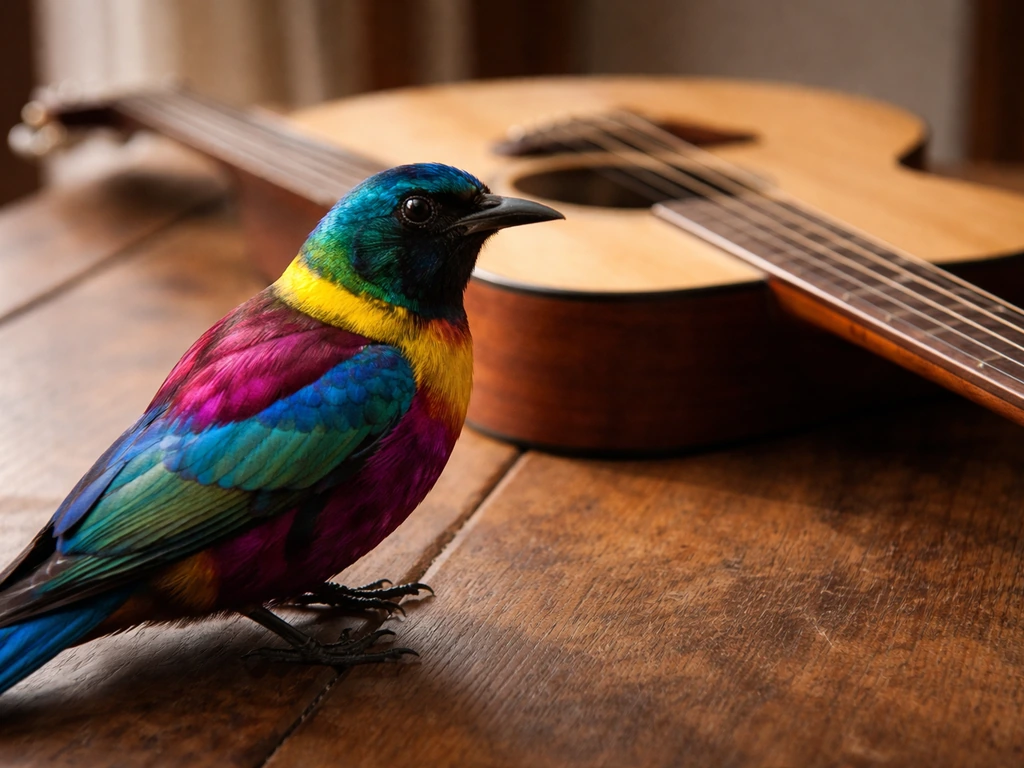
The bird of paradise has one of the most layered symbolic identities in ornithological and spiritual traditions. Early European explorers who first encountered specimens in the 16th century believed the birds never landed, that they lived perpetually in flight and came from paradise itself. This gave rise to the Latin name Paradisaea and centuries of association with the divine, the unreachable, and the ineffably beautiful.
In spiritual contexts, the bird of paradise tends to represent transcendence, longing, and the gap between the earthly and the sacred. The biblical meaning of the bird of paradise draws on this imagery of Eden and the divine garden, connecting the bird to a state of grace that humanity lost and continues to reach toward. That yearning quality is embedded in the very name.
The flower that shares the bird's name carries its own symbolic weight. Bird of paradise flower meaning often centers on joy, freedom, and paradise in a very literal sense, which mirrors the bird's spiritual associations. Both the flower and the bird function as symbols of something beautiful and slightly out of reach.
Neal Merritt almost certainly chose the bird of paradise for the title because the name alone carries a comic weight. Dropping that symbol of paradise and transcendence into an undignified physical situation is the whole joke. But if you are drawn to the song's title for reasons beyond the humor, that instinct makes sense. The phrase "bird of paradise" does something to people. It evokes a real and ancient longing. The song borrows that power and subverts it, which is a comedic technique with a surprisingly long history in folk and country music.
It is also worth noting that novelty songs often use happiness and good fortune as a backdrop precisely because the contrast lands harder. The blue bird of happiness is another tradition that runs parallel here: wishing someone well is such a deeply embedded folk and spiritual act that flipping it into a curse amplifies the humor. The "may the bluebird of happiness" blessing operates in the same cultural register as Merritt's title, just without the punchline.
How to play along: chords and where to find them

The song is not harmonically complicated, which is part of why it traveled so well as a sing-along. The published guitar songbook version pairs the lyrics with straightforward chord symbols. The chorus section, for example, is charted with B7 and E, a classic country turnaround that sits comfortably in open position on a standard-tuned guitar. If you are a beginner, this is genuinely approachable territory.
For a full chord chart matched to the Dickens recording, ScoreExchange offers a piano/vocal/guitar score for this title that includes both the chord symbols and the lyric text in a single document. The advantage of using a source like that over a free tab site is exactly the same as with lyrics: the lyric text and the chord chart come from the same verified arrangement, so you are not accidentally mixing chords from one performer's version with lyrics from another.
If you want to play it by ear or work from a minimal chart, the song stays in a single key throughout with a basic I-IV-V structure typical of 1960s country. The key of E is the most commonly cited for this song (matching the E and B7 chord markings in the songbook), but you can capo up or down depending on your vocal range. The melody is repetitive by design, so most players can work it out after a single listen.
Different recordings and performers: matching your version to the right chords
Little Jimmy Dickens's 1965 recording is the original and the canonical version, but like most popular novelty songs, this one has been covered, parodied, and performed by other artists over the decades. Little Jimmy Dickens's Wikipedia page lists "May the Bird of Paradise Fly Up Your Nose" in his 1965 singles/works Little Jimmy Dickens's 1965 recording. If the lyrics you found online do not quite match what you remember hearing, or if the chords feel off when you play along with a recording, there is a good chance you are working with mismatched sources.
Johnny Carson famously referenced and performed material related to this song during his years on The Tonight Show, and his association with it gave the song a second wave of cultural life. The connection between Johnny Carson and "May the Bird of Paradise" is one reason some people associate the song with a slightly different era or context than its 1965 origins. If your memory of the song comes from a Carson-era television performance rather than the original Dickens recording, the arrangement may differ slightly.
The safest approach when matching lyrics to chords is to identify the specific recording first, then find a chart built from that same recording. The table below shows the most reliable sources by use case.
| What you need | Best source | Why it works |
|---|---|---|
| Verified complete lyrics | Musicnotes (Little Jimmy Dickens listing) | Publisher-tied arrangement with original lyric text |
| Lyrics + chord symbols together | Published guitar songbook PDF (miscellany of older popular songs) | Lyric and chord chart come from the same arrangement |
| Full piano/vocal/guitar score | ScoreExchange listing for this title | Single document with matched chords and lyrics |
| Background and recording details | Wikipedia entry for the song | Credits Neal Merritt as writer, confirms 1965 release date |
One more thing to check: if a lyrics site shows verses you do not recognize, or the chorus wording differs from what you remember, look for a note about which version or year the transcription is based on. Many fan transcriptions blend multiple recordings without flagging it. Going back to the Dickens original is always the cleanest reset point. And if you are curious why a song about a bird of paradise has stuck in the cultural memory for over sixty years, part of the answer is the same reason the symbol itself endures. When the bird of paradise blooms and appears, in nature or in song, it tends to leave an impression.
FAQ
Why do the lyrics I find online not match what I hear in the Little Jimmy Dickens recording?
If your lyrics and chords do not line up with the recording, the most common cause is mixing a chart made for a cover with the Dickens lyrics (or vice versa). Reconfirm the songwriter (Neal Merritt), performer (Little Jimmy Dickens), and release year (1965), then use a chord chart that explicitly matches that same arrangement.
I have the correct chords, but my timing feels off. What should I adjust first?
The chorus cadence is simple, so beginners often try to “sing along” over a chord that has a slightly different bar length in their source. Use the printed chorus layout with chord symbols shown above or alongside the lyric lines, and practice counting the measure before you change chords.
Can I capo or transpose May the Bird of Paradise Fly Up Your Nose for my vocal range?
Yes, the song is commonly transposed for easier guitar shapes. If your chart is in E and you want to sing in a different comfortable range, capo to match the key of your vocal, then keep your strumming and chord changes consistent with the chart’s shapes (do not transpose one part and not the other).
Are free guitar tabs reliable for playing along with the original recording?
If you are using a free tab site, treat it as unverified unless it clearly states the recording it’s based on. Many tabs differ in details like whether a turnaround chord gets a full measure, which can make the chorus feel “wrong” even when the chord names look right.
Does the chorus order matter musically, or can I sing it differently?
The phrase “may the bird of paradise fly up your nose” is the refrain that completes each comic “wish.” If you omit part of the chorus line or shorten it, the joke rhythm breaks and you will notice chord changes arriving too early or too late.
What strumming approach works best if I am learning it as a sing-along?
Most versions keep a steady, country-style strum rather than a complex picking pattern. If your right-hand pattern is too busy, the song stops feeling like a sing-along and you may think the chords are wrong. Start with a consistent down-up pattern, then add accents only after it locks in.
How can I tell if I am looking at a cover or parody lyrics, not the original?
Some covers change the narrative pacing or substitute different words in the verses while keeping the same general punchline. If any verse lines sound unfamiliar to you, do not try to “correct” them by memory, go back to a lyrics source tied to the Dickens recording.
What quick checks can I do to confirm my chord chart matches the intended key and arrangement?
For guitars, a quick check is whether your chord shapes match the chart’s stated key center (often E with a recognizable B7 use in the chorus area). For vocals, a quick check is whether you can comfortably hit the repeated refrain at the same pitch center, without straining between verses and chorus.