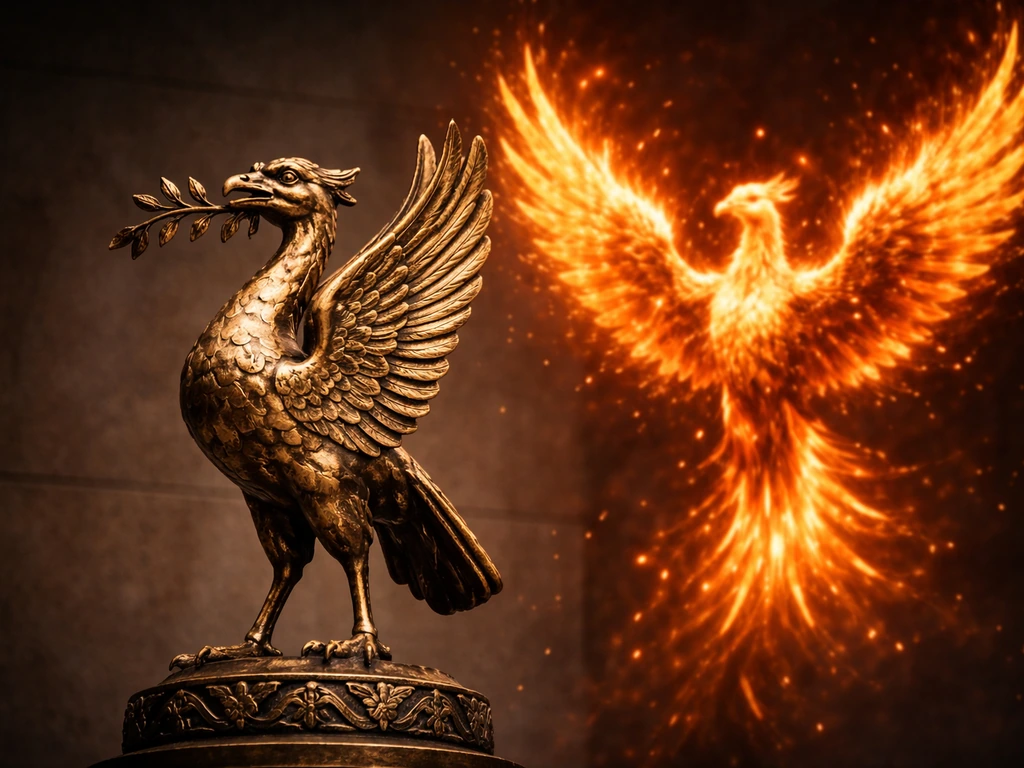
The Liver Bird represents identity, protection, and an unbreakable bond between a place and its people. It is Liverpool's heraldic emblem, a stylized cormorant-like creature that has been watching over the city since at least 1352, and its core meaning is civic pride rooted in maritime heritage. When you notice it, whether on a building, a football shirt, a piece of jewelry, or a tattoo, it is almost always carrying that same cluster of meanings: home, loyalty, endurance, and guardianship.
What Does the Liver Bird Represent and Its Meaning

Eleanor Hartwell
2 May 2026
What the Liver Bird actually is
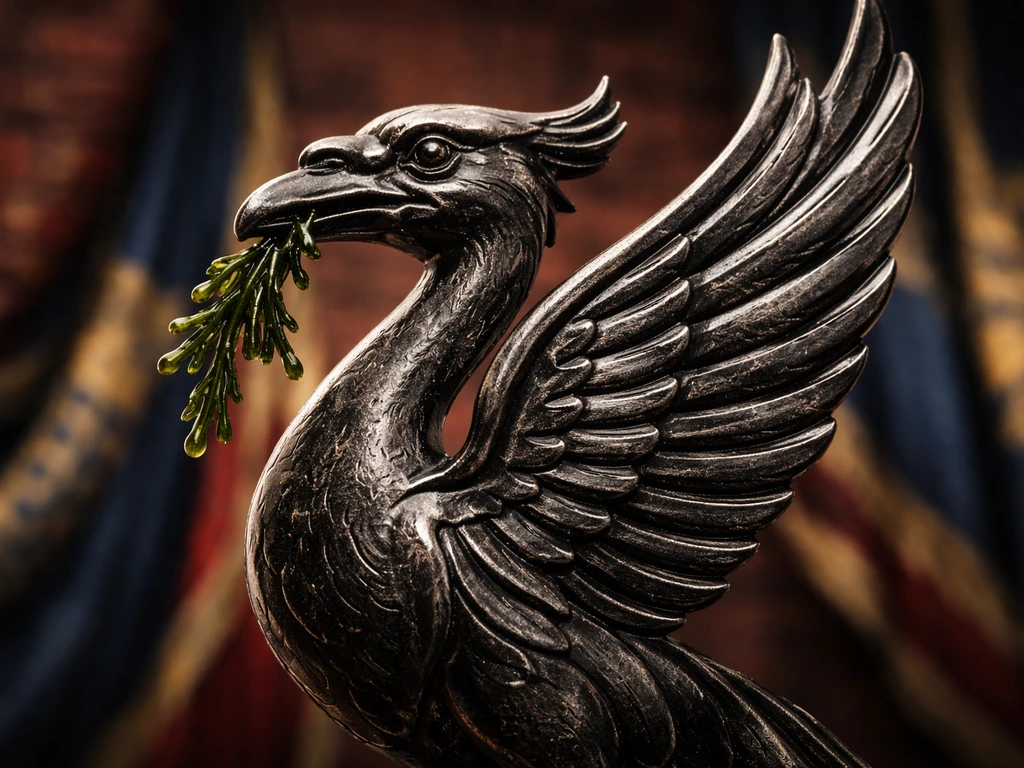
Before diving into symbolism, it helps to get the basics straight, because a lot of confusion starts here. The Liver Bird is not a real species of bird. It is a heraldic creature, a mythical-feeling figure that evolved from the cormorant and became inseparable from Liverpool's identity over centuries. blank" rel="noopener noreferrer">The earliest surviving impression of Liverpool's seal dates to 1352 and is held at the British Museum, making this one of England's older continuous civic emblems. When the city was formally granted a coat of arms on 22 March 1797, the heraldic grant explicitly identified the bird as a cormorant, which locked in the visual tradition that persists today.
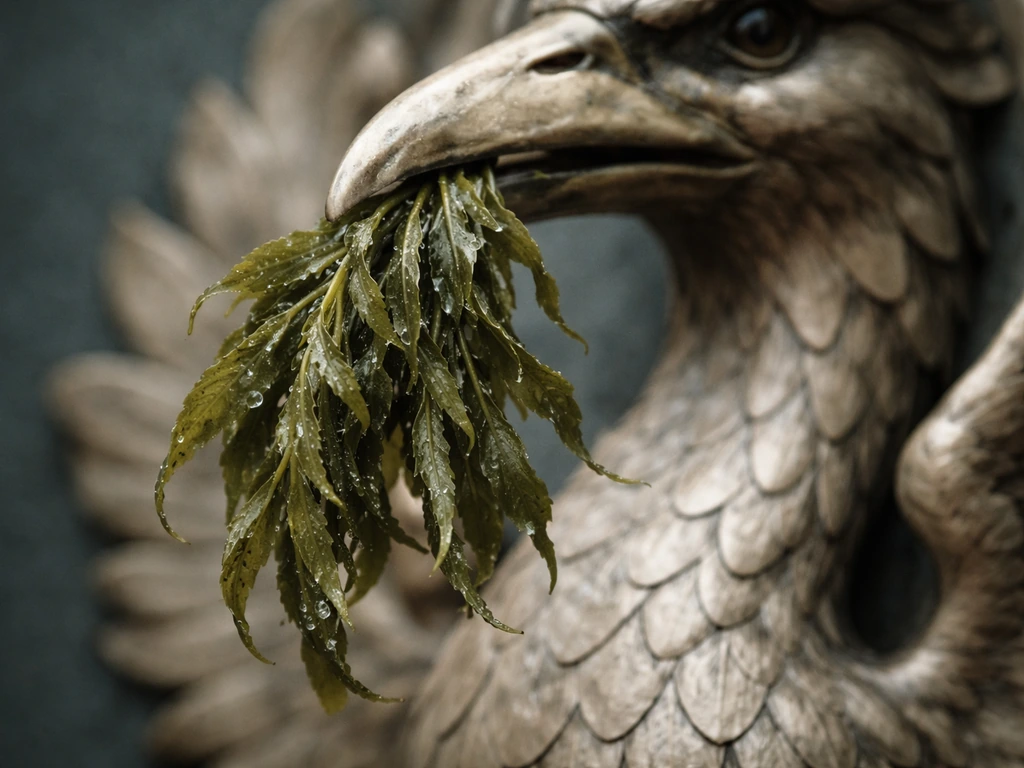
The creature's defining feature is what it holds in its beak: a sprig of laver, a type of seaweed. That detail is not decorative. It is a deliberate pun on the name "Liverpool," with laver becoming liver in the spoken word, and the port becoming pool. So the Liver Bird is literally a visual wordplay encoding the city's name and its relationship to the sea into a single image.
If you are wondering why the Liver Bird is Liverpool’s emblem, the answer comes down to centuries of heraldry, maritime wordplay, and civic identity Liver Bird is literally a visual wordplay. In some alternative mythic interpretations, a bird described as alucard the bird of hermes is my name is tied into broader themes of messenger-like birds and symbolic identity.
The two giant sculpted Liver Birds perched on top of the Royal Liver Building (whose foundation stone was laid on 11 May 1908) are the most famous physical versions of this symbol, standing with wings half-raised over the waterfront, seaweed in beak, facing outward like permanent sentinels.
The core meanings: identity, heritage, and civic pride
In heraldic tradition, a bird atop a civic emblem is almost always doing a specific job: it marks belonging. It says "this place has a story, and we are still living it. " The Liver Bird does exactly that. If you’re wondering specifically what the bird is on the Thomas coat of arms, it’s the same kind of heraldic bird association, and the details of the design matter The Liver Bird.
Liverpool built its wealth and its culture through the sea, through trade, migration, and the constant movement of people and goods in and out of the port. The cormorant, a seabird known for its endurance and its ability to work in harsh maritime environments, captured something true about the city's character even before anyone consciously chose it for those reasons.
Liverpool FC adopted the Liver Bird from the city's coat of arms, first placing it on club kits in 1950, and that decision amplified the symbol's reach globally. This Is Anfield also notes that Liverpool used the Liver Bird on kits in connection with the 1950 FA Cup final against Arsenal, and that the crest developed further in later years club kits in 1950.
Today tens of millions of people recognize it not just as a local emblem but as a mark of a specific kind of fierce local loyalty. National Museums Liverpool has built an entire Liver Bird Trail around it, treating the symbol as a heritage timeline you can walk through across the city.
That context matters: this is a symbol that has been continuously interpreted, displayed, and argued over for more than six centuries, which gives it unusual depth for a heraldic image.
Spiritual and symbolic interpretations worth knowing
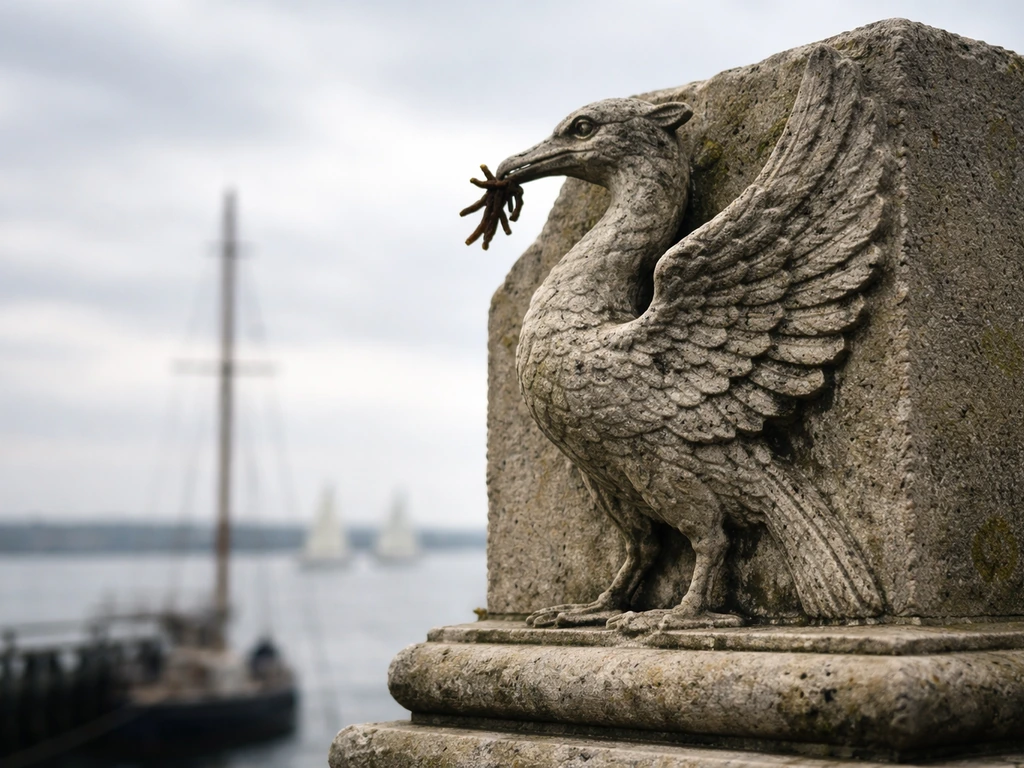
Heraldic birds have long carried a set of meanings that go beyond civic pride, and the Liver Bird fits comfortably within that tradition. In heraldry broadly, birds in elevated positions (especially on towers, gates, or rooftops) are understood as protectors and guardians, watching over the space below. The Liver Birds on the Royal Liver Building are literally described in popular and architectural contexts as "watching over" the city and the sea, which means the guardianship reading is not a projection but is baked into how Liverpudlians and visitors have always talked about them.
Cormorants themselves carry spiritual resonance across several traditions. In medieval Christian art, the cormorant's wing-drying posture was sometimes interpreted as a representation of the cross, linking the bird to themes of sacrifice and renewal. In broader symbolic frameworks, cormorants are read as omens of resilience, deep diving (persistence through difficulty), and the ability to thrive at the boundary between worlds, the sea and the land, the known and the unknown. These themes layer naturally onto the Liver Bird without distorting its civic meaning.
If you are drawn to the Liver Bird as a personal symbol, the cluster of meanings that consistently emerge across contexts is this:
- Protection and guardianship, especially of home and community
- Loyalty that survives distance and difficulty
- Maritime heritage as a metaphor for navigating uncertainty
- Civic belonging and pride in roots
- Endurance rooted in place rather than abstract strength
It is worth noting that questions around whether the Liver Bird shares qualities with mythical or legendary birds (like the phoenix) come up regularly in discussions of this symbol. While the Liver Bird is not a phoenix and does not carry explicit rebirth mythology, the long continuity of the symbol, surviving fires, wars, economic collapse, and cultural change, does give it a kind of earned resilience that resonates with regeneration themes.
How context changes what the Liver Bird means
The same symbol can mean something quite different depending on where and how you encounter it. Here is how context shifts the reading:
| Context | Primary meaning carried | Tone |
|---|---|---|
| Royal Liver Building rooftop | Civic guardianship, maritime heritage, monumental pride | Reverent, public, landmark |
| Liverpool FC crest / football kit | Club loyalty, collective identity, competitive pride | Passionate, tribal, sporting |
| Tattoo on skin | Personal loyalty, Scouse identity, homesickness or homecoming | Intimate, permanent, deeply personal |
| Jewelry or accessories | Cultural belonging, fashion-forward pride, diaspora connection | Personal but wearable, often nostalgic |
| Street murals or public art | Community reclamation, neighborhood pride, local storytelling | Political, communal, expressive |
| Souvenir or tourist item | Place memory, gift of meaning, entry-level introduction to the symbol | Accessible, commercial, light |
| Museum or heritage trail | Historical literacy, civic education, archival meaning | Scholarly, reflective, contextual |
If you see the Liver Bird on someone's arm as a tattoo, you are almost certainly looking at a statement about where that person is from and how deeply they feel it. That same sense of local pride is captured in the way the Liver Bird stands proud on rooftops and waterfronts where the noble bird stands proud. If you see it on a stadium scarf in a city far from Liverpool, it is functioning as a portable homeland symbol. If you encounter it on a building or monument you were not expecting, that is usually the moment people start asking what it actually means, which is exactly the kind of encounter worth sitting with.
How to connect it to your own life right now
Symbolism is most useful when it becomes a lens rather than a label. If the Liver Bird has caught your attention, whether through travel, ancestry, sport, or just a visual encounter that felt charged with meaning, these prompts can help you figure out what it is actually pointing toward for you personally:
- Where is your 'home' right now, and do you feel protected by it or separated from it? The Liver Bird's guardianship energy speaks directly to the tension between rootedness and distance.
- Are you navigating something that feels like open water, uncertain, vast, unfamiliar? The cormorant dives deep and returns. The Liver Bird can be a prompt to trust your own capacity to surface.
- Is there a community or group of people you feel fiercely loyal to? This symbol is fundamentally about collective identity, not individual achievement. Who or what is your Liverpool?
- If you have Scouse heritage or a family connection to Liverpool, the Liver Bird may be arriving as an invitation to reconnect with that thread rather than a purely abstract spiritual sign.
- Notice where you encountered it. A rooftop bird speaks differently to you than one on a piece of jewelry handed down from a grandparent. The container shapes the message.
The Liver Bird sits within a wider family of heraldic birds that carry location-specific meaning: birds on coats of arms serve as territorial markers and identity anchors in a way that migratory or wild birds do not. If you are curious about another heraldic emblem, the secretary bird on South Africa's coat of arms is often discussed for what it represents there secretary bird coat of arms meaning. If you are already drawn to exploring what bird symbols mean in heraldic and civic traditions, looking at how other heraldic birds function (like the secretary bird on South Africa's coat of arms, or the eagle in European civic heraldry) can deepen your understanding of what the Liver Bird is doing symbolically.
Common mix-ups and how to verify you are looking at the real thing
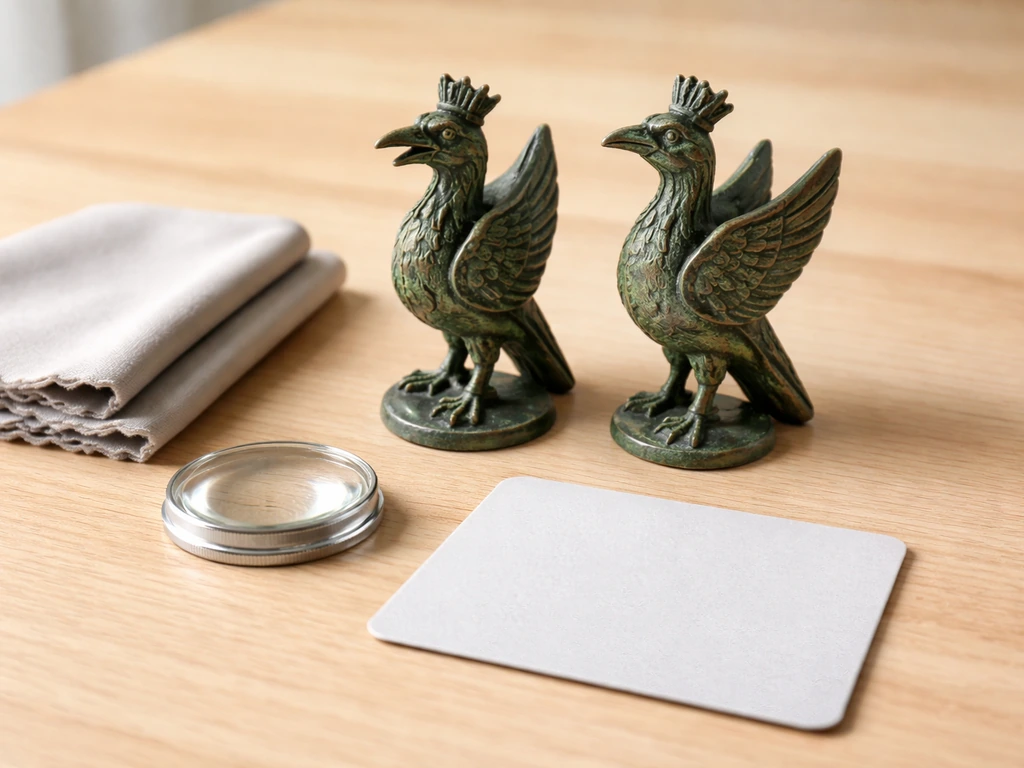
The Liver Bird gets confused with other things more often than you might expect. Here are the most common mix-ups and how to quickly resolve them:
- "Liver" as an organ: The name has nothing to do with the body part. It comes from 'laver,' the seaweed held in the bird's beak, which itself is a pun on Liverpool. If you see the word 'liver' paired with 'bird,' you are in civic heraldry territory, not anatomy.
- Assuming it is a real species: The Liver Bird is a heraldic creature. It is based on the cormorant, and since 1797 the official grant calls it a cormorant, but it has been stylized and mythologized to the point where it exists as its own visual category.
- Confusing it with other Liverpool crests or badges: Various Liverpool institutions have used bird imagery over the centuries. The authoritative reference points are the city's official coat of arms (the cormorant on a white background holding laver) and the Liver Birds atop the Royal Liver Building.
- Mixing it up with eagle imagery: Liverpool Museums have noted that eagle imagery sometimes appears in nearby civic contexts, which can cause confusion. If the bird you are looking at holds seaweed and sits atop a waterfront building or civic emblem in Liverpool, it is the Liver Bird.
- Assuming all Liver Bird depictions are identical: The visual has evolved across centuries. The seal impression from 1352 looks different from the 1908 rooftop sculptures, which look different from the Liverpool FC crest version. They are all expressions of the same symbol, but with different artistic idioms.
The most reliable way to verify you are engaging with the authentic symbol is to check three things: Is it associated with Liverpool (the city, its institutions, or its diaspora)? Does it resemble a cormorant-like form, wings often raised or half-raised? And does it carry seaweed or a branch in its beak, or appear in a clear civic or heraldic context? If yes to those three, you are looking at the real Liver Bird, and you can read its meaning accordingly.
The Liver Bird is one of those symbols that rewards closer attention. The more you understand its origins in maritime wordplay and civic tradition, the more layered its meanings become: protection, loyalty, endurance, home. If you are curious about other bird symbols with seasonal meaning, you might also look into which bird is known as the herald of spring. Whether you encounter it on a waterfront skyline or stitched onto a shirt in a city far from the Mersey, it is carrying over six centuries of accumulated meaning, and that is worth pausing for.
FAQ
What does the liver bird represent if I see it outside Liverpool, like on clothing or in another country?
In that case it usually functions as a portable identity marker, meaning “I am from Liverpool” or “I belong to Liverpool culture.” The core symbolism, home and loyalty, stays intact, but the emphasis shifts from local civic pride to personal or diaspora belonging.
Is the sprig in the beak always laver, and does it change the meaning if the seaweed looks different?
The intended detail is laver (seaweed), and it is the key for the Liverpool name wordplay. If the artwork uses a different-looking leaf or loses the seaweed cue entirely, the image can drift into a generic “Liverpool bird” style, where the origin story and name pun become less obvious even if the symbolism is still meant to read as Liver Bird.
What does the liver bird represent on a football shirt versus on a tattoo?
On kits it is typically shorthand for civic pride plus fan allegiance, a badge of shared identity. On tattoos it is more personal and often treated as a long-term “where I’m from” statement, so the wearer may also be signaling family ties, migration, or a specific life chapter connected to Liverpool.
Are there common look-alikes that people mistake for the liver bird?
Yes, especially generic stylized birds with half-raised wings or any heraldic bird holding something that looks like seaweed. The fastest check is whether it is clearly cormorant-like in form and, crucially, whether it is connected to Liverpool in context (a club, waterfront landmark, or heraldic style) and includes the seaweed-by-the-name logic.
What does the liver bird represent in terms of religion or spirituality, beyond civic meaning?
While the emblem’s main role is civic, the cormorant itself has been interpreted in medieval Christian contexts through wing-drying symbolism, sometimes linked to cross imagery. If you see religious framing around a Liver Bird image, it is likely layered influence from the cormorant tradition rather than an official change to the emblem’s civic purpose.
Does the liver bird ever represent something negative, like rivalry or politics?
Usually it does not, but context matters. If it appears alongside modern political slogans or as part of a faction identity, people may repurpose it for messaging unrelated to maritime heritage, even though the emblem’s historical meaning remains rooted in belonging and guardianship.
What should I check to confirm I’m seeing the authentic symbol rather than an inspired design?
Use a three-part verification: it should be tied to Liverpool in setting (city, club, institutions, or diaspora), it should look cormorant-like with wings raised or half-raised, and it should include the seaweed or equivalent branch detail in the beak. If one of those is missing, treat it as an interpretation rather than a guaranteed authentic Liver Bird rendering.
Does the liver bird represent a specific type of protection, or is it just “being a guardian”?
In heraldic reading it is guardianship and watchfulness, but practically it often implies protection of the community and its maritime lifeline. Because Liverpool’s identity is closely tied to port life, “protection” is frequently felt as endurance through harsh conditions, loyalty to home, and stewardship over what sustains the city.
How can I personalize what the liver bird represents for me, beyond the general meanings?
Try linking the symbol to one concrete “anchor” in your own story, such as ancestry, a hometown you left, or a value you associate with resilience and staying connected. If you can name your personal connection to home and endurance, the symbol stops being a label and becomes a usable lens for your identity.