
The bird of prey in Isaiah 46:11 is almost universally identified as Cyrus the Great, the Persian king who conquered Babylon in 539 BCE. The verse calls him a bird of prey summoned from the east, a man from a far-off land who will carry out God's purpose. That identification is not speculative, the USCCB's footnote for Isaiah 46:11 states it plainly: "From the east a bird of prey: Cyrus." The surrounding chapters make the connection even clearer, since Isaiah 45:1 names Cyrus directly as God's anointed instrument.
Who Is the Bird of Prey in Isaiah 46:11? Meaning

Eleanor Hartwell
2 May 2026

What Isaiah 46:11 actually says

Before diving into who the bird of prey is, it helps to read the verse in a couple of translations side by side. blank" rel="noopener noreferrer">The KJV renders it: "Calling a ravenous bird from the east, the man that executeth my counsel from a far country." blank" rel="noopener noreferrer">The NIV and ESV both go with: "From the east I summon a bird of prey; from a far-off land, a man to fulfill my purpose." The NETBible follows the same pattern. Then the verse closes with God's emphatic declaration: "Truly I have spoken; truly I will bring it to pass; yes, I have decreed it, I will also do it." That final clause is worth noting, the summoned agent's arrival is framed as a done deal, something God has already set in motion.
The verse sits inside a passage (Isaiah 46:9–13) where God distinguishes himself sharply from Babylon's idols. Verses 9 and 10 establish the argument: God alone declares the end from the beginning. Verse 11 then introduces the instrument of that declaration. Verses 12 and 13 shift to comfort language for Israel, promising deliverance and salvation. The bird-of-prey image is a pivot point, it connects the theological argument about God's sovereignty with the historical event about to happen.
The most common identification: Cyrus of Persia
Cyrus the Great fits every geographic and historical marker in the verse. He came from the east (Persia, present-day Iran). He was from a far-off land relative to both Babylon and Israel. His conquest of Babylon in 539 BCE was swift and decisive, the kind of sudden, overwhelming movement a bird of prey suggests. And critically, Cyrus issued a decree allowing the Jewish exiles to return to their homeland, which is exactly the deliverance Isaiah 46:12–13 anticipates.
The scholar Michael Jay Chan, writing in a 2010 journal article specifically titled "Cyrus, Yhwh's Bird of Prey (Isa. 46.11)," examines the Cyrus identification at length and acknowledges that most commentators land there, while also wrestling with the parallelism in the Hebrew text, the way "bird of prey" and "the man" sit in poetic parallel, suggesting they refer to the same figure. ESV study material reinforces the Cyrus link by cross-referencing Isaiah 45:1, where Cyrus is named explicitly as the one God holds by the right hand.
Why the identification holds up in context
Isaiah 46 as a whole is a rhetorical argument against Babylon's idols. The chapter opens with the Babylonian gods Bel and Nebo being carted away, humiliated, unable to save anyone. God then contrasts that weakness with his own power to announce and accomplish history. The bird-of-prey verse lands right at the climax of that argument: here is a specific, named (elsewhere) human agent who will prove God's point by defeating Babylon. Cyrus is not just a historical footnote here, he is the concrete evidence for God's sovereignty over nations.
The geography also matters. Isaiah consistently associates Cyrus and Persia with "the east" and "the north" (see Isaiah 41:2, 41:25). The phrase "from a far country" echoes Cyrus-adjacent language elsewhere in the book. When you read Isaiah 46:11 in that wider context, the cumulative weight of the evidence points in one direction.
Is it a literal bird, a pure metaphor, or something else?
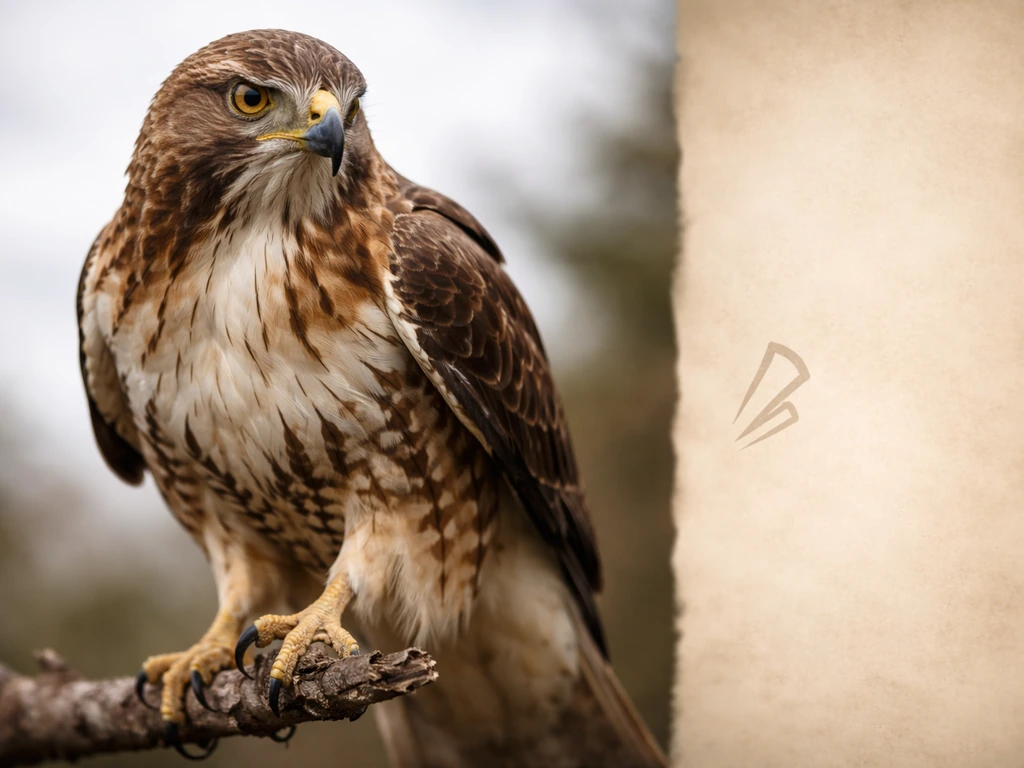
This is where readers sometimes get confused, so let's be direct: the bird of prey in Isaiah 46:11 is not a literal bird. The phrase “bird of jove” is often discussed online, and the bird of jove meaning is usually tied to how readers interpret that raptor language in context. It is a poetic metaphor for Cyrus, built around the Hebrew word עַיִט (ayit), which means a bird of prey or raptor. BibleHub's lexicon entry for that word (Strong's 5861) notes it is used figuratively of an invader in Isaiah 46:11, and of enemies in Jeremiah 12:9. In the r/AcademicBiblical thread about Isaiah 46:11, commenters frame “bird of prey” as a metaphor that functions as an invader imagery for Cyrus, quoting and pointing to the wording of the verse used figuratively of an invader in Isaiah 46:11. The same raptor imagery appears in Ezekiel 39:4, where predatory birds gather around fallen warriors as a judgment image. Biblical writers used birds of prey consistently as symbols of sudden, powerful, conquest-oriented force, not as zoological references.
So while this site regularly explores the genuine spiritual symbolism of birds across cultures and traditions, Isaiah 46:11 is not really an invitation to read in a specific species (like an eagle or hawk) and decode its symbolic meaning. The text is using raptor imagery to say: God is sending a fast, powerful, decisive agent from far away. Forcing a particular bird species interpretation here would miss what the text is doing. The symbolic layer is about conquest and divine mandate, not about the specific bird.
How translation choices affect what you read
The two main translation choices, "ravenous bird" (KJV, NKJV) versus "bird of prey" (NIV, ESV, NETBible), reflect slightly different emphasis but point to the same Hebrew word. "Ravenous" leans into the predatory hunger of the image. "Bird of prey" is more neutral and common in modern translations. Neither is wrong, but the modern phrasing tends to feel more like a symbol of swift military power, which aligns better with what Cyrus actually represented historically.
The second half of the verse, "the man that executeth my counsel" (KJV) versus "a man to fulfill my purpose" (NIV/ESV), hinges on the Hebrew עֵצָה (etsah), which carries the meaning of counsel, plan, or purpose. Both renderings are valid. The NIV's "purpose" feels more teleological, God had an end in mind. The KJV's "counsel" feels more deliberate and advisory. Either way, the agent is acting on God's directive, which reinforces the identification with Cyrus as a knowingly or unknowingly appointed instrument.
| Translation | Key phrase | Tone |
|---|---|---|
| KJV | ravenous bird from the east | Predatory, consuming |
| NKJV | bird of prey from the east | Military, decisive |
| NIV | bird of prey / man to fulfill my purpose | Teleological, sovereign |
| ESV | bird of prey / man to fulfill my purpose | Teleological, sovereign |
| NETBible | bird of prey / man to fulfil my purpose | Same as NIV/ESV with expanded notes |
What the bird-of-prey image actually symbolizes here

Even though this is not a species-specific symbol, the choice of raptor imagery is meaningful. Birds of prey across cultures and throughout scripture consistently carry themes of speed, precision, power from above, and judgment. A hawk or eagle does not hesitate. It does not negotiate. It strikes from a position of height and moves faster than its target can respond. That is exactly what Cyrus's campaign against Babylon represented historically, a swift, seemingly unstoppable military advance that Babylon's defenders could not match. That same idea, that the weak should fear the strong, shows up in how the passage uses the bird-of-prey image for judgment and overwhelming power the weak should fear the strong bird.
There is also a divine mandate dimension. In many ancient Near Eastern traditions, birds of prey were associated with royal and divine authority, think of the eagle in Roman and later American imagery, or the falcon in Egyptian symbolism (particularly Horus). Isaiah's use of bird-of-prey language for Cyrus borrows from that cultural register. It communicates that this is not just a foreign conqueror: this is someone operating under divine commission, arriving with the authority of heaven behind him.
The broader symbolic themes at play in Isaiah 46:11, swift judgment, divine appointment, power from a distant and unexpected source, connect to how birds of prey function as symbols across many traditions. If you have read about bird of prey meaning in the Bible more broadly, or come across the idea that predatory birds signal turning points and divine intervention, Isaiah 46 is one of the clearest examples of that pattern in action. The same kind of imagery appears in discussions of what it means when a bird of prey appears as a symbol in a broader spiritual context.
Practical steps for reading this passage well
If you want to understand Isaiah 46:11 confidently and apply its meaning thoughtfully, here is how I would approach it:
- Read the full chapter (Isaiah 46: 1–13) in one sitting. The bird-of-prey verse only makes full sense in the arc of the chapter's argument against idols and toward deliverance.
- Cross-reference Isaiah 41: 2 and 45:1. These passages use similar "from the east" language and the second explicitly names Cyrus, locking in the identification.
- Compare at least two translations — try the NIV and the KJV together. The difference between "ravenous bird" and "bird of prey" is subtle, but seeing both helps you feel the range of the imagery.
- Check a Bible commentary or footnote for Isaiah 46: 11 specifically. The USCCB's footnote naming Cyrus is freely available online and is a good starting point.
- If you are exploring the symbolic dimension, focus on what raptor imagery means broadly (speed, judgment, divine mandate) rather than trying to identify a specific species. The text does not name a species because the species is not the point.
- Notice the fulfillment language at the end of the verse — "I have spoken it, I will also bring it to pass." That is the theological heart of the passage. The bird is the vehicle; God's word is the message.
The beauty of this passage is that it works on multiple levels at once. Historically, it pointed to a real person (Cyrus) who would do a real thing (conquer Babylon and free the exiles). Theologically, it makes a claim about God's ability to use unexpected, even foreign agents to accomplish stated purposes. Symbolically, it draws on deep raptor imagery to communicate the character of that action: swift, powerful, coming from beyond the horizon. You do not have to choose one layer. All three can hold.
FAQ
Is the “bird of prey” in Isaiah 46:11 definitely Cyrus, or could it be something else?
Most readings identify it as Cyrus because Isaiah 45:1 names Cyrus directly and because the Hebrew “bird of prey” language in context functions as a figure that issues forth God’s plan. Some scholars note the poetic parallelism between “bird of prey” and “the man” and consider stylistic linkage rather than two separate figures, not a different identity.
Does “from the east” mean Cyrus came from the east geographically in his lifetime?
In the biblical world, “the east” is a common directional label for Persia’s region. The verse’s wording fits that cultural-geographic expectation, meaning the phrase is describing the origin direction rather than asking you to prove an exact route of travel.
Why do some translations say “ravenous bird” while others say “bird of prey,” does it change the meaning?
It changes emphasis, not the referent. “Ravenous” highlights the predatory character of the image, “bird of prey” is more neutral and widely understood. Both aim at the same idea, swift, overpowering action associated with raptors.
Could the text mean two different things, one bird and one man?
The verse reads like Hebrew poetic parallelism, the raptor image and “the man” work together to describe the same appointed agent. Reading them as two separate references tends to create a mismatch with the strong identification of Cyrus in the surrounding chapters.
Is the bird imagery supposed to point to a specific species, like an eagle or hawk?
No. The text uses raptor language as metaphor for sudden conquest and judgment, not as a zoological key. Even when birds of prey imagery shows up across Scripture, Isaiah 46:11 is focused on the political-theological role of Cyrus rather than which species God had in mind.
What does “executeth my counsel” or “fulfill my purpose” tell us about God’s role?
It frames Cyrus’s actions as functioning within God’s declared plan, even if Cyrus is not portrayed as a worshiper. The emphasis is on purpose and agency, God’s word is what sets the outcome in motion.
Does Isaiah 46:11 teach that God uses “foreign conquerors” as instruments?
Yes, that is a major implication of the passage. Isaiah contrasts Babylon’s helpless idols with God’s ability to achieve his end using outsiders, meaning deliverance for Israel can arrive through an unexpected route.
How does Isaiah 46:11 relate to the promise of deliverance in verses 12–13?
Verse 11 introduces the agent God summons to accomplish the outcome, then verses 12–13 shift to what that outcome means for Israel (deliverance and salvation). So the bird-of-prey line is the pivot, it bridges God’s sovereignty argument to the promised rescue.
If someone is reading Isaiah 46:11 devotionally, what should they avoid?
Avoid treating the raptor image as a promise about a specific personal sign (like “a hawk means this is from God”). In Isaiah 46:11, the symbolic layer points to decisive divine commission shown through a historical ruler’s campaign.
How can I confirm the Cyrus identification quickly while reading?
Check whether your Bible notes cross-reference Isaiah 45:1 (where Cyrus is named) and then read Isaiah 46:9–13 as a whole unit. If the passage’s rhetoric about God’s sovereignty and the defeat of Babylon is central, the “bird of prey” naturally functions as the instrument that makes that rhetoric concrete.