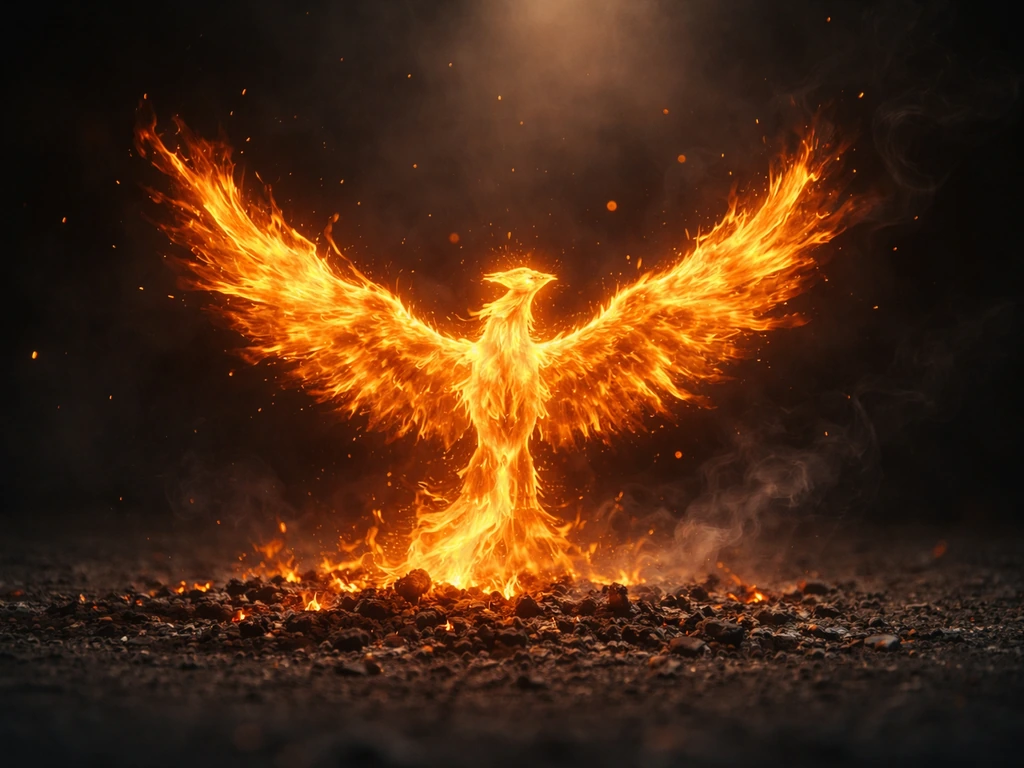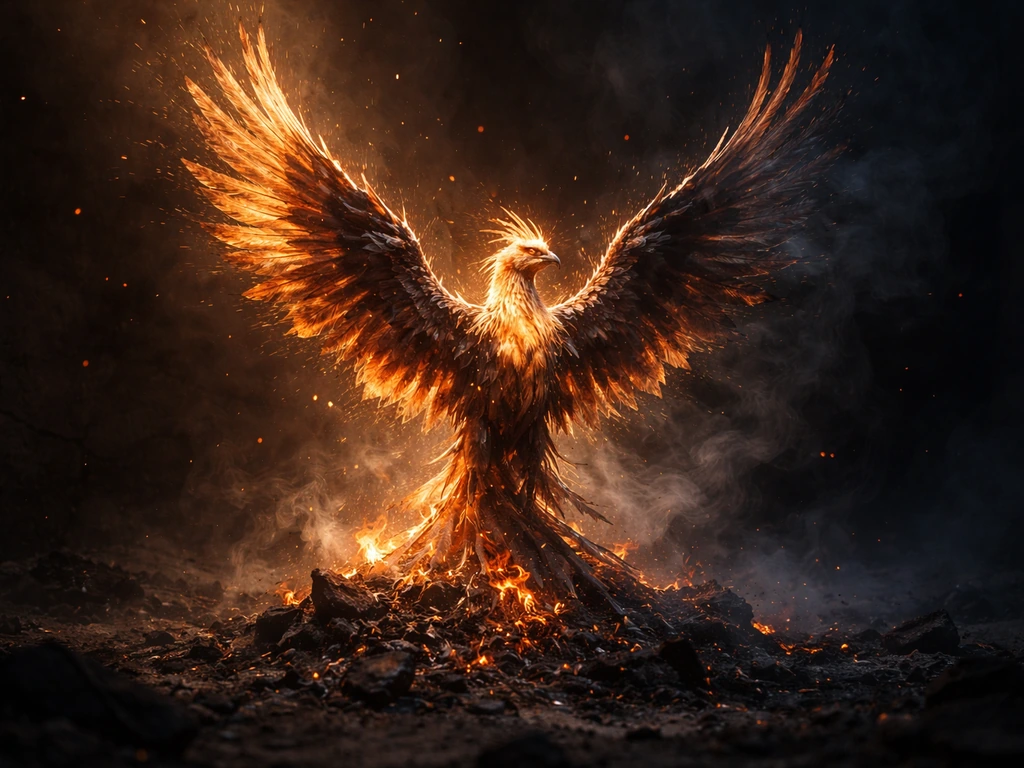
Phoenix symbolism offers something genuinely useful: a framework for making sense of loss, endings, and difficult change by reframing them as necessary steps toward renewal. For many people, the phoenix also raises the question of what is stronger than a phoenix bird, pointing back to the idea of renewal through loss. The "benefits" people seek from the phoenix aren't magical or literal. They're symbolic and psychological. When you sit with the phoenix's core message, which is that destruction and rebirth are part of the same cycle, you get a lens for processing grief, starting over, building resilience, and finding hope when things fall apart. That's the real value here, and it's been recognized across cultures for thousands of years.
Phoenix Bird Benefits: Rebirth, Renewal, and Inner Transformation

Eleanor Hartwell
15 May 2026
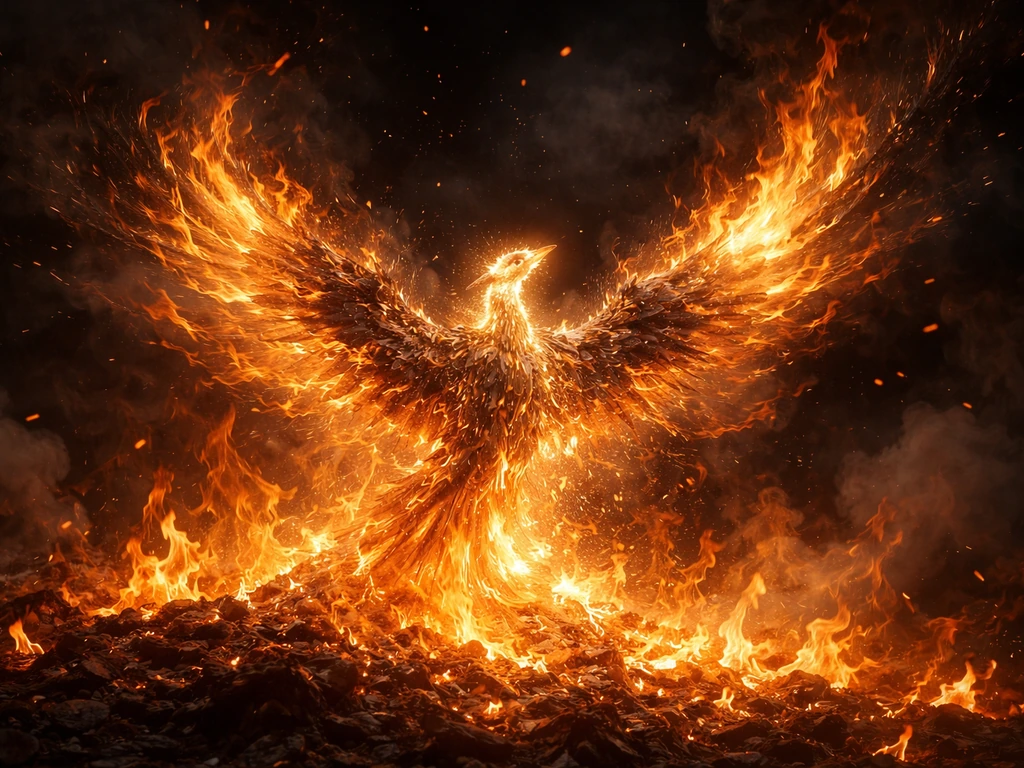
What the Phoenix Actually Is (and Where It Comes From)
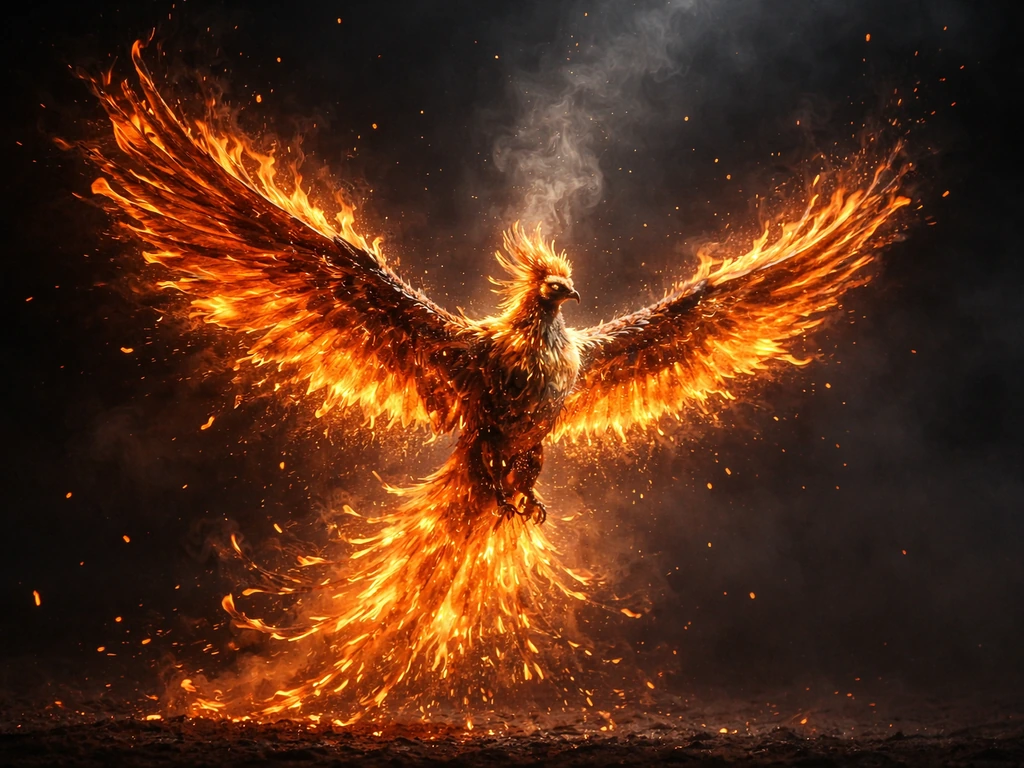
The phoenix is a legendary immortal bird that cyclically destroys itself and is reborn from its own ashes. That's the core image. But the tradition behind it is older, more layered, and more geographically diverse than most people realize. Herodotus, Ovid, Pliny the Elder, Lucan, Pope Clement I, Lactantius, and Isidore of Seville all engaged with the myth in different forms, which tells you this symbol carried weight across centuries of classical thought.
The likely ancestor of the Greek phoenix is the Egyptian Bennu, a solar bird whose very name connects to an Egyptian verb meaning "to rise in brilliance" or "to shine." The Bennu was tied to the sun, creation, and cyclical rebirth, described as living around 500 years before dying and reviving. The fire-and-ashes renewal motifs from Egyptian tradition appear to have shaped what later became the Greek phoenix legend, though scholars debate the exact lines of influence.
What makes this symbol so durable is that it wasn't contained to one tradition. The Old English poem "The Phoenix," drawing on Lactantius and early Christian biblical commentary, explicitly connected phoenix rebirth to resurrection and eternal life, Christianizing the archetype while keeping the core cycle intact. In Persian mythology, the Simurgh plays a related role: a gigantic bird described as living roughly 1,700 years before plunging into its own fire to die and be reborn, embodying immortality, sacrifice, and cyclical renewal. The Chinese fenghuang, while distinct in character (it symbolizes yin-yang harmony and Confucian virtues like compassion, duty, and trust), is frequently compared to the phoenix and shares the fire association. The fenghuang’s name is analyzed as feng (male aspect) plus huang (female aspect), a pairing tied to yin, yang harmony, as Britannica notes fenghuang’s name is analyzed as feng plus huang, tied to yin–yang harmony. So when people talk about "the phoenix," they're actually drawing on a cross-cultural well of meaning that runs from ancient Egypt through Greece, Persia, China, and early Christian Europe.
The Specific Benefits People Seek from Phoenix Symbolism
People aren't usually searching for phoenix symbolism out of pure academic curiosity. They're in the middle of something hard. Divorce, job loss, illness, grief, the end of an identity they built for years. What they want to know is: does this symbol have something useful to say to me right now? The answer is yes, and here's how to be specific about it. If you want a more practical, belief-based angle alongside the symbolic psychology discussed here, you may also like these phoenix bird images vastu benefits.
- Emotional renewal after loss: The phoenix says endings aren't just endings. When something burns down, that fire is also the source of what comes next. This reframe is genuinely useful for processing grief without forcing false positivity.
- Resilience through hardship: The symbol affirms that surviving difficult passages isn't just recovery, it's transformation. You emerge from the fire different, not diminished.
- Permission to let go: One of the most overlooked aspects of the phoenix cycle is the burning itself. The bird doesn't cling to its old form. The symbolism actively encourages releasing what no longer serves you, whether that's a relationship, a career path, or a self-image.
- Hope during a dark period: The ashes phase, the in-between before the rebirth, is part of the cycle too. Phoenix symbolism validates the darkness as meaningful, not as failure.
- Inner transformation and self-reinvention: For people navigating major identity shifts, the phoenix offers a culturally deep narrative for the experience of becoming someone new.
- Spiritual resilience: In traditions from early Christianity to Persian mythology, the phoenix carries themes of sacrificial renewal and immortality of spirit that speak to people processing existential or faith-based questions.
One important caution here: phoenix symbolism works best when it's pointed toward growth, not self-destruction. The archetype can be misread as glamorizing burning everything down. The actual message is that transformation requires releasing what's dead, not destroying what's living. The fire is purposeful, not reckless.
How to Read Phoenix Signs in Everyday Life
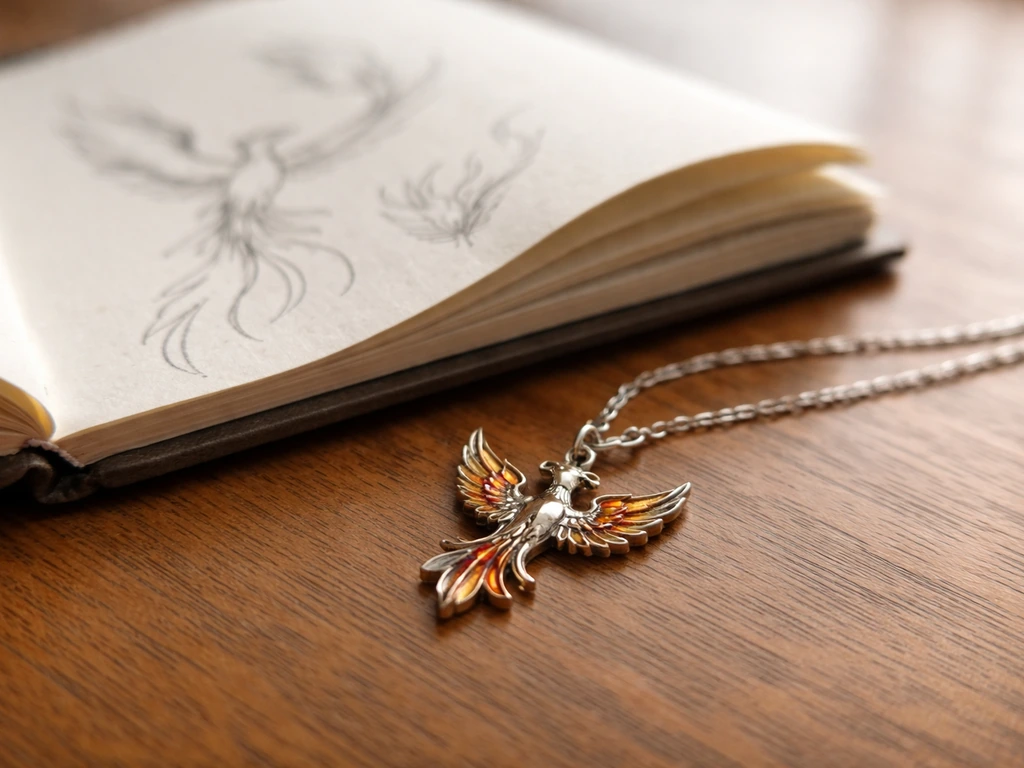
If you keep encountering phoenix imagery, whether in art, tattoos, jewelry, conversation, or online, the useful question isn't "what does this mean in general" but "what does this mean relative to where I am right now? If you're also trying to interpret a golden phoenix bird meaning, use the same contextual approach and consider what transformation is being signaled in your current life situation phoenix meaning. " Symbolic interpretation is always contextual. The same image lands differently depending on whether you're at the beginning of a difficult transition, in the middle of one, or emerging from it.
If you're in a period of loss or ending and phoenix imagery keeps showing up, it may be reinforcing the message that what feels like destruction is actually a clearing. If you're already rebuilding and you encounter it, it may be affirming the direction you're heading. If you feel stuck in the "ashes" phase, the symbol is arguably most powerful: it's a reminder that the cycle continues and the stillness before rebirth is part of the process, not a sign that nothing will ever change.
Practical approaches to working with these encounters include keeping a simple log of when and where you notice phoenix imagery and what was on your mind at the time. Patterns become clearer over a few weeks than they do in a single moment. You don't need to assign rigid meaning to every sighting, but noticing the frequency and context can be genuinely reflective.
Phoenix in Dreams, Meditation, and Personal Rituals
What Phoenix Dreams Usually Point To
Dream interpretation traditions vary widely across cultures, with some framing dreams as messages from ancestors or spiritual forces and others treating them more psychologically. What's broadly consistent is that dream imagery tends to work metaphorically rather than literally. A phoenix in a dream almost certainly isn't about a literal fire. It's pointing to something in your waking life that involves transformation, endings, or emergence.
Common phoenix dream themes include: watching a fire you can't stop (releasing control of an ending), flying as a phoenix (embodying your own resilience), rising from ashes (recognition of personal growth), or seeing a phoenix egg (potential not yet realized). The most useful thing you can do with a vivid phoenix dream is write it down immediately and note what's actively changing or ending in your life. The connection often becomes obvious.
Meditation and Reflective Practices

You don't need an elaborate ritual to work with phoenix symbolism in a meaningful way. A simple visualization practice is highly effective: close your eyes, bring to mind something you're ready to release, imagine it burning completely, and then sit with the image of clear, warm ash and the question of what wants to grow in that cleared space. Keep it reverent and intentional. This kind of meditation draws on the core symbolism without requiring any particular religious framework.
Journaling prompts aligned with phoenix symbolism are another practical tool. Questions like "What in my life has run its full course?" or "What would I rebuild if I could start completely fresh?" or "Where am I still clinging to something that's already ended?" mirror the phoenix cycle in a way that produces real personal insight. These aren't mystical prompts. They're just good questions that the symbol naturally generates.
Simple Rituals for Marking Transitions
Many people find value in small physical rituals when navigating major life transitions. Writing something you're releasing on paper and burning it safely is probably the most direct expression of phoenix symbolism in practice. Lighting a candle with the specific intention of marking an ending and a beginning works similarly. These aren't supernatural acts. They're psychological anchors, ways of making an internal shift feel real and marked. The phoenix tradition gives them a symbolic vocabulary that has thousands of years of resonance behind it.
How the Phoenix Reads Differently Across Cultures
This is where it's worth slowing down, because cultural context shapes meaning significantly and flattening all phoenix traditions into a single universal image loses something important.
| Tradition | Name / Form | Core Emphasis | Distinctive Features |
|---|---|---|---|
| Ancient Egyptian | Bennu | Solar rebirth, creation, cyclical renewal | Tied to sunrise and the sun god Ra; name means 'to rise in brilliance' |
| Greek / Roman | Phoenix | Immortality, singular regeneration cycle (~500 years) | Only one phoenix exists at a time; rebirth from ashes or a pyre |
| Persian | Simurgh | Sacrifice, cyclical renewal, wisdom | Composite creature (dog/lion head, peacock tail); lives ~1,700 years before self-immolation |
| Chinese | Fenghuang | Harmony, virtue, yin-yang balance | Represents male (feng) and female (huang) principles; tied to Confucian values |
| Early Christian (Old English) | Phoenix (adapted) | Resurrection, eternal life, spiritual rebirth | Phoenix cycle mapped directly to Christ's death and resurrection |
The most common misconception is treating these as the same symbol with minor cosmetic differences. They're related, and the rebirth theme runs through all of them, but their cultural functions are genuinely distinct. The Chinese fenghuang is fundamentally about harmony and social virtue. It's not a bird of suffering and transformation the way the Greek or Persian versions are. The Simurgh carries wisdom and ancient knowledge in ways the classical phoenix doesn't emphasize. And the Christian adaptation is explicitly theological, tying the cycle to resurrection faith.
Another common misconception is treating the phoenix as a symbol of literal immortality, as in personal immortality you can somehow access or claim. Every tradition frames the cycle as something the bird undergoes, not something it escapes. The phoenix dies. That's the point. The benefit isn't avoiding endings. It's trusting the cycle that follows them. If you're curious about whether the phoenix is a positive or negative symbol overall, that's a question worth examining on its own terms, since different traditions answer it differently.
Practical Steps for Applying Phoenix Symbolism to Your Life Right Now
Symbolism only does something useful when it connects to action or perspective shift. Here's how to actually apply the phoenix's message.
- Name what's burning. Before you can work with the rebirth side of the cycle, you have to honestly identify what's ending or needs to end. Get specific. Not 'my life feels chaotic' but 'this version of my career is over' or 'this relationship dynamic has run its course.' The phoenix's fire needs fuel.
- Sit in the ashes without rushing. One of the most practically useful aspects of phoenix symbolism is the ashes phase. It validates the in-between. Resist the urge to immediately build something new before you've processed what was lost. The clearing is part of the process.
- Ask what wants to grow. Once you've genuinely acknowledged the ending, ask: what would I choose to build here if I could start with intention rather than inertia? Phoenix symbolism is explicitly about deliberate renewal, not just survival.
- Mark the transition. Do something physical to honor the shift. Write and burn something. Light a candle. Change something visible in your environment. These small rituals are effective not because they're magical but because they make internal transitions real and named.
- Reset a goal or intention through the phoenix frame. Take something you've been holding onto out of habit rather than genuine alignment and ask if it belongs in your rebuilt version. The phoenix doesn't carry its old nest into its new life.
- Return to the symbol when you're struggling. Phoenix symbolism is most useful not as a one-time insight but as a recurring touchstone. When you hit another hard passage, the symbol reminds you: you've been in fire before, and that's not the end of the story.
Fire, Ashes, Feathers, and Flight: The Broader Symbol Web
The phoenix doesn't exist in isolation. Its meaning is shaped and deepened by the specific symbols it's made of, and understanding those adds texture to how you interpret it.
Fire is the most obvious. Across virtually every symbolic tradition, fire carries dual meaning: destruction and purification. In the phoenix cycle, fire isn't punitive. It's transformative. The bird isn't punished by the flames. It initiates them. That's a meaningful distinction when you're applying the symbolism to your own life. Difficulty that you choose to move through (even when the choice is forced on you by circumstance) carries different weight than suffering that's simply happening to you.
Ashes carry their own symbolism: humility, reduction to essentials, the quiet after a dramatic ending. In multiple traditions (including Christian liturgical symbolism in the use of ashes on Ash Wednesday) ash is the material of mortality and renewal simultaneously. When the phoenix is reborn from ashes, it's emerging from the most reduced, humble state possible. That's the message: you don't need to have it together to begin again.
Feathers within the phoenix context amplify the renewal theme. In many bird symbolism frameworks, feathers represent messages, transitions, and connection to something beyond the ordinary. A phoenix feather, where it appears in legend and art, is often depicted as still holding the fire's light, something that carries the transformation forward. If feathers as symbols resonate with you more broadly, the phoenix gives them a specific directionality: not just connection or message, but emergence.
Flight is perhaps the most universal of all bird symbols: freedom, perspective, transcendence of earthly limitations. The phoenix adds a dimension to this that ordinary bird flight doesn't carry. The phoenix earns its flight. It rises from the ashes, literally. The elevation is meaningful precisely because of what preceded it. That narrative shape, descent, destruction, rising, is what makes phoenix symbolism so resonant for people navigating real difficulty, and it's what distinguishes it from simply cheerful imagery about new beginnings.
If you're exploring related aspects of the phoenix's meaning, questions like whether it functions as a good luck symbol, what the golden phoenix specifically represents, or how vastu traditions use phoenix imagery each pull on different threads of this broader symbol web. The phoenix is rich enough that each of those angles opens something genuinely distinct.
FAQ
How can I turn phoenix bird benefits into a real decision instead of just feeling inspired?
Treat it as a cue to name the specific change you are resisting. Pick one concrete thing that ended (a role, a routine, a relationship pattern), then ask, “What part of me is asking for release rather than repair?” The phoenix message becomes actionable when you translate symbolism into one next step you can do in 24 to 72 hours.
Is phoenix symbolism helpful during every phase of grief, or only after the worst part is over?
Yes, but the “benefit” depends on timing. During an active loss, focus on containment and gentle support (rest, boundaries, seeking help). When you are stabilizing, use phoenix symbolism for rebuilding plans and new identity choices. If you use it to rush rebuilding too soon, it can accidentally intensify grief or guilt.
What should I track if phoenix imagery keeps appearing, so I do not invent meaning?
Keep a short log with two columns: “Phoenix cue” (where you saw it, what kind of image) and “Life context” (what was ending, changing, or demanding a choice). After a couple of weeks, look for recurring life themes. If the same theme keeps appearing, that suggests the symbolism is pointing to one unresolved release.
How do I avoid using the phoenix as a way to rationalize pain or self-blame?
A common mistake is interpreting any tough event as “my phoenix moment,” which can become self-blame. Try separating “purification through difficulty” (something you are choosing, or something you can learn from) from “harm happening to me” (something that needs protection, support, or intervention). Phoenix symbolism is most useful when it guides perspective, not when it excuses harm.
What if a phoenix dream feels scary rather than hopeful?
If the dream has strong fear or panic, prioritize your waking-life response over symbolic meaning. Use the dream as a prompt to check stress load, sleep quality, and current pressure points. Only after you feel safer, write the metaphor link (what was “uncontrollable fire,” what “rising” would look like) to avoid forcing a narrative onto distress.
How do I work with recurring phoenix dreams without overthinking them?
If you have a recurring phoenix dream, change one variable at a time: journaling before sleep, a consistent wind-down routine, or reducing triggers (doomscrolling, intense conversations late at night). Then look for whether the dream’s plot changes. The goal is not perfect interpretation, but whether your emotional landscape becomes more workable.
Does the phoenix symbolize immortality, and how should I interpret that if I feel obsessed with it?
Yes, and it changes the takeaway. In many traditions, the phoenix cycle is about trusting endings rather than seeking escape from them. So if you are chasing “immortality” themes, redirect to what you can renew now (values, habits, relationships) instead of trying to outsmart time or avoid mortality realities.
How should I interpret phoenix-like symbols from different cultures without mixing them up?
Don’t flatten all phoenix-like figures into one meaning. Use the “function” you actually encounter: does the image emphasize harmony and social virtues (more like fenghuang themes), wisdom or ancient knowledge (Simurgh-like), or resurrection-like theology (Christian resonances)? Then apply phoenix benefits to your situation through that specific lens.
What are safe, practical ways to do a phoenix release ritual if I have a sensitive nervous system?
Keep the practice low-stakes and consent-based with yourself. If you write something to release, consider using words that describe a pattern (“I’m letting go of control” or “I release the story that I must stay”) rather than blaming others. If you feel emotionally flooded during visualization, shorten the session, reduce intensity, and return to breath.
Can phoenix symbolism be used to improve work or career decisions, not only personal grief?
If you have vivid phoenix imagery at work, treat it as a prompt for renewal habits rather than a dramatic life overhaul. Try a “rebirth audit”: identify one process to simplify, one skill to update, and one boundary to set. Symbolic work becomes most effective when it translates into better systems, not just bigger feelings.
What is the best way to interpret a golden phoenix bird meaning without making it vague?
For “golden phoenix” imagery, use the color as a clue but still anchor in context. Gold often points to value, clarity, or confidence, so ask what you believe is “valuable” right now, and what wants a cleaner, more honest version of your future. If your life context is still unstable, keep goals small and measurable.
How can I apply phoenix symbolism as a “good luck” practice without relying on luck alone?
If you want to use it for luck, set a specific intention that you can verify. Example: “This week I will apply for one opportunity,” “I will ask one question,” or “I will follow up.” Then review outcomes. Luck-focused symbolism works best as motivation plus action, not as a substitute for choices.