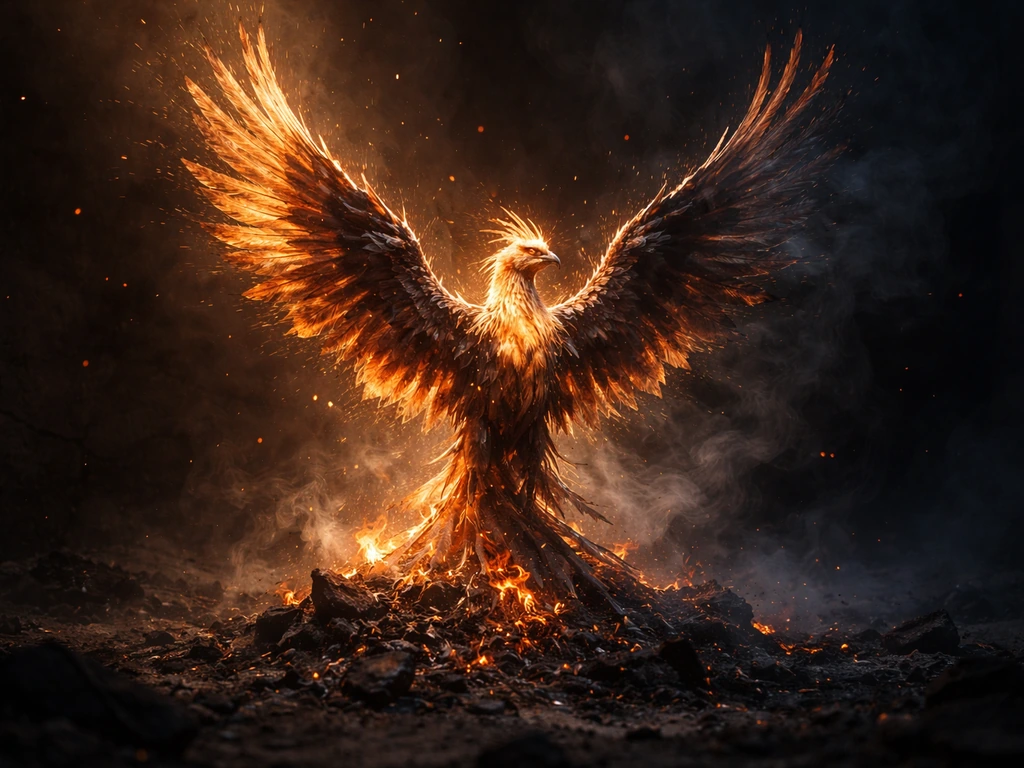
The phoenix is one of the most powerful symbols of good luck you can work with, but not because it magically wards off bad fortune. Its luck comes from what it represents: the absolute certainty that something new and better can rise from whatever has burned down in your life. If you are drawn to the phoenix right now, that pull usually means something. If you are also asking what is stronger than a phoenix bird, it helps to compare other mythic symbols to the phoenix’s core idea of rebirth after destruction. You are likely in a moment of transition, recovery, or fresh start, and the phoenix tradition across cultures offers a remarkably coherent framework for turning that moment into forward momentum.
Phoenix Bird for Good Luck: Symbolism and Practical Rituals

Eleanor Hartwell
13 May 2026
What the phoenix actually symbolizes
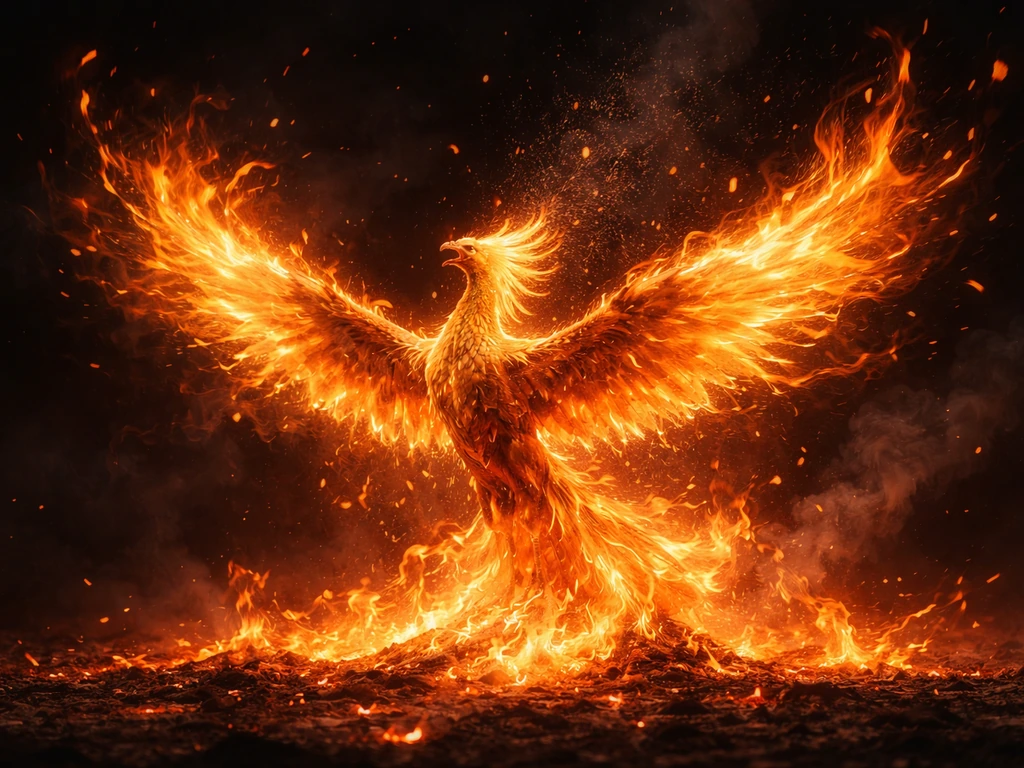
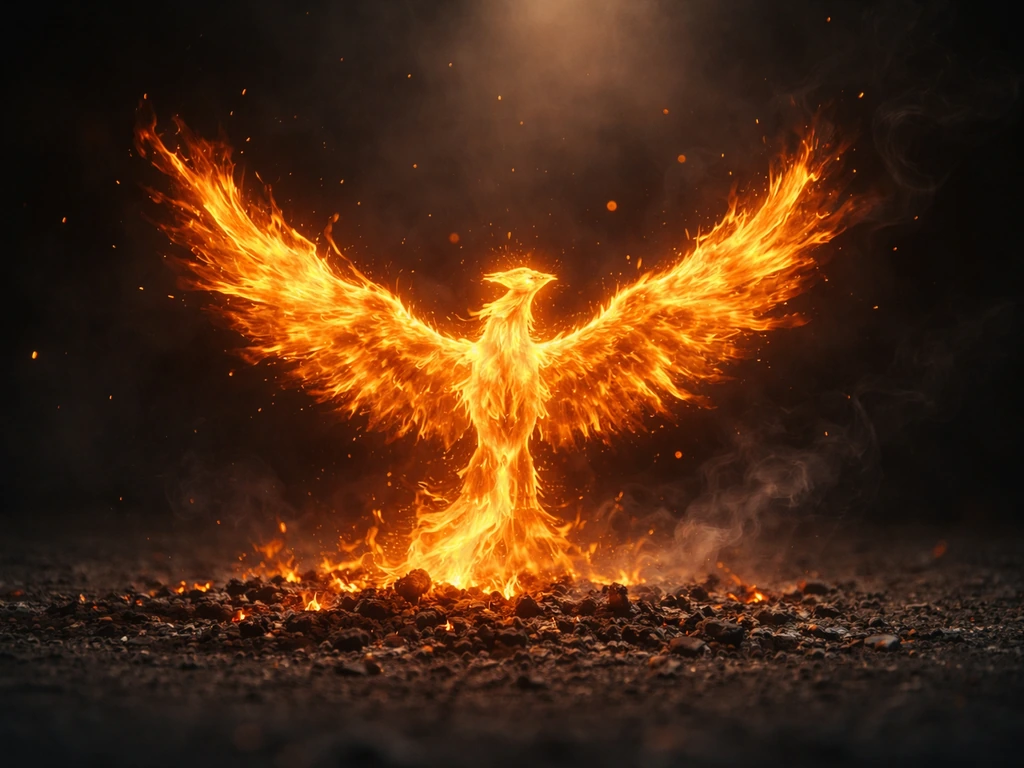
The core of the phoenix legend is simple and consistent across its oldest sources: the bird dies, often consumed by fire, and then rises again, reborn from its own ashes. Encyclopaedia Britannica describes the phoenix as a creature that is killed or immolates itself at an altar fire, after which a young phoenix rises in its place. Encyclopedia.com frames that same image as the enduring connotation of the symbol: life arising anew from the ashes of death. Resurrection. Immortality. The cycle of endings that contain within them the seed of a new beginning.
That is the foundational meaning, and every tradition that adopted the phoenix built on it. Early Christians found the symbol so resonant with their theology of resurrection that the phoenix became a regular allegory for the rising of the body and soul, appearing in early Christian writing and later in the Old English poem 'The Phoenix,' which extended the death-and-rebirth cycle into a full Christian allegory about the Last Judgment. The symbol traveled that far because the core idea, that destruction is not the end, maps onto human experience in a way that feels true regardless of the specific theology involved.
Renewal and transformation are the two words that modern spiritual practitioners reach for most often, and they are both accurate expansions of the original meaning. What the phoenix adds to those words is direction: not just change, but change that moves upward, from ash to flight. That directionality is exactly what makes it relevant to the question of good luck.
How phoenix symbolism connects to good luck
The phoenix is not a traditional good-luck charm in the way a horseshoe or a four-leaf clover is. It does not represent the arrival of random fortune. What it represents is the conditions that allow better outcomes to emerge, which is a more interesting and more useful kind of luck. It can be helpful to frame phoenix bird benefits as the conditions for better outcomes to emerge, which is a more useful kind of luck than random fortune. Think of it this way: after a major loss or setback, the people who tend to recover well are the ones who find a way to believe that recovery is genuinely possible. The phoenix symbol is a tool for building and holding that belief.
The link between phoenix symbolism and good fortune is strongest in Chinese tradition. The fenghuang, the Chinese phoenix, carries explicitly auspicious meaning. According to Britannica's entry on the fenghuang, it appears in the classical text Shanhaijing as a symbol of Confucian virtues, with the characters for virtue, duty, ritual, compassion, and trust inscribed on different parts of its body. Wikipedia's entry on the fenghuang further connects it to fire, the sun, justice, fidelity, and later, love, happiness, and harmony. In feng shui practice, displaying phoenix imagery is widely associated with inviting positive energy and good fortune into a space, especially when paired with the dragon symbol. If you are looking for phoenix bird images vastu benefits, focus on how the artwork is placed and how it supports the positive energy intention behind the symbol phoenix imagery.
Research on how Chinese immigrant women use phoenix metaphors offers another angle. A SAGE academic study found that participants used the phoenix to represent overcoming profound difficulty and to frame their own experiences of 'ups and downs' as a meaningful arc of growth. That is phoenix symbolism functioning as a genuine psychological tool, not just decoration. When a symbol helps you reframe hardship as a passage rather than a conclusion, it changes what you do next, and changed behavior is where luck actually comes from.
Practical ways to use phoenix symbolism for good luck today
The most effective approaches treat the phoenix as an active framework, not a passive decoration. Here is what that looks like in practice.
Set a clear, named intention
The phoenix cycle always starts with an ending. Before you can work with its rising energy, you need to name what you are rising from. Take five minutes to write down specifically what situation, habit, relationship, or period of your life you are leaving behind. Then write what you intend to build in its place. This is not manifesting in the vague sense; it is the concrete first step of the phoenix process. Spiritual-practice guides themed around phoenix renewal consistently point to 'planting seeds with intention' as the starting action, the moment you decide what the new growth will be.
Use reflective journaling as a daily ritual
A phoenix journal is not a gratitude journal, though gratitude can appear in it. It is specifically a record of your transformation: what you let go of, what is beginning to emerge, and what evidence you see of forward movement, however small. Reviewing it regularly creates a personal narrative of rising, which reinforces the psychological reality that you are not stuck. Daily affirmations aligned with your phoenix intention can anchor this practice, but the journal is the more valuable tool because it builds evidence over time.
Choose phoenix imagery with intention
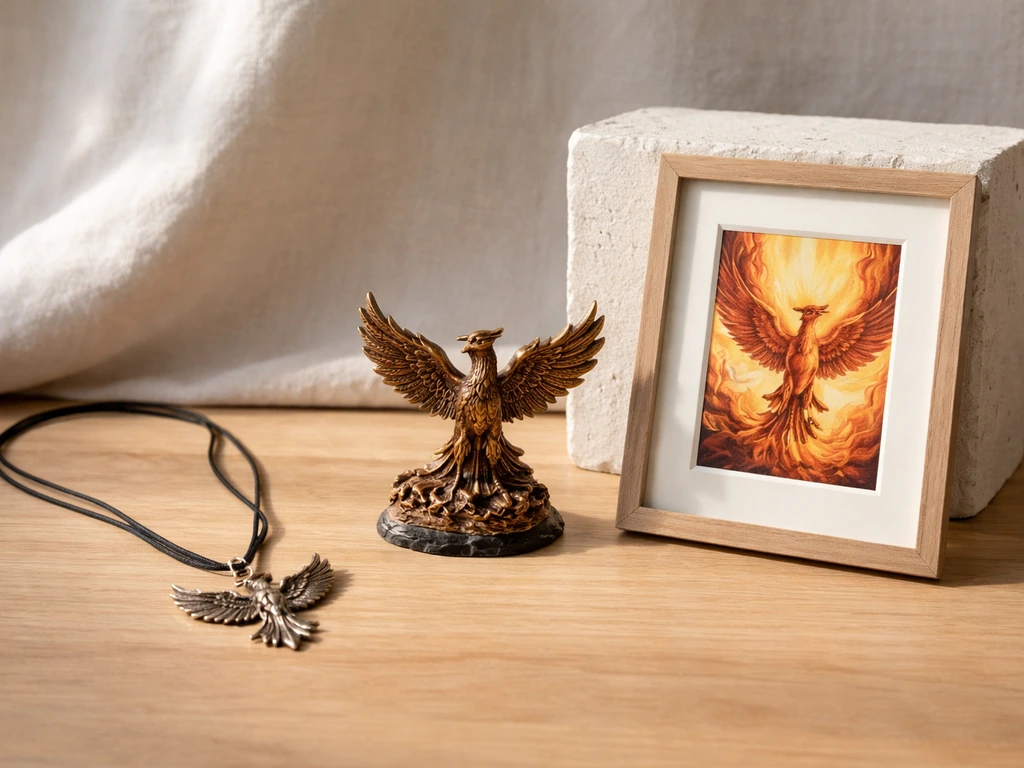
If you are drawn to using a physical phoenix symbol or talisman, choose it based on the tradition that resonates with you rather than purely aesthetically. A fenghuang image carries the feng shui auspicious framing and works well in a home or workspace if you want to invite positive energy and harmony into your environment. A more classical Western phoenix, depicted in flames or mid-flight, speaks more directly to the rebirth and transformation theme. The image you see daily shapes the associations that fire in your mind, so make sure the image you choose actually connects to the specific meaning you want to anchor.
Try a phoenix visualization or guided meditation
Phoenix-themed guided meditations are widely available on platforms like Insight Timer, where 'Phoenix Heart Rising' is a recognized practice framed around transformation, rebirth visualization, and self-forgiveness. The mechanics are straightforward: you visualize yourself as the phoenix, acknowledge what is burning away, and then hold the image of rising. Self-guided approaches from 'Phoenix Path' style guides use similar visualization prompts. Even five minutes of deliberate imagery like this, done consistently, trains your mind to orient toward renewal rather than loss.
Align your habits with the renewal theme
The phoenix does not just think about rising. It rises. Translate the symbolism into at least one concrete behavioral commitment that reflects your intention: ending a habit that belongs to the old chapter, starting a small daily action that belongs to the new one, or clearing out a physical space to make room for what is coming. The 'Phoenix Process' approach, which frames the practice as a structured set of rules rather than a one-time ritual, makes this behavioral dimension explicit. Symbolism without behavior changes nothing. Symbolism attached to behavior is how luck actually shifts.
The phoenix across traditions: why the cultural context matters
Understanding where your phoenix symbol comes from helps you use it more consciously and avoid conflating very different meanings.
| Tradition | Bird / Name | Core Symbolism | Luck Connection |
|---|---|---|---|
| Ancient Egyptian / Classical | Phoenix (Bennu in some accounts) | Immortality, sun worship, cyclical renewal, death and rebirth from fire | Hope and renewal after loss; cyclical optimism |
| Early Christian | Phoenix (allegorical) | Resurrection of body and soul; life after death; eschatological renewal | Spiritual hope; transformation through faith |
| Chinese | Fenghuang | Virtue, duty, ritual, compassion, trust; fire, sun, justice, fidelity, harmony | Good fortune, auspiciousness, positive energy in feng shui |
| Islamic / Persian | ʿAnqāʾ / Sīmorgh | Mysterious divine creation; complex narrative of power and transformation | Wisdom and transcendence through difficulty |
| Modern spiritual / New Age | Phoenix (eclectic) | Transformation, rebirth, rising after setbacks, self-renewal | Inviting positive outcomes through aligned intention |
The fenghuang deserves special attention because it is the tradition most explicitly connected to good fortune. According to cultural-history scholarship, the Chinese phoenix moved over time from divine and imperial associations (sun, fire, cosmic order, imperial power) toward associations with love, femininity, happiness, and harmony. That evolution means a fenghuang image today carries layers of meaning that are genuinely auspicious in origin, not just modern projection. In feng shui, the fenghuang is often paired with the dragon, and that pairing is considered one of the most powerfully lucky combinations in Chinese visual culture.
The Islamic tradition offers a different angle through the ʿanqāʾ (the Persian sīmorgh), identified with the phoenix by some scholars. Britannica describes it as a creature of great perfection created by God, with a complex mythological arc. Al-Qanṭara journal research notes that Western cultural traditions often identify the ʿanqāʾ Mugrib with the Greco-Latin phoenix, though the traditions are distinct. The overlap suggests a broad cross-cultural intuition that a great, transforming bird is a fitting image for overcoming profound difficulty.
For a deeper look at whether the phoenix's nature is positive or negative across these traditions, that is worth exploring separately, since some versions of the legend carry ambivalence. Some people also search for whether the phoenix is good or evil, but the meaning varies by tradition and context. And if you are interested specifically in the golden phoenix, that variant carries its own distinct connotations of solar energy and peak vitality worth examining on its own terms. If you are looking up the golden phoenix bird meaning, it is often tied to solar energy, peak vitality, and a particularly charged kind of renewal.
Common myths about the phoenix and luck, and how to avoid them
Myth: the object does the work
A phoenix pendant, painting, or figurine does nothing on its own. This is not a knock on the symbolism; it is an accurate description of how symbolism works. The object is an anchor for intention, a reminder of a commitment, a prompt for a mindset. If you buy a phoenix symbol and put it on a shelf and forget about it, nothing changes. The luck associated with the phoenix in feng shui and spiritual practice is conditional on engagement: you have to actually work with the symbol, return to it, let it prompt the thinking and behavior it is meant to prompt.
Myth: results are immediate
The phoenix takes time to rise. The mythological bird does not pop back to life in an instant; the cycle is exactly that, a cycle, with a full death before a full rebirth. Expecting quick dramatic results from phoenix symbolism practice will produce disappointment. The honest framing is that you are building a new orientation over weeks and months, not activating a lucky switch. Practices like the phoenix renewal ritual deliberately use agricultural metaphors, planting seeds, because growth is seasonal and requires patience.
Myth: the phoenix and fenghuang are the same bird
They share a name in English but they are meaningfully different symbols with different origins. The Western phoenix is primarily a rebirth-from-death story. The fenghuang is primarily a symbol of cosmic virtue, auspiciousness, and harmony. Conflating them can lead you to apply the wrong symbolic logic to your practice. If you want the feng shui good-fortune connection, work specifically with the fenghuang tradition. If you want the transformation-after-destruction meaning, work with the classical phoenix.
Myth: repeated phoenix sightings are guaranteed signs
Psychology Today and research published in Frontiers in Psychology both caution that when we are primed to look for something meaningful, we find it everywhere through confirmation bias: we notice the phoenix images that appear and forget the hundreds of other images we passed. A single striking encounter with phoenix symbolism can be a genuine moment of resonance worth paying attention to. A pattern that you are actively hunting for is more likely to reflect your own focused attention than an external signal. That distinction matters if you want your practice to be grounded rather than anxious.
Choosing a practice that fits your actual beliefs
You do not have to believe in a literal phoenix, or in any specific spiritual framework, to find phoenix symbolism useful. If you are secular, the phoenix works as a pure psychological metaphor for resilience and self-renewal, backed by actual research on how people use it (see the SAGE study on Chinese immigrant women). If you are Christian, the early allegorical tradition gives you the phoenix as a legitimate image for resurrection and hope. If you are drawn to Chinese spiritual and feng shui traditions, the fenghuang offers explicit good-fortune framing. Choose the interpretation that is honest for you, not the one that sounds most dramatic.
Reading everyday phoenix encounters, and knowing when to reassess
Dreams involving the phoenix
Dreaming of a phoenix is most commonly interpreted as a signal of impending or ongoing transformation. The specific details matter: a phoenix in flames may point to the dying-away phase, the grief or release that has to happen before renewal. A phoenix in flight suggests you are already in the rising phase and the subconscious is processing that movement. If the dream feels significant, treat it as worth reflecting on rather than decoding literally. Write it down, sit with the feeling, and ask yourself what in your waking life it might be mirroring.
Repeatedly encountering phoenix imagery
If phoenix symbols keep appearing in your environment, whether in art, tattoos you notice, books that surface, or conversations, one reasonable interpretation is that you are in a life chapter where that symbol is simply resonant for you, and so you are noticing it more. ScienceDirect Topics explains that synchronicity or serendipity is often experienced through heightened salience and observation, with intentionality shaping what feels meaningful synchronicity or serendipity through salience and intentionality. That is not nothing. Heightened sensitivity to a symbol during a transition is a legitimate signal that the transition is real and that your psyche is orienting around it. The useful response is not to chase more signs but to ask what the symbol is directing your attention toward.
When the symbolism stops resonating
Not every symbol stays relevant forever, and that is fine. If your phoenix practice starts to feel mechanical, or if you find yourself going through the motions without any real connection to the meaning, that is information. It could mean the transformation you set out on is complete enough that the fire-and-rebirth frame is no longer the most useful one. It could mean the specific practice you chose was not right for your personality. The 'Phoenix Process' approach explicitly frames practice as a set of adaptable rules rather than a fixed prescription, and that is the right instinct: adjust the practice rather than abandoning the intention behind it.
The reassess mindset is actually consistent with the phoenix symbol itself. The bird does not stay in the same form forever. It cycles. Allowing your practice to evolve, letting one version of it end so a better version can rise, is the most honest way to work with what the phoenix actually means.
Your next steps right now
- Write down one sentence naming what you are rising from and one sentence naming what you intend to build. That is your phoenix intention, and it is the foundation everything else builds on.
- Choose the cultural tradition that resonates with you: classical rebirth symbolism, Chinese fenghuang auspiciousness, Christian resurrection allegory, or a secular resilience metaphor. Let that choice shape which imagery and practices you use.
- Select one daily practice from the options above: journaling, visualization, a behavioral commitment, or simply keeping a meaningful phoenix image somewhere you will see it and engage with it.
- Give the practice at least thirty days before evaluating whether it is working. The phoenix cycle is not instant.
- If you want to go deeper, explore phoenix benefits and the specific feng shui dimensions of phoenix imagery, both of which extend what is covered here into more detail.
FAQ
How can I tell if the phoenix is a good fit for my situation, or if I am forcing it?
Use a quick “match test” for meaning and behavior. If the symbol helps you name what you are leaving behind and then take one concrete action this week, it is a fit. If it mainly creates vague optimism or anxiety without changing decisions, loosen your commitment and switch to a simpler practice, like one weekly journal entry and one small behavior step.
Do I need to do all phoenix practices (journal, meditation, clearing space), or can I start with one?
You can start with one anchor. The most reliable starter is the phoenix journal prompt (what I am leaving, what I am building). After 7 days, add a behavior commitment (for example, ending one small habit or creating one daily action). Meditation and feng shui work best as “add-ons” once the journal has created clarity.
What is the right way to use a phoenix symbol in feng shui without misplacing it?
Treat placement as an intention amplifier, not a magic switch. Keep the imagery in a meaningful active area (work zone or the space where you make daily plans). Avoid placing it in cluttered corners or under heavy storage, since the intention then clashes with the “room to rise” goal. If pairing with the dragon, make sure both items are visible and not blocked.
I want phoenix good-luck effects, but I do not believe in spirituality. Does it still work?
Yes, as a psychological practice. Frame the phoenix as a resilience metaphor: it supports meaning-making after setbacks. Your “luck” comes from improved follow-through and more realistic hope. Use measurable evidence, like tracking one behavior you started and one obstacle you handled differently, rather than waiting for luck to appear.
How long should I keep doing phoenix practice before I evaluate results?
Evaluate after at least 4 to 6 weeks. The symbol is about a cycle, not an instant outcome, so short trials can feel disappointing. A good check is whether your journal shows repeated forward movement (even small) and whether your behavior commitment has become easier to sustain.
Can phoenix symbolism make me feel worse, more anxious, or stuck in old grief?
It can, especially if you overfocus on the “burning” phase. If you notice rumination, rebalance the practice by spending more time on the “what I am building” section and choosing a tiny action (5 to 10 minutes) that proves forward movement. Also limit reflection sessions to a set time, so the practice does not become compulsive.
Is a phoenix pendant or figurine enough by itself, or do I need to actively engage with it?
You do need engagement. The object is an intention prompt, so schedule a small ritual around it, such as touching the pendant at the start of a daily plan (or placing a journal beside it). If you never return to it or use it to trigger a behavior, it stays decorative and will not shift outcomes.
What should I do if I stop seeing the phoenix in my life, or the practice stops feeling meaningful?
That can be a normal sign of “completion,” not failure. If the practice feels mechanical, switch the ritual form while keeping the core meaning. For example, move from daily journaling to weekly check-ins, or replace meditation with a single monthly reflection and one new behavior commitment.
Can I combine the phoenix with other good-luck symbols, like a horseshoe or clover?
Yes, as long as the meanings do not conflict. The phoenix is about conditions for better outcomes after an ending, while many charms are about random luck. If you combine them, use the charms to support your intention (action and reframing), not to outsource effort. Avoid stacking so many symbols that you stop knowing which behavior you are committing to.
What does it mean if I dream about a phoenix, and how should I respond without over-decoding it?
Treat the dream as emotional guidance, not a literal forecast. Write down the feeling (relief, grief, urgency, calm) and then identify one waking-life parallel action. If the dream was fiery, consider a “release step,” such as ending one draining routine. If it was flight, consider a “start step,” such as pitching, applying, or beginning a daily practice.
How should I choose between the Western phoenix and the fenghuang if I want the “best luck” version?
Choose based on which intention you want to anchor. Use the fenghuang when you are specifically working with auspicious harmony and space-based intention. Use the Western phoenix when you want transformation after a setback and a rebirth-from-loss frame. If you mix them, do it deliberately by keeping one primary meaning for your main journal prompt.