There is no single universal bird god. Depending on which culture, tradition, or mythology you are drawing from, the answer shifts dramatically: it could be Horus the falcon-headed Egyptian sky deity, Garuda the eagle-like king of birds in Hindu and Buddhist mythology, the Thunderbird of North American Indigenous traditions, Huitzilopochtli the hummingbird-linked Aztec sun god, or any number of other figures. The phrase 'bird god' is a shorthand that points toward a category, not one specific identity. Your job is to figure out which tradition you are actually asking about, and this guide will help you do exactly that.
Who Is the Bird God? Meaning, Traditions, and Key Candidates

Eleanor Hartwell
17 May 2026

What 'bird god' usually means: messenger, deity, or symbol?
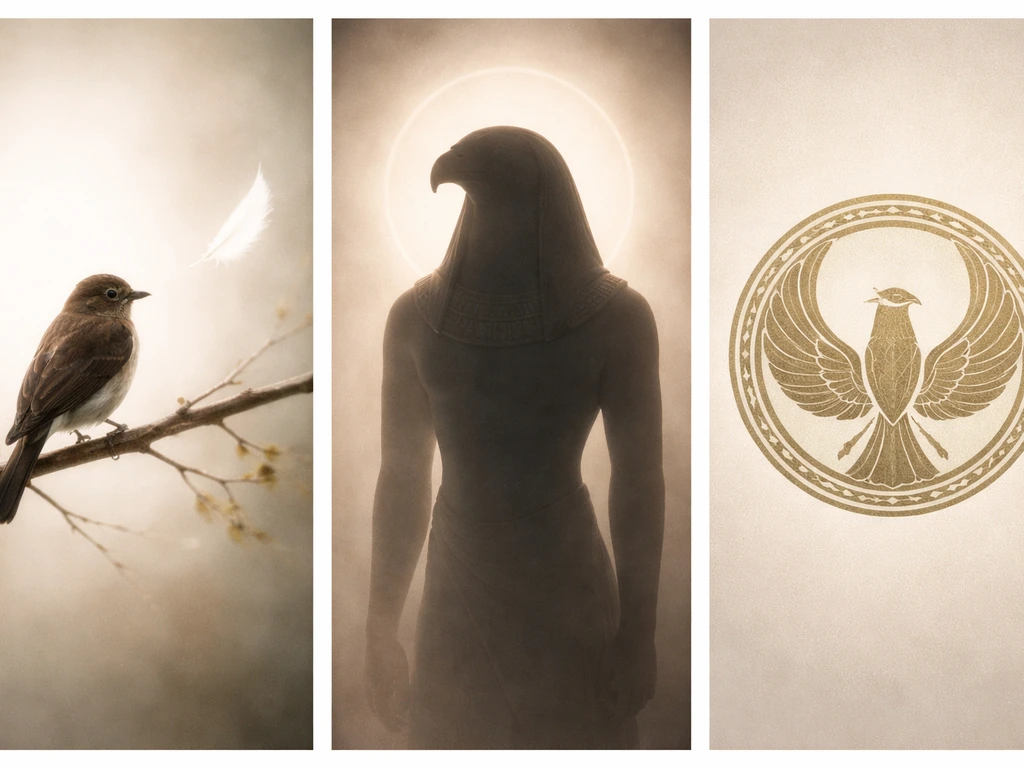
When most people use the phrase 'bird god,' they are reaching for one of three related but distinct ideas. The first is a literal deity who takes bird form or is iconographically represented as a bird. The second is a divine messenger, a bird that carries communications between worlds. The third is a symbolic figure where the bird embodies a concept like renewal, protection, or celestial power rather than functioning as a named deity in a pantheon. Understanding which of these you mean narrows the field considerably.
Birds have been treated as divine intermediaries across virtually every major tradition because of their most obvious attribute: flight. A creature that moves between earth and sky was naturally understood as bridging the human and the sacred. Archaeological evidence at Neolithic sites like Çatalhöyük includes bird remains in ritual deposits, suggesting that 'birds as sacred messengers' is not a recent spiritual trend but a deeply ancient pattern. In the Hebrew Bible, the dove functions as a paradigmatic communicator between heaven and earth. In Islamic mystical poetry, bird imagery is consistently tied to spiritual ascent and prophetic experience. What changes from tradition to tradition is whether that bird-intermediary becomes a named god, a divine animal companion, or simply an omen to be read.
Modern spiritual writing has blurred these categories further by describing birds as 'angels,' 'spirit guides,' or 'totems,' often without anchoring the claim in any specific tradition. That looseness is part of why 'who is the bird god' is such a common search: people encounter the idea through one lens and then want the name behind it. The answer depends entirely on which lens is active.
Major bird deities across traditions: a practical shortlist
Here are the strongest candidates you will encounter when researching 'bird god,' organized by cultural context. This is not an exhaustive mythological catalog; it is a working shortlist for identification.
| Deity / Figure | Culture | Bird Association | Primary Domains |
|---|---|---|---|
| Horus | Egyptian | Falcon | Sky, kingship, healing, protection, sun |
| Nekhbet | Egyptian | Vulture | Protection of rulers and mothers, eternity |
| Garuda | Hindu / Buddhist | Eagle-like divine bird | Strength, speed, mount of Vishnu, king of birds |
| Thunderbird | North American Indigenous | Great storm bird | Thunder, lightning, sky power, weather |
| Huitzilopochtli | Aztec | Hummingbird / Eagle | Sun, war, patron of Tenochtitlán |
| Quetzalcóatl | Aztec / Mesoamerican | Feathered serpent (quetzal plumage) | Creation, wind, sky, learning |
| Brân the Blessed | Celtic (Welsh) | Raven / Crow | Protection, the otherworld, wisdom |
| Dove (Holy Spirit) | Biblical / Christian | Dove | Peace, divine communication, spirit |
Egyptian bird gods: Horus and Nekhbet
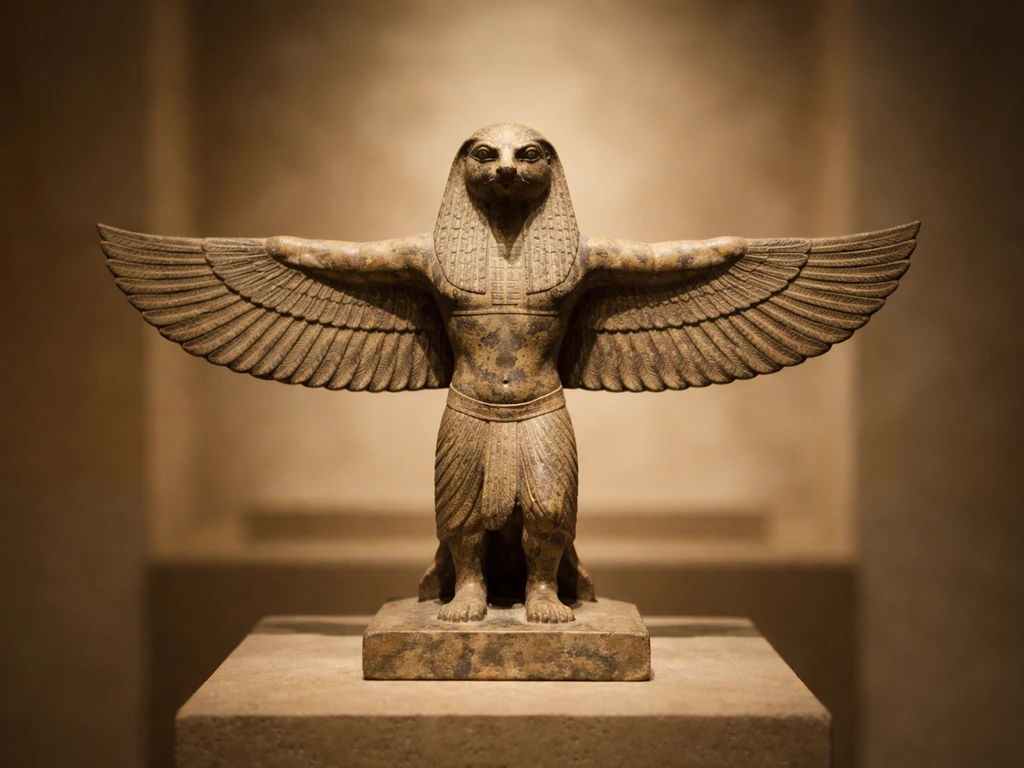
Horus is probably the most widely recognized 'bird god' in Western popular culture. Which divine beast is the bird depends on the tradition you mean and the specific kind of bird symbolism involved. He is depicted either as a full falcon or as a falcon-headed human, and his domains cover kingship, the sky, healing, and solar power. Wikipedia similarly summarizes Horus as commonly shown as a falcon or falcon-headed figure and as serving functions such as kingship, healing, protection, the sun, and the sky blank" rel="noopener noreferrer">Horus is depicted as a falcon or falcon-headed figure and associated with kingship, healing, protection, the sun, and the sky. Encyclopaedia Britannica describes Horus as the falcon form of an Egyptian god whose right and left eyes relate to the sun or morning star and the moon or evening star, linking him to power and healing domains cover kingship, the sky, healing, and solar power. His right eye is associated with the sun or morning star, his left with the moon or evening star. If someone is asking about an Egyptian bird god, Horus is the primary candidate. Nekhbet sits alongside him as the vulture goddess who protected Upper Egypt, specifically its rulers. She is almost always shown with wings spread wide in a protective gesture, clutching the shen symbol (eternity) in her talons. She also guarded mothers and children, making her a protector of life across its stages.
Garuda: the Hindu and Buddhist bird deity
In Hindu and Buddhist mythology, Garuda is explicitly called the king of birds and functions as the divine mount (vahana) of Vishnu. He is depicted as a large eagle-like being, often golden, with immense strength and speed. English-language mythology writing frequently calls Garuda an 'immortal bird god,' and that framing is accurate to the tradition. If your question is rooted in Hindu or Buddhist context, Garuda is almost certainly the figure you are looking for.
Thunderbird: the North American Indigenous bird spirit
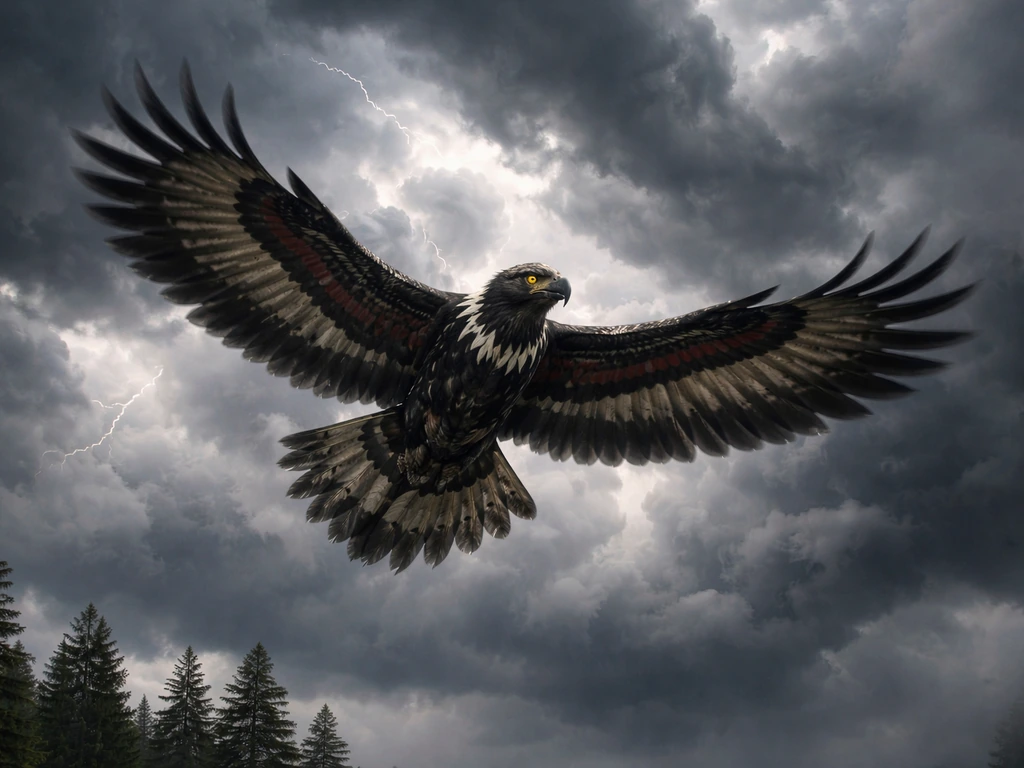
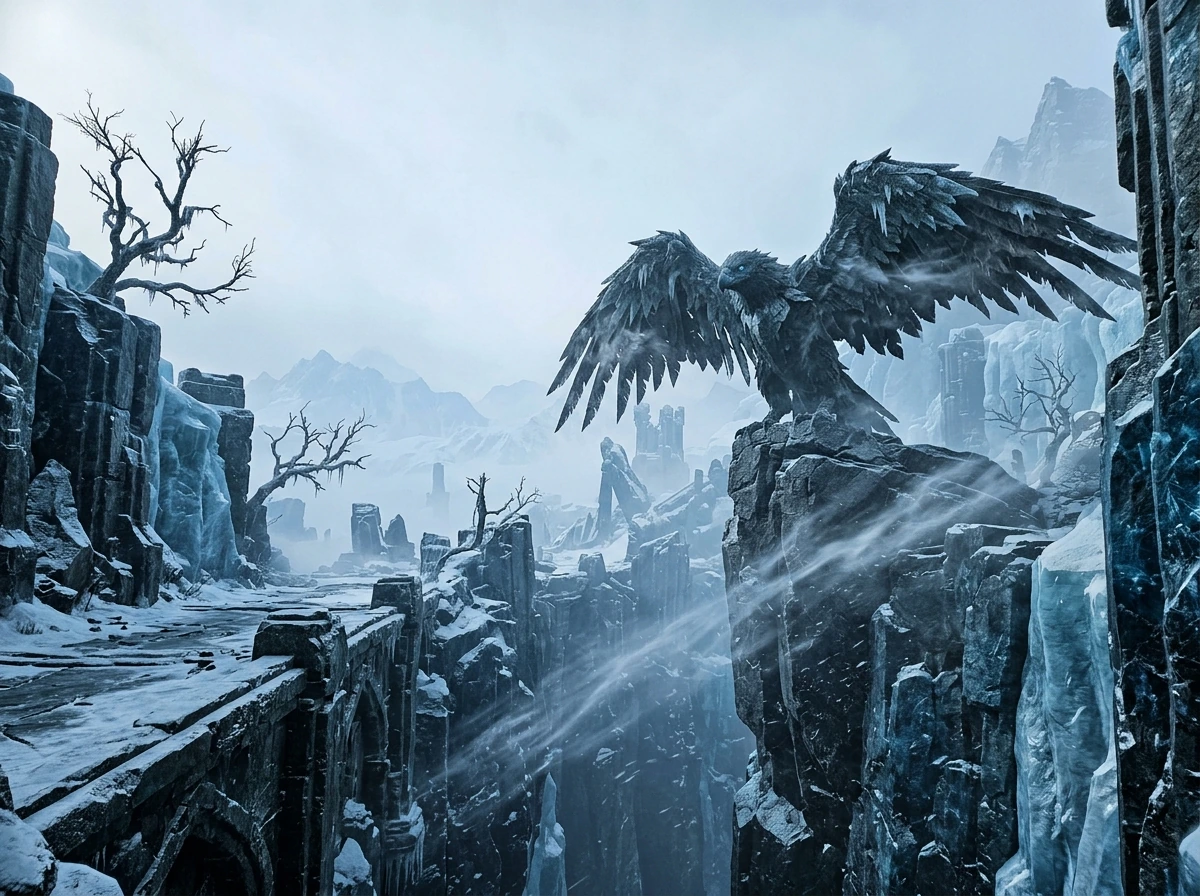
The Thunderbird is one of the most powerful bird-spirit figures in North American Indigenous mythology. It is described as a massive bird whose wingbeats produce thunder and from whose beak lightning flashes. It is not a single standardized deity shared identically across all nations; it appears across many distinct Indigenous traditions with regional variation. What is consistent is the domain: storm, sky power, and an overwhelming presence that commands awe. If someone is asking about a 'bird god' in a North American context, the Thunderbird is the most common referent.
Aztec bird gods: Huitzilopochtli and Quetzalcóatl
The Aztec tradition gives two strong 'bird god' candidates. Huitzilopochtli, whose Nahuatl name means roughly 'hummingbird of the south,' is the sun and war deity and the divine patron of Tenochtitlán, the Aztec capital founded in 1325 CE. He is associated with hummingbirds in one iconographic layer and with eagles in another, connected to solar fire, gold, and warriors. Quetzalcóatl is the 'feathered serpent,' combining quetzal plumage with serpentine form. He represents creation, wind, and sky, and while he is not purely a bird deity, his feathered imagery makes him a common answer when people ask about a Mesoamerican bird god.
Celtic bird figures: Brân and the raven
Celtic mythology does not have a single tidy 'bird god,' but Brân the Blessed is the closest Welsh equivalent. His name connects directly to the raven or crow, and he is associated with protection, the otherworld, and wisdom. The raven in Celtic tradition generally carries a dual weight: it can be an omen of battle and death, but also a messenger from beyond ordinary reality. If your 'bird god' question comes from a Celtic or druidic interest, Brân and the raven symbolism are the most relevant thread to follow.
How to recognize the right bird deity: attribute checklist
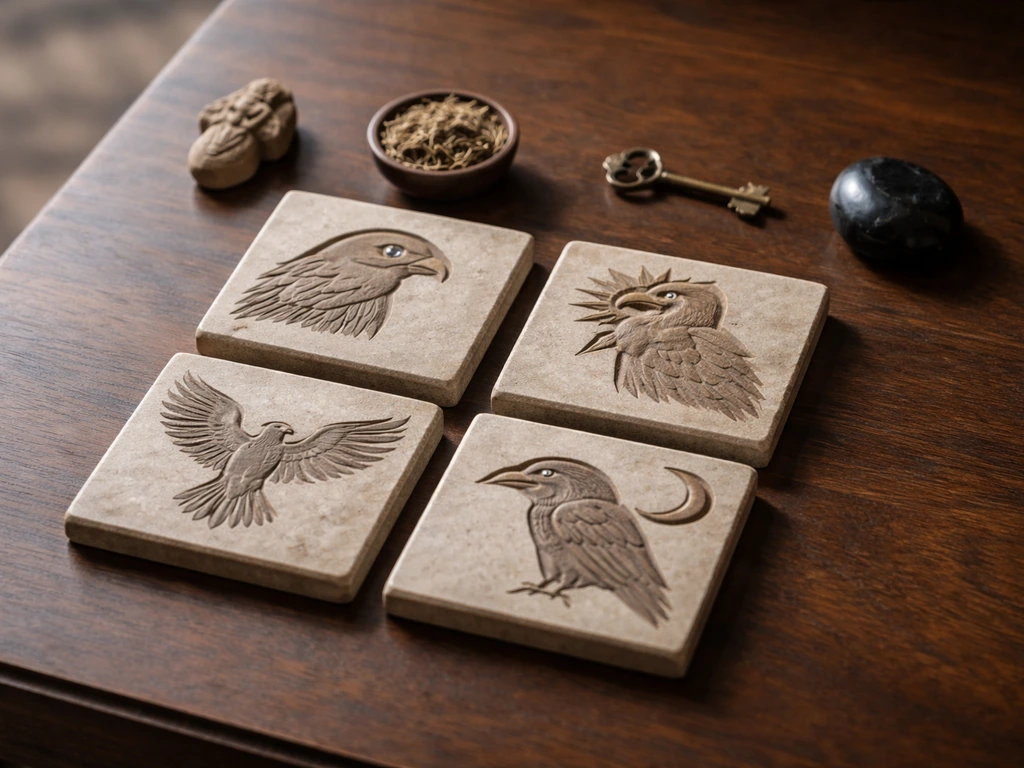
Every bird deity comes with a set of recognizable attributes: their bird species, their visual iconography, their domains of power, and the cultural context in which they appear. Using these as a checklist is the most reliable way to pin down which figure you are actually asking about.
- Bird species: falcon points to Horus; vulture points to Nekhbet; eagle-like form points to Garuda or Thunderbird; hummingbird or eagle points to Huitzilopochtli; raven or crow points to Brân or Celtic tradition; quetzal feathers point to Quetzalcóatl or Kukulcan.
- Visual form: Is the figure fully animal, fully human, or a hybrid? Horus is often falcon-headed human. Garuda is bird-bodied with human features. The Thunderbird is fully bird. Huitzilopochtli is human with hummingbird regalia.
- Domain of power: Sun and sky suggest Horus or Huitzilopochtli. Storm and weather suggest Thunderbird. Protection of rulers or mothers suggests Nekhbet. Renewal, creation, or wind suggests Quetzalcóatl. The underworld or psychopomp role suggests Celtic raven figures.
- Held objects or symbols: Shen (eternity loop) in talons is Nekhbet. The Was scepter and Ankh appear in Horus imagery. Quetzal feathers on a serpent body signal Quetzalcóatl. Lightning from wings or beak signals Thunderbird.
- Cultural source: Which tradition or mythology does your source material come from? This one question resolves most ambiguity immediately.
It is also worth flagging two common search confusions. 'The Good Lord Bird' is a novel and television adaptation with no connection to bird mythology or deities. References to a giant bird in Helheim come from the God of War video game series, not from actual Norse mythological texts. In God of War, the giant bird in Helheim is tied to the game's Norse-inspired setting rather than a specific Norse myth text. If either of those brought you here, you are looking at fictional or literary references rather than traditional mythology. Sometimes searches like "the Good Lord Bird" in India are really pointing to a fictional work or an unrelated phrase rather than a specific traditional bird deity the good lord bird ott india.
Feathers, flight, and nesting: the spiritual core of bird divinity
No matter which tradition you examine, three bird attributes keep appearing as spiritually charged: feathers, flight, and nesting. Understanding why they matter helps you understand why so many cultures independently developed bird deities in the first place. Colossal bird shrine where rock encases is the kind of striking, place-based evidence that helps connect bird symbolism to real ritual practice.
Feathers carry a particularly dense symbolic load. Academically documented as 'spirit objects' across multiple traditions, feathers appear in ritual deposits at Neolithic sites, in the headdresses of Aztec priests honoring Huitzilopochtli, in the regalia of Indigenous leaders, and in everyday spiritual practice as tokens of divine contact. The feather does not just represent a bird: it represents the moment of connection between the earthly and the divine, a physical remnant of something that can travel between worlds. Quetzal feathers in Mesoamerica were so sacred that their green-gold iridescence was treated as a material form of celestial light.
Flight is the attribute that makes birds uniquely suited to divine status. Medieval European writers described birds as exceptional boundary-crossers because of their capacity to move between realms through both song and movement. A bird is never entirely of one world: it walks on earth, swims in some cases, and moves through the sky. That literal boundary-crossing translated directly into mythological roles as messengers, psychopomps (guides of souls), and divine intermediaries. The dove mediates between heaven and earth in the Hebrew Bible. The falcon carries the sun across the sky in Egyptian cosmology. The Thunderbird moves through storm systems that connect sky and earth with violence and force.
Nesting grounds this celestial imagery in something earthy and life-giving. Birds build homes, lay eggs, incubate new life, and return season after season, making them natural symbols of renewal, fertility, and the cyclical nature of existence. In 14th-century New Mexico, the incorporation of avifauna into ritual practice was tied directly to fertility, weather control, and communal well-being. That is not a coincidence: the nesting behavior of birds was read as a model for human flourishing. Birds do not just carry messages from gods; in many traditions, their annual cycles are themselves divine speech.
Everyday bird encounters and what they're often taken to mean
If you searched 'who is the bird god' because you had an unexpected encounter with a specific bird and felt it was meaningful, you are working within a long and legitimate interpretive tradition. For some traditions, that same sacred-bird idea is tied to monumental shrines built for powerful avian deities and ceremonies, including places associated with little light the colossal bird shrine where there is little light. Here is how the most commonly encountered birds are typically read through a spiritual or symbolic framework, and how those readings connect to the larger idea of bird divinity.
- Cardinals: Widely understood as messages from deceased loved ones or as signs of good luck. In this framework the bird functions as a divine messenger, aligning with the intermediary role of bird gods generally rather than naming a specific deity.
- Hummingbirds: In many Indigenous traditions, hummingbirds carry positive spiritual messages and are associated with joy, resilience, and divine favor. In the Aztec tradition, dead warriors were believed to be reborn as hummingbirds, connecting the bird directly to Huitzilopochtli and solar energy.
- Eagles: Across Native American, Aztec, and Egyptian traditions, the eagle represents power, solar energy, and divine authority. An eagle sighting is often interpreted as a call toward strength or clarity.
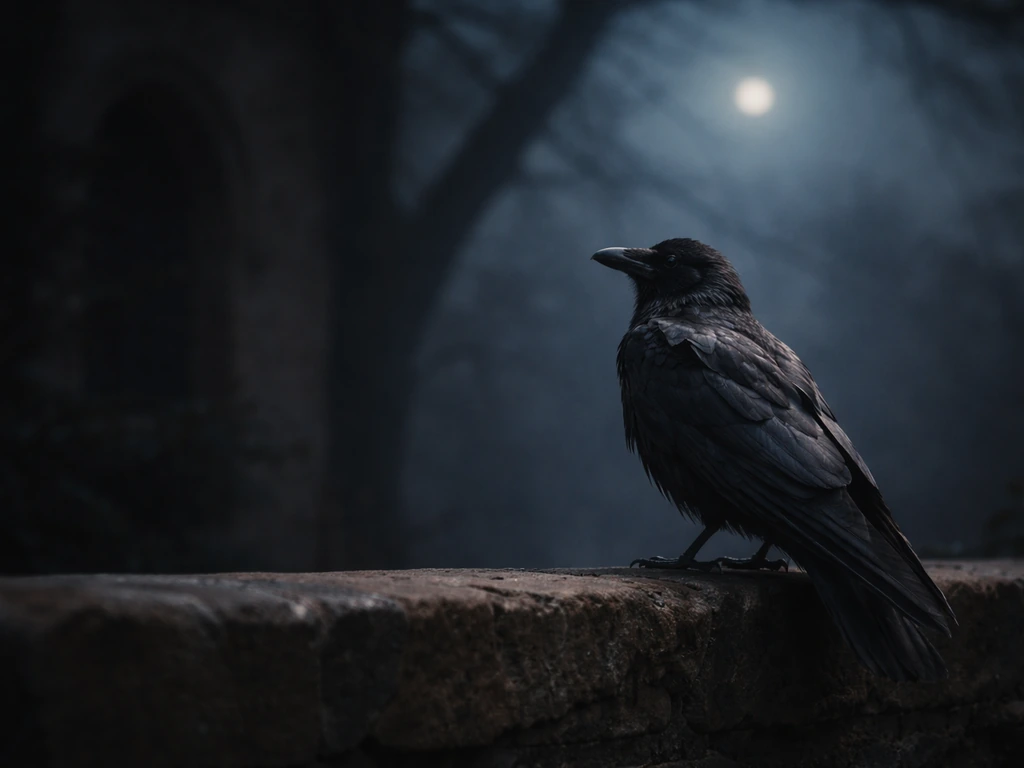
- Ravens and crows: In Celtic and Nordic traditions, ravens are associated with wisdom, mystery, and communication from the otherworld. A raven's appearance is often read as a message requiring careful attention rather than simple comfort.
- Owls: Cross-culturally documented as omens and sign-bearers, owls are associated with transition, the night, and knowledge beyond ordinary sight. They appear in augury traditions worldwide as boundary figures between known and unknown.
- Swallows: Historically associated with safe return, hope, and loyalty. In maritime cultures they were signs of land and survival. In broader spiritual reading they represent home, seasonal renewal, and guidance.
- Doves: In biblical and broadly Western spiritual contexts, the dove is the clearest avian symbol of divine communication and peace, functioning almost as the official bird of the Holy Spirit.
What these encounters share is the underlying framework that birds move between worlds and that their presence carries information worth reading. Whether you interpret that through a specific named deity like Horus or Huitzilopochtli, or through a more generalized spiritual lens, you are drawing on the same ancient human intuition: birds see what we cannot, go where we cannot, and return with something to tell us.
How to identify your tradition and find your specific answer today
If you still are not sure which 'bird god' you are looking for, here is a practical method for narrowing it down. Work through these steps honestly and you will arrive at a much more specific and useful answer than any single-name response could provide.
- Identify the cultural source of your question. Did you encounter 'bird god' in a book, game, film, spiritual practice, or family tradition? Trace the phrase back to its origin. A Mesoamerican reference almost certainly points to Huitzilopochtli or Quetzalcóatl. An Egyptian context points to Horus or Nekhbet. A Hindu or Buddhist context points to Garuda.
- Name the bird if you can. If the tradition specifies a species, use the attribute checklist above. Falcon means Egypt and Horus. Vulture means Nekhbet. Hummingbird means Aztec and Huitzilopochtli. Eagle-like divine bird means Garuda. Storm bird means Thunderbird. Raven or crow in a Celtic context means Brân.
- Check the domain of power. What does the deity do? Protect rulers? Guide the sun? Cause thunder? Heal? The domain narrows the field as effectively as the species does.
- Verify using primary or reliable secondary sources. For Egyptian deities, Britannica and academic museum resources are solid starting points. For Indigenous traditions, resources produced or endorsed by the relevant nations are more authoritative than general spiritual websites. For Hindu and Buddhist mythology, university or museum sources are more reliable than popular spirituality blogs.
- Translate the symbolism into personal relevance. Once you have identified the tradition and figure, ask what the deity's domains and attributes mean for your situation. If you are drawn to Horus, you are working with themes of sky, healing, and restored order. If Thunderbird resonates, you are engaging with raw elemental power and sky sovereignty. If the dove brings you here, you are in the territory of peace and divine communication.
- Hold the answer with appropriate flexibility. Bird symbolism across traditions is not a fixed code. The same bird can carry different meanings in different cultural contexts, and multiple meanings can coexist. Use the identification as a starting point for reflection, not a final answer that closes inquiry.
One practical caution: be careful about sources that flatten all bird-deity traditions into one universal 'bird god' figure. That kind of over-simplification erases the specific richness of each tradition and often produces a mash of unrelated concepts. The traditions listed here are distinct, with their own histories, iconographies, and contexts. Respecting those distinctions is not just academic precision: it is what makes the symbolism actually meaningful rather than decorative.
The question 'who is the bird god' is genuinely a good one, because it points toward something real: the universal human intuition that birds carry sacred significance. But the answer is not one name. It is a tradition, a species, a set of attributes, and a context. With those four things in hand, you can identify the exact figure you are looking for and begin engaging with what that figure's symbolism actually means for your question.
FAQ
How can I figure out which “bird god” someone means when they do not mention a culture or tradition?
Start by stating the bird and the context you saw or heard about (ritual, dream, artwork, literature, modern spirituality). Then match it to the article’s three categories: named deity (like Horus), bird as messenger (like dove as communicator), or symbolic use (like renewal or sky power). If you can’t name the tradition, focus on iconography and domain first, then species.
Are modern “bird angels” or “spirit guides” actually referring to a specific bird deity?
Be cautious with phrases like “bird god” used in modern generic spirituality, because they often combine multiple traditions without keeping their original meanings. A quick check is whether the claim includes a specific iconography, specific bird species, or a known cultural setting (for example, Egyptian sky/healing for Horus, Hindu/Buddhist vahana role for Garuda). If none are present, treat it as symbolic interpretation rather than identification.
What if the “bird god” I’m looking for is not clearly a named god in the sources I find?
Yes. Some traditions emphasize a divine animal or sacred bird role rather than a full pantheon member. In that case, the correct answer may be “a sacred intermediary bird” (messenger or omen) instead of a named god. To avoid the mistake, ask whether the figure has a genealogical identity, temples, and consistent iconographic features, or whether it is primarily used as a spiritual symbol.
How can I tell whether I’m reading mythology or just pop culture references?
Use the mismatch signal: if the explanation is about a place called Helheim, a plot from a video game, or a title like “The Good Lord Bird,” it is likely pop culture rather than mythology. Your best next step is to filter search results by “mythology,” “pantheon,” “iconography,” or the specific culture name, rather than relying on broad web results.
Is it wrong to assume there is one bird god across all religions and cultures?
When sources say “the” bird god in broad terms, that usually means the author is blending traditions. Instead of choosing one name, compile the bird features you’re given, then compare them to the checklist the article mentions (species, iconography, domains, cultural context). For example, thunder and storm power points more toward Thunderbird-style storm symbolism than toward Egyptian solar roles.
Does the type of bird I encountered determine the correct deity candidate, or is it mostly symbolism?
If the bird you’re wondering about is a specific one, treat species as a clue but not the only clue. Birds like ravens/crows, doves, falcons, and eagles can carry different meanings even within the same broad region. Confirm with the domain and visual traits (wings spread protector, sun/healing connections, or messenger between realms) before deciding which candidate fits.
How should I interpret “bird god” encounters that happen in dreams or during personal spiritual practice?
If your question is tied to dream or spiritual experience, try recording three details: what the bird did (carried something, appeared, called, attacked, protected), where it appeared (house, sky, temple-like space), and what emotion or change followed. Then compare those elements to the three frameworks, messenger versus named deity, and symbolic renewal versus protective mediation.
If I only know “Aztec,” how do I choose between Huitzilopochtli and Quetzalcóatl?
To avoid mixing timelines and labels, don’t use “Aztec” as a catch-all for all Mesoamerican bird imagery. For bird-linked candidates in the article, keep them distinct: Huitzilopochtli is tied to the hummingbird/sun/war and Tenochtitlán, while Quetzalcóatl is primarily creation/wind/sky with feathered serpent imagery. If you only know “Aztec bird god,” you may need more context than that.
Can the same bird be both a symbol and a deity, and how do I avoid confusing the two?
Yes, and it is common to see overlap because some birds appear in multiple spiritual frameworks. For instance, a single culture may use a bird species both as omen and as sacred intermediary. The practical rule is to decide whether you are trying to name a deity (fixed identity), identify a messenger function, or explain a symbolic theme, then use that to pick the best “who” answer.