In the Bible, the dove is consistently a symbol of divine presence, peace after judgment, and the Holy Spirit's activity in the world. It shows up in a handful of key passages, and each one adds a distinct layer of meaning: not just "peace" in a greeting-card sense, but something more textured, including covenant renewal, ritual purity, and God's visible approval of Jesus. If you want to understand what the dove actually meant to the people who wrote and first read Scripture, you need to look at each passage on its own terms rather than collapsing all of them into a single tidy symbol.
Dove Bird Meaning in the Bible: Verses and Spiritual Takeaways

Eleanor Hartwell
28 May 2026
Where doves appear in the Bible (the key verses)
Doves aren't everywhere in Scripture, but when they appear, they almost always carry interpretive weight. The major passages worth knowing are Genesis 8:8–12 (Noah's dove after the flood), Matthew 3:16, Luke 3:22, and John 1:32 (the Holy Spirit descending at Jesus' baptism), and then a cluster of legal and ritual texts: Leviticus 1:14, Leviticus 5:7, Leviticus 12:8, and Luke 2:24. That last group is often overlooked, but it's important for understanding why doves appear in the temple and what they signal about the people bringing them.
Here's a quick map of the passages and what each one is doing:
| Passage | Context | Core Function of the Dove |
|---|---|---|
| Genesis 8:8–12 | Noah releases a dove to test the floodwaters | Scout/messenger; signals new life and land available |
| Genesis 8:11 | Dove returns with an olive leaf | Sign of receding waters and renewed earth |
| Matthew 3:16 | Spirit descends "like a dove" at Jesus' baptism | Visible marker of the Holy Spirit's presence |
| Luke 3:22 | Spirit descends "in bodily form like a dove" | Embodied, witnessed confirmation of the Spirit |
| John 1:32 | John the Baptist testifies he saw the Spirit descend like a dove | Confirms Jesus' identity as the one sent by God |
| Leviticus 1:14; 12:8 | Doves/turtledoves as sacrificial substitutions | Ritual offering for those who cannot afford a lamb |
| Luke 2:24 | Mary and Joseph offer two turtledoves at the temple | Legal compliance and signal of the family's economic status |
That last row matters more than people often realize. When Mary and Joseph bring turtledoves instead of a lamb (following the Leviticus 12:8 provision for poorer families), the dove isn't being used as a spiritual symbol at all. It's a straightforward legal and economic reality. Doves were plentiful in Palestine and were the accessible option for people who couldn't afford larger animals. Keeping that in mind helps you avoid projecting "Holy Spirit symbolism" onto every dove reference in the Bible.
Noah's dove and the olive branch: what it actually meant
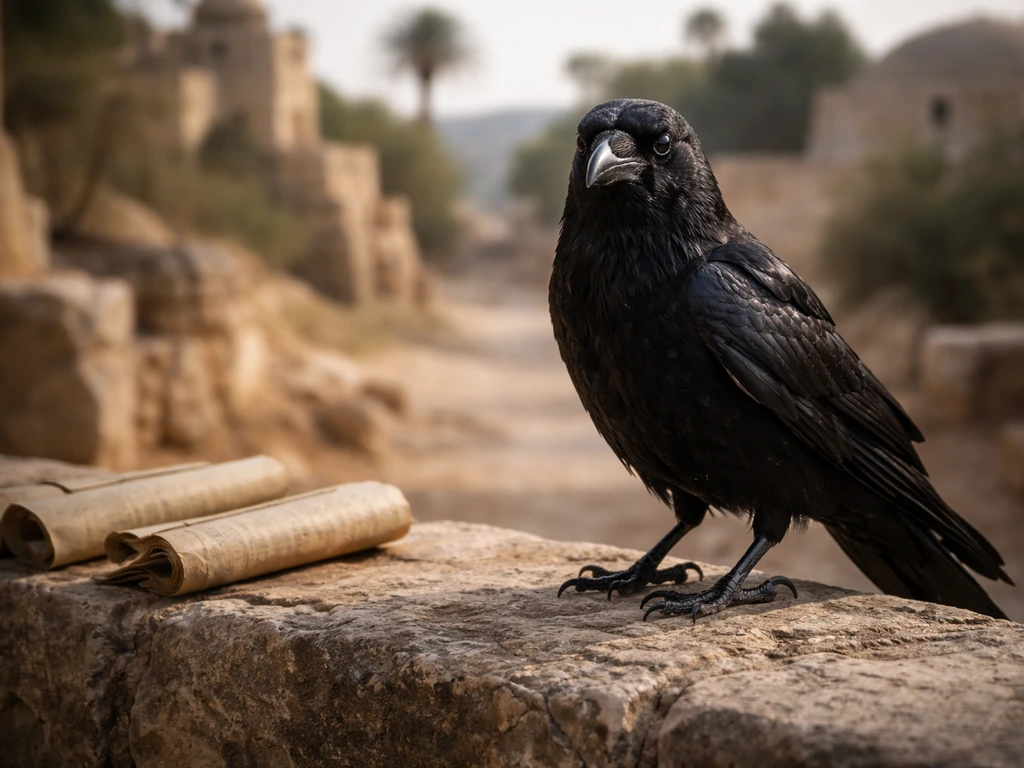
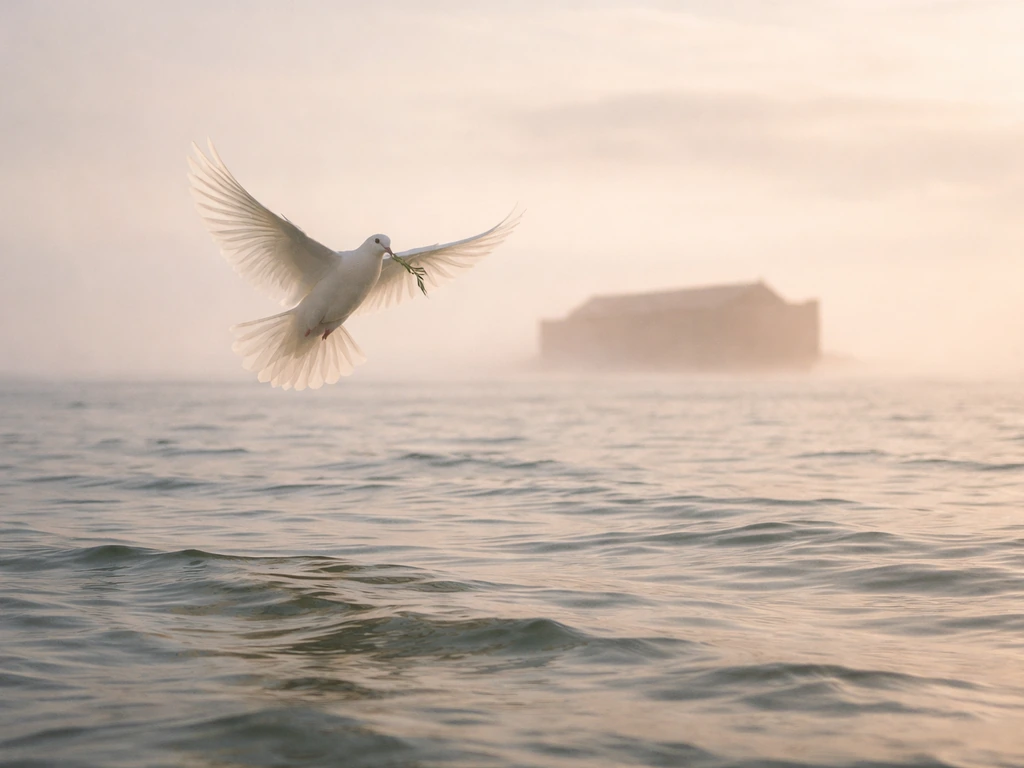
Genesis 8:8–12 is worth reading carefully because the narrative has a structure that people gloss over. Noah first sends out a raven (Genesis 8:7), which flies back and forth without bringing news. A raven in the Bible is often treated differently than a dove, so the context of the story matters for its meaning raven bird meaning in the bible. Then he sends a dove. The first time, the dove finds no place to land and returns to the ark (v.9). Noah waits seven days and sends her out again. This time, she comes back in the evening with a freshly plucked olive leaf in her beak (v.11). He waits another seven days, releases the dove a third time, and this time she doesn't return (v.12). The dove's failure to return is read by commentators as evidence that dry ground and food exist outside the ark and that the mission is complete.
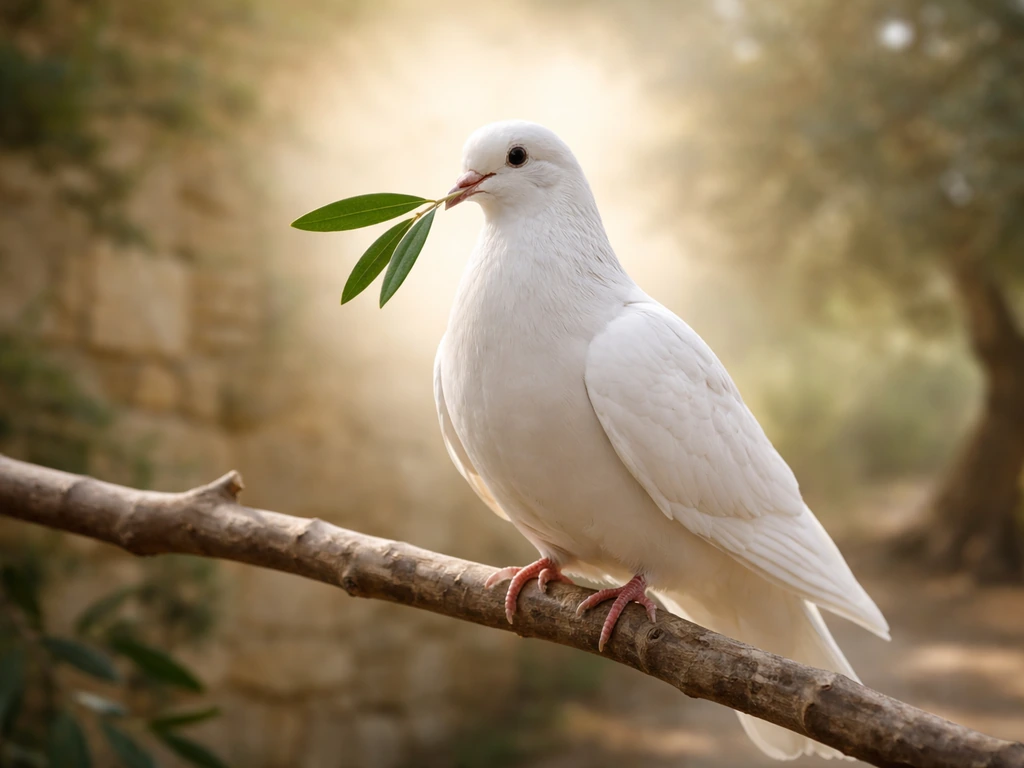
The olive leaf in verse 11 is what carries the symbolic freight here. A freshly plucked leaf means living vegetation has returned, which means the waters have receded enough for plant life to survive. For the original readers, this wasn't abstract symbolism: it was concrete evidence that the judgment was ending and the earth was being renewed. The dove functioned as a scout, and the olive leaf was the report she brought back.
The connection to "peace" came later. Tertullian and Augustine both wrote about the dove and olive branch as a symbol of divine reconciliation and perpetual peace, and that interpretive tradition stuck. Augustine, in On Christian Doctrine, specifically read the olive branch as indicating "perpetual peace" between God and humanity. That reading is coherent and meaningful, but it's worth knowing it developed in early Christian theology rather than being explicitly stated in the Genesis text itself. The text says the waters receded and life resumed. The peace reading is a legitimate theological inference, not a verse-by-verse claim.
The dove at Jesus' baptism: Holy Spirit symbolism in full

The baptism scene is where dove symbolism becomes most theologically loaded in the New Testament. All four gospels record the moment, and the wording across them is worth comparing. Matthew 3:16 says the Spirit descended "like a dove" and came to rest on Jesus. Luke 3:22 sharpens this: the Spirit descended "in bodily form like a dove." Luke's addition of "bodily form" is significant because it emphasizes that what happened was visible and embodied, not merely an inner spiritual experience. John 1:32 adds another angle entirely: it's John the Baptist's own testimony that he saw the Spirit descend and remain on Jesus, and that this sight is what allowed him to identify Jesus as the one he was pointing toward.
What the dove imagery is doing in this scene has been debated in scholarship for a long time. The dove appears alongside two other events: the heavens opening and a voice from heaven saying "This is my Son, whom I love; with him I am well pleased" (Matthew 3:17). The dove doesn't stand alone as a symbol. It's part of a three-part divine confirmation: opened heavens (access to God), the Spirit descending (divine presence resting on Jesus), and the voice (verbal approval from the Father). The dove is the visible, embodied form the Spirit takes at that moment.
One nuance worth noting: scholars have pointed out that in first-century Jewish texts, the dove was not already an established symbol of the Holy Spirit. That association developed in early Christian interpretation, largely because of this baptism scene. So when you read later Christian art or church writing that treats the dove as a universal symbol of the Holy Spirit, you're seeing the effect of this passage on Christian imagination, not a pre-existing Jewish symbol that Jesus was drawing on. The symbol grew from the event.
The core biblical themes the dove carries
Across these passages, a few consistent themes emerge. They aren't interchangeable, and no single dove reference carries all of them at once, but together they form the biblical vocabulary around the dove.
- Peace and rest after judgment: Most directly from Noah's story, where the dove and olive leaf signal that the destructive phase is over and restoration has begun.
- Divine presence and the Holy Spirit: From the baptism accounts, where the dove is the visible form of the Spirit's descent onto Jesus. This becomes the dominant Christian association.
- Divine approval and selection: At Jesus' baptism, the dove's descent is part of a public sign that God has marked Jesus as His chosen one. John 1:32 makes this explicit.
- New beginnings and covenant renewal: The olive leaf in Genesis 8 signals the start of a new phase in God's relationship with creation. The flood judgment is behind them; a new covenant is ahead (Genesis 9).
- Purity and ritual accessibility: In the Levitical texts, doves are linked to purity offerings and are the option available to those without resources for a lamb. Jesus' own family used this provision. The dove is associated with coming before God in humility and compliance with the law.
Common misinterpretations worth avoiding
The biggest trap with dove symbolism in the Bible is collapsing all of it into a single meaning: "dove = peace," full stop. That flattens a much more specific set of symbols. Here are the misreadings that come up most often.
"Dove always means peace" is too simple
The peace association is real, but it came specifically from Noah's story and was developed most explicitly by early Christian theologians like Tertullian and Augustine. The first-century Jewish context didn't use the dove as a peace symbol in the way we now assume. And in the baptism accounts, "peace" isn't really the point at all. The point is divine identity, Spirit presence, and the inauguration of Jesus' public ministry. Reading the baptism dove as "a symbol of peace" misses what the text is actually doing.
Don't treat every dove mention as spiritual symbolism
Leviticus 1:14 and 12:8 are legal texts, not symbolic ones. Leviticus also specifies that bird sacrifices can include turtledoves, grounding later references to “dove” in the historical reality of ritual offerings blank" rel="noopener noreferrer">Leviticus 1. Luke 2:24 records Mary and Joseph following the law for purification after childbirth, using the bird option available to families who couldn't afford a lamb. Reading spiritual symbolism into that specific transaction distorts what the text is communicating. Sometimes a dove in the Bible is just a bird being used in a religious ritual, and the meaning is about obedience and accessibility, not mystical symbolism.
Don't separate the dove from its narrative context
The baptism dove only makes sense inside the full baptism scene: the open heavens, the Spirit, and the voice together constitute the sign. Pulling out the dove imagery and reading it independently leads to vague interpretations that don't reflect what any of the gospel authors were trying to communicate. Scholars who work on Luke 3:22 specifically emphasize that the dove has to be interpreted within Luke's overall narrative argument, not as a standalone symbol imported from somewhere else. The same principle applies to Genesis: Noah's dove is meaningful because of the sequence of events (three releases, increasing information, a final absence) and not just because a dove appeared.
Comparing the dove to ravens and other birds in Scripture
In Genesis 8, Noah sends out a raven first, and it just keeps flying around without resolution. Commentators frequently contrast the raven (classified as unclean in the Levitical food laws) with the dove (a clean bird used in offerings) to explain why the dove is the one who brings back meaningful news. This raven-versus-dove contrast is an interesting lens, and it connects to the broader biblical pattern of raven symbolism in Scripture, where the raven is more ambiguous as a messenger. The dove being a clean, sacrificially acceptable bird is not incidental to how ancient readers would have heard the story.
How to apply dove symbolism practically today

If you came to this topic because you encountered a dove in art, in a dream, in a church setting, or just while reading the Bible and wanted to understand it better, here's a practical approach to using what you've learned.
Start with the specific passage, not the symbol
If someone references "the dove" in a sermon or an artwork, your first question should be: which passage is this drawing from? Noah's dove and the baptism dove have overlapping but distinct meanings. Knowing which story is being invoked helps you apply the right interpretive lens. If you're reading Genesis 8, you're in a story about divine faithfulness after judgment and the renewal of the earth. If you're reading Matthew 3 or Luke 3, you're in a story about the identity of Jesus and the presence of the Holy Spirit.
Journaling and reflection prompts
Biblical symbolism becomes most useful when it intersects with your actual situation. These questions are a starting point for personal reflection tied to the dove's specific biblical meanings:
- Where in your life are you waiting for a sign that the "flood" is receding? What would the equivalent of an olive leaf look like for you right now?
- The baptism scene is about confirmation and approval. Is there a season of public commitment or new beginning in your life where you need to sense divine affirmation rather than just human validation?
- The dove in Leviticus appears in the context of accessibility: God's law made a provision for those without resources. Where in your spiritual life are you trying to bring what you actually have rather than what you think you're supposed to have?
- New beginnings in the Bible often come after a period of profound difficulty (the flood, the wilderness, the baptism that inaugurated a path to the cross). What difficulty in your past are you now on the other side of, and what does the "new covenant" look like from where you are?
Using dove imagery in prayer without making it superstitious
One concern people have when working with symbolic imagery is that it tips into magical thinking: if I see a dove, God is telling me something specific. The biblical texts don't work that way. The doves in Scripture appear in divinely orchestrated, narratively specific moments, not as general omens. The healthiest way to use the dove as a spiritual lens is to let the passages themselves inform your prayer, rather than reading significance into the bird's appearance. If a dove image catches your attention, that might be an invitation to return to Genesis 8 or Luke 3 and sit with what those texts actually say. The symbol points back to the story, and the story is where the meaning lives.
Interpreting dove imagery in art and everyday encounters
When you encounter dove imagery in Christian art, the visual shorthand almost always draws from one of two sources: the Holy Spirit (descended like a dove at the baptism) or peace and reconciliation (Noah's dove with the olive branch). Early Christian funerary art used the dove to represent the soul finding peace, which is a development of both those threads. If you're looking at a painting or icon and there's a dove, check whether it appears near water and a figure being baptized (Spirit imagery) or whether it's carrying an olive branch (peace and covenant imagery). Those two are the primary visual codes. Outside of an explicitly biblical setting, a dove releasing into the air has taken on broader cultural meanings around freedom and new beginnings, but those are later developments built on the biblical foundation.
If you're interested in how other birds function in biblical symbolism for comparison, the raven and crow carry very different energy in Scripture and in broader tradition, as do cranes. If you're also curious about the biblical meaning of the crane bird, it helps to look at how birds function in Scripture as messengers and symbols rather than assuming one universal significance cranes. If you are curious about the crow bird meaning in the Bible, it helps to look at how Scripture uses it as a symbol of more than just color or nature raven and crow. The dove is unusual in how consistently positive its biblical associations are across the Old and New Testaments. That consistency is part of why it became such a durable Christian symbol, and why understanding its specific textual roots makes the symbol richer rather than simpler.
FAQ
Does “dove” in the Bible always mean the Holy Spirit or peace?
No. The meaning depends on the passage. In Genesis 8 the dove functions as a scout that signals the end of the flood, in Leviticus it relates to ritual offerings, and in the baptism accounts it is tied to the Spirit’s visible arrival on Jesus. Peace is a later theological emphasis that draws especially from Noah and early church teaching, not from every dove text.
How can I tell whether a dove reference is about a legal offering versus spiritual symbolism?
Look for transaction details and ritual context. If the text mentions sacrifices after childbirth, purification, or specific allowable animals for certain families, it is functioning as law, obedience, and accessibility. Spiritual readings should not override what the passage is doing in its legal setting.
What does “like a dove” mean in the baptism, since it does not say the Spirit literally is a dove?
The gospels use a comparison to describe visible appearance and resemblance, not identity. Luke’s “in bodily form like a dove” stresses what observers could see, so the focus is on the Spirit’s visible descent on Jesus, within the broader scene that includes the opened heavens and the Father’s approval.
Why does the article say the dove’s association with the Holy Spirit developed in early Christianity?
Because the New Testament event is what drove the later Christian association. The first-century Jewish background did not treat the dove as a guaranteed standing symbol for the Holy Spirit in the way later Christian art and preaching often assume. So the symbolism grows from interpretation of the baptism scene.
In Genesis 8, why is the dove’s third non-return important?
The narrative logic is sequential. After multiple releases, the dove eventually does not come back, which signals that conditions outside the ark are stable enough for her to remain. That absence functions as the climactic “report” that the mission is complete, not just a general “peace” moment.
Is the olive leaf definitely a sign of “peace,” or is it something more concrete?
It is first and foremost concrete evidence of renewed plant life after the waters receded. The olive leaf indicates living vegetation has returned, meaning judgment has ended and the world can sustain life. The peace connection is a theological development layered on top of that primary observation.
Can I use a dove image as a personal sign from God if I notice one during my day?
The Bible treats doves as meaningful in specifically narrated, divinely timed moments. If you treat a random dove sighting like a direct message, it can drift into magical thinking. A safer approach is to let the dove push you back into prayer and reflection on the specific passage (Noah, baptism, or ritual context) rather than claiming a one-off personal omen.
What is the biggest interpretive mistake people make with dove symbolism?
Flattening all dove occurrences into a single formula, “dove equals peace.” The texts have distinct functions: scouting after judgment, legal ritual offerings, and Spirit presence at Jesus’ inauguration. Matching the right meaning requires matching the passage.
If I’m reading or hearing “the dove” in a sermon, how should I respond quickly to avoid misunderstanding?
Ask which story the speaker is invoking (Genesis 8, Leviticus or Luke 2, or the baptism in Matthew 3 and Luke 3). Then align your application with that scene’s purpose, especially remembering that the baptism emphasis is identity and Spirit presence, not primarily “peace.”
Do Christian artworks always interpret the dove the same way, and how can I read them correctly?
Many artworks follow one of two primary visual codes: Spirit imagery near baptism scenes, or Noah-style peace and reconciliation using an olive branch. Check what the dove is next to in the picture, for example water, baptism figures, or the olive branch, because the surrounding elements usually signal which biblical meaning the artist intends.
Next Article
Crow Bird Meaning in the Bible: Passages and Practical Insight
Biblical crow symbolism explained with key passages, context vs folklore, and practical guidance for real-life encounter