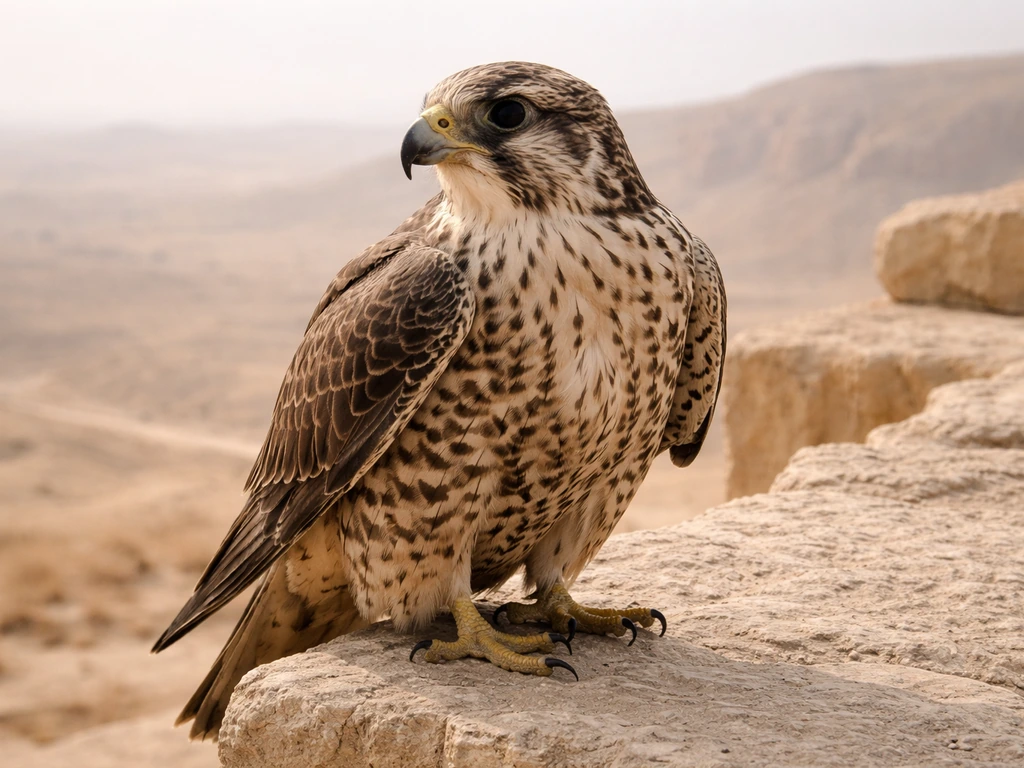
No single verse in the Bible names God's favorite bird. If you are wondering about the great speckled bird specifically, the key is to look at how that phrase is used and whether it has any clear biblical identification. What scripture does do, repeatedly and vividly, is use specific birds to illustrate something about God's character: the sparrow to show providence, the dove to signal peace and the Holy Spirit, the raven to demonstrate that God provides even through unexpected messengers. If you had to point to one bird that comes closest to a 'most cherished' role across Christian tradition, the dove is the strongest candidate, but it earns that status through accumulated symbolism, not a single divine declaration. The honest, useful answer is that the question invites you into a richer exploration than a one-word reply can satisfy.
What Is God’s Favorite Bird? Meaning, Scripture, and Symbols


Is there an actual 'favorite bird' in scripture?

The Bible never frames any bird as God's preferred species. What it does do is deploy birds as teaching tools, narrative devices, and living symbols at pivotal moments. The sparrow appears in Matthew 10:29-31, where Jesus says 'not one of them will fall to the ground apart from your Father,' and in Luke 12:6-7, where God is described as forgetting 'not one' of them. That is a statement about God's omniscience and care, not a declaration that sparrows hold a special rank. Matthew 6:26 invites readers to 'look at the birds of the air' as proof against anxiety over provision. Again: a teaching moment, not a favoritism claim.
This matters because the question 'what is God's favorite bird? Micah 1:16 is a good place to check which specific bird is mentioned in the verse. ' tends to arrive with a real need underneath it: people want to know whether a bird they keep seeing is meaningful, whether a particular species carries divine approval, or simply which bird to connect with when seeking spiritual comfort. Those are legitimate pursuits. But they require a more layered answer than a 'winning bird,' so the honest starting place is acknowledging that the answer is tradition-shaped, not verse-stamped. If you are also curious about the earliest bird reference, the Bible first mentions a bird in the Genesis flood narrative, which connects to what is the first bird mentioned in the bible.
The top candidate birds and what evidence actually supports them
Across Christian scripture, devotional tradition, and cross-cultural symbolism, four birds come up consistently when people work through this question. Each has a different kind and strength of evidence behind it.
The dove

The dove has the strongest cumulative case. It appears at two major pivot points in scripture: Genesis 8, when Noah sends a dove from the ark and it returns with an olive branch signaling the flood's end, and the Gospel accounts of Jesus' baptism, where the Holy Spirit descends 'like a dove.' That second moment is the one that sealed the dove's status in Christian tradition. Early Christian art routinely depicted the Holy Spirit as a dove, and the apostles and faithful were symbolized as doves in catacombs and mosaics. This is tradition built on a strong scriptural anchor, which makes it different from pure cultural overlay.
The sparrow
The sparrow has arguably the most theologically deliberate treatment in the Gospels. Jesus specifically chose the sparrow because it was the cheapest bird you could buy at market, making his point sharper: if God keeps account of the most economically insignificant bird, how much more does he attend to you? The sparrow doesn't represent divine favoritism; it represents the floor of divine care. That's actually a more profound theological statement than 'favorite bird,' and it explains why the sparrow has generated centuries of devotional writing and hymns (most famously 'His Eye Is on the Sparrow').
The raven
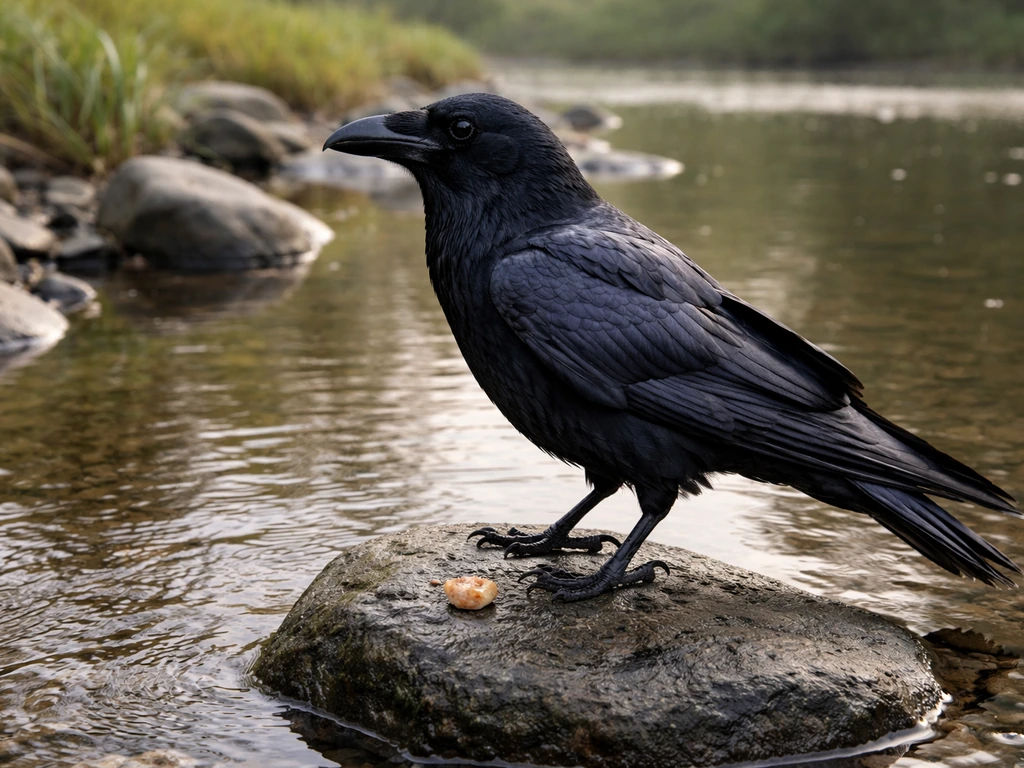
The raven earns its place through two distinct passages. In Genesis 8, Noah sends a raven first, before the dove. In 1 Kings 17:4-6, God explicitly commands the ravens to feed the prophet Elijah during a famine, and they bring him bread and meat. It even connects with the wilderness provision of birds that God gave to feed his people God gave ravens to bring bread and meat. That verse, 'I have commanded the ravens to feed you there,' is one of the most direct instances of God directing a specific bird to serve a human purpose. Job 38:41 adds another layer, with God asking rhetorically who provides food for the raven, positioning it as a creature under divine care and attention. In Job 38:41, God’s rhetorical question about who provides food for the raven frames the raven as under divine care and providence blank" rel="noopener noreferrer">who provides for the raven. The raven's reputation as a dark omen in folk traditions is almost the opposite of how it functions in the Hebrew Bible.
Other birds worth noting
The eagle appears frequently in biblical poetry as a symbol of God's protective power (Exodus 19:4, Deuteronomy 32:11, Isaiah 40:31), often as a metaphor for God himself carrying Israel. The quail is the bird God actually sent as food for the Israelites in the wilderness (Numbers 11), making it the most literally 'provided' bird in the Hebrew Bible. Psalm 104:17 mentions birds nesting in the cedars that God planted, framing all birds as beneficiaries of his creative order, not singling out one species.
| Bird | Primary Scripture | Type of Evidence | Main Symbolic Role |
|---|---|---|---|
| Dove | Genesis 8:8-12; Gospel baptism accounts | Strong scriptural + deep tradition | Peace, Holy Spirit, renewal, purity |
| Sparrow | Matthew 10:29-31; Luke 12:6-7 | Direct scripture (Jesus' own words) | Providence, divine care, human value |
| Raven | 1 Kings 17:4-6; Job 38:41; Genesis 8:7 | Direct scripture (God commands ravens) | Provision, God's care for the wild |
| Eagle | Exodus 19:4; Isaiah 40:31 | Strong scripture, mostly metaphorical | Strength, protection, divine power |
| Quail | Exodus 16:13; Numbers 11:31-32 | Literal provision narrative | God's provision, sustenance |
What each bird actually symbolizes
The dove's symbolism is the most layered because it operates on multiple registers simultaneously. The olive branch in Genesis represents the end of divine judgment and the resumption of covenant relationship. The baptism scene ties the dove to the third person of the Trinity, making it not just a peace symbol but a symbol of God's active, present Spirit. In early Christian art, the dove over baptismal fonts connected both meanings: you were entering the peace of God and receiving the Spirit. That double symbolism is why the dove dominates Christian iconography across denominations and across two thousand years.
The sparrow's symbolic power is paradoxical: its very smallness and cheapness make it the perfect carrier for a message about infinite divine attention. In devotional tradition, the sparrow has come to represent the individual believer who feels overlooked or insignificant. No bird in scripture is used more pointedly to address fear and anxiety, which is why it resonates so strongly in personal spirituality.
The raven carries a messenger and provider role in the biblical framework that contrasts sharply with its reputation in other traditions. In Celtic and Norse symbolism, ravens are oracles and battlefield scavengers. In the Hebrew Bible they are instruments of divine provision, willingly (or commandedly) crossing the boundary between the wild and the human world to bring bread to a prophet. That gap between cultural reputation and biblical function is worth sitting with: the bird considered ominous in many folk traditions is the one God chose to run room service for Elijah.
What God's care for birds teaches us (beyond the 'favorite bird' question)
The theological through-line connecting all these bird passages is providence: the conviction that God sustains creation at every level, from the smallest sparrow to the ravens of the wilderness. Matthew 6:26 makes this explicit in an argument structure: if God feeds birds that neither sow nor reap, that is evidence about the character of God, not just a nature observation. The sparrow passages in Matthew 10 and Luke 12 escalate this: God not only feeds birds, he notices when one of them dies. The point Jesus draws from this is pastoral, not ornithological: 'Do not be afraid.' Many people also ask, "why is turkey the thanksgiving bird," and it helps to look at how cultural symbolism gets paired with religious holidays.
The raven passages add an interesting dimension: God does not just sustain birds passively but actively deploys them. In 1 Kings 17, the ravens are essentially agents carrying out a divine directive. That framing positions birds not just as objects of God's care but occasionally as instruments of it, a distinction that has fed centuries of reflection on how God works through ordinary, created things to accomplish extraordinary purposes.
Psalm 104's sweeping creation psalm presents birds nesting in God-planted cedars as part of a cosmic order that God actively maintains. Every bird in that vision is, in a sense, 'favored' in that it is held within God's sustaining attention. This broader theological lens is worth keeping: the question 'which bird is God's favorite?' may be less useful than 'what do birds reveal about how God relates to creation?'
How to interpret your own bird sightings responsibly
This is where a lot of people get into trouble, not because seeking meaning in nature is wrong, but because the interpretive leap from 'I keep seeing a red cardinal' to 'God is sending me a message' involves several steps that deserve honest examination. The Bible does not present bird encounters as a routine channel for divine communication in the way that, say, scripture or prayer is. What it presents is birds as illustrations of theological truths already established elsewhere.
That said, using bird encounters as prompts for reflection is different from treating them as omens or divination. If seeing a dove at a difficult moment causes you to recall the peace imagery of Genesis 8 and the Holy Spirit symbolism of the baptism accounts, and that recollection shifts your emotional state toward trust, that is a legitimate use of symbolic tradition. You are drawing on a real, documented meaning framework, not inventing private revelation. The problem arises when the bird encounter is framed as a guaranteed message or a prediction about specific outcomes.
Discernment traditions across Christianity (Catholic, Lutheran, broadly Protestant) converge on this: God's will is primarily known through revelation in scripture and the life of Jesus, through community, prayer, and reason. Natural occurrences, including unusual bird sightings, can be occasions for prayer and reflection, but they shouldn't be treated as standalone messages that override or supplement what you already know from scripture and community. That is actually the more respectful interpretive stance: it takes both the bird encounter and the doctrinal tradition seriously.
- Notice the encounter without immediately assigning meaning: what bird, what context, what were you thinking about?
- Look up what that bird actually represents in documented symbolic traditions (biblical, cultural, or both).
- Ask whether that meaning connects genuinely to something already in your life or in scripture you know.
- Hold the interpretation loosely: it is a prompt for reflection, not a prophecy.
- If the 'message' you are reading conflicts with established ethical or scriptural teaching, set it aside.
Cross-cultural bird symbolism and where the 'favorite bird' idea comes from
The impulse to identify a sacred or divinely favored bird is not unique to Christianity. In Egyptian tradition, the ibis was associated with Thoth, god of wisdom, and the falcon with Horus, the divine king. The ibis literally represented divine intelligence made manifest in nature. In Native American traditions, the eagle is widely (though not universally across nations) treated as the bird closest to the Great Spirit, a messenger between earth and sky. In Celtic tradition, the wren and the crane carry sacred status in different regions. The phoenix, appearing in Egyptian, Greek, and later Christian iconography, carries resurrection symbolism that maps closely onto Christian renewal theology, even though it is a mythological rather than real bird.
These cross-cultural patterns explain why people bring the 'favorite bird' question to Christianity: they have absorbed the broader human instinct that divine power aligns with particular birds, and they are trying to locate that alignment within their own tradition. The biblical answer reframes the question rather than refusing it: instead of one privileged species, the Bible distributes sacred significance across multiple birds while insisting that all birds exist within God's providential order. That is actually a more radical claim than 'God likes doves best.'
The dove's emergence as the dominant Christian sacred bird is partly this cross-cultural pressure at work: early Christians needed a bird that could carry peace and Spirit symbolism in a visual language that worked across cultures, and the dove, already loaded with those meanings in Mediterranean and Near Eastern cultures, fit. The scriptural basis was real, but the visual and devotional prominence of the dove in art and liturgy was also shaped by this wider symbolic ecosystem.
Practical next steps: journaling, reflection questions, and choosing a meaning for your situation

If you arrived at this question because a specific bird keeps appearing in your life and you want to know what it means, the most useful thing you can do is slow down and work through the meaning rather than grabbing the first answer you find. Here is a practical framework for doing that well.
Start with a journal entry
Write down the bird, the circumstances, how many times you have seen it, and what was happening in your life at those moments. Patterns matter. A single sighting of a raven is much less significant than a raven appearing repeatedly during a period of anxiety about provision. The journaling step also protects against retrospective bias: you are creating a record before you decide what it means.
Reflective questions worth sitting with
- What does this bird represent in the tradition I draw on most (biblical, cultural, family)?
- Does that meaning speak to something I am actually wrestling with right now?
- Am I looking for reassurance, guidance, or comfort, and does this bird's symbolism offer any of those things honestly?
- Would the meaning I am assigning to this bird hold up if I told it to someone I trust and respect spiritually?
- Can I find this bird's symbolic meaning grounded in at least one documented tradition rather than something I invented in the moment?
Picking a meaning without overclaiming
The most responsible way to claim meaning from a bird encounter is to say: 'This bird, in the tradition I draw on, represents X, and I am choosing to hold that as a prompt for prayer and reflection.' That is very different from saying 'God sent this bird to tell me Y.' The first statement is grounded, humble, and useful. The second claims a level of certainty about divine intention that scripture itself rarely offers for individual, circumstantial events. If the dove brings peace imagery to mind at a difficult moment, let it. If the sparrow reminds you that God attends to small things and therefore to you, sit with that. These are legitimate uses of a rich symbolic tradition, and they do not require you to claim more than the tradition actually supports.
The question of which bird is God's favorite is ultimately a doorway into a broader and more nourishing inquiry: how do birds function as carriers of meaning across human spiritual life, and what can that teach you about the tradition you inhabit? The dove, sparrow, and raven each illuminate a different facet of how the biblical God is understood: present in peace, attentive to the small, and capable of working through the wild and unexpected. That is a richer answer than any single species could deliver.
FAQ
If the Bible never says God has a favorite bird, how should I read passages that mention birds?
If a verse name a bird, the reference is usually about a specific lesson or scene, not a ranked preference. So the question becomes, “What does this bird illustrate in that passage?” For example, the sparrow passages are used to argue that God cares even for what seems minor, while other bird references serve narrative and providence purposes rather than declaring favoritism.
Can I use bird sightings as messages from God for my personal decisions?
Yes, but the Bible does not treat them as a consistent channel of personal guidance the way prayer or scripture is. A safer approach is to treat sightings as a prompt to pray, not as a guaranteed prediction. The article’s distinction is key: reflection grounded in established biblical symbolism is different from using a bird as an oracle for specific outcomes.
What’s the most common mistake people make when they try to interpret a bird in a spiritual way?
Be cautious with claims like “God told me to do X because I saw Y bird.” That kind of certainty goes beyond what scripture typically supports for individual, circumstantial events. A more responsible claim is narrower, like “This sight reminds me to trust God’s care,” then you test the decision using scripture, wisdom from your community, and practical next steps.
How do I avoid over-interpreting a bird that keeps showing up in my life?
Start by distinguishing two different questions: (1) meaning in scripture, and (2) meaning in your lived experience. The article suggests journaling the exact bird, date, setting, and your emotional context, then comparing your interpretation to the meanings birds already carry in biblical and Christian tradition. If your interpretation requires ignoring the established tradition, it is likely too speculative.
Why do some Christians answer “dove” anyway, even though there’s no verse that says it’s God’s favorite?
The dove is often considered the strongest “favorite” candidate in Christian tradition, but it is best understood as a cumulative symbol tied to specific biblical moments (Noah’s dove and Jesus’ baptism) and reinforced through early Christian visual language. If someone wants a single answer, “dove” can be defensible, but the article frames it as tradition-built symbolism, not a single explicit divine declaration.
What should I do if I want to connect a bird I saw to a specific biblical meaning?
If you are trying to link a specific bird you saw to a verse, you will likely do better using “themes” than “species.” For instance, scripture frequently uses birds to teach providence, care, and trust. Matching your bird to an exact passage may be tempting, but the article emphasizes that birds function as teaching tools rather than a consistent code.
What if bird symbolism makes me more anxious instead of more peaceful?
If the sightings involve fear, panic, or obsessive pattern-seeking, slow down and return to what the article calls “the floor of divine care,” especially the sparrow theme (God’s attention to what seems small). If anxiety is driving the interpretation, shift from certainty claims to prayer and grounding practices (journaling, talking with a trusted spiritual guide).
How can I turn this into practical spiritual reflection without claiming too much certainty?
A good next step is to write a short “meaning statement” that stays within tradition, like, “In the tradition I draw on, this bird connects with trust in God’s care, and I will hold it as a prompt for prayer.” Then make the decision using normal discernment steps. This keeps you from treating the bird as overriding scripture or communal wisdom.
How do I tell the difference between reflection and divination when I interpret birds?
Look for the difference between “occasion for reflection” and “divination.” The article explicitly warns against treating bird encounters as guaranteed messages or predictions. If your interpretation can be used to shift your attitude toward trust and obedience, it’s likely a faithful use of symbolism. If it demands you treat it as a specific prediction, it’s a red flag.
Should I consider Egyptian, Native, or Celtic bird symbolism when I’m trying to understand the question within Christianity?
Cross-cultural bird symbolism can be interesting, but the article’s main reframing is that biblical sacred meaning is distributed across multiple birds based on scripture and Christian tradition. You can learn from other cultures, but avoid importing meanings that the biblical texts do not support as a deciding factor in your conclusion about what the “Bible says.”
What Is the Great Speckled Bird in the Bible? Meaning
Is the Great Speckled Bird actually in the Bible? Find the real wording, context, and symbol meaning plus a verification