
No canonical Gospel records Jesus bringing a bird back to life. The closest story comes from the Infancy Gospel of Thomas, an apocryphal (non-biblical) text in which the young Jesus molds twelve sparrows out of clay and animates them into living birds. That story never made it into the New Testament. What the Gospels do contain is rich, specific bird imagery tied to God's care, the Holy Spirit, prophecy, and resurrection themes, and that's where most of the meaningful spiritual content actually lives.
Did Jesus Bring a Bird Back to Life? Scriptural Answers

Eleanor Hartwell
30 May 2026
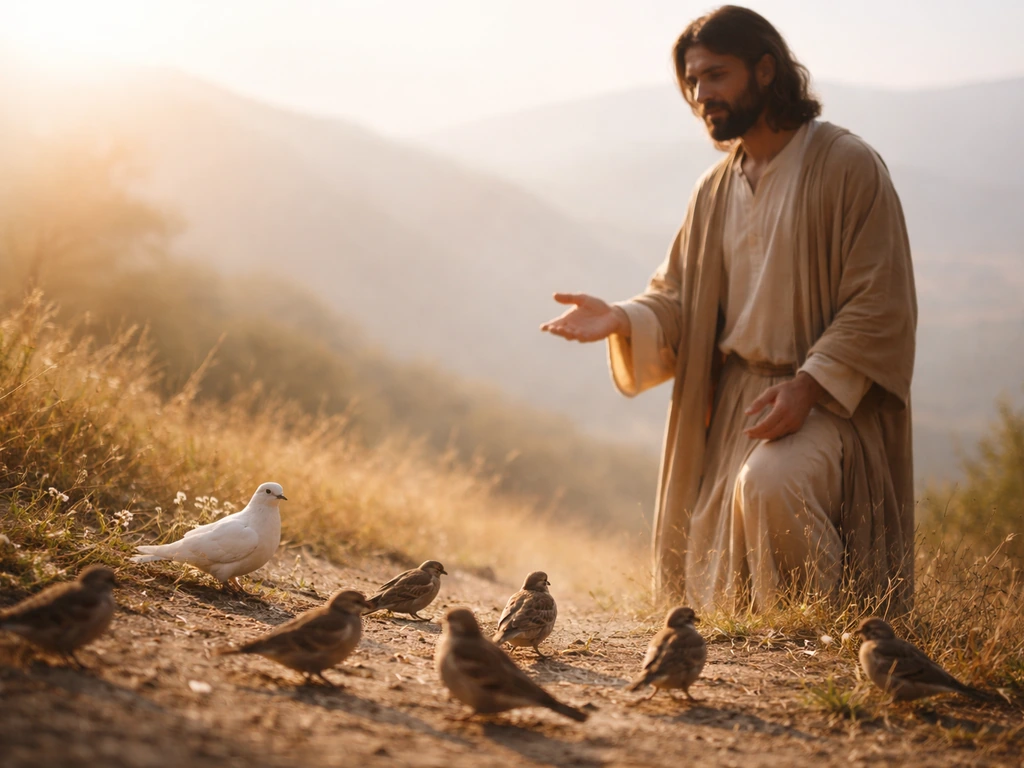
The story people are usually thinking of
The Infancy Gospel of Thomas is the source behind almost every version of the "Jesus brought a bird to life" claim you'll encounter. In that text, the child Jesus takes clay, shapes it into twelve sparrows, and they fly away as living birds. It's a remarkable image, and it clearly captured the imagination of early Christian communities, since it survived in multiple manuscript traditions. In 2024, a 1,600-year-old papyrus fragment was reported as one of the earliest physical witnesses to this story, which shows just how old and persistent the tradition is.
The critical detail, documented clearly by Cambridge scholars and others, is that this episode is not found in the New Testament. The Infancy Gospel of Thomas is an apocryphal text. That doesn't necessarily make it spiritually worthless, but it does mean you can't cite it as Gospel. It belongs to a genre of early Christian writing that explored questions about Jesus' childhood that the four canonical Gospels largely leave blank. Knowing that distinction matters if you're trying to verify a claim someone made or figure out where an idea came from.
What the Gospels actually say about birds
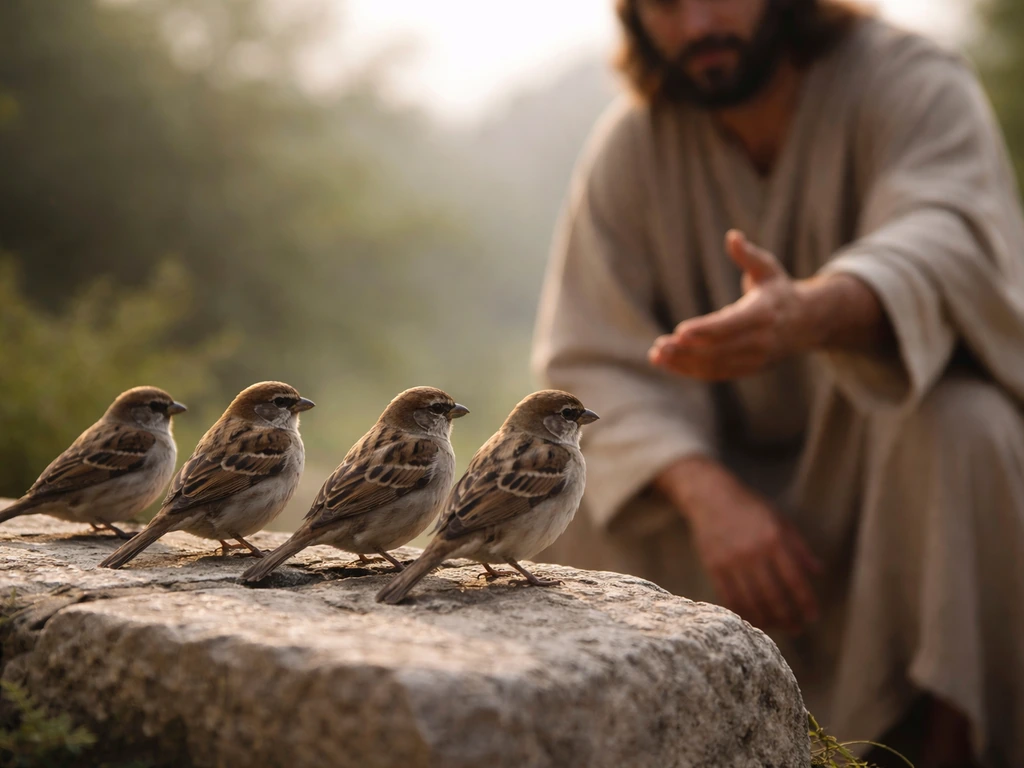
The canonical Gospels don't include a bird resurrection miracle, but they do use birds repeatedly and deliberately. The passages cluster around three themes: divine care, prophetic fulfillment, and the identity of the Holy Spirit.
The most quoted bird passages in the Gospels involve sparrows. In Matthew 10:29, Jesus says that not one sparrow will fall to the ground apart from the Father's will. In the parallel passage in Luke 12:6-7, he extends this to say that God forgets none of them, then pivots to reassure his listeners that they are worth far more than many sparrows. These aren't resurrection stories. They're arguments about providence: the point is that God tracks even the smallest, cheapest life, so his followers can release fear. Church fathers like Chrysostom read this passage as teaching divine oversight over death and circumstance, not as a miracle claim.
Matthew 6:26 uses birds differently. "Look at the birds of the air," Jesus says, "your heavenly Father feeds them." Again, no miracle, no restoration of life. The bird here is a teacher of trust, an example of a creature that doesn't hoard or worry and still gets fed. It's an invitation to a particular way of moving through the world.
Then there's the rooster. In Matthew 26:69-75, the crowing of a rooster marks the exact moment Peter's third denial fulfills Jesus' earlier prediction. The bird isn't being healed or raised. It's functioning as a prophetic clock, a signal that the timeline of events is unfolding exactly as Jesus said. It's one of the more overlooked bird moments in the Gospels, but it carries real weight.
Luke 13:34 offers something more tender. Jesus compares himself to a hen who wants to gather her chicks under her wings, lamenting that Jerusalem refused. It's bird imagery used as a metaphor for protective love and grief, not for a literal event involving an animal.
The dove at the baptism: the bird that changed everything
The most theologically loaded bird moment in the Gospels is the descent of the Holy Spirit in the form of a dove at Jesus' baptism (Luke 3:22). This is the passage that permanently fixed the dove as a symbol of the Holy Spirit in Christian art, theology, and tradition. For the question what bird represents an angel, many Christians also point to the dove because of its close connection to the Spirit’s presence around Jesus dove as a symbol of the Holy Spirit. The Catholic Encyclopedia traces the dove's role as an emblem of the Third Person of the Trinity directly to this moment. Whether the dove was a literal bird or a visible manifestation of spiritual presence is a question theologians have discussed for centuries, but the symbolic weight is undeniable. The dove at the Jordan River became one of the most reproduced images in the history of Christian art precisely because it captured something essential about the relationship between Jesus and the Spirit.
Symbolic vs. literal: how to read bird imagery in scripture

A practical interpretive rule, emphasized by both the USCCB's guidance on scripture and by Bible study teachers like those at Bible.org, is that you determine whether a passage is literal or figurative by examining its genre, immediate context, and broader context. Birds in the Gospels appear most often in teaching passages, parables, and metaphors. That genre context signals figurative intent. When Jesus says God feeds the birds, he's not writing a nature guide; he's constructing an argument by analogy.
This matters specifically for the "bird revival" question because some readers encounter the sparrow passages and read the phrase "fall to the ground" as implying God prevents the bird's death, or raises it afterward. Chrysostom and Jerome, writing in the early church, interpreted "fall" as a natural death event that God knows about and permits within his sovereign will. The passage is about divine awareness and care, not physical resurrection of birds. Reading a miracle into it requires importing something the text itself doesn't claim.
The peacock, resurrection, and wider Christian bird tradition
Beyond the Gospels, the broader Christian symbolic tradition does connect birds to resurrection and renewal. The peacock became a resurrection emblem in early Christian art because ancient writers believed its flesh didn't decay after death, making it a natural symbol of incorruptibility and eternal life. The Catholic Encyclopedia documents this explicitly. The phoenix, borrowed from Greek and Egyptian tradition, carried similar freight: a bird that burns and rises from its own ashes, widely used in early Christian writings as a metaphor for Christ's resurrection and the hope of bodily renewal.
Neither the peacock nor the phoenix appears in the canonical Gospels as part of a miracle story. But they circulated in Christian homilies, artwork, and theological writing from the early centuries onward, which is why so many churches and catacombs are decorated with them. They represent the same impulse behind the Infancy Gospel's clay sparrows: an attempt to express the idea of life coming from lifelessness, divine creative power, and the reversal of death.
What these stories share symbolically
Whether you're looking at the clay birds of the Infancy Gospel, the sparrow passages in Matthew and Luke, the baptism dove, or the resurrection peacock in catacomb art, there's a consistent symbolic thread: birds in the Jesus and biblical context carry the weight of life, divine attention, renewal, and the relationship between the earthly and the transcendent. Flight itself functions as a metaphor for the soul's movement toward God. Feathers appear in Psalm 91:4 ("He will cover you with his feathers") as an image of protective shelter. The nest, the egg, the moment a bird rises from the ground: these images resonated deeply in a world that watched birds closely and read them as signs.
If you're drawn to the idea of Jesus and birds, the symbolic language is genuinely rich, even if the literal miracle story you may have heard isn't from the canonical text. The question of what bird represents Jesus, or whether birds can serve as messengers or visitors from heaven, draws on this same long tradition of reading avian life as spiritually significant. So if you are wondering, whether birds can serve as messengers or visitors from heaven. In that frame, the question “what bird is a visitor from heaven” is less about a single animal and more about what the imagery is meant to communicate spiritually visitors from heaven. The dove in the baptism scene is the bird most associated with the Holy Spirit in Christian tradition baptism dove (bird).
How to verify what you've been told
If someone tells you Jesus brought a bird back to life, or you've encountered this idea and want to check it, here's a direct path to clarity.
- Search a Bible concordance (BibleHub, Blue Letter Bible, or any exhaustive concordance) for the Greek word strouthion, which is the diminutive form used for sparrows in Matthew 10:29 and Luke 12:6-7. Read the full context of every passage it appears in. You'll see quickly that none of them describe a bird resurrection.
- Search specifically for 'Infancy Gospel of Thomas clay sparrows' if you've heard the childhood miracle story. You'll find the text freely available online (Gnosis.org hosts a full translation). Read it yourself, note that it says 'Infancy Gospel,' and recognize it is explicitly categorized as apocryphal, not canonical scripture.
- Use the New Testament keyword 'dove' to trace the baptism story across Matthew 3: 16, Mark 1:10, Luke 3:22, and John 1:32. This is the most important bird event in the Gospels and the foundation for much of the Christian dove symbolism that followed.
- If someone cites a specific verse for a bird miracle, look it up in at least two translations (ESV and NIV are good starting points) and read five verses before and after it. Context almost always clarifies whether the passage is literal, metaphorical, or being misread.
- Cross-reference with a study Bible or the USCCB's guidance on the senses of scripture if you're trying to determine whether a church tradition (like the peacock as resurrection symbol) is doctrinal or merely cultural.
If you're seeking spiritual meaning, not just historical facts
Many people search for "did Jesus bring a bird back to life" not because they're writing a theology paper but because they had an encounter with a bird that felt significant, or because they're sitting with grief and something about the image of life returning to a small creature touched them. That's a completely legitimate starting point. The canonical Gospels may not have the literal story, but they do teach that God notices when a sparrow falls. That's not nothing. It's a specific theological claim about divine attention to small, vulnerable lives, and it has comforted people for two thousand years for good reason.
If you're processing a personal encounter or loss and trying to interpret it spiritually, the most useful thing you can do is sit with the actual Gospel passages: Matthew 10:29-31, Luke 12:6-7, and Matthew 6:26. Let them speak in their own context before layering interpretation onto them. The tradition of bird symbolism in Christianity, from the baptism dove to the phoenix to the protective hen of Luke 13:34, gives you a genuine symbolic vocabulary to work with. You don't need an apocryphal miracle to find meaning in a bird encounter. The canonical material is already pointing in the direction of life, care, and presence.
Quick reference: key bird passages in the Gospels

| Passage | Bird | Type of reference | Core meaning |
|---|---|---|---|
| Matthew 10:29-31 | Sparrow (strouthion) | Teaching/literal animal | God's providence over all life, even the smallest |
| Luke 12:6-7 | Sparrow | Teaching/literal animal | None forgotten by God; release fear |
| Matthew 6:26 | Birds of the air (general) | Metaphor/illustration | Trust in God's provision; don't anxiously hoard |
| Luke 3:22 | Dove | Theophany/symbol | Holy Spirit descends; identity of Jesus confirmed |
| Luke 13:34 | Hen and chicks | Metaphor | Jesus' protective longing for Jerusalem |
| Matthew 26:74-75 | Rooster | Prophetic sign/literal animal | Peter's denial fulfills Jesus' prediction |
| Infancy Gospel of Thomas (apocryphal) | Sparrows/clay birds | Miracle narrative (non-canonical) | Jesus animates clay birds; not in the New Testament |
FAQ
Is there any place in the New Testament where Jesus brings a bird back to life?
If “bird revival” means Jesus healed or raised an actual bird, the New Testament does not report that. The closest “clay sparrows becoming living birds” episode comes from the Infancy Gospel of Thomas, which is considered apocryphal rather than canonical, so you should treat it as an extra-Gospel tradition, not as a Gospel miracle record.
Does “not one sparrow will fall” mean God prevents death or resurrects the sparrows?
Many retellings blur two different ideas, sparrows “falling” and the clay sparrows being animated. In Matthew 10 and Luke 12, “fall to the ground” is about God’s awareness and sovereignty over natural events, not a scene of restoration afterward. The text does not narrate a bird being raised after dying.
Why do some people read the sparrow passage as a literal bird-resurrection story?
Yes, that confusion is common. One reason is readers treat a brief phrase like a complete story. The sparrow sayings are built as reassurance arguments, so the conclusion is about comfort and trust, not about describing what happens biologically after “falling.”
What’s the best way to tell whether a bird passage is literal history or metaphor?
Most scholars and church interpreters treat these bird passages as non-miraculous because of genre and context, birds appear inside teaching and metaphor, and the immediate point is theological reassurance. When authors wanted to narrate miracles, they did so with a fuller storyline, like healing episodes, which these texts lack.
Can you give a quick decision checklist for reading bird imagery in the Gospels correctly?
If you want a simple check, compare three cues: immediate context (is Jesus teaching, warning, or comforting?), wording function (does it serve an analogy argument?), and surrounding genre (sermon, proverb, parable, or metaphor section). For the sparrows, the “teaching reassurance” function is the dominant cue.
Is Luke 13:34 telling a real event involving a hen, or is it metaphorical?
Chickens and hens are used as protective-love imagery in Luke 13:34. Nothing in that passage suggests literal hen-related events, it functions as a lament and a call to recognize the visitation of God, so it should not be used to argue for a physical bird incident.
What is the point of the rooster crowing in the Gospels, is it another “bird miracle”?
The rooster/crowing in Matthew 26 is not a resurrection or restoration moment. It is a timing sign that fulfills Jesus’ prediction about Peter, so the bird’s role is prophetic coordination of events, not intervention to reverse death.
Which bird in the Gospels is most closely associated with the Holy Spirit, and is it a revival story?
For many Christians, the dove at Jesus’ baptism is the bird most directly associated with the Holy Spirit because the Spirit is described as descending in the form of a dove. The key distinction is that the dove is tied to the Spirit’s presence at baptism as a symbol or visible manifestation, not a reported revival of a dead bird.
How should I respond if someone says the “bird revival” story is in the Bible?
Yes, but you should label it properly: the clay-sparrow story is an apocryphal infancy narrative, and it circulated in early communities enough to survive in multiple manuscripts. If someone claims it as “the Bible,” ask what text they mean (New Testament versus an apocryphal work) and whether they are quoting a tradition outside the four Gospels.
Does Christian tradition ever use birds to symbolize resurrection, even if not in the Gospels as miracles?
If your question is about whether Christianity teaches resurrection and renewal through bird symbolism, the tradition often uses birds like peacocks and the phoenix as art and metaphor for incorruptibility and hope. However, that is different from saying Jesus revived a bird, those are symbolic images rather than Gospel miracles.
If I’m grieving, how can I use the sparrow passages without forcing them into a literal “bird revival” interpretation?
In grief, the “not one sparrow falls” theme is usually approached as assurance that God is aware of small losses, even when humans cannot trace a bigger purpose. A practical next step is to read the surrounding verses as a comfort passage, then connect your loss to the larger biblical theme of God’s care rather than searching for a literal animal-raising event.
Citations
Britannica describes the Infancy Gospel of Thomas as a noncanonical apocryphal text (purporting to cover Jesus’ childhood) in which Jesus “molds” clay into “12 sparrows” (birds) that become living/real creatures.
https://www.britannica.com/topic/Infancy-Gospel-of-Thomas
A text of the Infancy Gospel of Thomas (hosted by Gnosis) includes the narrative of Jesus acting with clay and sparrows/birds, i.e., a tradition in which Jesus creates/animates birds from clay rather than resurrecting a dead bird mentioned in the canonical Gospels.
https://www.gnosis.org/library/inftoma.htm
BibleHub’s Strong’s entry says στρουθίον (strouthion) is a diminutive of στρουθός (“a little bird”), commonly identified especially with sparrows, and it appears in Matthew 10:29 and Luke 12:6–7.
https://biblehub.com/str/greek/4765.htm
BibleHub’s Matthew 10:29 text records Jesus’ statement that sparrows won’t fall “to the ground” apart from the Father’s will/knowledge—used as an argument for God’s providential care rather than as a resurrection story.
https://biblehub.com/matthew/10-29.htm
NETBible’s Luke 12:6–7 passage includes Jesus’ teaching that multiple sparrows are sold cheaply but none are “forgotten before God,” and the point is fearlessness and trust in divine care.
https://classic.net.bible.org/passage.php?passage=Luke+12%3A6-7
RSV of Matthew 6:26 records Jesus’ instruction: “Look at the birds of the air… yet your heavenly Father feeds them,” used to counter anxiety rather than to depict any bird resurrection.
https://www.bible.com/bible/2020/MAT.6.26.RSV
BibleRef’s Luke 13:34 explains Jesus’ “hen gathers her chicks under her wings” metaphor, portraying God/Jesus’ protective longing for Jerusalem/Israel—bird imagery used figuratively for care and judgment, not literal animal life-restoration.
https://www.bibleref.com/Luke/13/Luke-13-34.html
BibleGateway’s combined text for Peter’s denials includes explicit “rooster crowed” language as the sign timing Jesus’ predictions were fulfilled; this is about prophecy/time, not restoring a bird to life.
https://www.biblegateway.com/passage/?search=Matthew+26%3A69-75%2CMark+14%3A66-72%2CJohn+18%3A16-18%2CJohn+18%3A25-27&version=AMP%3BNIV
New Advent’s Catholic Encyclopedia states that the dove is used as a symbol of the Third Person of the Trinity because the Holy Ghost descended like a dove at Jesus’ baptism (Luke 3:22), and that the peacock is used as an emblem of Resurrection due to its (ancient) association with incorruptible flesh.
https://www.newadvent.org/cathen/02576b.htm
New Advent’s translation of Chrysostom’s homily on Matthew 10:29 interprets Jesus’ sparrow statement as teaching divine providence (“one of them shall not fall… without your Father”), supporting a care/providence reading rather than any literal bird revival.
https://www.newadvent.org/fathers/200134.htm
The Times of Israel reports that a 1,600-year-old papyrus fragment includes a story of young Jesus bringing clay birds to life (not from the canonical Gospels), framing it as an extra-biblical infancy tradition.
https://www.timesofisrael.com/1600-year-old-papyrus-fragment-contains-earliest-account-of-jesus-childhood/
Cambridge Core states the clay-birds-to-life legend is “not found in the New Testament” and identifies the Infancy Gospel of Thomas as the key locus classicus for the tale.
https://www.cambridge.org/core/journals/traditio/article/abs/jesus-and-the-birds-in-medieval-abrahamic-traditions/5E661EDAD003E5DE16F865874298F912
USCCB explains that the literal sense is discovered through careful and attentive study of the biblical text using interpretive tools including grammatical/historical/literary context and other supporting evidence.
https://www.usccb.org/resources/viviano-senses-scripture
Bible.org instructs that interpretation should normally use the passage’s immediate context and broad context and that figurative interpretation is appropriate when literal meaning does not fit the genre/context (e.g., parables/poetry), emphasizing avoiding reading unsupported meanings into the text.
https://bible.org/seriespage/v-interpreting-bible
Bible.org’s “Practical Procedures for Interpretation” advises checking significant parallel passages and using concordances (e.g., exhaustive concordances) to compile and compare relevant scriptural data when studying a topic.
https://bible.org/seriespage/8-practical-procedures-interpretation
A published text version (“Infancy Gospel of Thomas”) includes multiple episodes of Jesus’ miraculous childhood deeds; the work is widely cited as the source behind later ‘clay birds’ miracle traditions, not a canonical resurrection of a literal dead bird.
https://www.earlychristianwritings.com/text/infancythomas-hock.html
The Matthew 10:29 Wikipedia entry summarizes patristic readings (e.g., Chrysostom/Jerome) that treat the sparrow-fall line as teaching God’s providence over death/happening, supporting a doctrinal reading rather than a literal bird-resurrection miracle claim.
https://en.wikipedia.org/wiki/Matthew_10:29
Next Articles

What Bird Represents Jesus? The Dove and Other Common Symbols
Find the Christian bird symbol of Jesus: the dove and its link to the Holy Spirit, plus common alternatives and how to v

Is the Holy Spirit a Bird? Dove Meaning in Scripture
Biblical answer to is the Holy Spirit a bird, explaining the dove appearance at Jesus baptism and dove symbolism for pra
Why Is the Cardinal a Christmas Bird? Meaning and Facts
Learn why cardinals are called Christmas birds, from winter visibility and red color to cultural and spiritual meanings.