
The birds most commonly treated as signs from heaven, across religious traditions and widespread cultural folklore, are the white dove, the cardinal, the eagle, the swallow, and the hummingbird. If you just had an encounter with one of these and felt something shift, you are not imagining a tradition that exists. These birds have carried spiritual weight across centuries and continents. What they mean for you, though, depends on the details of what you actually saw.
What Bird Is a Sign From Heaven? Meaning and How to Interpret

Eleanor Hartwell
7 Jun 2026
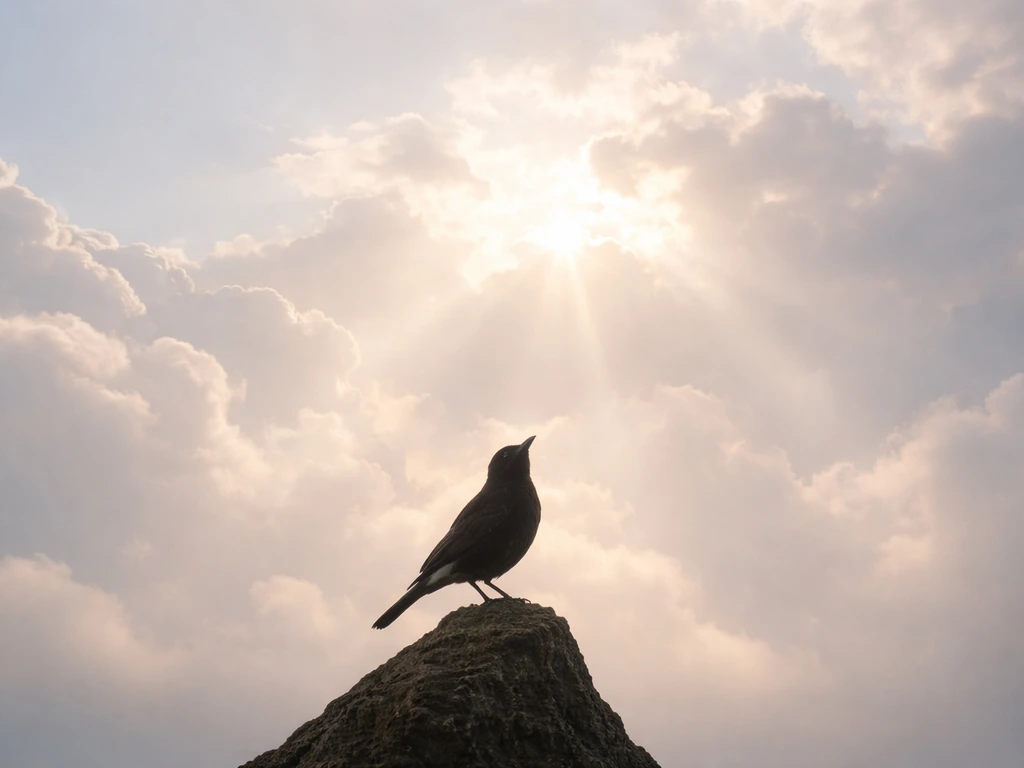
The most common 'sign from heaven' birds, at a glance
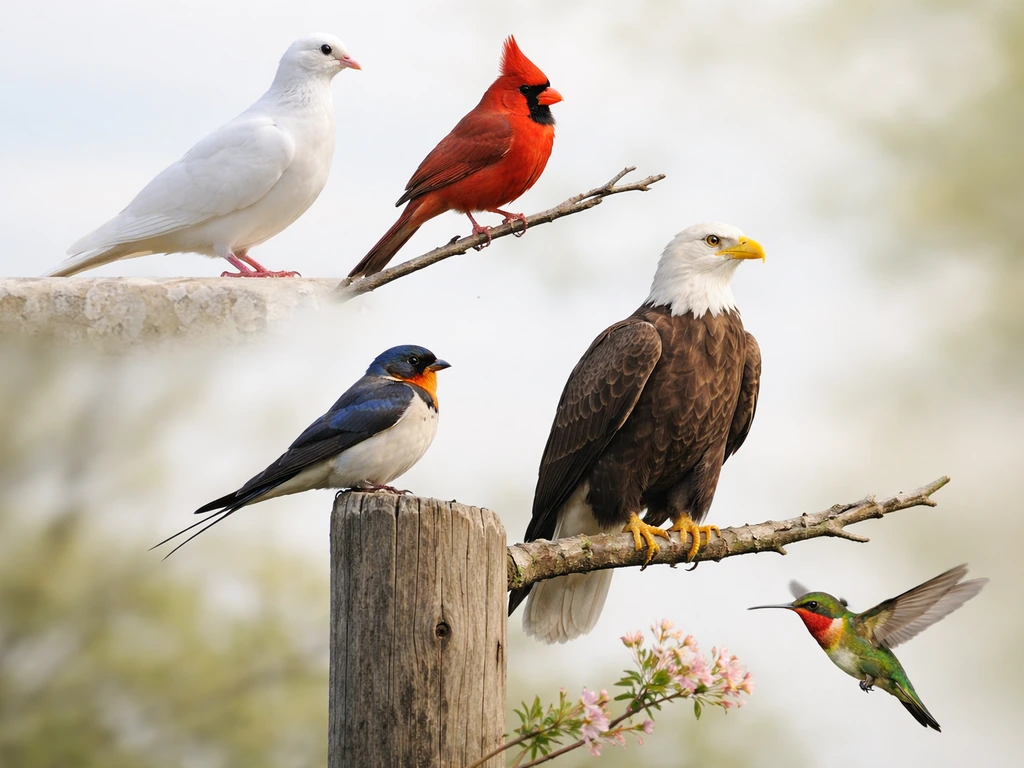
Different traditions converge on a short list of birds that show up again and again as messengers, comforters, or divine signals. Here is the shortlist with their most widely repeated meanings:
| Bird | Core Symbolic Theme | Primary Tradition |
|---|---|---|
| White Dove | Peace, Holy Spirit, divine reassurance | Christian/Biblical, broad Western |
| Cardinal (male, red) | Comfort, love, hope from a lost loved one | American Christian folklore, grief tradition |
| Eagle | Strength, spiritual renewal, divine protection | Biblical (Isaiah 40:31), Native American, many others |
| Swallow / Barn Swallow | Hope, return, safe homecoming | Celtic, Mediterranean, early Christian |
| Hummingbird | Spiritual joy, attunement, resilience | Native American, Latin American, New Age spiritual |
| Owl | Transition, wisdom, soul passage | Celtic, Egyptian, Native American (varies by nation) |
| Crow / Raven | Transformation, prophecy, divine message | Norse, Celtic, Native American (many nations) |
A quick note on the phoenix: it does appear in bird symbolism discussions as a sign of rebirth and resurrection, particularly in Christian art that borrowed from Egyptian and Greek mythology, but it is a mythological creature rather than a bird you will actually see fly past your window. Its meaning (death and renewal, transformation) is valid symbolically but belongs to a different conversation than a real encounter in your yard.
How to identify the bird you actually saw
Before you interpret, identify. The meaning you land on is only as useful as your species ID is accurate. Here are the most practical field marks for the birds most often associated with heavenly signs:
Cardinal
The male northern cardinal is unmistakable: brilliant all-red body, a pointed crest on the head, and an orange-red cone-shaped bill. Females are warm buff-brown with reddish tinges on the crest, wings, and tail. If you saw a bright red bird with a crest in the eastern or central United States, it was almost certainly a cardinal. No other common backyard bird matches that combination.
Dove vs. pigeon
This one trips people up. The rock pigeon (rock dove) that congregates in cities has a dark head, dark breast, light gray body, two dark wing bars, a white rump, and a dark tail-tip band. A mourning dove is slimmer, with a long pointed tail and soft beige-gray tones. A truly white dove is most likely a domesticated white pigeon or a ringneck dove released at an event. If the bird you saw was white and dove-shaped, that specific color carries its own weight in Christian symbolism regardless of whether it was technically a wild dove.
Swallow vs. swift
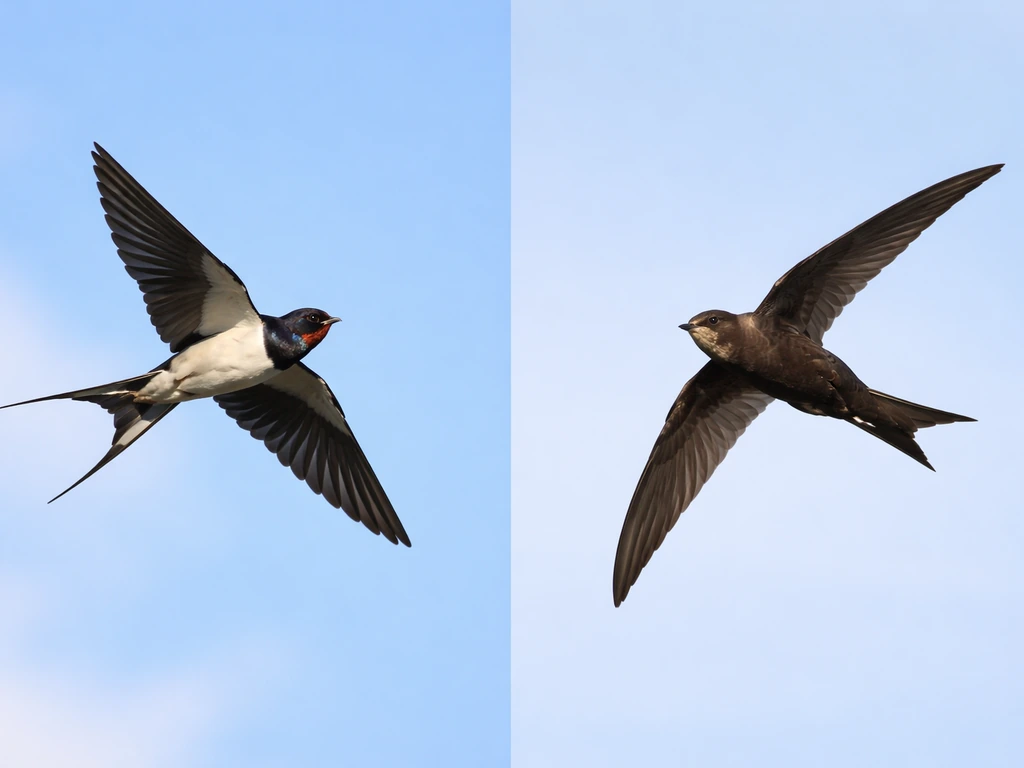
Swallows and swifts are often confused because both are aerial acrobats. Swifts have long, pointed wings held in a stiff boomerang shape, a short forked tail that folds to a point, and a screaming call. Swallows, including the barn swallow, have pale bellies, more flexible wingbeats, and the barn swallow specifically has a long, deeply forked tail with small white spots (sometimes hidden in flight). If the bird swooped gracefully with a deeply forked tail and a pale underside, you most likely saw a swallow.
Eagle
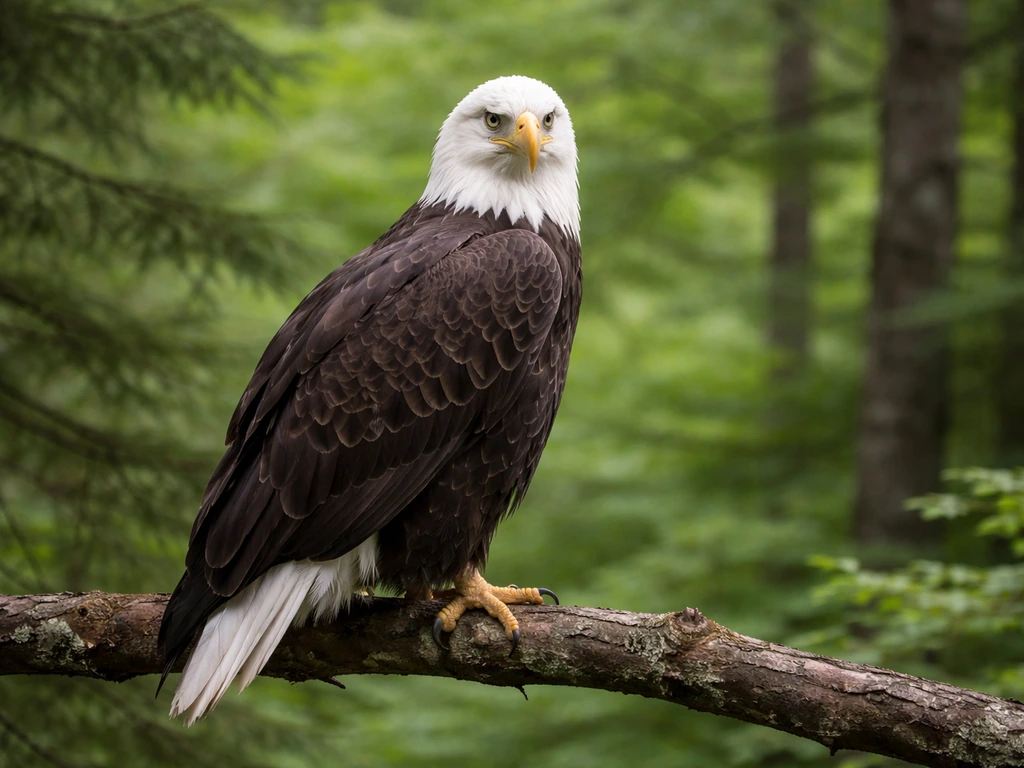
Bald eagles are identifiable by their white head and tail on an otherwise dark brown body, and they are large enough that there is usually no doubt. Immature bald eagles and golden eagles are dark brown throughout, with golden eagles showing tawny-gold nape feathers. If you saw a massive soaring bird with a flat wing profile and minimal flapping, it was likely an eagle, hawk, or vulture. Turkey vultures hold their wings in a shallow V (called a dihedral) and rock side to side; eagles hold wings flat and steady.
Hummingbird
Hummingbirds are the only birds that can hover in place with rapid wingbeats. In the eastern US, the ruby-throated hummingbird is the species you will almost always encounter: the male has a vivid iridescent red-orange throat (gorget) that can look dark in shadow, and a forked tail. The female is green above with a white throat. If you are west of the Rockies, you have more species to sort through, but size (very small, 3 to 4 inches), hovering behavior, and fast wingbeats distinguish all hummingbirds clearly.
What the details of your encounter actually mean
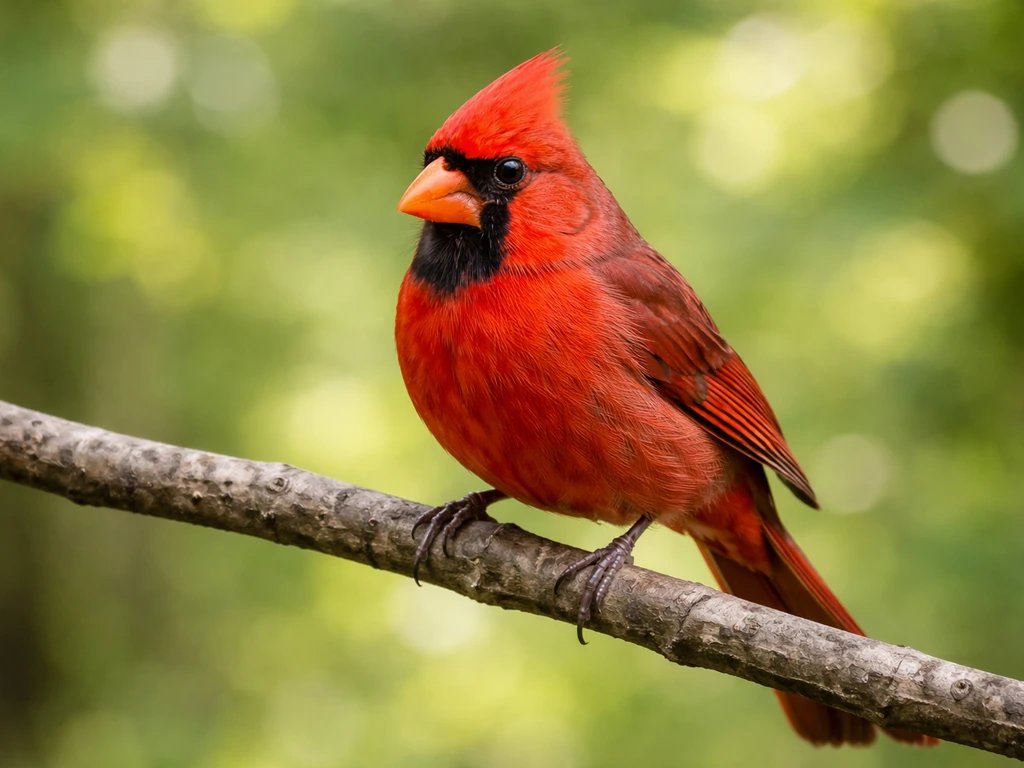
Once you know what you saw, the meaning shifts depending on how it happened. This is where you move from a general symbol to a personal one.
Color
Color is one of the most reliable layers of meaning across traditions. Red cardinals are almost universally associated with vitality, life force, and passion, making them potent comfort symbols after a loss. White birds of any species carry peace and spiritual purity across nearly every tradition that assigns bird meanings. Black birds (crows, ravens) carry transformation and prophetic significance in Celtic and Norse traditions but can signal soul guidance in others. A bird that appears unusually bright or seems lit up against its surroundings is frequently described in personal accounts as feeling different from a random sighting.
Behavior
Behavior matters as much as species. A bird that taps on your window repeatedly, lands close to you without fleeing, follows you along a path, or returns to the same spot on multiple consecutive days is the kind of encounter that people describe as feeling intentional. A bird that crashes into a window and sits stunned is a different situation entirely: Audubon recommends giving a stunned bird 15 to 30 minutes in a quiet, dark space to recover before drawing any conclusions. In that case, the physical cause (window reflection) is the first explanation, and the symbolic interpretation, if it feels meaningful to you, can live alongside it without conflict.
Location
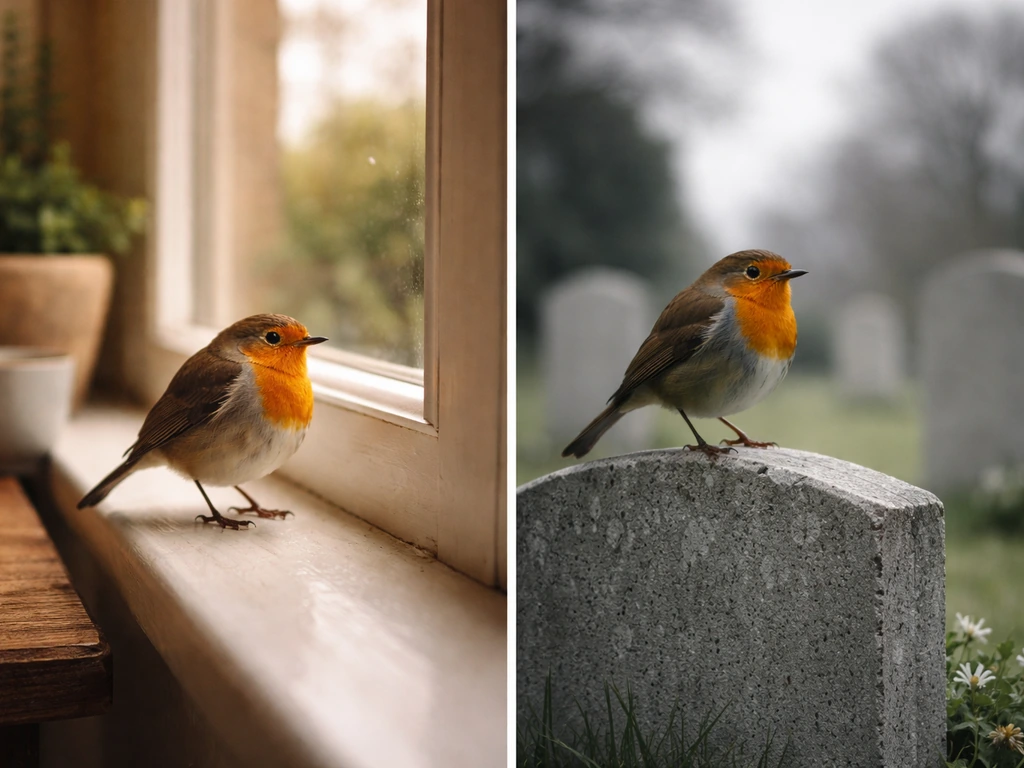
A bird entering your home, perching on a gravestone at a funeral, appearing at a hospital window, or landing on your car at a moment of grief carries more symbolic weight within the tradition than a bird seen casually while walking. The location situates the encounter in a context your mind and heart are already primed to find meaningful. That is not a flaw in the interpretation; it is how symbolic frameworks work.
Timing
If the encounter happened on an anniversary of a loved one's death, at a moment of prayer or grief, immediately after asking for a sign, or during a period of major life transition, those circumstances amplify the encounter's significance within a symbolic reading. The timing is part of the text, so to speak. Traditions from multiple cultures treat coincidence of timing as part of what distinguishes a sign from an ordinary sighting.
Biblical and faith-based meanings
The most textually grounded 'bird from heaven' moment in the Bible is the dove at Jesus' baptism. All four Gospel accounts describe the Holy Spirit descending 'like a dove' and settling on Jesus (Matthew 3:16, Mark 1:10, Luke 3:22, John 1:32). This is not a metaphor buried in poetry; it is a narrative event at the center of the Gospel story. That moment seeded Christian art, liturgy, and everyday symbolism with the white dove as the emblem of divine presence, peace, and the Holy Spirit. Earlier in the same tradition, the dove in the Noah story returns with an olive branch, becoming the first symbol of divine peace and renewed life after destruction. Those two moments explain why a white dove still stops people in their tracks. In the same way, some believers point to stories of Jesus bringing life back, connecting that kind of miracle to themes of renewal and hope.
Eagles carry a different kind of biblical weight. Isaiah 40:31 promises that those who wait on the Lord 'will soar on wings like eagles' and will renew their strength. The verse is explicitly about spiritual endurance and divine empowerment, not about a specific bird encounter. But when someone sees an eagle at a moment of exhaustion or doubt, the connection to that promise feels immediate. It is worth being clear that mainstream Christian teaching treats Isaiah 40:31 as a metaphor for spiritual renewal, not a guarantee that every eagle sighting is a divine signal, but that does not make the resonance less real.
Cardinals do not appear in the Bible. Their 'visitor from heaven' role is American Christian folklore that grew especially strong in grief communities, amplified by the phrase 'when cardinals appear, angels are near.' That phrase is not a Scripture quote, but it is not meaningless either. It functions as a culturally shared interpretive lens that thousands of grieving people have found genuinely comforting. The distinction between biblical grounding and cultural tradition matters for theological precision, but both can be spiritually valid depending on your framework.
A gentle caution from within Christian traditions themselves: Catholic teaching warns against superstition, which it defines as treating external signs as automatically guaranteeing a specific spiritual effect or message. Protestant voices, including those from the Reformed tradition, caution against 'circumstantial confirmations,' the habit of reading ordinary events as coded divine instructions. This does not mean you should dismiss what you felt; it means the healthiest approach treats the bird as a possible prompt for reflection rather than a guaranteed directive.
What different cultures say about birds as divine messengers
The reason birds keep appearing as divine messengers across traditions that have never interacted is not a coincidence. It is a human response to the observable fact that birds can go where we cannot: into the sky, which nearly every culture has associated with gods, ancestors, or the sacred. Ethno-ornithological research among the Ch'orti' Maya of Guatemala documents birds as message-carriers from gods, communicated through specific vocalizations and behaviors. A comparative review of bird-as-sign traditions finds that eagles and crows appear disproportionately as sign-bearers across many unrelated cultures, and that the mode of communication is usually behavior and call, not just appearance. A comparative review of bird-as-sign traditions also reports that eagles and crows are disproportionately represented as sign-bearers, with signs communicated through bird behavior and calls rather than a single uniform meaning eagles and crows appear disproportionately as sign-bearers.
Native American traditions
It is important to note upfront that 'Native American' covers hundreds of distinct nations, each with their own specific bird symbolism. That said, some broad patterns include the eagle as a sacred messenger to the Creator, used in ceremony and regarded as carrying prayers upward. Hummingbirds appear in many Latin American and Southwestern traditions as symbols of joy, healing, and the resilience of the soul. Owls carry varied meanings: some nations associate them with death and transition, others with wisdom or warning. The crow occupies a trickster-messenger role in many Pacific Northwest traditions. Applying a single 'Native American meaning' to any bird erases that complexity, so it is worth researching the specific nation whose territory you are on if that tradition feels relevant to you.
Celtic traditions
In Celtic mythology, birds frequently serve as shape-shifting forms of gods, druids, and the dead. The wren was considered the king of birds and associated with prophecy. Swallows and swifts were considered souls of the dead or divine visitors, and harming one was considered deeply unlucky. The raven was associated with the Morrigan, the goddess of fate and war, and its appearance before battle was read as prophecy. Flight direction, call behavior, and the number of birds seen were all interpretive factors in Celtic augury.
Egyptian traditions
Ancient Egyptian religion gave birds major divine roles. The ibis was the physical form of Thoth, god of wisdom and writing. The falcon was the form of Horus, the sky god. The ba, one of the components of the soul, was depicted as a human-headed bird that could travel between the living world and the afterlife. Finding or encountering a particular bird in Egyptian symbolic thinking was not a casual event; it was a potential interaction with a divine force.
Norse traditions
Odin's ravens, Huginn (thought) and Muninn (memory), flew across the world each day and reported back to him. A raven appearing unexpectedly in Norse cultural contexts carried the weight of Odin's awareness, as if the god himself were watching. This is one of the reasons the raven carries such contradictory meanings in popular culture today: sacred messenger in one tradition, ominous omen in another.
Tibetan Buddhist and broader Asian traditions
Academic scholarship on Tibetan Buddhist visual culture documents how bird-totem traditions were absorbed into religious iconography, with birds functioning as markers of ritual power and divine protection. In Hinduism, Garuda, the eagle-like divine bird, serves as the mount of Vishnu and represents speed, protection, and divine will. The crane in Chinese and Japanese traditions carries longevity and heavenly favor. The peacock, in both Hindu and Buddhist contexts, is associated with spiritual watchfulness and divine beauty.
What feathers, flight, and nesting each symbolize
Sometimes you do not see a whole bird. You find a feather, you notice a bird overhead, or a bird builds a nest at your door. Each of these has its own symbolic register.
Feathers
Feathers are one of the most widespread 'found sign' objects across cultures. They are physical fragments of a creature that travels between earth and sky, which gives them obvious symbolic value as tokens of the divine. In many Native American traditions, feathers are ceremonial objects tied to specific birds and specific intentions; their use in material culture is documented in ethnographic and museum collections as carrying real cultural weight. In popular spiritual interpretation today, finding a white feather is commonly read as a message from a deceased loved one or an angel. The color of the feather often carries layered meaning: white for peace or angelic contact, red for life or urgency, blue for calm or spiritual clarity. What matters most is the context in which you found it and what was happening in your life at that moment.
Flight
Flight is the core reason birds carry divine associations at all. The direction and character of a bird's flight has been used as an interpretive tool in cultures as different as ancient Roman augury and Ch'orti' Maya divination. A bird rising upward is almost universally read as a positive omen: ascension, answered prayer, spiritual lift. A bird flying toward you can mean an approaching message or encounter. A bird circling overhead, especially an eagle or hawk, has long been read as protection or watchful divine presence. A bird flying erratically or repeatedly into something can signal confusion or a need for course correction in some interpretations, though here the practical concern for the bird's physical safety should come first.
Nesting
A bird that chooses to build a nest at or near your home is one of the most consistently positive symbols across traditions. Nesting signals safety, fertility, new beginnings, and the establishment of a protected space. Swallows nesting on a house in European folk tradition were considered an exceptional good-luck sign, and removing their nest was believed to bring misfortune. A new nest at a time of life transition, a pregnancy, a new home, or a period of rebuilding after loss carries obvious resonance. The act of a wild creature choosing your space as safe ground is itself worth pausing over.
What to do after your encounter
The most important thing you can do right after a bird encounter that felt significant is to write it down before the details fade. Note the species (or your best description of it), the color, the specific behavior, the location, the time of day, and what was on your mind or happening in your life at that moment. That record becomes the raw material for meaningful reflection, and it also protects you from the very human tendency to reshape memory to fit an interpretation later.
- Write down the full encounter in a journal within a few hours: species, color, behavior, location, what you were feeling or thinking.
- If your faith tradition includes prayer or meditation, bring the encounter into that practice deliberately. Ask what, if anything, you are being called to notice or act on.
- Match the interpreted message to something actionable in your actual life. If the bird felt like comfort after a loss, let it invite you to grieve more openly or reach out to someone who is also grieving. If it felt like a call to strength (eagle, hawk), identify one area where you are holding back out of fear.
- Hold the interpretation lightly. Treat it as a lens that clarifies something you may already sense, not as a guaranteed instruction from an external source.
- If the encounter involved a bird that hit a window or appears injured, give it quiet time and space to recover before reading meaning into it. A stunned bird needs 15 to 30 minutes in a sheltered spot before you know if it is okay.
- Return to the spot or watch for the bird again over the next few days. Repeated encounters within a short window are the consistent marker across traditions for what distinguishes a sign from an ordinary sighting.
The symbolic framework around birds and heaven is one of the oldest and most widely shared in human experience. From the Holy Spirit descending as a dove to Odin's ravens to the cardinal outside a grieving family's window, birds have served as the creatures that cross between the visible world and whatever lies beyond it. That does not mean every bird you see is a message, but it does mean that when one lands close to you at the right moment, you are standing inside a very long tradition of people who felt exactly what you are feeling right now. In many traditions, people connect that kind of “from heaven” symbolism to the divine messenger imagery of specific birds, especially the white dove. The meaning you make of it, grounded in reflection and honest self-examination, is yours to shape.
If you want to go deeper, the questions of whether the Holy Spirit is specifically represented as a bird, which bird represents Jesus in Christian iconography, and what it means when a bird visits you in the specific context of mourning a loved one are each worth exploring on their own terms. They are distinct threads in a rich symbolic tradition, and following any one of them leads somewhere worthwhile.
FAQ
What should I do if the bird seems like it is trying to get inside, or it keeps hitting my windows?
First, check for obvious causes, like a window reflection, a startled bird, weather changes, or a feeder nearby. If it was a hummingbird or swallow repeatedly hitting a specific glass surface, cover that window or move reflective decor for a couple of days. Then, only after the bird is safe, you can treat the encounter as a prompt for reflection rather than a guaranteed message.
How can I avoid turning a bird encounter into a guaranteed prediction?
It is helpful to separate “meaning” from “certainty.” Even in traditions that take signs seriously, you can frame the bird as offering a nudge to pause, pray, or journal, without concluding a specific prediction will happen. A practical rule is, if you cannot connect the bird’s timing or behavior to a real next step, keep the message at the level of feelings and questions.
What if I cannot confidently identify the bird species, can I still interpret it?
Use the bird’s most reliable identifiers first, then narrow by geography and behavior. For example, a “white dove” could be a released bird, a rock pigeon with a pale variant, or a ringneck dove. If you are not confident, write down what you saw and describe it instead of forcing a species label, because meaning should not be built on an uncertain ID.
Is one bird sighting enough to count as a sign, or does it need to repeat?
Count both appearances and patterns. One sighting can still feel meaningful, but a repeated return to the same spot over consecutive days, or the same bird showing up right after you ask for clarity, is the pattern people most often describe as “sign-like.” Note whether it was one bird or a group, since flock behavior can indicate feeding or migration rather than intention.
Does the meaning change if the bird shows up in everyday places versus at a death-related location?
Yes, but treat location as context, not proof of theology. A bird appearing at a funeral, hospital, or gravesite often feels “heavier” because you are already in grief-processing mode. If a bird appears while you are distracted or doing routine errands, you may still take it as encouragement, but you might aim for softer interpretations (comfort, patience) rather than specific guidance.
How do I connect the bird symbolism to what I personally need right now?
If you want to connect “what bird” to “what it means,” don’t ignore your own emotional state. For example, the same cardinal can be comfort when you are grieving, and a reminder to be resilient when you are stuck. Ask yourself, what feeling was most alive in you during the encounter, and what did you most need to hear in that moment?
If I found a feather, how do I interpret it differently from seeing a whole bird?
If you find a feather, note its size, whether it is fresh or weathered, where it was (path, doorstep, car), and what was happening emotionally that day. A white feather is often read as peace, but the most useful interpretation usually comes from matching color and context to your current reality, not from copying a single fixed meaning.
What does it mean if the bird flies toward me, circles, or flies away immediately?
In many traditions, people read flight direction as meaningful, but you can keep it grounded. For instance, upward flight can be taken as “uplift,” while erratic flight can mean either symbolic disruption or simply a bird navigating hazards. When in doubt, prioritize the bird’s safety first (lighting changes, window covers), then use the experience as a reflection on what needs “course correction” in your life.
How do I know whether the encounter is meaningful or just a result of me looking for signs?
Yes. If the encounter happens after you already fixated on “signs,” your mind may connect dots that were partly created by attention. A good check is to compare how you feel afterward. If the encounter pushes you toward calmer reflection and constructive action, that can be meaningful. If it increases anxiety or obsessive searching, scale back and use it as a prompt to return to your values.
What if I hear the phrase “when cardinals appear, angels are near,” is that always the right interpretation?
If you want to apply the “cardinal equals angelic nearness” phrase, remember it is cultural comfort language rather than a universal religious claim. A balanced approach is to treat it as reassurance, not as a guarantee of a particular outcome, and to focus on what would help you move forward (support, remembrance practices, prayer if that fits your tradition).
Next Article
What Bird Symbolizes Someone From Heaven? Meanings
Cross-cultural guide to birds symbolizing someone from heaven, with meanings, context clues, and how to validate sightin