
No single bird holds that role across every tradition, but a handful appear again and again: the dove, the cardinal, the eagle, and the swallow are the most widely cited birds linked to heaven, angels, and the spirits of lost loved ones. Which one fits your sighting depends on the species you saw, what it was doing, the cultural or spiritual framework you're working within, and honestly, what felt significant in the moment. That context is everything.
What Bird Symbolizes Someone From Heaven? Meanings

Eleanor Hartwell
5 Jun 2026

What "someone from heaven" actually means in bird symbolism
When people ask what bird symbolizes someone from heaven, they're usually asking one of two related but distinct questions. The first is personal and grief-adjacent: did the bird I just saw carry a message from a person I've lost? The second is more theological: which birds are spiritually associated with the heavenly realm, divine messengers, or the afterlife in formal religious or cultural systems? Both are legitimate questions, and this guide addresses both, but it's worth knowing which one is driving you, because the answers come from different places.
In most traditions, birds earn their heavenly associations because of flight. They move between earth and sky naturally, which made them obvious candidates for the role of spiritual messenger or soul-carrier long before any formal religion systematized the idea. A scholarly review of bird omen traditions found that about half of all bird-communicated signs were transmitted through vocalizations and about a quarter through observable behavior, which tells you something important: the tradition has always paid attention to what the bird does, not just what species it is. That's a useful instinct to carry into your own interpretation.
The birds most commonly linked to heaven and lost loved ones
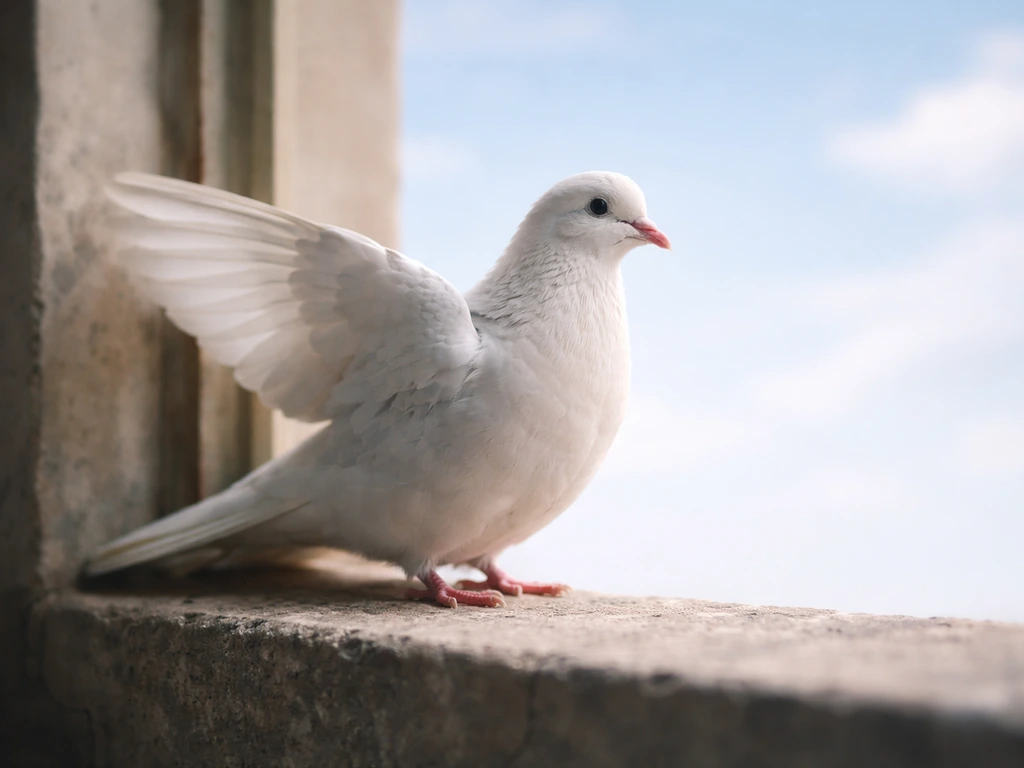
Here's a practical shortlist of the birds that show up most consistently across spiritual traditions and modern folk belief when the topic is heaven, angels, or deceased loved ones.
The dove
The dove is the most universally documented bird in this category, and its credentials go back further than most people realize. In Christian tradition, it represents the Holy Spirit, famously descending at Jesus's baptism. The dove as Spirit-symbol was in use before the cross became Christianity's primary icon, and a local council in Constantinople formalized the imagery in 536 CE. In early Christian art, the dove appeared in scenes like the Annunciation, coming down toward Mary. The color matters here: a snow-white dove specifically carries the Holy Spirit association. In modern spiritual interpretation, seeing a dove after a loss is one of the most common experiences people describe as feeling like a sign. The Mourning Dove, which is the species most North Americans encounter, is gray-brown with a gentle coo and a distinctive black neck spot, and it's commonly found in open and semi-open habitats like yards, suburbs, and farmland.
The cardinal
In contemporary folk and spiritual belief, particularly in North America, the red cardinal is probably the most commonly cited bird associated with a visiting loved one from heaven. The saying "when a cardinal appears, a loved one is near" is so widespread that it's almost a cultural reflex. The cardinal's vivid red coloring, its tendency to appear at feeders and windows in quiet moments, and the fact that it sings year-round all contribute to why people find it emotionally resonant. This association is more modern folk spirituality than ancient theological tradition, but that doesn't make it less meaningful. Symbolically, the red color connects it to vitality, the blood of life, and in some Christian readings, to sacrifice and resurrection.
The eagle
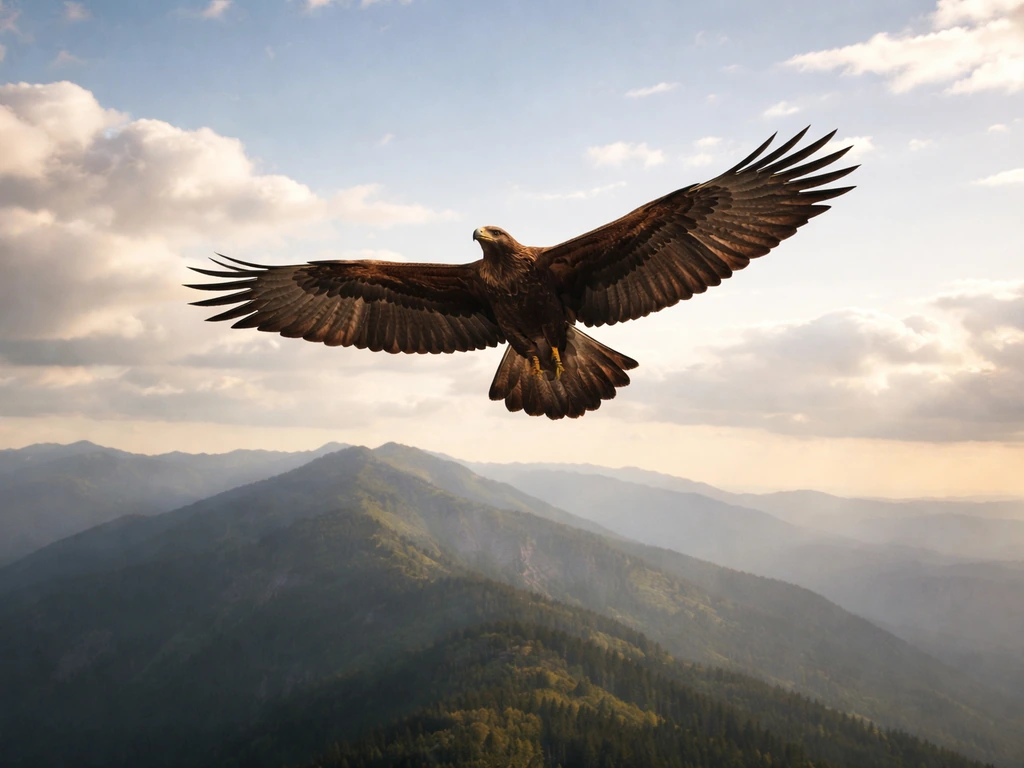
In Native American traditions (with the important caveat that meanings vary significantly by nation and family), the eagle is widely understood as a bird that embodies a connection to the Creator and the celestial realm. Eagle feathers are used in ceremonies and carry associations with prayers rising to the heavens and with ancestral connections. The eagle's role as a heavenly messenger in Indigenous contexts has deep, documented roots in ritual practice, supported by archaeological evidence of bird use in ceremonial settings going back centuries. If you're working within an Indigenous spiritual framework, the eagle carries far more weight here than the cardinal or even the dove.
The swallow
Swallows have long been associated with returning souls, safe passage, and hope after absence. Sailors historically believed swallows carried the souls of the dead. In many folk traditions, swallows arriving in spring signal a return of life and the presence of protective spirits. Their behavior reinforces the symbolism: swallows are fast, acrobatic fliers that migrate enormous distances, and they return reliably, which makes them natural candidates for representing something coming back from a far-off place, including heaven.
The hummingbird
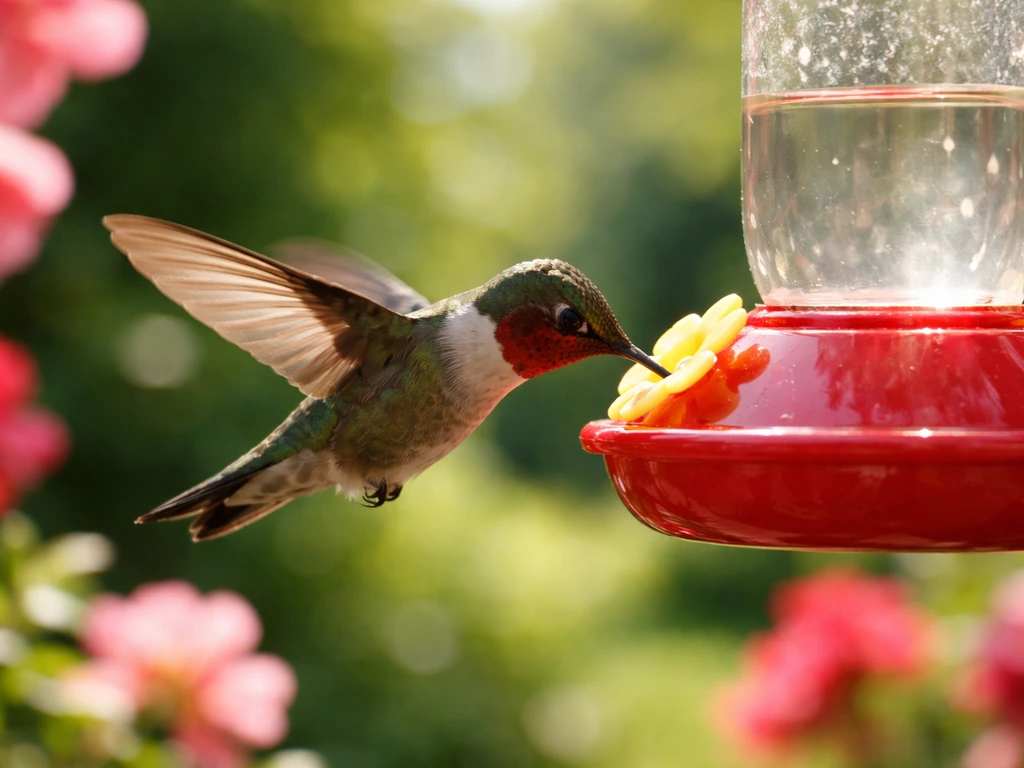
In several Mesoamerican traditions, the hummingbird carries specific associations with departed warriors and with divine connection. In modern grief culture it has become, like the cardinal, a commonly cited sign of a visiting loved one. Its hovering flight, its apparent fearlessness around humans, and its rarity of appearance all contribute to why a hummingbird encounter feels significant. If you saw a hummingbird pause and hover near you for an unusual length of time, that behavioral element is worth noting.
How to identify the bird and match it to its symbolism
If you're trying to figure out what a specific sighting means, the first job is accurate identification. If you're wondering what bird is a sign from heaven, start by identifying the species and the context of your sighting. This matters more than people think, because the symbolism is species-specific. A Mourning Dove and a pigeon can look similar at a glance, but they carry very different cultural associations. Cornell Lab's Merlin Bird ID app is the most practical tool available right now for identifying a bird by photo, sound, or a few physical descriptors. It's free, it covers North America and much of the world, and it will give you a confident species identification in under a minute.
Once you have the species, ask these questions to build your interpretation:
- What color was it, and was the color unusual or particularly vivid? Color is symbolically significant across nearly every tradition.
- What was it doing? Sitting still and making eye contact reads differently than frantic flight or singing. Behavior is historically one of the primary ways birds communicate omens.
- Where did it appear? At a window, near a grave, in your yard after a prayer, or during a grief-heavy moment all carry different interpretive weight.
- Was the encounter unusual? A bird that enters your home, approaches without fear, or appears at a statistically unlikely time earns more interpretive attention than a bird you see every day.
- What was your emotional state? Traditions across cultures emphasize that the receiver's state of attention matters.
What different cultures say about birds from heaven
Biblical and Christian
The dove dominates here, as covered above. But early Christian symbolism also drew on birds more broadly as metaphors for the soul's ascent. The idea of the spirit "hovering like a bird" appears in Jewish and early Christian interpretive traditions tied to Genesis. The question of whether the Holy Spirit is literally a bird is a distinct topic, but what's clear is that bird imagery was a primary language for describing divine presence and spiritual descent in biblical contexts.
Egyptian
Ancient Egyptian belief gave the world one of the most literal and vivid versions of a bird-as-heavenly-soul. The ba, one of the aspects of the human soul, was depicted as a human-headed bird that could leave the tomb and travel between earth and the afterlife. It was shown in tomb art speeding between the world of the living and the realm of the dead. This isn't symbolic in a loose sense: it was a theological map of how the soul moved after death. The idea that a bird you see might be carrying the soul of someone who has died connects directly to this Egyptian framework, even if most people encountering it today don't know that's the origin.
Native American
It's important not to flatten the extraordinary diversity of Native American traditions into a single interpretation, but certain patterns are documented. Eagles are widely associated with connection to the Creator and with ancestral communication. Feathers from eagles and other birds are used ceremonially, with prayers described as rising to the heavens through smudging and ritual. Archaeological evidence from 14th-century Pueblo sites shows birds had documented ritual roles centuries before modern new-age reinterpretations entered the picture. Archaeological evidence from 14th-century Central New Mexico Pueblo settings has been used to argue that bird imagery and ritual use increased in certain contexts, supporting documented ritual roles for birds beyond modern folk reinterpretations 14th-century Pueblo sites. Among the Ch'orti' Maya, birds were understood as seers that access the heavens through flight and convey messages from gods. Specific meanings vary by nation, community, and context, so if you have ties to a particular Indigenous tradition, go to that tradition's elders and knowledge-keepers rather than generalizing.
Celtic
Celtic traditions are rich with bird messengers and otherworld associations. Cranes, swans, and wrens each carry distinct meanings in Irish and Welsh mythology. Swans in particular were often understood as transformed souls or otherworld beings, and harming one was considered deeply taboo. Ravens appear as messengers between worlds, associated with both death and prophetic wisdom. The Celtic otherworld (variously called Tir na nOg, the Sidhe, or similar names) was not exactly "heaven" in the Christian sense, but birds served as the connective tissue between that realm and the human one.
Aztec and Mesoamerican
Aztec bird symbolism is among the most thoroughly documented in the ancient world, thanks to 16th-century Náhuatl sources and the codices, though some earlier identifications of specific species have needed scholarly revision. The most famous example of birds and the divine in this tradition is the Resplendent Quetzal, whose feathers adorned the feathered serpent Quetzalcoatl. The quetzal was associated with divinity, royalty, and the sky. Hummingbirds carried the souls of fallen warriors and were connected to the sun deity Huitzilopochtli. The idea that deceased warriors could return as hummingbirds is one of the most specific and well-documented "someone from heaven" bird associations in any pre-Columbian tradition.
A quick comparison across traditions
| Bird | Primary Tradition | Heavenly Association | Key Feature to Note |
|---|---|---|---|
| Dove | Christian / Biblical | Holy Spirit, divine peace, spiritual descent | White color, gentle behavior, appears near water or at quiet moments |
| Cardinal | Modern folk / North American | Visiting loved one, spiritual closeness after death | Vivid red color, appears unexpectedly, sings year-round |
| Eagle | Native American (varies by nation) | Creator connection, ancestral messenger, celestial realm | Soaring flight, size, feathers used ceremonially |
| Hummingbird | Aztec / Mesoamerican, modern folk | Fallen warrior souls, divine energy, visiting loved ones | Hovering, fearless approach, unusual stillness near you |
| Swallow | European folk, Celtic | Returning soul, hope, safe passage between worlds | Arrival at significant time, aerial acrobatics, nesting near home |
| Swan | Celtic / Norse | Transformed soul, otherworld traveler | White color, association with sacred water, grace |
| Quetzal | Aztec / Maya | Divinity, royalty, sky god connection | Brilliant green-and-red plumage, tail feathers, tropical habitat |
Feathers, flight, and the universal language of "heaven"
Even when you can't identify the specific bird, feathers carry their own weight. Finding a feather, especially in an unexpected place or at a significant moment, is widely interpreted across cultures as a sign of angelic or ancestral presence. In Native American contexts, feathers are understood as ceremonial objects that carry prayers upward, with eagle feathers specifically described as links to ancestors and to the Creator. In Christian folk tradition, finding a white feather is commonly understood as an angelic sign.
The act of flight itself is the original heavenly metaphor. Birds move between earth and sky effortlessly, which is why so many traditions, from Egyptian to Celtic to Aztec, chose birds as the primary vehicle for representing souls, messengers, and divine presence. When a bird does something that breaks its normal behavioral pattern, especially when it enters your space, approaches you closely, or appears at a moment of emotional significance, that behavioral anomaly is what traditions across the world have historically treated as meaningful. The bird's normal behavior is background noise. The interruption is the signal.
Related to this: the question of what bird represents an angel, or what bird is a visitor from heaven, overlaps significantly with what you're asking here. Angels in Christian tradition are also associated with the dove and with white feathers specifically. The imagery of heavenly visitors and the imagery of angels converge in some traditions and stay distinct in others, so it's worth thinking about which framing feels most resonant for you.
How to confirm your interpretation and what to do right now
No guide, including this one, can tell you with certainty that the bird you saw was carrying a message from someone who has died. What responsible interpretation does is give you a framework for making meaning in a grounded way, one that's connected to actual tradition rather than invented on the spot. Here's a practical process you can work through today.
- Identify the species first. Use Merlin Bird ID (free, from Cornell Lab) and enter the bird's size, color, behavior, and location. Get a confirmed species name before you interpret anything.
- Document the encounter. Write down or voice-record what happened: where you were, what the bird was doing, what time of day it was, what you were thinking about or feeling, and whether anything about the encounter felt unusual. Details fade fast.
- Match the species to its tradition. Use the table above as a starting point. Then go deeper into the specific cultural tradition most relevant to you, whether that's Christian, Indigenous, Celtic, or another framework.
- Weigh the behavior heavily. A dove that lands near you and stays for several minutes is symbolically weightier than one flying past. Behavior is how traditions across the world have historically distinguished meaningful sightings from ordinary ones.
- Resist locking in certainty. One useful framework from spiritual advice traditions: treat the sighting as a reference point, not a definitive message. Note what comes next in your life, how you feel, and whether the encounter continues to feel significant over time.
- Seek community if it matters. If you're working within a specific tradition, Indigenous, Christian, or other, ask an elder, pastor, or community member how that tradition interprets what you experienced. Lived tradition always carries more specificity than any written guide.
It's also worth acknowledging what caution looks like here. Some religious frameworks, including parts of the Catholic tradition, warn against treating omens as a substitute for trust in providence, arguing that seeking definitive signs can become a spiritually unhealthy habit if it replaces faith with superstition. Some Catholic Answers Encyclopedia entries on divination argue that knowledge of the future belongs to God alone, and they frame divination or prognostics (including omen practices) as religiously problematic. That tension is real, and the most thoughtful interpreters in every tradition navigate it by treating bird encounters as invitations to reflection rather than as guaranteed messages with fixed meanings. You can honor what you saw without needing it to be more than it might be.
The bird you saw, whether it was a dove sitting quietly on your fence after a funeral, a cardinal at the window during a hard morning, or something rarer and harder to identify, carries the weight you bring to it plus the weight of the traditions that have been building this symbolic language for thousands of years. Both of those things are real. You don't have to choose between them.
FAQ
How can I tell the difference between a “sign” and a bird just acting normally near me?
Look for behavioral change relative to what that species typically does in your area. Examples include entering your yard repeatedly from unusual angles, lingering where it normally passes through quickly, or approaching your personal space at a level that seems out of pattern. If it was simply foraging, preening, or feeding like usual, most traditions treat it as coincidence or mood resonance rather than a message.
What if I saw more than one bird, or I saw a bird species that isn’t on your list?
Use the context first, then let the symbol be flexible. If you cannot confidently match a species, focus on the bird’s action (hovering, returning, vocalizing, or quiet presence) and whether it connects to a known framework you already follow (Christian, Indigenous, Celtic, etc.). When multiple birds appear, many people interpret it as “themes” rather than a single fixed sender, for example dove-like calm plus cardinal-like presence.
Do the meanings change depending on the time of day, season, or weather?
Yes, because the same species has different “expected” behavior across seasons. For instance, swallows returning in spring fit the symbolism of return and safe passage, while an unexpected winter arrival can feel more interruptive. Similarly, a bird that appears during a major milestone (funeral, memorial day, a specific anniversary) is more likely to be experienced as meaningful than one seen on an ordinary day.
If I want to interpret it as “someone from heaven,” what questions should I ask about my sighting?
Try a three-part check: (1) What species was it and what did it do (land, circle, hover, vocalize)? (2) Where did it appear (window, on a grave, in a doorway, close to you)? (3) What was happening emotionally in you at that moment. Traditions consistently emphasize behavior and interruption, not only species.
What should I do if I misidentified the bird (for example, dove versus pigeon)?
Recheck calmly, then update your interpretation instead of forcing the original meaning to fit. A common mistake is building grief-adjacent certainty on a visual guess, especially with birds that look similar. If you are unsure, use audio or clear photos to confirm, and treat the encounter as “symbolic meaning is uncertain,” not as proof of a specific message.
Are there specific “behavior cues” that are considered stronger than simply seeing the bird?
Many people give extra weight when the bird breaks its normal distance or timing, for example hovering unusually long, repeatedly returning to the same spot, making direct vocal contact near you, or landing where it typically would not. In these cases, the “interruption” is the key, because it changes the encounter from background nature into an event you share with the animal.
How should I interpret feather signs differently from seeing a whole bird?
Feathers are often treated as more stationary, deliberate objects than an encounter. Because feathers can appear in specific places, many traditions read them as invitations to reflection, prayer, or remembrance, rather than a direct “appearance” of the spirit. If you find a feather, note the color and location, and consider it a cue to pause and connect with your chosen spiritual practice.
Is it okay to treat the bird encounter as comforting even if I cannot prove it’s a “message”?
Yes, that is often the healthiest approach. Responsible interpretation avoids turning the sighting into certainty about the afterlife or a literal guarantee of communication. You can honor the comfort it brings, use it as a prompt for remembrance or support, and still recognize that the bird also has natural reasons for being there.
What caution should I take if I start waiting for signs to guide decisions?
If bird sightings begin to replace your own judgment, therapy, or faith practices, that can become unhealthy. Some religious perspectives warn that repeatedly seeking definitive omens can become a habit. A practical boundary is to treat signs as “permission to reflect,” not as a final authority for major decisions (finances, health, relationships).
How can I connect the interpretation to my own religion or heritage without appropriating others’ traditions?
If you have ties to a specific Indigenous or faith community, use that community’s guidance instead of relying on general internet meanings. If you do not, focus on broader themes like “interruption,” “remembrance,” or “hope,” and avoid declaring a specific tribal or ritual meaning you are not authorized to apply. Let the tradition you already belong to do the interpretation work.
Next Articles
What Bird Represents an Angel: Meanings and How to Identify It
Most common angel-associated birds and how to identify them, plus meaning and tips to avoid mix-ups like doves
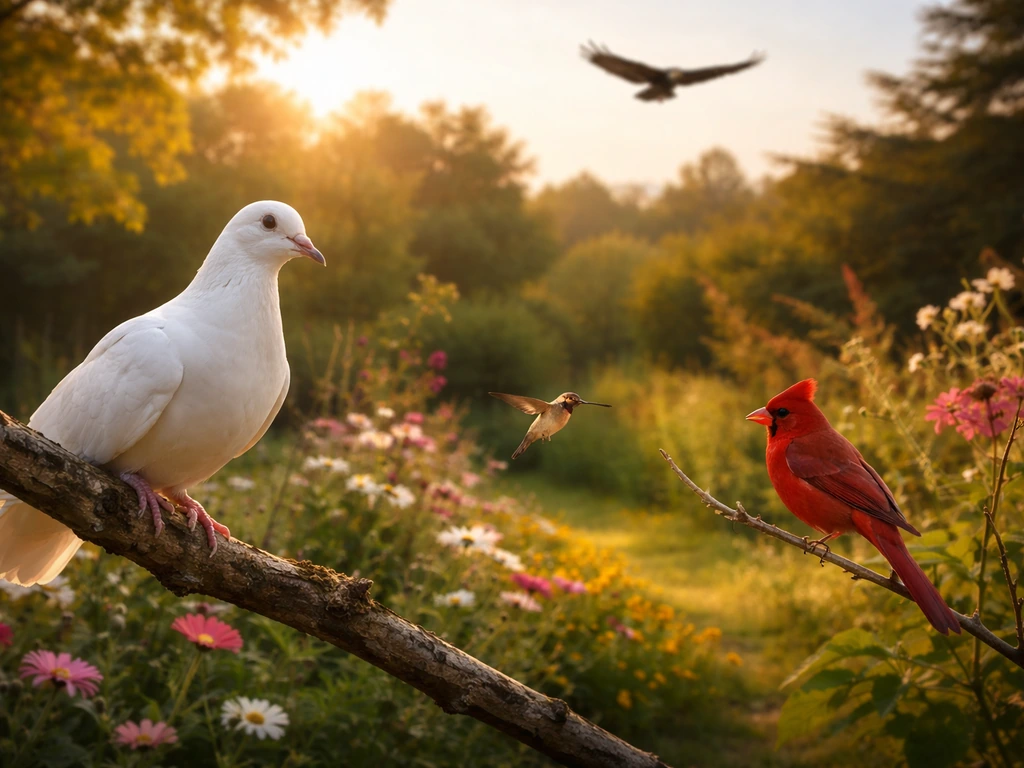
What Bird Is a Visitor From Heaven? How to Identify the Sign
Identify common “visitor from heaven” birds like dove, cardinal, swallow, hummingbird, and eagle with step-by-step check
Did Jesus Bring a Bird Back to Life? Scriptural Answers
No Gospel says Jesus resurrected a bird. Explore scripture bird imagery, renewal themes, and verify common bird-revival