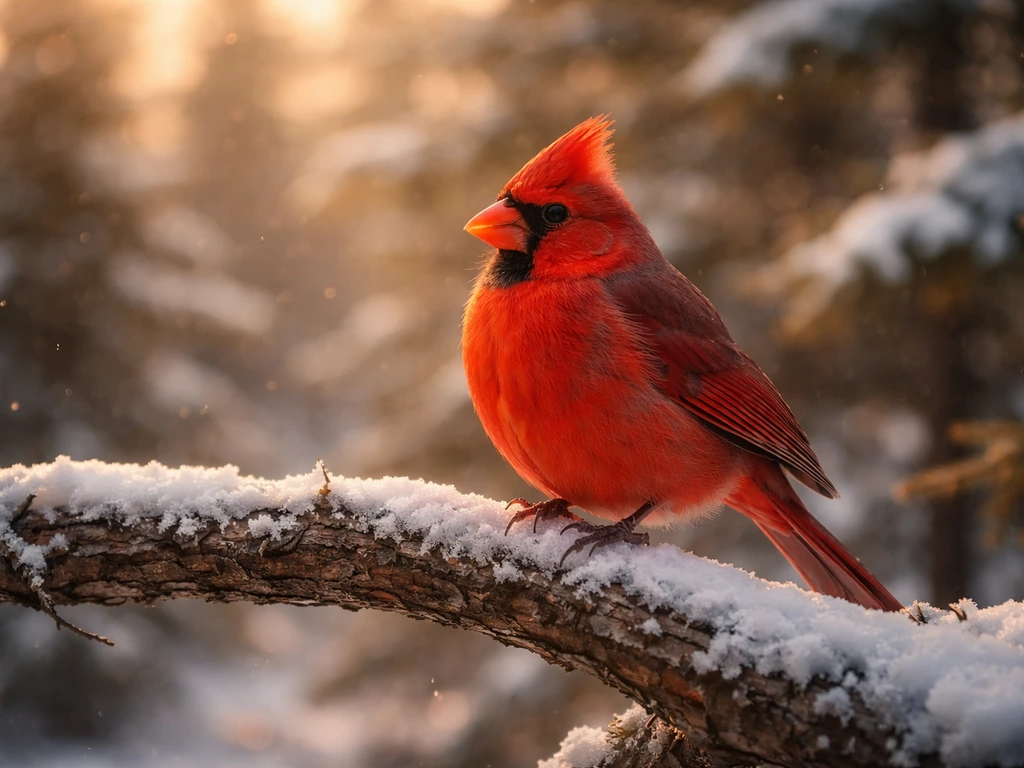
Yes, the Northern Cardinal is widely regarded as a Christmas bird, especially across the United States and Canada. The association isn't official or scientific, but it's deeply rooted in real-world reasons: cardinals don't migrate, they stay brilliantly red all winter long, and their vivid plumage against snow has made them a fixture in holiday imagery for generations. Add in the spiritual meanings people have layered onto cardinals over time, and you have a bird that fits Christmas in almost every dimension, visually, symbolically, and emotionally.
Why Is the Cardinal a Christmas Bird? Meaning and Facts

Eleanor Hartwell
20 May 2026
Is a cardinal actually considered a Christmas bird?
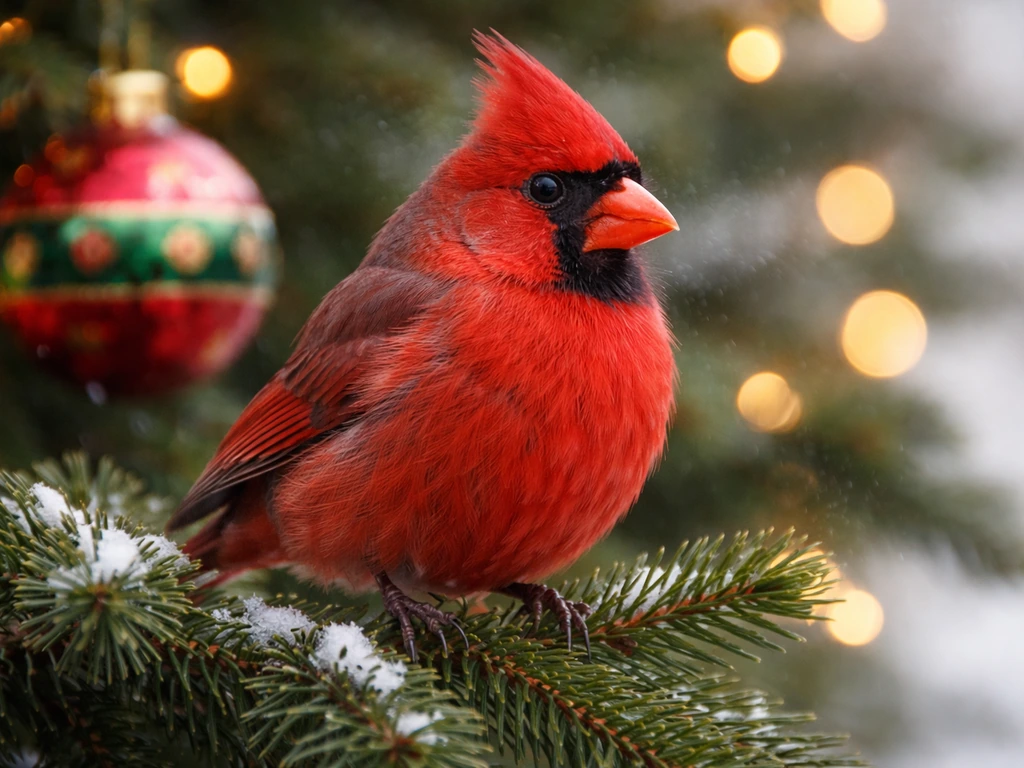
Informally, absolutely. You'll find cardinals on Christmas cards, ornaments, wrapping paper, and holiday decorations across North America in a way that no other bird quite matches. Sources ranging from regional newspapers to holiday gift retailers to wildlife organizations have all used the phrase "Christmas bird" when describing the Northern Cardinal. Old World Christmas, a well-known ornament company, even published a piece calling cardinals "Christmas' Most Popular Bird," pointing to their connection with faith, hope, and love in holiday tradition. That kind of mainstream cultural saturation is as clear a signal as any that the label has stuck.
There's also an institutional angle worth knowing. The Audubon Society has run its Christmas Bird Count every year since December 25, 1900, a coordinated annual survey held between December 14 and January 5. The Northern Cardinal appeared on that very first count list and has been a regular part of holiday-season birding documentation ever since. The count doesn't single out cardinals as the Christmas bird, but it firmly places them in the holiday-birding consciousness in the US and Canada, which is part of how the association gets reinforced year after year.
Seasonal timing: why cardinals show up in winter
The simplest reason cardinals feel like a Christmas bird is that they're actually there at Christmas, unlike most of the songbirds you'd see in warmer months. Northern Cardinals are non-migratory. They don't head south when temperatures drop, and unlike some birds that molt into duller winter plumage, male cardinals keep their full, intense red color year-round. When snow blankets the yard and most other birds have vanished, a bright red cardinal at the feeder becomes one of the most striking things in the landscape. That contrast is hard to overlook.
There's also a behavioral shift in winter that concentrates sightings. In fall and winter, cardinals that normally keep to themselves or defend breeding territories start loosening up. All About Birds (Cornell Lab of Ornithology) notes that in fall and winter cardinals form loose foraging flocks of “a dozen to several dozen birds,” which helps explain why more people spot them during the cold season blank" rel="noopener noreferrer">form loose foraging flocks, sometimes a dozen to several dozen birds. They form loose foraging flocks, sometimes a dozen to several dozen birds feeding together. Once winter arrives, pairs that kept to their own turf rejoin the wider flock. So rather than seeing one or two cardinals in the summer, you might suddenly see eight or ten at once during December. That clustering effect, combined with their non-migratory nature, means the holidays are practically a peak window for cardinal encounters.
Backyard feeders amplify this further. Cardinals are heavily seed-dependent in winter and are particularly drawn to black-oil sunflower seeds. People who put out feeders in December to enjoy winter wildlife are, often without knowing it, creating ideal conditions to see more cardinals than at almost any other time of year. The bird isn't coming to find you. It's coming to eat. But the effect is the same: a Christmas-season spike in cardinal sightings that feels meaningful even when the explanation is ecological.
Cultural and religious symbolism of cardinals around Christmas
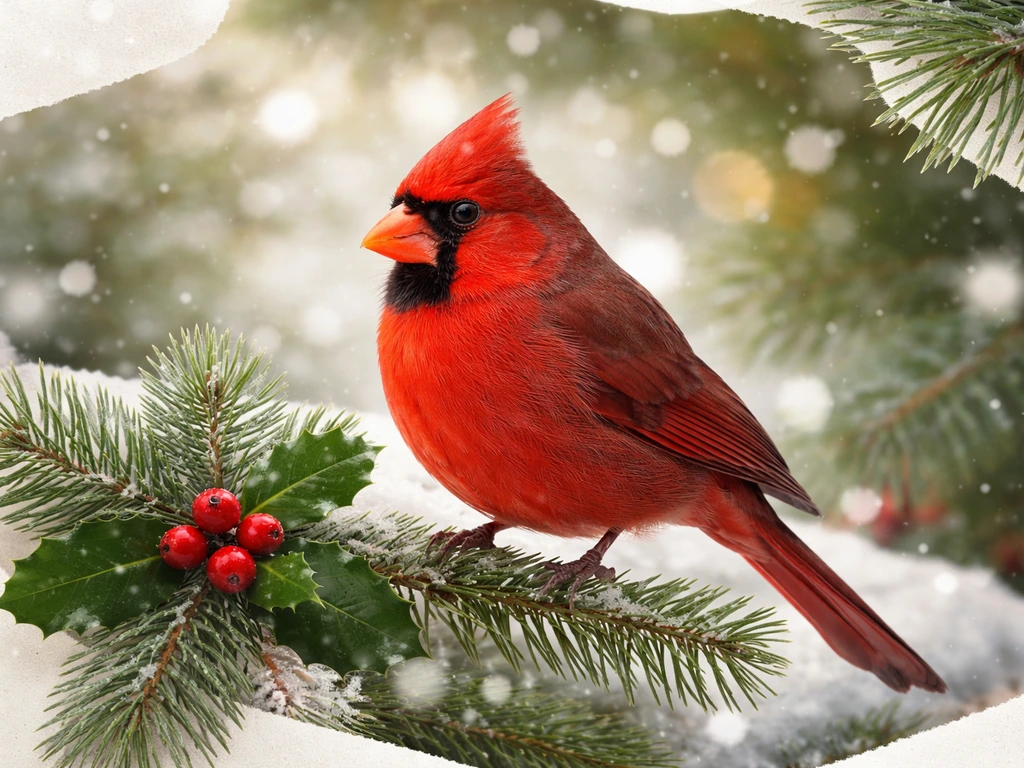
The color is everything here. Red is the color of Christmas, and the male Northern Cardinal is one of the most intensely red birds in North America. The association with Santa Claus's red suit, with poinsettias, with Christmas ribbon, and with the liturgical red of Christian tradition has made the cardinal feel almost purpose-built for the season. That's not an accident of perception; it's a consistent cultural framing that has been noted by wildlife writers, holiday tradition researchers, and everyday observers for decades.
The religious layer runs deeper than just color matching. In Christian tradition, red symbolizes the blood of Christ, sacrifice, and redemption, themes that sit at the theological heart of Christmas. Cardinals have long appeared in Christian iconography, and the name itself comes from the scarlet-robed Catholic cardinals of the Church, a connection that ties the bird directly to religious identity. Whether someone is aware of that etymological history or not, the bird carries that weight in Christian-influenced holiday culture. If you're interested in how the bird's name relates to the Church, that naming history is its own fascinating thread. If you're curious about cardinal meaning in the bible, the name and Christian symbolism give you a useful comparison point.
Beyond Christianity, the Audubon Christmas Bird Count tradition has embedded cardinals in a secular but spiritually attentive approach to the natural world during the holiday season. Birding during Christmas has become a quiet ritual for many families, and the cardinal is almost always the most photographed, most discussed bird in those outings. Culture reinforces itself: the more cardinals appear on holiday greeting cards and ornaments, the more people associate them with Christmas, and the more meaningful a real sighting feels.
How the cardinal's appearance fits Christmas imagery
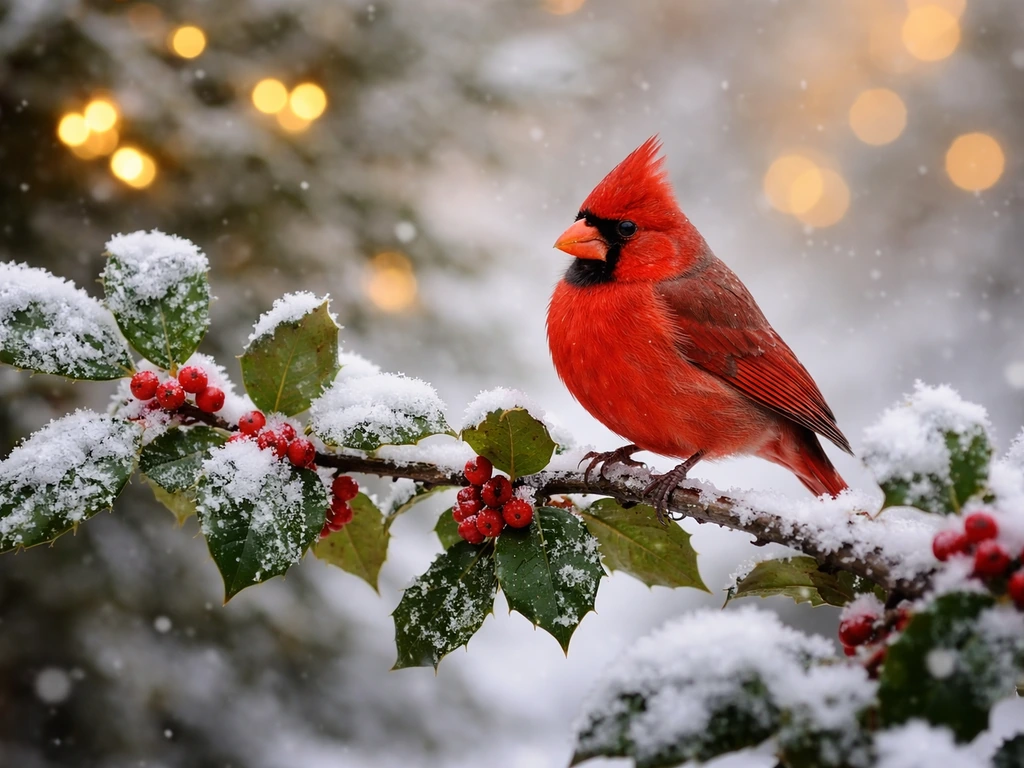
Picture a male Northern Cardinal perched in a snow-dusted holly bush. It's almost absurdly on-brand for Christmas: red bird, green leaves, white snow, red berries. The bird didn't evolve to look like a Christmas ornament, but it's hard not to see why people respond to the image the way they do. The combination of red plumage against winter whites and greens has made the cardinal one of the most reproduced images in American holiday decorating, right alongside the wreath and the candle.
Song adds another dimension. The Audubon Field Guide notes that cardinals "brighten winter days" with both their color and their whistled song, even as far north as southeastern Canada. Most people associate birdsong with spring, so hearing a cardinal's clear, looping whistle on a cold December morning carries a certain lift to it. It's unexpected and vivid, which is part of why it registers as significant rather than ordinary. The bird is visually and audibly present when the natural world is otherwise quiet and gray.
Regional and tradition-based explanations: US and Canada vs. other places

The Northern Cardinal's status as a Christmas bird is very much a North American phenomenon. The bird's native range covers the eastern and central United States and extends into southern Canada, including Ontario, Quebec, and parts of the Maritime provinces. In those regions, the cardinal is a familiar backyard presence and has been woven into holiday culture over many generations. Outside of that range, the association simply doesn't exist in the same way, because the bird doesn't either.
In the United Kingdom, for instance, the Christmas bird is the robin, a small red-breasted thrush that appears on British holiday cards with the same cultural frequency that cardinals do in North America. The pattern is the same: a red bird, visible in winter, emotionally resonant during the holidays. But the species is entirely different, shaped by what birds actually live in that region. This comparison is worth keeping in mind because it shows that the cardinal's Christmas status isn't universal or spiritually absolute. It's rooted in geography, in which birds people actually see outside their windows in December.
As cardinals have expanded their range northward, partly aided by the spread of backyard bird feeders, more people in previously cardinal-free zones have started having that first-time December encounter with a stunning red bird. That slow range expansion means the Christmas-cardinal connection is actually growing, reaching new communities who are encountering the bird for the first time in a holiday context.
Cardinal meaning in spiritual contexts: good luck, faith, and loved ones
Separate from the seasonal timing and the color symbolism, cardinals carry a rich set of spiritual meanings that become especially prominent during the holidays. The most widely held belief in contemporary American spirituality is that a cardinal sighting represents a visit from or a message from a deceased loved one. The saying "when cardinals appear, angels are near" circulates in grief communities, memorial traditions, and everyday family stories with remarkable consistency. For people who have lost someone before or during the Christmas season, a cardinal at the window can feel like contact with the person they're missing.
Cardinals are also associated with faith, hope, and love in various Christian and folk traditions. Old World Christmas's holiday ornament documentation frames the cardinal specifically in those three terms, echoing the theological virtues and connecting the bird to the spiritual heart of Christmas. The bird's brightness and persistence in difficult weather conditions has made it a natural symbol for keeping faith through hard seasons, which resonates deeply when Christmas arrives amid personal grief, financial stress, or family difficulty.
In broader spiritual frameworks outside Christianity, the red cardinal is frequently interpreted as a messenger of energy, vitality, and renewed connection. Its fire-like color links it to passion and life force in many symbolic traditions. The cardinal's willingness to sing in winter, when other birds go quiet, has been read as a sign of courage and spiritual endurance. These meanings aren't doctrinal in any fixed tradition, but they've accumulated over time into a consistent symbolic profile that fits the emotional register of Christmas: warmth in the cold, light in the darkness, presence amid loss.
The question of whether the cardinal is a sign from heaven is one that many people arrive at precisely during the holiday season, when grief and gratitude are both heightened. Whether or not you interpret a cardinal as a sign from heaven, its consistent winter presence is part of why people find the encounter so meaningful. That question connects directly to the broader spiritual meaning people assign to cardinal encounters, and it's worth exploring in its own right if this is where your curiosity is pulling you.
How to interpret a cardinal sighting during the holidays
There's no single correct interpretation, and being honest about that is actually more useful than offering a prescription. What you bring to the sighting shapes what it means. Here's a practical way to think it through.
- Notice the context first. A single cardinal at your feeder on a snowy December morning is ecologically normal. Cardinals are non-migratory, they flock in winter, and they're actively seeking food. Acknowledging the natural explanation doesn't diminish the experience; it gives you an honest baseline.
- Consider your emotional state. If you've recently lost someone and a cardinal appears during a moment of grief or memory, that timing can feel significant. Many people find comfort in the 'messenger from a loved one' interpretation, and there's genuine value in that meaning-making even if you hold it lightly.
- Sit with the color and presence. Even purely as a sensory experience, a brilliant red bird against a gray or white December landscape is striking. Let yourself notice it fully before deciding what it means, or whether it needs to mean anything beyond itself.
- Reflect on what feels true for you. The cardinal has accumulated meanings across Christian symbolism, folk tradition, and contemporary grief culture. None of these requires belief in all the others. Choose the lens that fits your own framework.
- Come back to it. A single sighting during the holidays is worth noting, especially if it lands in a moment of reflection or prayer. Repeated sightings, or encounters at particularly charged emotional moments, are what most spiritual traditions point to as more meaningfully significant rather than routine ones.
- If you want to attract more cardinals for spiritual or aesthetic reasons, put out black-oil sunflower seeds in a platform feeder, keep it stocked through December and January, and avoid cutting back shrubs near the feeder that provide cover. You'll almost certainly see more of them.
The most grounded position is also the most open one: cardinals are genuinely present at Christmas for real ecological reasons, and the meanings people find in that presence are genuinely real in the way that all symbolism is real, as a framework for connecting inner life to the outer world. Whether you're watching a cardinal because you miss someone, because you love the color, or because you're curious what your tradition says about it, the bird rewards attention. That's probably the simplest reason it became a Christmas bird in the first place. Some people also wonder which came first, the cardinal's reputation as a Christmas bird or the priestly religious symbolism connected to it which came first cardinal bird or priest.
FAQ
Is the Northern Cardinal officially a “Christmas bird,” or is that just folklore?
It is not an official biological or government designation. The “Christmas bird” label is cultural, reinforced by repeated holiday imagery and winter sightings, especially where cardinals are common year-round. The ecological reasons (no migration, bright winter color) are real even if the holiday name is informal.
If I don’t live in the US or Canada, how can I tell what bird will be considered the “Christmas bird” where I am?
Look for the red bird that shows up in your area during mid-to-late December and is commonly depicted on local holiday cards and decorations. The Northern Cardinal’s association is largely geographic, since it depends on the species people reliably see in winter. In many places outside North America, a different red winter species (like the robin in the UK) fills that role.
Why do I see more cardinals at my feeder in winter, but far fewer in summer?
In winter they rely more heavily on seeds and are more likely to cluster during foraging, so your feeder can concentrate multiple birds at once. In summer they are often more territorial and harder to notice. If you want to confirm the shift, track counts at the same time of day from one month to the next.
What feeder foods best attract cardinals during the holidays?
Black-oil sunflower seeds are a top choice because cardinals are particularly drawn to them in cold weather. Also place feeders where you can safely observe from indoors or a sheltered porch, since cardinals tend to pause and watch before approaching.
Do cardinals ever appear to “arrive for Christmas” even if they are not usually in my yard?
Yes. Range expansion and new backyard feeder setups can create first-time winter encounters in areas that did not historically see many cardinals. If this is your first December with cardinals, it may be due to both seasonal movements in the region and increased food availability in your neighborhood.
Are there any risks with feeding cardinals in winter that could reduce sightings?
Dirty feeders, stale seed, or spilled seed that attracts pests can discourage visits. Use clean feeders regularly, remove spoiled food, and avoid over-crowding multiple species in a way that creates heavy waste. Better hygiene often means more consistent cardinal traffic.
If I see a cardinal in December, does it always mean something spiritual?
No single meaning is guaranteed. Many people interpret cardinal sightings as visits or messages, but the interpretation depends on the person and the moment. A useful approach is to separate the ecological fact (a winter bird attracted to resources) from your personal symbolism, and decide what you believe after reflection rather than treating it as a fixed sign.
Can the cardinal’s color be affected by weather or age, and does that change the “Christmas bird” look?
Male Northern Cardinals are typically intensely red year-round, but lighting, distance, and snow glare can make the bird appear more or less vivid. If you photograph or observe from different angles, you may notice how the same bird looks dramatically different against snow versus greenery.
How can I spot cardinals more easily during the holiday season if there’s a lot of snow?
Use a seed source that attracts them and look for movement around likely perching spots like holly, evergreens, or shrubs. Timing helps too, many observers find activity increases around the coldest parts of the day and after people first refill feeders. Also, listen for their whistled calls, which can be easier to detect than the bird itself when visibility is limited.
Is the “Christmas bird” association the same for every cardinal species in North America?
The Northern Cardinal is the main species tied to Christmas imagery in the US and Canada. Other regional red birds may show up during winter, but they do not carry the same widespread holiday identity. If you want to be accurate, confirm the species before tying symbolism to the sighting.
What’s a quick way to check whether the cardinal is “really there” in your region during December?
Compare your personal sightings with local winter birding behavior, such as whether cardinals are year-round residents nearby. You can also do simple month-by-month counts around the same locations (feeder area, nearby shrubs) to see whether the pattern is consistent and not just a one-off visitor.
Next Article
Is a Cardinal Bird a Sign From Heaven? Meaning and Steps
Cardinal sightings meaning and steps: spiritual and cultural interpretations, plus grounded ways to journal, pray, and r