Yes, when people search 'bird of good omen' alongside 'Rime of the Ancient Mariner,' they almost always mean the albatross. It is the only named bird in Coleridge's poem, it arrives during the icebound stretch of the voyage near the South Pole, and the sailors explicitly treat it as a favorable omen before everything goes wrong. The poem is really a meditation on what it means to kill a creature you called good luck, and what that costs you. If you are here to understand the symbol, apply it spiritually, or figure out how a real-life bird encounter might be pointing you toward something, you are in exactly the right place.
Bird of Good Omen in The Rime of the Ancient Mariner

Eleanor Hartwell
4 May 2026
Which bird, which scene? Getting the disambiguation right
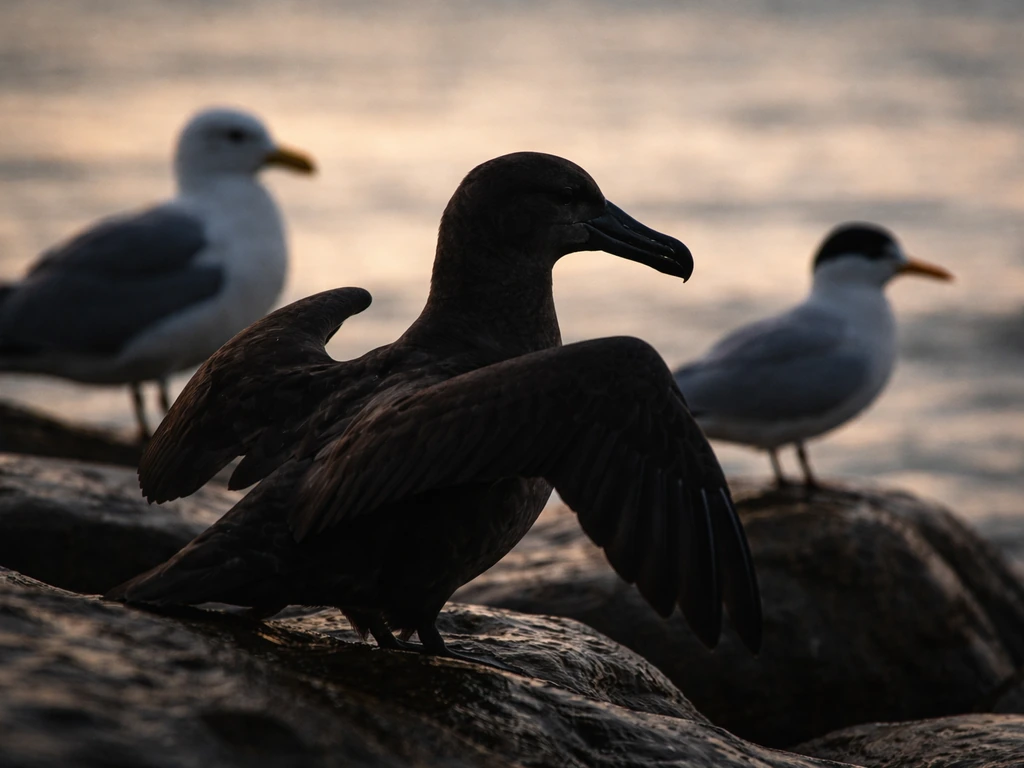
The confusion around 'bird of good omen Rime of the Ancient Mariner' is understandable because the phrase sounds like it could refer to any number of birds or traditions. But Coleridge's poem is specific. The bird is the albatross, described in Part I as 'a great sea-bird, called the Albatross,' emerging 'through the snow-fog' to reach the storm-tossed ship. The crew greets it with hospitality and joy. Then, in the very next movement of the poem (Part II), the Mariner shoots it with a crossbow: 'I shot the ALBATROSS.' The resolution comes much later in Part VII, when the Mariner's prayer of reverence causes the bird's carcass to slip from his neck and 'sink like lead into the sea.'
If you are working through a study guide and trying to pin down which bird or which episode the 'good omen' reference applies to, the sequence is: fog-bound arrival (good omen, Part I), killing (moral crime, Part II), carcass hung around the Mariner's neck (guilt made visible, Part II onward), and the falling of the albatross into the sea (redemption, Part VII). There is no other bird in the poem playing a comparable omen role. The albatross is the answer.
It is worth noting that if your search was nudging toward the Fleetwood Mac album title 'The Pious Bird of Good Omen,' or toward the broader concept of what a 'pious bird of good omen' means as a phrase, those are related but distinct threads. In other words, the pious bird of good omen idea points to the same tradition of treating unexpected bird encounters as spiritually meaningful signs. In case the phrase is coming from music culture, the album title you might be thinking of is Fleetwood Mac, The Pious Bird of Good Omen Fleetwood Mac album title 'The Pious Bird of Good Omen,'. Similarly, the idea of a 'bird of ill omen' is essentially the dark mirror of this same framework. In that context, people ask what a bird of ill omen meaning is, and how it contrasts with the poem’s “good omen” frame. This article focuses on the albatross in the poem and how its omen logic maps onto real symbolic and spiritual meaning.
How Coleridge builds the omen logic in the poem
What makes the albatross so symbolically rich is that Coleridge does not simply label it a good omen and move on. He builds a living omen logic that evolves through the poem's moral arc. The bird arrives with a south wind at its back: 'And a good south wind sprung up behind, / The Albatross did follow.' The crew reads this causally, treating the bird as the source of their good fortune. They feed it and welcome it as a guest. This is not superstition on their part; it is a coherent spiritual framework in which a living creature functions as a message from the natural-spiritual order.
The killing shatters that framework violently. After the Mariner shoots the albatross without explanation or justification, the crew's interpretation shifts twice: first they agree that the Mariner 'had done a hellish thing' (they condemn the act), then when the fog lifts and the sun returns, they reverse course and agree that he was right to kill it. Coleridge uses those shifting interpretations to make a pointed argument: the moral weight of the act does not depend on what the crew decides. The consequences that follow, drought, death of the crew, the ghost ship, prove that the omen logic operates independently of consensus.
Coleridge also added marginal glosses in later editions of the poem, brief commentary that interprets the story alongside the verse itself. This layering signals that no single reading is meant to be final or locked in. The poem invites you to sit with the instability of signs and meaning, which is something to keep in mind when applying bird-omen symbolism to your own life.
The albatross as symbol: fate, responsibility, and consequence
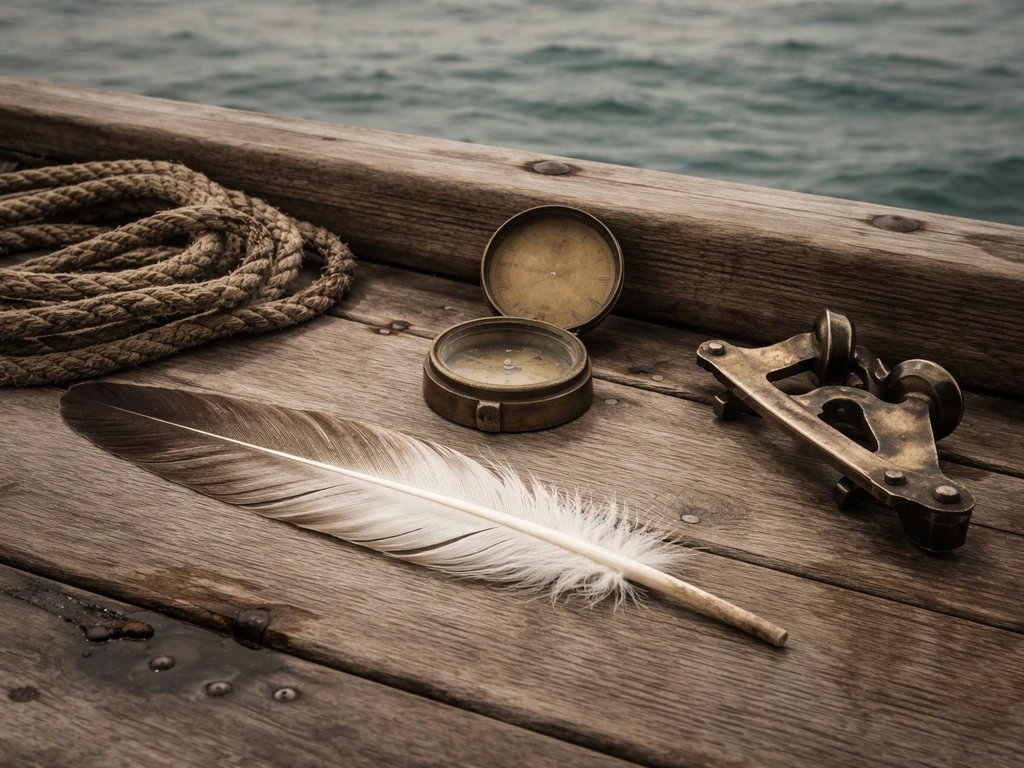
The albatross in the poem carries layered meanings that do not collapse into a single tidy message, and that complexity is exactly why the symbol has lasted more than two centuries.
A bridge between worlds
The albatross materializes out of the fog, crossing from an unseen place into the sailors' immediate reality. This boundary-crossing quality, appearing from the natural world but feeling supernatural, is what gives it omen status in the first place. In many traditions, birds that arrive unexpectedly in liminal conditions (fog, storm, extreme cold, unusual silence) are treated as messengers from a spiritual register. The albatross fits this pattern precisely. It arrives when the crew is most vulnerable and most in need of direction, and its presence seems to restore order. That is a classic messenger-bird role.
Guilt made visible
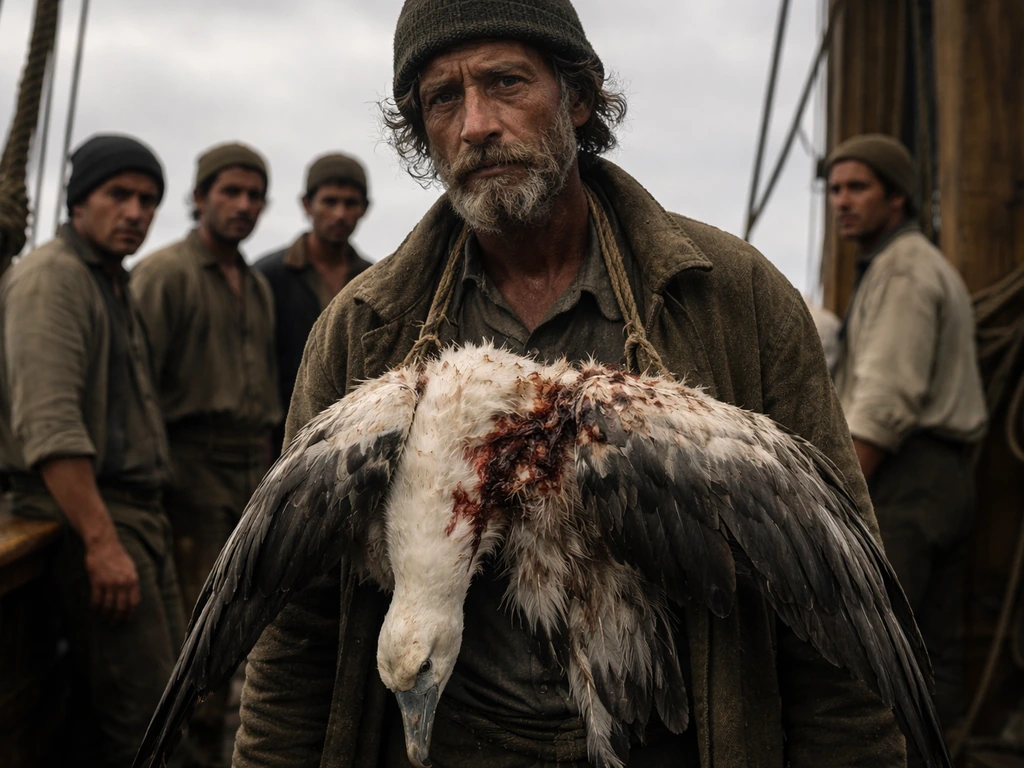
The poem's most powerful symbolic move is the hanging of the albatross carcass around the Mariner's neck as a marker of guilt. The line 'Instead of the cross, the Albatross / About my neck was hung' draws a direct parallel to Christ-bearing imagery. Many literary critics read the albatross as a figure of innocent life sacrificed without cause, with the Mariner as a figure of betrayal. Whether you take that theological reading or simply treat it as a powerful metaphor for accountability, the mechanics are the same: you cannot escape responsibility for harming what was sacred, and the burden you carry is visible to others.
Redemption through reverence
The resolution of the poem does not come through punishment alone. It comes through a shift in perception: the Mariner begins to notice the beauty of the sea creatures around him and blesses them involuntarily. In that moment of genuine reverence for living things, the albatross falls from his neck into the sea. The poem's closing moral is explicit: 'He prayeth best, who loveth best / All things both great and small.' The omen logic circles back to love and attention as the corrective force. This is not a passive reading of fate but an active ethical call.
| Symbol Stage | What Happens | What It Means |
|---|---|---|
| Arrival through fog | Albatross appears during icebound distress; wind and luck follow | Good omen: spiritual message, grace, guidance |
| Killing | Mariner shoots the albatross with a crossbow, no stated reason | Violation: destruction of innocence, moral rupture |
| Carcass hung on neck | Crew force the Mariner to wear the dead bird | Guilt externalized: accountability made visible to all |
| Prayer and blessing | Mariner genuinely blesses the sea creatures around him | Redemption: reverence restores connection to the spiritual order |
| Albatross falls into sea | The burden lifts; the bird returns to the deep | Release: atonement completed through changed perception |
Good omen birds across cultures: where the poem connects to a wider tradition
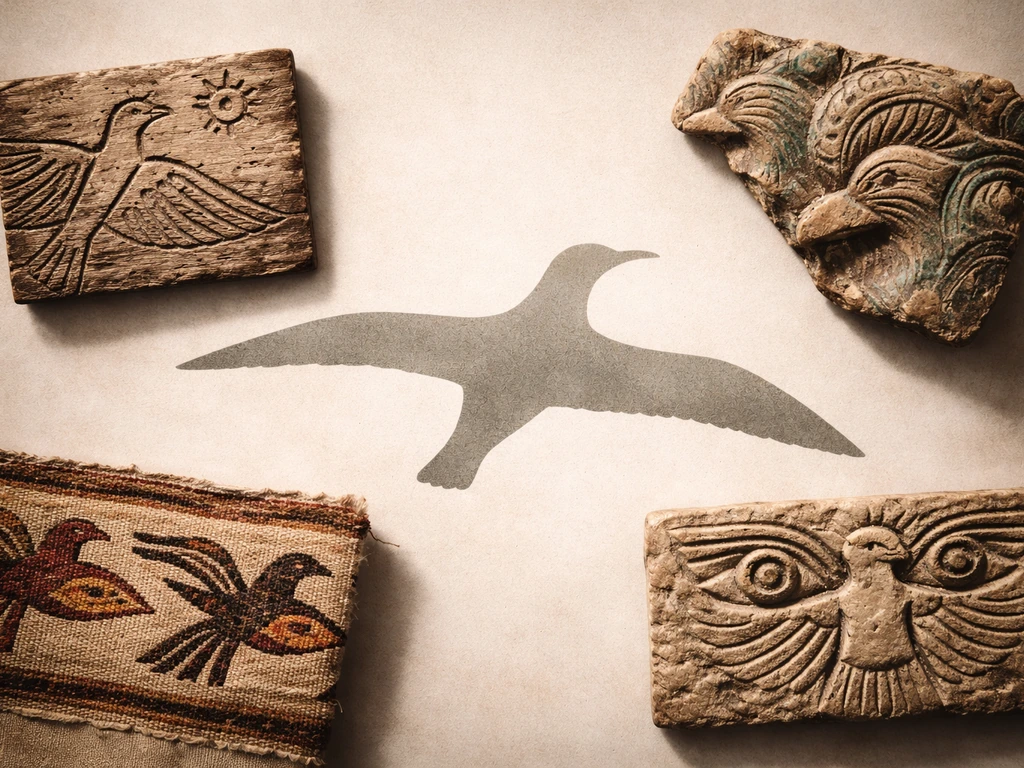
Coleridge did not invent the idea of birds as omens. He was drawing on a deep cross-cultural current. Cultures from ancient Greece and Rome to Yoruba traditions in West Africa have treated bird behavior, flight patterns, vocalizations, and unexpected appearances as meaningful signs. The formal name for this practice is ornithomancy, the reading of bird signs, and it operated through structured interpretive systems: the direction of flight (left or right of the observer), the type of call, and whether the encounter was spontaneous or sought. The point is that omen-reading was never purely passive superstition. It involved attention, context, and interpretation.
Seabirds in particular have carried portent meanings in maritime cultures for centuries. The storm petrel, for example, was historically labeled 'a bird of bad omen to mariners' because its appearance seemed to foretell rough weather. The albatross occupied a different position: for many sailors, its size, endurance, and ability to soar effortlessly in brutal conditions made it a symbol of mastery over the elements, and therefore favorable. That is exactly the reading the sailors in Coleridge's poem are working from.
It is also worth noting that 'good omen' vs 'bad omen' is rarely absolute across traditions. Owls, for instance, are read as bad luck in some Chinese traditions but as protective spirits in others. The albatross itself is called a 'fool bird' in some Japanese contexts because of its vulnerability when on land. The same bird carries different charges depending on the tradition reading it. This is important when applying omen symbolism to your own encounters: context and cultural lens always shape meaning.
Feathers, flight, and messages
Across many traditions, birds carry meaning not just through their physical presence but through what they leave behind. Finding a feather has long been treated as a message from a spiritual source: Native American traditions in particular associate feather gifts with gratitude, prayer, and connection to the divine. Flight itself symbolizes freedom, perspective, and the capacity to move between earthly and spiritual registers. These associations run directly parallel to the albatross's role in the poem: it appears from above and beyond, its movement tied to wind and grace, and its death triggers a loss of that grace from the ship's world.
Seeing a bird in a meaningful moment: what to notice and what it might mean
If you are here because you had a real encounter with a bird (a large seabird, an albatross, a heron or gannet near water, or even an unexpected bird arrival during a difficult moment) and the poem's imagery felt relevant, here is how to work with that practically. As a real-life counterpart to the “albatross bird of good omen” idea, you might also notice how seabirds are often treated as meaningful signs in omen traditions. The core principle from both the poem and cross-cultural omen traditions is the same: a bird encounter becomes meaningful through context, attention, and honest reflection, not through passive fate.
- Notice the conditions: Was it fog, storm, a moment of feeling lost or stuck? Liminal conditions amplify the sense that a bird arrival is significant, and that is worth paying attention to rather than dismissing.
- Notice the bird's behavior: Was it following you, circling, landing nearby, making an unusual call, or simply appearing in a place where you would not expect it? Ornithomancy traditions have always read behavior over mere species.
- Notice your emotional state: The poem's sailors needed guidance and received what felt like an answer. If you are at a crossroads or carrying guilt, a bird encounter can function as a mirror for something you already know but have not named.
- Consider what you have been neglecting: The albatross poem's deepest lesson is about reverence, specifically what happens when you fail to honor a living thing that was showing up for you. If a bird arrival feels charged, ask honestly whether there is something in your life you have been treating carelessly.
- Do not read the sign as a verdict: As Audubon's cultural overview notes, bird-omen interpretation is a practice of meaning-making, not deterministic prophecy. The bird is a prompt, not a sentence.
Large soaring seabirds specifically, whether you see them at a coast, on a wildlife-watching trip, or even in a dream, tend to carry the symbolic weight of perspective, endurance, and freedom. If you encounter one during a period of transition or moral difficulty, the albatross tradition suggests asking: what am I carrying that I need to release, and what shift in how I see the living world around me would allow that release?
A quick interpretation checklist and next steps
Whether you are working through the poem for study, exploring the symbolism spiritually, or trying to make sense of a real bird encounter, the following checklist helps you confirm which layer of meaning you are working with and what to do with it.
- Confirm the bird in the poem: If you are studying the text, locate the Part I arrival scene (fog, ice, south wind, hospitality) and the Part II killing scene. The albatross is the only bird in this omen role. If your question is about the poem's structure, you are working with the albatross.
- Identify the stage of the omen arc that matters to you: Arrival and good fortune, the killing and its consequences, the guilt burden, or the redemption through reverence? Each stage carries a distinct lesson (grace, violation, accountability, and repair).
- Apply the core moral honestly: The poem does not teach that birds bring luck. It teaches that how you treat the sacred things in your life determines your moral and spiritual condition. Ask where that applies right now.
- For a real-life bird encounter: Record what you saw, when, under what conditions, and what you were carrying emotionally. Sit with that context before assigning meaning. One sighting rarely carries absolute weight; patterns matter more.
- Use gratitude as the starting practice: Following both the poem's resolution logic and cross-cultural feather traditions, begin with thanks. Acknowledge the creature, the moment, the attention it called from you. This is the practical equivalent of the Mariner's prayer.
- Check the tradition you are drawing from: The albatross as a good omen is a maritime tradition. If you are working within a different cultural framework (Native American, Celtic, Greek augury), the specific meanings may differ. Cross-reference where possible.
- Release the need for a final verdict: Coleridge's marginal glosses exist precisely because the poem resists one authoritative reading. Your encounter or study is allowed to mean more than one thing at once.
The albatross in 'Rime of the Ancient Mariner' is not just a plot device or a literary curiosity. It sits at the intersection of a genuine and ancient human practice of reading birds as messages from a larger order, and a moral argument about what reverence for living things actually requires of us. Whether you arrived here through a literature class, a spiritual question, or a bird that caught your attention at exactly the wrong (or right) moment, the framework the poem offers is essentially the same: pay attention, accept responsibility, and let what you love guide how you act. If you keep running into “a wonderful bird is the peacock limerick,” it can help to connect that playful refrain to the same idea of using bird imagery as symbolic guidance.
FAQ
If the poem says the albatross is a good omen, why do the sailors still end up suffering after it appears?
In the poem, the “good omen” does not guarantee a happy outcome, it marks a moral crossroads. The sailors interpret the bird as favorable, then the Mariner violates the reverent framework by killing it. The suffering that follows shows that the symbol’s meaning is ethical and relational, not a simple prediction of safety.
How can I tell the difference between an omen reading and a “self-fulfilling” belief when thinking about a real bird encounter?
Use an evidence-and-values check. If the encounter prompts reflection on how you treat living things, your attention, and your choices, it functions like the poem’s moral logic. If it mainly becomes a fear trigger or a justification for rash decisions, treat it as a coincidence and focus on grounded action instead (observe, note context, make one responsible choice).
What should I look for in the poem to map “omen meaning” to the right moment (arrival, killing, guilt, redemption)?
Pin the sequence to events rather than themes. The omen-like meaning is strongest at the fog-bound arrival and the crew’s hospitality. The moral reversal aligns with the moment the Mariner shoots it. Guilt is dramatized by the carcass hung around his neck, and redemption is tied to renewed noticing and reverent blessing that leads to release.
Does the crew agree the killing was right once the sun returns, and does that change the poem’s moral message?
The poem uses the crew’s shifting opinions to underline that moral reality is not decided by consensus. Even when interpretations flip, the consequences keep unfolding. Practically, this suggests your own understanding should not be built on “what people around me think,” but on the ethics of what you did and what you owe to what you harmed.
What if I’m not seeing an actual albatross, but I keep hearing “bird of good omen” in relation to my life, should I assume the poem applies literally?
Not literally. Treat the phrase as a pattern: a meaningful bird encounter plus your response to it. A different bird or even a dream can still fit the same symbolic structure, especially if the encounter occurs during vulnerability, transition, or a moment where you can choose respect over impulse.
How should I interpret “ornithomancy” in a modern way without turning it into blind superstition?
Borrow the structure, not the certainty. Focus on context (weather, location, timing), the bird’s behavior (calm arrival, lingering, unusual silence), and your own values and actions after the encounter. Avoid turning it into a deterministic “fate forecast,” instead use it as a prompt for reflection and careful choice.
Are birds always either “good omen” or “bad omen,” or can a single bird mean different things across cultures?
It is not absolute. The article’s point about varied readings (for example, owls and even specific birds in different places) means your cultural lens matters. If you are applying symbolism, choose the interpretation that best matches the values you want to live by, and be cautious about importing someone else’s meanings without context.
If I find a feather after a bird encounter, does that count as “good omen” in the poem’s spirit?
It can, as long as it leads to responsible reflection rather than fear. The poem’s spirit emphasizes reverence, accountability, and attention to living things. A feather can be a tangible prompt to be grateful, slow down, and act more kindly or more carefully in a situation where you previously acted without regard.
What is a practical “next step” if I suspect my bird encounter is emotionally tied to guilt, anger, or regret (like the Mariner’s arc)?
Try a reparative step. Identify one living thing or one person you have neglected or harmed, then take a specific, time-bound repair action (apology, restitution, improved care, or learning more about the creature’s habitat). In the poem, release comes through reverent perception, not denial.
How do I avoid misusing the albatross symbol when writing or studying the poem?
Avoid reducing it to “good luck equals one safe outcome.” The symbol evolves with the Mariner’s choices, and the poem stresses moral weight and consequence. If you are analyzing an essay, anchor claims to the poem’s turning points (arrival, killing, guilt, redemption) and explain how “meaning” changes through action.