
Yes, 'The Pious Bird of Good Omen' is a real Fleetwood Mac album. It is a 1969 compilation released on the Blue Horizon label in the UK, collecting early blues-era recordings from the band's formative period. So if you've been second-guessing yourself, wondering whether you misread the title or stumbled onto some fan-made bootleg, you can stop: the album exists, it has an official tracklist, and physical copies (including vinyl) do turn up in the market. What it is not, however, is a widely circulated US release. That's where a lot of the confusion starts, and that's what this guide will help you untangle.
Fleetwood Mac The Pious Bird of Good Omen: What It Is

Eleanor Hartwell
18 Apr 2026
Is the Title Correct? Official Release vs. Misremembered Phrase
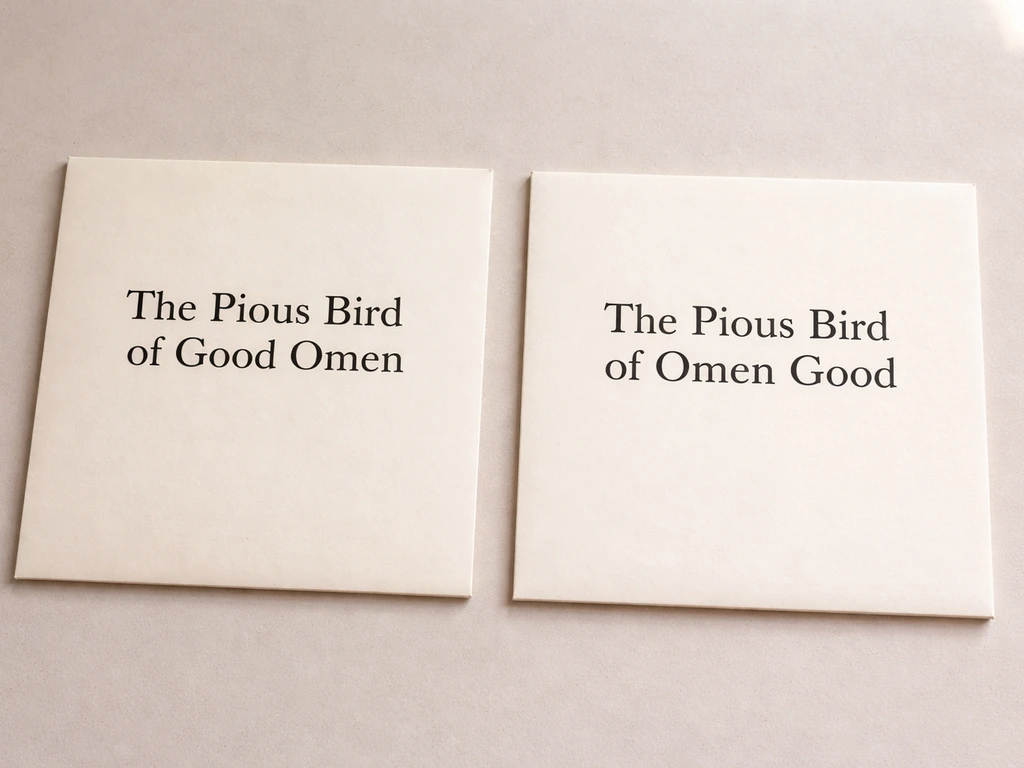
'The Pious Bird of Good Omen' is the album's actual, official title. It is not a lyric, not a fan nickname, and not a bootleg label someone invented for fun. The compilation was issued in 1969 by Blue Horizon, a UK label that was central to the British blues revival of that era. Because it was a UK-only release, American listeners who encountered references to it in the late 1960s and 1970s often couldn't find it on US shelves. Blue Horizon instead released the closest American equivalent under the title 'English Rose.' That US substitution is probably the single biggest reason the title sounds unfamiliar or feels like a misprint to some listeners today.
If you've seen the title written slightly differently, such as 'A Pious Bird of Good Omen' or with different punctuation, those are likely transcription errors or regional catalog variations rather than separate releases. The canonical title, as confirmed by both Wikipedia's entry and MusicBrainz's release database, is 'The Pious Bird of Good Omen.' Treat any listing that departs significantly from that wording with caution.
Tracklist: How to Verify the Songs and Credits
The album pulls together early Fleetwood Mac recordings, largely from the Peter Green and Jeremy Spencer era, when the band was rooted firmly in Chicago and Delta blues. Because this is a compilation rather than a studio album recorded as a single body of work, the songs come from different sessions and may appear with slightly different running orders or bonus tracks depending on the pressing. That matters a lot if you're trying to match a physical copy against an expected tracklist.
The most reliable place to verify the tracklist today is MusicBrainz, which maintains a community-edited database of releases including pressing-specific details. MusicBrainz has both a release entry and a release-group entry for 'The Pious Bird of Good Omen,' meaning you can cross-reference different physical pressings and see whether tracks, sequencing, or catalog numbers differ between them. Discogs is the other essential resource: it lets you look at individual pressing pages, see actual scanned labels, and read condition notes from sellers who own the physical record. Between those two databases, you can build a very accurate picture of what any specific copy should contain before you buy.
- MusicBrainz (musicbrainz.org): search the release-group 'The Pious Bird of Good Omen' by Fleetwood Mac to see tracklist variants and pressing differences
- Discogs (discogs.com): search the title to find individual pressings with scanned labels, catalog numbers, and seller condition notes
- AllMusic: good for a quick overview of credits and recording context, though less granular on pressing differences
- Streaming platforms (Spotify, Apple Music, Tidal): useful to hear the tracks and confirm song titles, though the digital version may not reflect an exact physical pressing order
Finding Vinyl and Full-Album Copies Today (Without Getting Burned)

Original 1969 Blue Horizon pressings of this album are collectible. An original UK first pressing in good condition will cost more than a casual listener expects, and the price gap between a genuine original and a later reissue is significant. Before buying any physical copy, especially from an online marketplace, there are a few things worth checking.
- Verify the catalog number: the original Blue Horizon pressing has a specific catalog number that you can confirm against Discogs listings. If the seller's photos show a label that doesn't match, ask questions before buying.
- Check the label design: original Blue Horizon pressings have a distinctive label color and font style. Reproductions or unofficial reissues sometimes copy the artwork but get the label wrong.
- Read seller feedback carefully: on Discogs and eBay, look specifically for feedback mentioning accurate grading. Vinyl condition ratings (VG, VG+, NM) mean different things to different sellers.
- Compare prices across listings: if a copy is dramatically cheaper than others for the same pressing, that's a flag. Genuine original pressings of UK blues compilations from 1969 rarely appear at bargain prices in good condition.
- Look for reissues as a practical alternative: if you want to hear the music rather than own a collectible, licensed reissues and CD versions of the same content exist and are far easier to find at reasonable prices.
For digital listening, the compilation's contents are generally available through major streaming services, though you may need to search by individual song titles rather than the album name if the streaming catalog groups tracks differently. Searching 'Fleetwood Mac Blue Horizon' is often a useful shortcut to surface this era of the band's recordings.
What 'Pious Bird of Good Omen' Actually Means as a Phrase
Even though this is a real album title, the phrase itself carries genuine symbolic weight that's worth understanding. 'Pious' means devout, holy, or reverently inclined toward the sacred. A 'bird of good omen' is a creature whose appearance or behavior has been read, across dozens of cultures, as a sign of blessing, protection, or divine favor. Put those together and you're describing a bird that is both holy in character and auspicious in meaning: a messenger between the earthly and the sacred that announces something good. That's a concept with deep roots in religious and mythological traditions across the world, and it's very much not an accident that someone chose this phrase for an album title. It frames the music as something more than entertainment; it frames it as a kind of spiritual arrival.
It's also worth noting the literary echo. Coleridge's 'Rime of the Ancient Mariner' made the albatross famous as a bird of good omen, a creature sailors believed brought favorable winds and divine protection. Coleridge's Rime of the Ancient Mariner is the most famous literary source for that bird of good omen idea, especially through the albatross symbolism. The killing of the albatross in that poem becomes the source of a terrible curse precisely because the bird held that sacred status. The phrase 'pious bird of good omen' nods toward that tradition of birds as morally and spiritually freighted creatures, not just animals. The album title almost certainly carries that resonance deliberately.
Bird Symbolism for Piety and Good Omens Across Traditions

When you look across Biblical, Egyptian, Native American, Celtic, and Aztec frameworks, certain ideas about birds repeat with remarkable consistency. Birds are seen as intermediaries between the human world and the divine because they inhabit the sky, the realm most cultures associate with the sacred. A bird that is both 'pious' (connected to the holy) and a 'good omen' (announcing blessing) tends to combine two symbolic registers: messenger and protector.
In Biblical tradition, the dove is the paradigmatic pious bird of good omen. It returned to Noah's ark carrying an olive branch, signaling that the flood was receding and that God's wrath had given way to peace. The same dove descended on Jesus at his baptism, marking the beginning of his ministry with a visible symbol of divine favor. The dove in this tradition is not just lucky; it is actively holy, carrying the presence of the Holy Spirit itself. Sparrows also appear in the Gospels as emblems of divine attention and care: 'not one sparrow falls to the ground without your Father knowing.' The sparrow's humility and ubiquity make it a symbol of protected, valued life.
In Egyptian tradition, the ibis was sacred to Thoth, the god of wisdom, writing, and the moon. The ibis was considered a divine bird whose presence signaled sacred knowledge and cosmic order. The sacred ibis was literally kept in temple precincts. The Bennu bird, an Egyptian heron-like creature, was associated with the sun and with rebirth, functioning as an early precursor to the phoenix concept. Both carry the 'good omen' quality tied to cosmic alignment and divine presence. The ba, often depicted as a bird with a human head, represented the soul in Egyptian belief, connecting bird imagery directly to the sacred self.
Celtic traditions invested enormous symbolic meaning in birds like the wren, the robin, and the crane. The wren, despite its small size, was considered the 'king of birds' in many Celtic stories, a creature of hidden wisdom. Cranes were associated with the Otherworld and with sacred knowledge, and harming one was considered deeply unlucky. The appearance of certain birds at the right moment was understood as a message from ancestors or from the divine realm, making the reading of bird behavior (augury) a serious practice in Celtic spiritual life.
In Native American traditions, the eagle is the most prominent 'holy bird' across many nations, serving as a direct messenger to the Creator. Eagle feathers are sacred objects used in ceremony precisely because they carry this connection. The hummingbird in many Southwestern and Mesoamerican traditions is a symbol of joy, resilience, and good fortune. In Aztec cosmology, Huitzilopochtli, the sun god, was associated with the hummingbird, making that small bird a symbol of divine solar power rather than mere prettiness. World History Encyclopedia describes Huitzilopochtli as a principal deity of the Aztec pantheon and notes that he is represented as the “Hummingbird of the South” (and related names) in the Mexica religious tradition In Aztec cosmology, Huitzilopochtli, the sun god, was associated with the hummingbird. The quetzal bird held sacred status among the Maya and Aztecs as a symbol of freedom, beauty, and divine connection, with its iridescent green feathers used in the regalia of rulers and priests.
The Best Candidate Birds for 'Pious Bird of Good Omen'
If you're trying to identify which specific bird best fits the description 'pious bird of good omen,' the answer genuinely depends on the cultural tradition you're working within. Here's how the main candidates compare across the key symbolic dimensions.
| Bird | Piety / Holy Connection | Good Omen Quality | Key Traditions |
|---|---|---|---|
| Dove | Carries the Holy Spirit; symbol of peace with God | Announces blessing, safety, and divine favor | Biblical, Christian, widespread Western |
| Albatross | Treated as sacred by sailors; killing one brings a curse | Signals safe winds and divine protection at sea | Maritime, literary (Coleridge), Celtic |
| Eagle | Direct messenger to the Creator; sacred in ceremony | Signals strength, victory, and divine approval | Native American, many Indigenous nations |
| Ibis | Sacred to Thoth; kept in temple precincts | Signals wisdom, cosmic order, divine knowledge | Ancient Egyptian |
| Hummingbird | Connected to Huitzilopochtli, the sun god | Symbol of joy, resilience, and good fortune | Aztec, Maya, Mesoamerican, Southwestern US |
| Quetzal | Worn by priests and rulers as a sacred object | Represents divine freedom and cosmic beauty | Maya, Aztec |
| Sparrow | Watched over individually by God in the Gospels | Symbol of humble, protected, valued life | Biblical, Christian |
| Crane / Wren | Connected to Otherworld wisdom and sacred knowledge | Appearance signals divine messages and good luck | Celtic |
If you're looking for one bird that best synthesizes 'pious' and 'good omen' across the widest range of traditions, the dove is the strongest candidate. It appears in more sacred contexts, across more cultural frameworks, as both a holy creature and a bringer of good news, than any other bird. But if your interest is specifically literary (drawn in by the Coleridge connection) or maritime, the albatross fits more precisely. If you're working within a Native American spiritual framework, the eagle is the natural answer. The 'right' bird is the one that resonates with the tradition you're exploring.
How to Search, Verify, and Use This for Personal Reflection
If your primary goal is to find the Fleetwood Mac album, the practical path is straightforward. Go to Discogs and search 'Fleetwood Mac The Pious Bird of Good Omen' to see current marketplace listings with pressing details and seller-verified condition. Cross-reference any specific pressing's catalog number against MusicBrainz to confirm authenticity. For just listening to the music, search 'Fleetwood Mac Blue Horizon' on your preferred streaming platform. That era of the band is well-documented and widely available digitally.
If what drew you to this phrase was something more than music hunting, that's worth following too. The idea of a 'pious bird of good omen' is genuinely useful as a reflective framework. It asks: what in my life right now functions as a messenger of something sacred? What appearance, arrival, or encounter has felt like a signal of blessing or protection? Bird symbolism traditions, from the Biblical sparrow to the Celtic crane, have always treated these encounters not as superstition but as invitations to pay closer attention. If you've noticed a particular bird appearing at meaningful moments, looking at what that bird represents across traditions can be a real tool for personal meaning-making.
For deeper reading within this symbolic space, the concept of the albatross as a bird of good omen has its own rich tradition worth exploring, as does the broader question of what distinguishes a bird of ill omen from one of good omen across cultures. Those distinctions are more nuanced than simple luck: they usually involve the bird's behavior, direction of approach, species-specific associations, and the circumstances of the encounter. Understanding the full spectrum, from the blessed arrival to the dark warning, gives you a much more complete picture of how bird symbolism actually functions as a language.
Whether you came here for a vinyl copy or for a spiritual concept, the phrase itself is doing something interesting. It holds both a musical artifact and a genuinely ancient idea about the world: that certain creatures carry holiness with them, and that their appearance is worth noticing. If you're curious about the specific limerick with that line, the peacock version is a fun angle on the “bird of good omen” idea a wonderful bird is the peacock limerick. That double meaning, music and omen, practical and sacred, is a reasonable place to start.
FAQ
Is “The Pious Bird of Good Omen” the same thing as the US “English Rose” release?
They are closely related because “English Rose” was used as a US substitute for the UK Blue Horizon compilation. However, US substitutions can differ in track order or even the exact track set, so treat it as “equivalent for availability,” not automatically identical.
How can I tell if a listing is the 1969 Blue Horizon compilation or just a different Fleetwood Mac collection?
Look for Blue Horizon branding and a matching catalog number on the record label or sleeve, then verify the catalog number against MusicBrainz. If the seller provides only a vague “early blues collection” description with no catalog details, assume it may be a different compilation.
Why do tracklists vary between copies of this compilation?
Because it is a compilation drawn from earlier sessions, different pressings can have variations such as bonus tracks, sequencing differences, or minor labeling changes. That means you should compare what’s shown on the specific Discogs pressing page (and, ideally, what’s printed on the copy’s own label) rather than relying on one generic tracklist.
What should I check on the physical record before buying, besides price?
Check condition indicators that commonly affect sound quality on older blues-era vinyl, such as sleeve wear, record warping, and visible scratches. Also confirm whether it is labeled as a first pressing or later reissue, since the cost gap for originals can be large.
Is it worth buying “an original” if my main goal is just to listen?
Often no. If you only want the music, streaming or a later digital/authorized release is usually the practical route. If you want the historical artifact, then chasing an original pressing makes more sense, but only after you confirm pressing-specific track details so you know you are getting the mix you expect.
Do streaming services show it as one album, or do I need to search by tracks?
Cataloging varies by platform. Some services may not present it as a single coherent album, or it may group tracks under different album metadata. If the album name does not surface, search by “Fleetwood Mac Blue Horizon” or by a known track title from the compilation.
What if the title is spelled differently on a record sleeve or in a database listing?
Small punctuation or article changes are usually transcription or catalog variation. If the wording differs significantly from “The Pious Bird of Good Omen,” verify the catalog number and the release entry before assuming it is a distinct release.
Is there any chance “The Pious Bird of Good Omen” is a lyric or subtitle on a specific song?
Treat it as the compilation title, not a lyric-based label. If you find the phrase associated with a particular track rather than the overall release metadata, it may be a secondary description or an indexing error rather than an alternate official title.
If I’m using Discogs, which details should I cross-check to avoid buying a reissue or misidentified pressing?
Cross-check the exact catalog number, label imprint, and the matrix/runout or pressing identifiers shown on the Discogs page (when available). Seller photos of the actual labels and any notes about variant tracks are also more reliable than generic descriptions.
What’s the safest way to confirm authenticity when a listing looks “almost right”?
Use a two-step confirmation: first match the catalog number and label name to the correct MusicBrainz release entry, then verify that the tracklist shown on the Discogs pressing page aligns with the listing’s claim. If either step fails, assume the listing is misidentified.
Does the symbolism of the phrase affect how I should interpret or listen to the compilation?
Not in a literal musicological way. The symbolic framing is a thematic lens you can use for reflection, but the listening experience should come from the recordings themselves. If you want to use the symbolism, consider it as a “meaning layer” rather than a guide to track order or authenticity.
Where does the “bird of good omen” concept come up beyond the album title?
The idea appears in multiple cultural and literary traditions, and the Coleridge “albatross” connection is one of the most recognizable literary versions. If you enjoy that thread, focusing on how “good omen” birds differ by tradition (behavior, context, species) will give you a more nuanced understanding than a single universal meaning.