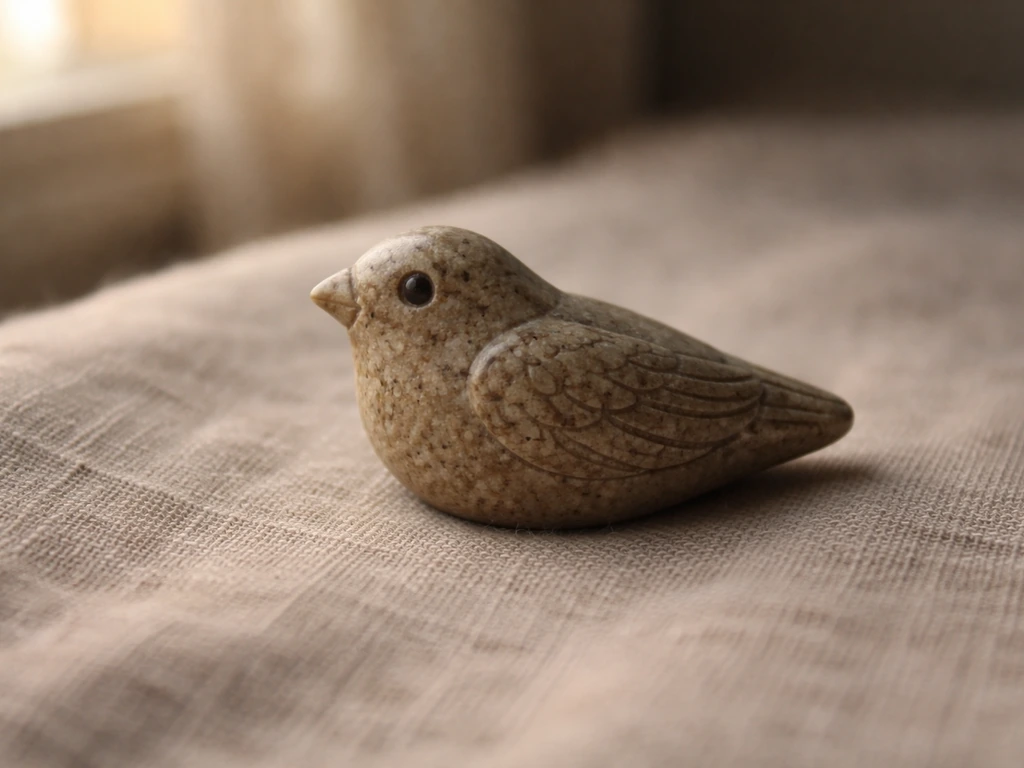
When people search for 'the bird revelation explained,' they're usually trying to make sense of a moment that felt too pointed to ignore: a bird appeared at an odd time, a feather showed up after a loss, or the same species kept crossing their path until it felt impossible to brush off. In spiritual and symbolic traditions, a 'bird revelation' refers to an encounter with a bird (or repeated bird imagery) that arrives with a sense of meaning, whether as a message, a confirmation, or a shift in awareness. This guide walks you through what that phrase usually means, how to interpret the specific sign you received, what the world's major traditions say about birds as spiritual messengers, and what to actually do with the experience once you've had it.
The Bird Revelation Explained: Meaning, Symbols, and Steps

What 'the bird revelation' usually means
The phrase 'bird revelation' doesn't belong to one religion or tradition. It's a colloquial shorthand for the experience of a bird encounter that feels revelatory, meaning it reveals something. That something could be comfort after grief, a nudge toward a decision, a warning, or a sense of connection to something larger than yourself. Most people who use the phrase are describing what psychologist Carl Jung called synchronicity: a meaningful coincidence in which an outward event (a bird appearing) and an inner state (grief, uncertainty, hope) align in a way that feels significant even if there's no obvious causal link. Merriam-Webster defines synchronicity as “meaningful coincidences,” noting Jung’s special importance given to this idea in his writings synchronicity: a meaningful coincidence.
Across traditions, birds are among the most consistent symbols of the soul, divine communication, and transition. Their ability to move between earth and sky has made them natural intermediaries in virtually every spiritual framework humans have built. So when a bird shows up at a charged moment, the instinct to read it as a message isn't superstition; it's a very old, very human response rooted in thousands of years of accumulated meaning. The key is learning to interpret that response with care rather than jumping to the first meaning that feels flattering or comfortable.
There are a few common categories of bird revelation that people describe. The first is the grief visitation, where a bird (most commonly a cardinal, blue jay, or dove) appears shortly after someone dies, and the bereaved person feels the bird carries the spirit of the deceased. The second is the decision sign, where a person wrestling with a choice repeatedly sees a particular bird or hears specific birdsong, and interprets it as a directional signal.
The third is the threshold revelation, where a bird appears at a literal or symbolic transition point (a new home, a new job, a breakup) and reads as an omen of what's ahead. All three share the same interpretive framework: something inside you is ready to receive a message, and a bird becomes the vehicle.
How to interpret a bird sign in real life

Interpretation isn't guesswork, but it does require honest observation. The most reliable method combines four elements: species identification, behavior, context, and emotional state. Work through each one before landing on a meaning.
Step 1: Identify the bird
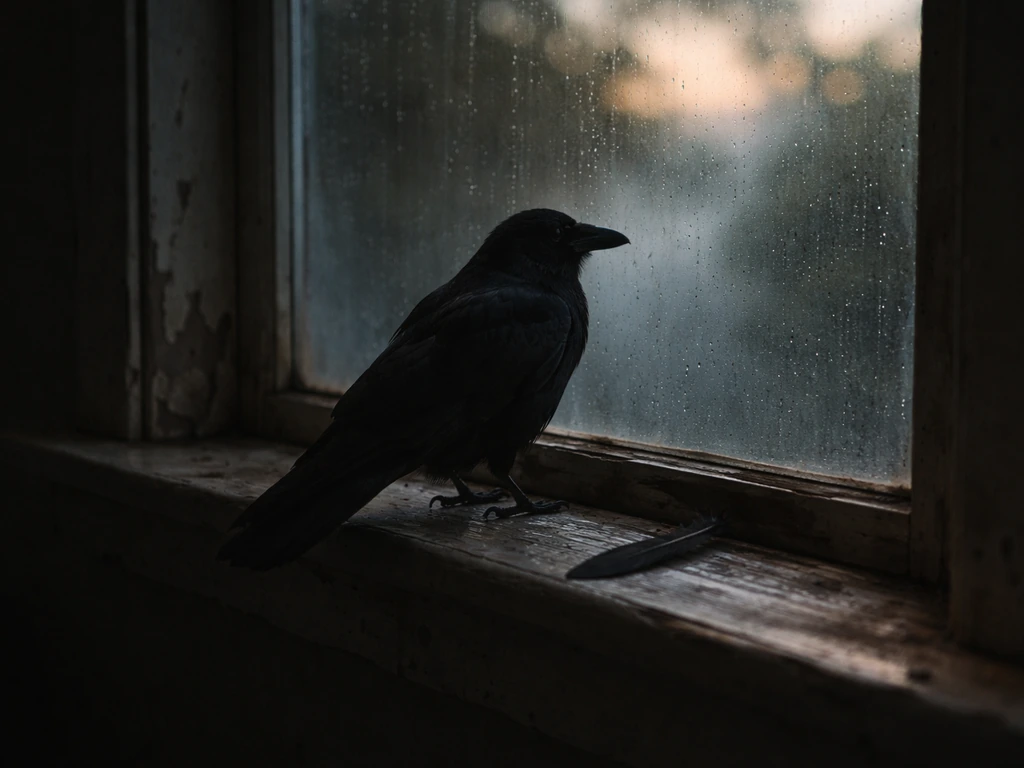
Species matters enormously in symbolic traditions. A crow and a dove carry almost opposite meanings in most frameworks. If you didn't catch a clear look, note color, size, and any distinctive markings. Even a rough identification (large black bird vs. small brown songbird) narrows the field significantly. If you're working with a feather rather than a live bird, color and shape are your main guides: a black feather points toward transformation and mystery in most traditions, a white feather toward peace and the divine, a red feather toward vitality and passion.
Step 2: Note the behavior

What the bird was doing carries as much weight as what it was. A bird that lands close to you, makes sustained eye contact, or follows you is behaving unusually, and unusual behavior is where meaning gets concentrated in most traditions. A bird in flight, circling overhead, tends to read as a message about perspective or freedom. A bird singing loudly outside your window at dawn carries different resonance than one that flies directly into your path and stops. Nesting behavior near your home is almost universally positive across cultures, associated with protection, fertility, and stability.
Step 3: Anchor the context
Time, location, and circumstance shape the reading dramatically. Did the bird appear at a threshold (a doorway, a gravesite, the moment you made a decision)? Was it dawn or dusk, seasons long associated with liminality across cultures? Was it at home, at work, somewhere emotionally loaded? A hawk circling over your childhood home carries a different weight than the same hawk spotted during a morning commute. Context doesn't determine meaning, but it focuses it.
Step 4: Check your emotional state
Be honest about what you were feeling immediately before and during the encounter. Were you grieving, anxious, hopeful, exhausted? Our emotional state primes us to receive certain messages, but it can also distort interpretation through confirmation bias, the well-documented tendency to find what we're already looking for. If you were deep in grief when a cardinal appeared, you'll naturally incline toward the 'loved one visiting' interpretation. That reading may still be valid, but naming the emotional priming makes your interpretation more trustworthy, not less meaningful.
Step 5: Track recurrence
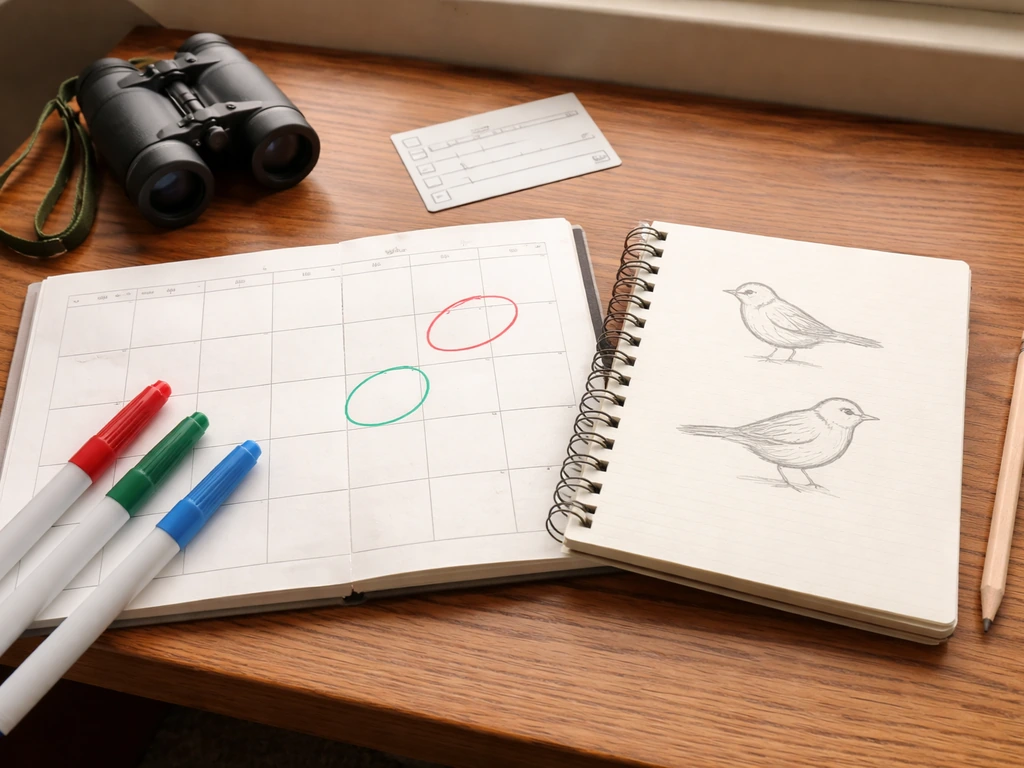
A single sighting is a prompting. Repeated sightings of the same species, in varied locations and contexts, over days or weeks, is something more insistent. Most traditions treat repetition as amplification: the message is being sent more urgently, or you haven't quite received it yet. Keep a log. If you notice a pattern, that's the heart of your revelation.
Universal bird symbolism: feathers, flight, nesting, and birdsong
Before you get to specific species, it helps to understand the four core elements of bird symbolism that appear across virtually every tradition. These are the building blocks of any bird revelation.
- Feathers: A feather is a calling card, something a bird leaves behind. Finding a feather is one of the most common forms of bird revelation because it persists; you can hold it, examine it, carry it. Across Native American, Celtic, and Egyptian traditions, feathers represent truth, divine favor, and connection to spirit. The specific color layers additional meaning on top of the species symbolism.
- Flight: The act of flying is the oldest bird symbol there is. It represents freedom from earthly constraint, spiritual ascent, and the soul's capacity to move between realms. When your revelation involves a bird in active flight, the message almost always has something to do with liberation, perspective, or transition.
- Nesting: A bird building or occupying a nest near your home or workspace is a sign of foundation, protection, and new growth in nearly every cultural tradition. It's one of the most grounded, tangible bird revelations: something is settling, something is being built, something young is about to be protected.
- Birdsong: Sound is often underestimated in bird symbolism, but many traditions treat birdsong as the clearest form of divine communication precisely because it bypasses the eye and speaks directly to the emotional body. Hearing an unexpected or unusually vivid bird call, especially at a threshold moment, is a recognized omen form in Celtic, Native American, and biblical frameworks alike.
What different traditions say about birds and revelation
No single tradition owns the idea of the bird revelation, but each frames it distinctively. Some people connect this symbolism to the history of India’s cultural golden age, often linked in stories to the Mughal Empire bird revelation. Knowing where your own instincts align culturally can sharpen your interpretation considerably.
| Tradition | How birds serve as messengers | Key birds and meanings |
|---|---|---|
| Biblical / Christian | Birds are instruments of divine provision and communication. The Holy Spirit descends as a dove; ravens bring food to Elijah; eagles represent renewal and strength (Isaiah 40:31). Birds at significant moments signal God's attention or guidance. | Dove (peace, the Holy Spirit), Raven (provision, dark wisdom), Eagle (divine strength, renewal), Sparrow (God's care for the small) |
| Egyptian | The soul (ba) was depicted as a human-headed bird. The ibis represented Thoth (wisdom, writing, magic); the falcon represented Horus (divine kingship). Bird encounters near sacred sites or temples carried high oracular significance. | Ibis (wisdom, cosmic order), Falcon/Hawk (divine power, the sun), Heron/Bennu (resurrection, the primordial moment of creation) |
| Native American | Birds are direct messengers between the human and spirit worlds. The specific tribe shapes the meaning significantly, but broadly: eagles carry prayers to the Creator, owls bridge the living and the dead, and hummingbirds bring joy and love. Feathers are sacred objects, never passive symbols. | Eagle (Creator, prayers, courage), Owl (death, transition, hidden knowledge), Hummingbird (joy, healing, love), Raven (transformation, trickster, creation) |
| Celtic | Druids used augury (reading bird omens) as a formal practice. The wren was king of birds; ravens and crows were associated with battle goddesses like the Morrigan; swans were sacred and sometimes shapeshifting beings tied to the Otherworld. | Raven/Crow (prophecy, battle, the Morrigan), Swan (Otherworld travel, purity, transformation), Wren (sovereignty, the turning year), Robin (new beginnings, the threshold between worlds) |
| Aztec | Birds were closely tied to gods and cosmic cycles. The hummingbird was the avatar of Huitzilopochtli, the sun and war god; the quetzal represented Quetzalcoatl and carried associations with freedom, divinity, and the preciousness of life. Owls were death omens. | Hummingbird (Huitzilopochtli, solar energy, warriors), Quetzal (Quetzalcoatl, freedom, divine favor), Owl (death omen, the underworld, Mictlantecuhtli) |
What's striking across these five traditions is the consistent architecture: birds occupy the space between worlds, they carry information across thresholds, and their appearance at charged moments is treated as an invitation to pay attention. The specific meaning varies by species and culture, but the underlying logic is stable. That consistency is worth taking seriously when you're trying to interpret your own experience.
What to actually do after a bird revelation
The most common mistake after a powerful bird encounter is to either dismiss it immediately or to over-interpret it on the spot. Both responses cut the experience short. The more productive path is to slow down and create a record before meaning-making begins in earnest.
- Write it down within 24 hours. Describe the bird, the behavior, your location, the time of day, what you were thinking or feeling before the encounter, and what happened immediately after. Don't interpret yet; just document. The more sensory detail you capture, the more useful the record becomes.
- Sit with the image. After you've documented the facts, take 10 to 15 minutes in meditation or quiet reflection and hold the bird's image in your mind. Notice what emotions surface, what memories arise, what questions come up. This is the interpretive space where intuition becomes legible.
- Cross-reference the symbolism. Using your species identification and the cultural frameworks above, look at what your bird means across two or three traditions. Don't just stop at the first meaning that confirms what you want to hear. Read the full range and notice what resonates and what doesn't.
- Choose an interpretation to test. Rather than locking in one meaning as fact, choose the interpretation that feels most alive and useful to you right now, and treat it as a working hypothesis. A revelation isn't a decree; it's an opening. Carry the interpretation into your week and notice what shifts.
- Return to your journal in 7 to 14 days. Write about what changed, what you noticed, and whether the bird or its imagery appeared again. Patterns across time are more telling than single moments.
- If you pray or work within a specific religious framework, bring the encounter into that practice explicitly. Ask for clarity, offer gratitude, or simply name what you witnessed. Most traditions treat this kind of acknowledgment as important: it closes the loop between the sign and the receiver.
Intuition vs. coincidence: how to tell the difference
This is the part most spiritual guides skip, and it's a real disservice. Not every bird is a message. Crows gather where there's food; sparrows nest near buildings because buildings mimic cliff faces; a hawk circling overhead is often just a hawk hunting. The challenge is distinguishing genuine synchronicity from what psychologists call apophenia, the very human tendency to perceive meaningful patterns in random or unrelated events. This tendency is closely related to apophenia, described as perceiving meaningful patterns or connections in unrelated or random events. Our brains are pattern-detection machines; that's adaptive and wonderful, but it also means we can construct significance from noise.
A few reliable markers help separate the two. First, genuine synchronicities tend to feel qualitatively different from ordinary coincidences: there's usually a quality of surprise combined with resonance, a 'how could this be random?' quality that isn't forced. Second, meaningful encounters tend to connect to a real inner question or threshold moment, not just any moment. Third, they often arrive unbidden, when you weren't actively looking for a sign, rather than when you're in full 'signs everywhere' mode. If you're in a period of grief, anxiety, or major transition and you find yourself reading meaning into every bird you see, that's worth noticing: it may be your nervous system reaching for reassurance rather than genuine spiritual communication.
Confirmation bias is worth naming directly here. It's not a character flaw; it's a well-documented feature of human cognition. We all tend to seek, notice, and remember information that confirms what we already believe. In spiritual practice, this means you can unconsciously construct a revelation that tells you exactly what you wanted to hear.
The antidote isn't skepticism; it's intellectual honesty. Ask yourself: would I find this encounter as significant if the message were the opposite of what I hoped for? If a bird appears and you're about to quit your job, and you interpret it as 'go ahead,' would you have read a different bird as 'stay put'? If yes, the revelation may be more about your own readiness than about the bird.
None of this invalidates the experience. The symbolic frameworks in this guide are real, time-tested, and worth taking seriously. But they work best when you bring genuine discernment to them, not when you use them to rubber-stamp what you already decided. If you are wondering about the two stones one bird meaning, it’s another example of how layered symbolism can shape interpretation alongside your own context and emotions rubber-stamp what you already decided. The most useful bird revelations tend to challenge or surprise you slightly, not just confirm what you already believed. That productive discomfort is often the clearest sign you're actually receiving something, rather than projecting it.
A few deeper threads worth following
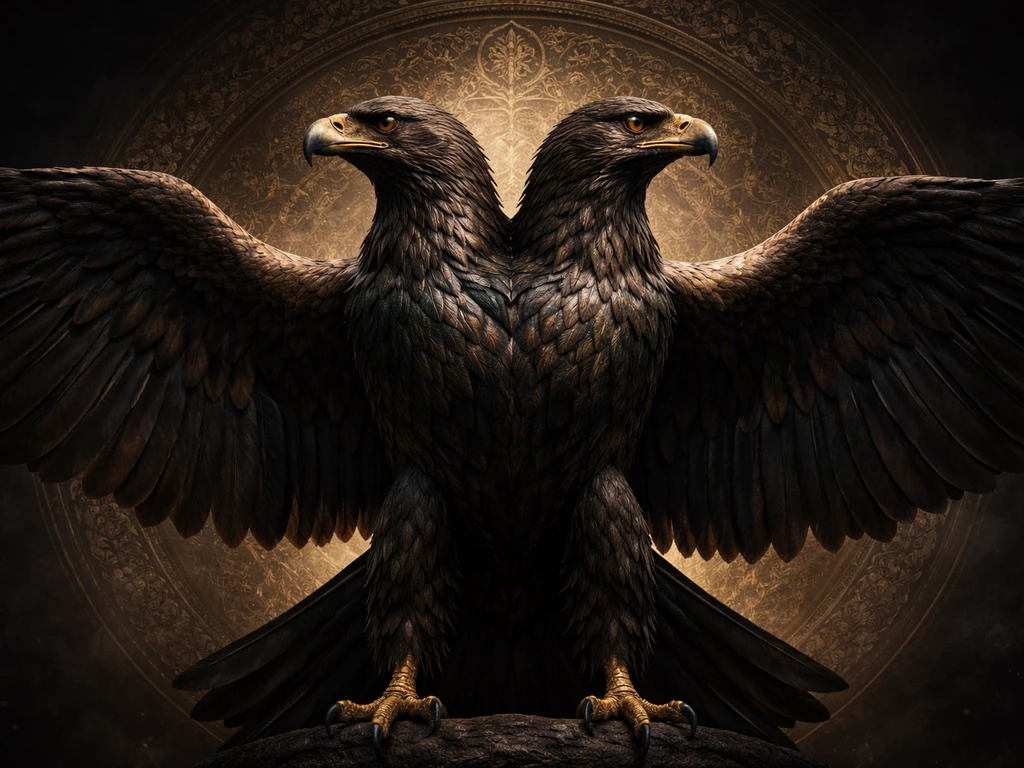
If your bird revelation involves unusual bird forms or combinations, the symbolism gets richer and more specific. The idea of a two-headed bird, for instance, carries its own layered tradition across heraldry, mythology, and spiritual art, often pointing to dual vision or the holding of opposites. Similarly, if your encounter involves very small birds, ground-nesting behavior, or birds associated with specific stones and totems, those threads each open into their own symbolic territory worth exploring. And if your sense of bird revelation comes not from a direct encounter but from language, proverbs, or cultural expressions involving birds, the tradition of what birds 'say' through human culture is its own vast field.
The short version: you don't need to master every tradition to work with a bird revelation meaningfully. You need to be honest about what you saw, curious about what it might mean across more than one framework, and willing to sit with the interpretation long enough to learn from it rather than just consume it. Birds have been carrying messages in human consciousness for as long as humans have had consciousness. Your job is to be a careful, honest recipient. That same mixture of devotion and message-carrying shows up in stories like The Good Lord Bird telegram.
FAQ
What should I do if I saw a bird but I cannot tell what species it was?
If the bird appears but you cannot identify the species confidently, base your meaning on behavior and context first, then treat any symbolic reading as tentative. Note color bands, size relative to familiar birds, beak shape (hooked vs. thin), and whether it was perched, circling, or vocalizing, then compare that pattern to the type of encounter you had (grief visitation, decision sign, or threshold revelation).
How do I avoid making the bird revelation mean everything at once?
A grounded approach is to pick one specific question the moment is already asking you, then see whether the bird details line up with that question. For example, if you are deciding between two job paths, look for signs connected to movement, protection, or perspective in your own interpretation, rather than trying to make the bird explain every possible life area at once.
What if I notice I am looking for signs everywhere and it feels compulsive?
If you are over-absorbed in signs (checking repeatedly, researching constantly, or expecting a bird at certain times), set a short boundary like “observe for 7 days, then decide.” Use your log for objective facts (time, location, behavior) and postpone conclusions until the boundary ends, because heightened anxiety can amplify pattern-detection and confirmation bias.
Should I treat a bird revelation as a direct instruction to take action right away?
Compare the bird encounter to your inner process, not just the event. If the message tells you to act immediately but your real-life readiness is low, treat it as contemplation rather than a command. A helpful rule is, “Does the revelation give clarity that reduces uncertainty, or does it create pressure to decide fast?”
How can I tell whether a bird visit is just normal bird behavior instead of a message?
Not necessarily. Birds naturally gather around food sources, nesting habitats, and migration corridors, so “real-world bird behavior” can explain many encounters. Use the “three markers” approach: it feels qualitatively different, it connects to your specific inner threshold, and it arrives unbidden. If those are missing, label it as coincidence and move on.
What does it mean if I find a feather rather than seeing the bird directly?
When feathers appear, treat it like a partial clue, not full confirmation. The most useful details are color, length, and whether it was fresh and intact (found indoors or outdoors near you). If you receive a feather repeatedly from the same “type” (similar color and shape), that repetition is more meaningful than a one-off.
If the bird hit my window or behaved strangely, is it still part of the bird revelation?
If the bird is aggressive, frantic, or injures itself after contact with glass, that can be an environmental event rather than spiritual symbolism. You can still reflect, but keep the reading separate from safety decisions, and prioritize practical steps like adjusting window decals or covering reflective surfaces during peak times.
How should I interpret a bird revelation when I am in deep grief?
If you are grieving, use symbolism for grounding and connection rather than certainty. Ask, “What support or comfort am I seeking, and how can I care for myself now?” If the encounter makes you spiral into certainty about the deceased, slow down and return to the emotional work of grief.
Does a threshold bird revelation always predict what will happen next?
A “threshold revelation” does not always predict an external event, it can also indicate an internal shift such as courage, closure, or readiness. Before concluding it predicts the future, test it against what has already started changing in you (habits, boundaries, choices, or willingness to risk).
How do I choose between multiple meanings when the symbolism feels layered or contradictory?
Layered symbolism can be real, but you should still choose a primary thread to avoid confusion. Pick one main theme from the strongest matching element (species or behavior), then let the rest function as supporting nuance. If multiple meanings clash, prioritize the one that reduces your emotional noise or helps you name the next step.
What is a concrete way to record and reflect on a bird revelation so it actually helps me?
If you want a practical next step, write a short entry in your log that includes (1) what you were deciding or feeling, (2) objective bird facts, (3) the meaning you first felt drawn to, and (4) what would count as “proof” that this matters (a new insight, a healthier decision, an actionable change). Review after a few days before acting on it.