
Bird stones were used as spiritual talismans, protective amulets, and ceremonial objects believed to carry the symbolic power of birds: guidance, luck, protection, healing, and connection to the spirit world. The exact purpose depends heavily on which tradition you're looking at, and honestly, even among archaeologists studying the most famous examples (prehistoric Native American birdstones), the function is still genuinely debated. What's consistent across cultures is the underlying idea: birds are messengers between worlds, and a stone carved or marked with bird imagery inherits some of that spiritual role.
What Was the Purpose of Bird Stones? Spiritual Meaning

Eleanor Hartwell
18 May 2026
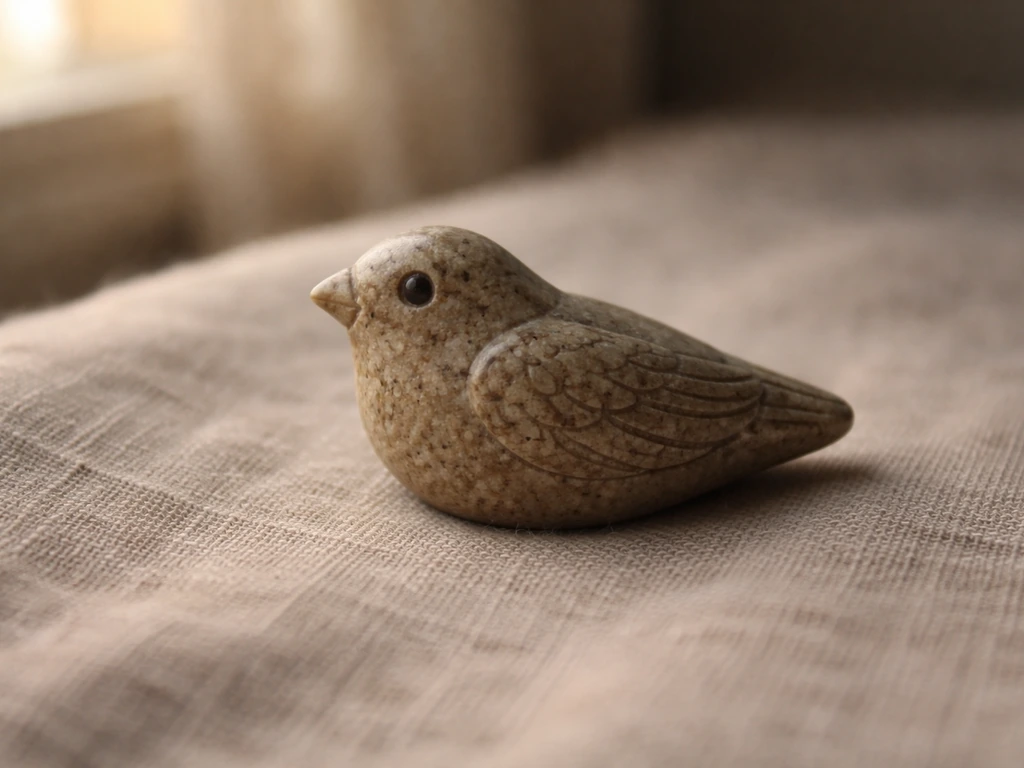
What 'bird stones' usually refers to
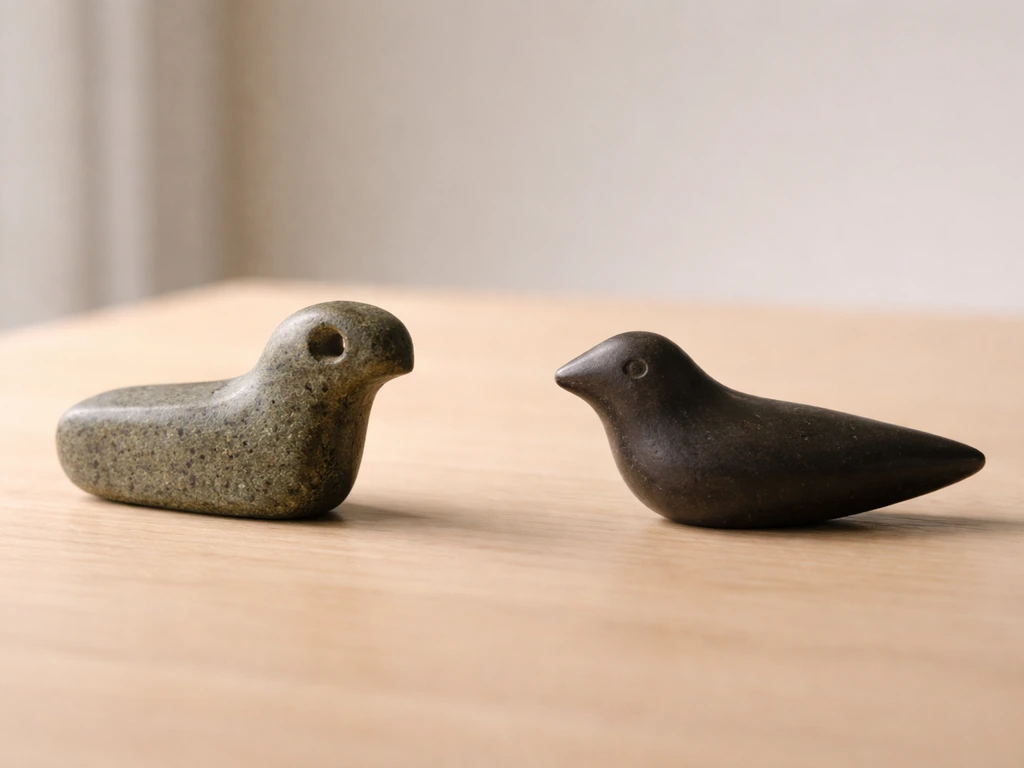
The term gets used in a few different ways, and it helps to know which one you're dealing with before diving into meaning.
- Prehistoric birdstones: Small, abstract stone carvings made by Indigenous peoples in eastern North America, sometimes called 'pre-contact abstract stone carvings' by heritage institutions like the Wisconsin Historical Society. These are ground-stone objects, often with a simplified bird or bird-head shape, sometimes featuring distinctive 'popeye' eyes. Their actual function is unknown. Scholarly theories range from atlatl (spear-thrower) weights to amulets to insignia, and no single explanation has consensus.
- Charm stones and amulets: Historically, museum collections and older anthropological writing grouped bird-shaped stones under 'charm stones' or 'amulets,' even when their exact function was uncertain. This talismanic framing has stuck in popular usage.
- Modern spiritual talismans: In contemporary spiritual communities, 'bird stones' commonly refers to any stone (tumbled, carved, or naturally shaped) that carries bird imagery, a feather motif, or is associated with a specific bird's symbolic meaning. These are used intentionally as personal objects for protection, guidance, or healing.
- Stones associated with bird omens: In some folk and New Age traditions, certain stones are paired with specific birds or bird energies, functioning as focal points for the symbolic meaning that bird carries.
If someone handed you a bird stone or you encountered the term in a spiritual context, you're most likely dealing with the third or fourth category. The prehistoric birdstones are primarily an archaeological topic, though their mystery has filtered into spiritual discussion in interesting ways.
The spiritual purpose: protection, luck, guidance, and healing
Across the cultures that have used bird-related amulets and talismans, a few core purposes show up repeatedly. These aren't arbitrary: they map directly onto what birds represent symbolically in almost every tradition.
Protection
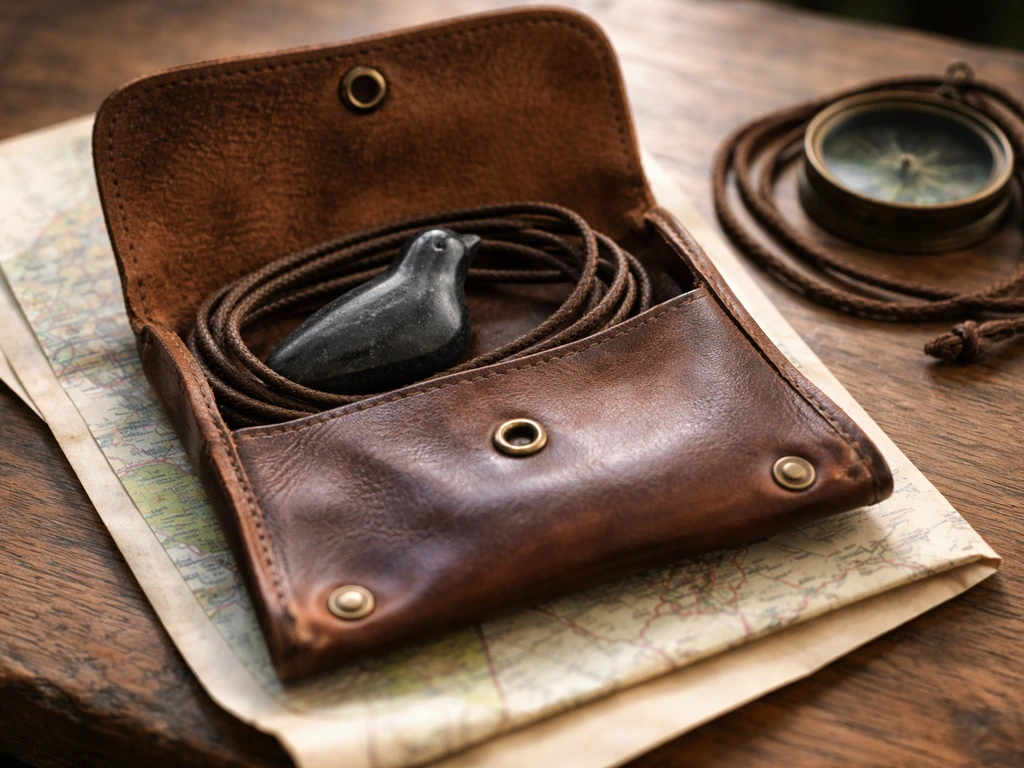
Birds that nest, watch from heights, or migrate through danger have long been seen as protective figures. A bird stone carried or worn was believed to extend that protection to the person holding it. Hawk and eagle imagery appears in protective amulets across Indigenous North American, Egyptian, and Celtic traditions precisely because these birds are vigilant, powerful, and associated with the sky realm where spirits and deities move.
Luck and fortune
Birds have been read as omens since ancient times. The Greek practice of ornithomancy (reading omens from birds' flight and cries) and Roman augury (where priests called augurs interpreted birds' behavior for guidance on major decisions) both reflect a deep cultural belief that birds carry messages about what's coming. A stone with bird imagery was a way of keeping that luck-signaling energy close. Swallow stones, for instance, were historically associated with good fortune in sea travel, drawing on the swallow's role as a sign of land and safe return.
Guidance and spiritual messages
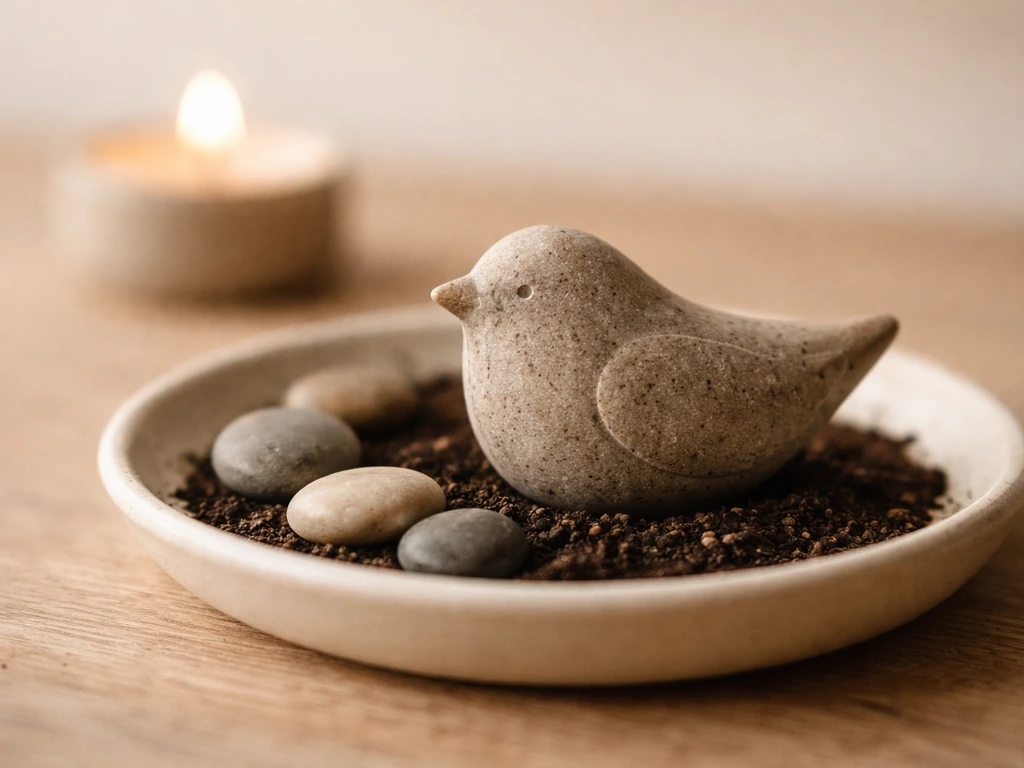
Birds move between earth and sky, which is why so many traditions treat them as intermediaries between the human and spirit worlds. A bird stone used for guidance is essentially a portable version of that idea: a physical anchor for asking, listening, or receiving. In practice, people use these stones during meditation, decision-making, or periods of transition, holding them as a prompt to stay open to signs or inner knowing.
Healing and grounding
Some bird traditions carry specific healing associations. The crane, for example, appears in Japanese and Celtic healing lore. Hummingbirds are connected in some Native American traditions to joy and the restoration of energy. A bird stone tied to one of these species may be used with healing intent, though it's worth being direct here: stones don't treat illness. Their role is symbolic and psychological, offering focus, comfort, and a framework for meaning during difficult times.
Why birds make powerful stone imagery
To understand why bird stones carry the symbolism they do, it helps to understand what birds represent at a foundational level. Flight is the obvious one: the ability to rise above ordinary perspective, to see the larger picture, to move freely between realms. Feathers, which fall from birds and land in our path, have been interpreted across cultures as messages, blessings, or signs from the deceased. Nesting behavior connects birds to home, return, and nurturing. And specific bird calls, flight patterns, and appearances have carried omen significance in nearly every major civilization on record.
When a stone is carved or shaped into bird form, it isn't just decorative. In symbolic thinking, the form carries the meaning. The stone becomes a materialized version of flight, of the messenger, of the watcher. That's the logic behind bird stones in spiritual practice, and it's the same logic behind carved amulets in Egyptian, Celtic, and Mesoamerican traditions.
The idea that a stone image can 'carry' meaning connects naturally to related symbolic thinking: the two-headed bird, for instance, appears in traditions where double awareness or watching in multiple directions was considered a spiritual quality. The two-headed bird meaning is often tied to heightened awareness, protection, and the idea of watching in more than one direction. And the concept of 'two stones, one bird' in symbolic interpretation reflects a similar interest in how physical objects anchor and concentrate symbolic energy.
How to interpret a bird stone you have right now
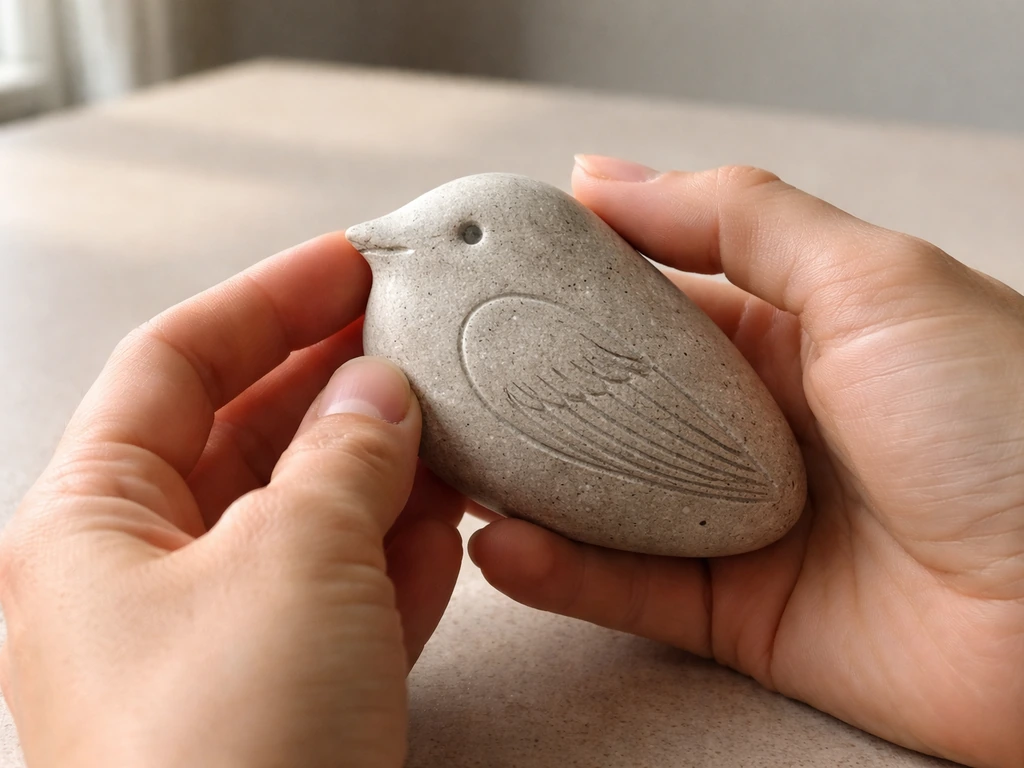
If you're holding a bird stone and trying to figure out what it means for you personally, here's a practical approach:
- Identify the bird species or imagery. Is there a specific bird carved or depicted, or is it a general bird shape? If there's a clear species (hawk, owl, swallow, heron, raven, cardinal), start with that bird's symbolic meaning, because the species matters enormously. A hawk stone carries entirely different associations than a dove stone.
- Look at the imagery beyond the bird. Are there feathers? Wings in flight? A nesting posture? A bird calling or watching? Each of these has distinct symbolic weight. Flight imagery emphasizes freedom, perspective, and transition. Nesting imagery emphasizes home, return, and protection. Feather motifs suggest messages and connection to something beyond the physical.
- Note where it came from and what you were told. A bird stone passed down in a family carries the meaning given to it in that lineage. One bought at a market carries the meaning you assign or the cultural tradition it represents. One that appeared unexpectedly in your life (found, gifted) may feel like an omen in itself. Context shapes interpretation.
- Cross-reference the bird's meaning across the relevant tradition. If your stone came from a Native American source or carries that aesthetic, research the specific nation's relationship with that bird, not a generic pan-Indigenous reading. If it comes from a Celtic or Norse context, look there. Broad spiritual 'meaning of birds' sources can be a starting point, but specificity matters.
| Bird Imagery | Common Symbolic Purpose | Associated Tradition(s) |
|---|---|---|
| Eagle/Hawk | Protection, vision, power, spiritual authority | Native American, Egyptian, Celtic |
| Owl | Wisdom, death omens, transition, hidden knowledge | Greek, Roman, many Indigenous |
| Raven/Crow | Messages, trickster energy, prophecy, death/rebirth | Norse, Celtic, Northwest Coast Native |
| Swallow | Safe return, luck at sea, fidelity, new beginnings | European folk, Mediterranean |
| Heron/Crane | Patience, healing, longevity, self-reliance | Celtic, Japanese, Chinese |
| Dove | Peace, love, divine messenger, purity | Christian, Greek, Near Eastern |
| Cardinal | Good luck, visitations from the deceased, vitality | North American folk, Christian |
| Hummingbird | Joy, resilience, love, energy restoration | Indigenous Americas |
| Feathers (general) | Spirit messages, blessings, connection to the divine | Widespread cross-cultural |
Using a bird stone: ritual and everyday practice
There's no single correct way to use a bird stone, and anyone who tells you otherwise is selling certainty that doesn't exist in this territory. What does matter is intentionality and respect.
Setting your intent
Before using a bird stone as a talisman or meditation focus, spend a moment being clear about what you're asking of it symbolically. Are you seeking protection on a journey? Clarity on a decision? Comfort during grief? The stone doesn't do anything on its own; it's a focal object for your own awareness and intention. The practice of consciously naming your intent before working with a symbolic object is common across traditions for good reason: it makes you articulate what you actually need.
Everyday carrying and placement
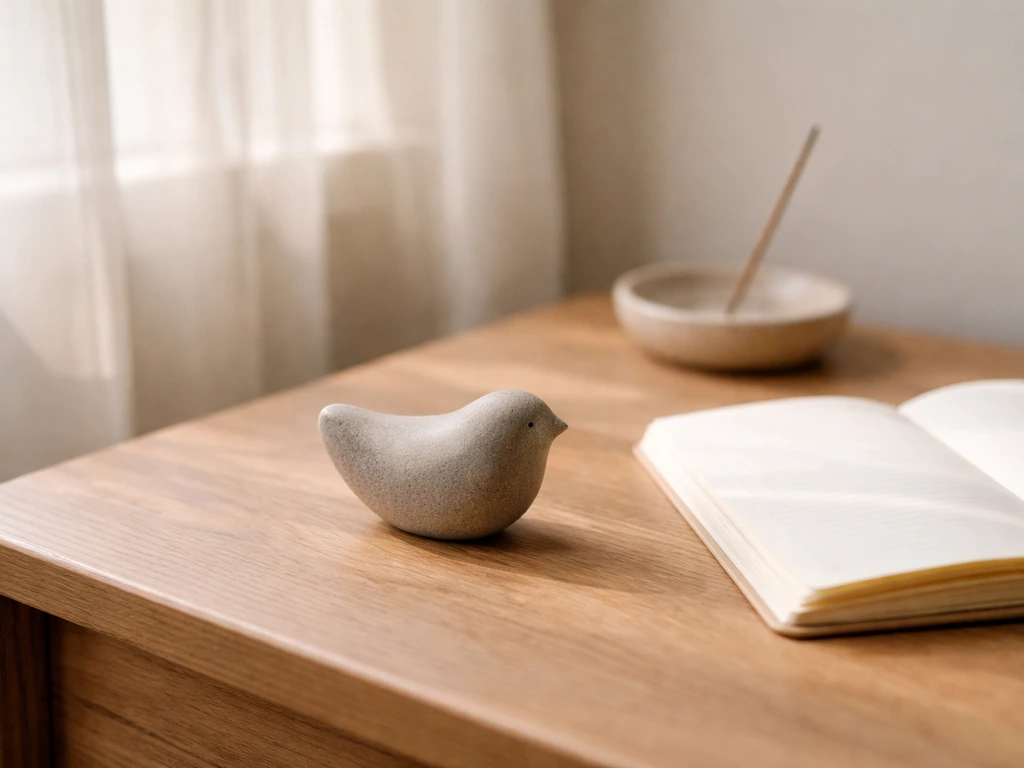
Many people keep a bird stone in a pocket, on a desk, or near a window, especially if the bird associated with the stone is one they watch for in nature. This creates a sensory connection between the symbol and the living bird, reinforcing the meaning each time you see one in the wild. If your stone is associated with owls, keeping it near where you work at night has a different resonance than keeping it in a garden.
Ritual use
For more formal ritual contexts, bird stones can serve as altar objects, meditation anchors, or part of ceremonies marking transitions (travel, grief, new phases of life). If the stone comes from a specific cultural tradition, using it within that tradition's framework is the most respectful and most coherent approach.
A note on healing claims
Some sellers and practitioners frame bird stones as having healing properties for specific physical conditions. Approach these claims carefully. Symbolic and spiritual practices can support wellbeing, offer comfort, and help people feel grounded, but they don't treat illness. If someone is making medical claims about a stone, that's a red flag regardless of how beautiful the symbolism is.
Cultural context and why the meaning varies so much
One of the honest things to say about bird stones is that there is no single, universal meaning. The prehistoric birdstones of eastern North America remain genuinely mysterious: archaeologists have proposed atlatl weights, amulets, insignia, and ceremonial objects as possible functions, with no firm consensus. The Museum of Stone Tools describes their function simply as 'unknown.' Scholars studying birdstones through semiotics have argued that treating them as straightforward symbol objects misses how complex and ambiguous these artifacts actually are. As you dig into how meanings vary, you may also like the bird revelation explained for a clearer, adjacent way of framing what people assume these symbols are doing.
What this means practically is that when you read that a birdstone was 'used for protection' or 'carried for luck,' you're reading an interpretation, not a documented fact from the original makers. That doesn't make the interpretation wrong or useless. It means you're participating in a living process of meaning-making that has always surrounded these objects, rather than receiving a fixed ancient truth.
Cultural variation matters enormously. A raven stone in a Northwest Coast Indigenous context carries the weight of Raven as creator and trickster, a figure central to entire cosmologies. A raven stone in a Norse-inspired practice carries different associations. A generic 'raven stone' sold online with no cultural attribution carries whatever the buyer brings to it. None of these is inherently more valid, but they're not interchangeable, and being clear about which tradition you're drawing from makes your interpretation more grounded and more honest.
It's also worth noting that bird symbolism itself shifts significantly across traditions. The same bird can be a death omen in one culture and a guide to rebirth in another. The phoenix is the clearest example: a bird whose purpose is transformation through destruction, with versions in Egyptian, Greek, Chinese, and other mythologies that differ in important ways. Acknowledging that range is part of working with bird symbolism responsibly.
How to figure out the right interpretation for your stone
If you're genuinely trying to understand what a specific bird stone means in your situation, work through these steps:
- Trace the source. Where did the stone come from? A family heirloom, a specific cultural tradition, a shop, a dig, a gift? The source gives you the most important clue about which interpretive framework to apply.
- Identify the bird or imagery precisely. Don't stop at 'it looks like a bird.' If you can identify the species or the specific posture (flying, nesting, calling, watching), you have a much richer starting point for meaning.
- Research the specific bird in the specific tradition. Use sources tied to the culture the stone comes from. If it's a Native American birdstone, look at resources from the relevant nation or consult Indigenous scholars rather than relying on generic spiritual sources. If it's from a Celtic tradition, look at Celtic mythology and folklore.
- Ask what question you're bringing to it. Bird stones, like all symbolic objects, function partly as mirrors. The meaning that resonates for you often reflects something you already sense or need. That's not a reason to dismiss the symbolism; it's how symbolic objects actually work.
- Hold the interpretation loosely. The meaning of a bird stone can shift over time as you work with it and as your circumstances change. Scholars are still debating the function of birdstones made thousands of years ago. You don't need to arrive at a final, fixed answer.
The core purpose of a bird stone, across most of the traditions where they appear, is to keep the symbolic power of birds accessible in a portable, tangible form. That purpose is as alive now as it was when the first person shaped a piece of stone into a bird and carried it somewhere they needed help. Some people also connect bird-related symbolism with the broader idea of prosperity and cultural flourishing, asking which empire made India feel like a golden age. A similar idea appears in modern stories like The Good Lord Bird telegram, where messages and symbolism are carried through the world in transit portable, tangible form.
FAQ
How can I tell whether a bird stone was meant as a talisman or something else?
If you are using one for spirituality, treat it as a symbol you relate to through intention. For archaeology, its “purpose” is not established in a single way, so avoid assuming it was definitely amuletic or ceremonial just because it includes bird imagery.
What should I do if my bird stone has no cultural origin or description?
Because meanings are tradition-specific, the safest choice is to research the bird species, the cultural attribution, and any associated symbols before assigning a purpose. If the stone is sold generically with no provenance, consider it a personal-symbol object rather than a direct carryover of someone else’s sacred practice.
Can bird stones actually heal illness?
Yes, but use it as a meaning framework, not a replacement for medical care. If a seller claims the stone “treats” conditions, consider that a red flag, especially if they suggest stopping medication or delaying diagnosis.
Why do the meanings change for the same bird species?
A common mistake is thinking the “bird equals one fixed meaning.” In reality, the same bird can symbolize protection, danger, grief, or transformation depending on context. Focus on the specific bird (for example, raven versus swallow) and the tradition you are drawing from.
What is the best way to use a bird stone for guidance?
Before using it, set a clear intention in plain language (for example, “support me with calm during a decision” or “help me feel guided on travel”). Then use it consistently in a routine (like a short hand-holding meditation), because repeated intentional use strengthens the psychological and symbolic effect.
Is there a correct place to keep a bird stone for protection or luck?
Bird stones are sometimes treated like “directional” tools (watching, protection, messages). If your practice feels that way, you can align your sitting position or place the stone near a relevant area (desk for work clarity, entryway for travel protection), but keep it about your intention rather than a guaranteed effect.
What does a two-headed bird on a stone usually mean?
If your stone includes a two-headed bird, it is often read as heightened awareness or watching in multiple directions. However, that interpretation is still symbolic, so confirm it with the tradition or iconographic context of the object before treating it as a definitive meaning.
How do I know if my bird stone practice is actually helping?
Many people over-commit emotionally or treat outcomes as proof the stone is “working.” A better approach is to track your experiences (calmer focus, clearer decision-making, reduced rumination) rather than expecting specific events to confirm the stone’s purpose.
Is it respectful to use a bird stone from another culture in my own rituals?
If the stone was made for ritual use in a specific community, adopting the “exact ritual” without understanding the context can be disrespectful. A respectful alternative is personal, non-exclusive symbolism (meditation, reflection, intention setting) while avoiding claims of cultural authority.
What are smart ways to interpret a bird stone when information is limited?
Don’t rely on general internet descriptions alone. Look for at least one concrete detail you can verify (species, material, carving style, provenance, or documented context). When details are missing, treat the meaning as interpretive and personal rather than factual.
Next Articles

Which Empire Made India Golden Bird Claim: How to Verify
Check which empire is tied to India’s Golden Bird claim, confirm sources, and separate legend, history, and symbolism.
Two-Headed Bird Meaning: Symbolism, Omens, and Spiritual Messages
Two-headed bird meaning explained through mythology, religion, and modern symbolism, with questions to interpret your me

What Bird Represents Jesus? The Dove and Other Common Symbols
Find the Christian bird symbol of Jesus: the dove and its link to the Holy Spirit, plus common alternatives and how to v