The bird most commonly used to carry messages is the pigeon, specifically the homing pigeon (also called the carrier pigeon). This is the answer whether you are working through a trivia question, a history assignment, or trying to trace the roots of a symbolic encounter with a pigeon today. Homing pigeons were used for thousands of years to relay written messages, and their role in both World Wars is extensively documented. Britannica describes carrier pigeons (homing pigeons) as being used to relay news and specifically notes their message-carrying role in the two World Wars, including relaying major news events carrier pigeons (homing pigeons) used to relay news in the two World Wars. If someone says 'messenger bird,' a pigeon is almost always what they mean.
Which Bird Was Used to Carry Messages and Why


The messenger bird people usually mean: the homing pigeon

Homing pigeons and carrier pigeons are the same bird described from two different angles. 'Homing pigeon' describes the bird's biological ability to find its way home across hundreds of miles. 'Carrier pigeon' describes the job it was given: carrying a message capsule strapped to its leg or body. Britannica documents their use as far back as ancient Greece and Persia, and traces a continuous line of use through government postal systems and military operations up through the twentieth century.
One of the most famous individual examples is Cher Ami, a homing pigeon serving with the U.S. Army Signal Corps in World War I. Cher Ami delivered a message through heavy enemy fire that helped rescue the members of the U.S. Lost Battalion in the Argonne Forest in 1918. The bird was wounded during the flight but completed the mission. Cher Ami later received the Croix de Guerre from France and became one of the most decorated animal veterans in history. That single story captures everything that made the carrier pigeon so valued: reliability, homing instinct, and the ability to move through terrain that no human runner could safely cross.
Why pigeons were trusted with messages: the science behind the homing instinct
Pigeons were not chosen arbitrarily. Their use for message carrying is built on a genuine navigational ability that researchers have studied for decades without fully explaining it. Homing pigeons use a combination of the Earth's magnetic field, the position of the sun, and local landmark memory to navigate back to their home loft even when released from an unfamiliar location hundreds of miles away. The U.S. Army Signal Corps dedicated an entire technical manual to the selection, breeding, training, and care of homing pigeons for military communications, treating the birds with the same operational seriousness as radio equipment.
The practical system worked like this: a pigeon is raised at a home loft, transported to another location, loaded with a message, and released. It flies home. The message arrives at the home loft. This one-way design meant pigeons were most useful in situations where a field unit needed to send news back to headquarters rather than receive it. Military handlers managed flocks carefully, selecting birds for speed, stamina, and reliable return rates. The 1911 Encyclopaedia Britannica's entry on 'Pigeon Post' describes organized government pigeon post systems in multiple countries, showing this was not informal folk practice but a structured communications infrastructure.
Other birds that have been called messengers through history

Pigeons dominate the factual historical record, but they are not the only birds associated with carrying messages. Other species appear in mythology, folklore, and cultural symbolism as messengers, and understanding those traditions matters if you are trying to interpret a symbolic or spiritual encounter rather than answer a history question.
| Bird | Messenger Role | Cultural Context |
|---|---|---|
| Pigeon / Homing Pigeon | Physical message carrier; military and postal use | Ancient Persia, Greece, Rome, WWI and WWII military forces worldwide |
| Dove | Symbol of divine messages and peace; related to the pigeon family | Biblical tradition (Noah's ark, Holy Spirit); Christianity broadly |
| Raven | Mythological messenger and omen | Norse mythology (Odin's ravens Huginn and Muninn); Celtic and Indigenous traditions |
| Ibis | Associated with Thoth, god of writing and communication | Ancient Egyptian religion and hieroglyphic culture |
| Swallow | Symbol of messages from distant places; return and homecoming | Maritime folklore; sailors saw swallows as signs of nearby land |
| Eagle | Divine messenger between sky and earth | Greek mythology (Zeus's bird); Native American sacred messenger traditions |
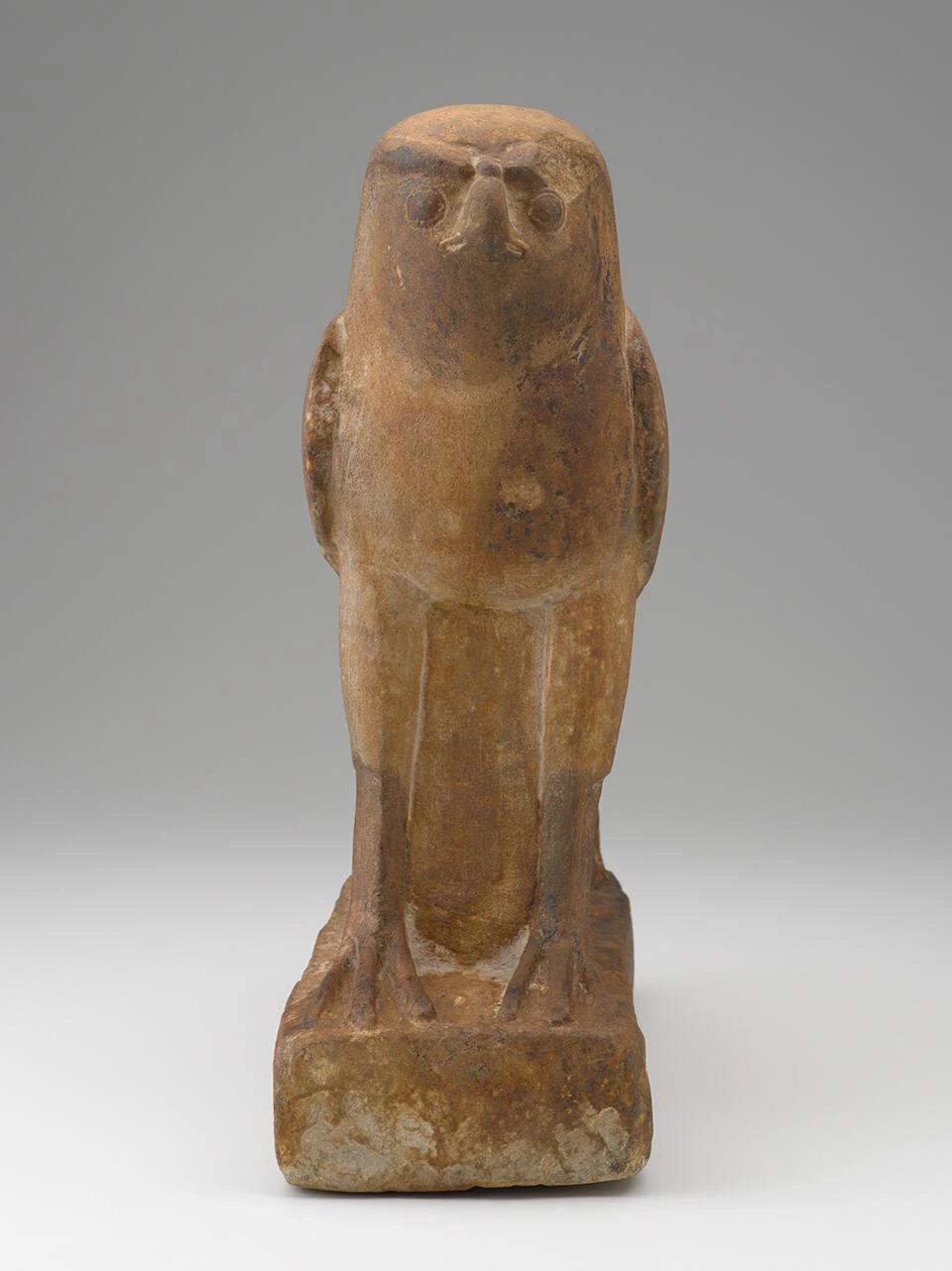
The ibis deserves a special note here given how closely it connects to the broader Egyptian bird symbolism tradition. In Egypt, the so-called Saqqara bird is discussed in connection with sacred or symbolic communication in the wider tradition of ancient Egyptian bird imagery Egyptian bird symbolism. In Egyptian mythology, an ibis is often associated with the god Thoth and sacred communication, which is why this bird frequently appears in discussions of Egyptian messenger symbolism Egyptian bird symbolism tradition. In Egyptian myth, Horus is often associated with the idea of a sacred messenger bird through this wider symbolism Egyptian bird symbolism tradition. The sacred ibis was the earthly symbol of Thoth, the Egyptian god of writing, wisdom, and communication. If you are exploring the spiritual dimension of birds as messengers of knowledge, that connection runs deep and predates the carrier pigeon by millennia. Similarly, Odin's twin ravens Huginn (Thought) and Muninn (Memory) were sent out each day to gather information and return it to him, making them divine intelligence carriers in the truest symbolic sense.
How to pin down the right answer for your specific question
If you are fact-checking a trivia answer, history question, or crossword clue, the terms to search are 'carrier pigeon history,' 'homing pigeon military use,' or 'pigeon post.' These will lead you to Britannica, encyclopedic military history sources, and documented examples like Cher Ami. Avoid confusing the following terms, which are sometimes used interchangeably but have distinctions worth knowing: If you meant the term itself, a syrinx definition bird answer points you to the bird anatomy behind sound production, which is a different but adjacent angle to the messenger-bird idea.
- Homing pigeon: describes the bird's navigational ability and breed type
- Carrier pigeon: describes the operational role of a homing pigeon carrying a message
- Messenger pigeon: a general term used in military and government contexts, effectively synonymous with carrier pigeon
- Dove: a culturally and religiously weighted name for certain pigeon species, particularly the rock dove or white dove, more often referenced in symbolic contexts than operational ones
If your question comes from a symbolic or spiritual context (a bird you saw, a dream, a piece of art), the answer may be less about the factual carrier pigeon and more about which bird tradition you are drawing from. In that case, search for the specific species combined with 'symbolism,' 'spiritual meaning,' or the cultural tradition you are interested in, such as 'dove biblical meaning' or 'raven Norse mythology messenger.' Primary sources to trust include Britannica for historical claims, academic texts on mythology for cultural associations, and scripture or traditional oral accounts for religious interpretations.
What the messenger bird means symbolically across traditions
The pigeon and dove family carry some of the richest symbolic freight of any bird grouping, precisely because of their long history as literal message carriers. When a symbol and a practical role align this closely, the meaning tends to run very deep.
The dove in biblical tradition
In the Hebrew Bible, the dove Noah releases from the ark returns with an olive branch, a physical message that the floodwaters have receded and safe land exists. That single image has shaped the dove's symbolic meaning across Western culture for thousands of years: the dove carries news of hope, survival, and divine mercy. In the New Testament, the Holy Spirit descends in the form of a dove at the baptism of Jesus, extending the bird's symbolic identity from earthly messenger to divine presence. These are not casual associations. They are foundational images embedded in one of the world's most widely read texts.
Peace, reliability, and homecoming

Outside of scripture, the pigeon and dove are associated with peace internationally, partly because of that olive branch image and partly because of their non-predatory, communal nature. The carrier pigeon specifically is associated with reliability and faithfulness: the bird that always comes home, no matter what. In a wartime context, soldiers attached enormous emotional significance to pigeons because a returning bird literally meant that someone on the other side was still alive and needed help. That kind of bond between humans and birds tends to generate symbolic weight over time.
The raven as a darker messenger
Contrast the pigeon's warmth with the raven's more ambiguous reputation. Odin's ravens are intelligent and tireless, but they carry information about death, war, and the fate of men, not reassurance. In many Indigenous traditions of the Pacific Northwest, Raven is a trickster whose messages transform and disrupt rather than comfort. A raven appearing as a 'messenger' in these frameworks means something is about to change, not that all is well. This comparative framing matters when you are trying to interpret a symbolic bird encounter: the species matters enormously.
Egyptian connections: the ibis and sacred communication
In ancient Egyptian religion, the ibis was the living symbol of Thoth, the god credited with inventing writing, hieroglyphics, and the measurement of time. The ibis does not carry physical messages but represents the very concept of recorded communication and divine knowledge. If the carrier pigeon is the practical messenger, the ibis is the sacred scribe: both are birds associated with the transmission of meaning, just in different registers. This tradition connects naturally to broader questions about Egyptian bird symbolism and the role of birds in hieroglyphic writing, where birds appear as some of the most complex and layered glyphs in the entire system. If you are looking at Egyptian bird hieroglyphs, the bird’s placement and context often determine its specific bird hieroglyph meaning hieroglyphic writing.
What this means for you personally
If you landed on this question because of a factual curiosity, you have your answer: the carrier pigeon, specifically the homing pigeon, is the bird used to carry messages throughout documented history, and that role is well evidenced from ancient Persia through the World Wars. But if something drew you to this question with a more personal or spiritual edge, the symbolism is worth sitting with.
A pigeon or dove showing up in your life, in a dream, or in a piece of art you cannot stop thinking about has historically been read as a sign connected to communication, news arriving or needing to arrive, reliability through difficulty, and the possibility of homecoming after a long journey. These are not shallow readings. They are drawn from thousands of years of human observation of a bird that genuinely returns home no matter how far it has traveled.
Ask yourself what message you might be waiting for, or what message you have been carrying that has not yet been delivered. The carrier pigeon does not wait to be told the way home. It simply knows. That quality, the instinct to return, to complete the journey, to bring news through any obstacle, is what the messenger bird has always represented in the human imagination, and it is worth reflecting on when one crosses your path.
Next steps if you want to go deeper
- If your interest is historical: Search 'carrier pigeon WWI,' 'Cher Ami history,' or 'pigeon post encyclopedia' for well-sourced factual accounts.
- If your interest is biblical or Christian symbolism: Look into the dove's appearances in Genesis and the Gospels, and explore the broader tradition of the dove as the Holy Spirit.
- If your interest is Egyptian: Explore the ibis and its connection to Thoth, and consider how birds function within Egyptian hieroglyphic writing as a whole. The Saqqara bird and Egyptian bird symbols are a fascinating adjacent territory.
- If your interest is Norse or Celtic: Research Odin's ravens and the role of corvids as divine messengers in northern European traditions.
- If your interest is a personal encounter: Note the species of bird you saw, the circumstances, and the direction it was traveling. Symbolism is most meaningful when grounded in the specific details of your actual experience.
FAQ
Are carrier pigeons and homing pigeons different birds, or just different names?
They are the same general type of bird, described by different emphasis. “Homing pigeon” refers to training and the bird’s ability to navigate back to its home loft, while “carrier pigeon” refers to the job of carrying a capsule to be delivered.
Do pigeons carry messages both ways, or were they mainly used for one-way delivery?
Historically they were most often used one-way communication, from field locations back to a headquarters or home loft. If you need two-way messaging, you would typically use a separate second group with a different home loft, or switch to other communication methods.
How did handlers prepare a pigeon so it could find its way from unfamiliar areas?
They raised birds at a home loft, then released them from distances and conditions meant to test and build reliable homing behavior. Selection and training focused on speed, stamina, and consistent return rates, not just general “flying ability.”
What would happen if a pigeon could not find its home loft?
In practice, failure could occur due to weather, release errors, injuries, predation, or simply too much disorientation. That is one reason military use emphasized careful selection and repeated handling procedures, since reliability was the whole point.
Were message-carrying pigeons used to transmit spoken audio or only written notes?
They were typically used for written notes or small message capsules, strapped to the leg or body. Their advantage was stable delivery by navigation, not real-time audio communication.
Can I trust the “pigeon post” idea as an actual organized communications system, not just folklore?
Yes, the term “pigeon post” refers to organized, structured systems in multiple places. The key is whether the account you are reading describes formal routes, managed flocks, and scheduled operations, rather than casual or improvised use.
If I’m answering a crossword or trivia question, what wording is most likely to be accepted?
“Carrier pigeon” and “homing pigeon” are the safest answers for the historical messenger-bird concept. If the clue is very general, “pigeon” may also be accepted, but “homing pigeon” is more precise for the documented navigation-based role.
Which other birds show up as “messengers” in culture, and how do I avoid mixing up symbolism with facts?
The most common mix-ups come from treating symbolic messenger birds like ravens or ibises as literal carrier birds. A good check is whether the text discusses physical message delivery with trained return behavior, or instead discusses mythology, writing symbolism, or spiritual meaning.
Does an ibis represent practical message delivery the way a pigeon does?
No. In the Egyptian tradition discussed in the article, the ibis is strongly linked to Thoth and recorded communication, it represents the concept of knowledge and writing more than it served as a literal postal carrier.
In a religious or spiritual interpretation, how should I decide whether to focus on dove versus pigeon?
Dove associations often connect to specific scriptural images and peace symbolism, while pigeon-based readings often emphasize homecoming and reliability. If the context mentions Noah, baptism, or olive imagery, dove symbolism is usually the more appropriate direction.
What is the safest way to fact-check a claim that a specific “messenger bird” carried messages in a particular event?
Look for details that match a delivery setup: a named unit or organization, a time period, the message type (capsule or written note), and evidence of release and return to a specific loft or destination. Vague claims without those operational clues are more likely to be legend or symbolic retelling.
What Egyptian God Is a Bird Head? Identify and Meaning
Horus, the hawk headed Egyptian god, and other bird headed deities, with icon clues, meanings, and how to identify them.