
Cranes are one of the most consistently lucky birds across human cultures, carrying associations with longevity, good fortune, balance, and clear intention in traditions spanning Japan, China, Korea, ancient Greece, and Native American nations. If you just saw a crane and felt that tug of "that meant something," you're not imagining it. But what it means specifically depends heavily on context: where you were, what the crane was doing, how many you saw, and what's happening in your life right now. This guide breaks all of that down so you can walk away with a real interpretation, not just a vague "cranes are lucky" reassurance.
Crane Bird Good Luck Meaning and How to Apply It Today

Eleanor Hartwell
4 May 2026
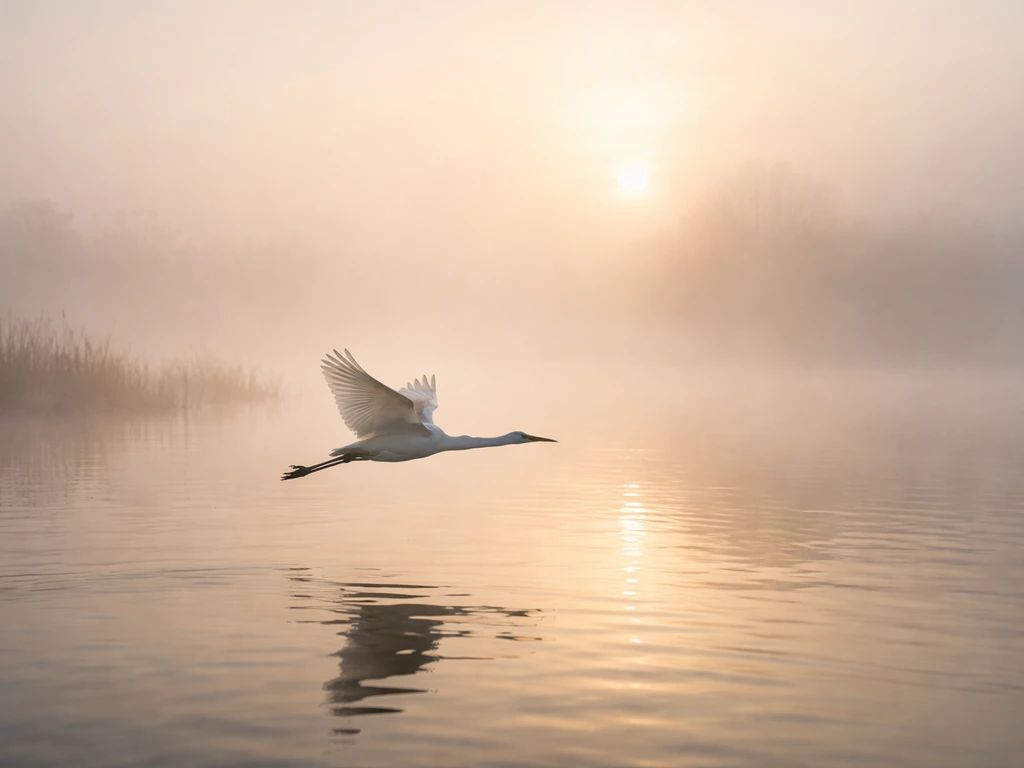
Crane symbolism across cultures: mostly good, but nuanced
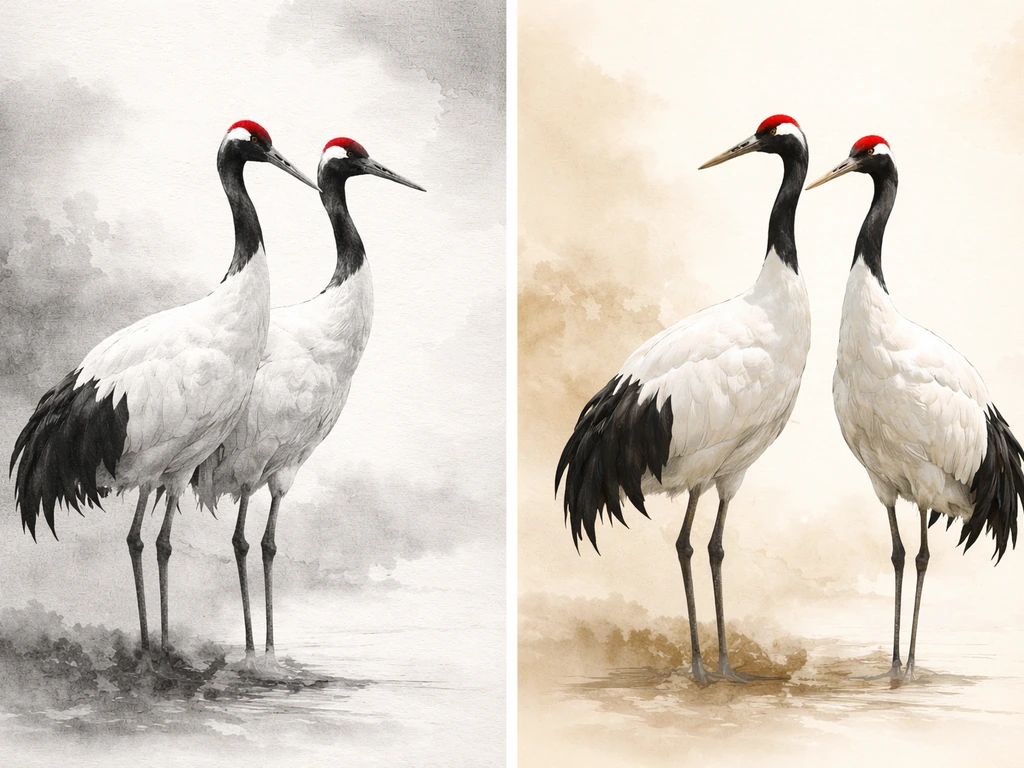
The crane's reputation as a lucky, auspicious bird is ancient and remarkably consistent. blank" rel="noopener noreferrer">In Japan, the crane (tsuru) is one of the most celebrated symbols of good fortune and longevity. The tradition of senbazuru, folding one thousand origami cranes (千羽鶴), grew from a belief that completing the task earns the folder a wish, often for health, long life, recovery from illness, happiness in marriage, or success. What's important to understand about this tradition is that it's framed as hope and perseverance, not a transactional guarantee. The act of folding itself, patient, repetitive, and intentional, is part of the meaning. In modern practice, senbazuru has expanded to symbolize world peace and collective healing, which tells you something about how the crane's symbolic range has grown over centuries.
In Chinese tradition, the crane is associated with immortality, wisdom, and the energy of heaven. Taoist sages are often depicted riding cranes as they journey to enlightenment, which connects the bird directly to spiritual ascent and refined purpose. Korean culture similarly holds the crane as a symbol of noble character and long life. In ancient Greece, cranes were linked to Apollo and the arrival of favorable weather. Native American traditions vary by nation, but many connect cranes to leadership, communication, and the ability to navigate between worlds. The crane's physical characteristics feed directly into these meanings: it stands still and patient for long periods, it flies at extraordinary heights, it performs elaborate courtship dances, and it returns to the same nesting grounds year after year.
Where you do find caution in crane symbolism is in a handful of European folk traditions, where large wading birds were sometimes read as omens of change rather than straightforward luck, particularly when seen flying over a home before a major life shift. But even these interpretations aren't "bad luck" so much as "change is coming." The crane rarely carries a dark omen in any tradition the way some other birds do. So while it's worth knowing the full picture, the overwhelmingly dominant symbolic weight of a crane encounter leans toward something positive: clarity, longevity, patience rewarded, or a fortunate turn ahead.
What a crane "good luck" sign can mean in everyday encounters
When a crane shows up in your life in a way that feels significant, the most common interpretations center on a few core themes. A crane sighting often signals that patience is about to pay off. This comes directly from the bird's behavior: cranes are famously still and watchful hunters, standing motionless for long stretches before striking. If you've been waiting on something, a job decision, a relationship question, a health concern, the crane may be reflecting that your stillness has been purposeful, not passive, and that movement is coming.
Cranes also appear as symbols of balance and partnership. They mate for life in many species and perform synchronized dances with their partners, which makes them a natural symbol for relationship harmony. If your crane encounter happened during a time of tension in a close relationship, the symbolism may be pointing you toward the value of coordinated effort and long-term commitment rather than quick fixes. On a personal level, crane energy is often read as an invitation to refine your intentions: to be clear about what you actually want before acting on it, not reckless or impulsive. That's a form of luck that comes from within, not from external forces.
The deeper spiritual layer: flight, longevity, balance, and purity of intention
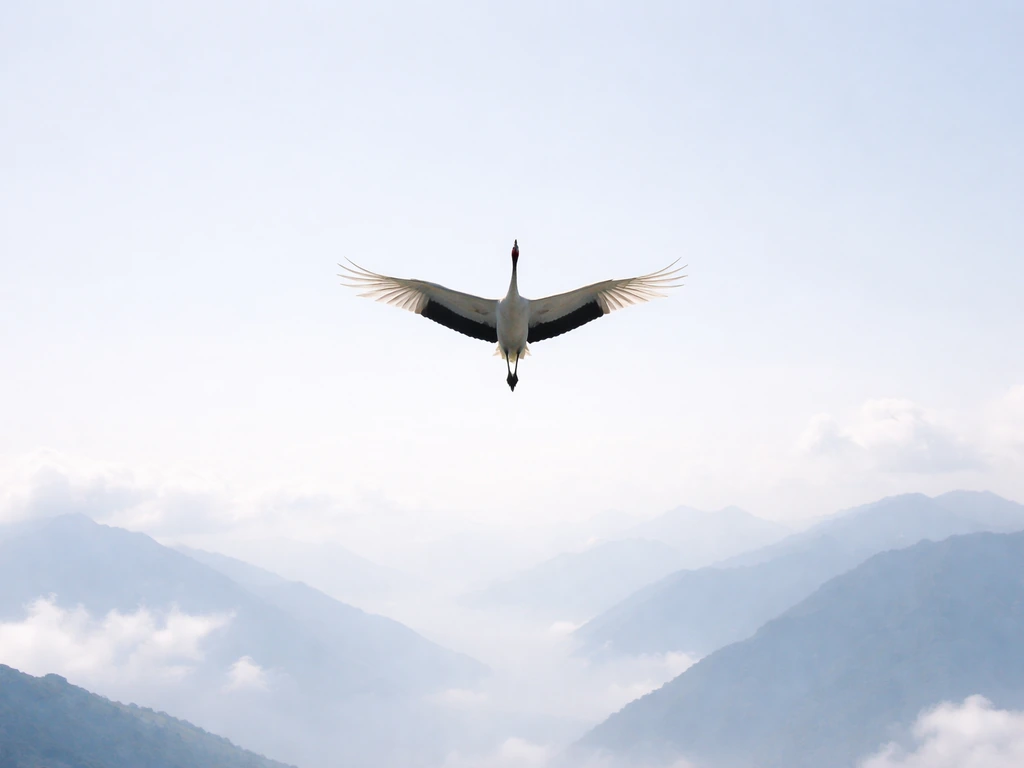
Cranes fly at remarkable heights, sometimes crossing mountain ranges during migration. That physical reality maps directly onto their spiritual symbolism. Height represents perspective, the ability to see a situation from above rather than being stuck in the ground-level noise of it. When a crane appears in a spiritual context, it often carries an invitation to elevate your viewpoint. What does this situation look like from a longer distance? What would you see if you weren't so close to it?
Longevity is another pillar. Cranes live for decades, some species reaching 20 to 30 years in the wild, and they're among the oldest bird species on Earth in terms of evolutionary history. Cranes are also described as long-lived birds in the mythology and symbolism discussions in Crane (bird) blank" rel="noopener noreferrer">Cranes live for decades. In symbolic terms, this translates to patience as a virtue, the idea that the good things in your life are built over time, not seized in a moment. If you're feeling rushed or pressured into a decision, a crane encounter is a gentle push back toward the long view.
The concept of purity of intention runs through nearly every culture's crane symbolism. In Taoist thought, the crane represents the cultivated soul, one that has refined its desires down to what truly matters. This doesn't mean being passive or detached. It means being honest with yourself about what you want and why, before you reach for it. That quality of intentionality is what makes the crane's "luck" feel different from pure chance. It's less about fate dropping something in your lap and more about being clear-headed enough to recognize and act on the right opportunity when it arrives.
Reading context: where, when, and how you saw the crane
The circumstances of your encounter matter considerably. Here's how to read the most common variables:
| Context | Common symbolic reading |
|---|---|
| Crane near water (river, lake, wetland) | Emotional clarity, intuition, going with the natural flow of things rather than forcing outcomes |
| Crane near your home or yard | Domestic blessing, long-term stability, good omens for family and household matters |
| Crane on a road or in transit | A journey (literal or metaphorical) is aligned, movement forward is supported |
| Crane flying overhead | Elevated perspective needed, big-picture thinking, spiritual connection to higher guidance |
| Crane standing completely still | Patience is the right move right now, wait and watch before acting |
| Crane dancing or displaying | Partnership energy, relationship matters are highlighted, or a joyful new phase beginning |
| Pair of cranes together | Partnership, commitment, balance between two people or two parts of yourself |
| Single crane | Self-reliance, personal refinement, a solo journey that will strengthen you |
| Crane in the morning | Fresh starts, new intentions, good time to begin something you've been putting off |
| Crane in the evening | Reflection, closure, gratitude for what's been built |
| Crane in spring or summer | Growth, renewal, active forward movement |
| Crane in autumn or winter | Patience, preservation, tending to what matters most during a quiet period |
Dreams follow a similar logic. A crane flying freely in a dream generally signals expansion and good fortune ahead. A crane that appears injured or struggling may be pointing to a situation in your waking life that needs careful attention before it becomes a larger problem. A crane that simply watches you calmly often represents inner wisdom or a guide-like presence asking you to slow down and listen.
Practical ways to work with crane energy today

You don't need elaborate rituals to engage meaningfully with crane symbolism. In an r/origami thread about the blank" rel="noopener noreferrer">1000 paper cranes (senbazuru) challenge, users share practical experiences such as how long it took them and which steps or materials were hardest. The most effective practices are simple, intentional, and grounded. Here are approaches that align with how crane energy actually works, through patience, clarity, and purposeful action:
- Set a clear intention: Cranes symbolize purity of purpose. Spend five minutes writing down, with real honesty, what you actually want from the situation you're in right now. Not what sounds good or what others expect, but what you genuinely want. This is the practical version of the crane's "refined soul" symbolism.
- Try a gratitude reflection: After a crane sighting, pause and acknowledge three things in your life that have taken time to build but now feel solid. This connects you to the crane's longevity energy and reinforces the idea that patience has already served you.
- Journal prompt: Ask yourself, "What would I see if I had the perspective of a crane flying above this situation?" Write for ten minutes without editing. This mirrors the crane's elevated flight symbolism and often surfaces insights you hadn't consciously accessed.
- Fold an origami crane: Even folding one crane (orizuru) rather than a thousand is a meditative act. While folding, hold your specific intention or wish in mind. The repetition and focus is the point, not the paper itself.
- Create a small nature offering: Leave water, seeds, or flowers near the area where you saw the crane (if accessible and appropriate to the location). This is a simple gesture of gratitude and acknowledgment rather than a request or transaction.
- Sit near water: Cranes are water-adjacent birds. If you have access to a river, pond, or even a quiet fountain, spend fifteen minutes there with the intention of listening rather than planning. Water settings amplify the crane's emotional clarity symbolism.
- Draw or find an image of a crane: Place it somewhere you'll see it daily for a week. Each time you notice it, let it remind you of your stated intention. This keeps the crane's energy actively present without requiring ongoing ritual.
None of these practices require you to believe in a strictly literal supernatural mechanism. They work because they direct your attention, encourage honesty with yourself, and build the kind of quiet clarity that the crane itself represents. That's a real and useful outcome regardless of how you frame it spiritually.
Common misconceptions about crane omens
The biggest mistake people make with crane symbolism, or any bird symbolism, is treating a sighting as a guarantee. Seeing a crane does not mean your wish will come true, your relationship will be saved, or your health scare will resolve itself. What it offers is a symbolic prompt: to be patient, to refine your intentions, to take the long view. The luck the crane represents is the kind you participate in, not the kind that happens to you.
A second common error is over-literalism about timing. Some people see a crane and immediately expect something lucky to happen within days. Crane symbolism doesn't operate on a deadline. The longevity theme cuts both ways: cranes are patient creatures, and so is the kind of good fortune they symbolize. If you're watching the horizon for an immediate sign that your wish came true, you'll likely miss the slower, more durable positive shift that's actually in motion.
A third misconception is that a lone crane is a bad sign compared to a pair. A single crane is simply different in emphasis, not lesser. It points to personal refinement and self-reliance rather than partnership. Many of the most profound crane symbolism traditions, including the single orizuru of Japanese origami, are centered on one crane, one wish, one person's focused intention. Don't layer negative meanings onto neutral variations.
It's also worth noting that not every crane you see carries a message. Sometimes a crane is wading in a marsh because that's where the fish are. The encounters that feel significant are the ones worth reflecting on: unusual timing, repeated appearances, a crane that seems to make sustained eye contact or behave in an unexpected way. If a sighting felt mundane, it probably was. You're not obligated to extract symbolism from every bird you notice.
This same grounded approach applies to other bird encounters people often interpret as luck signs. Like cranes, cardinals carry strong good-luck associations in many traditions, but context shapes meaning there too. If you also wonder whether a red bird is blowing a kiss good luck, treat it the same way: look for context, not guarantees, and use it to refine your intentions. If you are focused on cardinal bird good luck, treat it the same way as crane symbolism: look at context, not guarantees cardinals carry strong good-luck associations. And if you're drawn to good-luck bird symbolism more broadly, different traditions and species carry distinct symbolic weights that are worth comparing rather than treating as interchangeable. If you're curious about other regional good luck birds, Celtic traditions also include the belief in lucky bird omens good luck bird symbolism.
When to seek deeper support
Crane symbolism can be a genuinely useful framework for reflection, but it has a clear lane. If you like “bird on christmas tree good luck” style symbolism, you can use that same context check, focusing on where, when, and how the bird-themed image appears in your life. It helps you access clarity, shift your perspective, and stay patient during uncertain times. It is not a substitute for professional advice when you're dealing with serious health decisions, financial stress, legal situations, or relationship crises that require real-world action. If you found yourself searching "crane bird good luck" because you're anxious or overwhelmed and hoping for a sign that everything will be okay, that's worth noticing. The crane's message of purity of intention includes being honest about when you need human support, not just symbolic reassurance.
If you're drawn to deepen the spiritual side of this, many people find it useful to work with a spiritual director, a meditation teacher, or a practitioner from whatever tradition resonates with you, whether that's a Buddhist teacher familiar with crane symbolism in East Asian art, an indigenous cultural educator, or simply a trusted friend who takes symbolic meaning seriously. The crane has been a companion to human spiritual practice for thousands of years precisely because it models something worth emulating: stillness, patience, elevation, and the willingness to return, year after year, to what truly matters.
Use the encounter as a prompt, not a prophecy. Some people also connect this kind of symbolism to the celtic thunder bird without wings meaning, which is often discussed as a sign of hidden strength and protection. Take the practical steps you've been postponing. Clarify your intentions. Be patient with the timeline. And trust that showing up with that kind of clear, honest energy is already a form of making your own luck.
FAQ
If I saw a crane but I cannot remember what it was doing, how should I interpret it?
Focus on the most stable parts you can recall, such as whether it was near you, whether it was flying overhead or on the ground, and whether the moment felt calm or unsettling. Flying high often points to perspective and a wider viewpoint, while a crane wading or standing still points to patience and careful timing. If you truly remember nothing specific, treat it as a general prompt to slow down and clarify your next step rather than a prediction.
What if I saw more than one crane, but only briefly?
Multiple cranes usually strengthens the themes already present, like balance, partnership, or a longer timeline, but brief sightings typically indicate a passing reminder rather than an immediate “turn.” If you keep seeing cranes over several days or in different places, that repetition is a stronger signal to reflect and make a concrete plan, even if the outcome takes time.
Is it ever “bad luck” if the crane looked sick, injured, or unusual?
In most traditions, that is interpreted as a prompt for attention, not as doom. If the crane looked injured or struggling, consider it a metaphor to check what in your life is being neglected, then take practical steps (a conversation, a medical appointment, a systems check) before a small issue becomes larger.
Does the direction of flight or where it was seen matter?
It can help, but keep it grounded. Many people attach extra meaning when a crane appears over a home or near a workplace, yet the core message is still usually about change and timing rather than certainty. If you notice a consistent pattern (same time of day, same route, same area), that is more useful than trying to interpret every detail like a fixed code.
How long should I wait for “the lucky part” to show up after seeing a crane?
There is no reliable window, and rushing is a common mistake. Since crane symbolism often maps to longevity and patience, treat your sighting as guidance for sustained action. A practical approach is to pick one small, meaningful step within a week, then reassess after a few weeks to see whether the situation starts shifting.
What should I do if I keep seeing cranes and I start feeling anxious instead of hopeful?
Use it as a signal to regulate your expectations. Write down what you actually want and what you can control, then choose one action you can take now. If your anxiety is linked to health, legal, or relationship concerns, use the symbolism to prompt support-seeking, not to delay real decisions or professional advice.
Can I apply crane symbolism to dreams differently than to real-life sightings?
Yes. A freely flying crane in a dream is often read as expansion or positive movement, while a crane that is trapped, injured, or struggling tends to mirror an area of waking life that needs attention. If the dream leaves you calm, it often points to inner wisdom or clarity, while a tense or fearful feeling may indicate you need to act on something you have been postponing.
Is a single crane different from a pair in meaning, or should I ignore that detail?
It can be useful. A lone crane is commonly linked to self-reliance, focused intention, or personal refinement, while a pair emphasizes partnership and coordinated effort. If you do not know what you saw, do not force the interpretation, instead use the encounter’s emotional tone and your current life question as the main compass.
What’s the safest way to “use” crane good luck without making it superstition?
Treat it as a reflection tool. Choose one intentional behavior aligned with the symbolism, such as practicing patience in a negotiation, setting a clear goal before taking action, or creating a consistent routine. Then evaluate results over time, so the “luck” comes from your choices, not from trying to guarantee an outcome.
When should I stop interpreting bird sightings and focus on real action?
Stop when the symbolism is distracting you from necessary tasks, delaying appointments, or escalating rumination. If your situation involves serious health issues, financial or legal decisions, or urgent relationship safety, the symbolism should support your next step, not replace it.
Next Articles
Is Blowing a Kiss at a Red Bird Good Luck? Meaning and What To Do
Meaning of blowing a kiss at a red bird as good luck, symbolic interpretation, what to watch for, and respectful steps.
Celtic Good Luck Bird Meaning and How to Identify It
Interpret a Celtic good luck bird symbol: identify the imagery, learn meanings of birds and luck, and use it wisely.
Cardinal Bird Good Luck: What Seeing a Cardinal Means
Learn what a red cardinal bird sighting means for good luck, how to interpret it, and simple spiritual steps to respond.