
Yes, seeing a red cardinal can count as a 'cardinal bird good luck' sign, but the more useful answer is a little more layered than a simple yes or no. The belief is real, it has genuine roots in multiple traditions, and plenty of people find it genuinely helpful as a framework for meaning. At the same time, it works best when you treat it as a lens for reflection rather than a guaranteed forecast. Here is what the symbol actually means, how to read the specific moment you encountered that bird, and what you can do with it today.
Cardinal Bird Good Luck: What Seeing a Cardinal Means

Eleanor Hartwell
19 Apr 2026
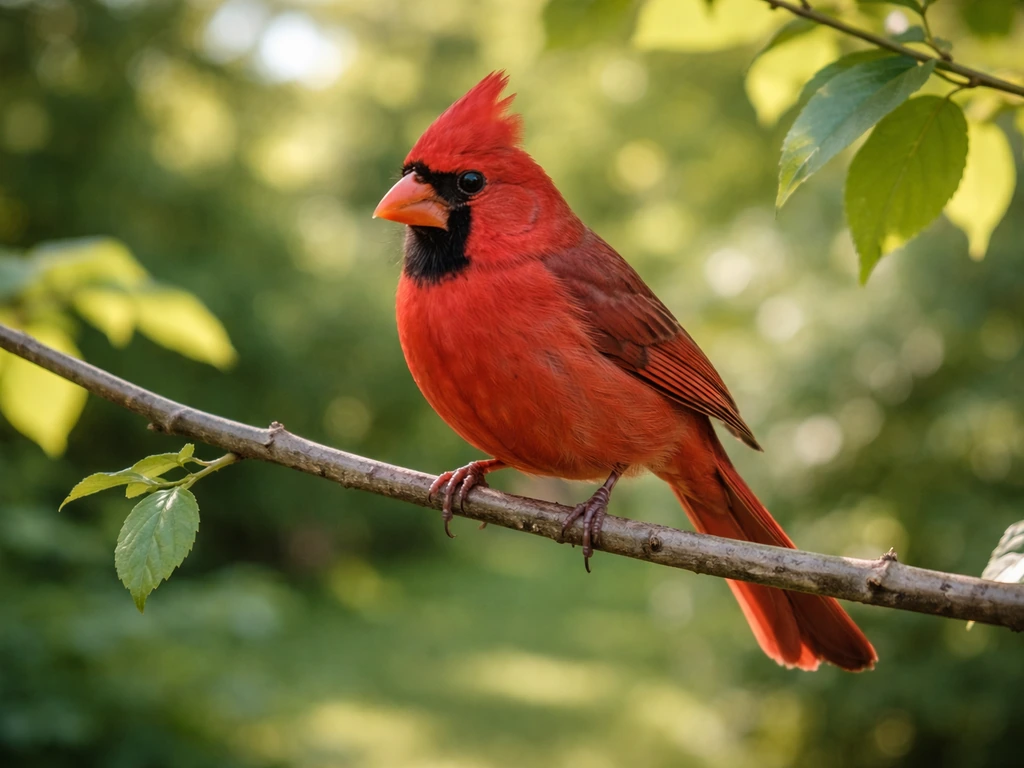
What 'cardinal bird = good luck' actually means
The idea that cardinals bring good luck is not a single belief from one place. It is a cluster of overlapping associations that independently developed across cultures, and they all point in a similar direction: protection, vitality, and auspicious change. In Cherokee mythology, the northern cardinal is specifically connected to the sun and described as a symbol of protection and good luck. That is one of the more direct cultural attributions you will find anywhere, and it has been documented consistently. The sun connection is significant: solar birds across many traditions carry themes of warmth, clarity, and the return of fortune after a hard stretch.
The bird's common name adds another layer. 'Cardinal' comes directly from the Roman Catholic Church cardinals, whose distinctive red robes and caps were so striking that early European settlers named the bird after them. Red itself carries enormous symbolic weight across cultures: vitality, life force, courage, divine fire. So when people say a cardinal brings good luck, they are drawing on a visual symbol that has been coded as powerful, sacred, and alive for a very long time. The bird is not just pretty. It is red in winter, conspicuous against snow, impossible to ignore. All About Birds (Cornell Lab) describes the male Northern Cardinal as “blank" rel="noopener noreferrer">brilliant red,” a detail that helps explain why the species is so visually striking and symbolically conspicuous. That quality of showing up vividly when things feel muted is a big part of why it became a sign of hope and good fortune.
There is also the broader bird-as-messenger theme that runs through almost every symbolic tradition covered on this site. Birds move between earth and sky. They appear and disappear. They are here, then gone. That liminality, the sense that a bird crosses thresholds we cannot, is exactly why so many cultures treat bird encounters as meaningful communications rather than random events. Cardinals fit that framework naturally. When one lands near you, holds your gaze for a moment, and then vanishes, the experience has a quality that invites interpretation.
Is it actually a sign? Common scenarios people encounter
People report cardinal encounters in a few recurring situations, and it is worth being honest about what is likely happening in each one, because that honesty does not kill the meaning. It actually sharpens it.
A cardinal lands near you outdoors
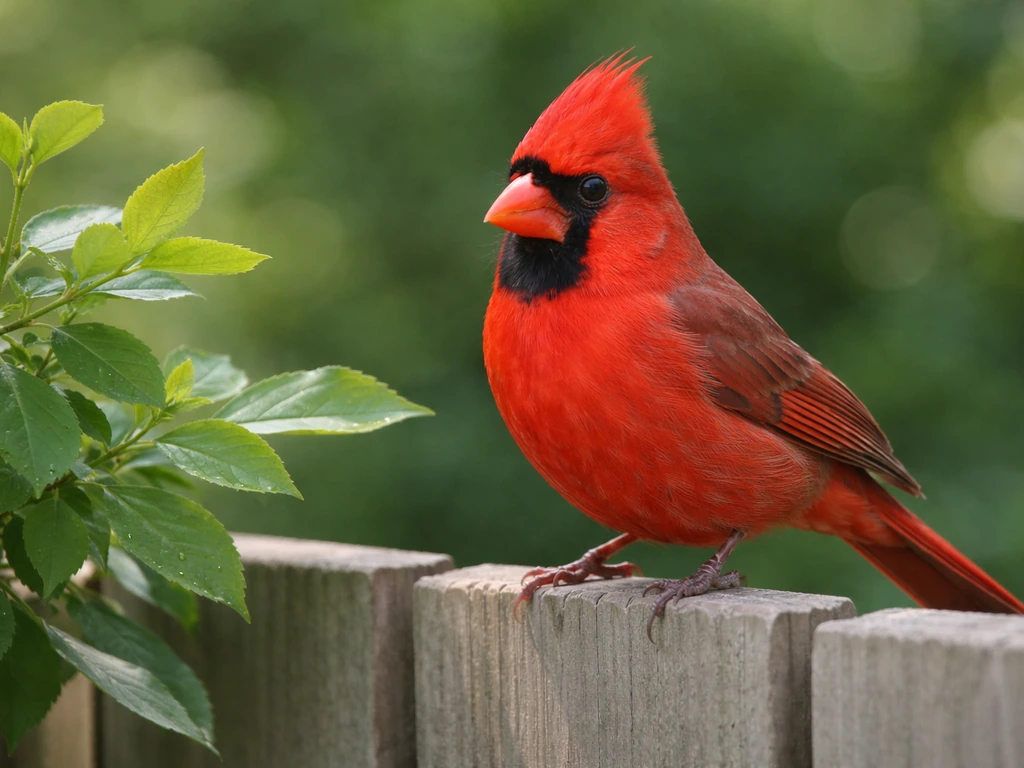
This is the cleanest version of the sign. A cardinal perches close to you in a garden, on a fence, or on a trail, seems unbothered by your presence, and lingers. This is genuinely unusual behavior for a wild bird. Cardinals are not especially bold around humans, so when one holds proximity to you, it is worth paying attention. Spiritually, this is the scenario most traditions would point to as a messenger encounter.
A cardinal taps at your window repeatedly
This one needs a grounded read alongside the spiritual one. Window-tapping behavior in cardinals is very well documented as a territorial response. Male cardinals see their own reflection in glass and interpret it as a rival. They attack. It can go on for days or even weeks, especially during breeding season in spring. Ornithologists, birding communities, and university extension programs all confirm this behavioral explanation. Kansas State University Extension even notes you can stop it by reducing the reflection the window shows, and Penn State Extension points out it often resolves on its own once breeding territory is established. So if a cardinal is slamming into your window every morning, the practical cause is most likely territorial instinct. That said, what you do with the timing, the persistence, and your emotional reaction to it is still yours to interpret. The bird's behavior does not have to be mystical for the encounter to carry personal meaning.
You see a cardinal right after a loss or a hard moment
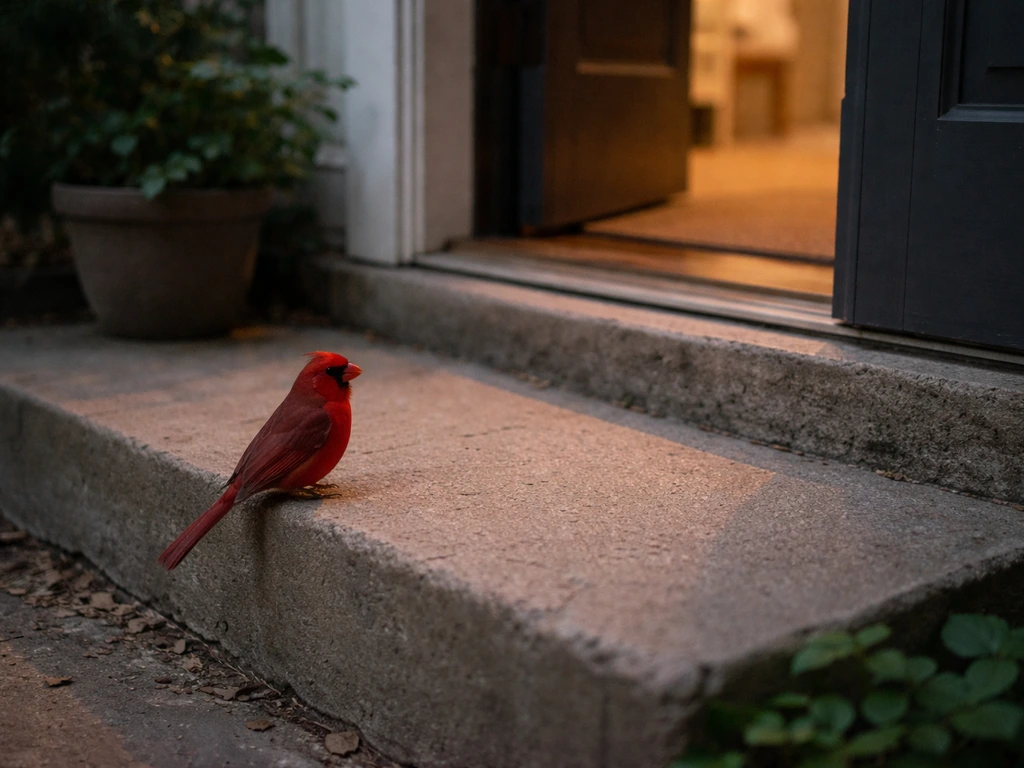
This is probably the most emotionally powerful scenario and the one people most frequently search for. The popular belief that cardinals carry messages from deceased loved ones is widespread enough to be its own tradition at this point, especially in North America. The spiritual read here is that the cardinal appears as a moment of comfort or reassurance. Whether that belief is literally true is a question each person answers for themselves. What is true is that many people find genuine solace in it, and there is nothing unserious about that.
A cardinal appears before or during a decision
Some people report cardinals showing up right as they are wrestling with a choice: a job offer, a relationship crossroads, a health decision. This is where the luck framing becomes most practically useful. The bird is not telling you what to choose. It is more like a prompt to pause, check your instincts, and take the decision seriously. Treat it as a signal to reflect rather than a green light to act.
How to read the moment: time, place, and what you were feeling
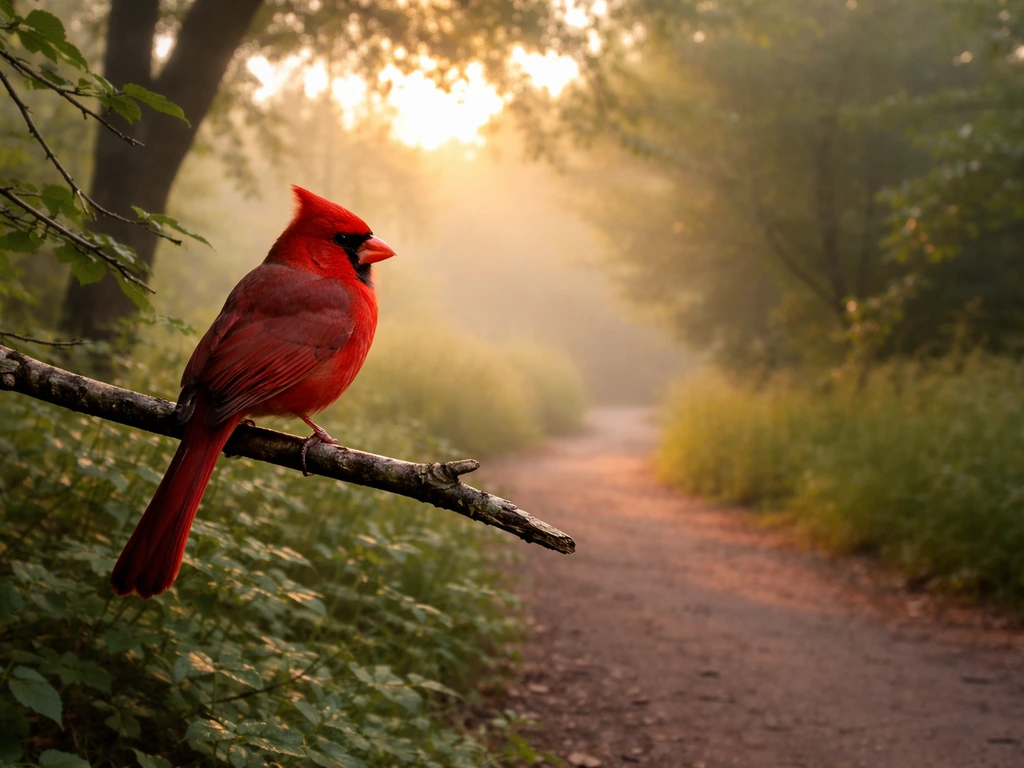
Context changes what a cardinal encounter means, and paying attention to the specifics of your particular moment is far more useful than a generic 'cardinals are good luck' answer. Here is what to notice:
- Time of day: A cardinal at dawn is often associated with new beginnings and fresh energy. Midday sightings can feel like confirmation or validation of something already in motion. An evening or dusk sighting, especially during a reflective moment, leans more toward closure or transition themes.
- Location: Seeing a cardinal in a place that already carries meaning for you (your childhood home, a cemetery, a spot where you made an important decision) amplifies the personal resonance. A cardinal in a completely unfamiliar place tends to feel more like a general auspicious marker rather than a specific message.
- What you were doing or thinking: This is the most important variable. If the cardinal appeared while you were actively worrying about something, the encounter can act as a pattern interrupt, a moment that pulls you out of the spiral. If you were in a peaceful or grateful state, it can feel like confirmation that you are on the right track.
- Your emotional reaction in the moment: Did you feel a sudden calm? A surge of energy? A sense of being watched in a comforting way? Your immediate gut response to the bird is data. Symbolic encounters tend to register in the body before the mind has a chance to analyze them.
- The bird's behavior: A cardinal that holds still, makes eye contact, and lingers is a very different encounter from one that flies through your field of vision. The longer and more unusual the contact, the more it invites interpretation.
- Color and sex of the bird: The brilliant red male is the classic 'good luck' image. The female cardinal, with her warm brown and red accents, is less often discussed but carries associations with nurturing, groundedness, and subtle guidance in some traditions.
What different traditions actually say about cardinals
It helps to know that 'cardinal = good luck' is not a single unified doctrine. It is more like a consensus that emerged from several independent streams of belief. Here is a short map of those traditions:
| Tradition | What Cardinals Represent | Key Theme |
|---|---|---|
| Cherokee / Indigenous North American | Sun symbol, protection, good luck | Solar energy, fortune, safeguarding |
| Christian / Catholic folk tradition | Named after cardinals of the Church; red as sacred fire and devotion | Divine presence, spiritual vitality |
| General North American folk belief | Messages from deceased loved ones; reassurance from ancestors | Connection across death, comfort, continuity |
| Color symbolism (cross-cultural) | Red as life force, courage, and vital power | Vitality, passion, visible divine energy |
| Bird-as-messenger (universal) | Liminal creatures crossing sky and earth; carriers of signs | Transition, threshold, communication between worlds |
It is worth noting that the 'good luck bird' tradition is not unique to cardinals. Cranes, for example, carry deep good luck symbolism in East Asian traditions. Cranes, for example, carry deep good luck symbolism in East Asian traditions, so crane bird good luck is another related thing to consider alongside cardinals. Celtic traditions have their own auspicious birds tied to protection and wisdom. In Celtic symbolism, the celtic thunder bird without wings meaning is sometimes connected with protection and communication through signs Celtic traditions. What makes cardinals particularly powerful in the North American context is the combination of factors: they are year-round residents (not migratory, so they do not disappear), they are intensely visible (especially in winter), and they have that direct naming link to religious authority. They are hard to miss and easy to assign meaning to, which is exactly the profile of a bird that ends up becoming symbolically significant in a culture.
What to actually do when you spot one
This is where practical meets spiritual. You do not need a ritual. You need a few intentional responses that anchor the moment and let you carry something useful from it. Here is a sequence that works whether you are deeply spiritual or just curious:
- Stop and be present for the full duration of the encounter. Do not immediately reach for your phone. Just watch. Take in the bird's color, movement, and what it does. Most cardinal encounters last under a minute; that minute is the whole experience.
- Notice your body and your immediate thoughts. Before your analytical mind kicks in with 'it's just a bird,' check what you felt. That first response is worth noting.
- Name what is on your mind. If you have been carrying a worry, a decision, or a grief, mentally or verbally acknowledge it. Something like: 'I see you, and I am grateful' is enough. You do not need elaborate language.
- Set a small intention. Cardinal sightings in luck traditions are associated with new energy coming in. Use that framing: decide one small thing you are going to move forward on today. It can be tiny. The point is to harness the moment as a prompt to act rather than just feel.
- Journal it within 24 hours. Write down where you were, what you were doing, how the bird appeared, and how you felt. If a pattern emerges over multiple sightings, that is genuinely useful personal data.
- Express gratitude. This sounds simple but it is not nothing. Gratitude practices have measurable effects on mood and decision-making. Whether you are thanking the universe, a loved one you believe sent the bird, or just the moment itself, the act of gratitude is the practical spiritual response.
Prayer or meditation in the moment is also completely appropriate if that is your practice. Some people silently ask for clarity. Some repeat a short phrase that grounds them. The specific form does not matter. What matters is that you treat the encounter as a deliberate pause rather than a passive coincidence.
Superstition vs. meaningful interpretation: where the line actually is

There is a real and useful distinction between superstition and symbolic interpretation, and it matters here. Superstition treats the sign as deterministic: 'I saw a cardinal, therefore good luck is coming, therefore I will make this risky decision.' That is the version to step back from. It outsources your judgment to an external event and removes your agency from the picture.
Symbolic interpretation works differently. It uses the encounter as a mirror. The cardinal does not tell you what will happen. It prompts you to check in with what you already know, feel, or need to hear. Used that way, the symbol is genuinely useful because it functions as an invitation to reflect at a moment when you might otherwise have stayed stuck in your head. That is not superstition. That is using a cultural framework to facilitate self-awareness, and there is nothing unscientific about that as a practice.
The window-tapping example is a good test case. If a cardinal is banging on your window every morning, you now know there is a behavioral, territorial explanation for why it is happening. That does not mean you cannot also sit with the timing of when it started, what was going on in your life then, and whether the persistence of the bird's appearance feels like something worth reflecting on. Both things are true at once: the bird has a biology, and you have a life that sometimes needs a prompt to pay attention.
The sign is most helpful when it leads you toward action, clarity, or peace rather than toward passivity or magical thinking. If you spotted a cardinal today and you are reading this article, the most grounded thing you can do is ask yourself: what did I need to hear right now, and what one small step can I take today? If you are wondering about other luck gestures too, you can apply the same reflective approach to whether a person blowing a kiss at a red bird feels meaningful to you blowing a kiss at a red bird good luck. If you are looking for a more seasonal version of the same hopeful idea, you might also consider bird on christmas tree good luck as a related tradition. That is the practical heart of what cardinal bird good luck actually means.
FAQ
If I see a cardinal while I am stressed, does it mean I should gamble or take a risk?
Use it as a time-stamp, not a prophecy. Ask yourself what decision, emotion, or question was most active in your mind in the minute before you saw the bird, then translate that into one concrete next step you can take within 24 to 48 hours (a call, a draft, a short walk, or a boundary setting).
What should I do if the cardinal keeps hitting my window every morning?
If the cardinal is window-tapping or persistent near glass, treat it primarily as territorial behavior. Meaning can still be present, but the “message” should be about redirecting your attention, adjusting the environment (reduce reflections, use netting or a temporary window cover), and noticing how your mood changes while it keeps happening.
How can I tell whether repeated cardinal sightings are meaningful or just because they live nearby?
Cardinals can be year-round in many regions, so your odds of seeing one are naturally higher. If the bird shows up repeatedly across days, you can treat that pattern as “the same theme returning,” but confirm whether there is an environmental reason (feeders, berries, nesting nearby) so you do not over-assign supernatural intent.
How do I know if my interpretation is superstition versus a useful symbol?
A helpful litmus test is whether you leave the encounter calmer and clearer. If the sight makes you feel pressured, reckless, or like you must act immediately, that is closer to superstition. If it nudges reflection, accountability, and peace, that is symbolic interpretation.
If I believe the cardinal is a sign from a loved one, how can I respond in a grounded way?
If you want a message from a deceased loved one, focus on what brings you comfort without forcing certainty. A practical approach is to write one sentence about what you hope they would want you to do next, then pick a small, respectful action (a visit, a charitable act, or a routine you share with them).
Does it matter if the cardinal looks a different shade of red or is far away?
Use bird-color details only as supportive context. The most consistent takeaway is the encounter’s timing and behavior (lingering near you, watching you, or appearing during a moment of choice). Let that drive your reflection more than whether the bird looked perfectly red, because lighting and distance can change perception.
What if the cardinal shows up at an inconvenient time, like during a hard week, and I worry I am overthinking it?
Check for a simple, real-world prompt: the encounter could coincide with a local habitat change like a nearby tree bearing seeds, new bird feeders, or seasonal mating activity. When you pair that practical explanation with your emotional reaction, you get meaning without ignoring the likely cause.
If I use cardinal sightings for “good luck,” how should I apply it to major decisions like money or health?
Many people find comfort in counting the sight as “good luck,” but it is safer to avoid deterministic language. Instead of “this will guarantee success,” try “this is a reminder to prepare, choose carefully, and keep my values in mind,” especially for big purchases or irreversible decisions.
Next Article
What Bird Is a Sign From Heaven? Meaning and How to Interpret
Which bird is often seen as a sign from heaven, plus a step-by-step way to interpret your specific encounter.